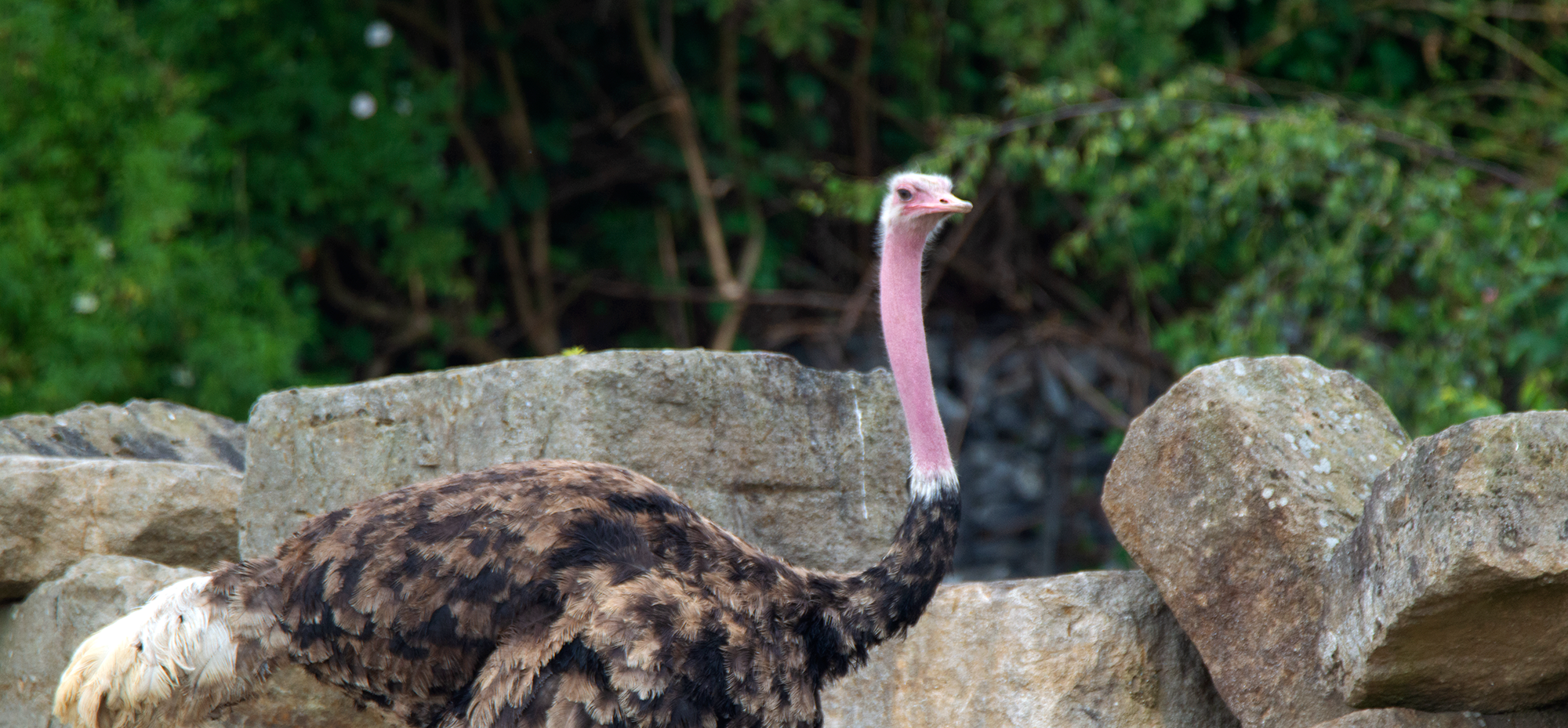
Red-necked ostrich
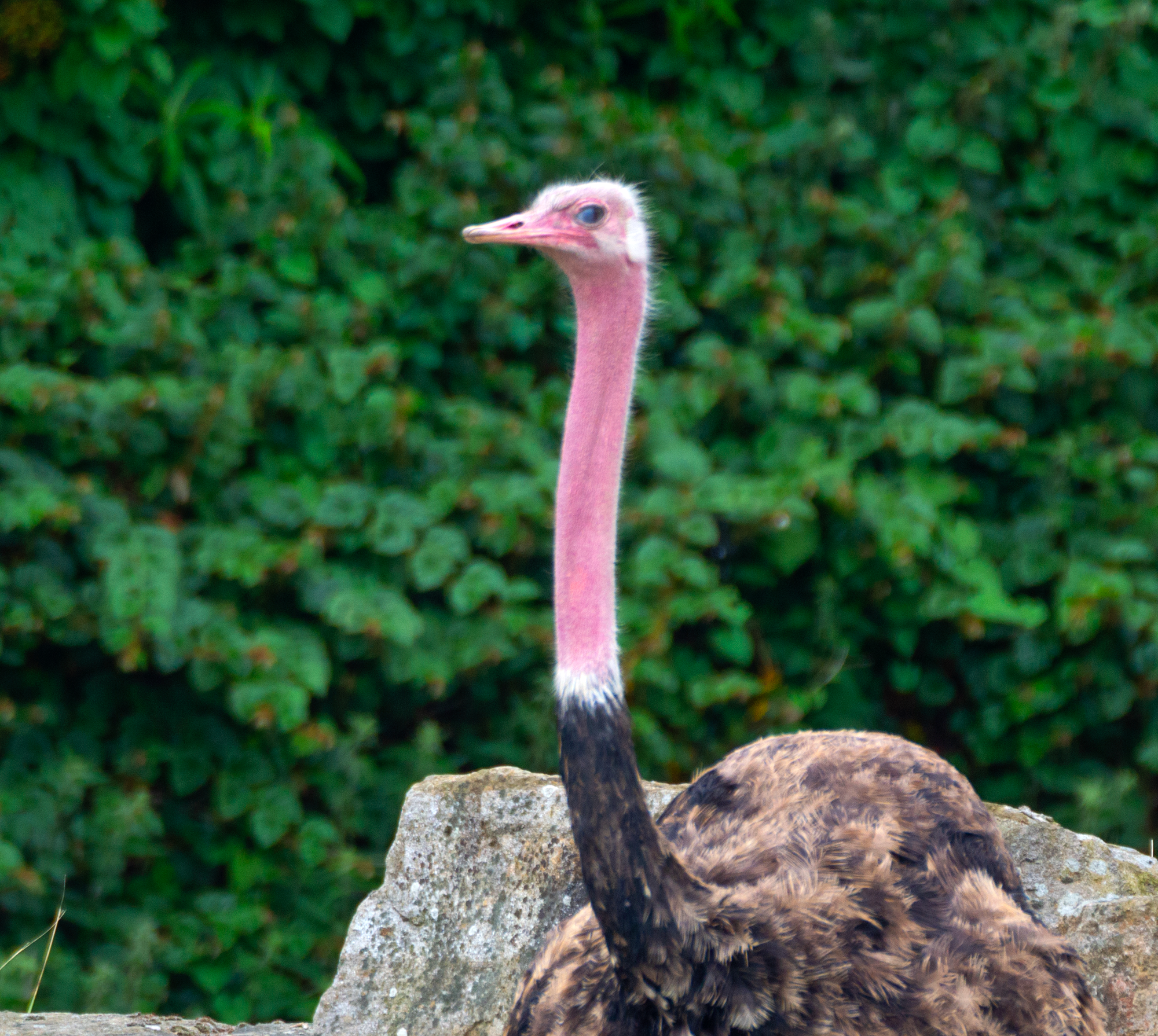
They are the largest subspecies of ostrich, making them the largest birds alive on the planet today.
Species
Birds
Habitat
Savannah
Diet
Omnivore
Conservation Status
Critically Endangered
Red-necked ostrich
Struthio camelus camelus
Irish Name: Ostrais
IUCN Status: Critically Endangered
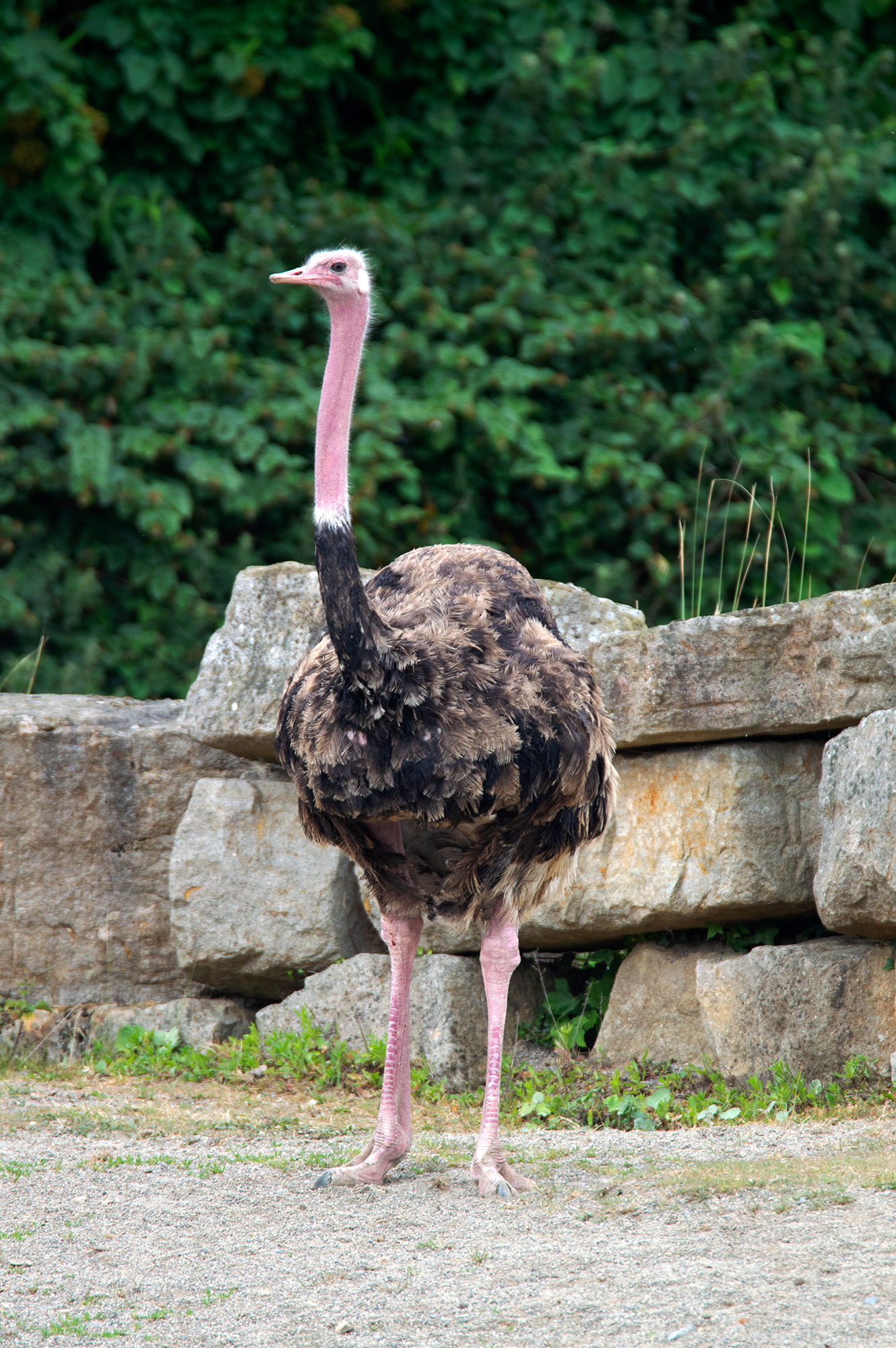
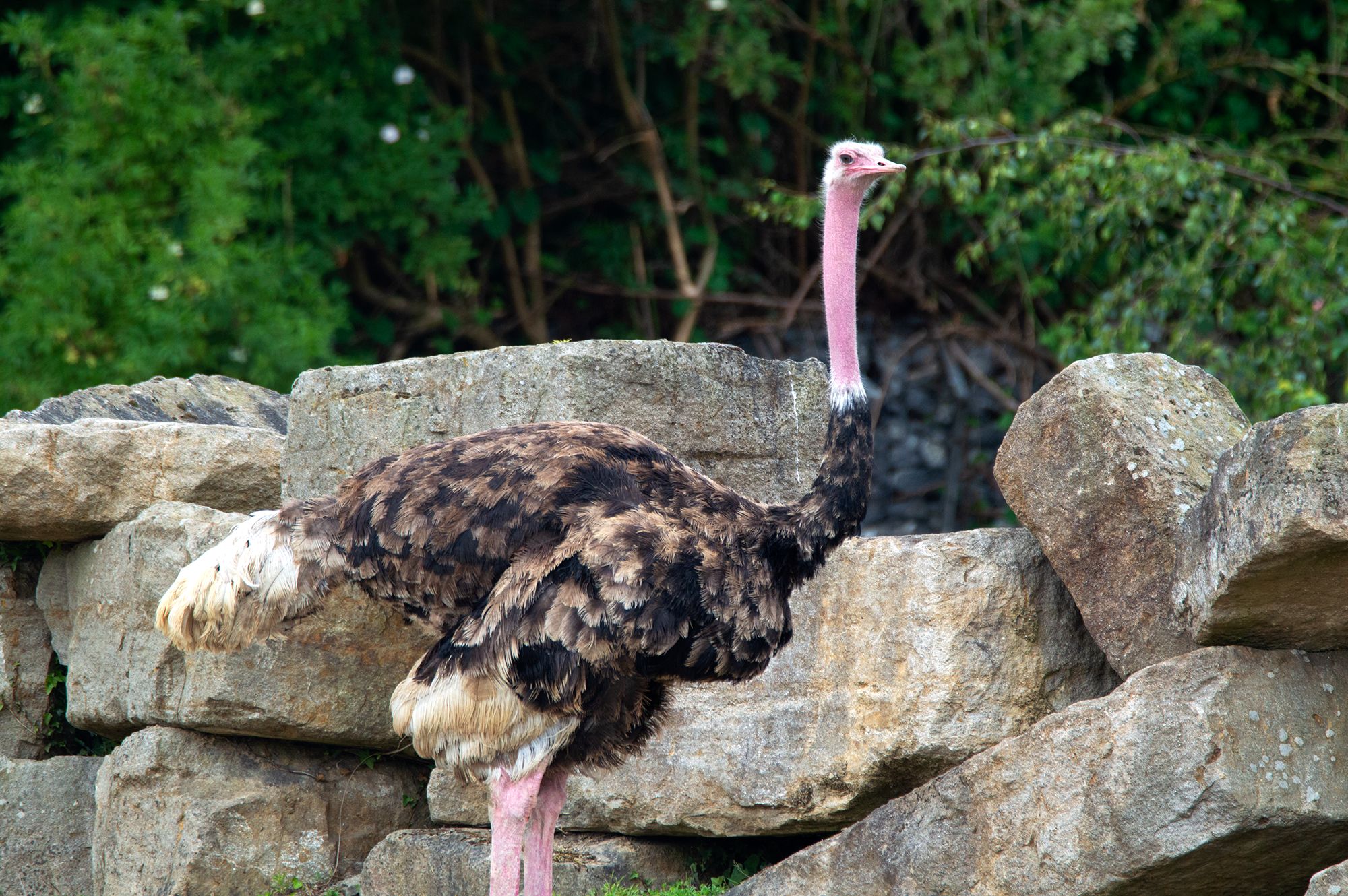
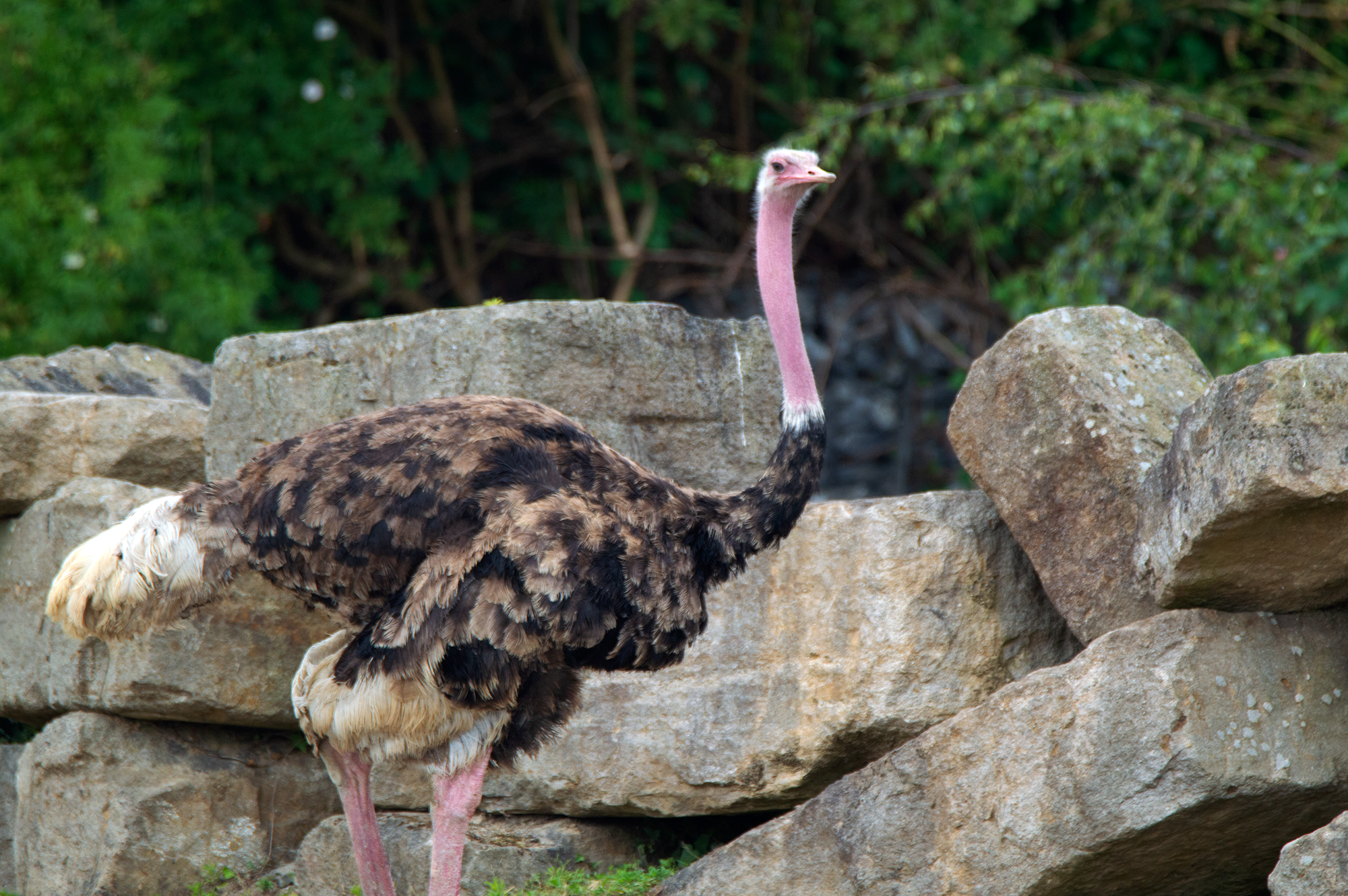
Red-necked ostriches are an ostrich subspecies native to northern Africa. They are the largest subspecies of ostrich, making them the largest birds alive on the planet today. Adults can grow to heights of over 2.7 metres, and weigh over 150 kilograms.
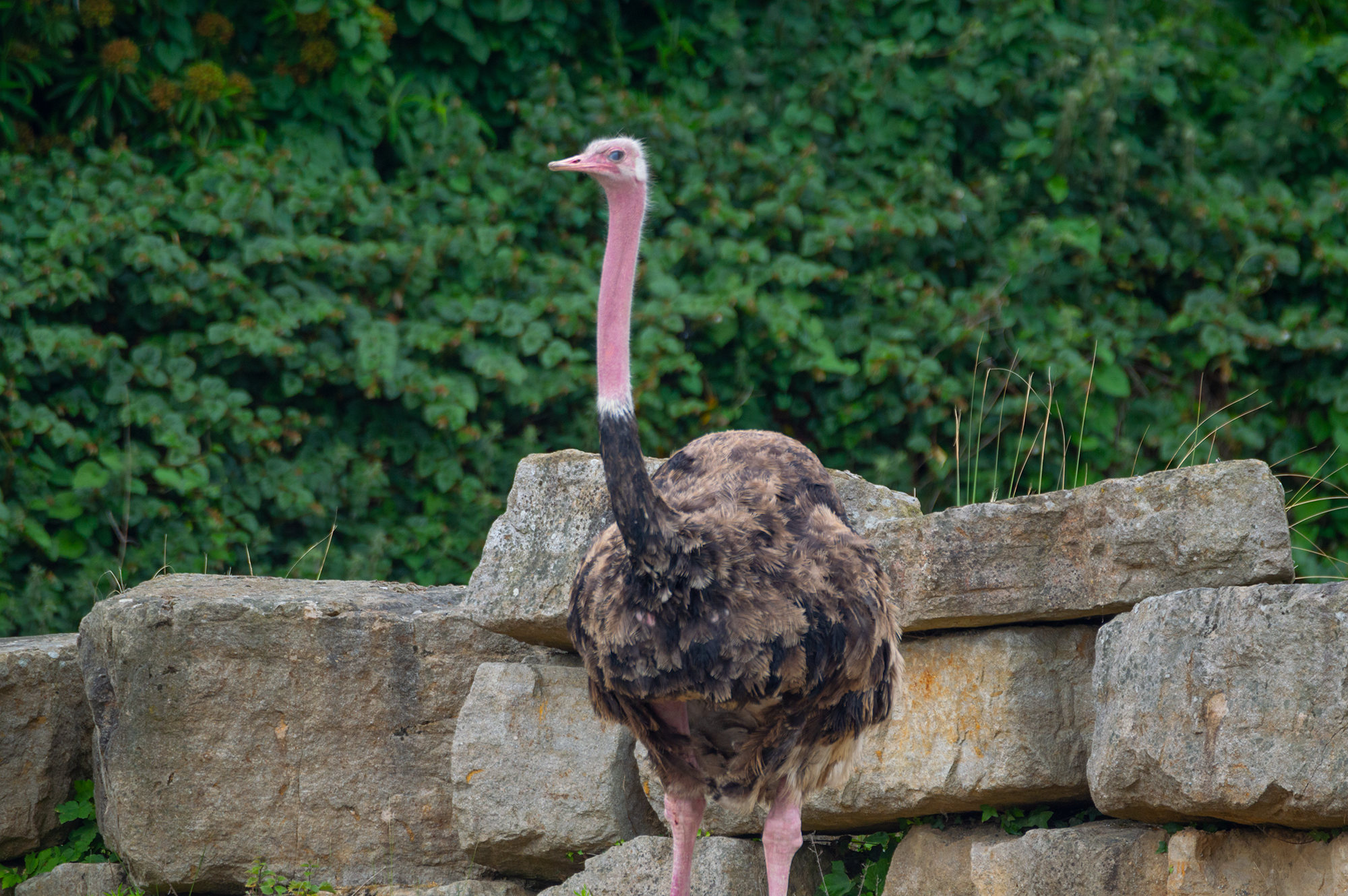
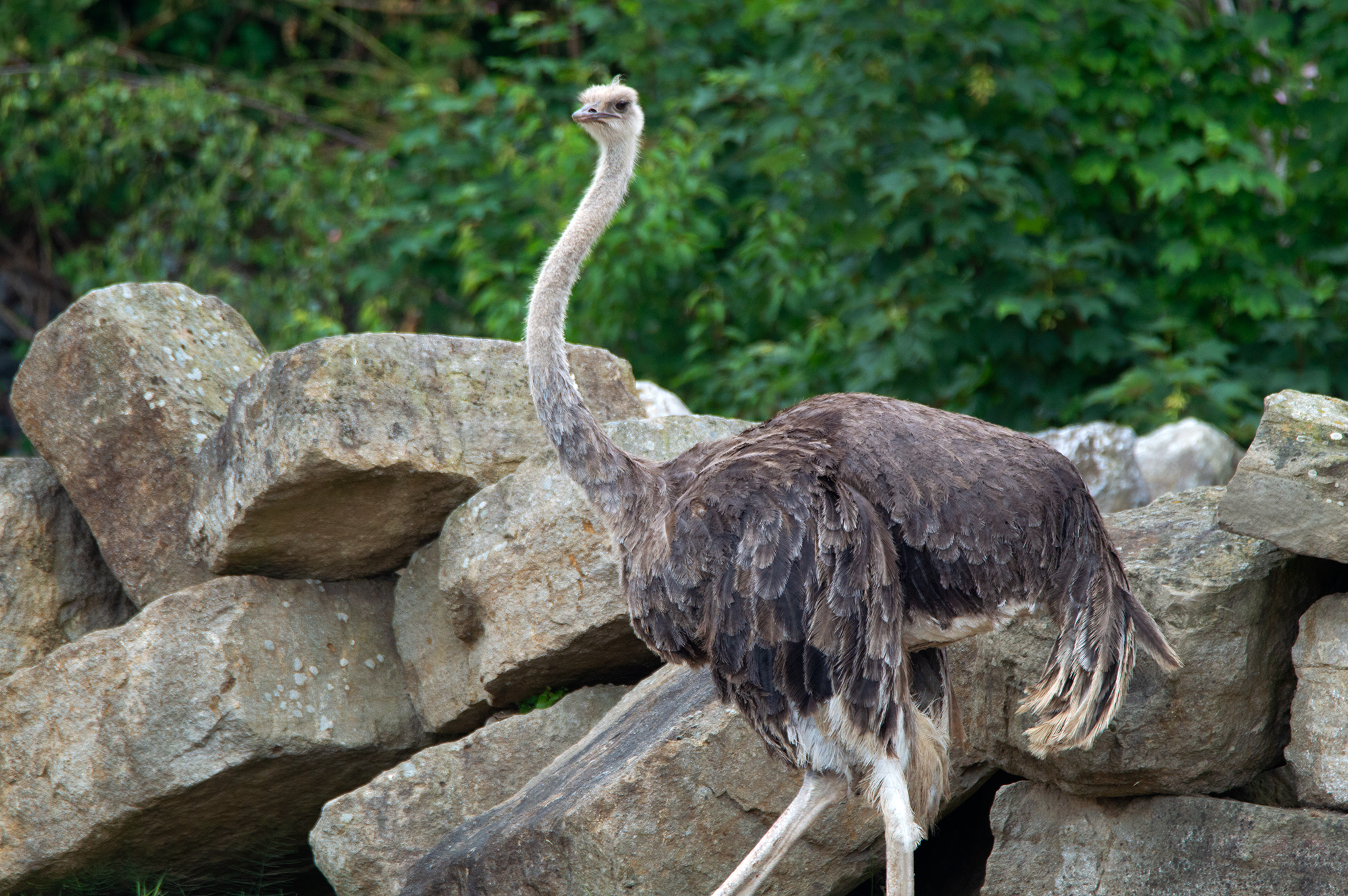
They have long, largely featherless legs and necks which are beige in colour. In the males, their necks and legs can become a bright pink-red when they reach maturity. Males also have dark black body feathers accompanied by white feathers around the nape of their neck and the ends of their wings, while females are largely grey-brown in colour.
Ostriches are flightless birds, utilising their feathers primarily for insulation, camouflage, and display.
General Information
Zoo location
The red-necked ostriches can be seen on the African Savanna in the African Plains
Animal class
Aves
Animal order
Struthioniformes
Where do they live (Natural habitat)?
Red-necked ostriches are primarily found in the dry savannas of sub-Saharan Africa. Where once widely distributed, they are now only found across a third of their historic range.
How long do they live?
Ostriches are some of the most long-lived birds, with adults in human care having been known to live for over 60 years. In the wild they have been known to live for around 40 years.
What do they eat?
Ostriches are omnivores. The majority of their diet consists of seeds, shrubs, grass, fruits, and flowers, but they have also been known to eat insects, small reptiles, and even small rodents.
They will also swallow small pebbles and stones which help to grind down plant matter in their gizzard. These stones are known as ‘gastroliths’.
Group name
The collective name for a group of ostriches is a ‘wobble’, though they may also be referred to as a ‘flock’ as is the case with many birds.
Closest related species / sister species
Ostriches are part of the infraclass of birds known as Palaeognathae, also known as ‘ratites’, meaning they are most closely related to birds such as a rheas, emus, and cassowaries.
Fun Facts!
Behaviours
Ostriches will typically move alone or in pairs, though have been known to move in larger groups during breeding season and periods of extreme drought. They have also been known to live in amongst herds of animals such as wildebeest and zebras for mutual protection from predators, a form of mutual symbiosis.
Though ostriches cannot fly, they can run at very high speeds over long distances. They have been recorded reaching speeds of over 65 kilometres per hour, placing them among some of the fastest land animals on the planet.
When threatened, an ostrich’s first instinct is typically to run away. However, if this is not an option, they can also unleash a powerful kick which can produce over 200 kilograms of force.
Reproduction and Life Cycle
Red-necked ostriches reach maturity between 2 and 4 years of age, with females typically reaching maturity around 6 months before the males. The mating season begins in April and ends in September.
Males will display to females by performing a ‘dance’ with their wings and scraping a hole in the ground which will become the communal nest. A male may mate with several females – known as a ‘harem’ – but will only pair bond with a single, more dominant female. The male will then defend his harem from other males by inflating his neck to make a low booming noise.
The females all lay their eggs in the communal nest, with the dominant female laying hers first closest to the centre. Throughout the incubation period, she may discard eggs from other females, leaving around 20 eggs in total. Each egg is typically around 15 centimetres long and weighs just under 1.5 kilograms. The male and female take shared duty incubating the eggs, with males sitting on the eggs at night and females during the day.
After an incubation period of between 35 and 45 days, the chicks hatch and are largely reared by the male, who defends them and teaches them how to feed. The chicks are typically a light brown colour with darker brown spots. Only 15% of chicks will make it through their first year.
Ostriches are some of the most long-lived birds, with adults in human care having been known to live for over 60 years. In the wild they have been known to live for around 40 years.
Adaptations
Though ostriches cannot fly, they can use their feathers to help stabilise themselves while running.
Ostriches only have 2 toes. This reduces traction on the ground to allow the ostrich to run faster. The larger of the 2 toes is also equipped with a large claw which can be used to defend itself against predators and other threats.
To survive in harsh, dry conditions, ostriches can go for several days without water, and can survive losing up to 25% of their body weight when food and water are scarce.
An ostrich’s large eyes allow it to see quite well in the dark. They also have a very keen sense of hearing. Combined with their long and flexible necks, this allows them to spot predators a lot quicker and easier than some other animals.
Conservation
Critically Endangered
Ostriches are listed as ‘Least Concern’ on the IUCN Red List of Endangered Species, but the red-necked subspecies seen at Dublin Zoo is listed as ‘Critically Endangered’.
Current population estimate
Reintroduction efforts have been made across Africa, with the first red-necked Ostriches being released into Tunisia for the first time in over 120 years in 2014. Further reintroductions are planned in Niger and Nigeria. The red-necked ostrich has also been reintroduced into Saudi Arabia and other Middle Eastern countries as a proxy for the extinct Arabian ostrich, to which it is the closest relative.
Threats
The species is now found across only a third of its historic range, with much of its population reduced due to hunting for their feathers, meat, and eggs, and loss of habitat.
Frequently Asked Questions
Red-necked ostriches live in the dry savannas of northern Africa in countries such as Cameroon, Chad, and Senegal.
In the wild, red-necked ostriches typically live for around 40 years. In human care, they’ve been known to live for over 60 years.
Red-necked ostriches can grow to over 2.7 metres tall and weigh over 150 kilograms.
No, ostriches are a flightless bird. They can, however, run at speeds of up to 65 kilometres per hour over long distances, using their feathers to help keep their balance.
No, ostriches do not stick their head in the ground to hide. This is a commonly believed myth. When threatened, they are more likely to run away or kick their aggressor. They will also lie down flat on the ground to look like a mound of earth from a distance.
Red-necked ostriches are omnivores. Though most of their diet consists of plant matter such as seeds, shrubs, and grasses, they have also been known to insects, small reptiles, and even small rodents.
The red-necked ostrich is a critically endangered subspecies of ostrich. As a whole species, while ostriches are considered to be of least concern, their wild populations have declined dramatically in the last 200 years. The majority of ostriches today are found on farms or reserves.
The red-necked ostriches can be seen on the African Savanna in the African Plains alongside other savanna species such as giraffes and zebra, and next to the southern white rhinos.