Malagasy giant jumping rat
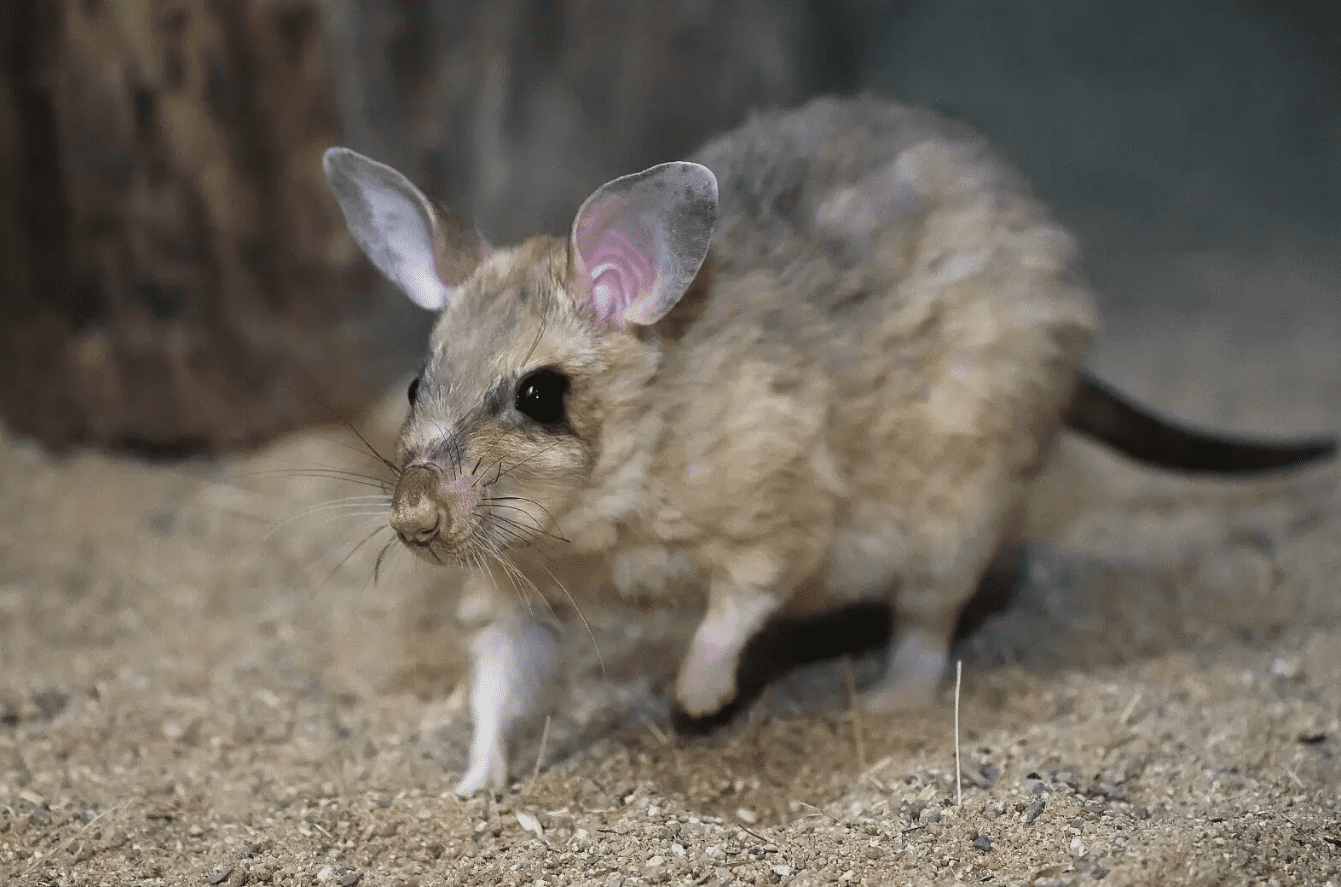
Malagasy giant jumping rats are a species of forest dwelling rodent, though they look very similar to a rabbit
Species
Mammals
Habitat
Coastal
Diet
Herbivores
Conservation Status
Critically Endangered
Malagasy giant jumping rat
Hypogeomys antimena
Irish Name: Ollfhrancach preabach Malagásach
IUCN Status: Critically Endangered
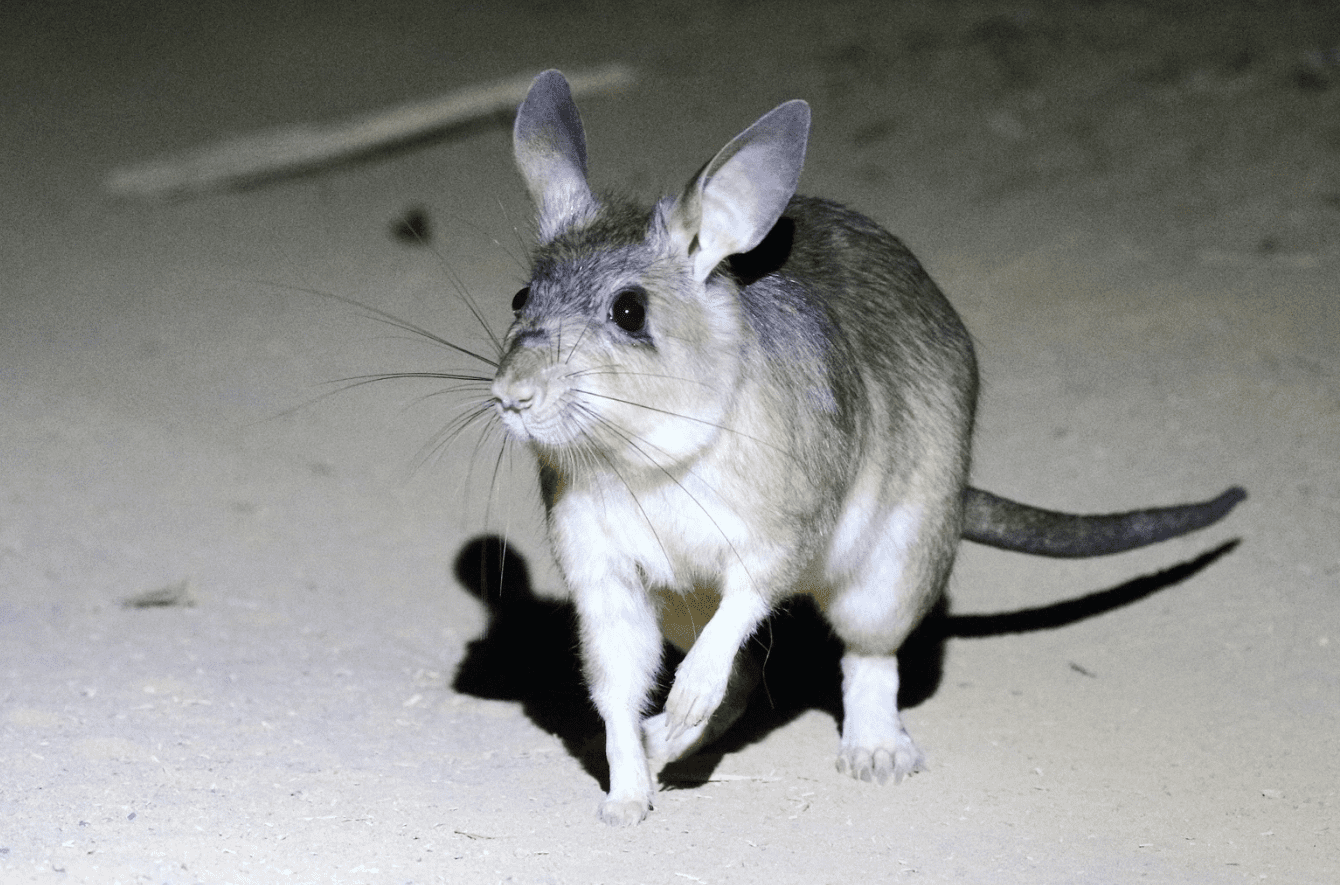
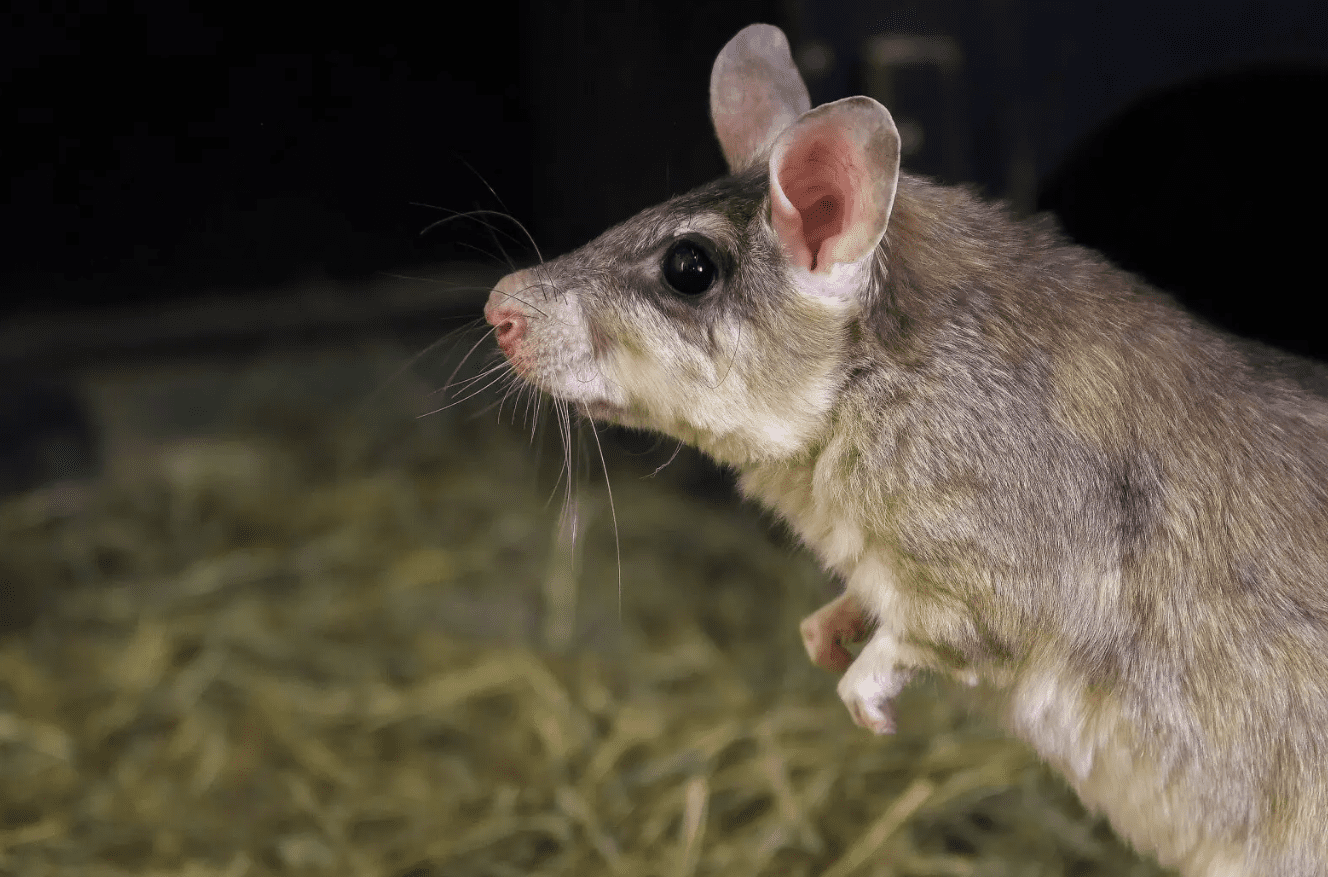
Malagasy giant jumping rats are a species of forest dwelling rodent, though they look very similar to a rabbit. They are also similarly sized to a rabbit, growing to around 30 centimetres long (up to 55 centimetres when including the tail) and weighing between 1 and 1.5 kilograms. They have large, pointed ears, large hind feet, and a grey-brown to reddish fur. The underside of their body is a pale grey or white, and they have short, stiff, dark hairs along their tail.
Malagasy giant jumping rats are native and endemic to Madagascar. They are found exclusively in the Menabe region in the west of Madagascar.
General Information
Zoo location
Nocturnal House
Animal class
Mammalia
Animal order
Rodentia
Where do they live (Natural habitat)?
Malagasy giant jumping rats are found in the sandy coastal areas and mature deciduous forests of western Madagascar.
How long do they live?
In human care, Malagasy giant jumping rats can live for up to 10 years. It’s possible their wild lifespan is similar, if not shorter, but more research is needed.
What do they eat?
The Malagasy giant jumping rats are primarily herbivores. They feed mainly on fallen fruits and seeds, as well as stripping bark from young trees. They will also eat insects on occasion.
Group name
The collective name for a group of rats is a ‘mischief’.
Closest related species / sister species
Malagasy giant jumping rats are most closely related to other African rodents species in the family Nesomyidae, such as white-tailed rats, climbing mice, and African rock mice.
Fun Facts!
Malagasy giant jumping rats
Behaviours
Malagasy giant jumping rats are nocturnal, meaning they are most active at night.
Like rabbits, they dig burrows that can be up to 5 metres deep with up to 6 entry points. The jumping rats will cover these entry points with leaves and soil to reduce the risk of predation from snakes. Whenever they enter or exit the burrow, they must uncover and then recover these entryways.
As the name suggests, the giant jumping rats are capable of jumping quite high. However, their preferred form of locomotion is walking on all fours.
Mated pairs of jumping rats will defend a territory together by marking it with faeces, urine, and scent gland deposits.
Reproduction and Life Cycle
Malagasy giant jumping rats are monogamous, meaning that they mate for life. The males reach maturity at around 1 year old, at which point it leaves its parental burrow to find its own territory. Females reach maturity at 2 years old, but typically remain with their parents for another breeding season after this.
Breeding and rearing of young occurs during the rainy season (December to March). Pregnancy lasts for between 102 and 138 days, after which females give birth to a single offspring.
In human care, Malagasy giant jumping rats can live for up to 10 years. It’s possible their wild lifespan is similar, if not shorter, but more research is needed.
Adaptations
As the name suggests, Malagasy giant jumping rats are capable of jumping up to 1 metre up in the air thanks to their large and powerful hind feet. They will jump to get away from predators, such as fossa, as quickly as possible.
Parents are known to increase their own risk of predation, drawing attention to themselves, to protect their young.
Conservation
Critically Endangered
The Malagasy giant jumping rat is listed as ‘Critically Endangered’ on the IUCN Red List of Endangered Species.
Current population estimate
Their population is estimated to be just over 5,000 mature individuals. Due to them being both an endemic species and having a very limited range, this species is at very high risk of extinction.
Threats
The giant jumping rat is threatened by human actions such as illegal deforestation for timber and agricultural land, predation from feral cats and dogs that have been introduced to the island, as well as climate change and the spread of disease. Malagasy giant jumping rats are susceptible to hantavirus which is contracted from other rodents introduced to Madagascar and causes kidney failure.
Frequently Asked Questions
Malagasy giant jumping rats live on the sandy coasts and in the mature deciduous forests of Menabe, a region in the east of Madagascar. They are endemic to Madagascar.
Endemic means a species lives only in a very specific place. Endemic species are often at higher risk of going extinct due to how isolated they typically are.
Malagasy giant jumping rats are herbivores. They primarily feed on fallen fruits and seeds, but have also been known to eat the bark of young trees and even insects from time to time.
Although they look a lot like rabbits, they are actually rodents. This means they are more closely related to animals such as mice, rats, and capybaras.
Despite their name, their preferred way of getting around is by walking on all fours. Giant jumping rats tend to only jump to escape from predators and other potential threats.
The Malagasy giant jumping rats can be found in the Nocturnal House at Dublin Zoo, alongside fellow nocturnal and Madagascar endemic species, the aye-aye.