Golden poison frog
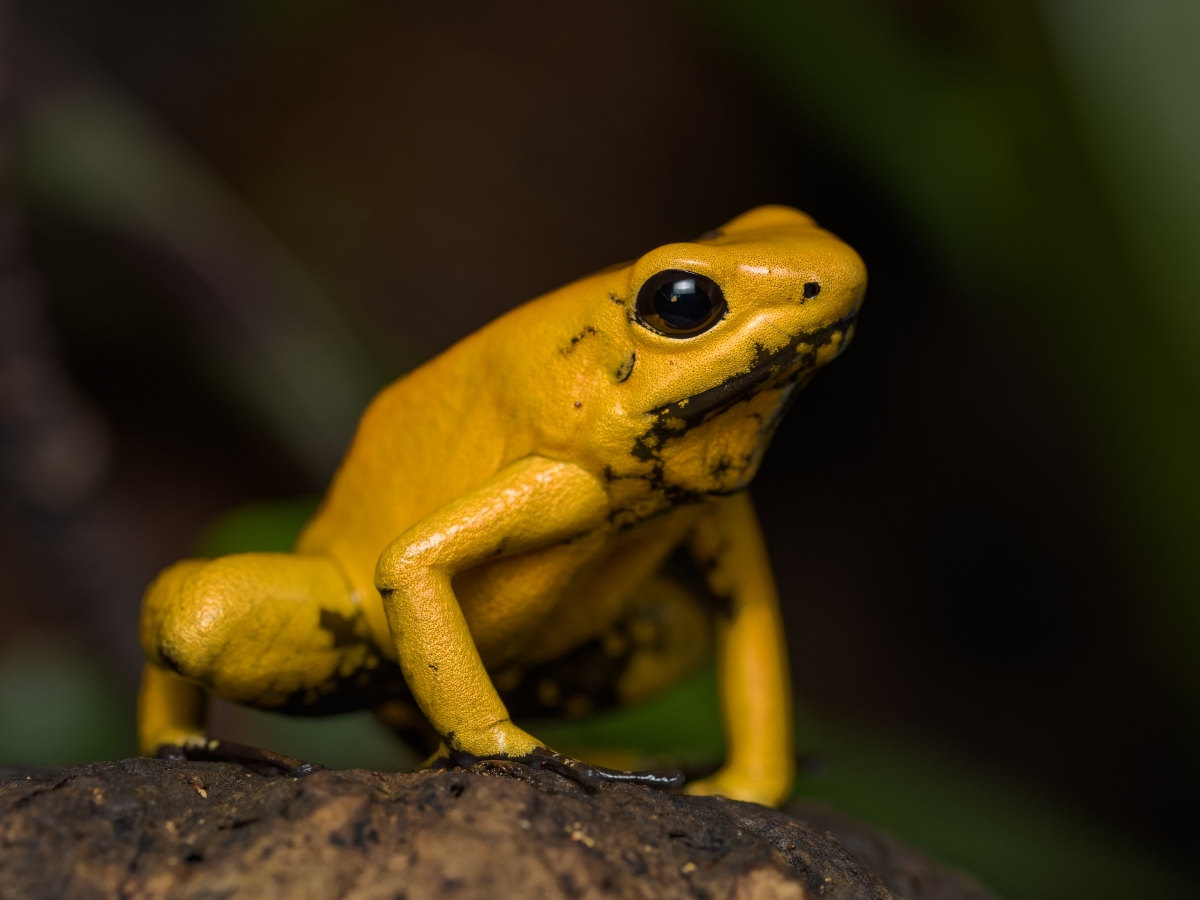
The golden poison frog is a species of poison dart frog endemic to the humid tropical forests of Pacific coast of Colombia
Species
Amphibians
Habitat
Rainforest
Diet
Insectivore
Conservation Status
Endangered
Golden poison frog
Phyllobates terribilis
Irish Name: Frog nimhe órga
IUCN Status: Endangered
The golden poison frog is a species of poison dart frog endemic to the humid tropical forests of Pacific coast of Colombia. It is the largest species of poison dart frog, growing up to 6 centimetres in length and weighing around 30 grams when fully grown.
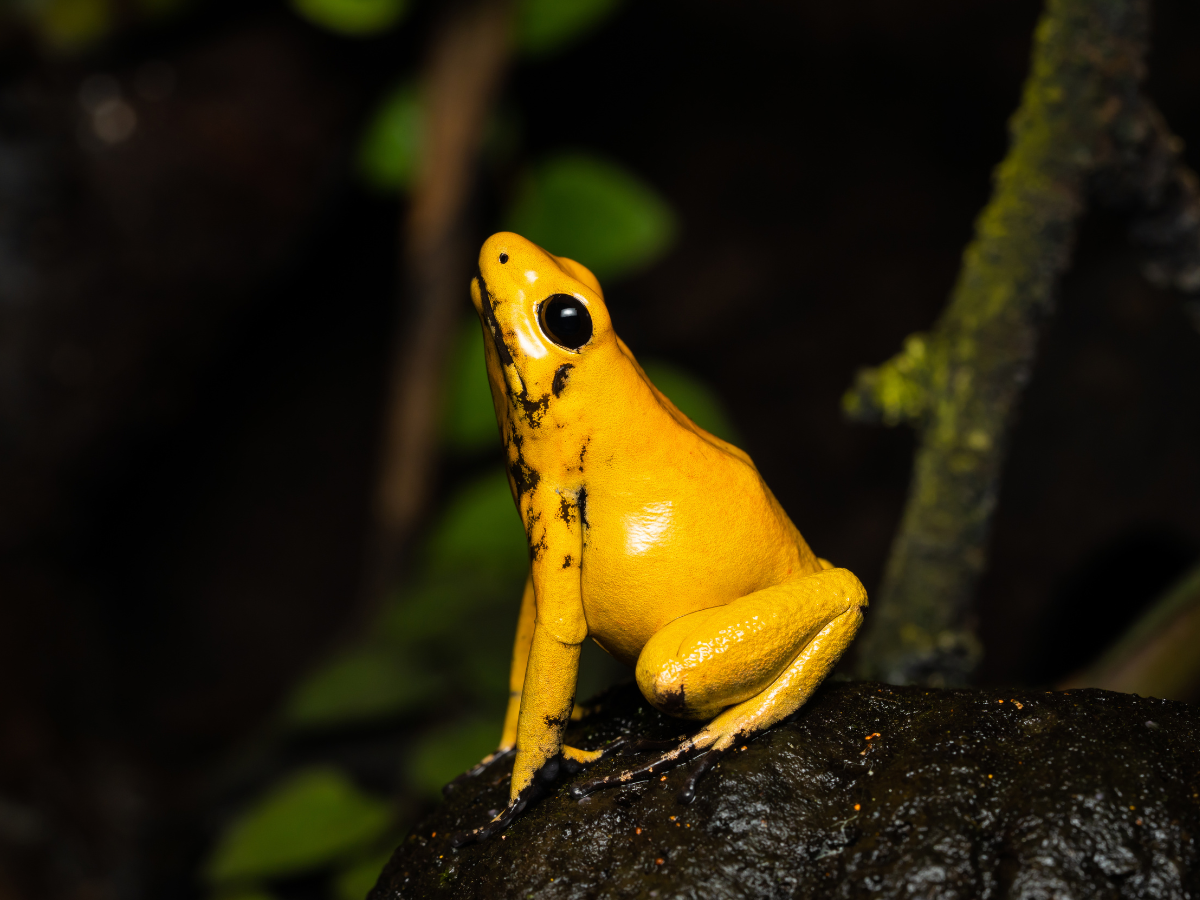
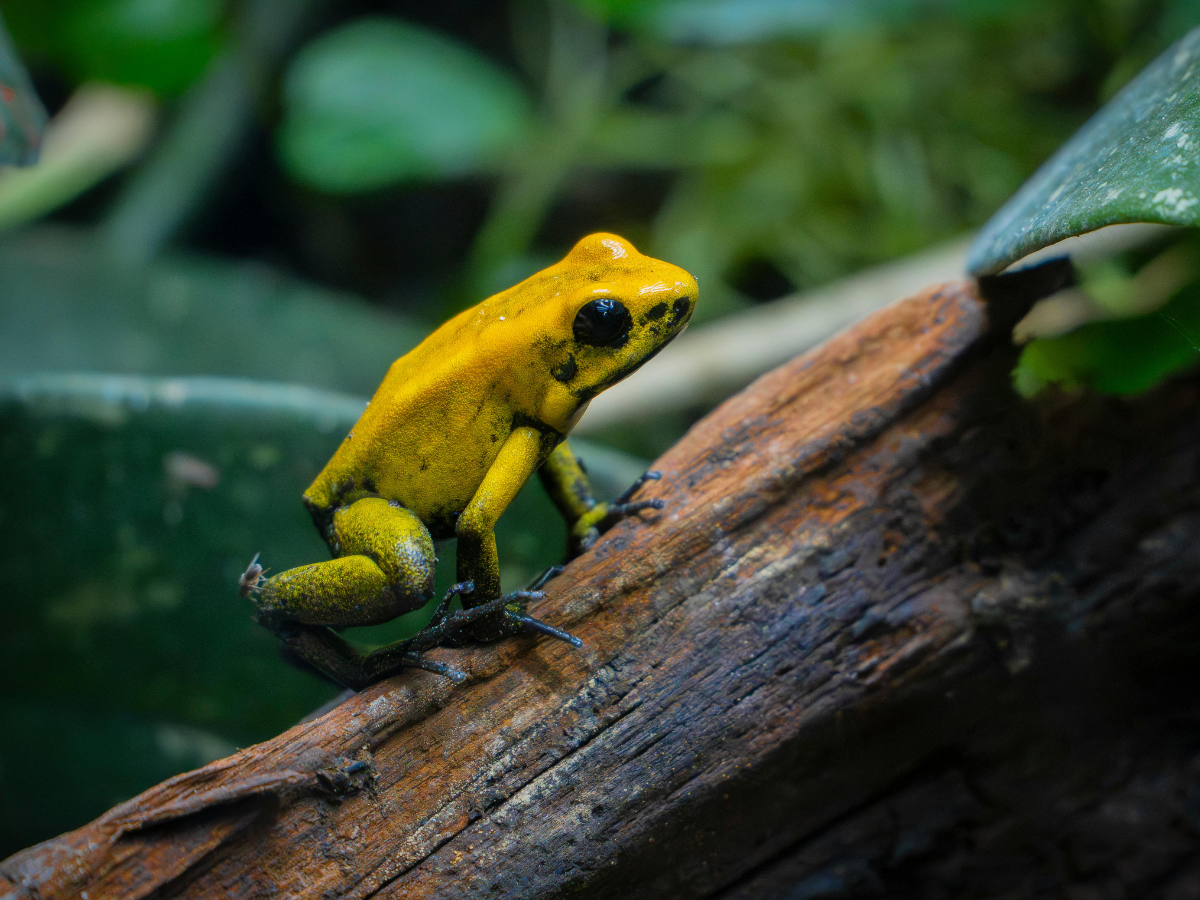
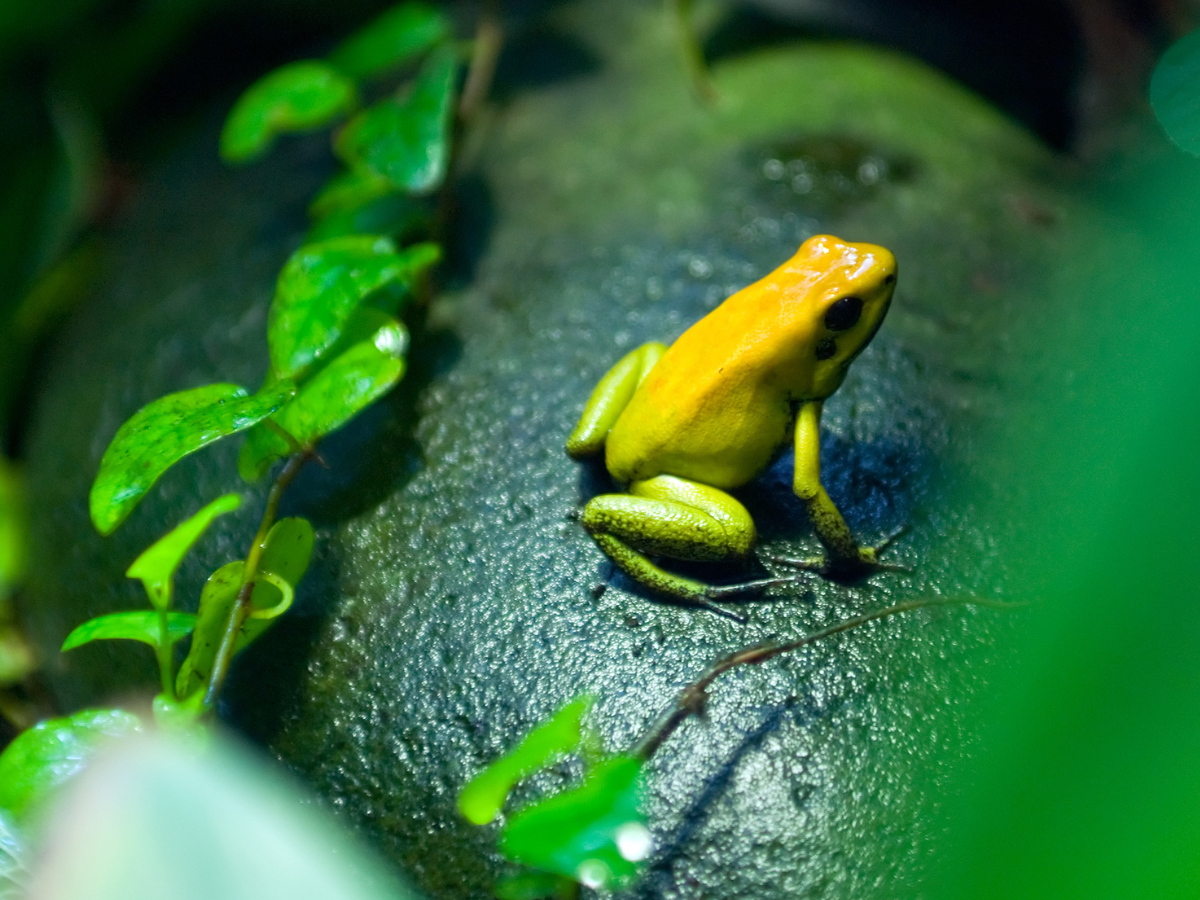
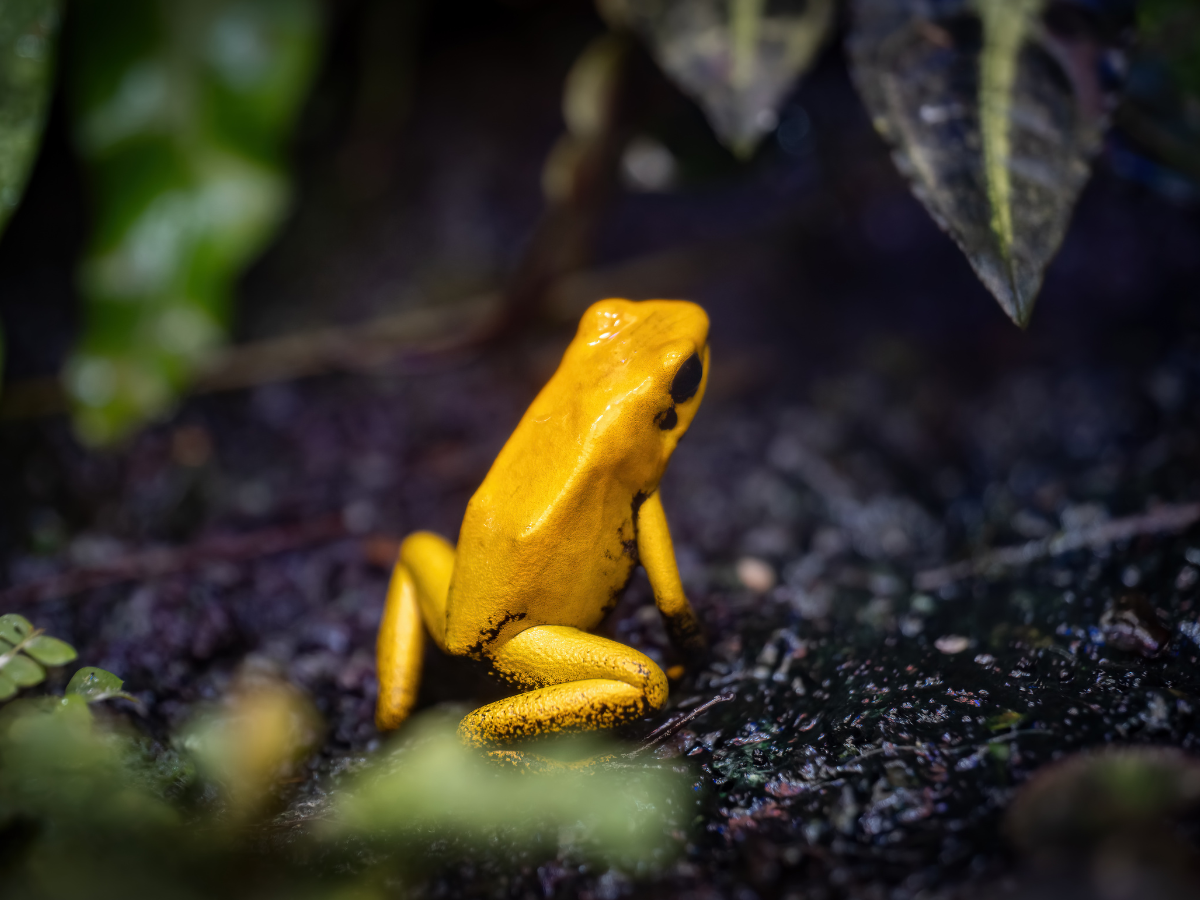
The species is named for its bright yellow colouration, though yellow is not the only colour these frogs can exhibit. Some individuals may be orange, orange with black feet, or sometimes even mint green. Different colour morphs are found in different regions of Colombia.
General Information
Zoo location
The golden Poison Frog can be found in the Rainforest House at Dublin Zoo
Animal class
Amphibia
Animal order
Anura
Where do they live (Natural habitat)?
Golden poison dart frogs prefer tropical rainforests with high rainfall and high humidity. They are endemic to the Chocó Rainforests of Colombia.
How long do they live?
Golden poison frogs typically live for around 10 years, though have been known to live up to twice as long in human care.
What do they eat?
Like many frogs, golden poison dart frogs are generalist insectivores. They feed largely on ants in the genera Brachymyrmex and Paratrechina but have been known to feed on other insects and invertebrates as well. Tadpoles largely feed on algae and mosquito larvae.
Group name
The collective name for a group of frogs is an ‘army’ or a ‘bundle’.
Closest related species / sister species
Golden poison frogs are most closely related to other frogs in the family Dendrobatidae, which includes all poison dart frogs.
Fun Facts!
Golden poison frog
Behaviours
Golden poison frogs are diurnal. They are not a social species. They typically sit along the forest floor evenly spaced out without congregating in groups.
Reproduction and Life Cycle
Male golden poison frogs attract females through a series of trilling calls. Males and females will then participate in tactile courtship, each frog stroking their mate’s head, back, and flanks before the female deposits her eggs for fertilisation.
Eggs are laid on the wet ground. Once they hatch, the tadpoles adhere themselves onto the backs of their parents who deposit them into water that accumulates in leaves in the forest canopy.
Golden poison frogs typically live for around 10 years, though have been known to live up to twice as long in human care.
Adaptations
As the name suggests, golden poison frogs produce a toxin to protect themselves from predators. They produce a poison known as batrachotoxin in glands in their skin, which can be transferred to another animal that touches or eats the frog. This poison can cause paralysis or even death in higher doses.
As well as the poison, golden poison frogs are brightly coloured to warn predators of their toxicity. Many poisonous animals are brightly coloured for this purpose. This is known as aposematism.
The poison produced by the golden poison frog contains alkaloids, which they absorb from the prey they consume. In human care, the frogs are not poisonous as they are fed different species of insect that do not contain these alkaloids.
Conservation
Endangered
Golden poison frogs are listed as ‘Endangered’ on the IUCN Red List of Endangered Species.
Population
Though there are no solid estimates for the frog’s wild population, its endemic nature puts it at high risk of going extinct. It is also heavily impacted by pollution and habitat loss.
Threats
This species is also very popular in the exotic pet trade. While this once impacted this species’ wild population, today most frogs sold in the pet trade are bred in captivity. The IUCN now estimates that the pet trade has a very low impact on the golden poison frog.
Frequently Asked Questions
Amphibians such as frogs, toads, and newts have soft, thin skin that must be kept moist by producing mucous and staying in wet environments. They lay soft eggs in water or moist areas, which then hatch into tadpoles. The tadpoles go through several major changes – known as metamorphosis – before they reach their adult form.
Reptiles such as snakes, lizards, and crocodiles have thick skin covered in scales, allowing them to live far from water. Many reptile species are adapted to live in dry climates that amphibians could not survive in. Most reptiles lay hard-shelled eggs. The young typically look like smaller versions of the adults.
Both reptiles and amphibians are ectothermic or “cold blooded”. This means that their internal body temperature is controlled by their external environment.
Ireland is home to 3 species of amphibians: the common frog, the natterjack toad, and the smooth newt. They are found across the country, most frequently in wetlands and bogs. However, all Irish amphibians are threatened by habitat loss, pollution such as pesticides, and climate change.
Poison is ingested, while venom is injected. In other words, if you bite something and get sick, it’s poisonous. But if something bites you and you get sick, it’s venomous.
Examples of poisonous animals include some frogs and pufferfish, while examples of venomous animals include spiders, some snakes, and blue-ringed octopus.
In most frog species, it is only the males who make noise. This is the case for the golden poison frog. These noises, or vocalisations, include ribbiting, trills, hisses, and croaks.
There are over 8,000 known species of frog, with over 150 new ones discovered every year. Frogs make up almost 90% of all known amphibians.
There are about 200 known species of poison dart frog. All species are native to South America.
As the name suggests, golden poison frogs produce a toxin in glands in their skin called batrachotoxin which can cause paralysis and even death. However, this poison can only be picked up if the frog is touched. In human care, the frogs are not poisonous as the chemicals to produce their poison are absorbed from their food in the wild. They are given different insects to eat in human care, and so cannot produce the poison.
Metamorphosis is the process by which an animal goes through great change during its growth, often with distinct stages at different points in their life. Frogs begin life as a tadpole, before growing legs, losing their tails, and reaching their adult forms. A caterpillar turning into a butterfly is another well-known example of metamorphosis.
Golden poison frogs are the largest poison dart frog species, growing to a whopping 6 centimetres long and 30 grams at adult size.
In the wild, phantasmal poison dart frogs typically live to between 8 and 10 years of age. In human care, they’ve been known to live for up to 14 years.
The only animal known to regularly feed on poison dart frogs is the fire-bellied snake, which has evolved to be resistant to the frogs’ poison.