

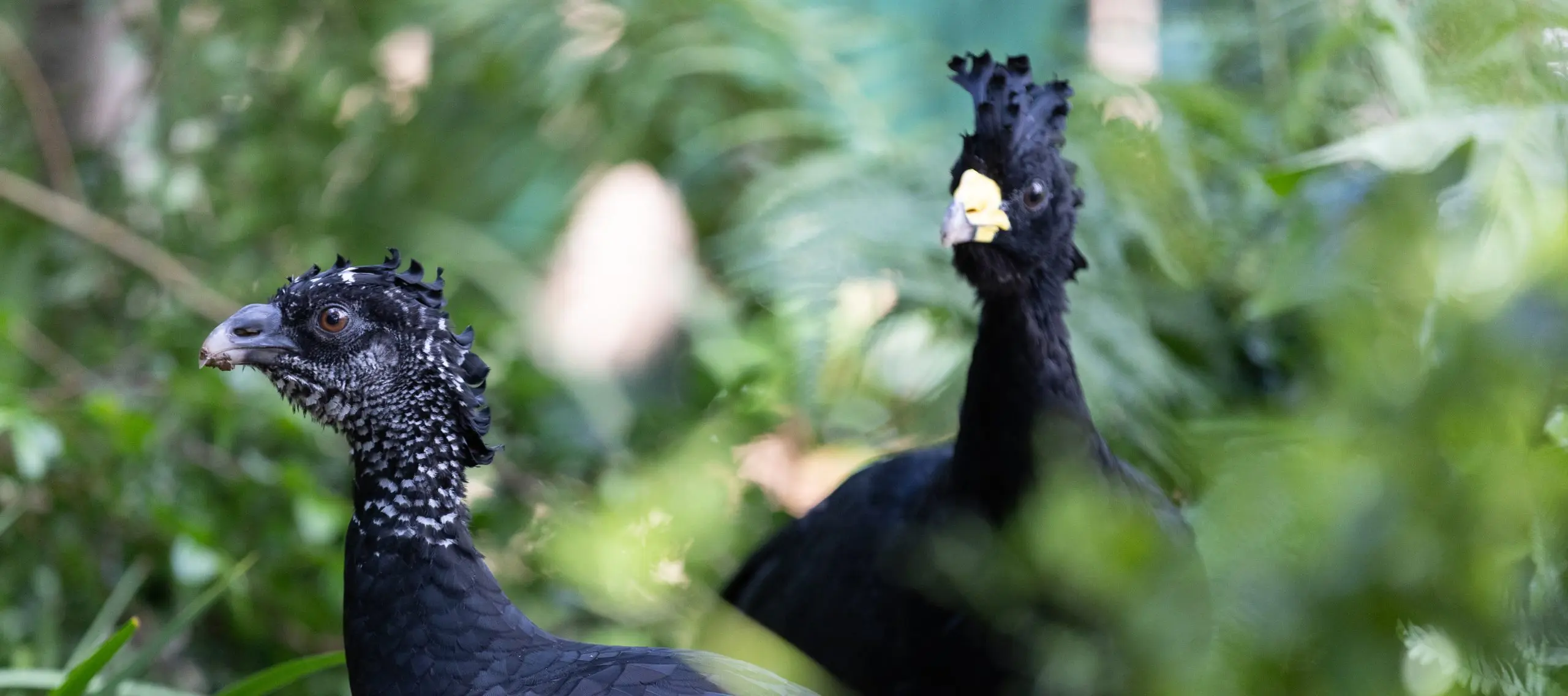
Great Curassow
Great curassows are a species of pheasant-like bird found in Central America
Species
Birds
Habitat
Rainforest
Conservation Status
Vulnerable
Great Curassow
Crax rubra
IUCN Status: Vulnerable
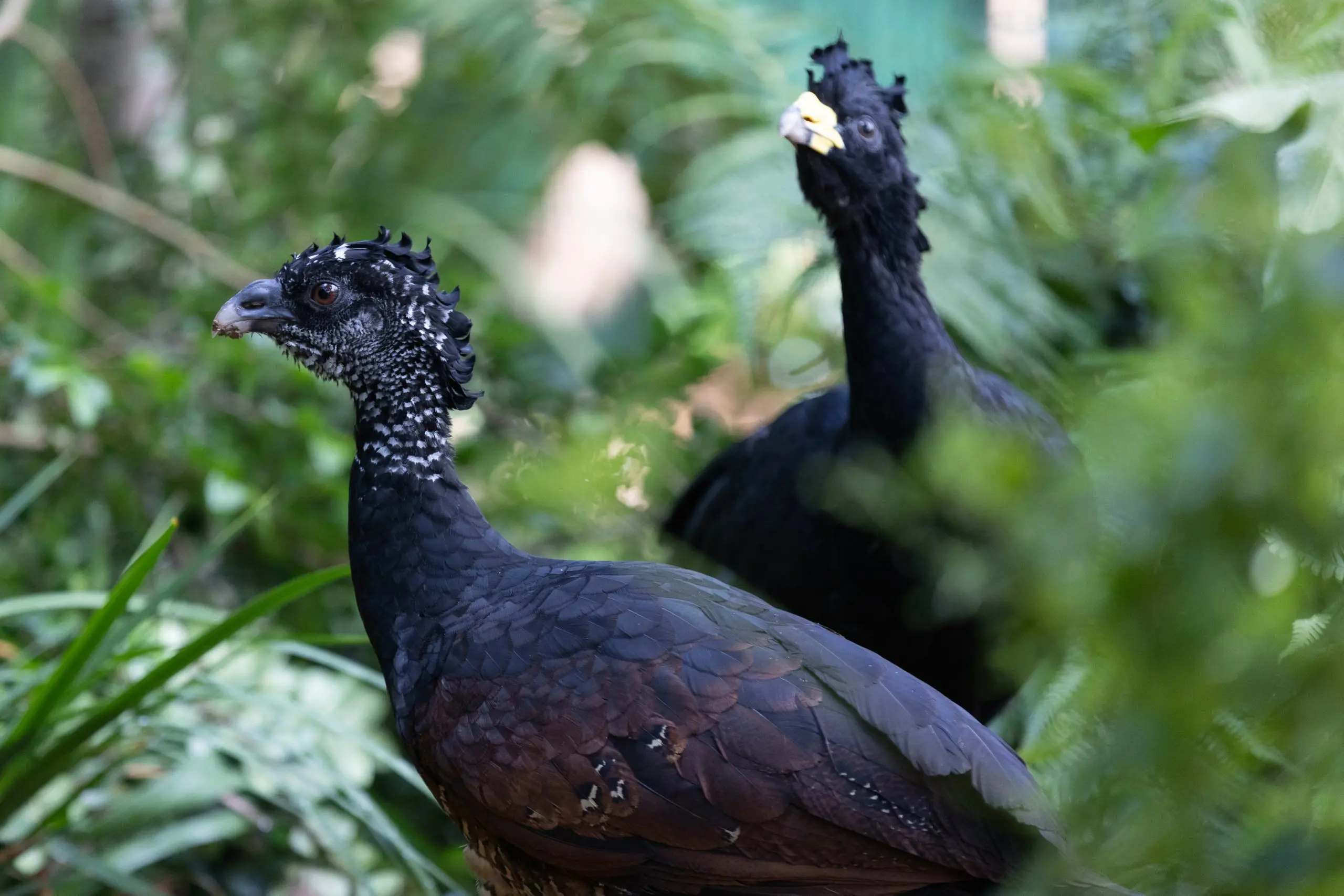
Great curassows are a species of pheasant-like bird found in Central America, as well as parts of Colombia and Ecuador. When fully grown, they stand at between 78 and 100 centimetres tall and weigh between 3 and 5 kilograms, with females typically being smaller than males.
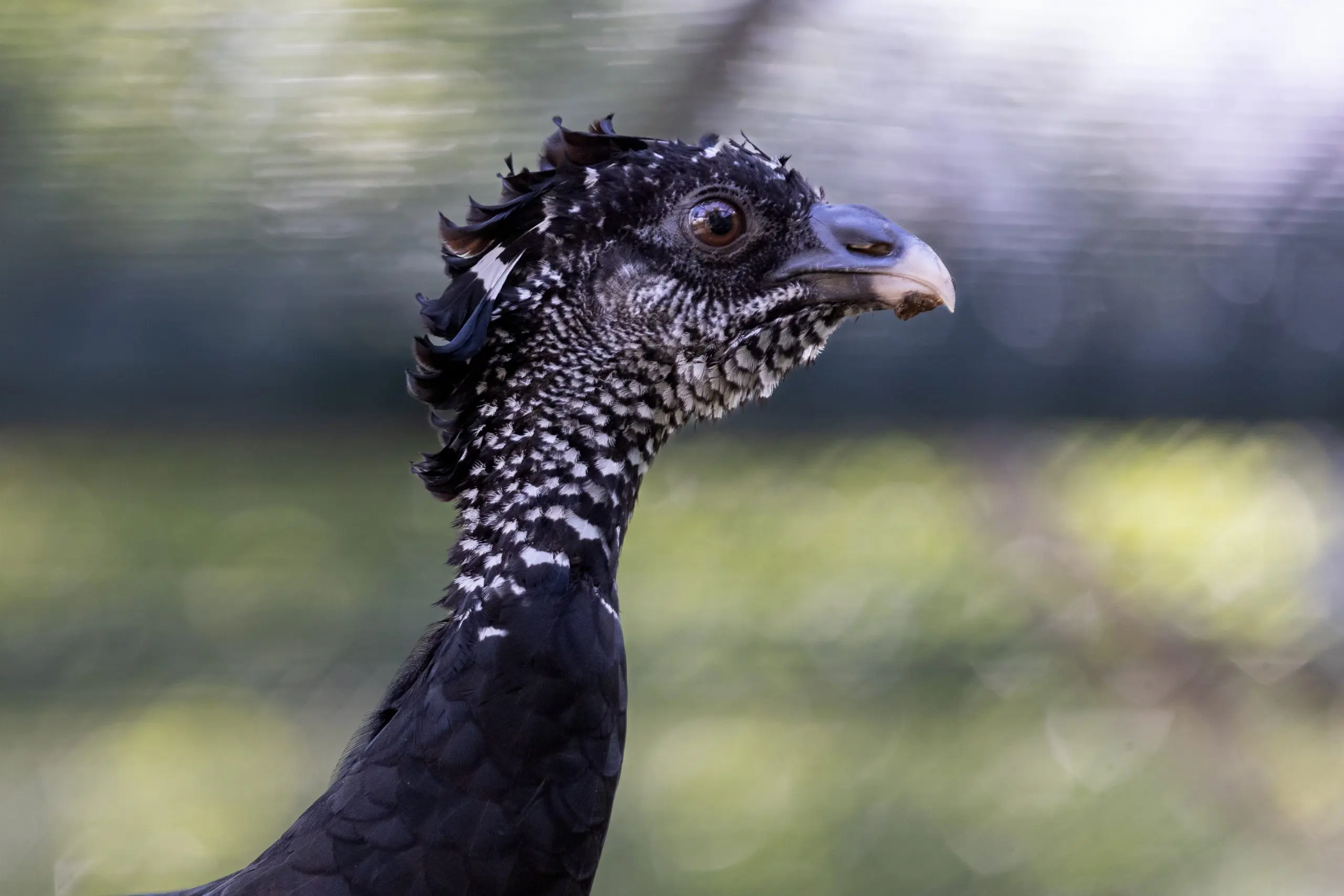
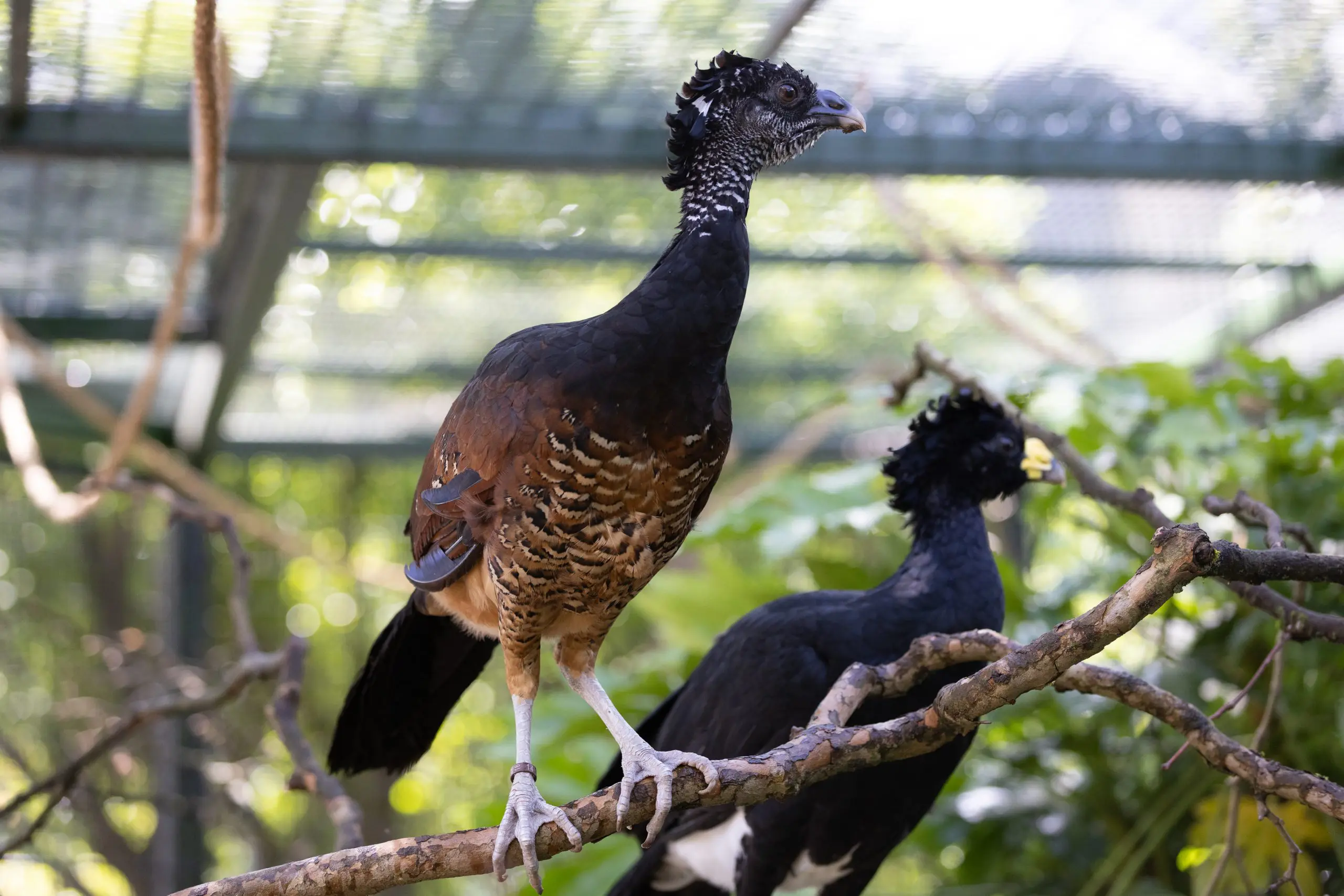
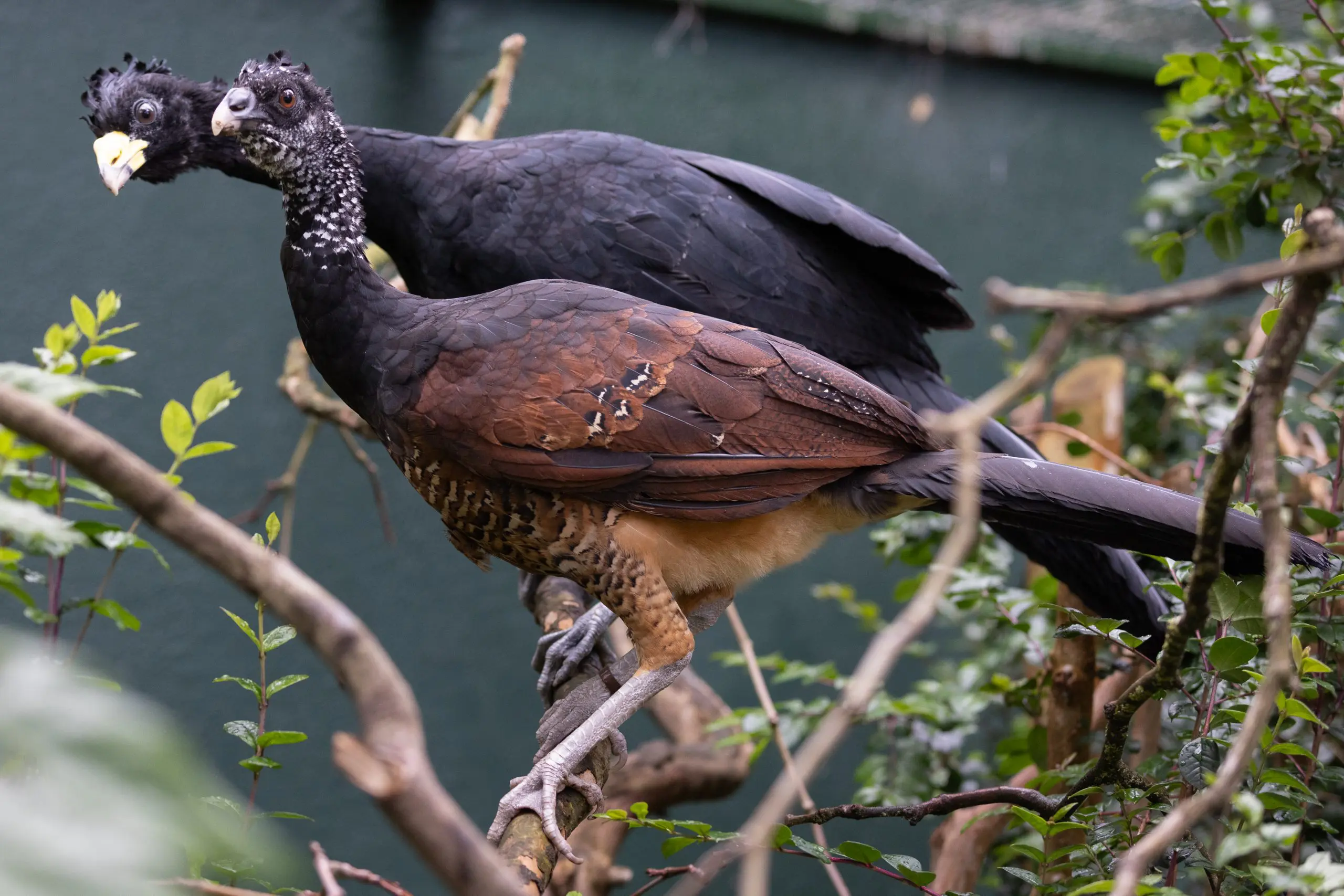
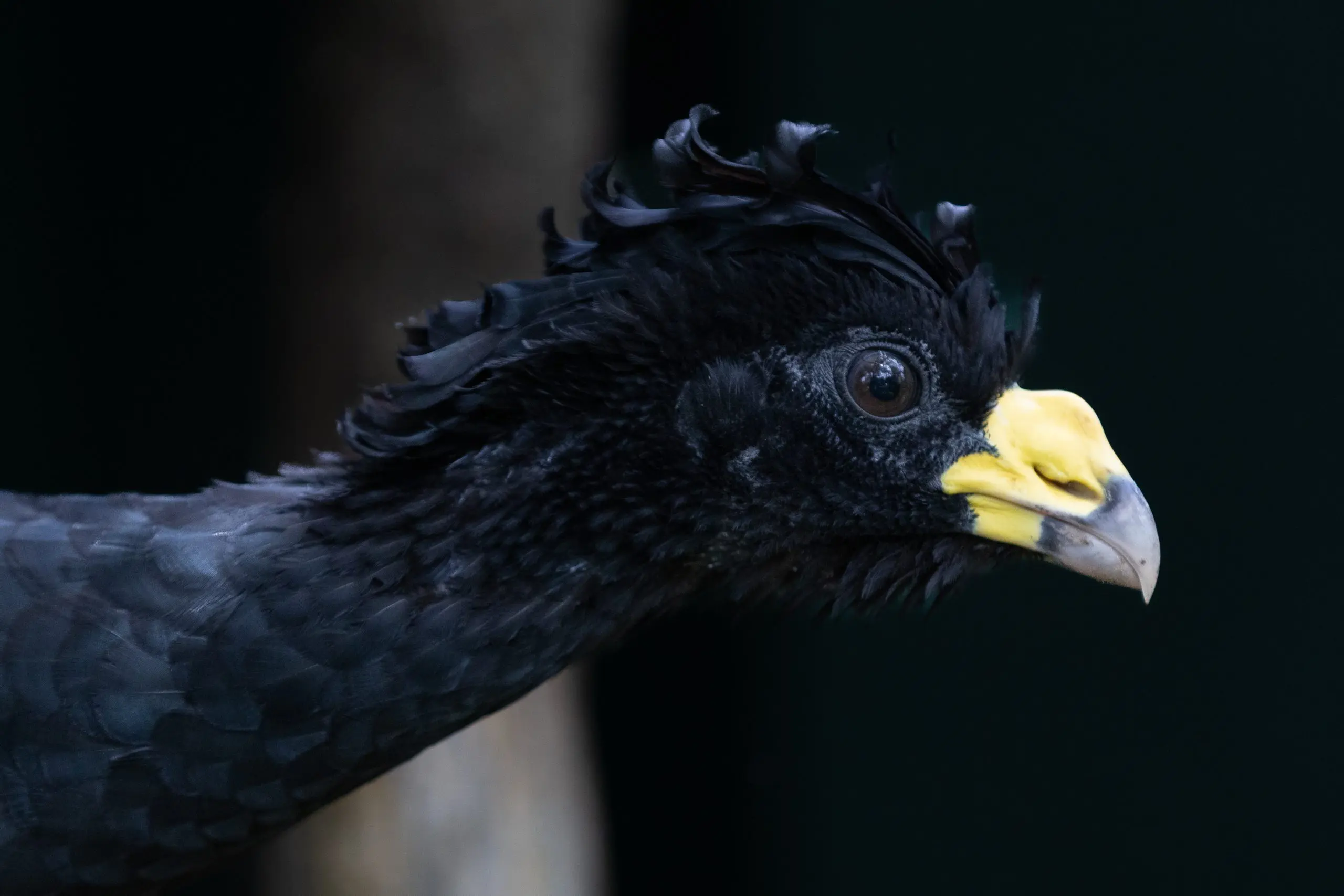
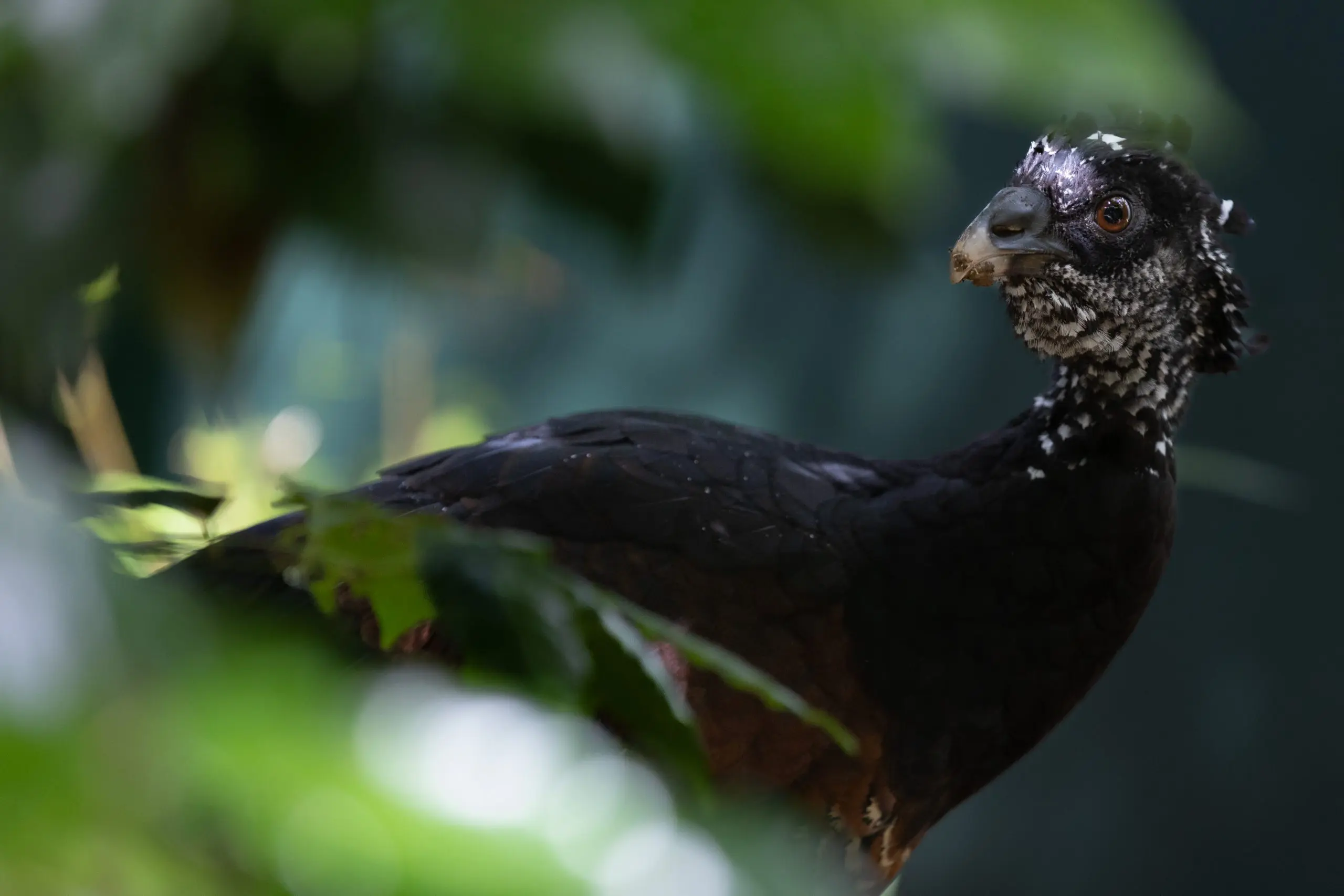
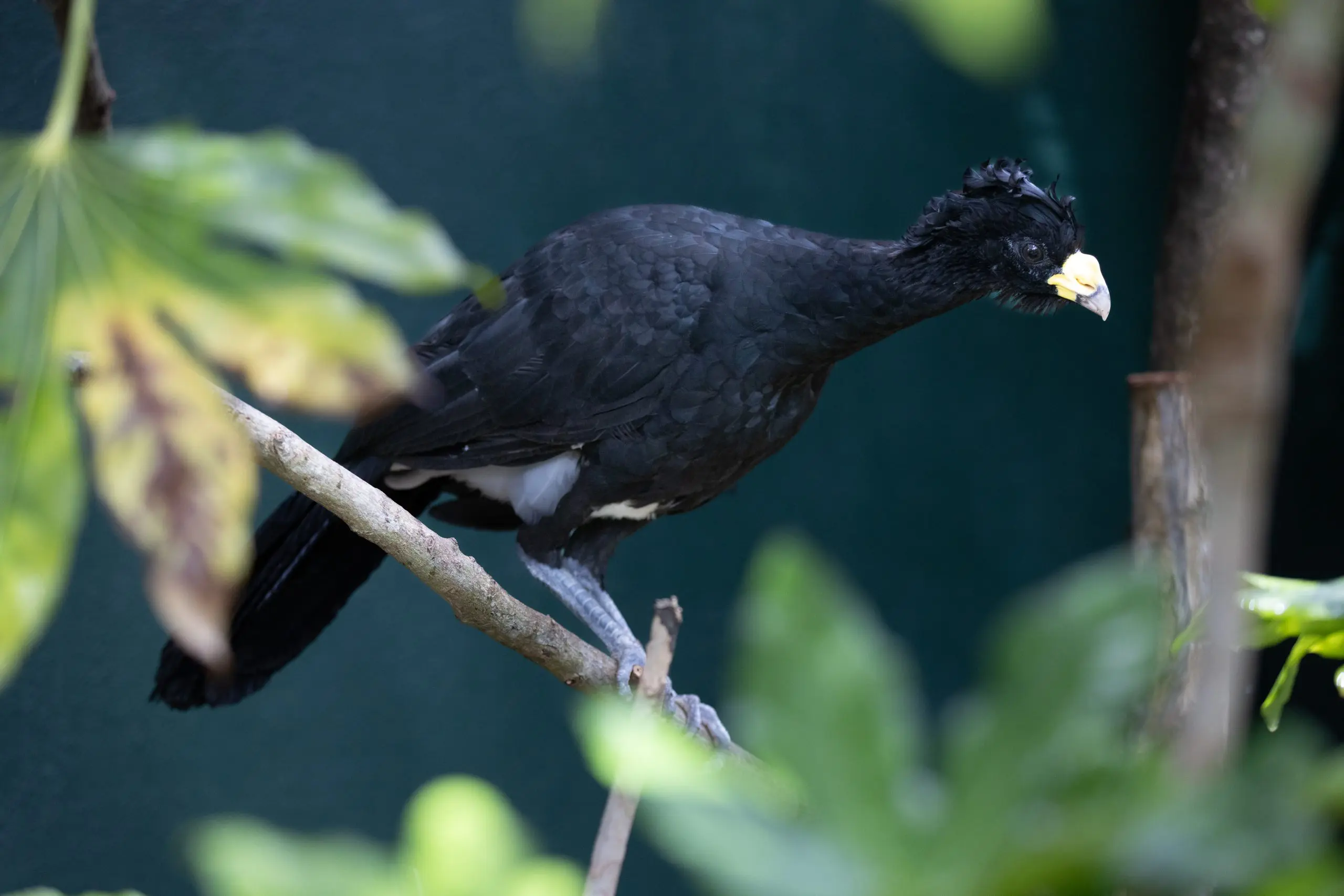
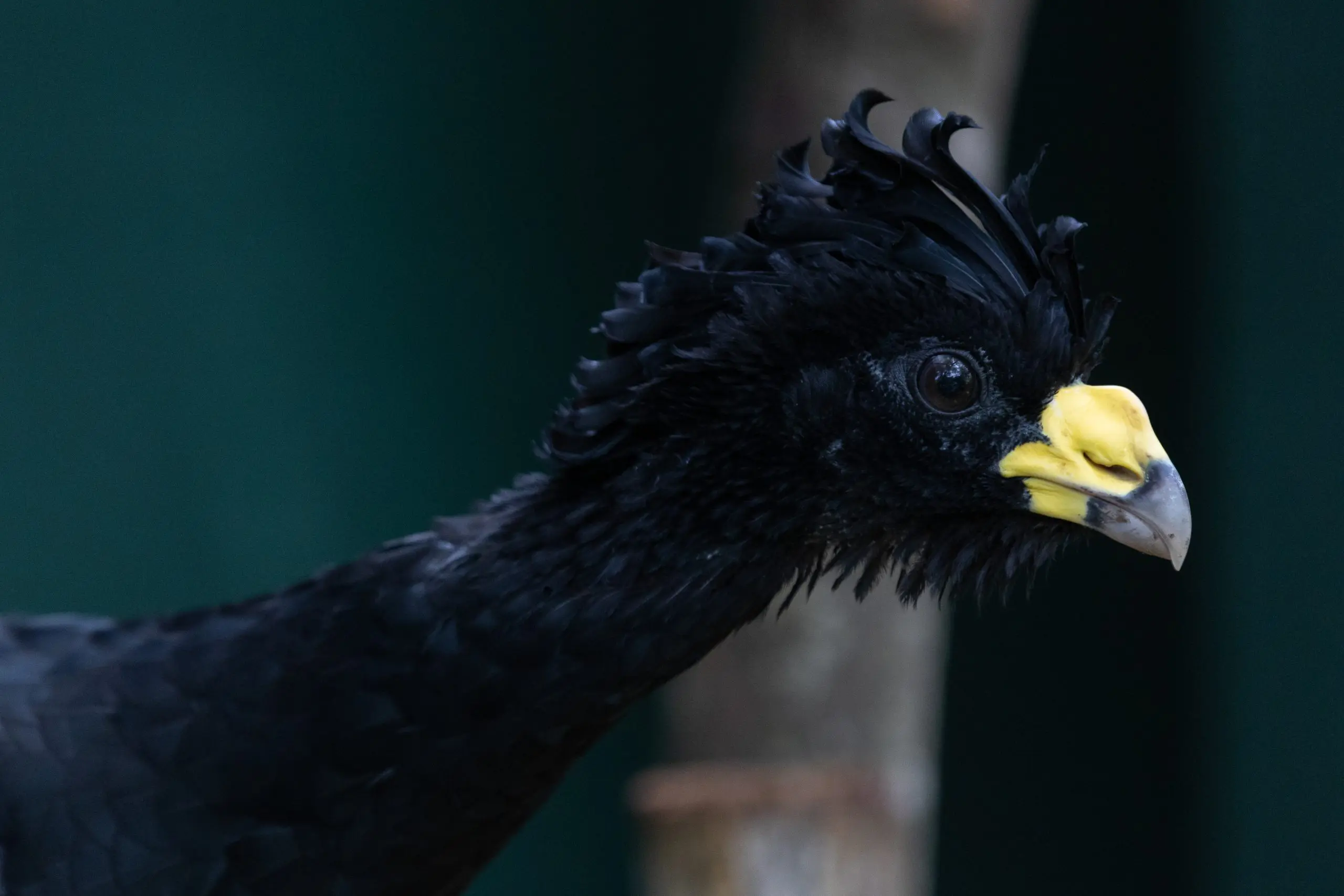
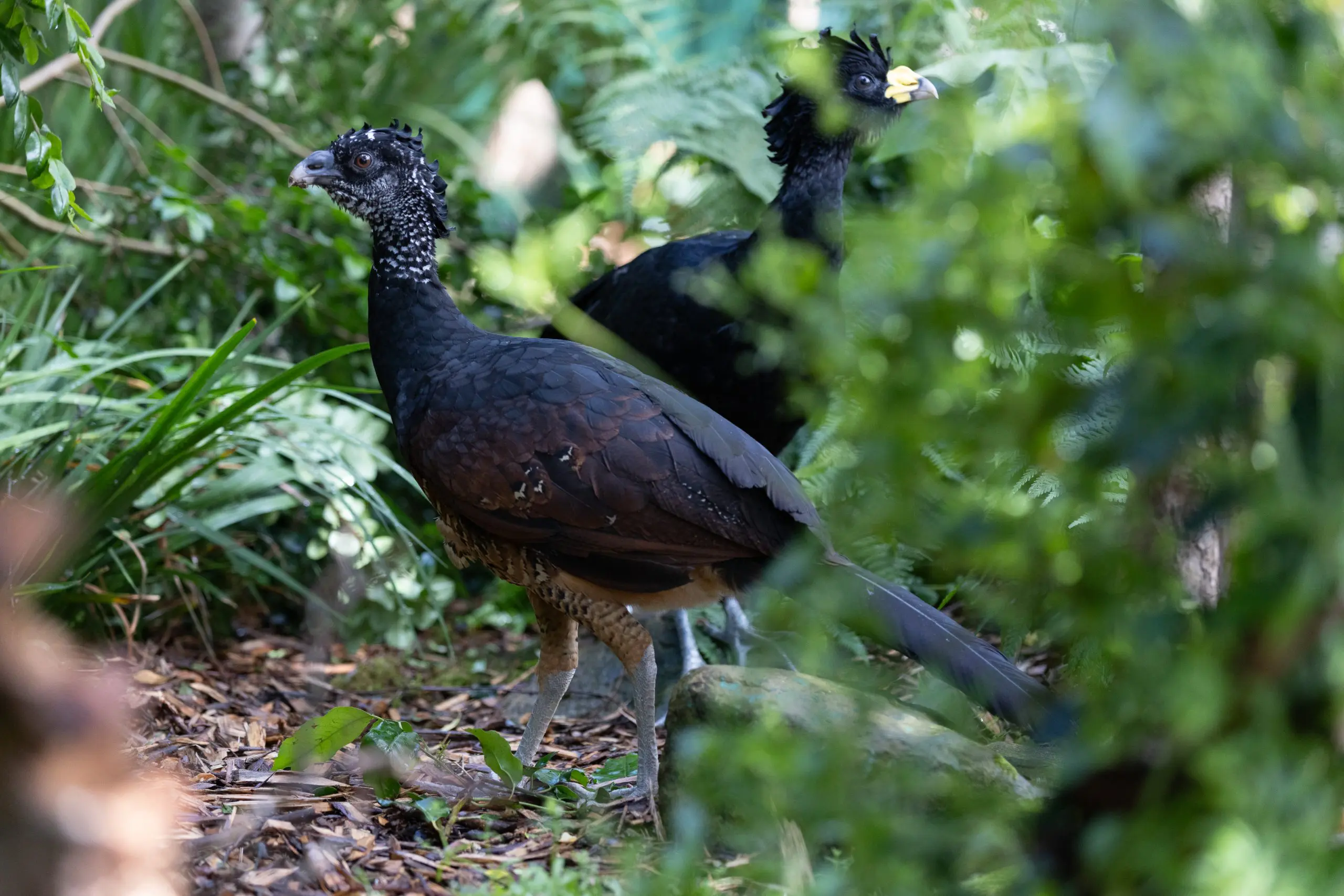
The species is sexually dimorphic, with males having black feathers, curly crest feathers, and a yellow beak. Females, meanwhile, can appear in several different colours – red, brown, or black – with a white beak. Both males and females have medium-length legs and round bodies with long tail feathers.
General Information
Zoo location
Rainforest House
Animal class
Aves
Animal order
Galliformes
Where do they live (Natural habitat)?
Great curassows are found in the lowlands of neotropical rainforests in central America and in parts of Colombia and Ecuador.
How long do they live?
In human care, great curassows have been known to live for up to 24 years.
What do they eat?
Great curassows are omnivorous, meaning they feed on both plant and animal matter. Their diet largely consists of fruits, figs, and insects. Unlike other cracid birds, they mostly feed on fallen fruits and figs, rather than plucking them directly from trees and other plants. They have also been recorded occasionally feeding on small mammals such as rodents.
Group name
There is no collective name specifically for a group of curassows, but a small group might generally be referred to as a ‘flock’.
Closest related species / sister species
Great curassows are most closely related to other birds in the family Cracidae, including guans and chachalacas.
Fun Facts!
Great Curassow
Behaviours
Great curassows are known for being rather aggressive, particularly towards humans. They have been known to leap in a fluttering flight, targeting the eyes of their aggressor.
Though they spend most of their life on the ground and move around largely by walking, they are capable of flight and will occasionally leap up into the midstory to perch on branches.
They tend to forage either alone, in pairs, or sometimes even in small groups.
Males will typically sing, making a long, drawn-out whistling noise. They also make a range of other noises, including short whistles, clucks, alarm calls, and deep booming calls.
Reproduction and Life Cycle
Great curassows are monogamous, mating for life. Males display to attract females by flashing their crests, tail, and belly feathers, accompanied by a deep booming call. Together, the pair builds a simple nest up to 5 metres off the ground, in which the female lays 2 eggs.
Each egg weighs around 200 grams. When the chicks hatch, they are precocial, feathered, and almost immediately mobile. In human care, great curassows have been known to live for up to 24 years.
Great curassows are also known to breed with other curassow species – the blue-billed and black curassows. These matings produce fertile, hybrid offspring.
Adaptations
When threatened by a potential predator, particularly when offspring are nearby, adult curassows will partake in a distraction display.
This involves them faking a broken wing to catch the attention of the predator, allowing the chicks to escape before the adult flies away themselves.
Conservation
Vulnerable
The great curassow is listed as ‘Vulnerable’ on the IUCN Red List of Endangered Species.
Current population estimate
It is estimated that there are between 40,000 and 50,000 individuals in the wild.
Threats
They are largely threatened by habitat loss and hunting for food.
Frequently Asked Questions
Great curassow are found in the neotropical rainforests of Central America and parts of Ecuador and Colombia.
Great curassow have been known to live up to 24 years in human care!
Great curassow are omnivores, meaning they eat both plant and animal matter. Their diet largely consists of fruits, figs, and insects. They have also been recording eating small mammals such as rodents.
A precocial species is one whose young are relatively mature and mobile soon after they are born. The chicks of great curassow, chickens, and many duck species are precocial, meaning that the chicks are moving and feeding themselves quite quickly after they hatch.
The great curassow can be found in the Rainforest House at Dublin Zoo, living alongside the Venezuelan howler monkeys.
