Yellow-headed gecko
Yellow-headed geckos are a small species of gecko native to warmer parts of South America as well as several islands in the Caribbean.
Species
Reptiles
Habitat
Forest
Diet
Insectivore
Conservation Status
Least Concern
Yellow-headed gecko
Gonatodes albogularis
Irish Name: Geiceo ceannbhuí
IUCN Status: Least Concern
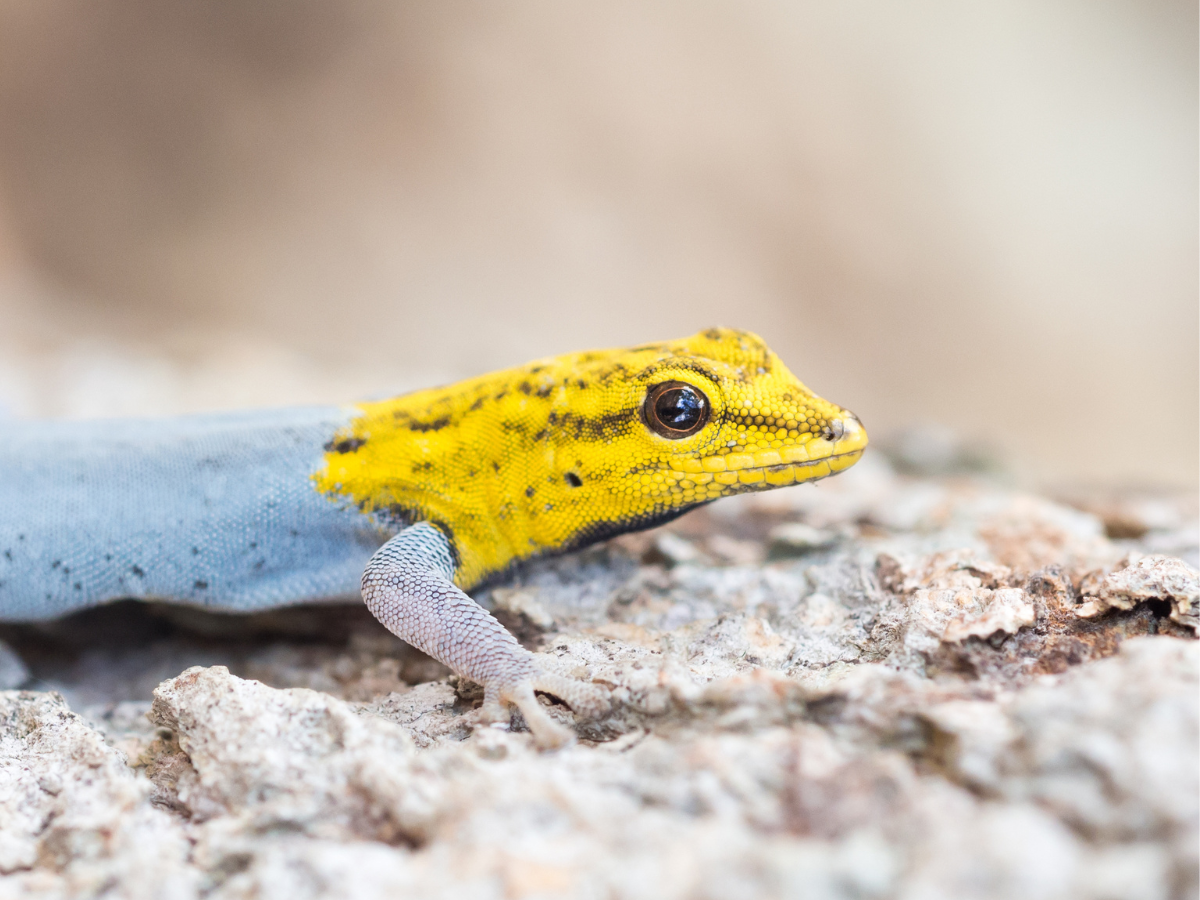
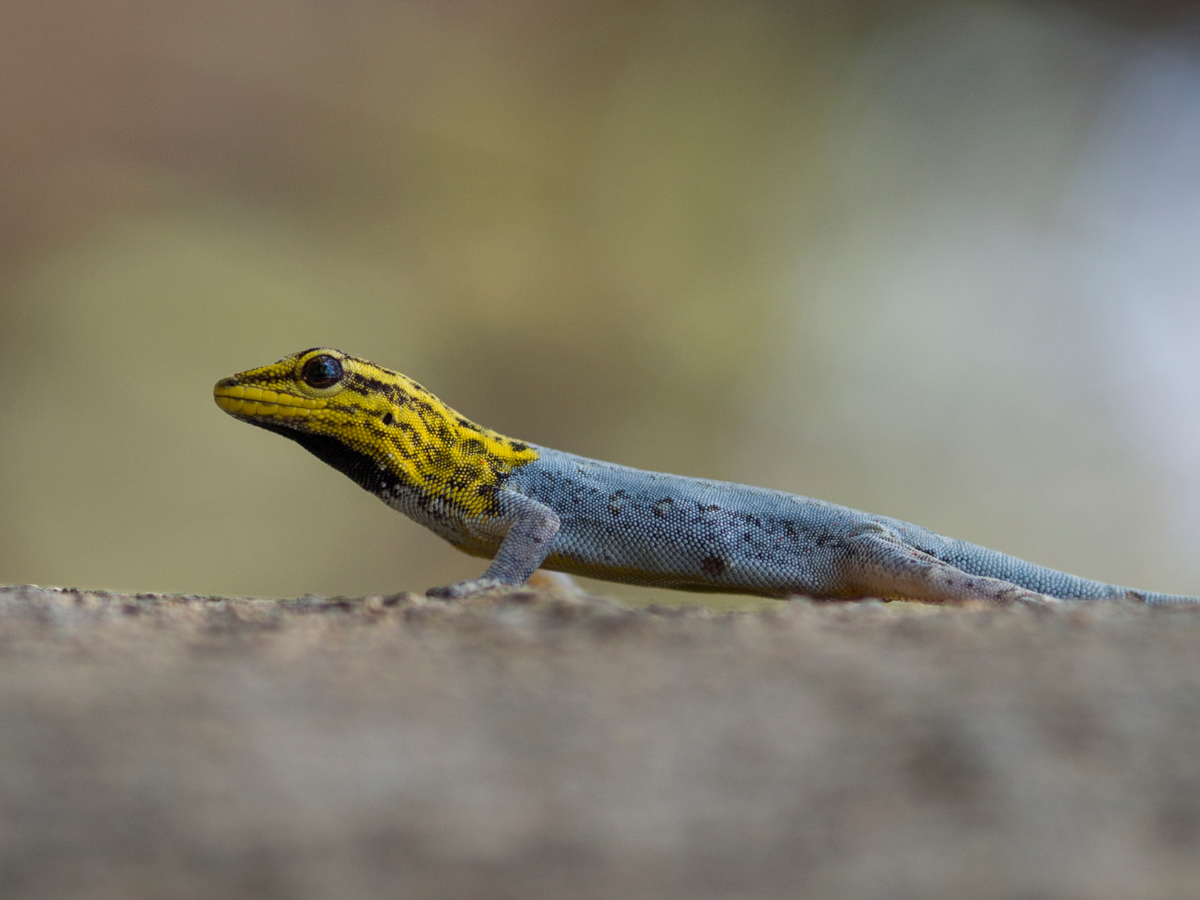
Yellow-headed geckos are a small species of gecko native to warmer parts of South America as well as several islands in the Caribbean. The species’ name is inspired by the colouration of the males, who have a blueish-grey body and bright yellow to orange head.
The females, meanwhile, are typically a duller grey-brown colour. They are a small species of gecko, growing to between 7 and 9 centimetres in length and weighing less than 2 grams at adult size.
General Information
Zoo location
The yellow-headed gecko can be found in Rainforest house at Dublin Zoo
Animal class
Reptilia
Animal order
Squamata
Where do they live (Natural habitat)?
Yellow-headed geckos appear to prefer dry forests and forest edges. They are also commonly found in human-built structures, including shops and peoples’ homes.
How long do they live?
Yellow-headed geckos typically live for between 6 and 8 years but have been known to live for over 10 years in human care.
What do they eat?
Yellow-headed geckos are insectivores, meaning they primarily feed on insects and other small invertebrates.
Group name
While no collective name exists for geckos, the collective name for a group of lizards is a ‘lounge’.
Closest related species / sister species
Yellow-headed geckos are mostly closely related to other geckos in the genus Gonatodes, also known as the New-world dwarf geckos. There are 34 species of gecko in this genus.
Fun Facts!
Yellow-headed gecko
Behaviours
Yellow-headed geckos are diurnal but prefer to avoid being out in direct sunlight to avoid detection by predators.
Males have been known to be highly territorial and aggressive towards other males of their species as well as some predators.
Reproduction and Life Cycle
Yellow-headed geckos can lay eggs multiple times throughout the year, with females laying a single egg each time. Eggs are typically laid in communal nests in tree trunks, branches, under rocks, and in soil litter. The eggs typically hatch within 2 to 4 months of being laid, with the offspring resembling smaller versions of adult females.
Both males and females reach full maturity at 6 months of age.
Yellow-headed geckos typically live for between 6 and 8 years but have been known to live for over 10 years in human care.
Adaptations
When threatened, yellow-headed geckos can ‘release’ their tail to distract predators such as birds and snakes. The tail will then fully regrow in around 2 months.
Yellow-headed geckos have excellent vision that is highly sensitive to colour and light. This is thought to allow them to best assess other individuals for mating viability, with females appearing to prefer more brightly coloured males.
Conservation
Least Concern
The yellow-headed gecko is listed as ‘Least Concern’ on the IUCN Red List of Endangered Species due to its high abundance.
Threats
They are collected from the wild, particularly in Central America, for the pet trade, but this is not currently thought to be having any major impact on wild populations.
Frequently Asked Questions
Yellow-headed geckos are found throughout Central and South America, as well as on several Caribbean islands. They are found largely in dry forests and among human settlements.
Yellow-headed geckos typically live for 6 to 8 years in the wild, but have been known to live for over 10 years in human care.
No, yellow-headed geckos are quite small, growing only to between 7 and 9 centimetres in length at full maturity. They are part of a genus known as the New-world dwarf geckos.
Dublin Zoo is also home to the Madagascar giant day gecko and turquoise dwarf gecko.
Sexual dimorphism is when the two sexes of a species look quite different. For example, male yellow-headed geckos have a blueish-grey body and bright yellow to orange head, while females are typically grey-brown all over.