Golden lion tamarin
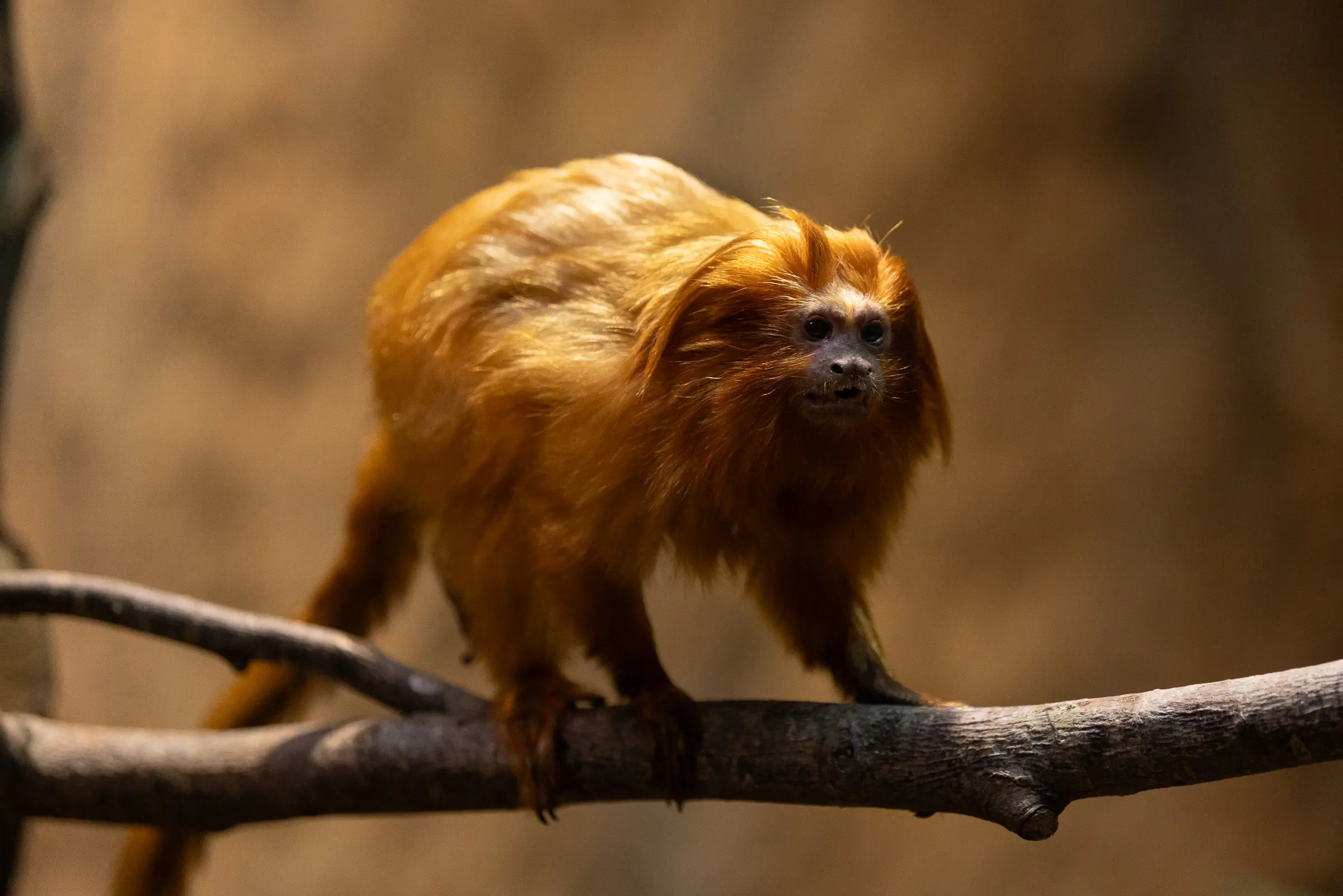
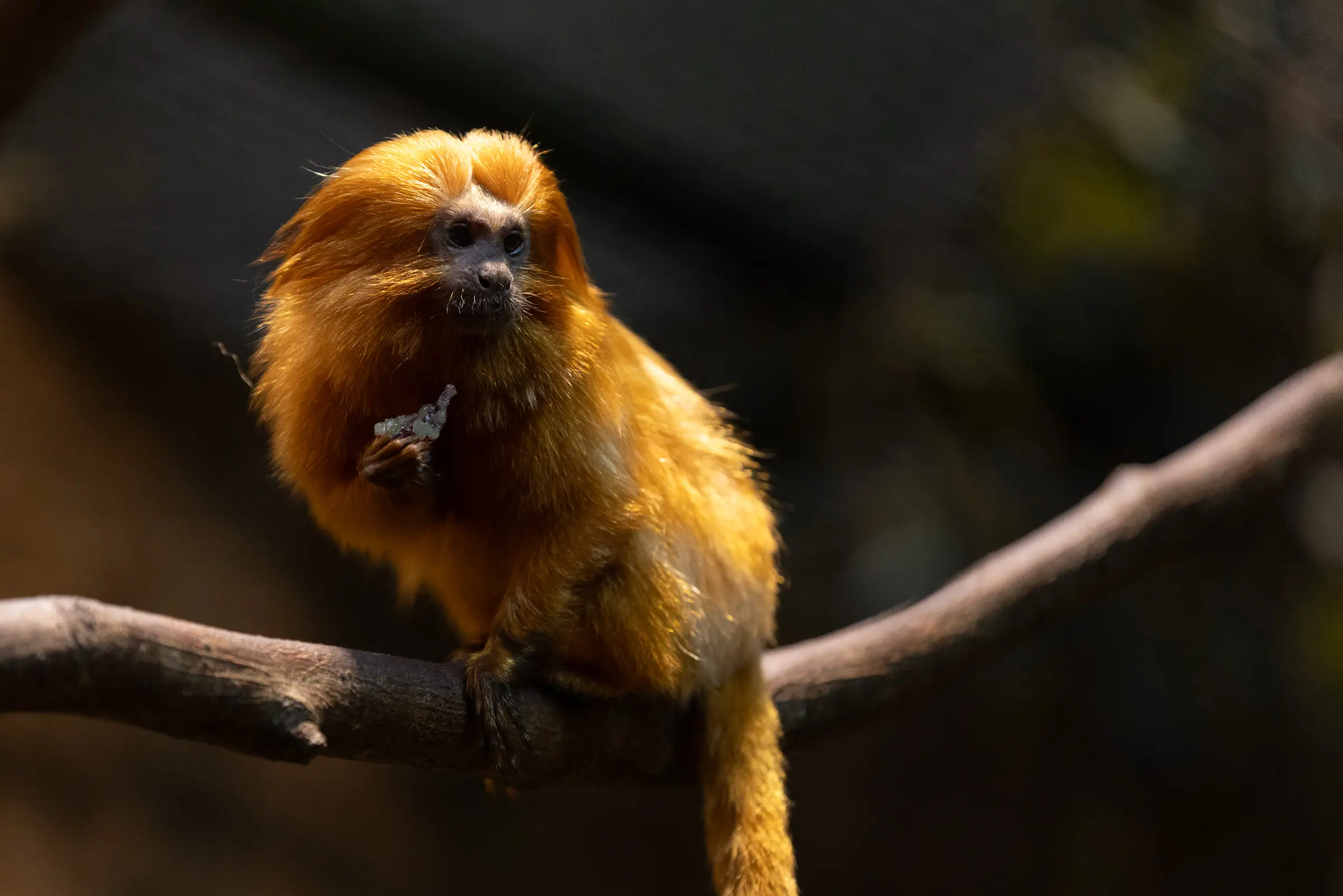
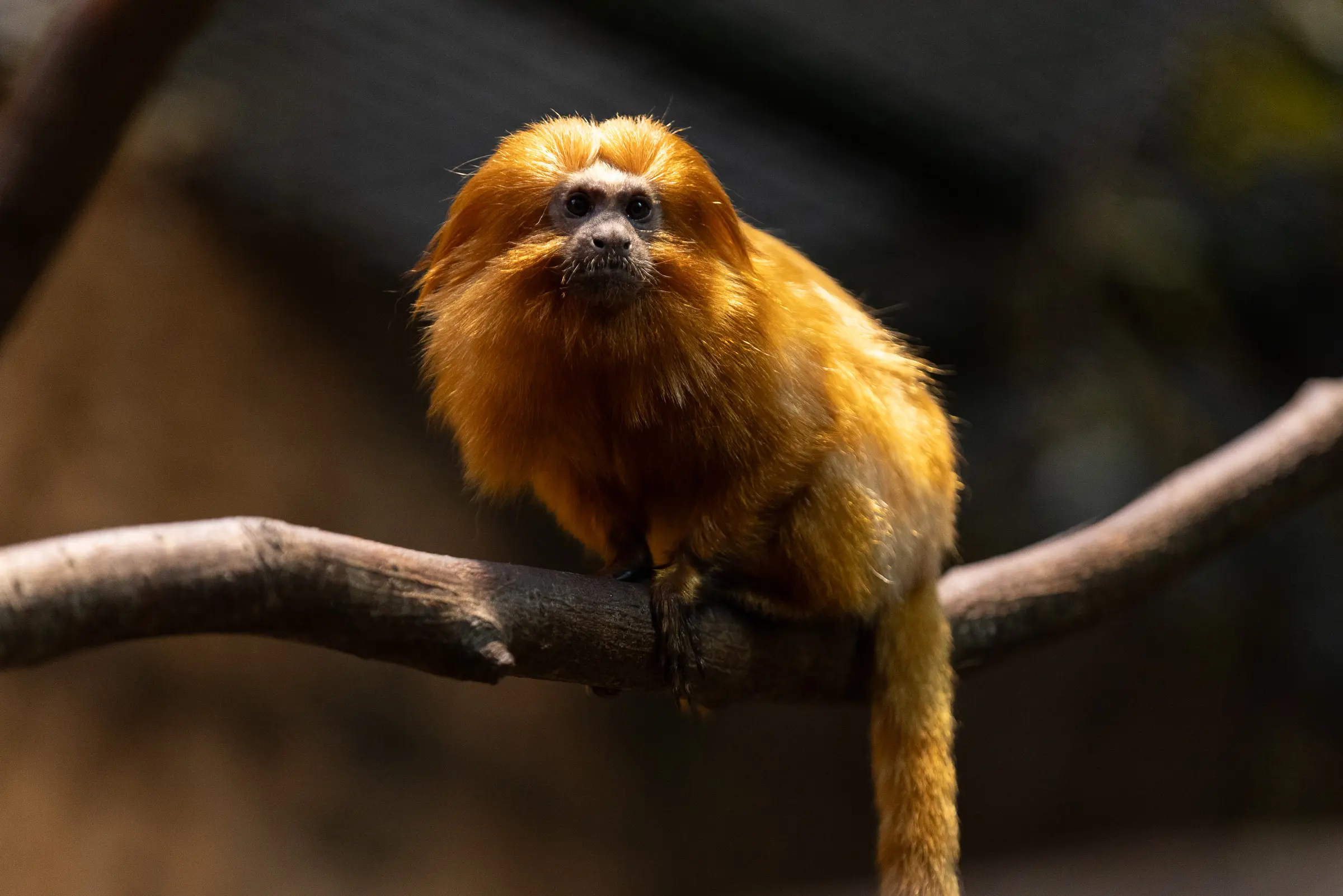
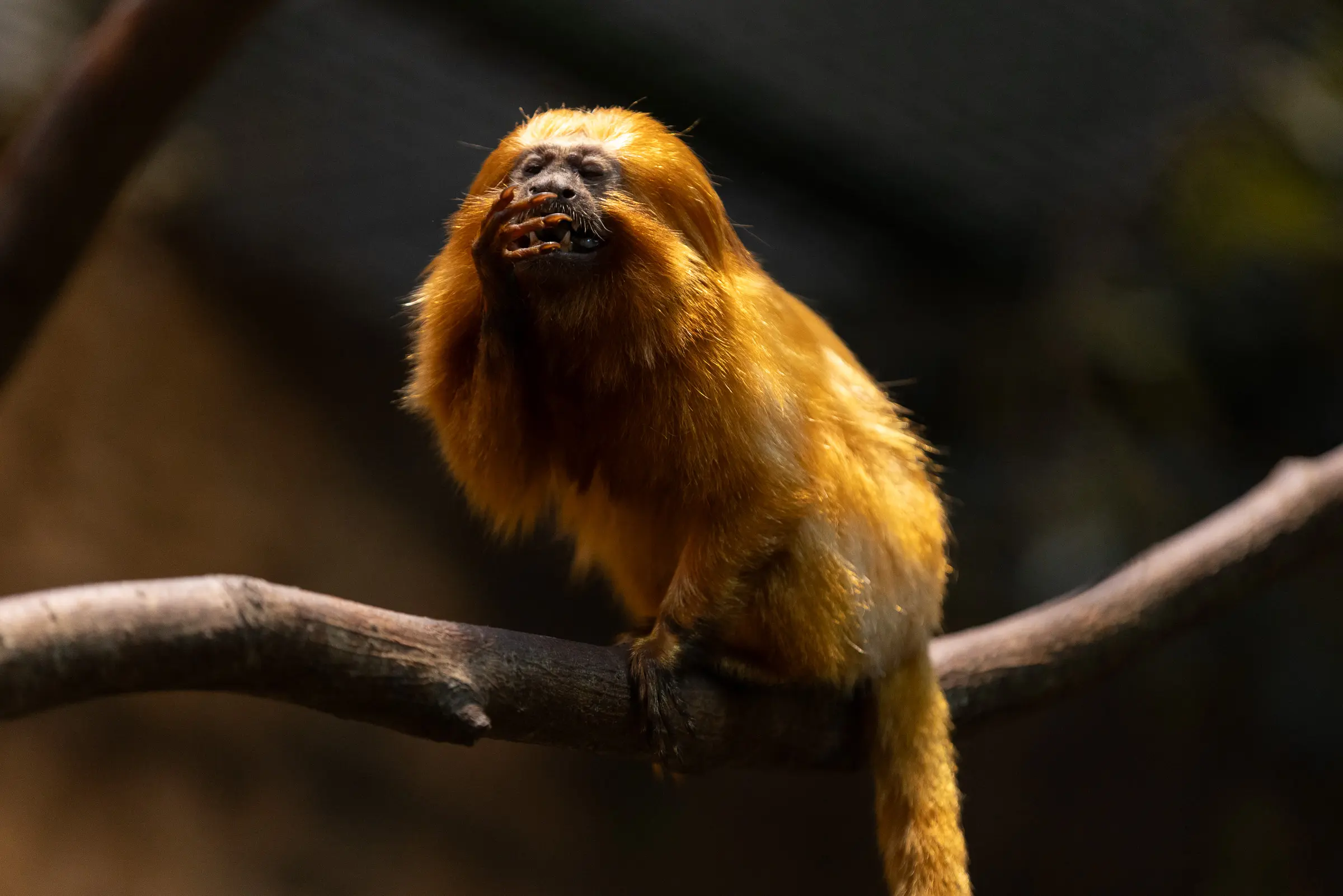
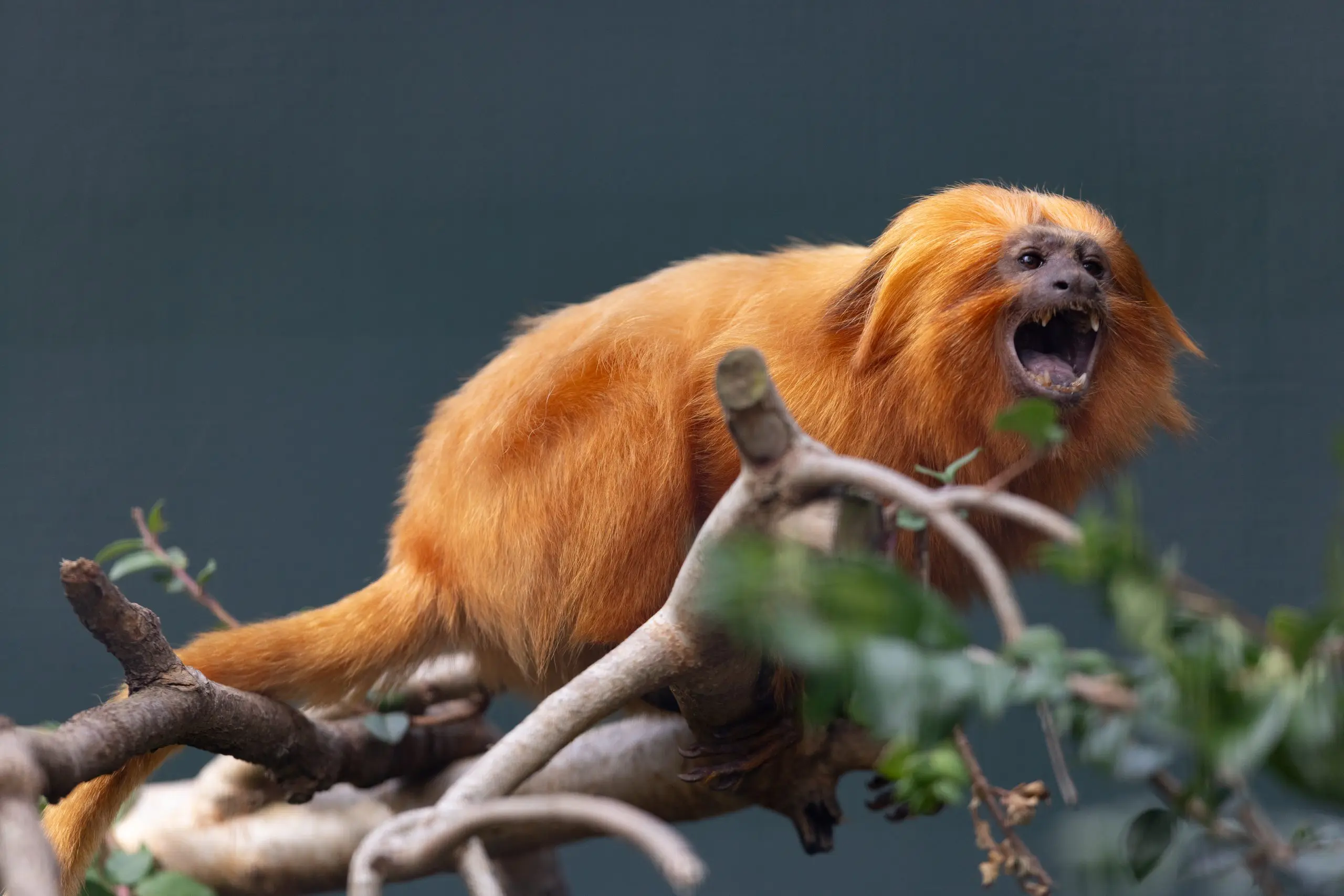
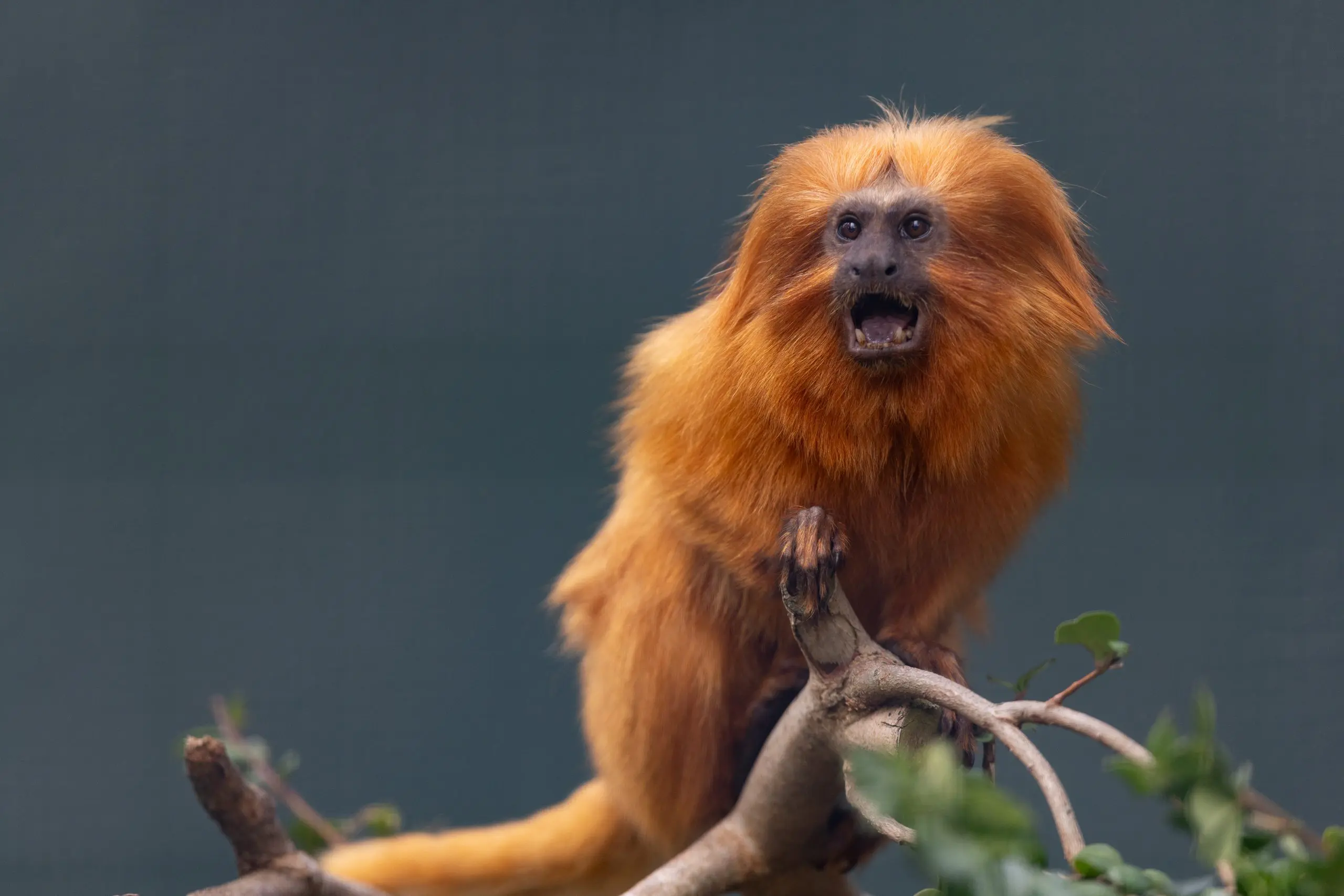
Golden lion tamarins are covered in bright orange fur, with extra-long hair around the ears and sides of the face, giving it a mane for which it gets its name.
Species
Mammals
Habitat
Forest
Diet
Omnivore
Conservation Status
Endangered
Golden lion tamarin
Leontopithecus rosalia
Irish Name: Tamairín leonta órga
IUCN Status: Endangered
Golden lion tamarins are a small species of monkey that are endemic to the Atlantic coastal forests of Brazil, almost entirely within the state of Rio de Janeiro.
They are covered in bright orange fur, with extra-long hair around the ears and sides of the face, giving it a mane for which it gets its name. At full maturity, they grow to around 26 centimetres in length and weigh just over 600 grams. Males and females are practically identical. Their faces are hairless and greyish brown in colour.
General Information
Zoo location
The golden lion tamarins can be found in the Rainforest House at Dublin Zoo
Animal class
Mammalia
Animal order
Primates
Where do they live (Natural habitat)?
Cotton-top tamarins are currently only found in the tropical and semi-dry forests of northwest Colombia. They spend most of their lives in the middle layer of the forest canopy, near the tops of trees.
How long do they live?
Golden lion tamarins typically live for between 10 and 15 years in the wild but have been known to live for over 20 years in human care.
What do they eat?
Like many small monkeys, golden lion tamarins are omnivores. Fruits and their seeds make up around 80% of their plant diet, but they have also been observed feeding on nectar and tree gum, particularly during cooler periods. They also feed on a variety of smaller animals, including frogs, lizards, snakes, small birds, grasshoppers, beetles, stick insects, ants, and eggs.
Group name
While there is no specific collective noun for tamarins, a group of monkeys is typically called a ‘troop’.
Closest related species / sister species
Golden lion tamarins are most closely related to other primates in the family Callitrichidae which includes other tamarins and marmosets.
Fun Facts!
Golden lion tamarins
Behaviours
Like many small monkey species, golden lion tamarins often live in large social groups, typically consisting of 2 to 8 members. There is usually a single breeding pair, though occasionally a breeding male or female may have more than one partner. Other members of the group typically include sub-adults, juveniles, and infants.
Golden lion tamarins communicate through a mixture of visuals, smells, and sounds. A study conducted in 2002 identified between 15 and 21 different vocalisations which were grouped into 6 categories – tonal, atonal, clucks, trills, combination calls, and multisyllable calls.
Golden lion tamarins have scent glands which allow other tamarins to identify them as an individual as well as determine sex, dominance status, and female reproductive status.
They have also been observed using and modifying tools. They have been primarily seen using sticks for probing and prying tree bark to find insects to feed on.
Golden lion tamarins are diurnal, like many monkeys, but spend between 13 and 14 hours resting in sleeping sites. These sleeping sites are typically naturally occurring holes in trees, with the tamarins using multiple different sites throughout their lives.
Groups of golden lion tamarins typically travel between 1.3 and 2.1 kilometres a day in search of food and resting spots.
Reproduction and Life Cycle
Golden lion tamarins are largely monogamous, though dominant males or females may have multiple partners in larger groups.
Reproduction is seasonal, usually aligned with the end of the rainy season between late March and mid-June, with births happening after a 6-month gestation between September and February during the rainy season. Golden lion tamarins typically give birth to twins. They exhibit cooperative parenting, with both males and females providing care to the young. Males will often carry infants on their backs in between feedings.
The infants are completely dependent on the adults, particularly their mother, for the first 4 weeks of their life. After that, they begin to explore their surroundings and rely on other members of the group more. They reach their juvenile stage at 17 weeks old and become reproductively mature between 28 and 30 months old, with males reaching maturity slightly earlier than females.
Golden lion tamarins typically live for between 10 and 15 years in the wild but have been known to live for over 20 years in human care.
Adaptations
Golden lion tamarins have claw-like fingernails giving them better grip on the bark of trees for climbing.
Conservation
Critically Endangered
Golden lion tamarins are listed as ‘Endangered’ on the IUCN Red List of Endangered Species.
Population
As of 2023, the wild population is estimated at around 4,600 individuals.
The population was largely in decline between the 16th and 20th centuries, with the wild population estimated to have been anywhere between 100 and 600 individuals in the 1970s. Between 1980 and 2000, over 140 zoo-bred golden lion tamarins were released into the wild.
Threats
Golden lion tamarins are threatened by the illegal pet trade, as well as habitat loss because of deforestation for timber, agricultural expansion, and urban development. The isolated nature of their range puts them at greater risk of going extinct.
Though the species has been recovering well in the 21st century, an unforeseen yellow fever epidemic in 2018 reduced the population from 3,600 to 2,500. Vaccination programmes have since been put in place to protect the species.
Frequently Asked Questions
Golden lion tamarins are endemic to the Atlantic coastal forests of Brazil, almost entirely within the state of Rio de Janeiro.
Golden lion tamarins can live for 10 to 15 years in the wild and have been known to live for over 20 years in human care.
Golden lion tamarins are omnivores. They feed on fruits, seeds, tree sap, small frogs, birds, lizards, eggs, and a variety of invertebrates.
Golden lion tamarins are listed as ‘Endangered’ on the IUCN Red List of Endangered Species. They are threatened by disease, habitat loss, and the illegal pet trade. Despite this, their numbers have been increasing throughout the 21st century and now number around 4,600 in the wild.
At a whopping 26 centimetres long and 600 grams in weigh, golden lion tamarins are the largest species of Callitrichidae monkey.
No, golden lion tamarins cannot hold on to things with their tail. Their tail is used purely for balance as they climb, run, and leap through the treetops.
The golden lion tamarins can be found in the Rainforest House at Dublin Zoo alongside several other monkey species, the great curassow, sloths, and leafcutter ants.