Giant anteater
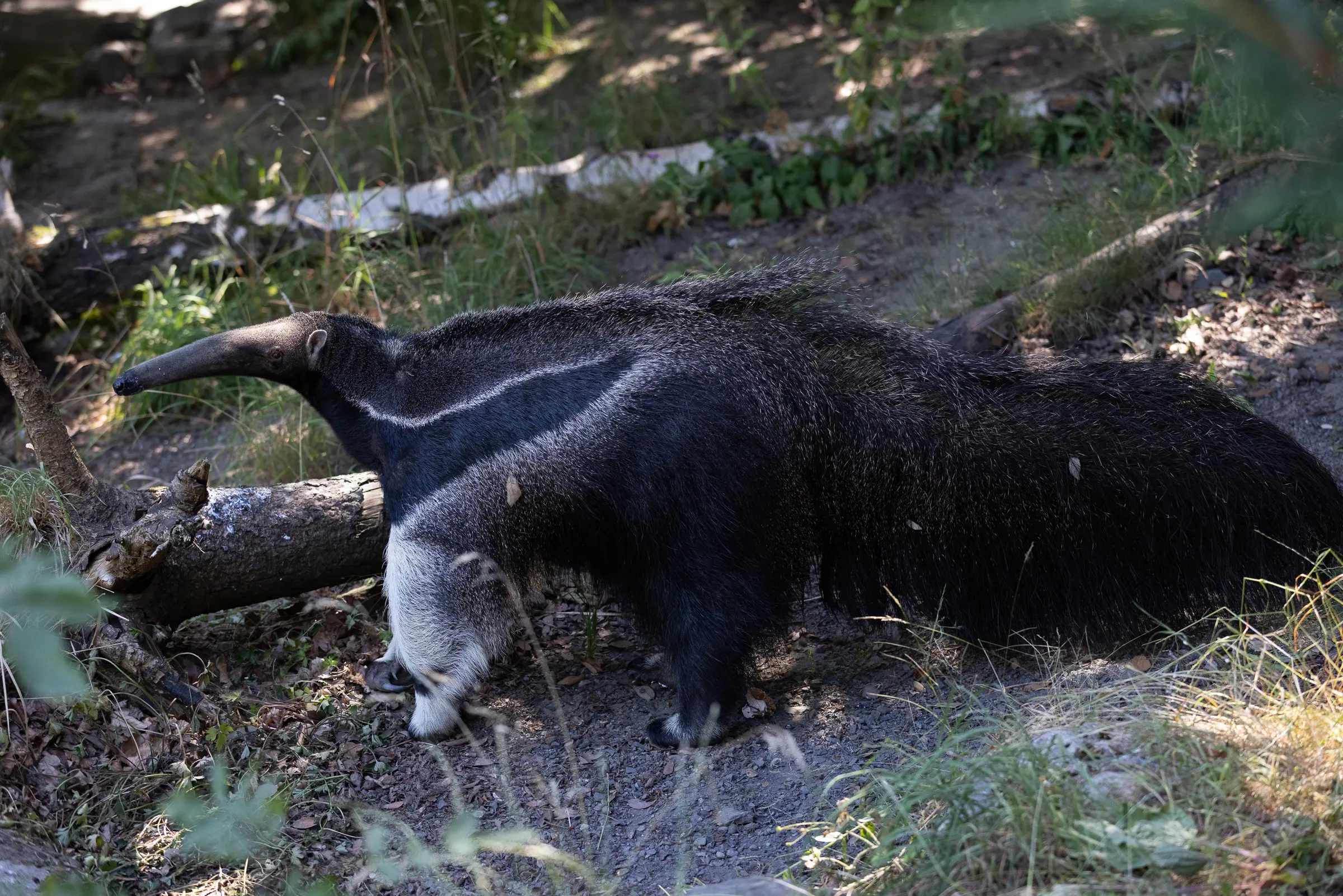
Giant anteaters are the largest of the four anteater species
Species
Mammals
Habitat
Grassland
Diet
Insectivore
Conservation Status
Vulnerable
Giant anteater
Giant anteater
Myrmecophaga tridactyla
Irish Name: Arcán talún mhór
IUCN Status: Vulnerable
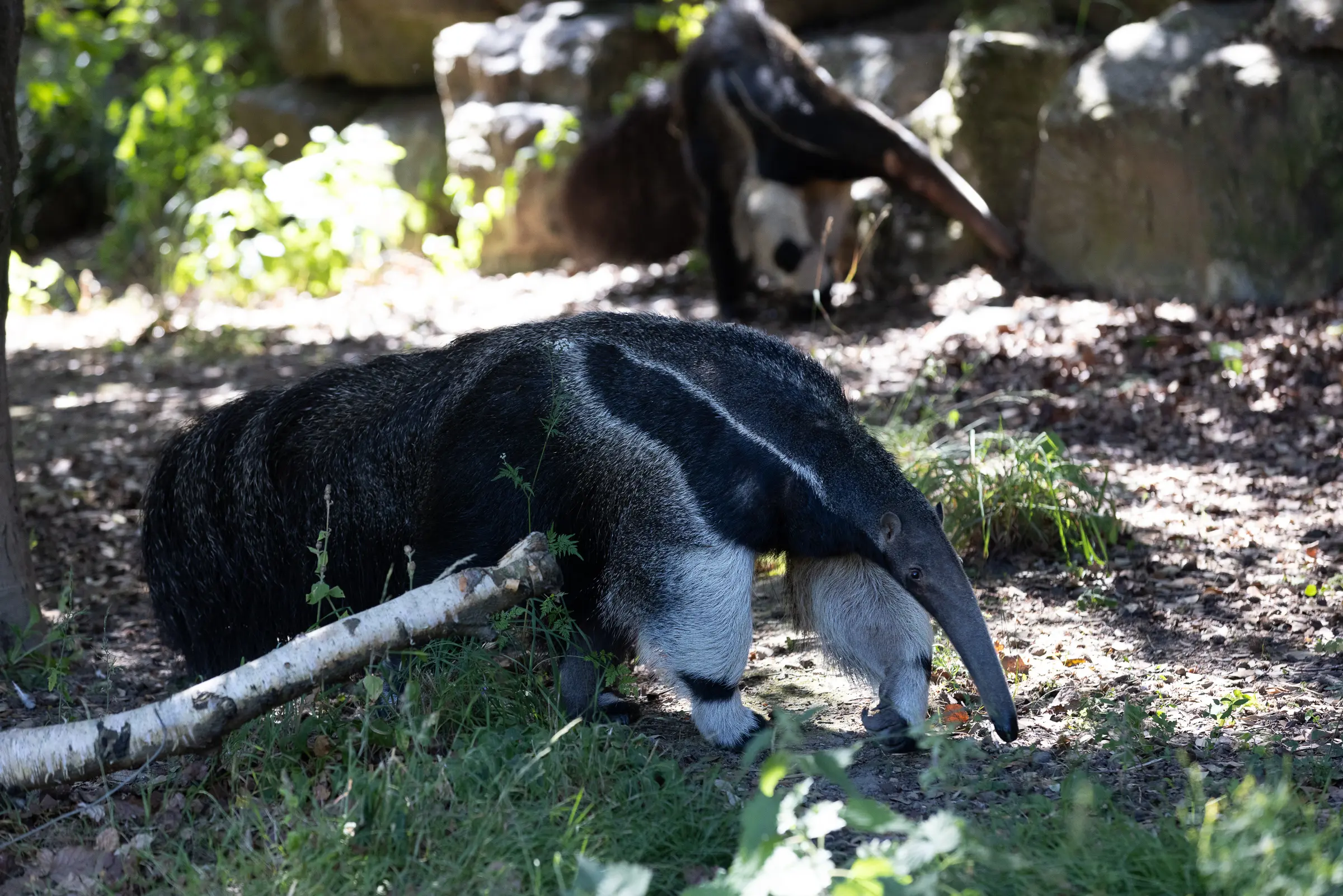
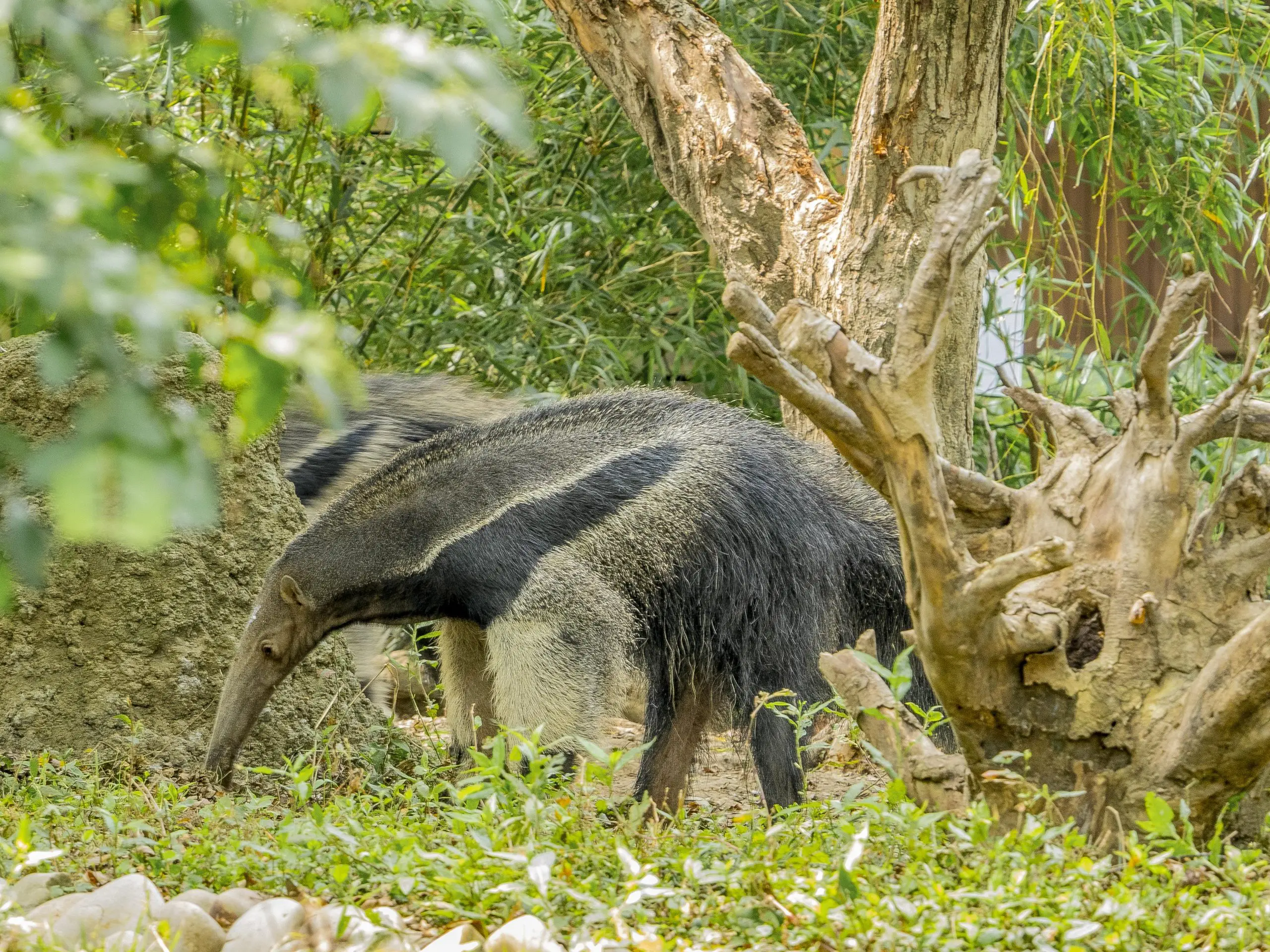
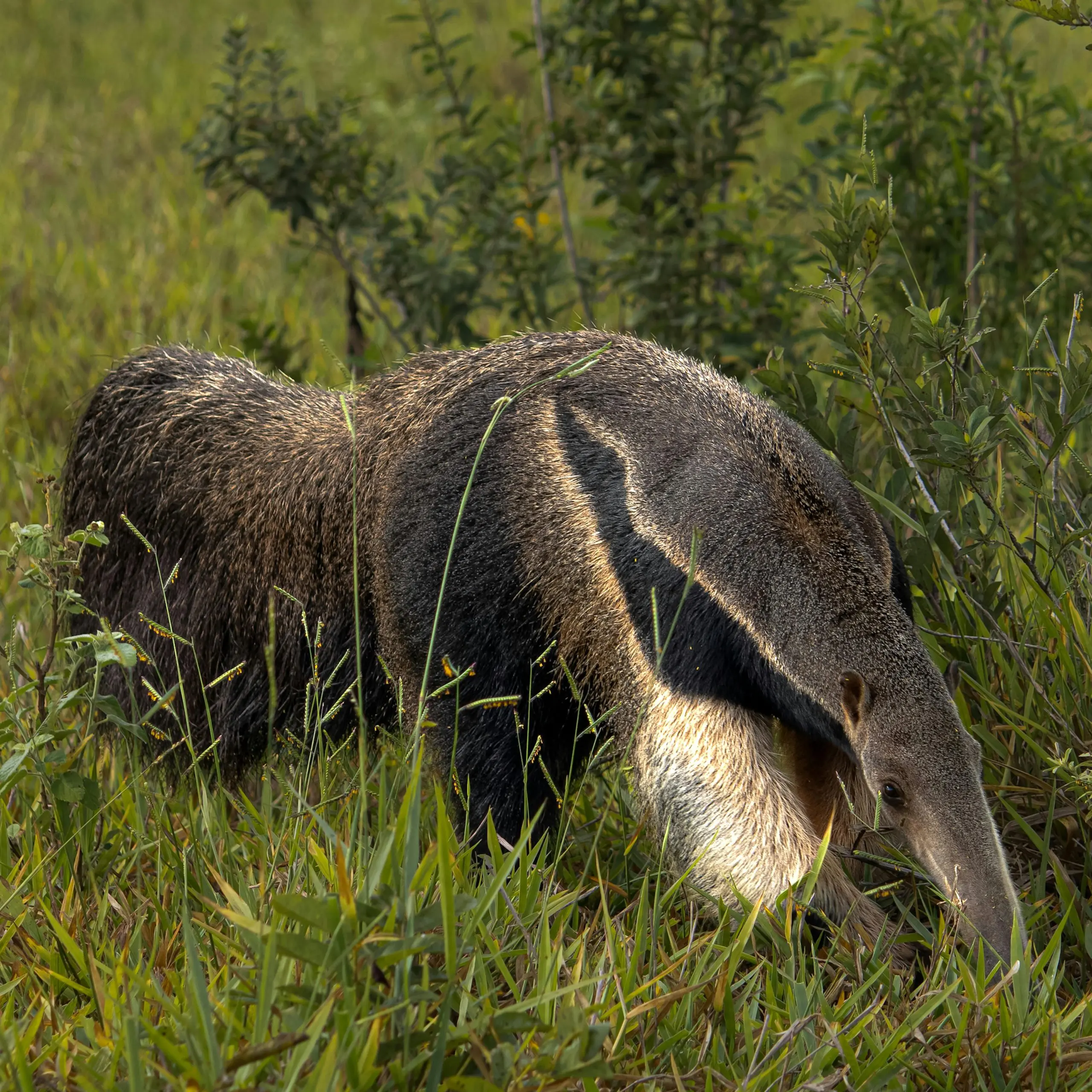
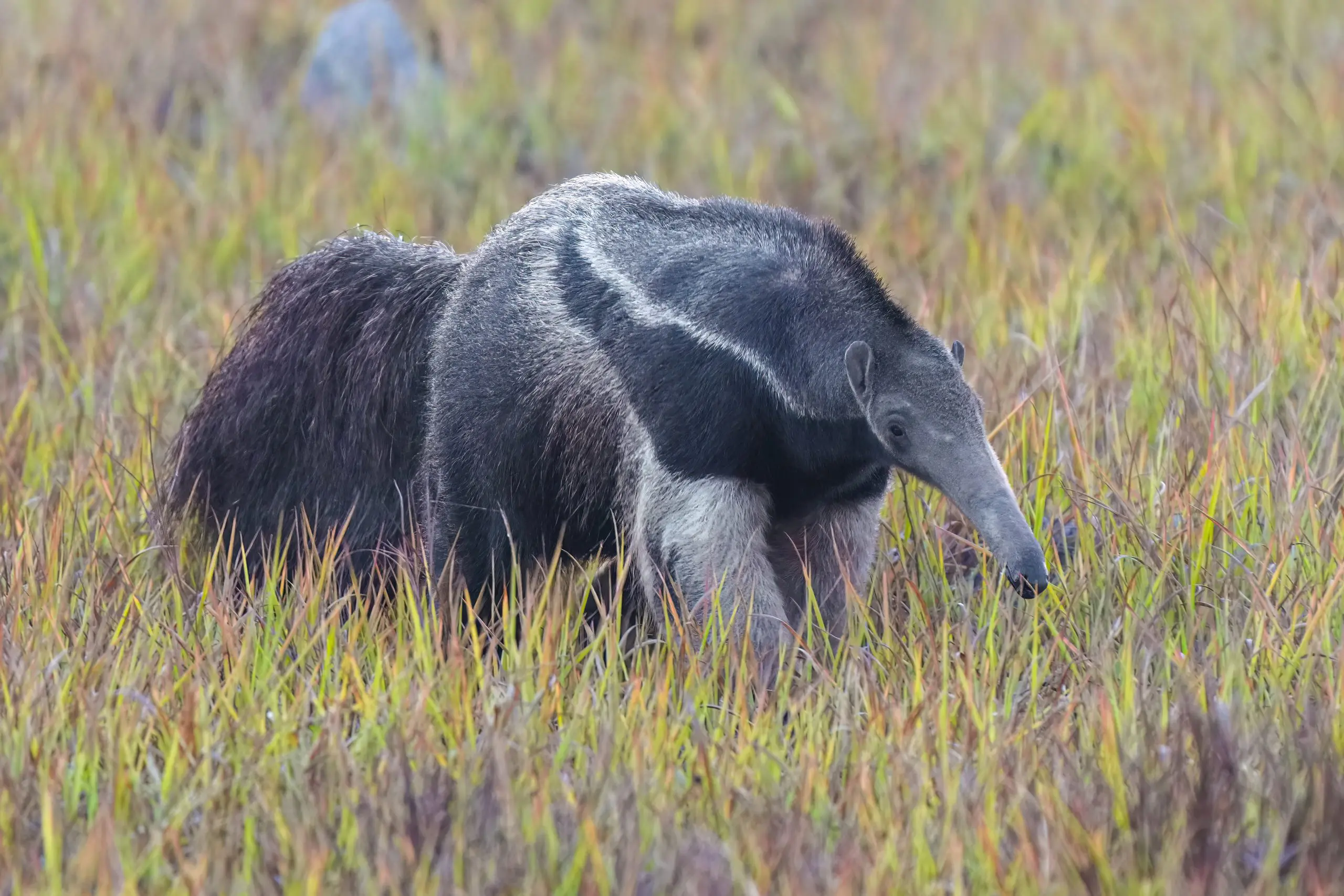
Giant anteaters are the largest of the four anteater species, growing to between 182 and 217 centimetres in length and weighing between 30 and 50 kilograms, with males being larger than females.
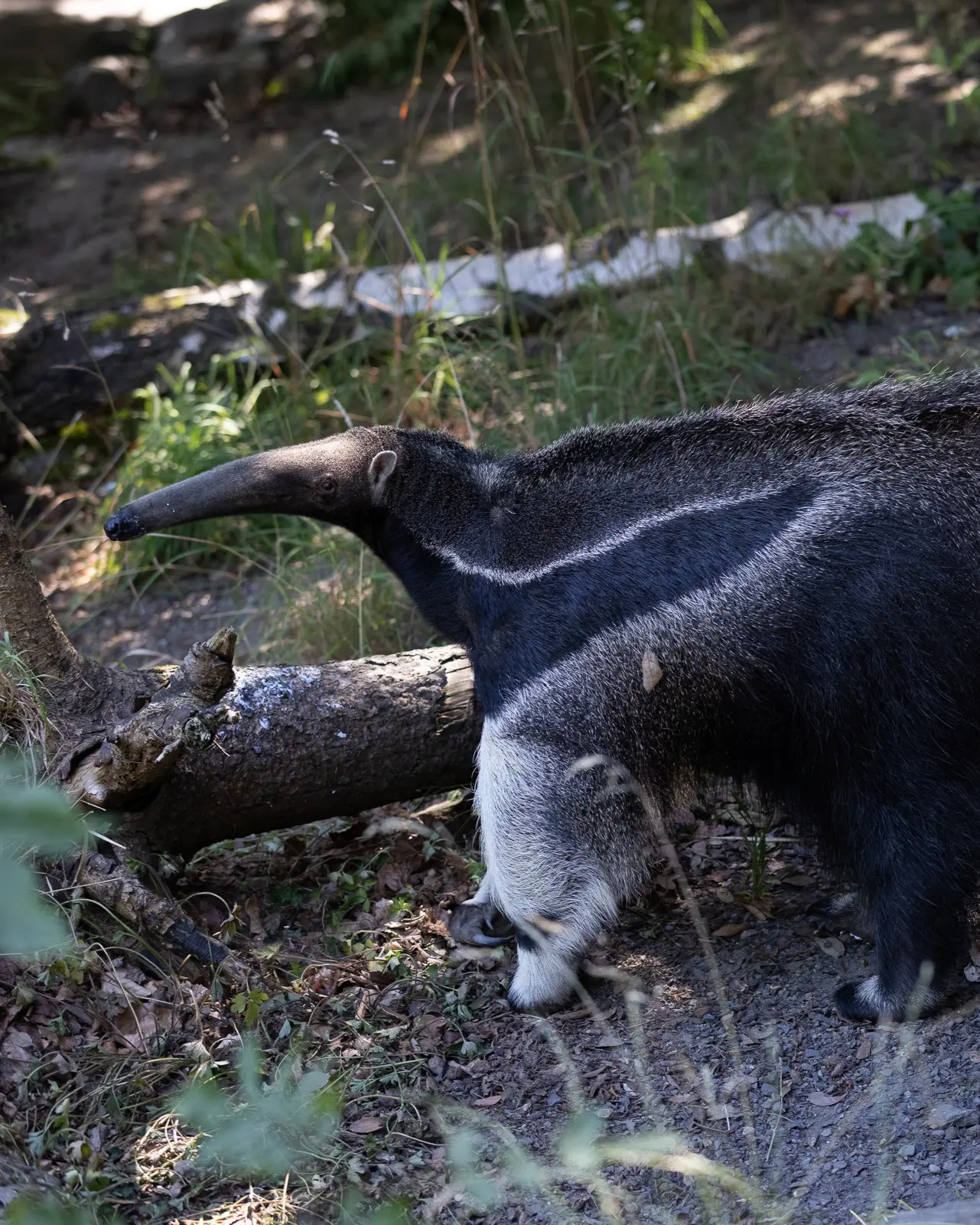
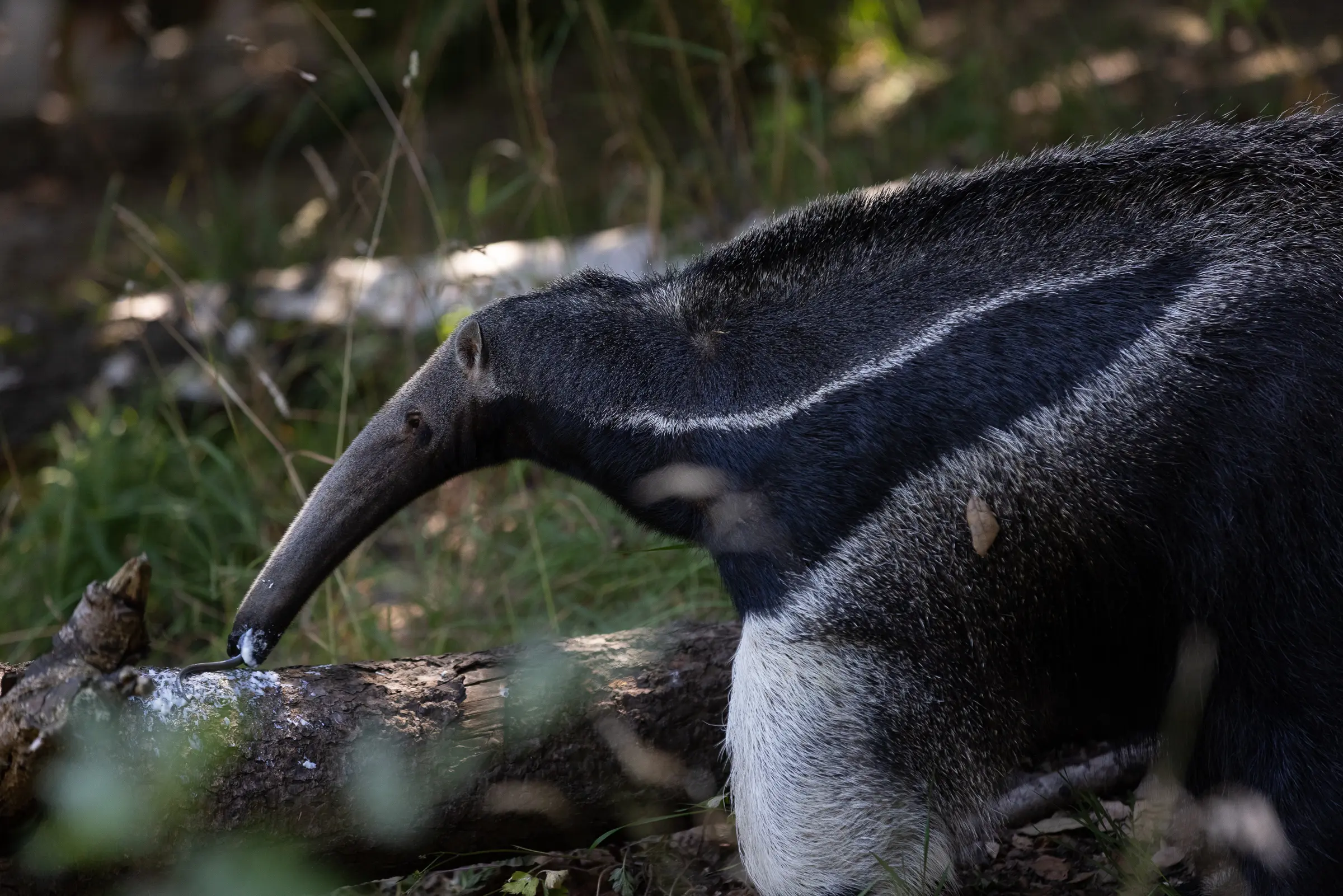
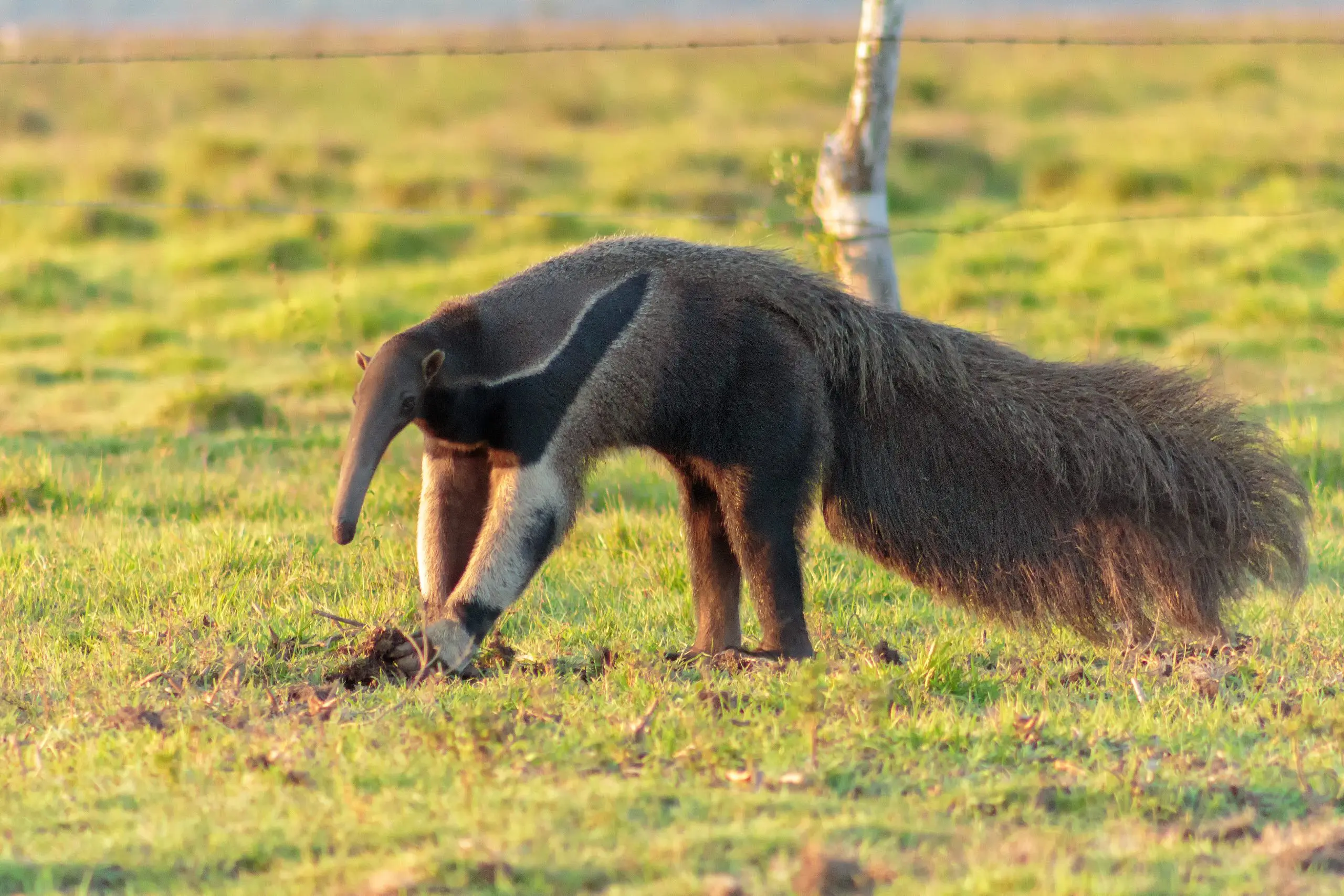
They are easily recognised by their long, narrow snouts, bushy tails, large claws, and distinctive colouration. Unlike other anteaters, they are primarily terrestrial, living the majority of their lives on the ground.
Giant anteaters are very adaptable and live in a wide variety of habitats, including grasslands and tropical forests throughout Central and South America.
Please be advised that the giant anteaters recently welcomed to Dublin Zoo are still settling into their new habitat following their reunion. To ensure they have the time and space they need to adjust, they may be off show from time to time as they continue to explore and become comfortable in their surroundings. Thank you for your understanding and patience.
General Information
Zoo location
The far side of the lake, past the Play Forest and across from the Flamingo Lagoon
Animal class
Mammalia
Animal order
Pilosa
Where do they live (Natural habitat)?
Giant anteaters are very adaptable and live in a wide variety of habitats, including grasslands and tropical forests throughout Central and South America.
How long do they live?
Giant anteaters reach maturity between 2.5 and 4 years. In the wild, they typically live for around 15 years, but have been known to live for almost twice as long in human care.
What do they eat?
Giant anteaters, as their name might suggest, are primarily insectivores. The bulk of their diet consists of ants and termites.
They tear open the nests of their prey with their large claws, before using their long, sticky tongue (which can grow up to 60 centimetres long) to pull eggs, larvae, and adult insects into its mouth. It is estimated that an adult anteater will consume around 35,000 insects a day.
Group name
Due to their relatively solitary lifestyle, there is no specific collective name for anteaters. A group of anteaters may be referred to as a ‘colony’.
Closest related species / sister species
Giant anteaters are part of the order Pilosa, which includes 3 other anteater species and 6 species of sloth. The giant anteaters are the largest living species in this order.
Fun Facts!
Giant anteater
Behaviours
Though they often live in overlapping territories, giant anteaters are largely solitary except when a mother is with her offspring.
When they need to rest, giant anteaters will dig a small hole in the ground for them to sit into. They then cover their bodies with their tail for added camouflage and warmth. They prefer to rest in amongst forest shrubbery or long grass for additional protection.
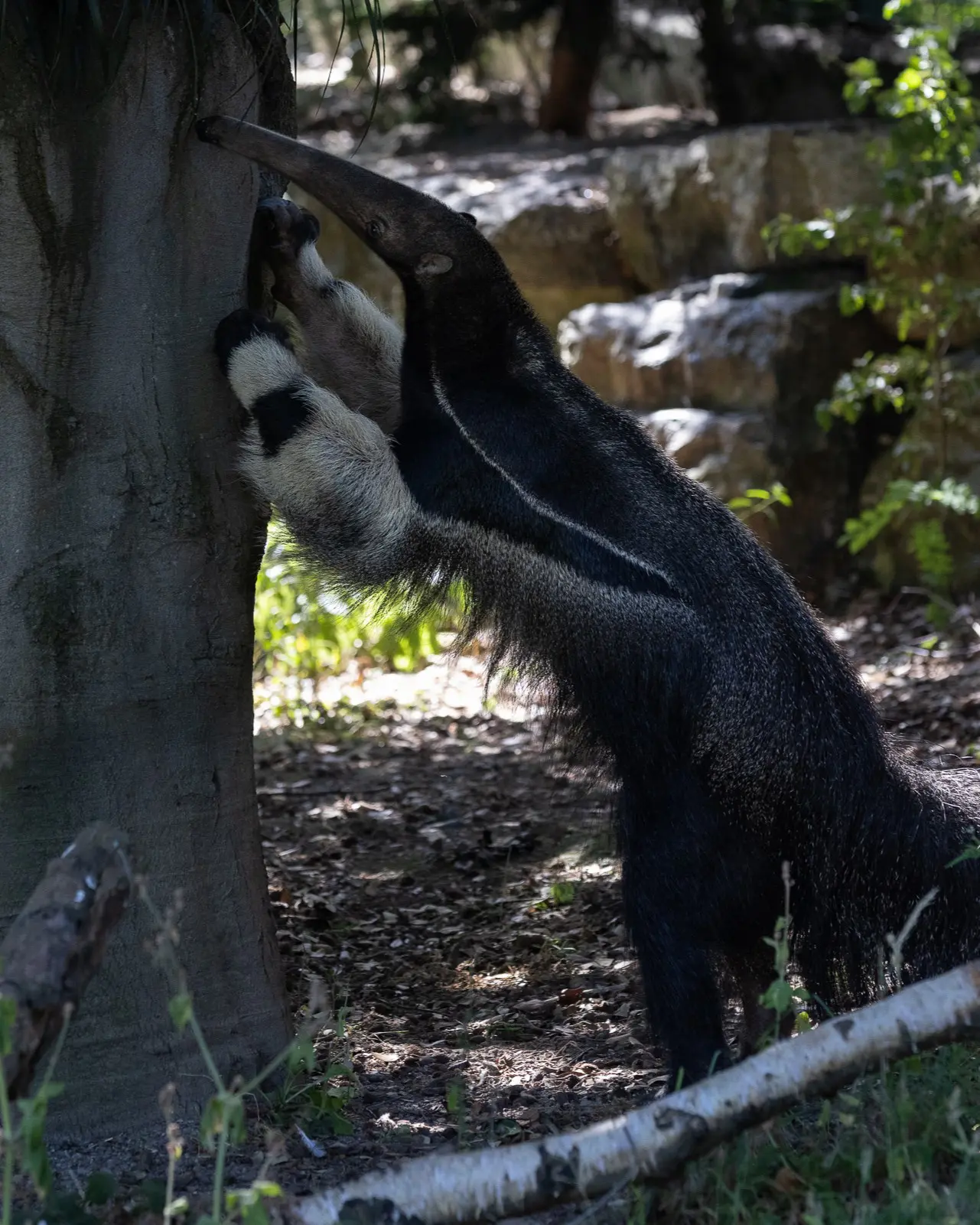
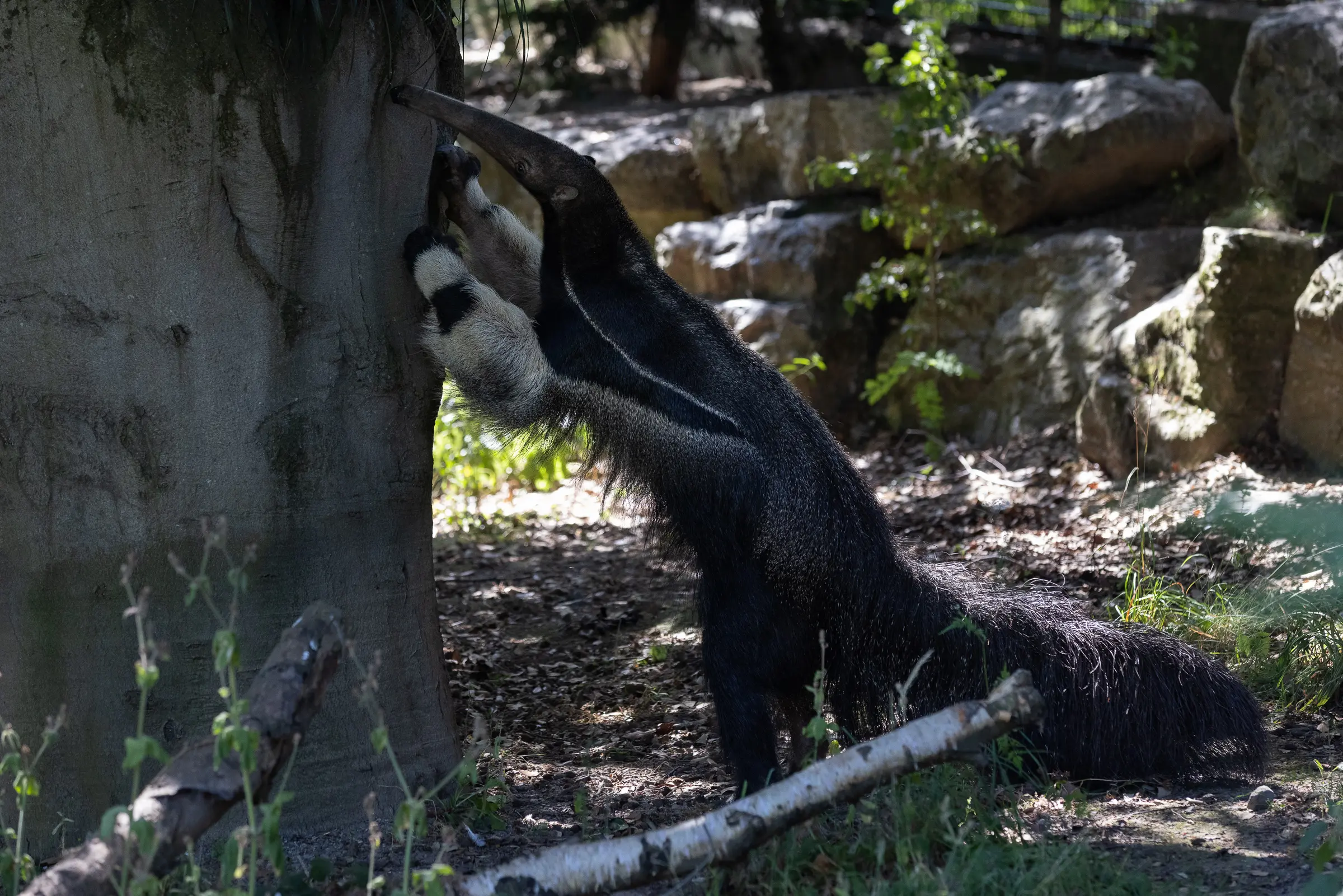
Though they are largely solitary, giant anteaters will communicate with one another through secretions from a gland on their rear end and claw markings on trees. Females are more tolerant of each other, while males appear to be more territorial.
Reproduction and Life Cycle
Giant anteaters mate throughout the year. Mating pairs will stay together for several days, mating multiple times during this period, and feeding from the same nests. The pregnancy lasts for around 190 days, after which a single pup is born.
Pups weigh around 2 kilograms when born, and their eyes are closed for the first 6 days of their lives. They cling on to their mother during this time, camouflaging in amongst the black and white bands on her back. They are dependent on their mother for feeding and grooming for the first 3 months of their lives, after which they begin to move on to more solid foods. By 10 months of age, giant anteater pups will leave their mother.
Giant anteaters reach maturity between 2.5 and 4 years. In the wild, they typically live for around 15 years, but have been known to live for almost twice as long in human care.
Adaptations
The most notable adaptations of giant anteaters are their long, narrow snout and long sticky tongue. Both features allow them to reach into the nests of ants and termites with ease, scooping up eggs, larvae, and adult insects. Their tongues can grow up to 60 centimetres long.
When threatened, giant anteaters are mostly likely to gallop away from a threat into dense vegetation. However, if cornered, they will rear up on their hind legs and defend themselves with their large front claws. These claws can be up to 10 centimetres long, and have the potential to cause serious harm to predators such as jaguars.
Conservation
Least Concern
Giant anteaters are listed as ‘Vulnerable’ on the IUCN Red List of Endangered Species.
Current population estimate
There are no current estimates for the size of the wild population.
Threats
Though the species is well distributed and highly adaptable, it has gone extinct in some of its historic range and is impacted by threats such as habitat loss, fire, and poaching for their fur and meat.
Frequently Asked Questions
Giant anteaters are found in a variety of habitats throughout Central and South America.
In the wild, giant anteaters can live for around 15 years. In human care, they can live for almost double this.
Giant anteaters can grow to over 2 metres long and weigh up to 50 kilograms.
As their name suggests, anteaters feed on ants and termites, consuming up to 35,000 insects every day.
Giant anteaters are most closely related to other species in the order Pilosa, which includes other anteater species and sloths.
While giant anteaters are not considered to be particularly aggressive, they do have large claws on their forearms which could do serious harm to another animal or human if they felt threatened.
The giant anteaters can be found on the far side of the lake at Dublin Zoo, past the Play Forest and across from the Flamingo Lagoon.