
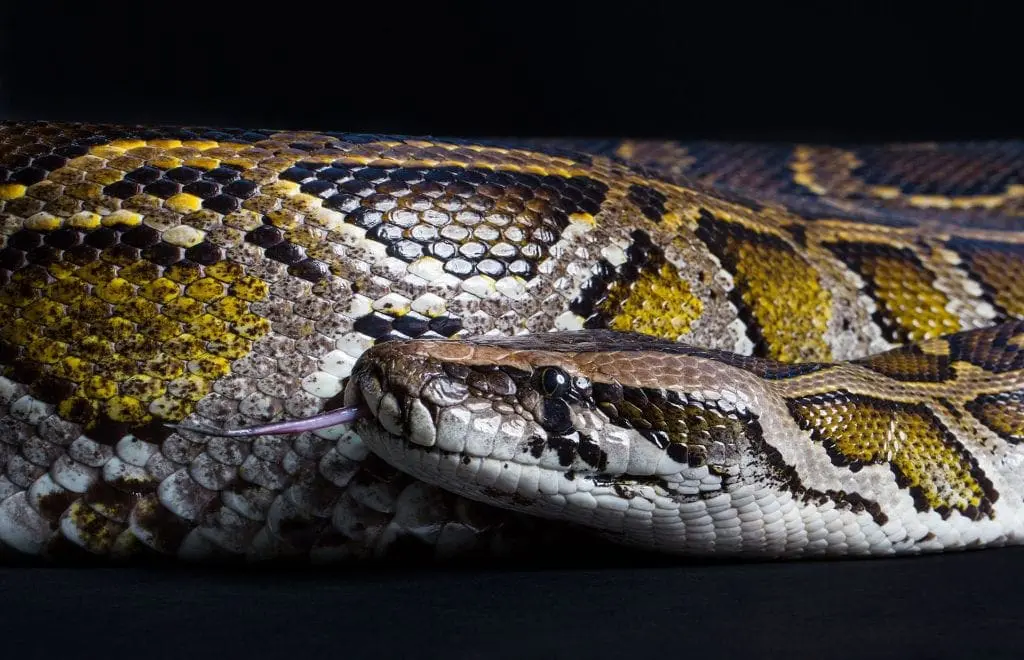
Burmese python
The Burmese python is a large snake that is tan in colour and has dark brown patches along its body
Species
Reptiles
Habitat
Forest
Diet
Carnivores
Conservation Status
Vulnerable
Burmese python
Python bivittatus
Irish Name: Píotón Burmach
IUCN Status: Vulnerable
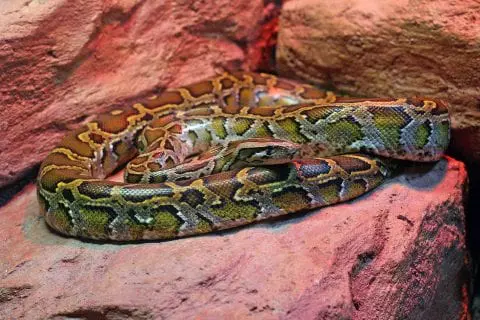
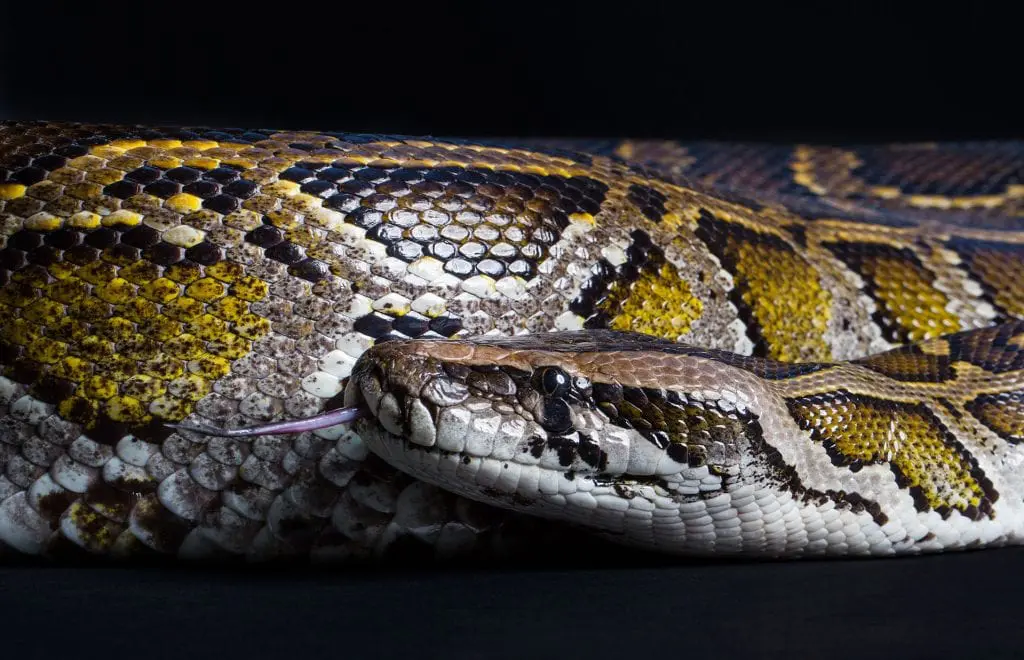
The Burmese python is a large snake that is tan in colour and has dark brown patches along its body. It is one of the world’s largest snakes and can grow six metres long. The Burmese python is a constrictor snake, meaning that it kills its prey by tightly wrapping itself around it. It is an excellent climber and swimmer.
General Information
Zoo location
Zoorassic World
Animal class
Reptilia
Animal order
Squamata
Where do they live (Natural habitat)?
Burmese pythons are native to Southeast Asia. They live in a variety of habitats, including tropical forests, mangrove (tropical trees found near water, usually saltwater) forests, grasslands, caves, rivers and swamps. When they are young, they spend time in the trees and on the ground. As they get older, they mostly stay on the ground.
How long do they live?
Burmese pythons live 15-25 years in zoos. Their lifespan in the wild is unknown.
What do they eat?
Burmese pythons are carnivores (meat-eaters). They kill their prey through constriction (tightly wrapping themselves around prey). They eat birds, reptiles and small mammals such as rats, mice, pigs and goats.
Group name
Burmese pythons are solitary (live alone) and do not have a group name.
Closest related species / sister species
The closest relative of the Burmese python is the Indian python, of which it was previously considered a subspecies.
Fun Facts!
The burmese python
Family life
Burmese pythons are solitary animals (live alone) and generally only meet during the breeding season. Females lay clutches of up to 100 eggs, which they incubate for two to three months. To keep their eggs warm, they continually contract their muscles (or shiver).
Baby name
Snakelet
Gestation (pregnancy) period
2-3 months (egg incubation period)
Number of young at birth
2-3 months (egg incubation period)
Age at maturity
2-3 years
Adult size
5-6 m in length, up to 90 kg in weight
Conservation
Vulnerable
Burmese pythons are classified as Vulnerable by the International Union for Conservation of Nature (IUCN) as their population in their native range in Asia is decreasing.
Threats
The main threat faced by Burmese pythons is poaching (illegal hunting). They are hunted for their skins, as food and for the illegal pet trade. Habitat loss due to agriculture also poses a threat to the python by eliminating its prey and leaving it more vulnerable to capture by humans.
Frequently Asked Questions
Burmese pythons are carnivores. They kill their prey using constriction (tightly wrapping themselves around prey). They mostly eat birds, reptiles and mammals such as rats, mice, pigs and goats.
Burmese pythons can grow 5-6 m in length and weigh up to 90 kg. They are among the largest snakes on earth.
Burmese pythons are native to Southeast Asia. They live in a variety of habitats, including tropical forests, mangrove forests, grasslands, caves, rivers and swamps. They have also established themselves as an invasive species in the Florida Everglades.
Pythons are not venomous.
Burmese pythons live 15-25 years in zoos. Their lifespan in the wild is unknown.
Burmese pythons are considered an invasive species in the Everglades. Their introduction to this area has led to significant population declines of a number of native animals that they prey on. These include raccoons, opossums, birds and rabbits.
Burmese pythons likely first arrived in Florida as part of the exotic pet trade. Over time, they made their way into the Everglades in Florida due to deliberate releases from owners who could no longer take care of them or by accidentally escaping from their owners’ homes. It is believed that around 1,000 pythons escaped from a python breeder’s facility in Florida during Hurricane Andrew in 1992.
Burmese pythons usually feed every 1-2 months, but they can go without food for several months.
Burmese pythons are classified as Vulnerable by the International Union for Conservation of Nature (IUCN) as their population is decreasing in their native range in Asia.