Abyssinian ground hornbill
Abyssinian ground hornbills are large land-dwelling birds
Species
Birds
Habitat
Savannah
Diet
Carnivores
Conservation Status
Vulnerable
Abyssinian ground hornbill
Bucorvus abyssinicus
Irish Name: Cornóg thalún Aibisíneach
IUCN Status: Vulnerable
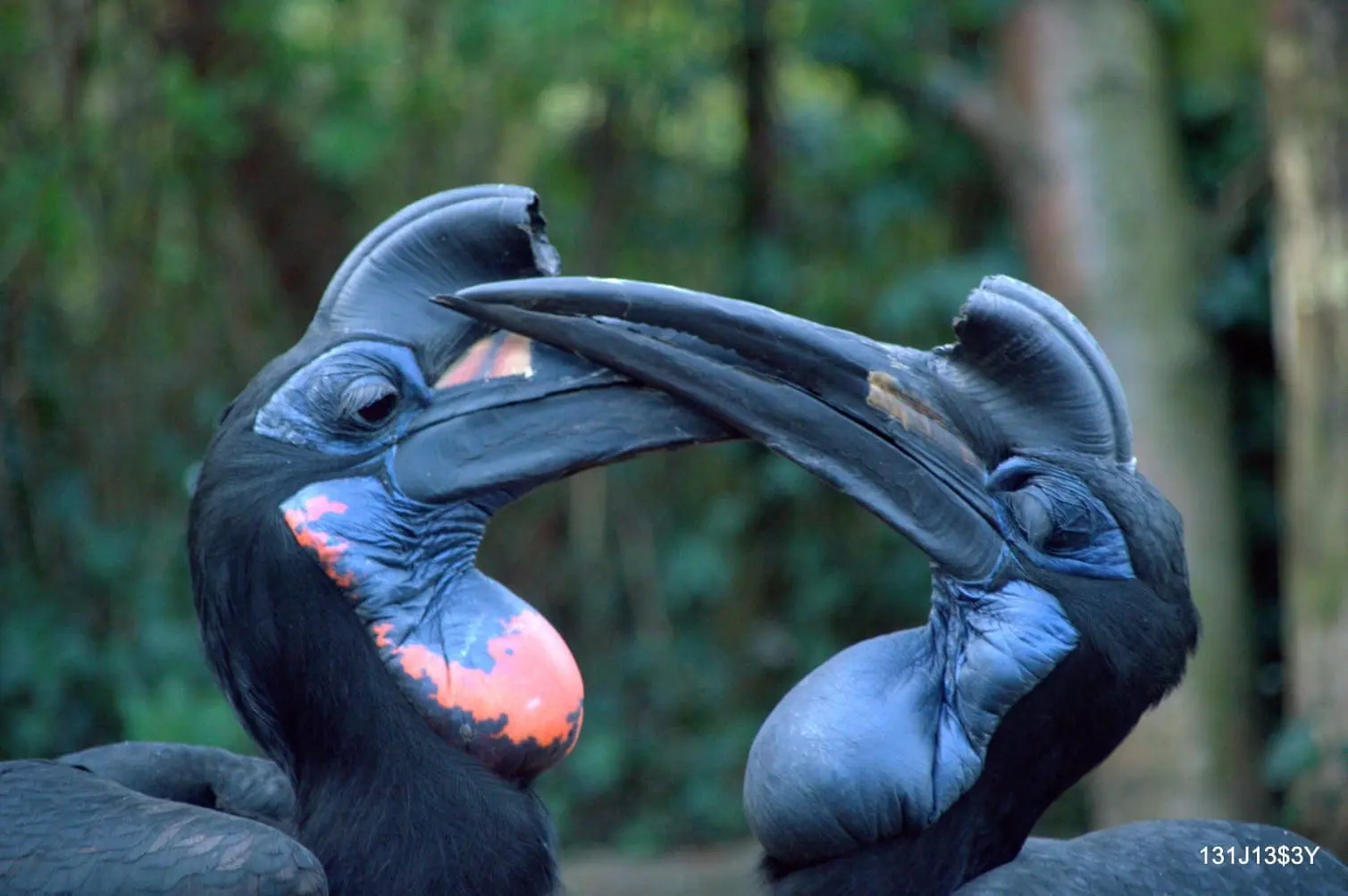
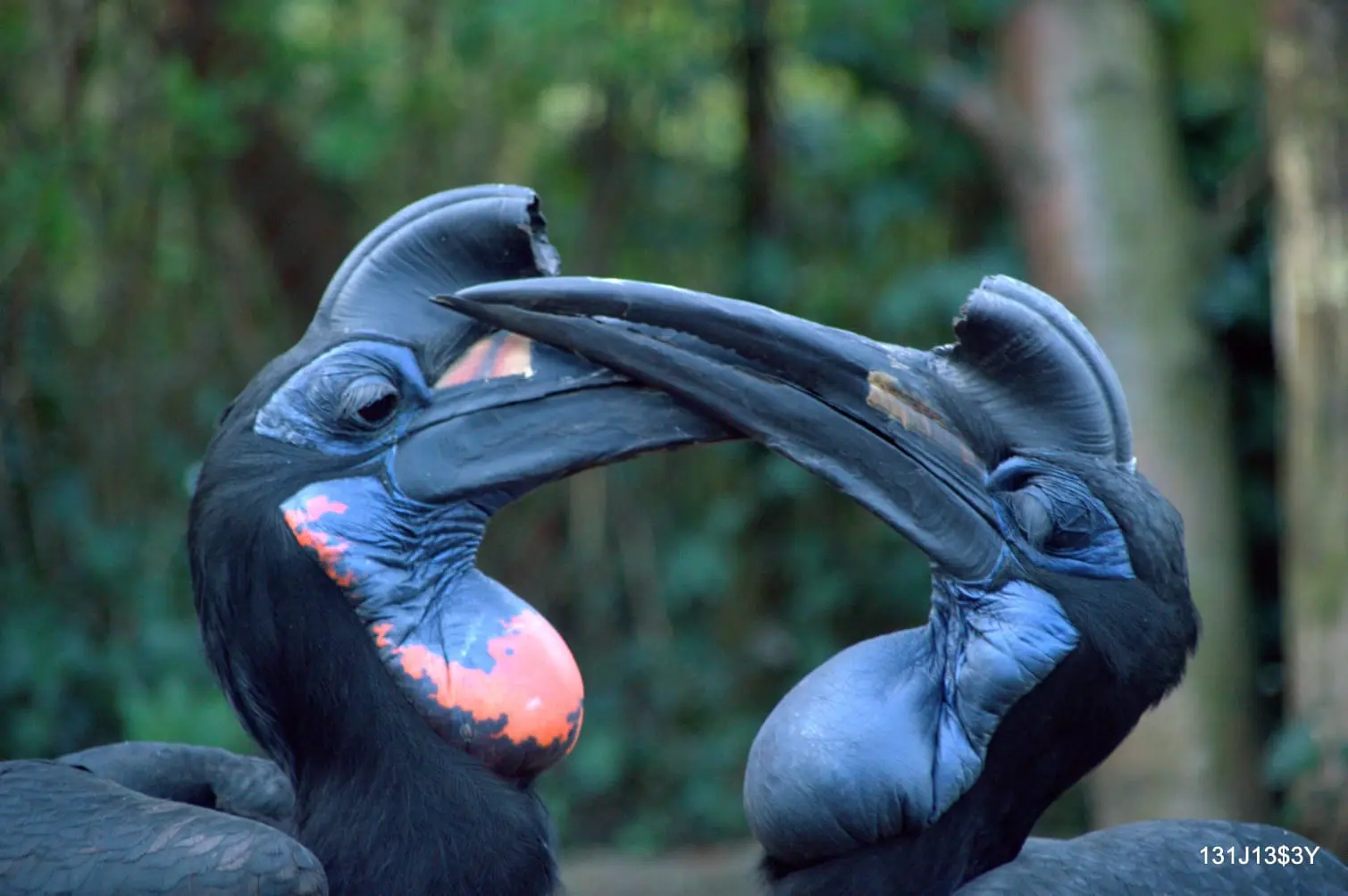
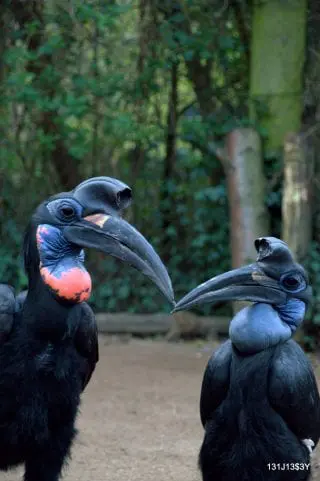
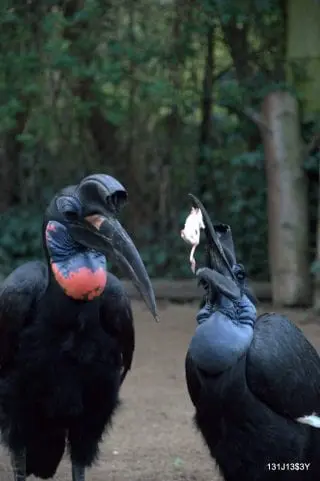
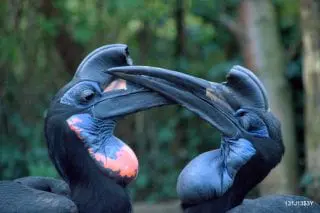
Abyssinian ground hornbills are large land-dwelling birds, meaning they spend most of their time on the ground. They have black body feathers and blue skin around their neck and eyes. Their large beak is topped with a large bony part called a casque. Males have red splotches on their neck and around their eyes.
General Information
Zoo location
African Plains
Animal class
Aves
Animal order
Bucerotiformes
Where do they live (Natural habitat)?
Abyssinian ground hornbills live in grasslands, savannahs and desert areas across northern sub-Saharan Africa. They spend most of their time on the ground.
How long do they live?
Up to 40 years
What do they eat?
Abyssinian ground hornbills are carnivores. They eat small animals such as tortoises, lizards, amphibians, mammals, other birds, and insects.
Group name
Flock
Closest related species / sister species
They are most closely related to southern ground hornbills, who are the only other carnivorous hornbill species and also spend most of their time on the ground.
Fun Facts!
The abyssinian ground hornbill
Family life
Abyssinian ground hornbills live in pairs or small family groups. Female hornbills make their nest in the cavities of trees. While incubating, the male will partially seal up the entrance to the nest with a mixture of mud, plants and faeces. Inside, the female will moult her flight feathers while the male delivers food through a small hole. Abyssinian ground hornbills only partially seal the nest, compared to the almost complete sealing of the nest done by other hornbills. The mother stays in the nest with the chick for around 30 days before leaving to help the male find food. After 80-90 days, the chick will be ready to leave the nest.
Baby name
Chick
Gestation (pregnancy) period
40 days incubation.
Number of young at birth
Two chicks are usually born. They are laid a few days apart and compete for food. The second-hatched chick will often die of starvation as the larger first-hatched chick gets the share of the food.
Weight at birth
70 grams.
Age at maturity
4 years
Adult size
Adult hornbills can reach heights of 90-110 cm and can weigh up to 4 kg.
Females are slightly smaller than males.
Conservation
Vulnerable
The Abyssinian ground hornbill is classified as Vulnerable by the International Union for the Conservation of Nature.
Current population estimate
Unknown, but decreasing.
Threats
Threats facing the Abyssinian ground hornbill are habitat loss due to lands being cleared for farming and development. This results in a loss of trees for nesting. It also faces the threat of hunting by humans, who use their stuffed heads as disguises while hunting other species.
What is Dublin Zoo doing?
Dublin Zoo participates in the European breeding programme for the Abyssinian ground hornbill.
Frequently Asked Questions
Abyssinian ground hornbills are carnivores. They eat small animals such as tortoises, lizards, amphibians, mammals, other birds, and insects.
Abyssinian ground hornbills live in grasslands, savannas and sub-desert areas across northern sub-Saharan Africa. They spend most of their time on the ground.
Abyssinian hornbills are not endangered. However, they are classified as Vulnerable by the IUCN because their numbers are decreasing.
Abyssinian ground hornbills can amplify their calls by inflating the red balloon-like wattle below their beak, making a sound similar to a dog’s bark.
Abyssinian ground hornbills are carnivores. They eat snakes, as well as lizards, birds, small mammals and invertebrates.
Female hornbills make their nest in the cavities of trees. While incubating, the male will partially seal up the entrance to the nest with a mixture of mud, plants and faeces and deliver food through a small hole. Abyssinian ground hornbills only partially seal the nest, compared to the almost complete sealing of the nest done by other hornbills.
They can fly, but prefer to walk or run. They travel long distances on the ground.