Visitors
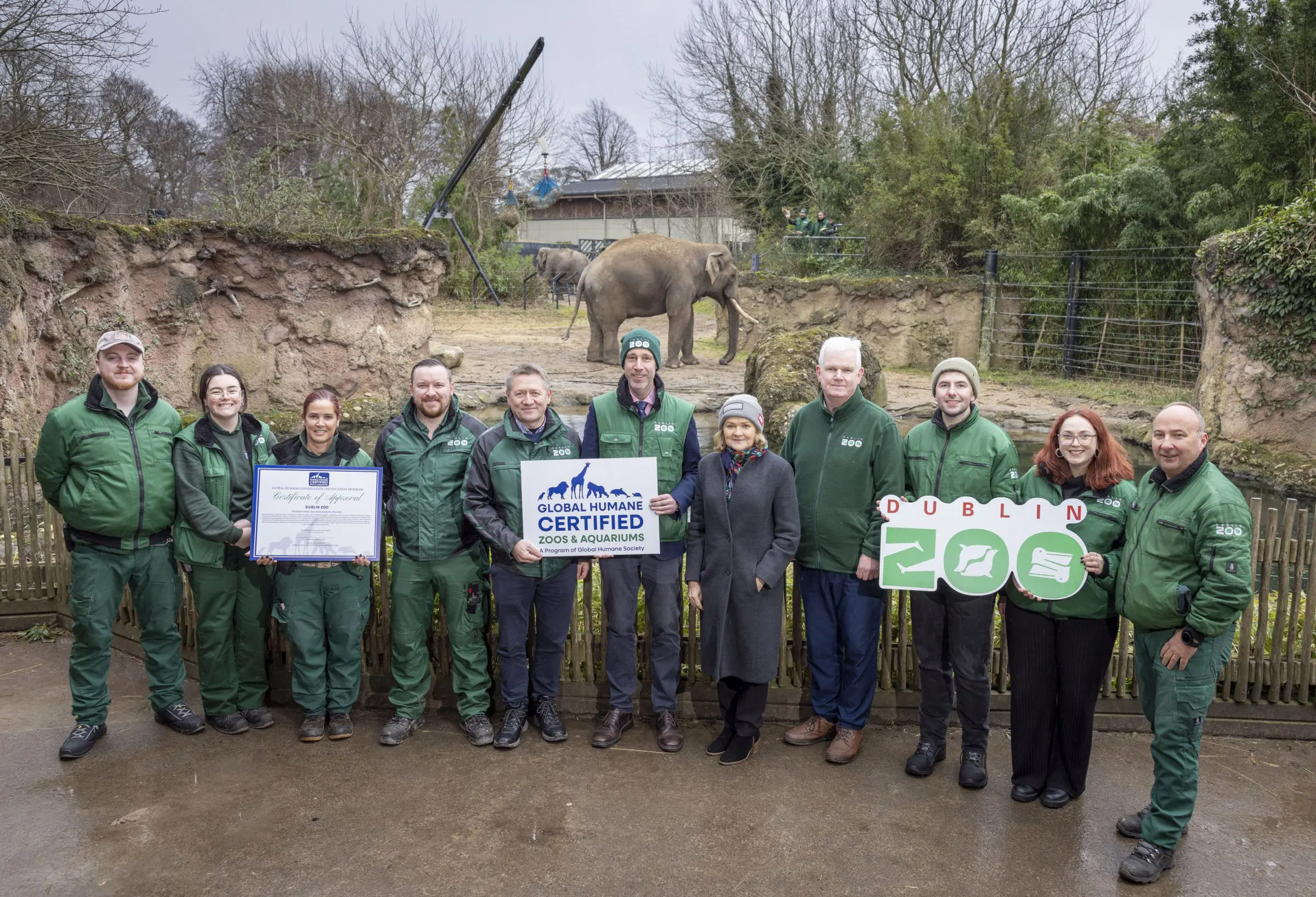
 This certification affirms Dublin Zoo’s ongoing commitment to the well-being of the animals in its care, meeting and exceeding rigorous welfare standards set by Global Humane Society. The certification process involved a comprehensive assessment of Dublin Zoo’s animal care practices and welfare policies, helping ensure that every species within the zoo thrives in an environment that prioritises their health, safety, and enrichment.
“We are thrilled that Dublin Zoo has met the standards to become Global Humane Certified,” said Dr. Robin Ganzert, President and CEO of Global Humane Society. “This zoo cares for numerous vital species and they have a pioneering Centre for Species Survival, which directly contributes to conservation efforts in Ireland. This certification provides Global Humane Society with the opportunity to recognize the extensive reach of the animal welfare movement at zoos, aquariums and conservation parks around the world.”
Dublin Zoo joins a select group of leading zoological institutions worldwide that have achieved Global Humane certification, reinforcing its role as a leader in ethical animal care and conservation.
This certification affirms Dublin Zoo’s ongoing commitment to the well-being of the animals in its care, meeting and exceeding rigorous welfare standards set by Global Humane Society. The certification process involved a comprehensive assessment of Dublin Zoo’s animal care practices and welfare policies, helping ensure that every species within the zoo thrives in an environment that prioritises their health, safety, and enrichment.
“We are thrilled that Dublin Zoo has met the standards to become Global Humane Certified,” said Dr. Robin Ganzert, President and CEO of Global Humane Society. “This zoo cares for numerous vital species and they have a pioneering Centre for Species Survival, which directly contributes to conservation efforts in Ireland. This certification provides Global Humane Society with the opportunity to recognize the extensive reach of the animal welfare movement at zoos, aquariums and conservation parks around the world.”
Dublin Zoo joins a select group of leading zoological institutions worldwide that have achieved Global Humane certification, reinforcing its role as a leader in ethical animal care and conservation.
 For over 190 years, Dublin Zoo has been a cornerstone of wildlife conservation and education in Ireland, welcoming generations of visitors and playing a key role in global conservation initiatives. This new accreditation further strengthens its mission to protect endangered species and educate the public on the importance of biodiversity and animal welfare.
To be recognized as Global Humane Certified, the Dublin Zoo passed a rigorous independent assessment that reviewed the wellbeing of animals in their care. The unique process is guided by the latest science and best practices and is informed by respected veterinarians and experts in the fields of animal welfare, animal science, zoology and ethics who have decades of experience in protecting animals.
The independent validation process provides visitors with confidence that the institution is meeting a high benchmark of care. The process includes submission of a pre-audit application, followed by an onsite audit that assesses animal welfare. Factors considered during the audit include, but are not limited to, housing, food, water, lighting, shade, sound, activity levels and the training of staff who are interacting with the animals. The benchmarks are species specific.
For over 190 years, Dublin Zoo has been a cornerstone of wildlife conservation and education in Ireland, welcoming generations of visitors and playing a key role in global conservation initiatives. This new accreditation further strengthens its mission to protect endangered species and educate the public on the importance of biodiversity and animal welfare.
To be recognized as Global Humane Certified, the Dublin Zoo passed a rigorous independent assessment that reviewed the wellbeing of animals in their care. The unique process is guided by the latest science and best practices and is informed by respected veterinarians and experts in the fields of animal welfare, animal science, zoology and ethics who have decades of experience in protecting animals.
The independent validation process provides visitors with confidence that the institution is meeting a high benchmark of care. The process includes submission of a pre-audit application, followed by an onsite audit that assesses animal welfare. Factors considered during the audit include, but are not limited to, housing, food, water, lighting, shade, sound, activity levels and the training of staff who are interacting with the animals. The benchmarks are species specific.