Chilean flamingo
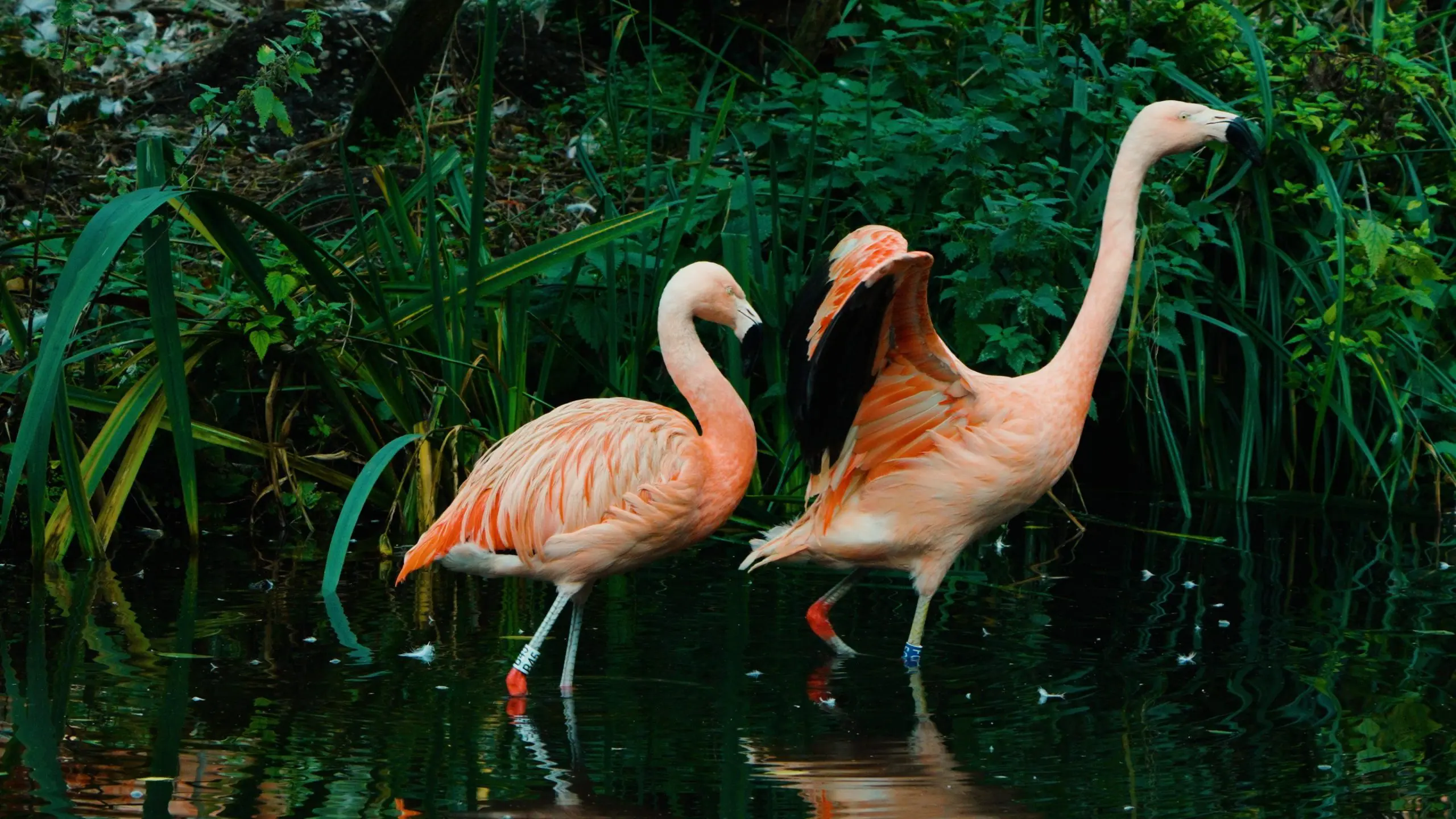
Chilean flamingos are one of six species of flamingos, a bird famous for their pink feathers, long stilt-like legs and hooked downward-bent bills
Species
Birds
Habitat
Coastal
Diet
Omnivore
Conservation Status
Near Threatened
Chilean flamingo
Phoenicopterus chilensis
Irish Name: Lasairéan Sileach
IUCN Status: Near Threatened
Chilean flamingos are one of six species of flamingos, a bird famous for their pink feathers, long stilt-like legs and hooked downward-bent bills. Dublin Zoo is home to a large flock of about 100 Chilean flamingos.
General Information
Zoo location
Flamingo Lagoon
Animal class
Aves
Animal order
Phoenicopteriformes
Where do they live (Natural habitat)?
Chilean flamingos are found in a number of South American countries including Argentina, Bolivia, Chile, Paraguay and Peru. They live on coastal mudflats, estuaries, salt lakes and lagoons.
How long do they live?
Up to 50 years in the wild.
What do they eat?
Chilean flamingos eat algae and plankton that they filter from the water using a comb-like structure in their beaks. Their food contains a pigment called beta-carotene (the same pigment that gives carrots their orange colour) It is this pigment that gives them their pink colour.
Group name
Flamboyance, colony, flock
Closest related species / sister species
The closest relatives of the Chilean flamingo are the Greater flamingo and the American flamingo. There are six flamingo species in total.
Fun Facts!
11 chicks hatch at Flamingo Lagoon
The Chilean flamingo
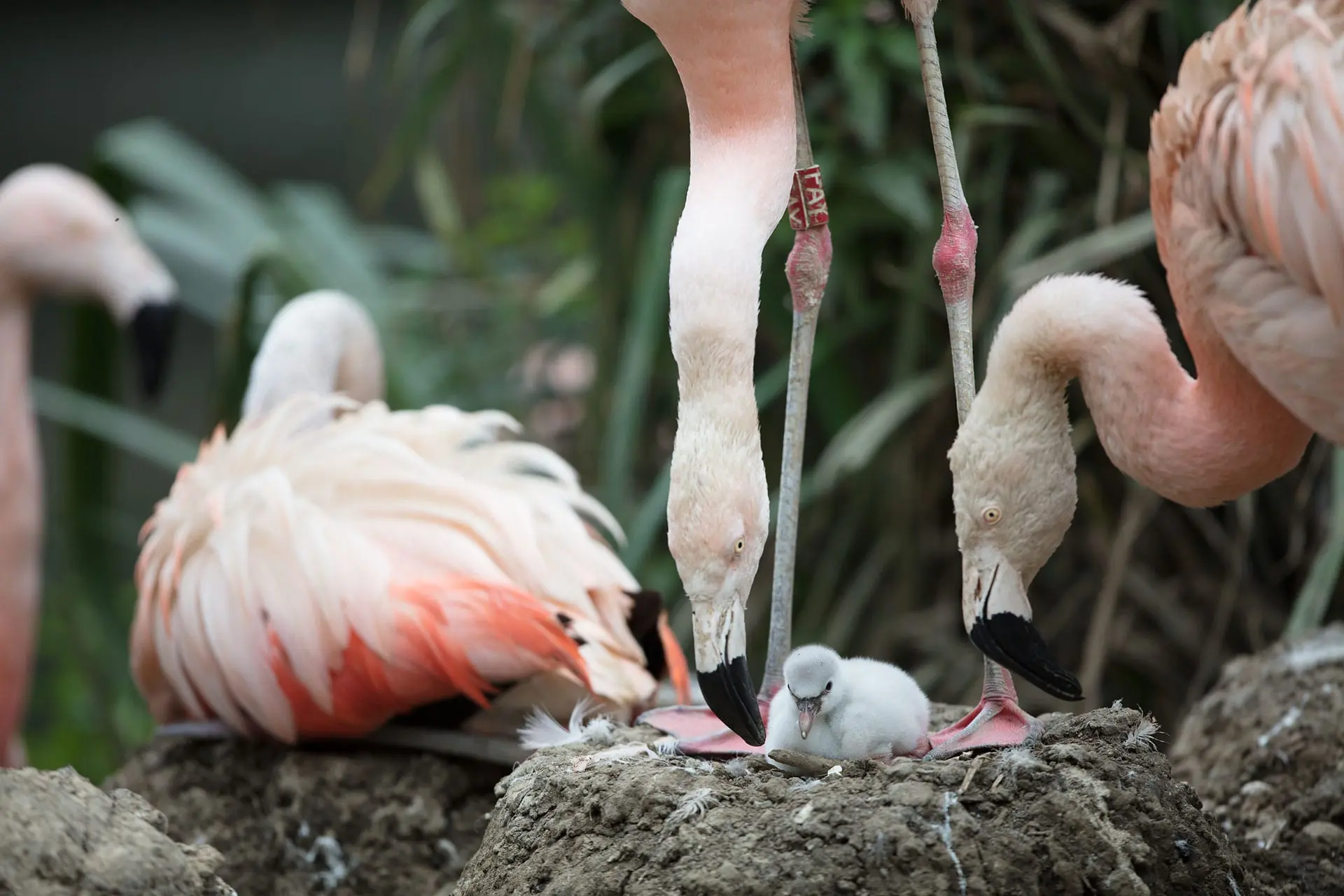
Family life
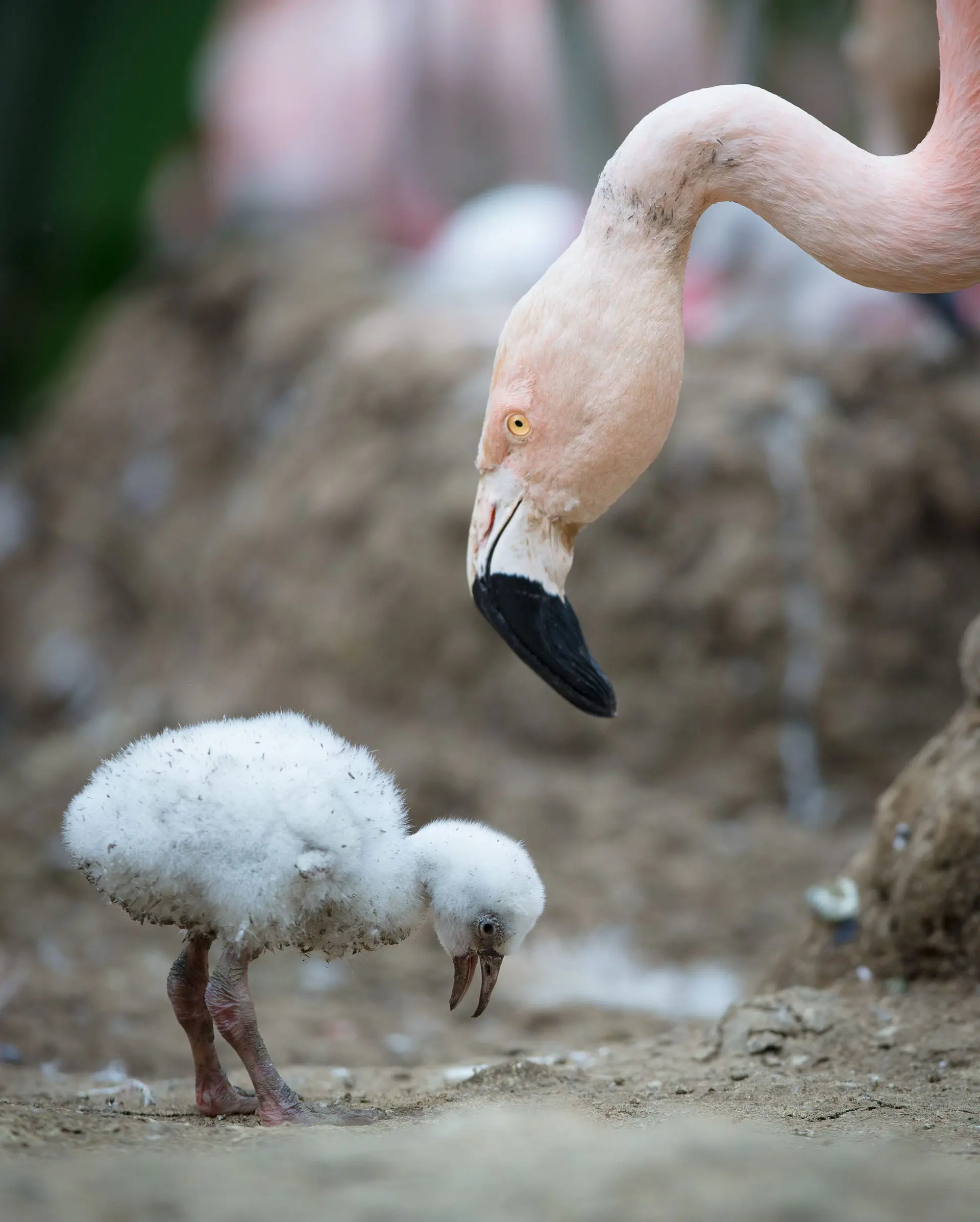
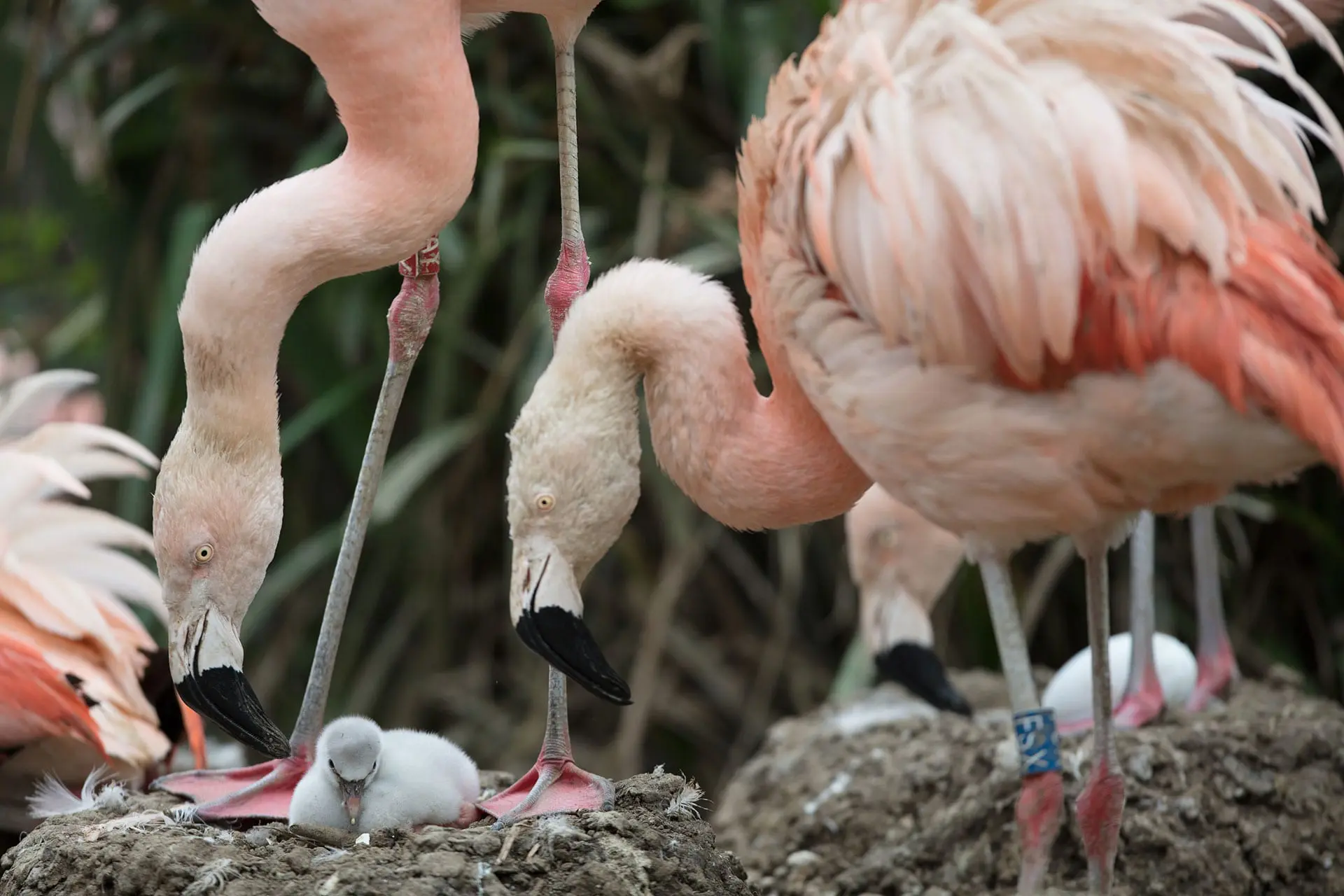
Flamingos are very social; they live in flocks of up to several thousand birds in the wild. Once the female lays an egg, both the male and female incubate it. After the chick hatches, it remains in the nest for the first few days before moving to large ‘crèches’ made up of thousands of chicks. After approximately 70 days, it can begin to feed by itself.
Baby name
Chick
Gestation (pregnancy) period
30 days incubation
Number of young at birth
One
Weight at birth
70-90 g
Age at maturity
5-6 years
Adult size
Up to 145 cm tall and 3.5 kg in weight
Conservation
Near Threatened
Chilean flamingos are classified as Near Threatened by the International Union for Conservation of Nature.
Current population estimate
In 2011, there was estimated to be around 300,000 remaining in the wild. The population is decreasing so this is now likely to be less.
Threats
One of the main threats to Chilean flamingos is egg-harvesting (eggs getting stolen). Other threats include hunting, habitat loss and water pollution.
What is Dublin Zoo doing?
Dublin Zoo is part of the European Breeding Programme for Chilean flamingos.
Frequently Asked Questions
Flamingos get their pink colour from the tiny crustaceans and algae they eat, which contains a pigment called beta-carotene (the same pigment that gives carrots their orange colour).
Yes, flamingos can fly.
Chilean flamingos eat algae and plankton that they filter from the water using a comb-like structure in their beaks. Their food contains a pigment called beta-carotene (the same pigment that gives carrots their orange colour) It is this pigment that gives them their pink colour.
They live in mudflats, estuaries, salt lakes and lagoons in a number of South American countries including Bolivia, Peru, Paraguay, Argentina and Chile.
Scientists now believe that flamingos are more stable for long periods of time on one leg than they are on two. This is because they have a locking mechanism in their joints that keeps them balanced, meaning it doesn’t require any muscular effort to stay in one place. It is a way for them to conserve energy by avoiding their muscles getting tired.
No, flamingo egg yolks are not pink.
Chilean flamingos communicate with each other by honking or grunting.
Up to 145 cm
The IUCN currently classifies Chilean flamingos as Near Threatened which means they are not currently endangered, but may be in the near future.
Flamingos live up to 50 years in the wild.
Yes, flamingos can swim, however it is rare for them to do so.
Flamingos sleep standing on one leg.
All flamingos get their pink colour from a pigment in their food so they are generally pink in colour. However, their colouring could change if they didn’t eat their natural foods.
Flamingos are birds, not mammals.
Flamingos are non-migratory birds, but may relocate if the climate or the water levels in their breeding area change.
In winter, Chilean flamingos migrate to lower ground where it is warmer.