Western lowland gorilla
Western lowland gorillas are a subspecies of the Western gorilla, one of two species of gorilla
Species
Mammals
Habitat
Rainforest
Diet
Omnivorous
Conservation Status
Critically Endangered
Western lowland gorilla
Gorilla gorilla gorilla
Irish Name: Gorilla ísealchríche iartharach
ICUN Status: Critically Endangered
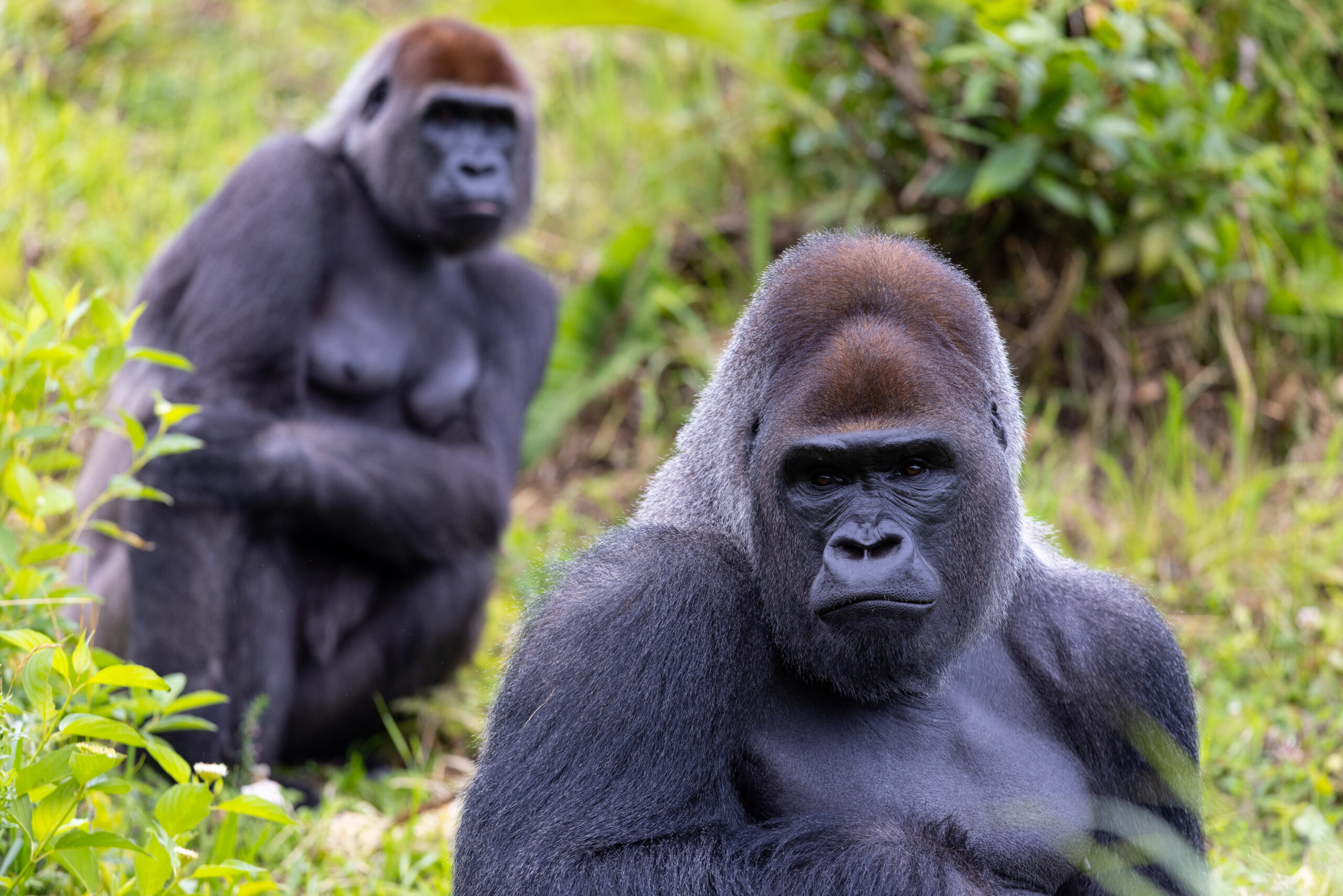
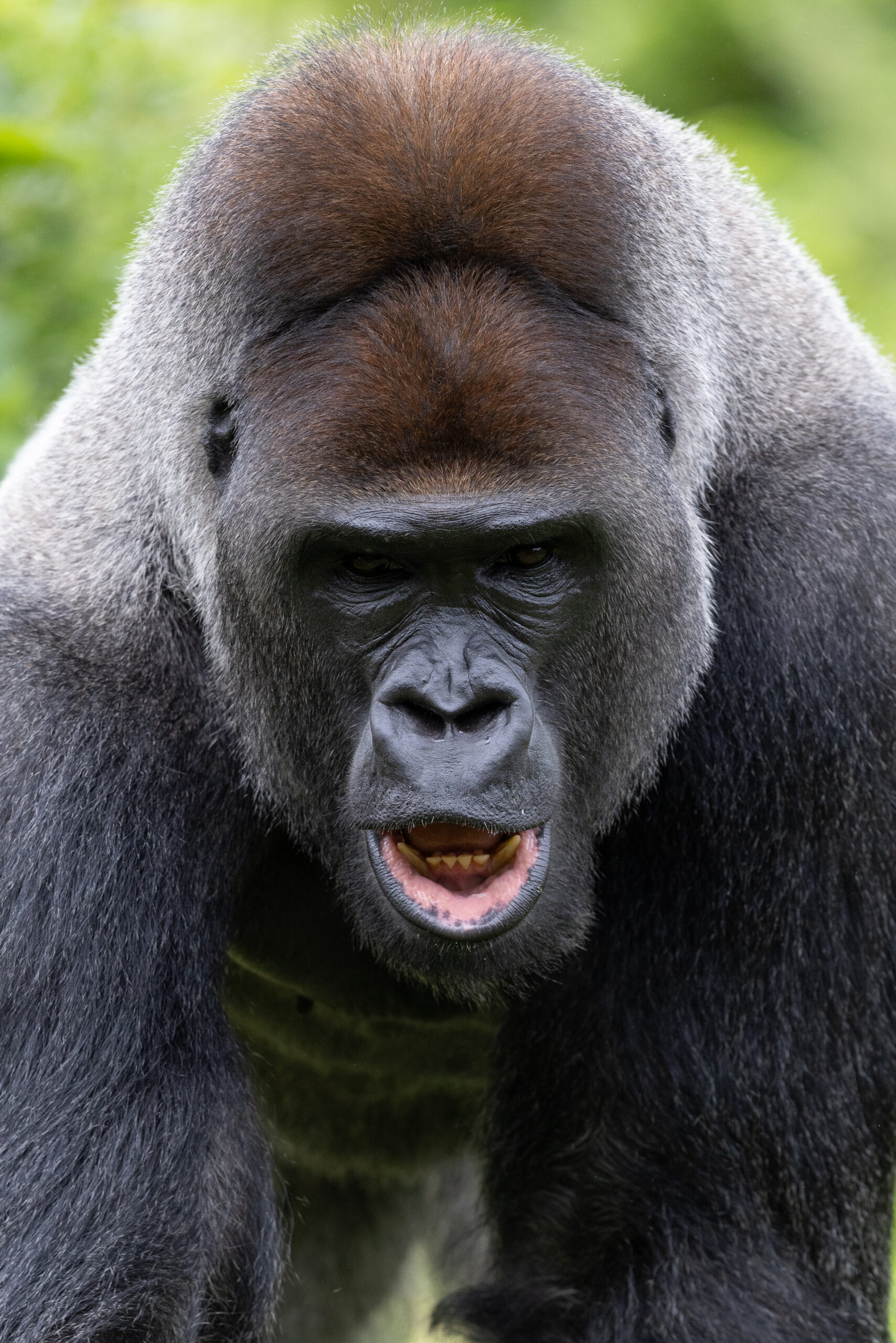
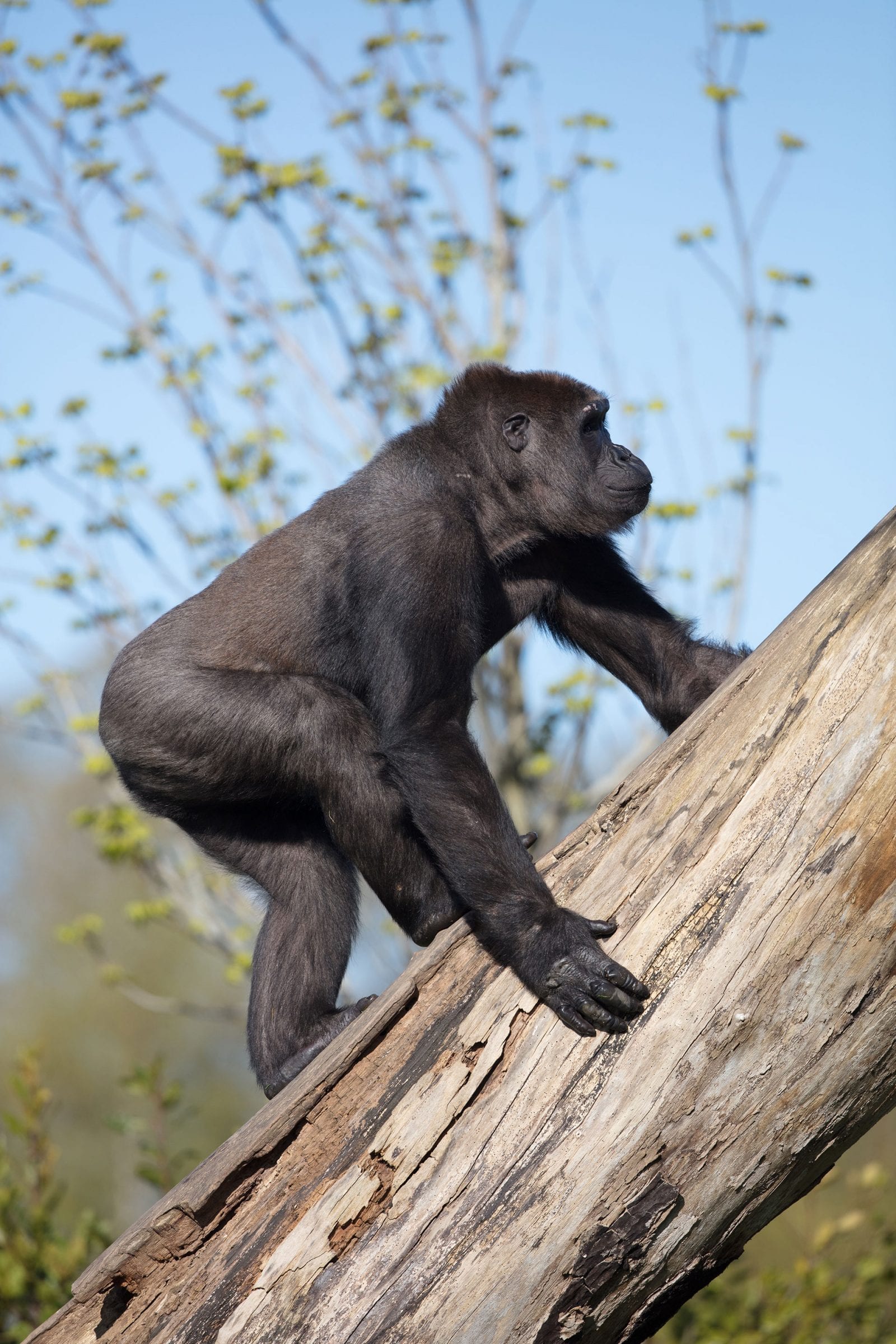
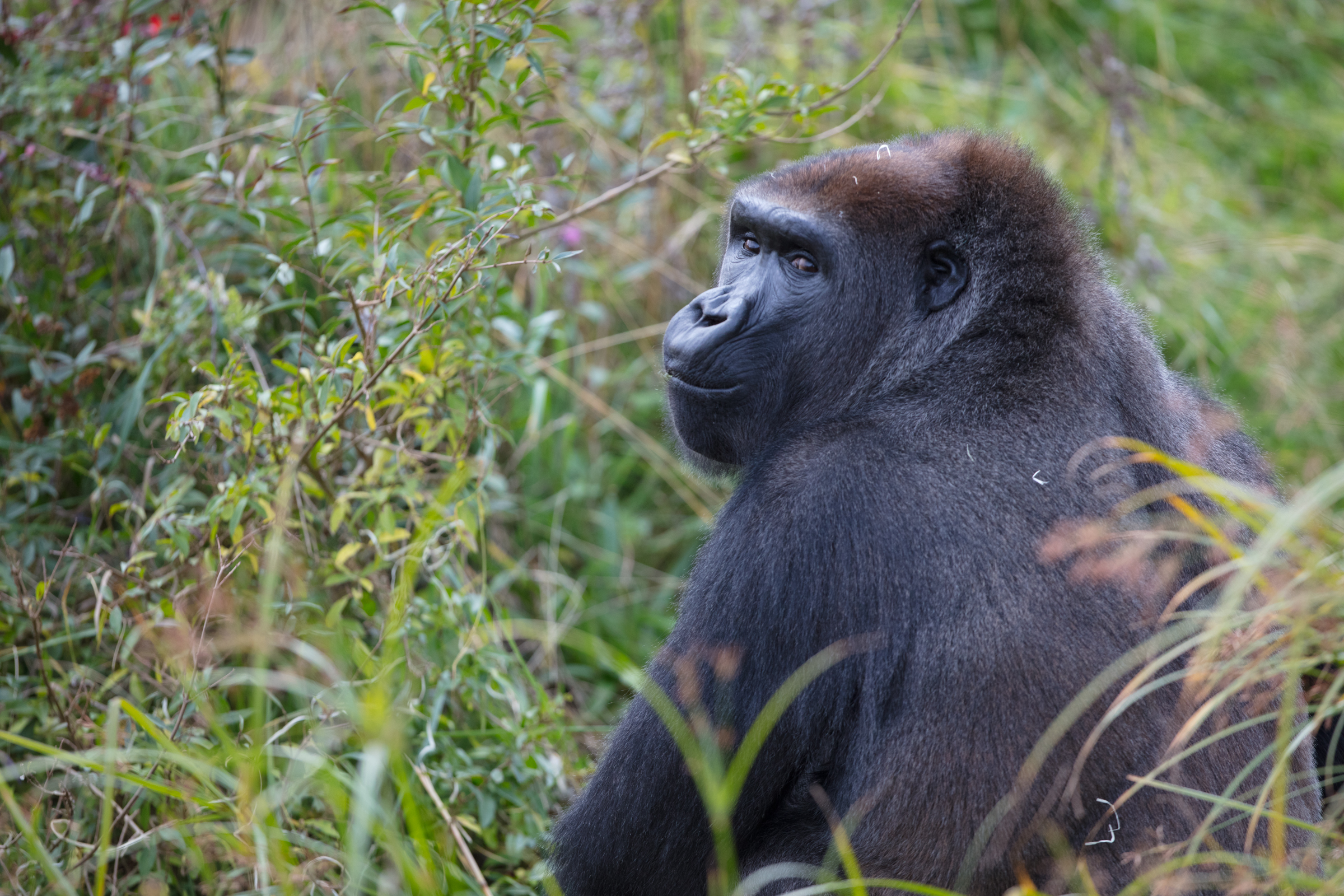
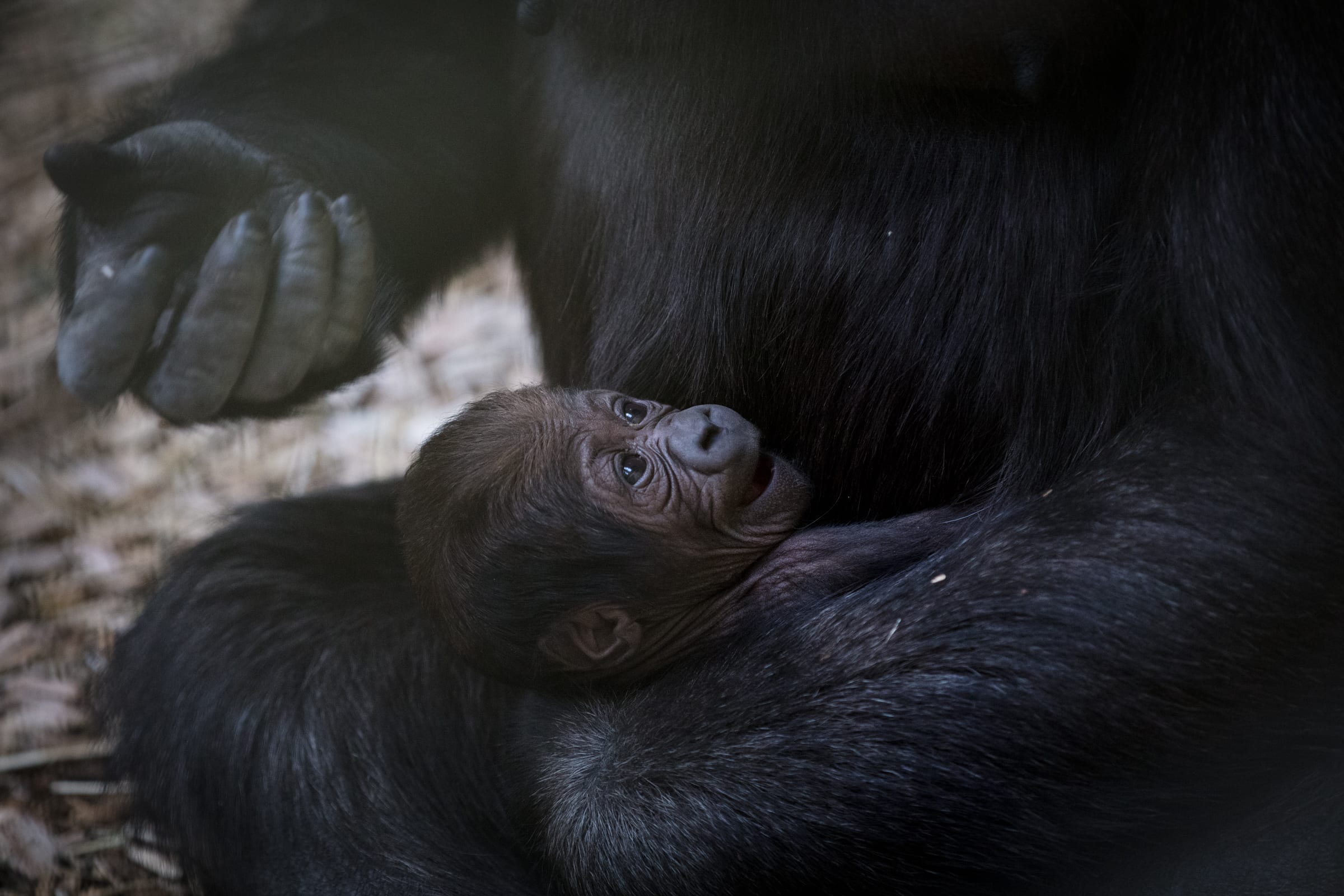
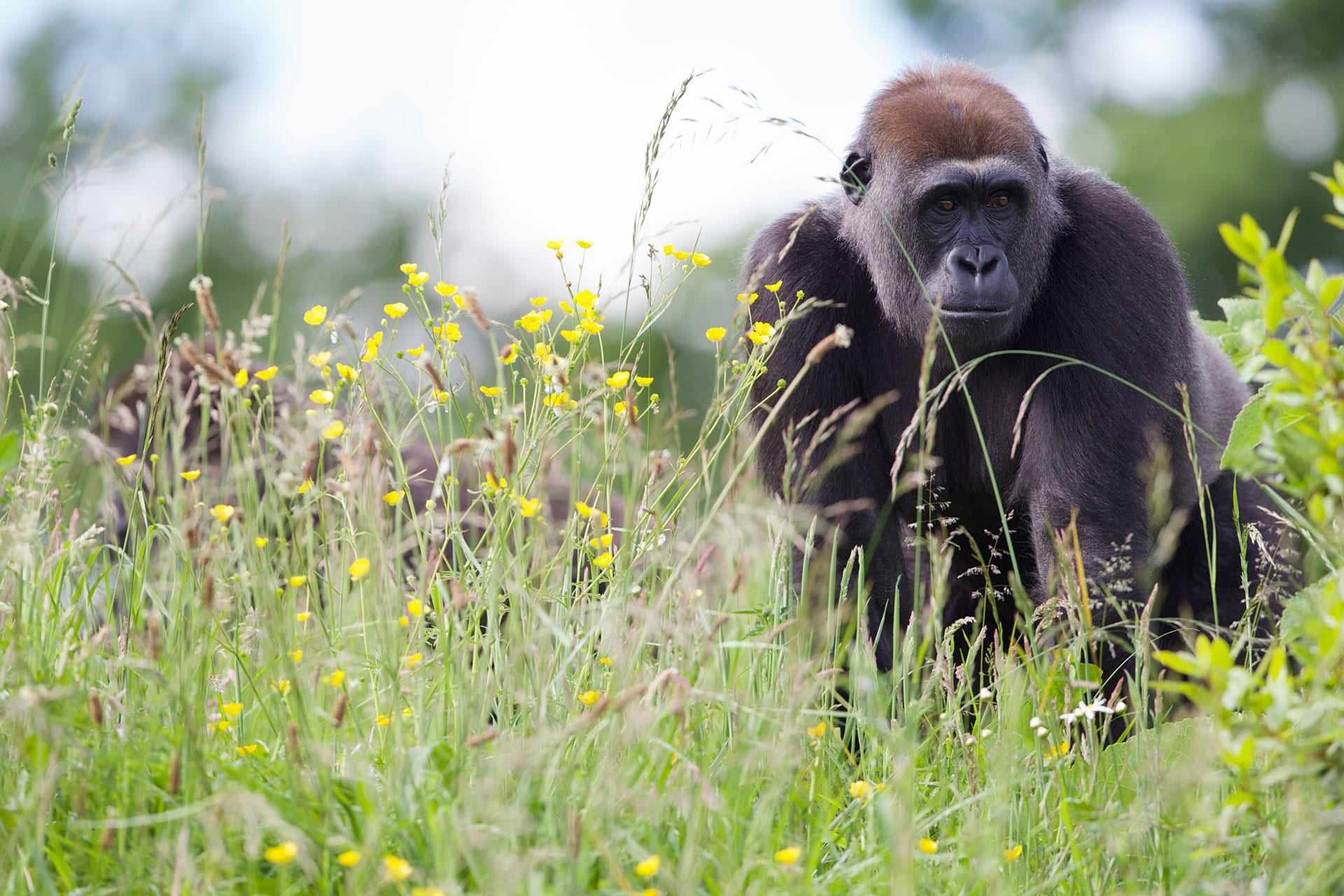
Western lowland gorillas are a subspecies of the Western gorilla, one of two species of gorilla. They are large primates with black-brown hair, which covers the whole body excluding the face, ears, palms and the soles of their feet. Males are larger than females and grow silver hair on their back when they become the dominant male. This gives them the name ‘silverback’. The western lowland gorilla is the smallest of the four subspecies of gorillas.
General Information
Zoo location
African plains
Animal class
Mammalia
Animal order
Primates
Where do they live (Natural habitat)?
Western lowland gorillas live in tropical rainforests and lowland swampy forests in Angola, Cameron, Central African Republic, Congo, Equatorial Guinea and Gabon.
How long do they live?
35 years old in the wild and approximately 55 years old in zoos.
What do they eat?
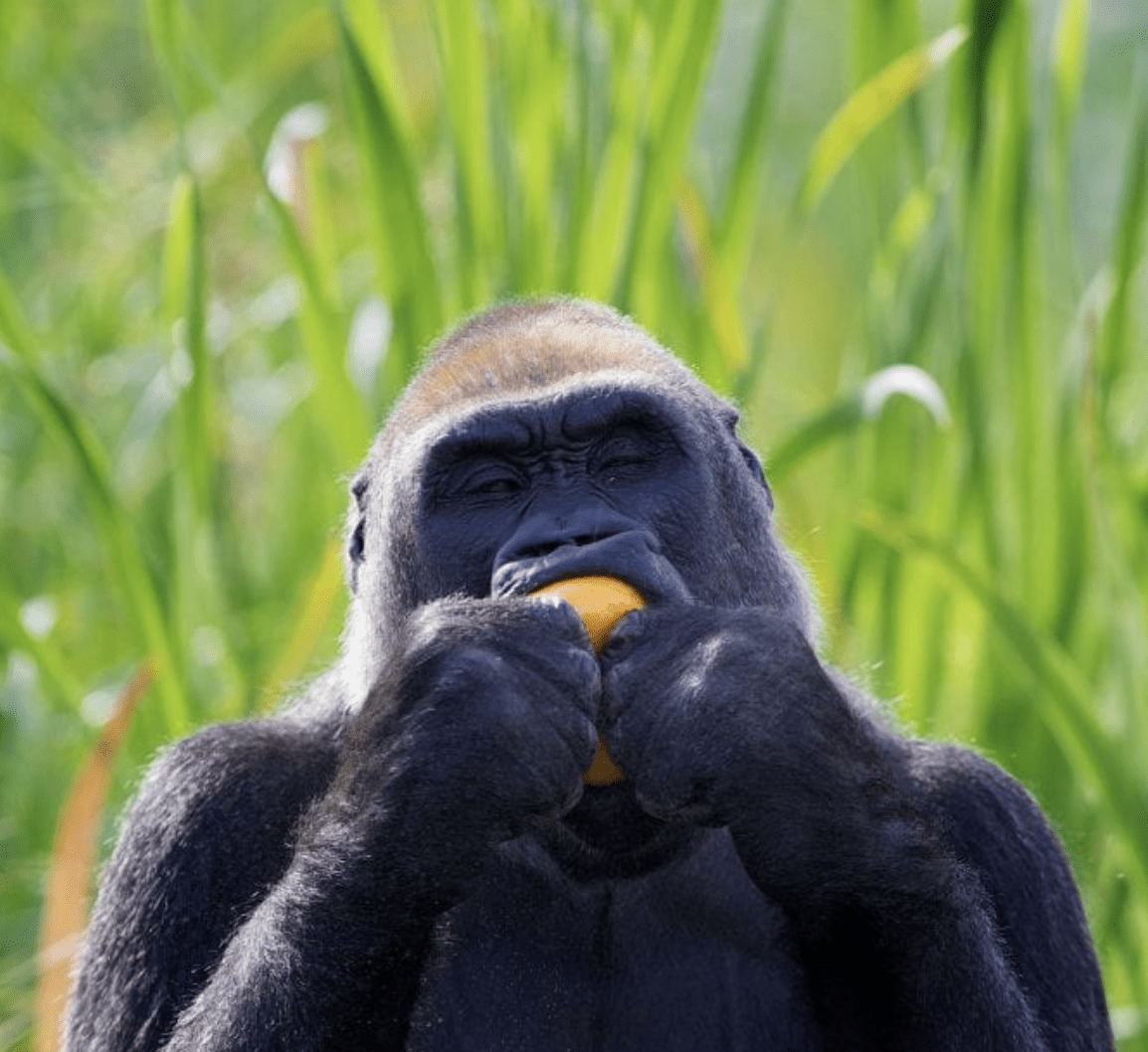
An adult male will eat up to 18 kilograms of food each day; that is equal to the weight of over 100 bananas. Their diet includes fruit, seeds, leaves, stems, bark, shoots, roots, petioles, bracts, vine tendrils, invertebrates and earth.
Group name
Troop
Closest related species / sister species
The closest relative of the western lowland gorilla is the other subspecies of western gorilla, the Cross River gorilla.
Fun Facts!
The Western lowland gorilla
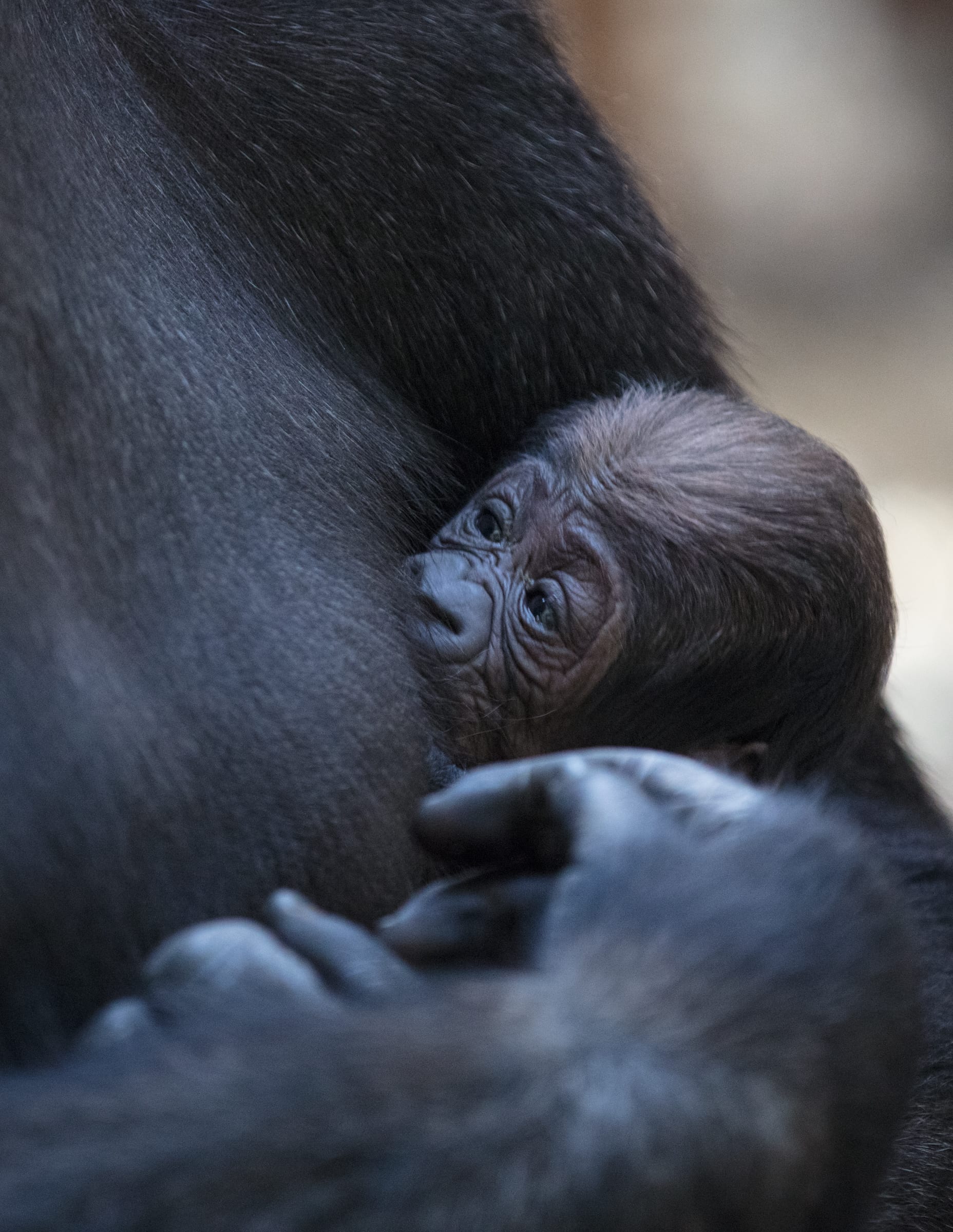
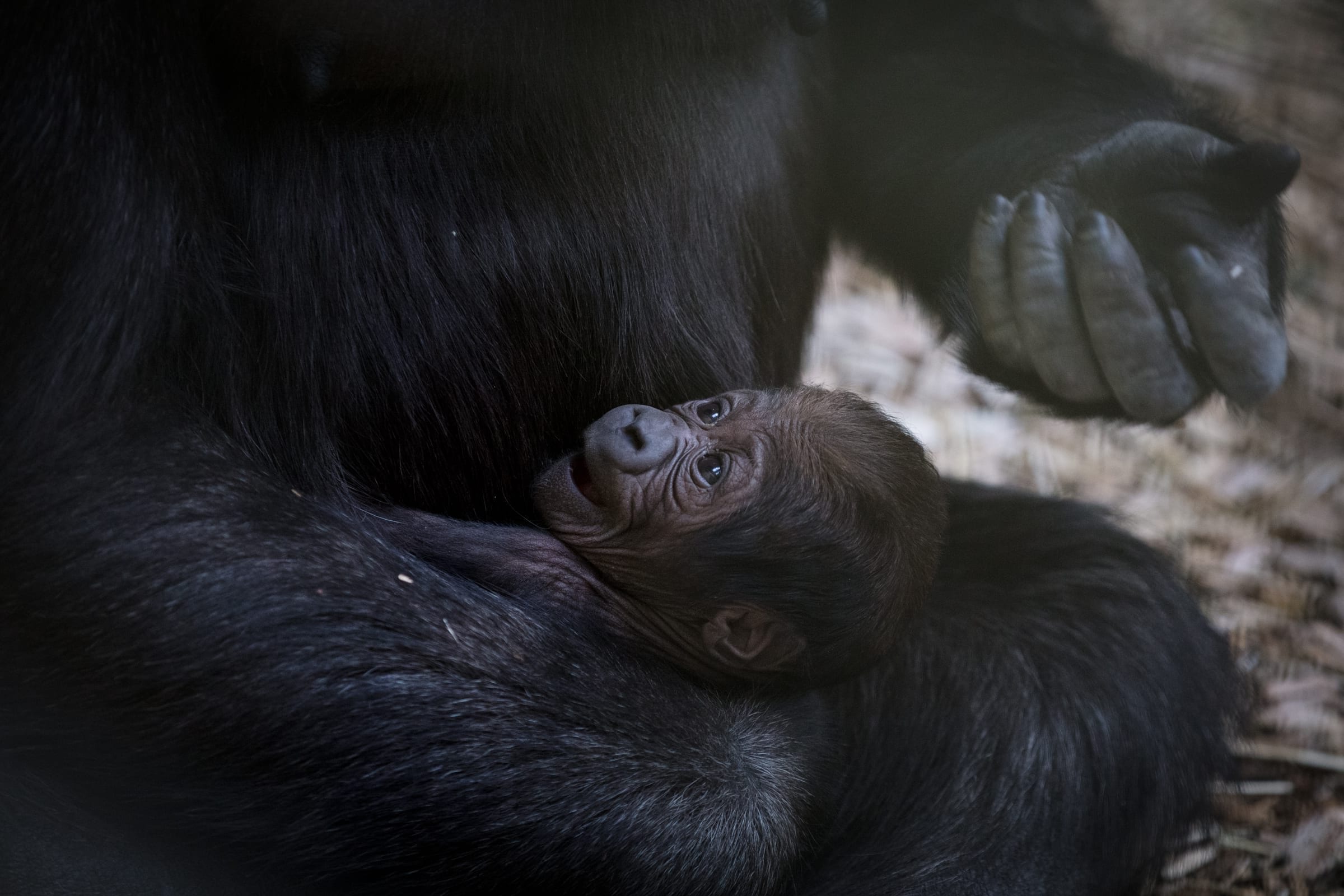
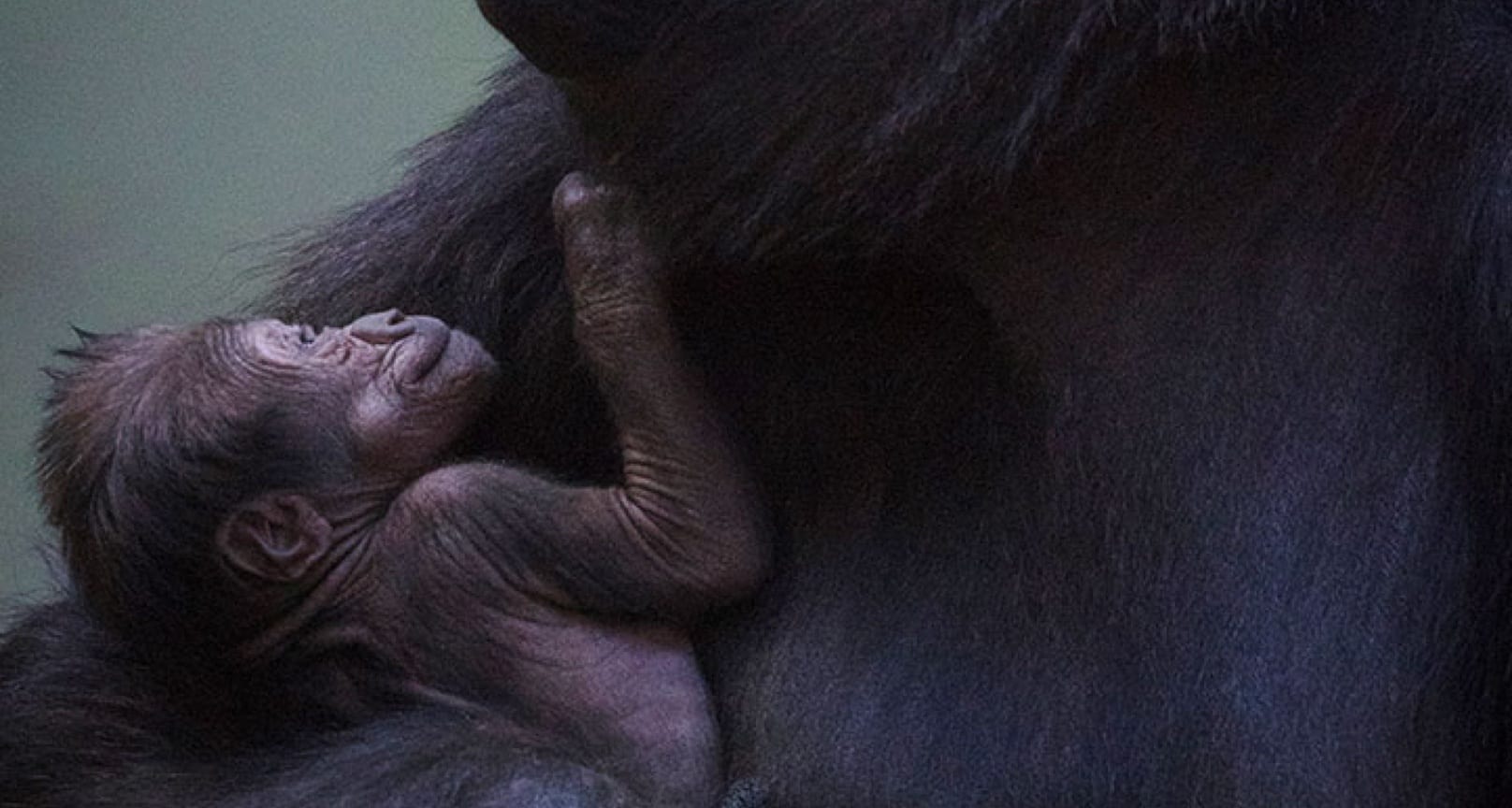
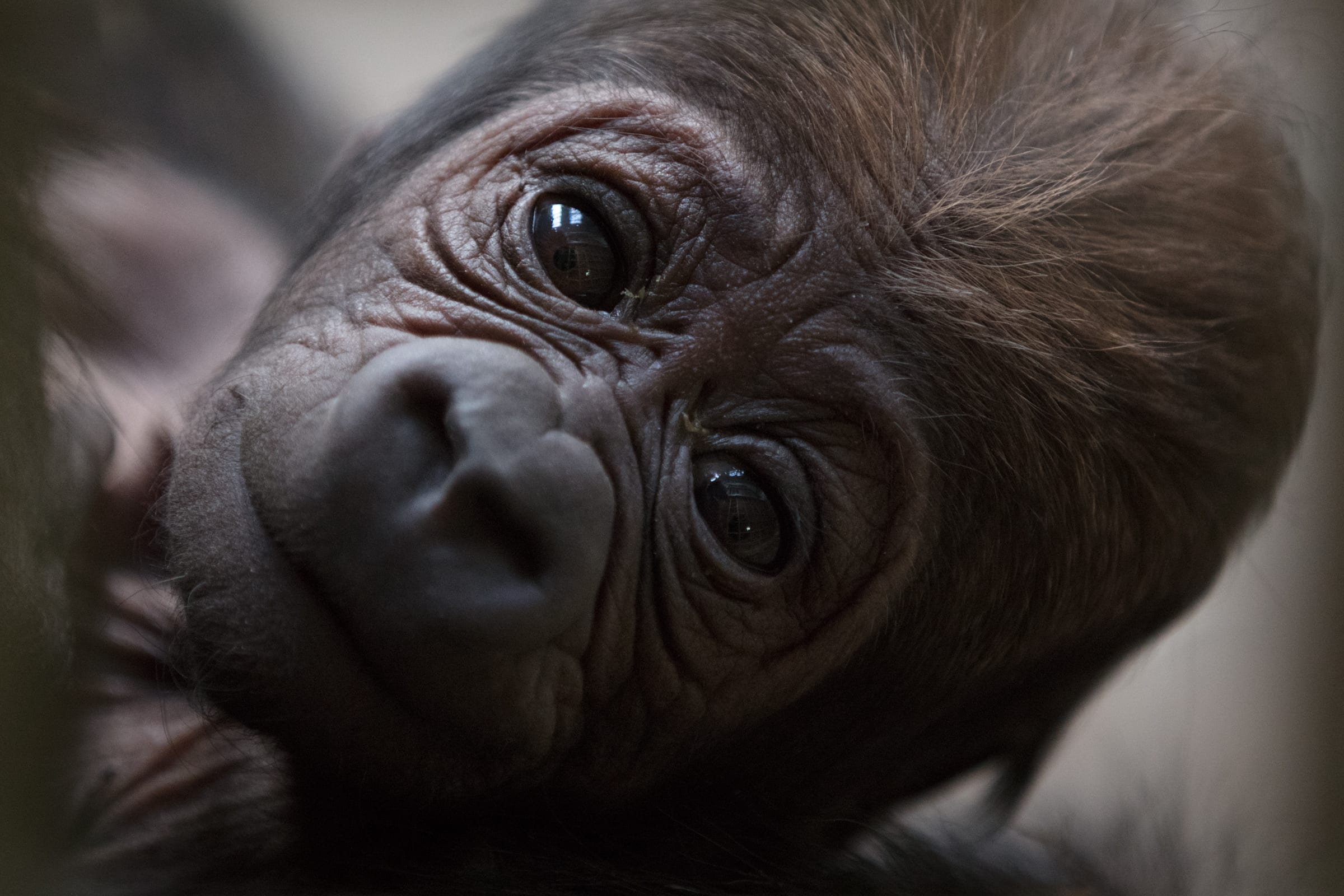
Family life
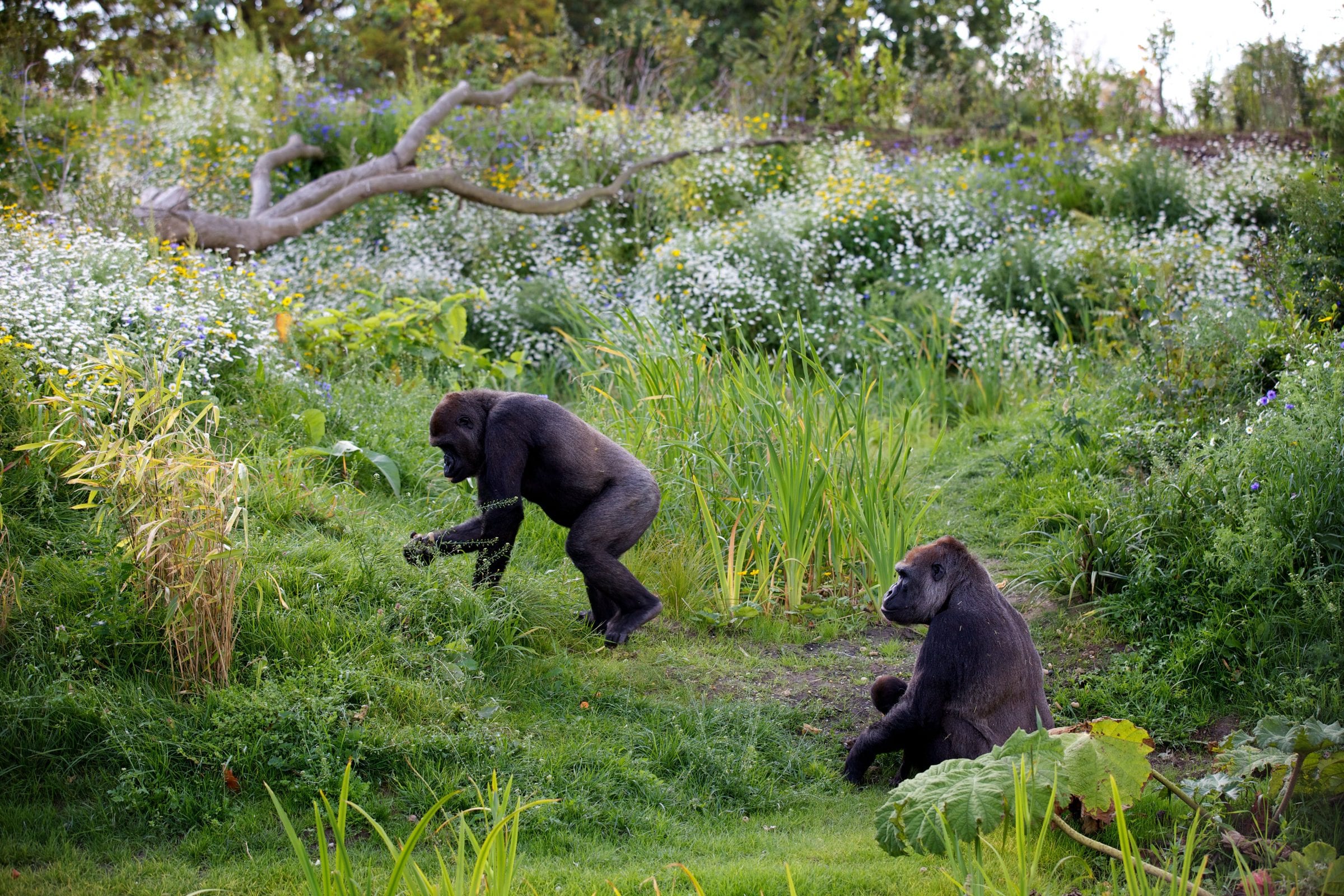
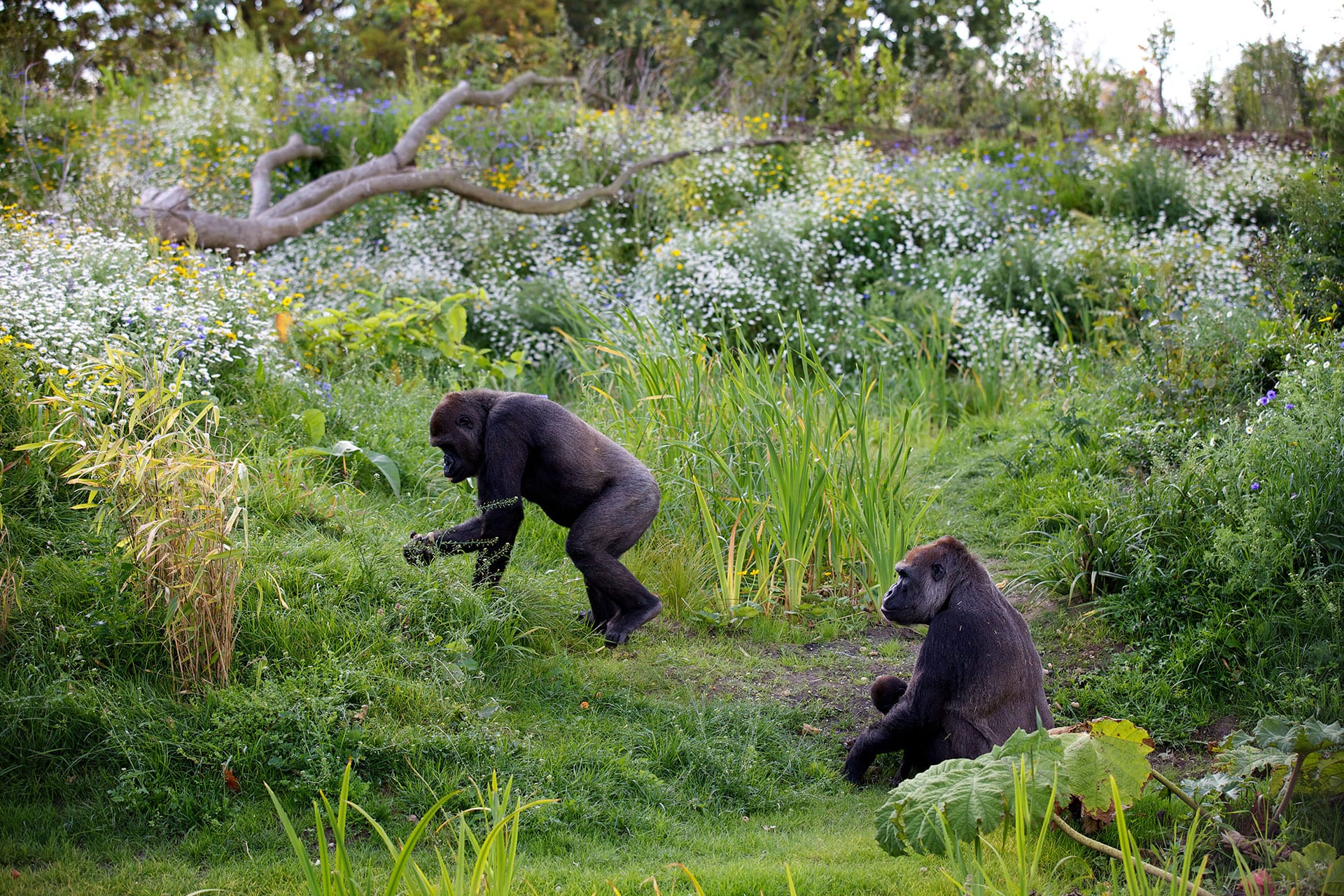
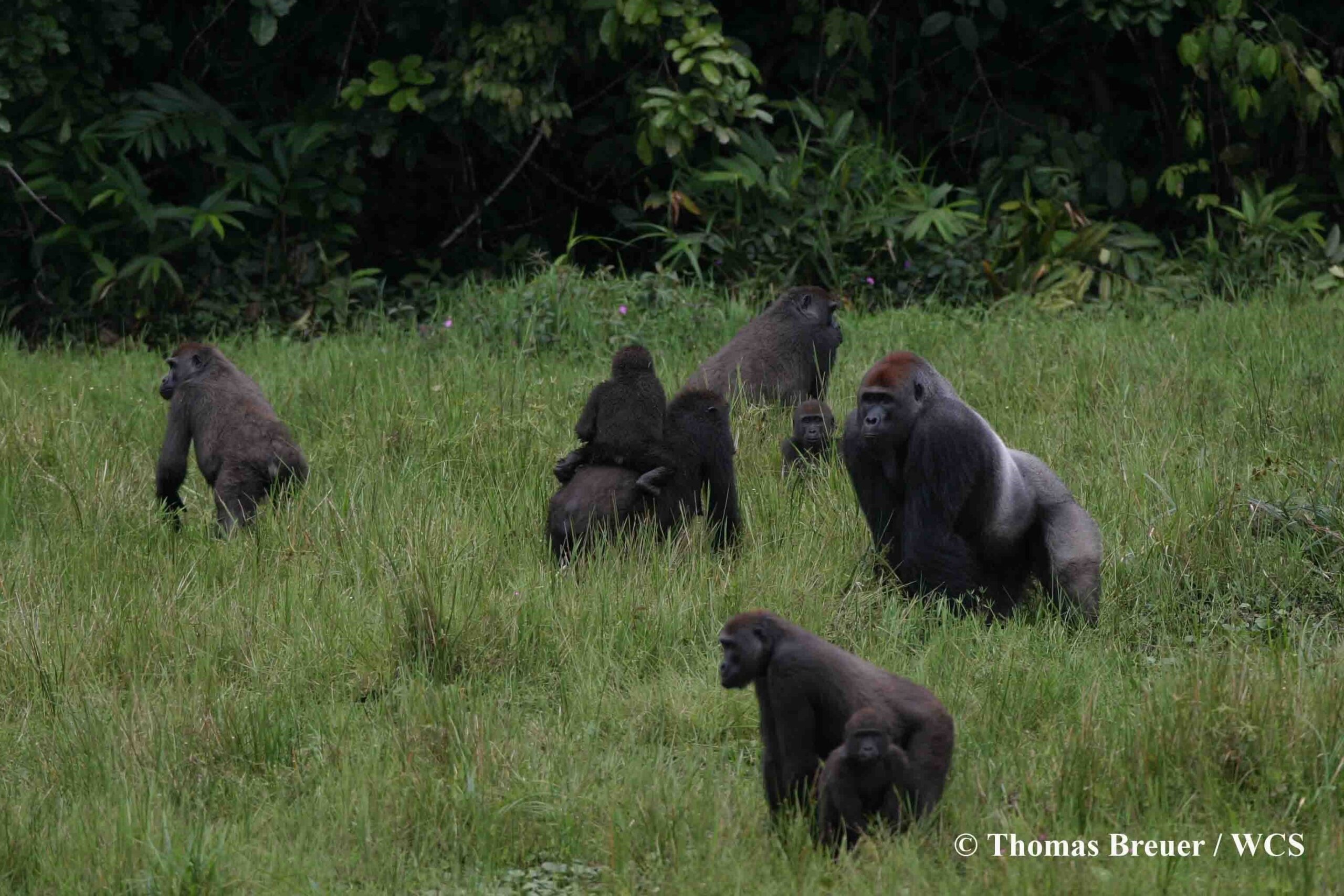
Western lowland gorillas live in troops of approximately 4-8 individuals led by a dominant male, the ‘silverback’. This is a smaller troop size than other gorilla subspecies. Adult males may also travel for years in ‘bachelor groups’ (groups of males) after they leave their birth group, until they become silverbacks and are able to attract females and establish their own troop.
Baby name
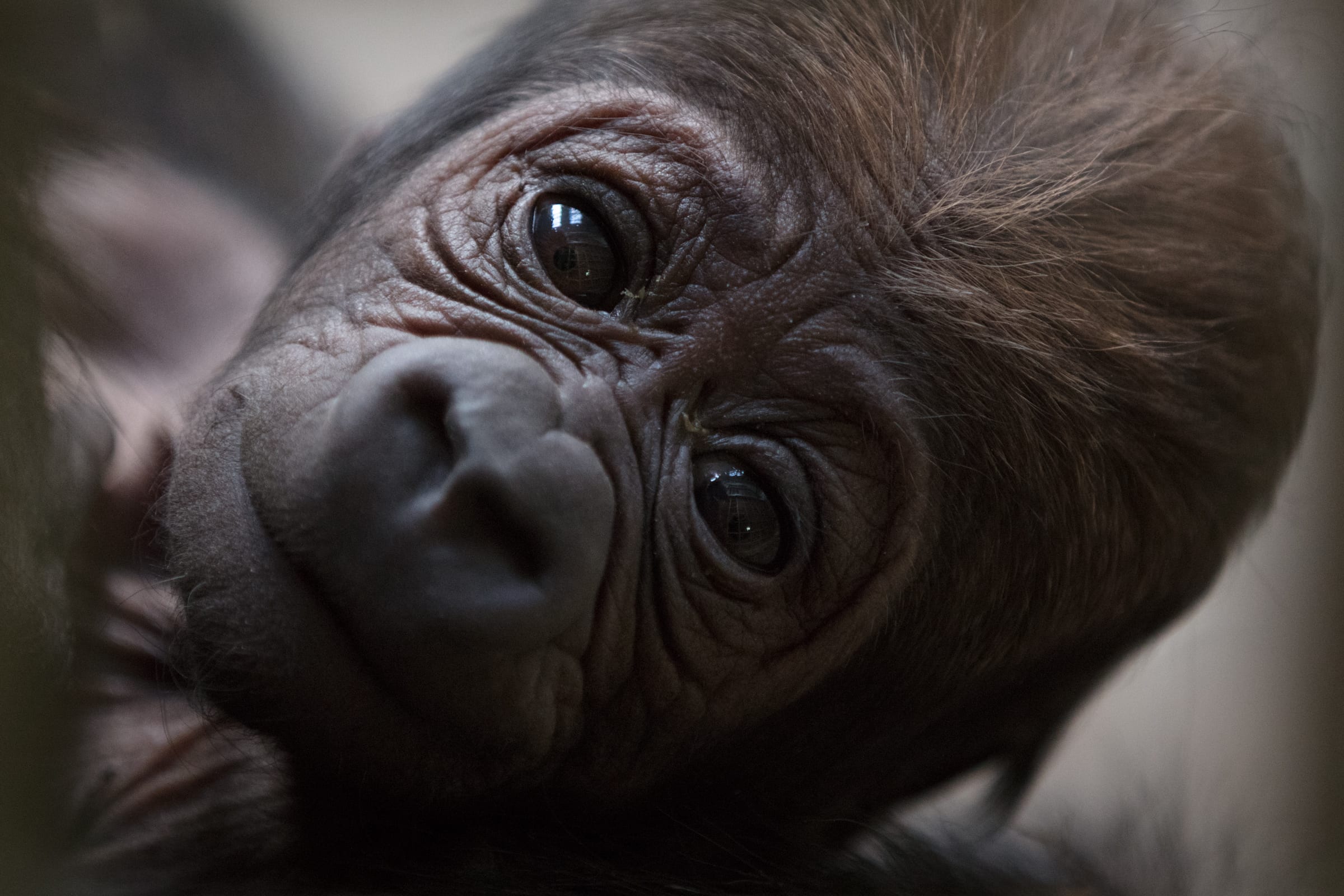
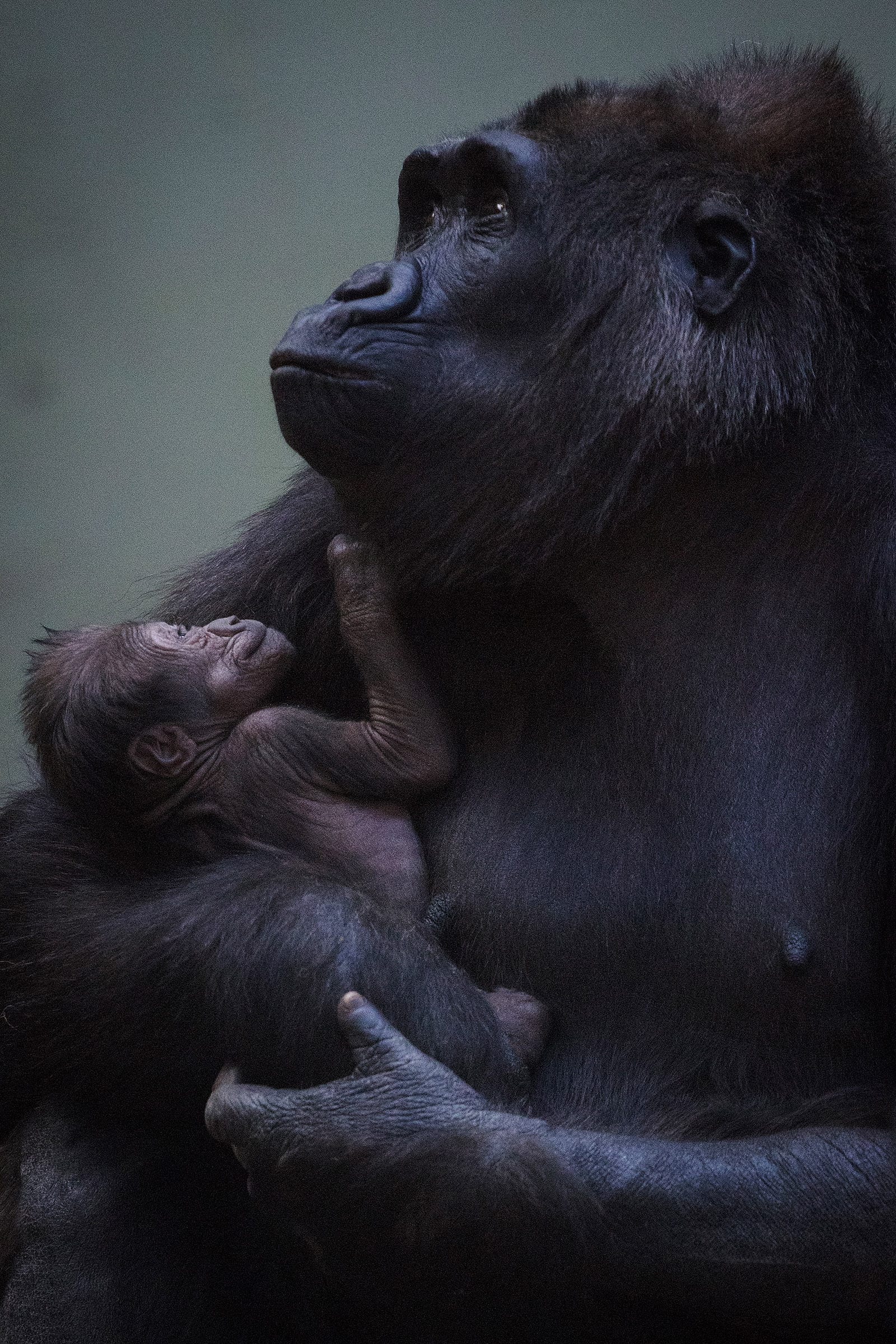
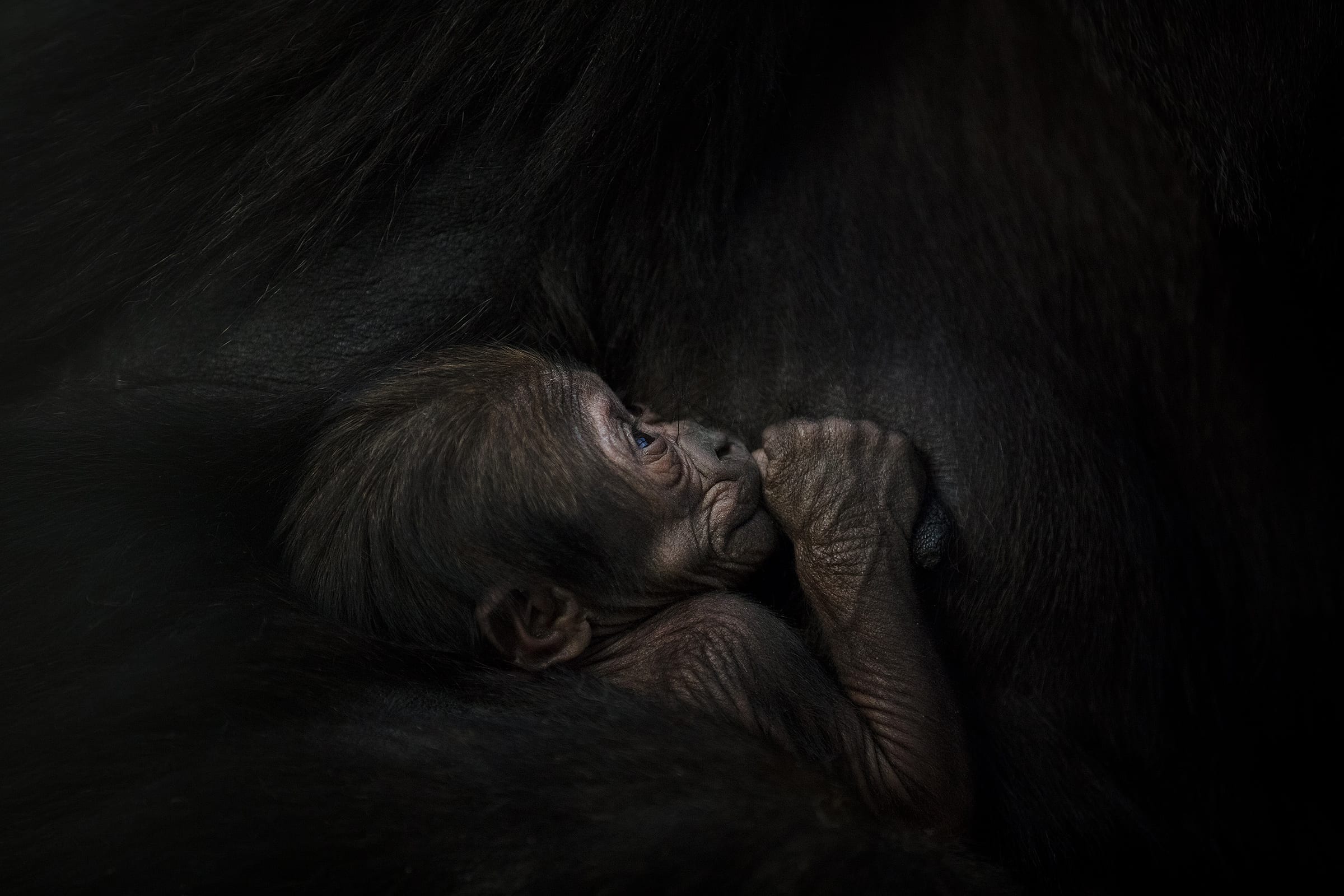
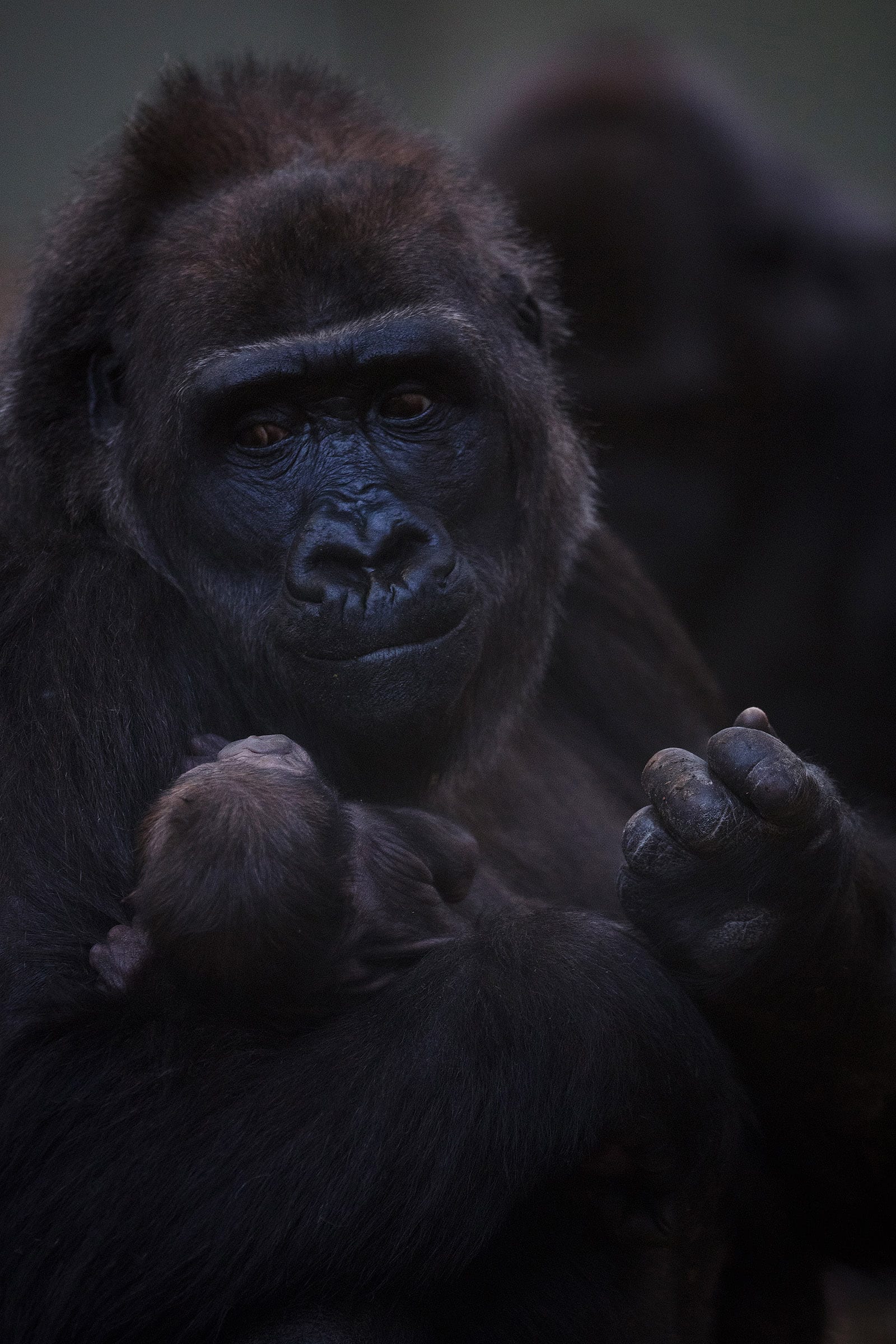
Infant
Gestation (pregnancy) period
8.5-9 months
Number of young at birth
One
Weight at birth
Approximately 2 kg
Age at maturity
Between 8-12 years old for females, males a few years later at greater than 13 years old.
Size male adult
1.5 – 1.8 m in height standing upright. Approximately 140-270 kg
Size female adult
Approximately 1.5 m in height standing upright. Approximately 90-130 kg
Conservation
Critically Endangered
Western lowland gorillas are classified as Critically Endangered by the International Union for Conservation of Nature (IUCN).
Current population estimate
There are an estimated 315,000 western lowland gorillas remaining in the wild, but their numbers are dropping by approximately 2.7% every year.
Threats
The main threats to western lowland gorillas are destruction of their habitat due to mining, deforestation and climate change, poaching for bushmeat and disease (e.g. Ebola virus).
What is Dublin Zoo doing?
In 2010, Dublin Zoo began supporting the Mbeli Bai Study in the Republic of Congo. This project has been collecting valuable long-term data on western lowland gorillas in Mbeli Bai in the Nouabalé-Ndoki National Park since 1995. The Mbeli Bai Study also raises awareness about gorillas in the local area including educating children about local wildlife to discourage the hunting and eating of gorillas.
Frequently Asked Questions
It is thought that a male gorilla is anywhere from four to nine times stronger than a human male.
According to the Guinness Book of Records, a silverback gorilla can lift up to 815 kilograms (1800 pounds) of dead weight. Meanwhile, a well-trained human could lift a maximum of 410 kilograms (900 pounds) – half as much as the gorilla can manage. This is, of course, a rough calculation.
Western lowland gorillas are omnivores (eat both meat and plants). Their diet includes fruit, seeds, leaves, stems, bark and roots, as well as invertebrates such as termites and ants.
Gorillas live to around 35 years in the wild and up to 55 years in zoos.
The western lowland gorilla’s diet is mainly made up of fruit, seeds, leaves, stems, bark and roots. However, they do also eat invertebrates such as termites and ants.
Males can weigh between 140-270 kg, females are generally smaller than males.
Yes, they are great apes, a group that also includes chimpanzees, orangutans, bonobos and humans.
They are classified as Critically Endangered due to habitat loss, climate change, poaching for bushmeat and disease.
No, humans are the only apes that can swim.
A group of gorillas is called a troop.
Although their diet is mainly herbivorous (made up of plants), they do also eat invertebrates such as ants and termites, making them omnivores.
Males can reach up to 1.8 m in height. Females are usually slightly shorter.
An infant
No, they are apes so they possess no tail.
Yes.