Western chimpanzee
One of the four subspecies of the common chimpanzee
Species
Mammals
Habitat
Forest
Diet
Omnivores
Conservation Status
Critically Endangered
Western chimpanzee
Pan troglodytes verus
Irish Name: Simpeansaí iartharach
ICUN Status: Critically Endangered
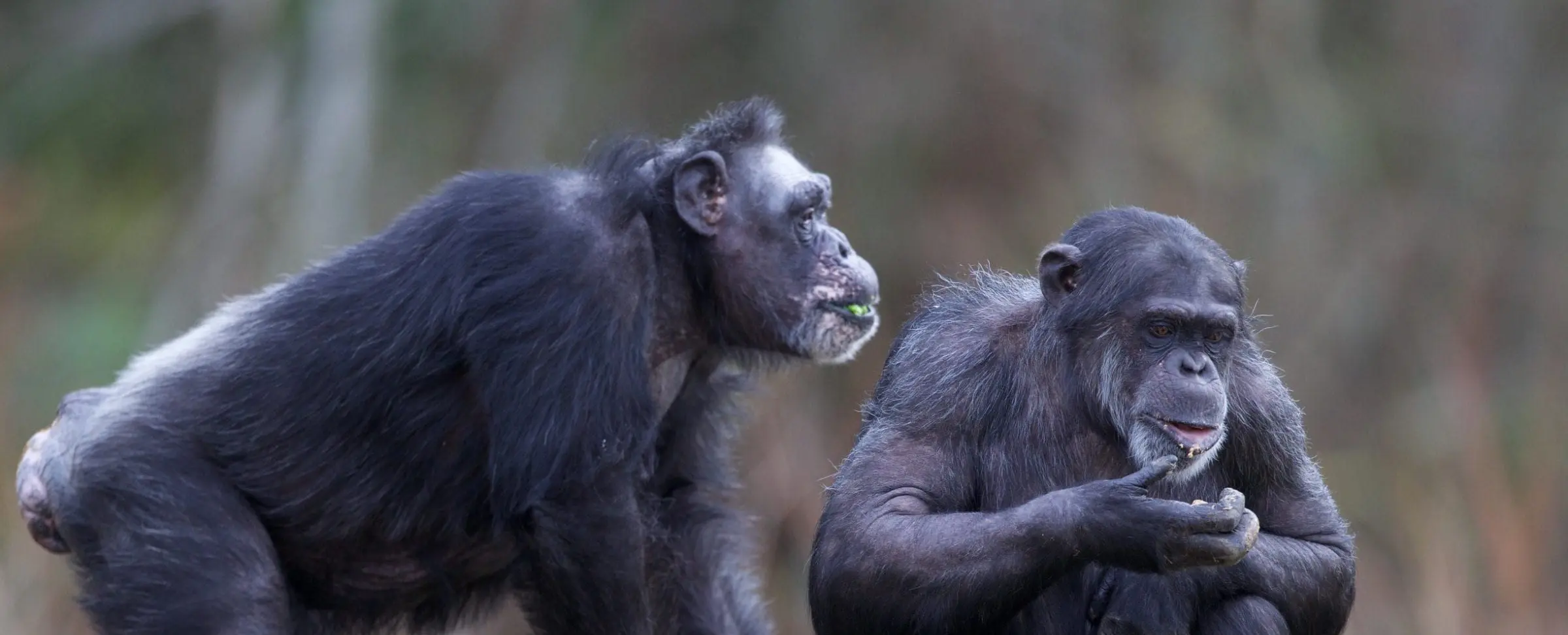
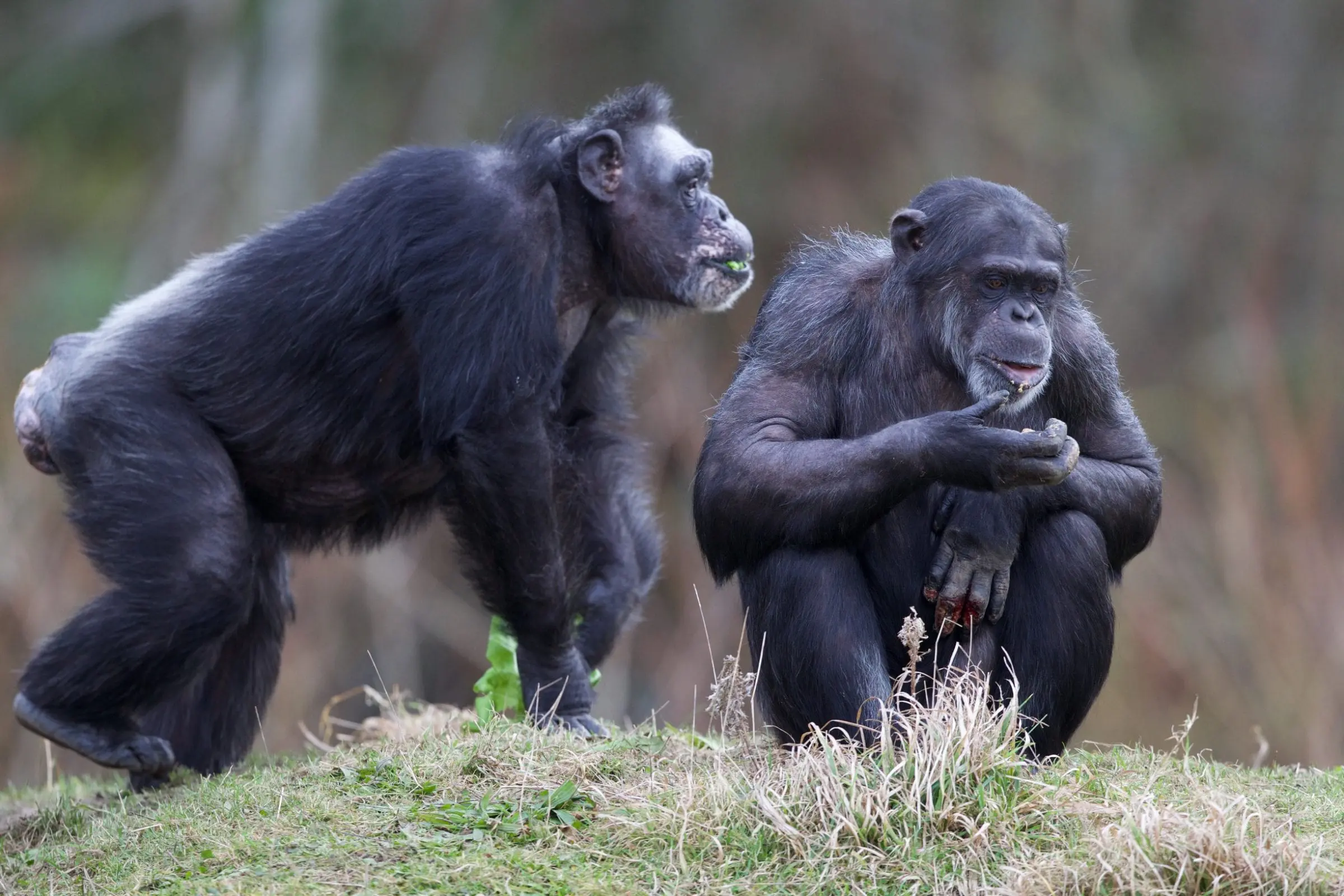
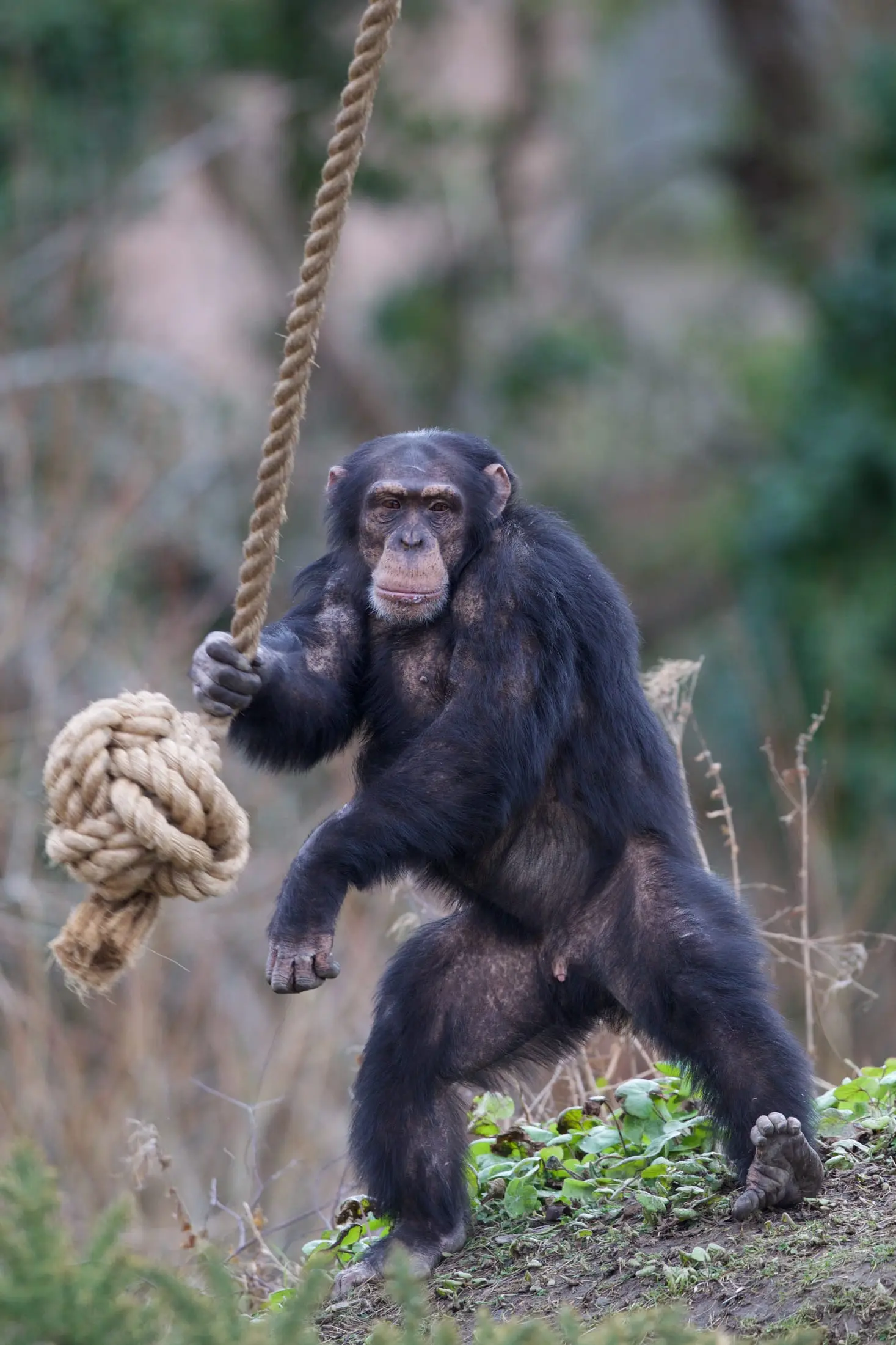
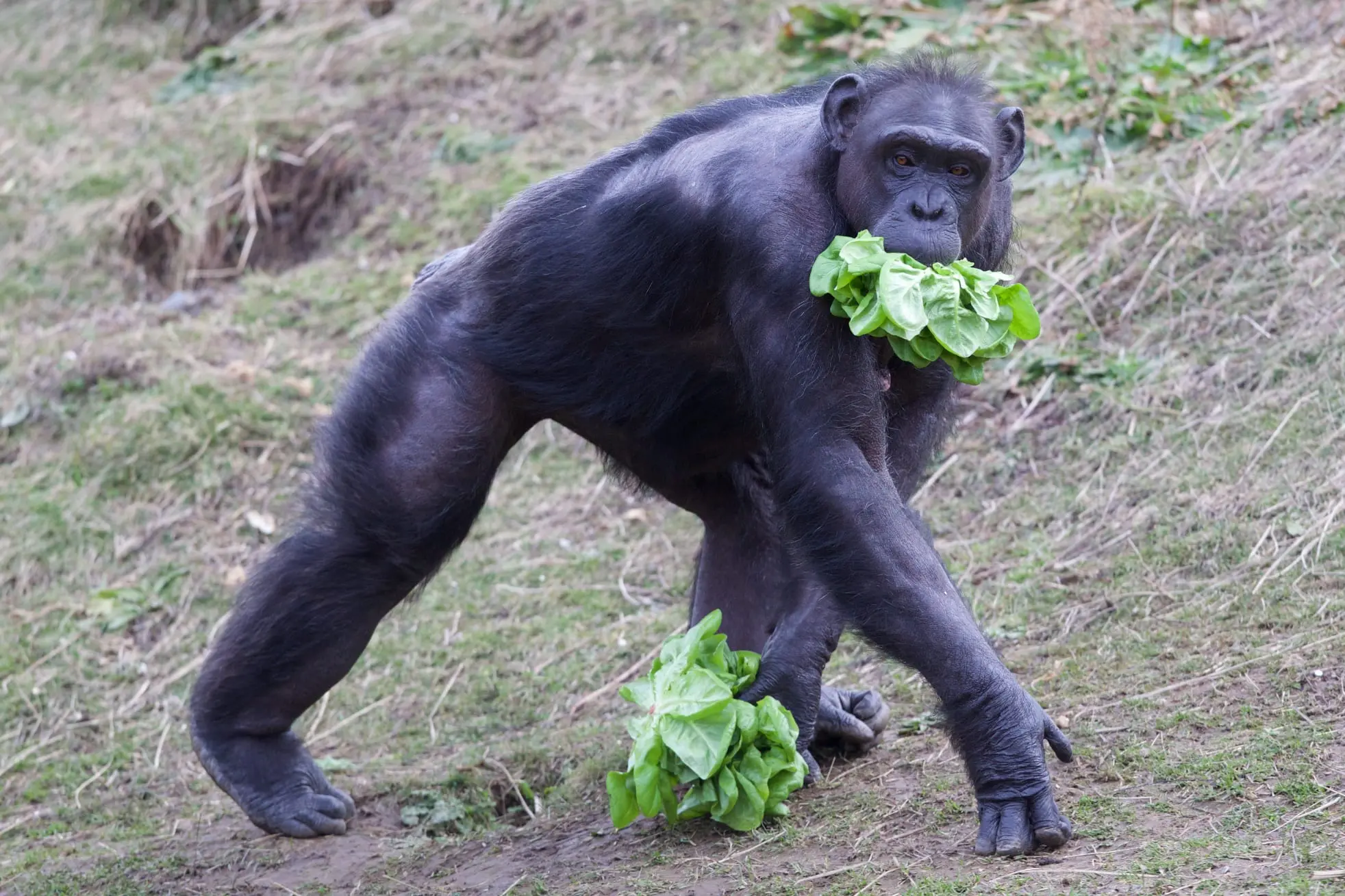
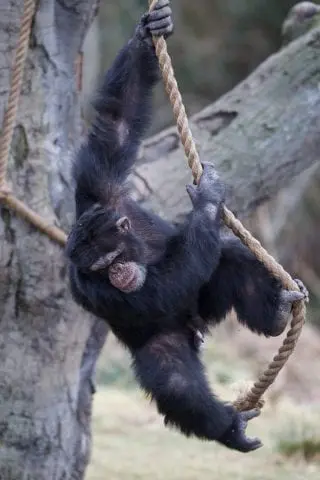
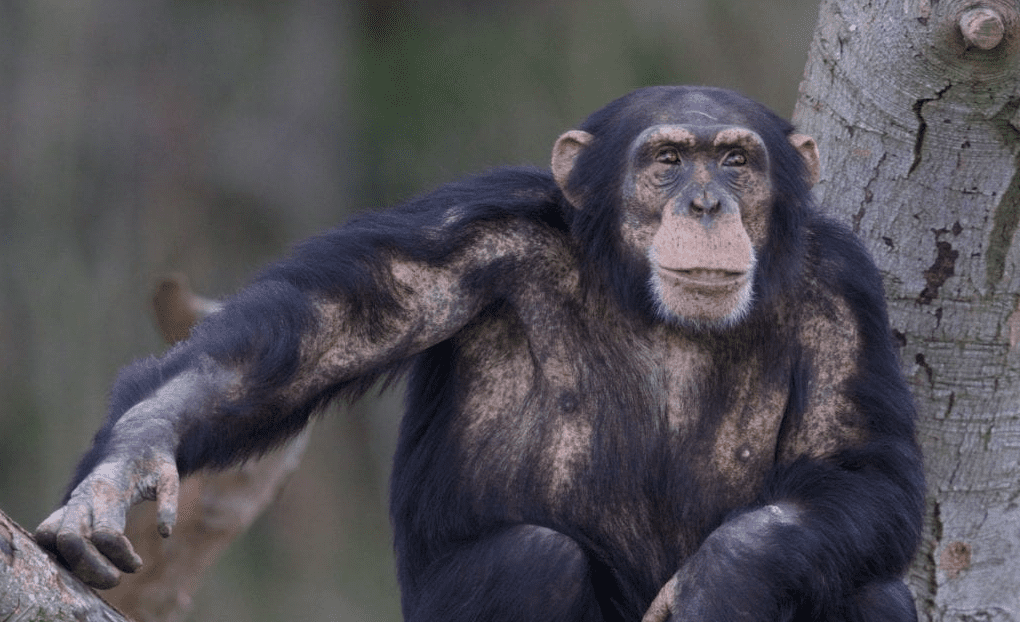
Western chimpanzees are one of the four subspecies of the common chimpanzee. They are similar in size to a human and have a coat of black hair. Chimpanzees have long arms, hands, and fingers, which help them climb trees and swing from branch to branch.
General Information
Zoo location
African Plains, beside the Gorilla Rainforest.
Animal class
Mammalia
Animal order
Primates
Where do they live (Natural habitat)?
Western chimpanzees live in a range of West African forest habitats including lowland tropical forests, mountainous forests and swamp forests.
How long do they live?
Up to 40-50 years in the wild, and more than 60 years in zoos.
What do they eat?
Western chimpanzees are omnivores. They mainly eat fruit, leaves, seeds and flowers, but also feed on insects and honey.
Group name
Community
Closest related species / sister species
The western chimpanzee’s closest relatives are the other three subspecies of the common chimpanzee, these are the eastern chimpanzee, central chimpanzee and Nigeria-Cameroon chimpanzee.
Fun Facts!
The Western chimpanzee

Family life
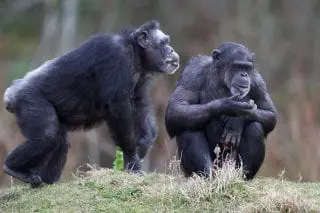
Chimpanzees are highly social animals. Western chimpanzees live in groups that range in size from 11 to 63 individuals. Each community has a home range that they defend from outsiders. These groups are hierarchical with a dominant male. They can communicate with a range of vocalisations and facial expressions, and maintain friendships by grooming each other.
Baby name
Infant
Gestation (pregnancy) period
7 to 8 months
Number of young at birth
1
Weight at birth
Approximately 2 kg
Age at maturity
Females reach maturity between 12 and 14 years old, and males at 15 years old. When a female is ready to mate, the skin around her bottom swells up and turns pink.
Size male adult
Males can be up to 77 – 96 cm in length and can weigh 40 – 60 kg.
Size female adult
Females are slightly smaller and can measure 68 – 91 cm in length and typically weigh 45 – 55 kg.
Conservation
IUCN status
The western chimpanzee is listed as Critically Endangered by the International Union for Conservation of Nature.
Current population estimate
Less than 65,000.
Threats
The main threats to western chimpanzees are poaching for the illegal bushmeat, pet trade and the destruction of their rainforest habitat due to logging, mining and agriculture. They are also susceptible to diseases such as Ebola virus.
What is Dublin Zoo doing?
Since 2009, Dublin Zoo has worked with the Tacugama Chimpanzee Sanctuary in Sierra Leone which rehabilitates rescued chimpanzees and is involved in community outreach programmes, wildlife monitoring and promoting responsible tourism. Dublin Zoo also participates in the European Endangered Species Breeding Programme for western chimpanzees.
Frequently Asked Questions
Western chimpanzees are omnivores. The mainly eat fruit, leaves, seeds and flowers, but also feed on insects and honey.
Yes, western chimpanzees are classified as Critically Endangered by the IUCN.
Research suggests that human ancestors and the ancestors of modern chimpanzees split genetically approximately 5-8 million years ago. Humans are not evolved from chimpanzees, but instead, they have a common ancestor and are closely related.
Western chimpanzees live in a range of West African forest habitats including lowland tropical forests, mountainous forests and swamp forests.
The chimpanzee’s greatest natural predators are leopards and lions, however, their greatest threat is humans.
The IUCN first classified chimpanzees as Vulnerable in 1986. This changed to Endangered in 1996. As of 2016, western chimpanzees are classified as Critically Endangered.
Many African cultures lived near chimpanzees for thousands of years. Europeans first encountered chimpanzees during the 17th century and soon after, they began to be taken back to Europe as gifts. The name “chimpanzee” was first recorded during the 1700s, originating from a local Angolan term for ‘mock man’.
Western chimpanzees spend time on the ground, where they generally walk on all fours (knuckle-walking), but can also stand and walk upright. They also spend time in the trees, mainly when searching for food. They build tree nests to sleep in every night.
A chimp community is dominated by an alpha male. Male chimpanzees are known to show their dominance using power displays: they scream, stamp their feet, throw rocks, and their hair stands on end so they look bigger. This may scare other chimpanzees and keep them from picking a fight. The females also have a hierarchical order.
Research and scientific observations of chimpanzees has shown that many primates including chimpanzees are highly intelligent. This is evidenced by their use of tools, complex communication systems and patterns of behaviour.
In 2016, the conservation status of western chimpanzees changed from Endangered to Critically Endangered due to increased threats to this subspecies. These threats include poaching for the illegal bushmeat, pet trade and the destruction of their rainforest habitat due to logging, mining and agriculture. They are also susceptible to diseases such as Ebola virus.
Chimpanzees are primates – a group that includes monkeys and apes – but they are great apes, not monkeys. One of the main physical differences between monkeys and apes is that most monkeys have tails but apes do not.