Vietnamese pond turtle
The Annam leaf or Vietnamese pond turtle is one of the world’s most endangered turtles
Species
Reptiles
Habitat
Wetlands
Diet
Omnivores
Conservation Status
Critically Endangered
Vietnamese pond turtle
Mauremys annamensis
Irish Name: Lochthurtar Annam
ICUN Status: Critically Endangered
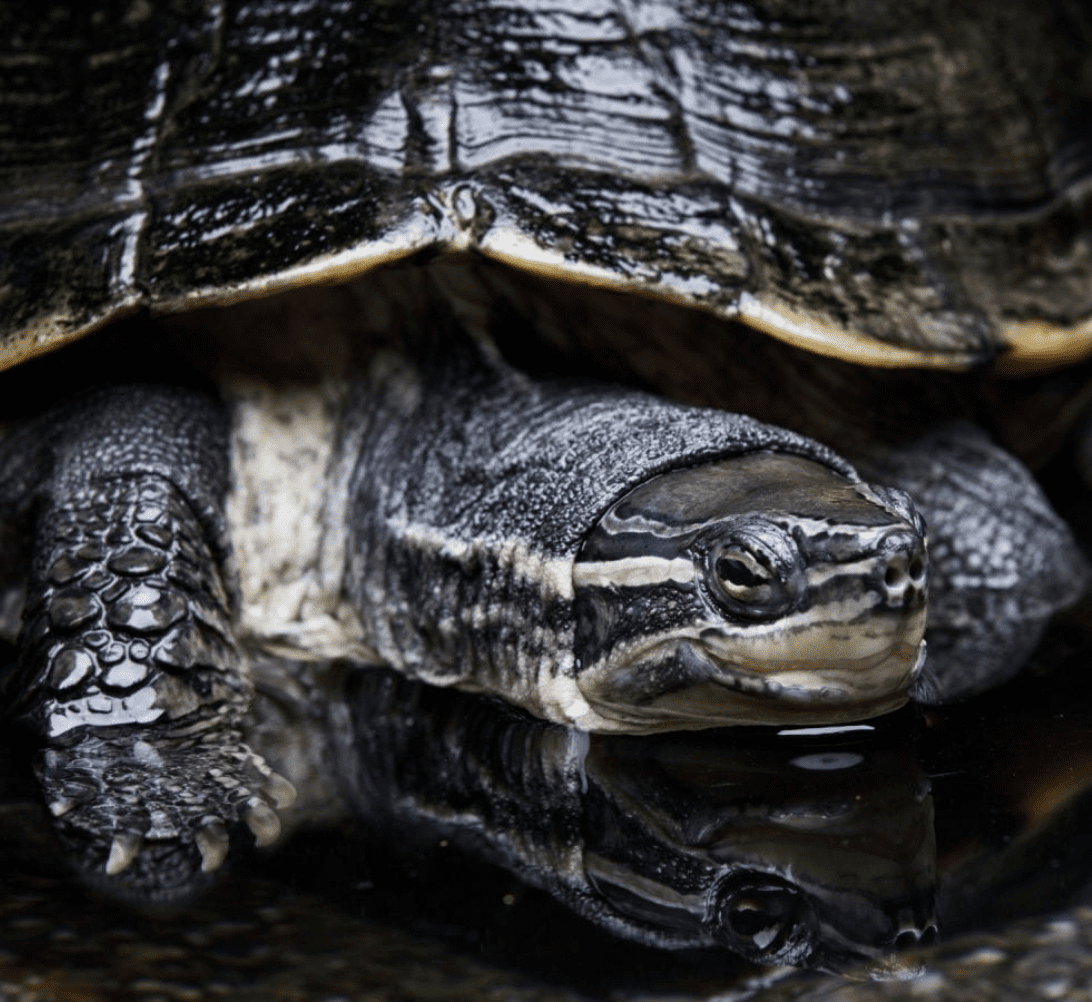
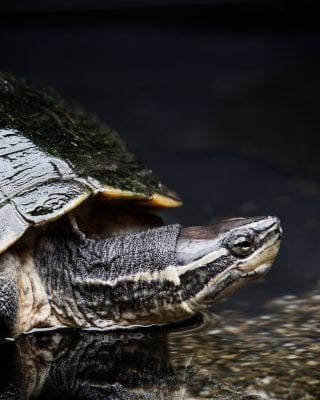
The Annam leaf or Vietnamese pond turtle is one of the world’s most endangered turtles. They have a dark head with three or four yellow stripes on their neck. Their shell is dark brown/black.
General Information
Zoo location
Zoorassic World
Animal class
Reptilia
Animal order
Testudines
Where do they live (Natural habitat)?
Vietnamese pond turtles are found in marshes, streams, lakes and ponds in central Vietnam.
How long do they live?
Information on their lifespan in the wild is unknown. The longest-living Vietnamese pond turtle in a zoo has been 46 years old.
What do they eat?
Little is known about their diet in the wild. In zoos, they are omnivores, and feed on fish and vegetables.
Group name
A group of turtles is called a “bale”
Closest related species / sister species
The closest related species of the Vietnamese pond turtle is the yellow pond turtle.
Fun Facts!
National Turtle Day
The vietnamese pond turtle
Family life
Knowledge about their life in the wild is limited, given how rare they are. In zoos, they tend to respond well to living in groups.
Baby name
Hatchling
Gestation (pregnancy) period
The incubation period is anywhere between 80–131 days depending on the heat of their environment.
Fascinatingly, the sex of turtle hatchlings depends on the temperature the egg is incubated at. If it is incubated below 28.9 degrees then the hatchlings tend to be male and above 28.9 degrees, they are mostly female.
Number of young at birth
Females lay 1-4 clutches of eggs per year with 4-7 eggs per clutch.
Weight at birth
6.5 – 11 g
Age at maturity
5-7 years old for females. Males unknown
Size male adult
Shell length of 16-21 cm and 0.7-1.7kg in weight.
Size female adult
Shell length of 19-28 cm and 1.3-2.1kg in weight.
Conservation
Critically Endangered
The Vietnamese pond turtle is classified as Critically Endangered by the International Union for Conservation of Nature.
Current population estimate
Surveying the population of Vietnamese pond turtles has been mostly unsuccessful in recent years, indicating that it is now extremely rare in the wild. It is likely that no more than 50 mature individuals remain in the wild.
Threats
The greatest threats to Vietnamese pond turtles are poaching for food, traditional medicine and the pet trade, as well as habitat destruction and pollution.
What is Dublin Zoo doing?
Dublin Zoo participates in a European breeding programme for Vietnamese pond turtles.
Frequently Asked Questions
Vietnamese pond turtles are found in marshes, streams, lakes and ponds in central Vietnam.
The Vietnamese pond turtle is classified as Critically Endangered by the International Union for Conservation of Nature. They are rarely seen in the wild.
The greatest threat to Vietnamese pond turtles is poaching for food, traditional medicine and the pet trade. Other threats include habitat destruction and pollution.