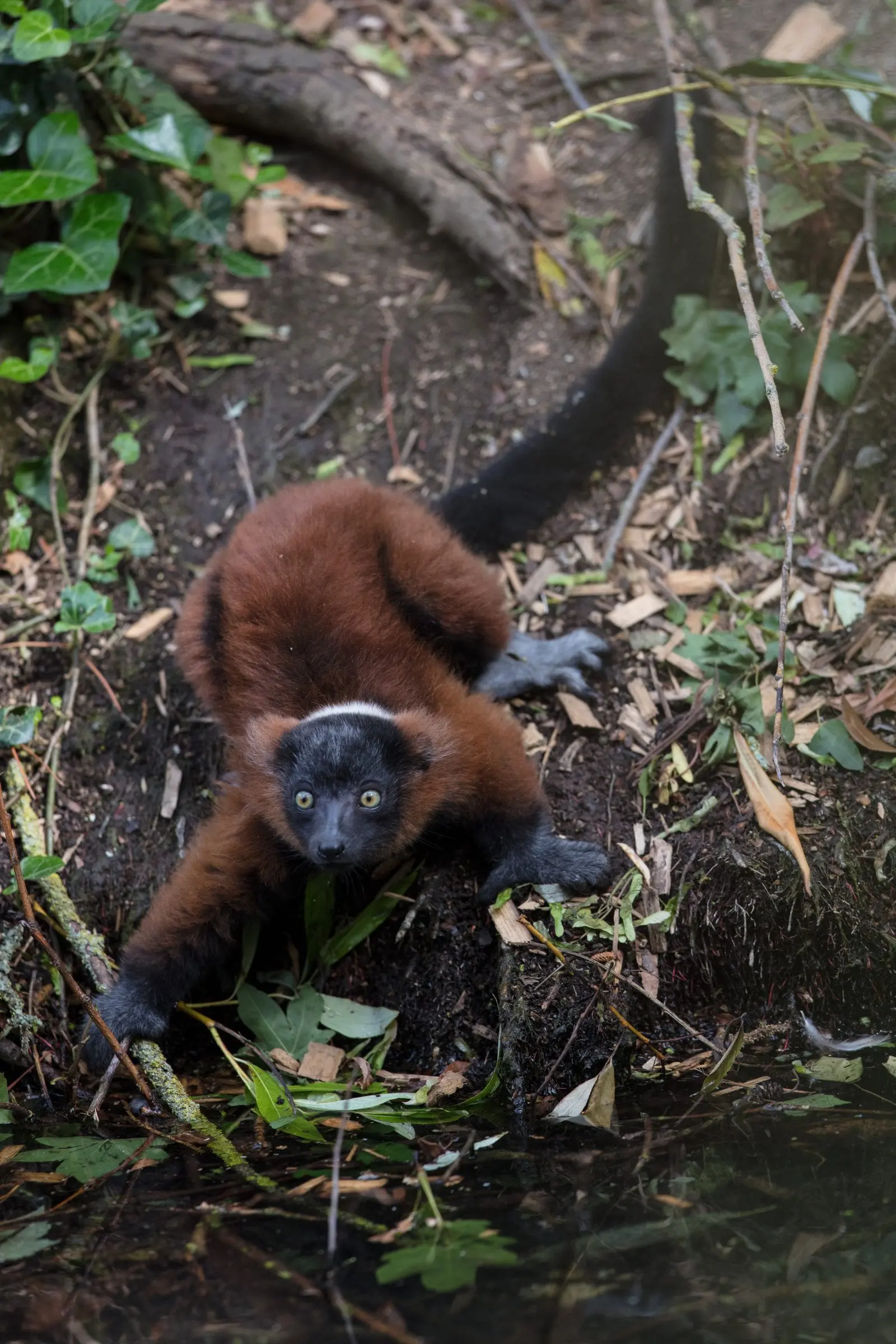
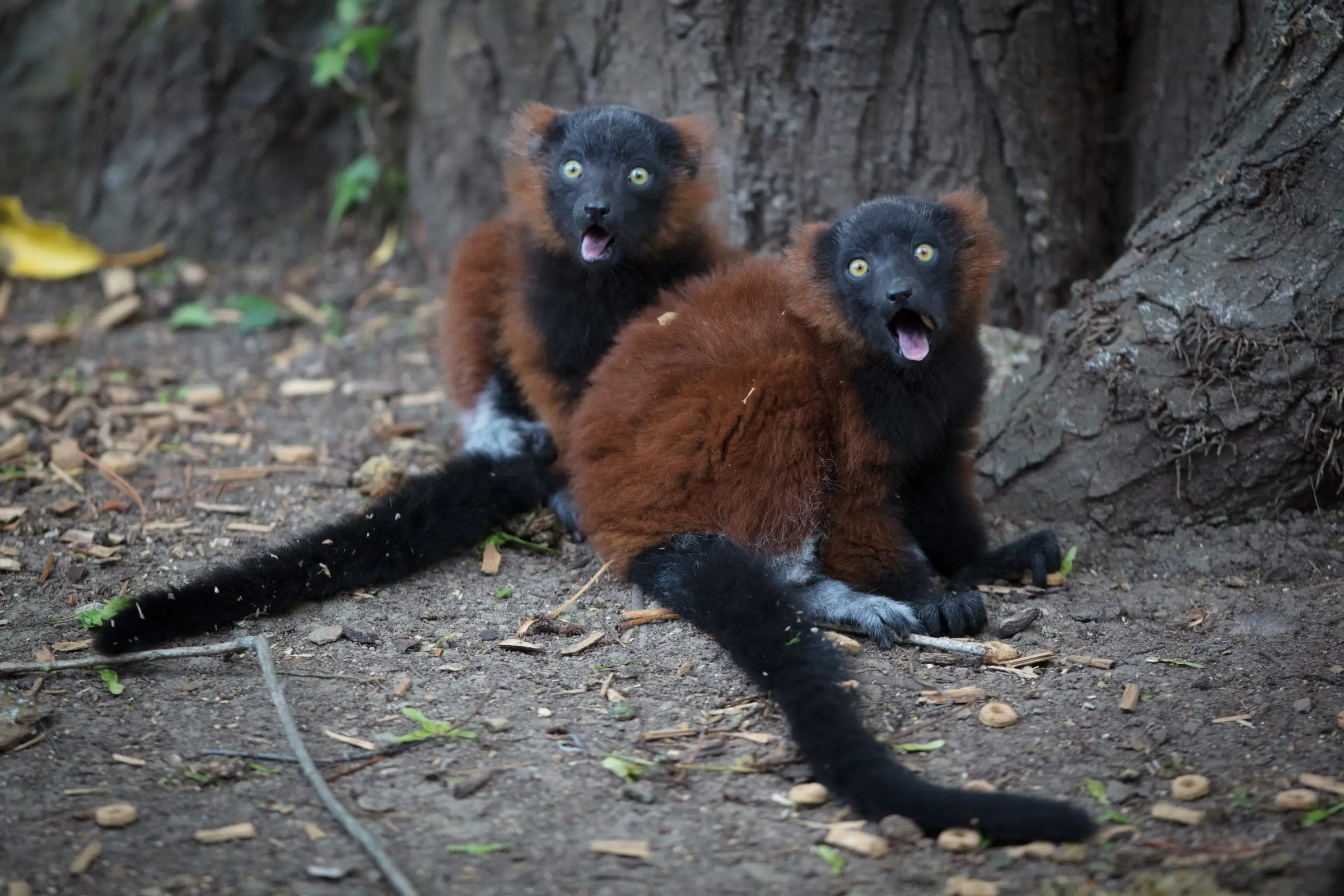
Red ruffed lemur
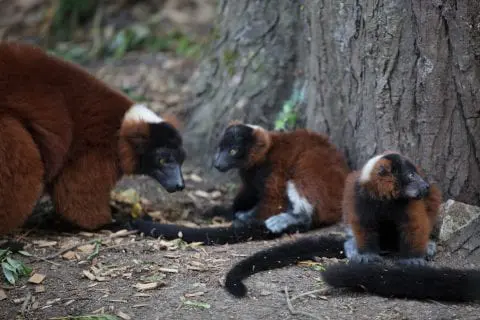
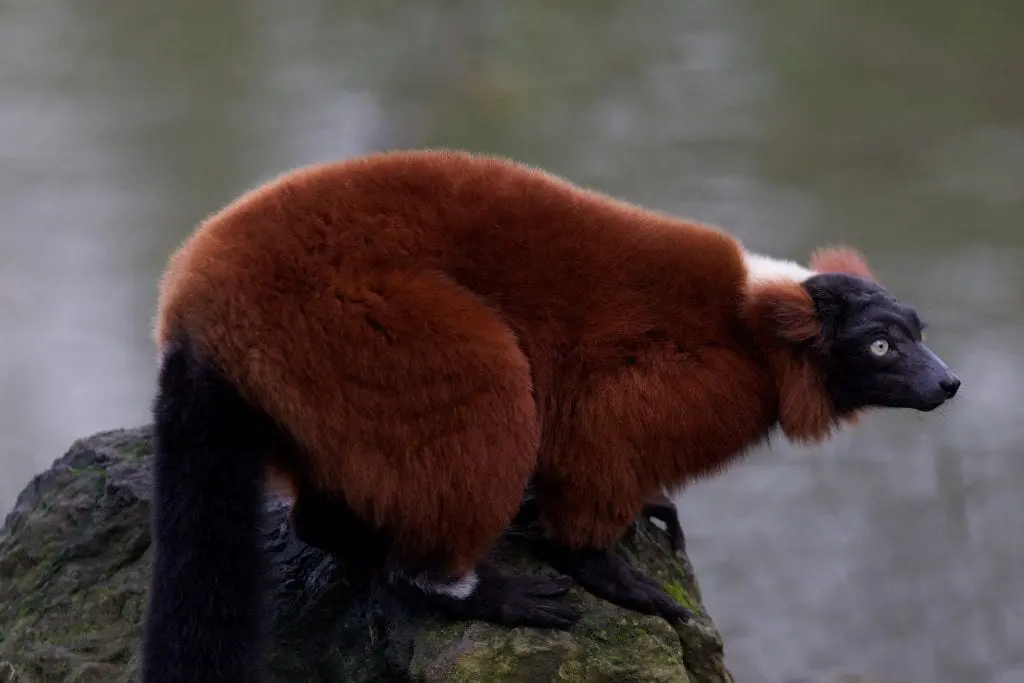
Red-ruffed lemurs are a small primate and are one of the largest lemurs on the island of Madagascar
Species
Mammals
Habitat
Forest
Diet
Frugivores
Conservation Status
Critically Endangered
Red ruffed lemur
Varecia rubra
Irish Name: Léamar rua-rufach
ICUN Status: Critically Endangered
Aye-ayes are a small nocturnal species of lemur that can only be found in the wild in Madagascar. They are covered in black or brown fur and have large yellow eyes which help them see in the dark. They are known for their long, thin middle finger which they use to search for food. They have large, sensitive ears that help them detect prey and a long, bushy tail which allows them to balance as they travel along tree branches.
General Information
Zoo location
Between the Ring-tailed lemur habitat and the Orangutan Forest habitat.
Animal class
Mammalia
Animal order
Primates
Where do they live (Natural habitat)?
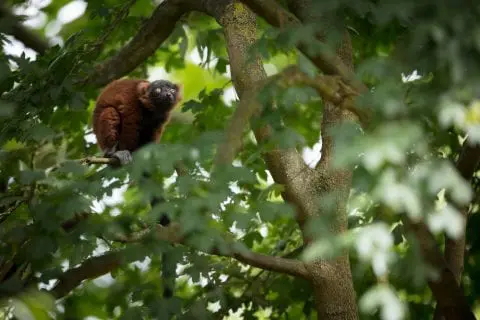
Red ruffed lemurs, like all lemur species, are only found on the island of Madagascar. They can be found in Northeastern Madagascar in the forests of the Masoala Peninsula.
How long do they live?
Red ruffed lemurs live on average less than 20 years in the wild and approximately 20 or more years in zoos. The oldest ever recorded red-ruffed lemur was 36 years old in a zoo.
What do they eat?
Red ruffed lemurs are frugivores, meaning they mostly eat fruit. They also eat nectar, flowers and leaves.
They play an important role in regenerating their habitats in the wild as they disperse the seeds from the fruits they have eaten, helping to create more plants.
Group name
Troop
Closest related species / sister species
Black and white ruffed lemurs are the closest related species to the red ruffed lemurs and the only other members of their genus.
Fun Facts!
The red ruffed lemur
Family life
Red ruffed lemurs live in large groups made up of smaller core groups. They give birth to a litter of infants in nests built above the ground for safety. The infants stay in nests while the mother looks for food nearby for short amounts of time. Other members of the mother’s core group guard the infants while the mother is foraging for food. Infants stay in nests for approximately 2 weeks; by 6 weeks of age, they can walk, climb and leap.
Baby name
Infant
Gestation (pregnancy) period
102 days approximately (3-3.5 months)
Number of young at birth
1-6 infants per litter (usually 2-3)
Weight at birth
100g on average
Age at maturity
2-3 years
Adult size
Adults are usually 110-120cm in length (head and body are 50-55cm, while the tail is 60-65cm).
Adults weigh 3.5kg on average.
Adult male name
Male
Adult female name
Female
Conservation
Critically Endangered
Red ruffed lemurs are listed as Critically Endangered by the International Union for the Conservation of Nature.
Current population estimate
Unknown
Threats
The main threats to red ruffed lemurs are habitat loss and hunting. Many of the forests they rely on for food and protection are being damaged and lost, bringing them closer to traps and snares which are used to catch them. They have also been impacted by an increase in the number and severity of cyclones, due to climate change and deforestation.
What is Dublin Zoo doing?
Dublin Zoo provides annual funding to a conservation project which is looking at reintroducing red ruffed lemurs in Northeastern Madagascar. The project is run by GERP (Groupe d’Etude et de Recherche sur les Primates de Madagascar).
Dublin Zoo also participates in a European breeding program for red ruffed lemurs.
Frequently Asked Questions
The population is in decline, but it is unknown exactly how many are in the wild.
Red ruffed lemurs are frugivores, meaning they mostly eat fruit. They also eat nectar, flowers and leaves. Having this diet makes them both important seed dispersers and pollinators in the wild.
Red ruffed lemurs, like all lemur species, are only found on the island of Madagascar. They can be found in Northeastern Madagascar in the forests of the Masoala Peninsula.
Red ruffed lemurs are Critically Endangered due to habitat loss, hunting and an increase in the number and severity of cyclones (due to deforestation and climate change).
No, red ruffed lemurs are diurnal, meaning they are active during the day.
No, red ruffed lemurs cannot swim.
No, red ruffed lemurs do not have prehensile tails. However, they do use their tails for balance when climbing or leaping in tall trees.
Red ruffed lemurs are very vocal. They use alarm calls to alert others if there is a predator nearby and gather a ‘mob’ or group to back each other up against the threat.
They can also use vocalisations to find mates and long, booming calls to communicate over large distances. Scent marking is also used to communicate or mark their territory.
Fossae, hawks and large snakes.