Madagascar giant day gecko
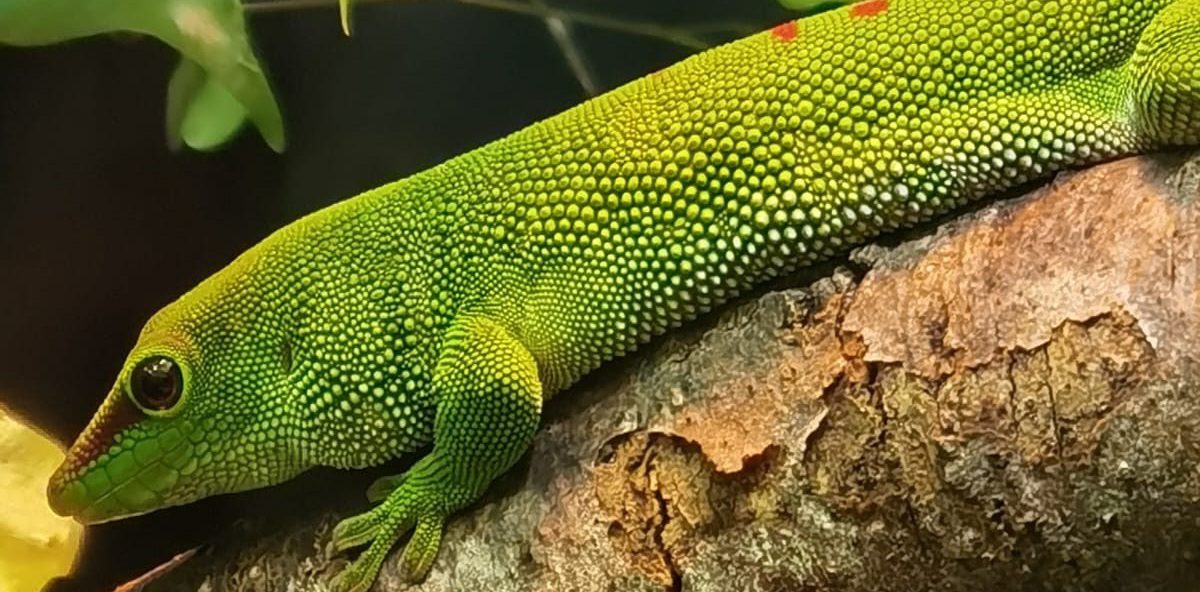
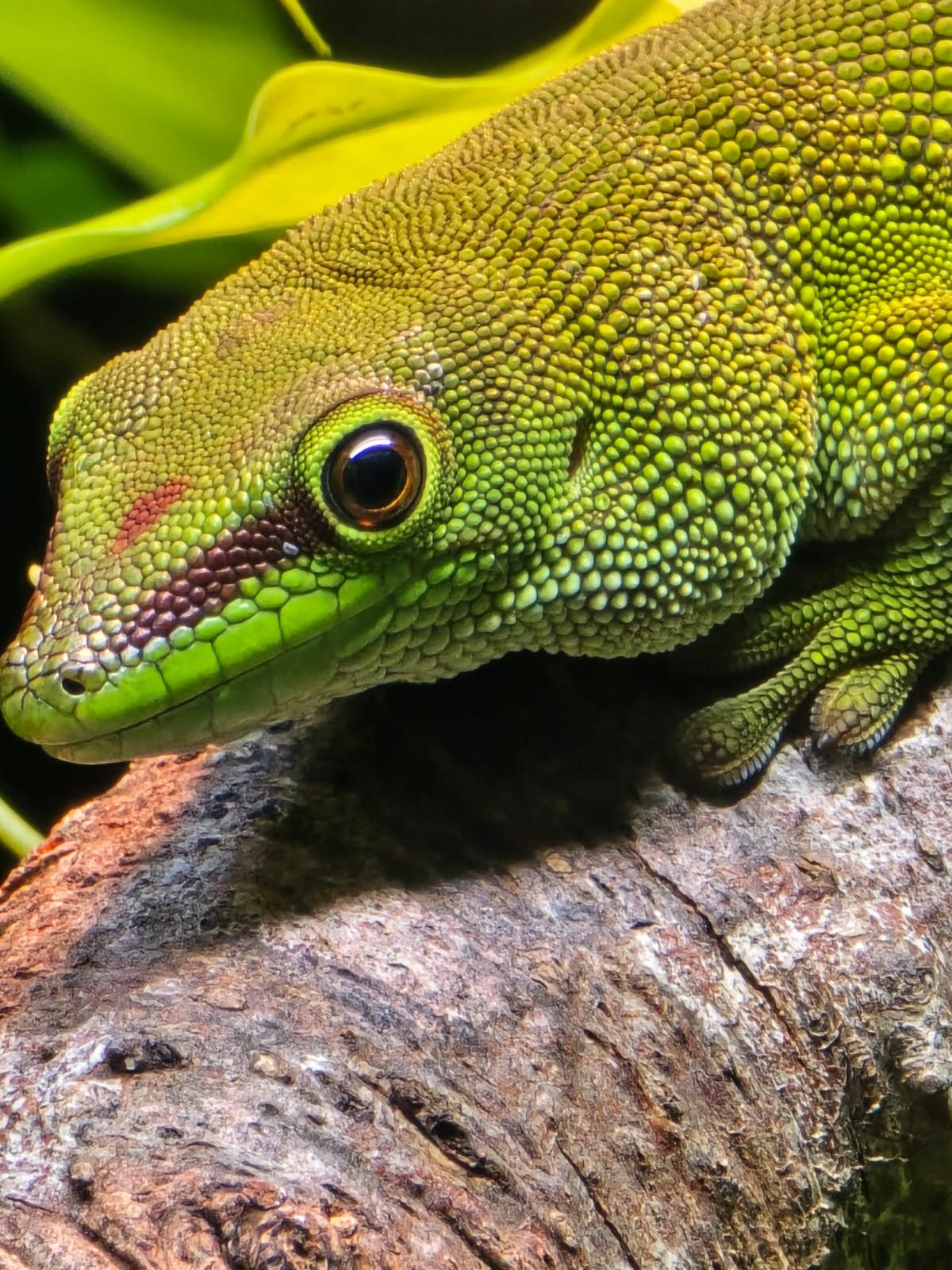
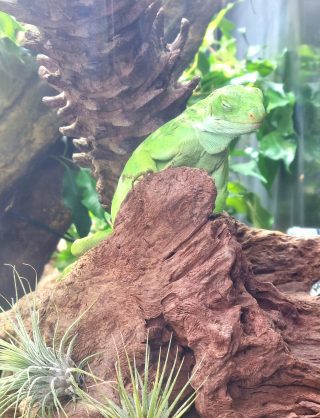
The Madagascar giant day gecko is one of the largest day gecko species and is notable for its brilliant emerald-green body with red markings and its diurnal lifestyle unlike most geckos
Species
Reptiles
Habitat
Rainforest
Diet
Omnivores
Conservation Status
Least Concern
Madagascar giant day gecko
Phelsuma grandis
Irish Name: Ollgheiceo lae Mhadagascar
ICUN Status: Least Concern
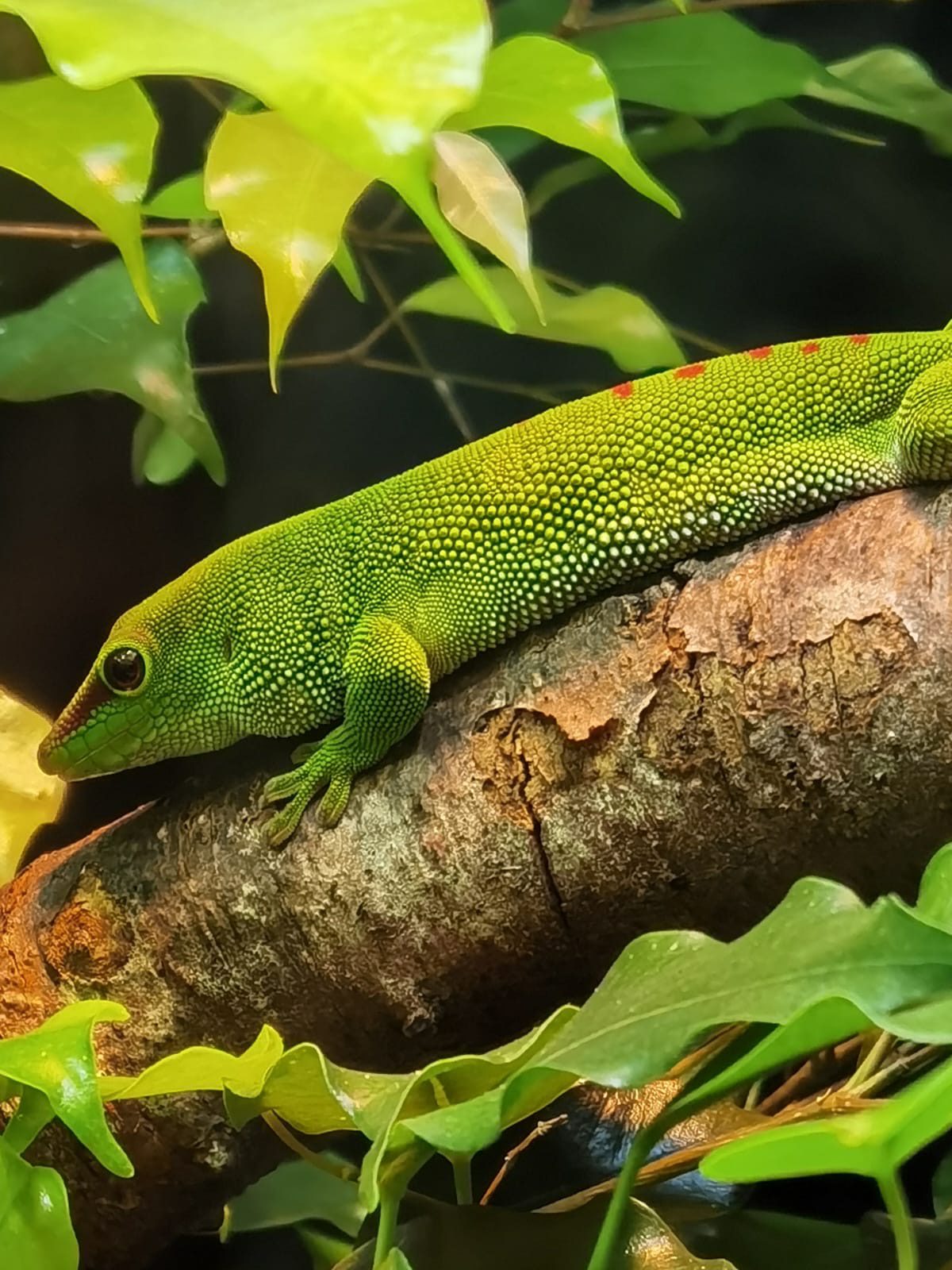
Madagascar giant day geckos are large geckos with bright green bodies, red markings on their heads and sometimes orange markings on their backs. They are active during the day and spend most of their time foraging for food and basking in the sun to heat up their bodies.
General Information
Zoo location
Zoorassic World
Animal class
Reptilia
Animal order
Squamata
Where do they live (Natural habitat)?
Madagascar giant day geckos live in rainforests and plantations in Madagascar, Africa. Some have been introduced to Mauritius and Réunion.
How long do they live?
Madagascar giant day geckos live 6-8 years in the wild and up to 15 years in human care.
What do they eat?
Madagascar giant day geckos are omnivores (meat- and plant-eaters). They eat small invertebrates (animals without backbones), like insects and spiders, as well as fruits and honey.
Group name
Madagascar giant day geckos are solitary (live alone) and do not have a group name.
Closest related species / sister species
The closest relative of the Madagascar giant day gecko is the Madagascar day gecko, of which it was previously considered a subspecies.
Fun Facts!
The madagascar giant day gecko

Family life
Madagascar giant day geckos are solitary (live alone). When the female lays her eggs, she holds them with her back legs for a couple of hours until they grow hard. Then, she leaves them, and the young raise themselves once they hatch.
Baby name
Hatchling
Gestation (pregnancy) period
47-82 days (egg incubation period)
Number of young at birth
Approximately 2 eggs per clutch
Weight at birth
Unknown
Age at maturity
Approximately 1 year
Adult size
Adults are approximately 25 cm long, and females are generally smaller than males.
Conservation
Least Concern
Madagascar giant day geckos are classified as Least Concern by the International Union for Conservation of Nature (IUCN).
Current population estimate
Unknown
Threats
The main threat to Madagascar giant day geckos is habitat loss due to deforestation. However, these geckos can live comfortably in other habitat types like plantations and orchards. Another threat to them is the pet trade.
What is Dublin Zoo doing?
Dublin Zoo raises awareness of Madagascar giant day geckos and provides education on the species.
Frequently Asked Questions
Madagascar giant day geckos live in rainforests and plantations in Madagascar, Africa. They were also introduced to some of the surrounding islands.
Madagascar giant day geckos eat small invertebrates (animals without backbones), like insects and spiders, as well as fruit and honey.
Scientists are unsure but think that birds, mammals and other reptiles hunt Madagascar giant day geckos.
There is not enough research to see how many Madagascar giant day geckos are left in the world.
No, Madagascar giant day geckos are not endangered. They are classified as Least Concern by the International Union for Conservation of Nature (IUCN). They have no big threats and handle changes to their habitats well.