Linne's two-toed sloth
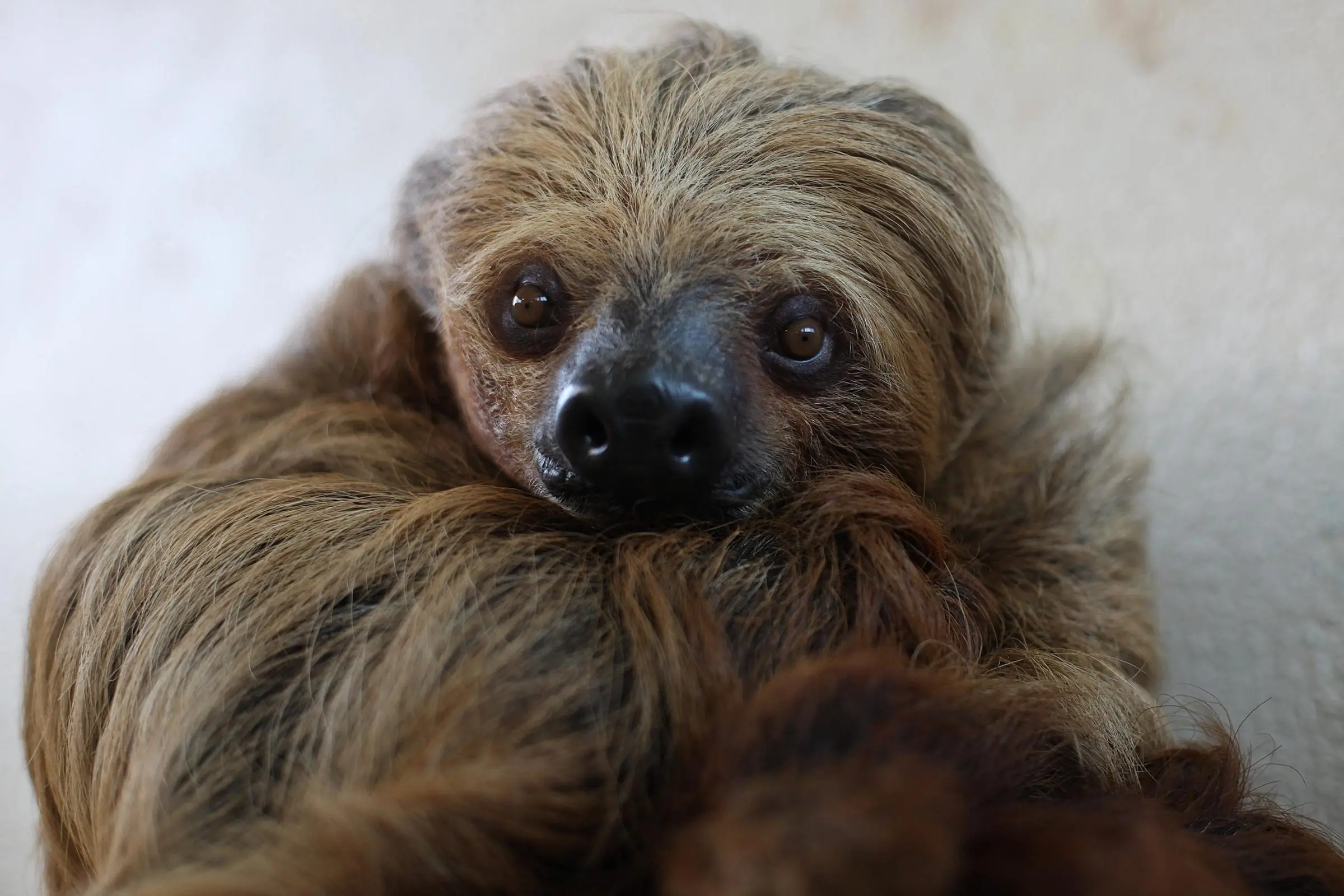
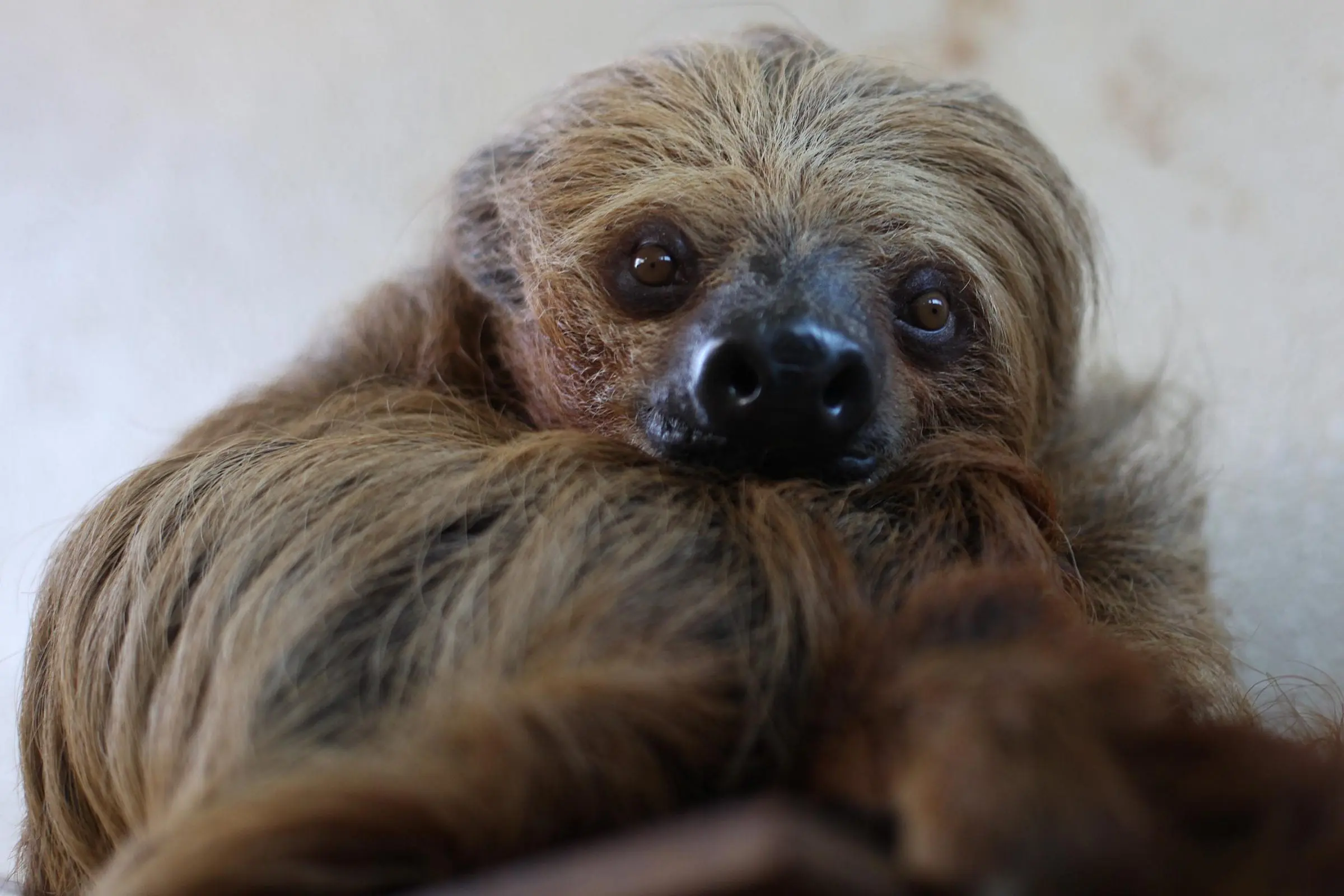
Linne's two-toed sloth is a nocturnal tree-dwelling mammal that moves extremely slowly to conserve energy
Species
Mammals
Habitat
Forest
Diet
Herbivores
Conservation Status
Least Concern
Linne’s two-toed sloth
Choloepus didactylus
Irish Name: Spadán déladhrach Linne
ICUN Status: Least concern
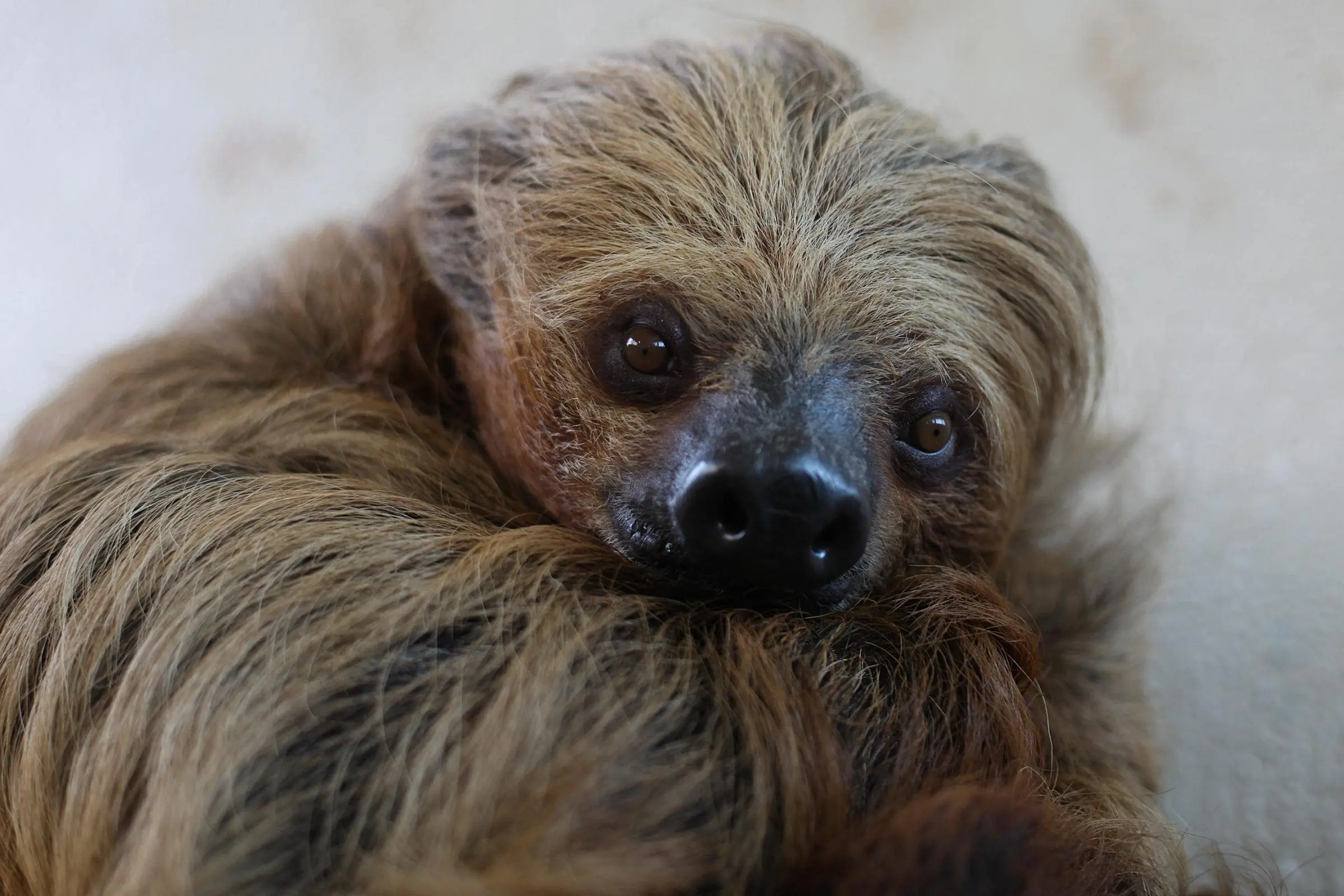
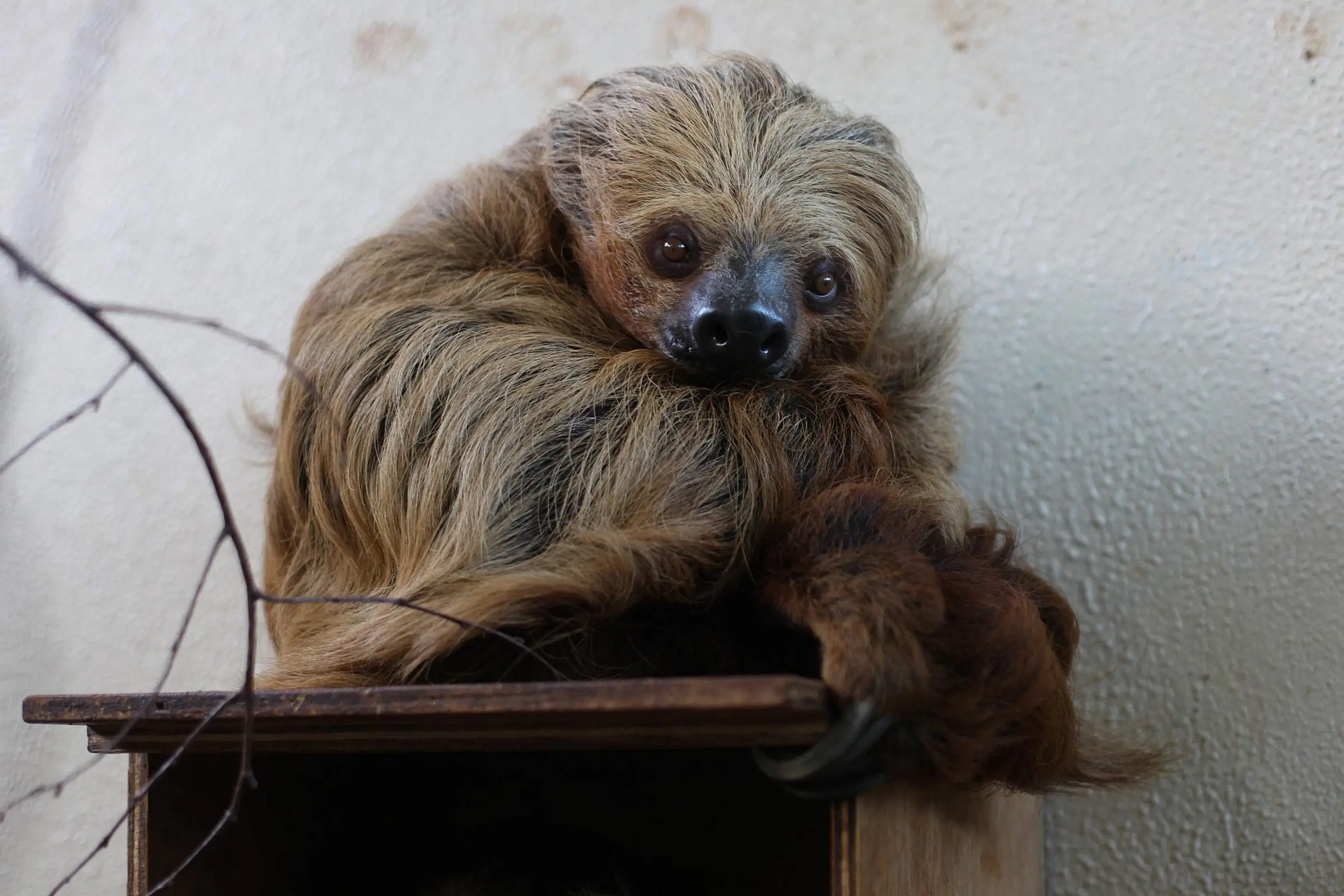
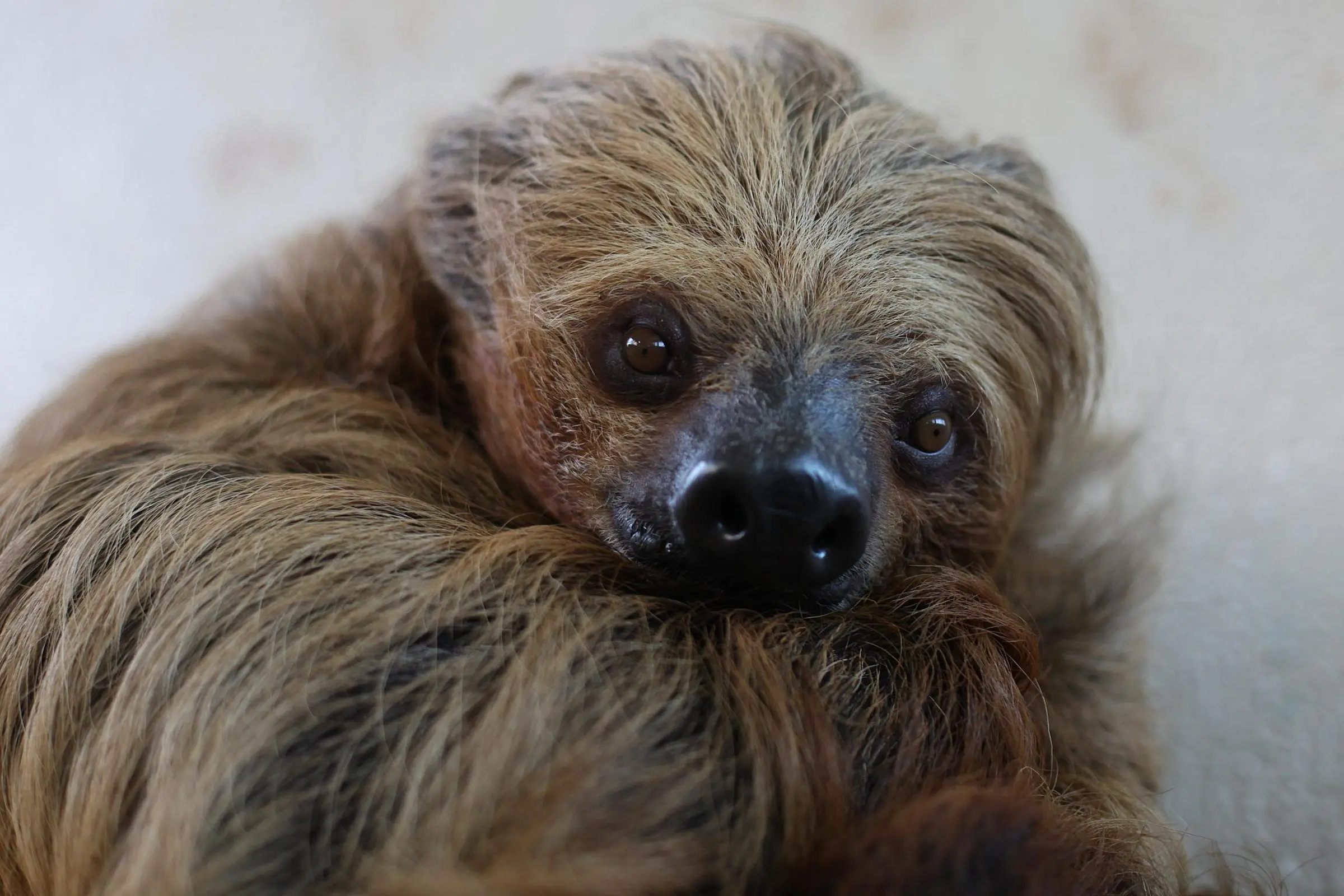
Sloths are the slowest mammals in the world, metabolically. Two-toed sloths, like the ones that live in Dublin Zoo, have grey-brown/beige fur and paler faces. They have a small head but a large body with powerful limbs and a tail hidden beneath its fur. They have long, hooked claws which it uses to climb, hang and defend itself.
General Information
Zoo location
South American House
Animal class
Mammalia
Animal order
Pilosa
Where do they live (Natural habitat)?
Two-toed sloths are found in the northern part of South America (Brazil, Peru, Ecuador, Columbia, Venezuela). They live in tropical and subtropical forests. They are entirely arboreal meaning they live all their lives in trees.
How long do they live?
Live up to 20 years in the wild. The average lifespan of captive Linne’s two-toed sloth is 28 years. Oldest known sloth was Mrs C , a Hoffman’s two-toed sloth. She lived to the age of 43
What do they eat?
They have a mainly herbivorous diet, which includes leaves, fruit, berries, small twigs and sometimes small insects
Group name
Sloths are relatively solitary so do not have a group name.
Closest related species / sister species
Their closest relative is the Hoffman’s two-toed sloth, followed by the family of three-toed sloths, followed by the suborder Vermilingua which is composed of the anteaters.
Fun Facts!
The Linne's two-toed sloth
Family life
Two-toed sloths live a life of solitude. The female and male sloth will come together to breed and the male will then leave. The female will raise her young (usually 1) on her own for up to 2 years.
Baby name
Pup
Gestation (pregnancy) period
Around 9 months.
Number of young at birth
Usually one baby.
Weight at birth
About 340 grams.
Age at maturity
2 years
Size male adult
46-86cm, weight:4-8.5kg
Size female adult
46-86cm, weight:4-8.5kg
Adult male name
Boar
Adult male name
Sow
Conservation
Least Concern
The two-toed sloth is listed as of Least Concern by the International Union for Conservation in Nature.
Current population estimate
Unknown
Threats
Other than natural predation, sloths face no other major threats.
What is Dublin Zoo doing?
Dublin Zoo promotes the education and awareness of the species to our visitors, through our ‘Discovery and Learning Team.
Frequently Asked Questions
Sloths eat fruit, leaves, berries, twigs and sometimes insects.
Linne’s two-toed sloths live in South America, in the trees of tropical rainforests.
Linne’s two-toed sloths move slowly because they have an extremely slow metabolism. They have four stomachs that digest food very slowly and can sometimes take up to a month to digest one meal.
Also, being slow-moving also helps camouflage them in the treetops where they live.
Linne’s two-toed sloths are not endangered, they are listed as Least Concern by the International Union for Conservation in Nature. However, their habitats are under constant destruction from the human activity so it is likely their populations are declining.
Linne’s two-toed sloths can live anywhere from 20 to 40 years and longer in zoos.
Linne’s two-toed sloths are not aggressive animals but they do have 4 inch claws to use against predators.
Linne’s two-toed sloths can sleep anywhere from 15-20 hours a day.
Linne’s two-toed sloths have a small tail that is between 1.5 and 3.5 cm.
Linne’s two-toed sloths poop once a week, it is the only thing they go to the ground to do. They do everything else in trees.
Sloths can swim but are just as slow in the water.
Sloths move at a rate of about 3m per minute in trees but only about 2m per minute on the ground.
Sloths can make hissing noises and loud calls.
Sloths are not marsupials.
They do not live in groups, they are solitary animals.
Sloths are not primates, they are part of the order pilosa.
Linne’s two-toed sloths can weigh from 4-8.5kg, the size of a small dog.
Females attract a male with loud screams and they mate in trees.
Sloths are mammals.
Baby sloths are called pups.
Linne’s two-toed sloths are not endangered. They are listed as Least Concern by the IUCN.