Lau banded iguana
The Lau Banded Iguana is an arboreal species of lizard found in the Lau Island Group in Fiji
Species
Reptiles
Habitat
Forest
Diet
Omnivores
Conservation Status
Endangered
Lau banded iguana
Brachylophus fasciatus
Irish Name: Ioguána bandach Lau
ICUN Status: Endangered
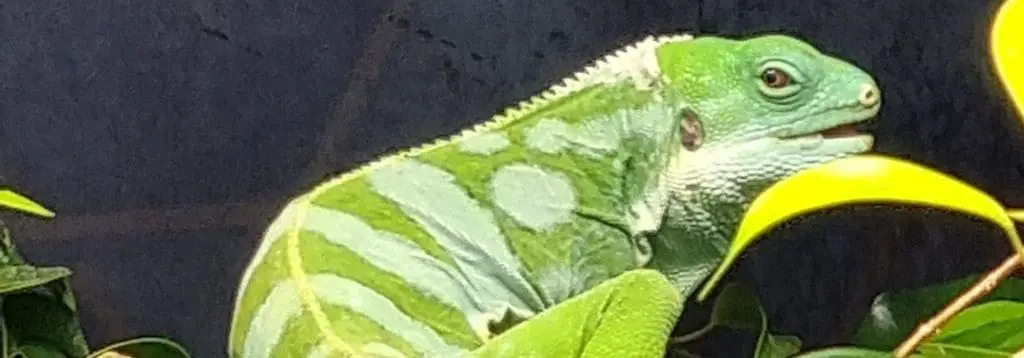
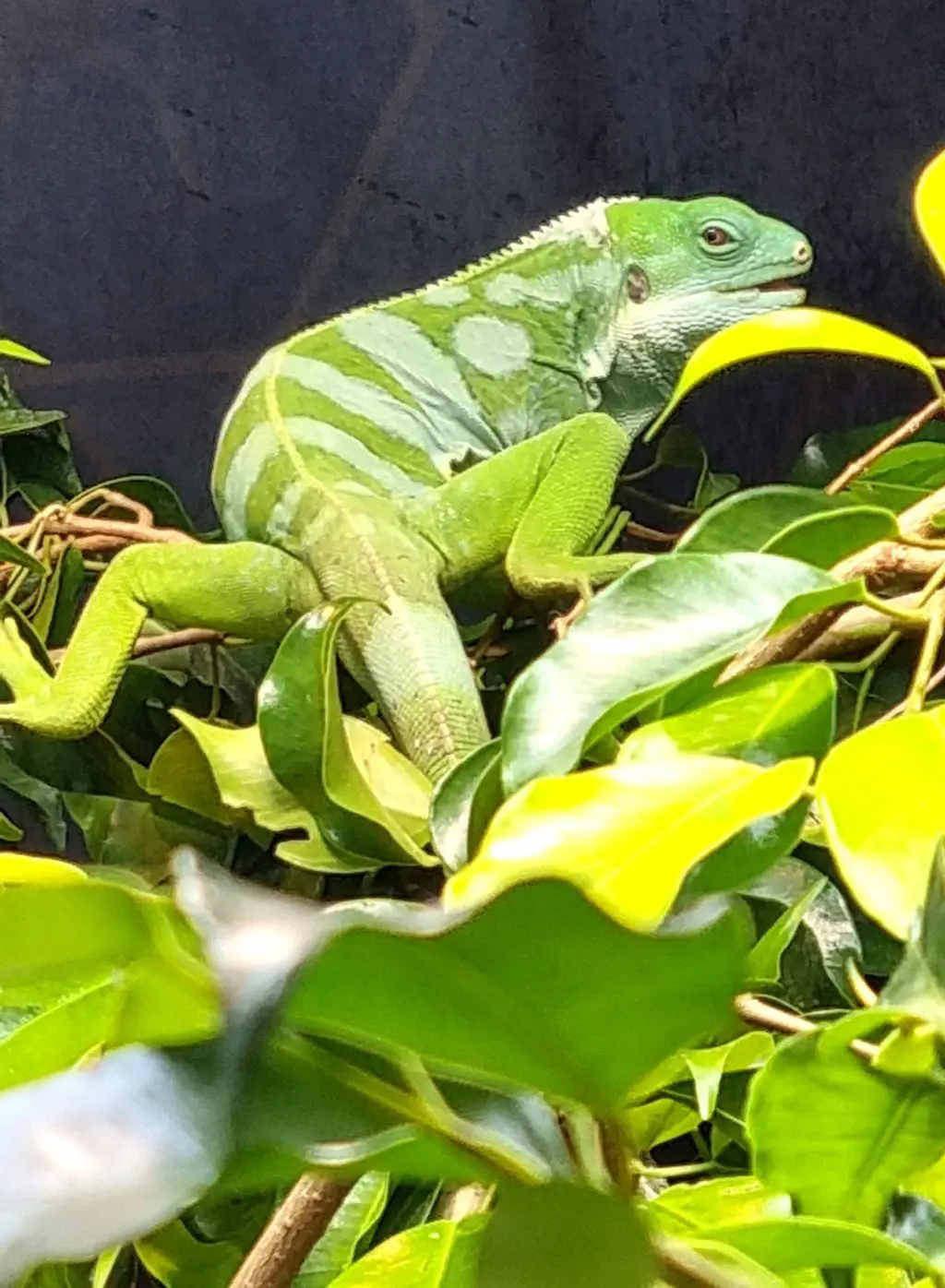
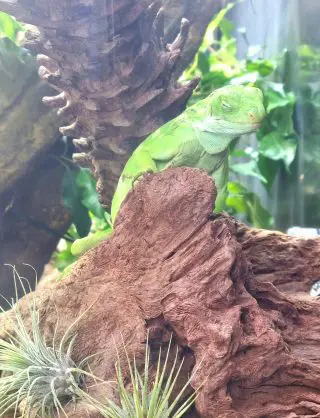
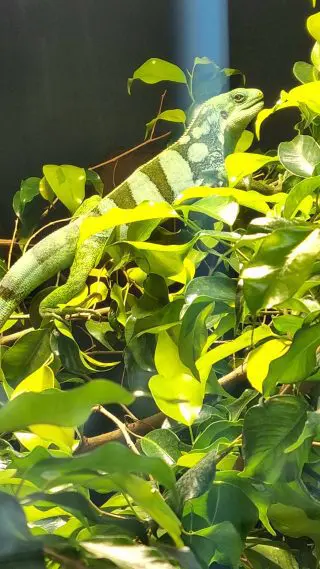
The Lau banded iguana is a lizard that spends most of its time in trees (arboreal species), searching for food. Males are usually bright or dark green, with white stripes on their body. Females are a solid green colour, with no stripes. They both have yellow/green chests and bellies, and red/orange eyes.
General Information
Zoo location
Zoorassic World
Animal class
Reptilia
Animal order
Squamata
Where do they live (Natural habitat)?
They are native to the Lau Island group of Fiji.
How long do they live?
Approximately 20 years in zoos. Unknown in the wild.
What do they eat?
They are omnivores, primarily feeding on insects, vegetables and fruits.
Group name
There is currently no name used to describe a group of Lau banded iguanas; however, a group of iguanas is referred to as a ‘mess’.
Closest related species / sister species
Fiji, Central and Gau iguana.
Fun Facts!
The lau banded iguana
Family life
Lau banded iguanas are generally solitary (live alone), but males can live close to females. Males are territorial and can be aggressive towards other males that enter their territory.
Baby name
Hatchling
Gestation (pregnancy) period
120-150 days.
Number of young at birth
2-7 eggs
Weight at birth
7-12 g
Age at maturity
16 months
Adult size
60-75 cm
Conservation
Endangered
The Lau banded iguana is classified as Endangered by the International Union for Conservation of Nature (IUCN).
Current population estimate
There are approximately 8,000-22,000 individuals left in the wild.
Threats
The main threats to Lau banded iguanas are habitat destruction for logging, forest fires and the introduction of non-native species such as cats and rats.
What is Dublin Zoo doing?
Dublin Zoo raises awareness about this species and how we protect them.
Frequently Asked Questions
They are native to the Lau Island group of Fiji, and they were also introduced to Vanuatu and reintroduced to Tonga.
Approximately 20 years in zoos. Unknown in the wild.
They are omnivores, mainly feeding on insects, vegetables and fruits.
The Lau banded iguana population has fallen due to habitat destruction for logging, forest fires and the introduction of non-native species such as cats and rats.
There are approximately 8,000-22,000 individuals left in the wild.
There is currently no name used to describe a group of Lau banded iguanas; however, a group of iguanas of no specific species is referred to as a ‘mess’.
60-75cm.
A hatchling.