Hispaniolan Boa
Hispaniolan boas are a species of snake from the family Boidae, known more commonly as boas
Species
Reptiles
Habitat
Rainforest
Diet
Carnivores
Conservation Status
Least Concern
Hispaniolan Boa
Chilabothrus striatus
IUCN Status: Least concern
Hispaniolan boas are a species of snake from the family Boidae, known more commonly as boas. Adults can reach up to lengths of almost 2.5 metres, but more commonly grow to between 2 and 2.3 metres, with males typically being larger than females.
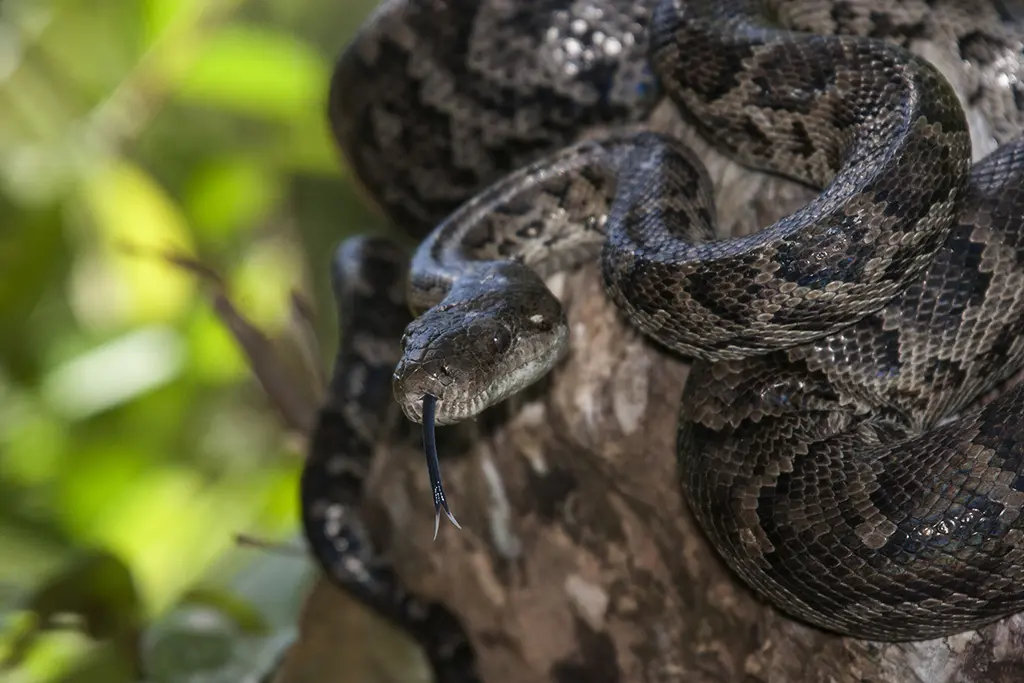
They are typically a reddish-brown colour, with darker blotches running along the back from the back of the head to the end of their tail. They are endemic to the island of Hispaniola, which is divided by Haiti and the Dominican Republic as part of the Caribbean islands.
General Information
Zoo location
Rainforest House at Dublin Zoo next to the howler monkey and great curassow habitat.
Animal class
Reptilia
Animal order
Squamata
Where do they live (Natural habitat)?
Hispaniolan boas are found across the island of Hispaniola, from sea level to areas 1200 metres above sea level. They are most commonly found in moist, forested areas, but are also frequently found in or near human settlements.
What do they eat?
Like all boas, Hispaniolan boas are carnivores. Smaller individuals tend to feed on lizards, while larger snakes feed on birds and rodents.
Group name
While there is no collective name specific to the Hispaniolan boa, a group of snakes may be referred to as a ‘slither’ or a ‘ball’.
Closest related species / sister species
Hispaniolan boas are most closely related to other boas in the genus Chilabothrus, such as the Cuban boa, Puerto Rican boa, and Jamaican boa.
Fun Facts!
Behaviours
Hispaniolan boas are largely nocturnal snakes, typically spending the daytime resting in the shade of tree branches several metres off the ground.
Like all boas, they are constrictors. This means that they kill their prey by suffocating it. After latching on to a prey animal with its jaws, the Hispaniolan boa will wrap its body around its prey and gradually tighten its grip. The snake will then proceed to open up its jaws so that it can swallow its prey whole, which may take up to several hours.
Reproduction and Life Cycle
Like most boas, Hispaniolan boas are ovoviviparous. This means that, while the mother produces eggs like most other reptile species, the young hatch from the eggs inside the mother before being born.
The young appear like smaller versions of the adults. While most Hispaniolan boas typically live for around 7 years, there are some reports of individuals living for over 20 years. These reports are yet to be verified, however.
Adaptations
The reddish-brown and blotchy colouration of the Hispaniolan boa provides it with excellent camouflage as it moves through its forest habitats at night.
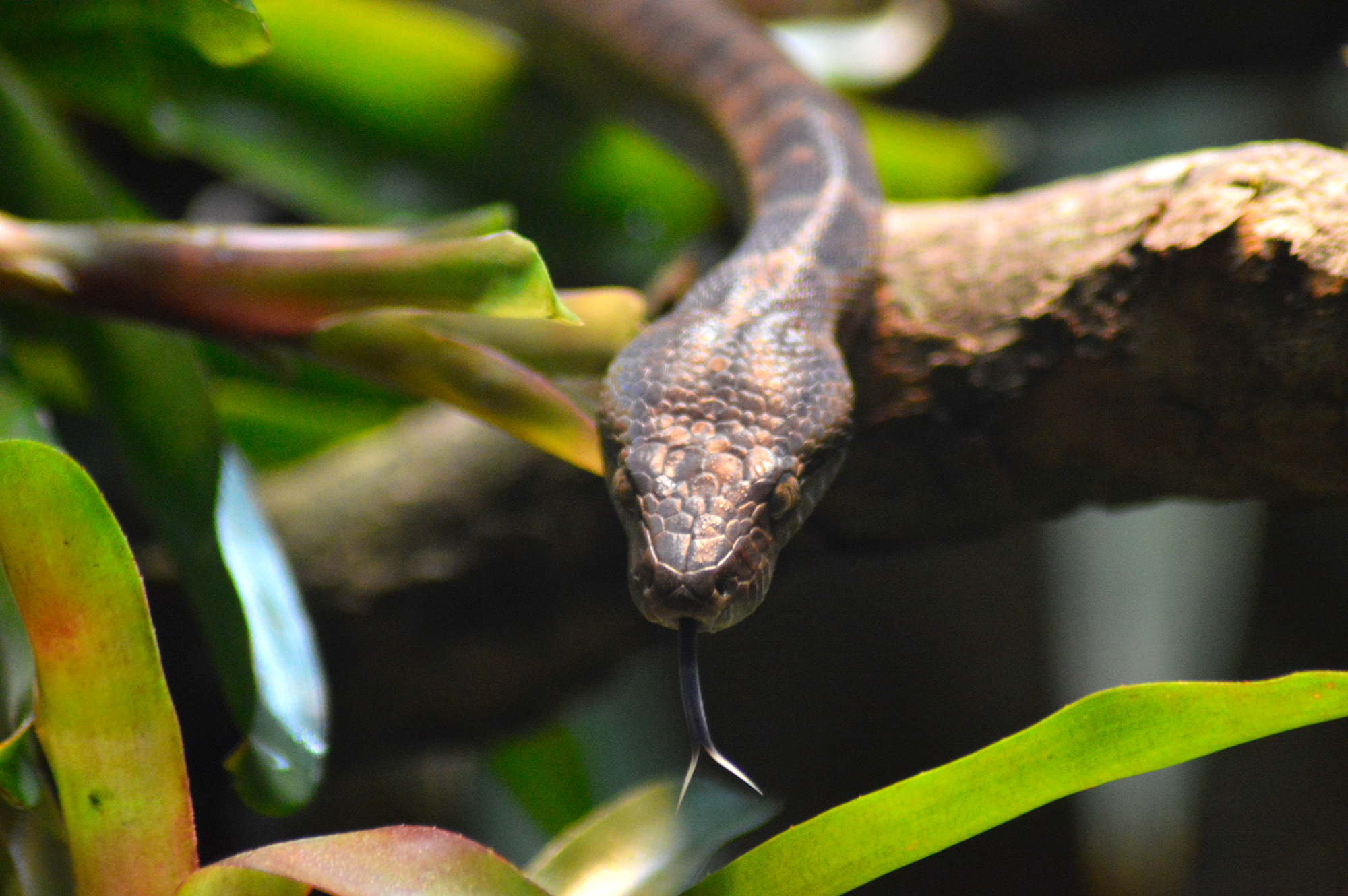
Like all snakes, Hispaniolan boas are capable of detecting particles in the air, water, and ground on their forked tongue which are then transferred to the vomeronasal organ, also known as a Jacobson’s organ. The forked end of the tongue also provides directional information to the boa.
As cold-blooded animals or ‘ectotherms’, Hispaniolan boas get their energy from their external environment, and so aren’t as reliant on food for energy. This means that they can go several days or even weeks in between feeding.
Conservation
Least Concern/Not Listed
The Hispaniolan boa is listed as ‘Least Concern’ on the IUCN Red List of Endangered Species.
Current population estimate
This snake species is well distributed across the island of Hispaniola, surviving in a variety of habitats, and is also very popular in the pet trade.
Threats
However, as the species is endemic to Hispaniola, this does put it at a heightened risk of going extinct. The Caribbean is vulnerable to intense weather phenomenon such as typhoons and hurricanes which can do serious damage to the islands in this region. An increase in frequency and intensity of this phenomenon due to climate change could in the future have a serious impact on these snakes.
Frequently Asked Questions
Hispaniolan boas can be found on the island of Hispaniola in the Caribbean, which is a territory split between Haiti and Dominican Republic.
Endemic means a species lives only in a very specific place. Endemic species are often at higher risk of going extinct due to how isolated they typically are.
Official records suggest that Hispaniolan boas have a lifespan of around 7 years, though some informal records suggest a possible lifespan of up to 22 years.
An ovoviviparous animal is one that produces shelled eggs during pregnancy, but the young hatch from these eggs inside the mother before being born.
They are carnivores, meaning they prey on other animals. Smaller individuals typically feed on lizards, while larger snakes feed on birds and rodents.
No, Hispaniolan boas are not venomous snakes. They are constrictors, meaning they wrap themselves around their prey to suffocate them before feeding.
The Hispaniolan boa can be seen in the Rainforest House at Dublin Zoo next to the howler monkey and great curassow habitat. They can be tough to spot, so make sure to look really hard for them!
Several other snake species can be seen in Zoorassic World, right next to the Rainforest House, alongside many other reptile and amphibian species. These snake species include Burmese pythons and king rat snakes.