
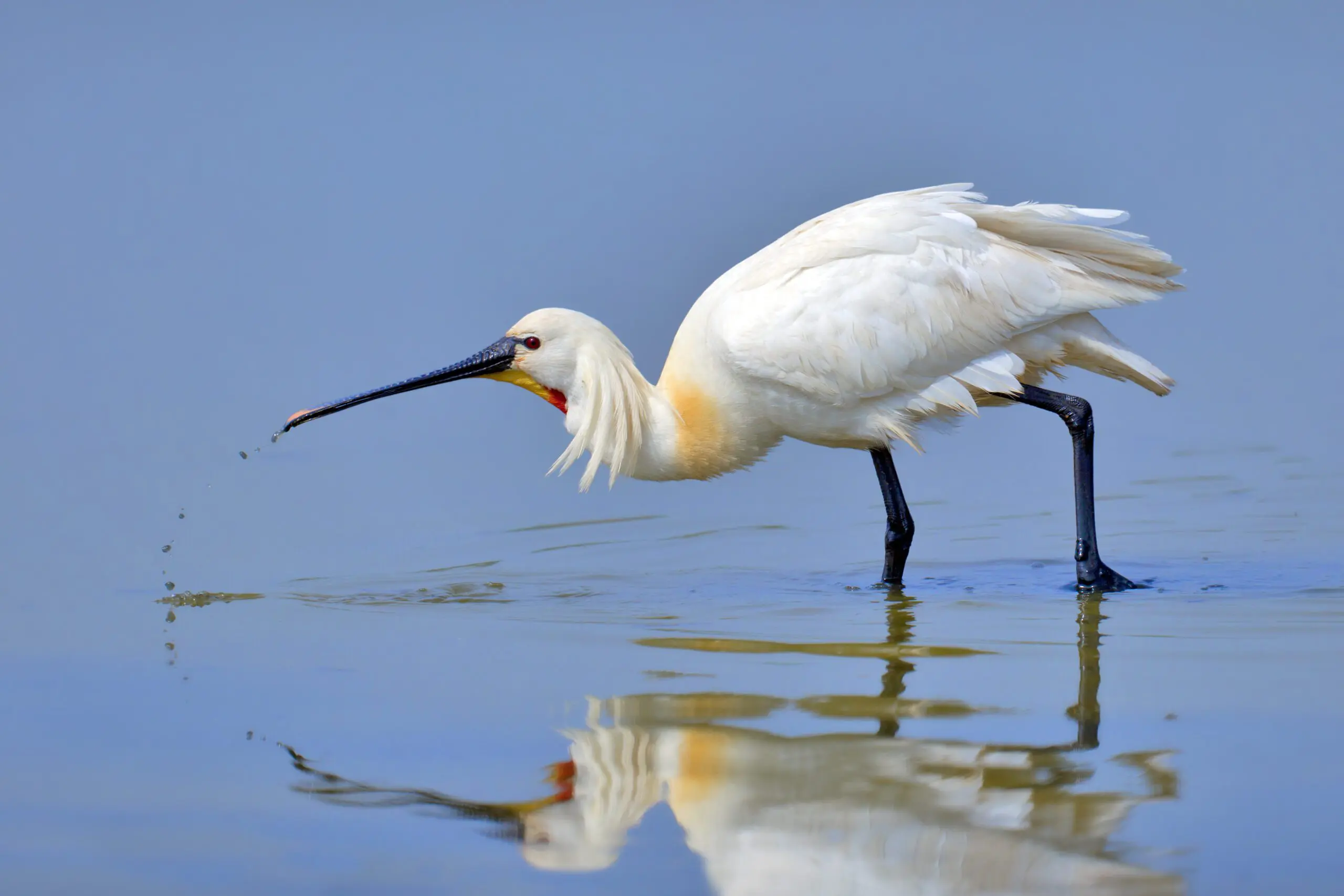
Eurasian spoonbill
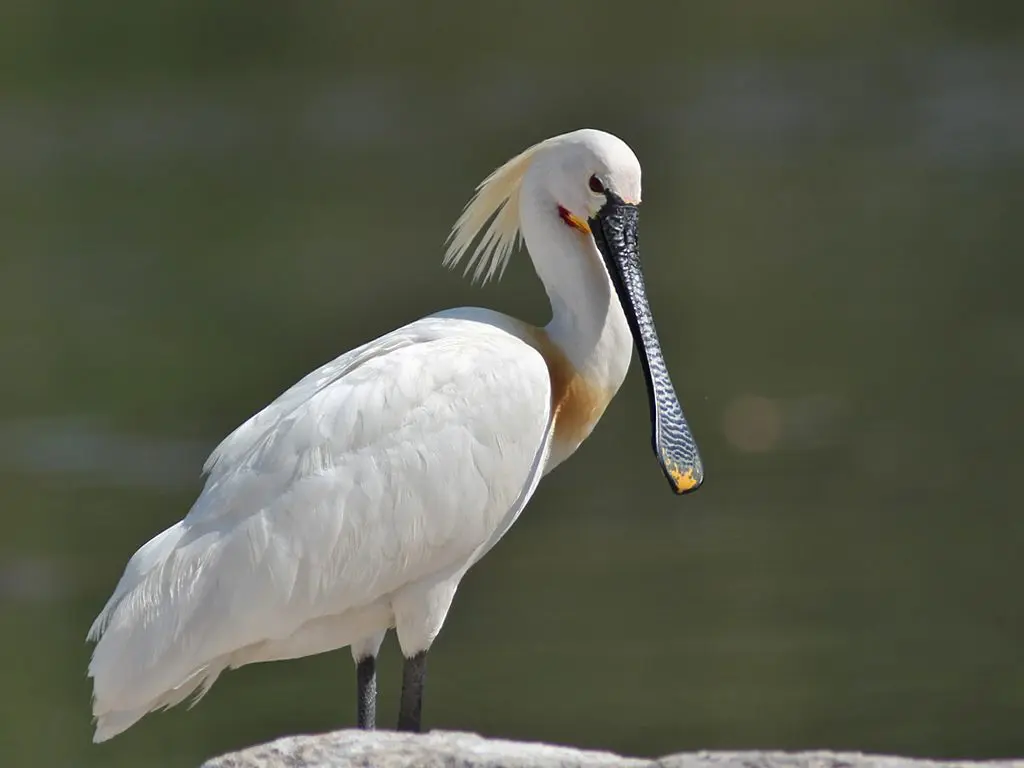
Eurasian spoonbills have long, slender bodies, standing around 90 centimetres tall and covered in bright white feathers
Species
Birds
Habitat
Wetlands
Diet
Carnivores
Conservation Status
Least Concern
Eurasian spoonbill
Platalea leucorodia
Irish Name: Leitheadach Eoráiseach
ICUN Status: Least Concern
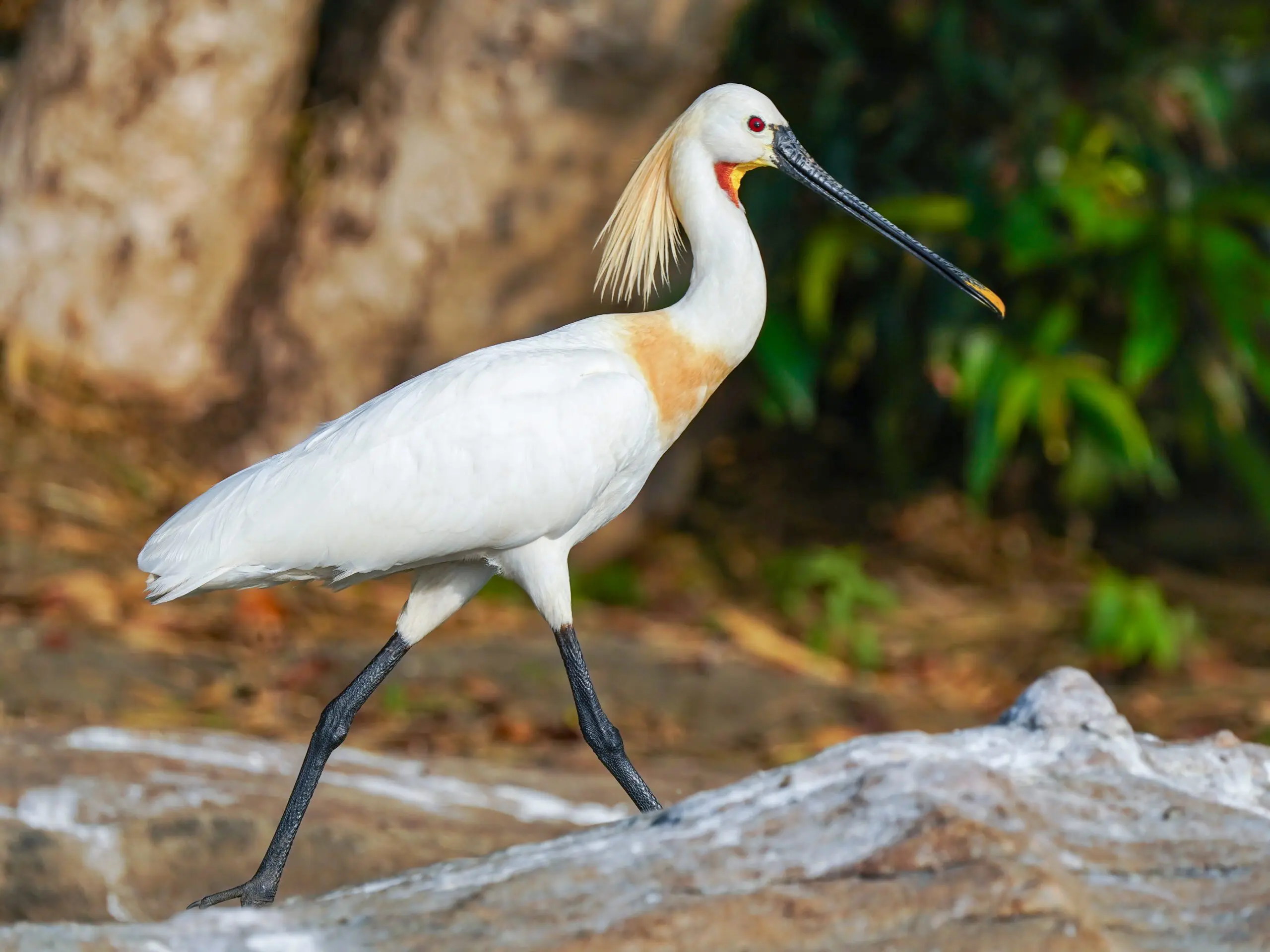
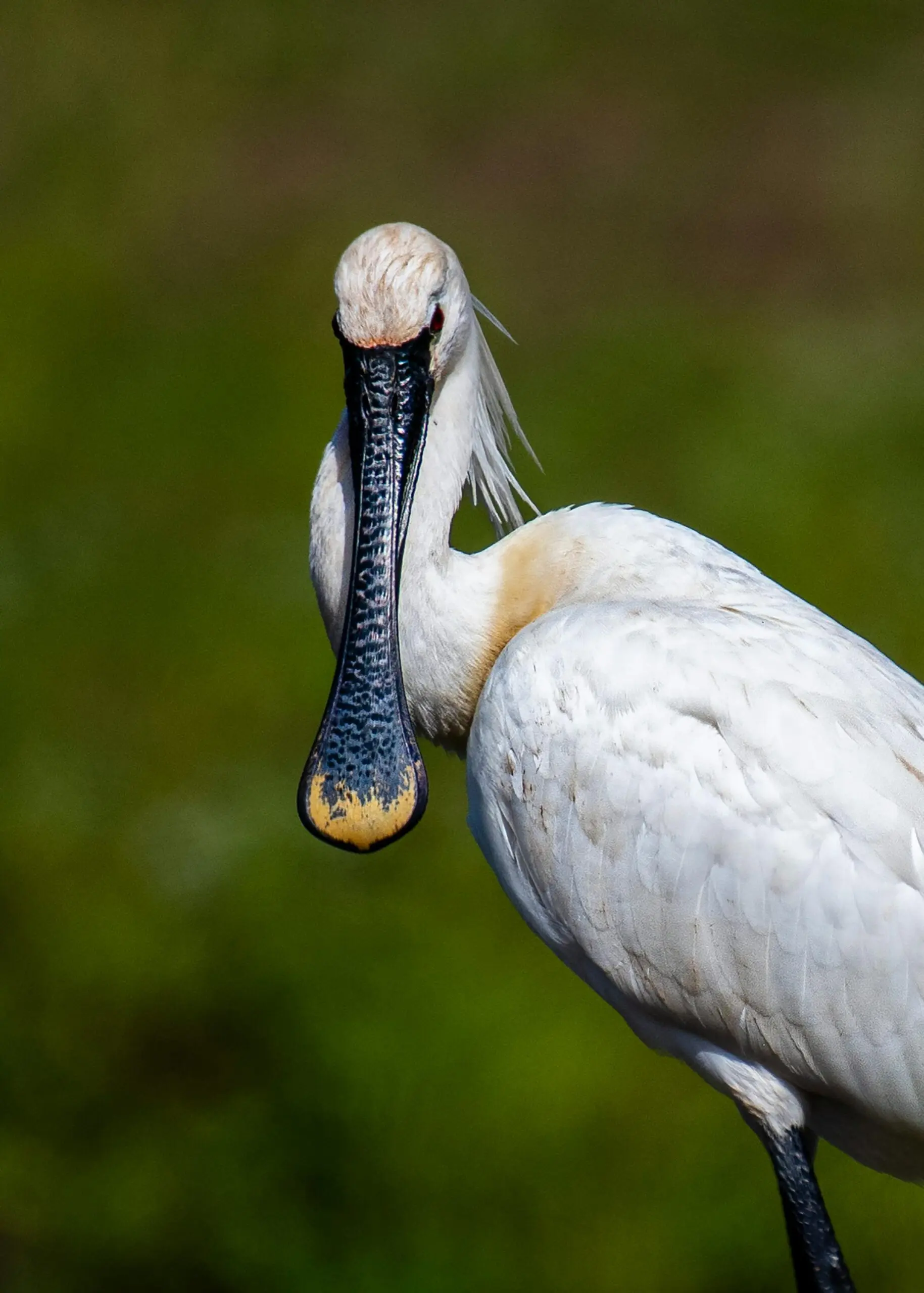
Eurasian spoonbills are a widely distributed and easily identified species of the spoonbill family Threskiornithidae. They have long, slender bodies, standing around 90 centimetres tall and covered in bright white feathers. They have long black legs, and a distinctive broad, black beak which looks similar to a spoon as their name suggests. They also have a yellow patch on their chest. Their wingspan measures around 120 centimetres across and they weigh between 1.3 and 2 kilograms when fully grown.
The Eurasian spoonbill is found across continental Europe, central and eastern Asia, and parts of northern Africa. It is a migratory species, with more northern populations moving further south during winter.
General Information
Zoo location
Flamingo Lagoon
Animal class
Aves
Animal order
Pelecaniformes
Where do they live (Natural habitat)?
Eurasian spoonbills typically live in inland wetland habitats, with a preference for extensive, shallow areas with mud, clay, or fine sands. They have also been known to live in marine and intertidal areas.
How long do they live?
The lifespan of a wild Eurasian spoonbill is typically between 10 and 15 years, though individuals have been known to live for nearly 30 years.
What do they eat?
Eurasian spoonbills are carnivores, feeding primarily on small fish, frogs, and aquatic invertebrates such as worms and crustaceans. They use their broad beaks to sweep through the water to catch their prey.
Group name
The collective name for a group of spoonbills is a ‘canteen’ or a ‘bowl’.
Closest related species / sister species
Eurasian spoonbills are most closely related to other spoonbill species in the genus Platalea, such as roseate spoonbills and African spoonbills.
Fun Facts!
The Eurasian spoonbill
Behaviours
Most northern populations of Eurasian spoonbills are migratory, though typically only over short distances. They migrate further south in winter months to escape the colder weather. Southern populations are typically less migratory, with some even being completely resident, but will travel shorter distances in search of food and suitable nesting grounds.
Spoonbills will frequently migrate in groups of up to 100 individuals.
Eurasian spoonbills are not vocal birds. The noises they are most easily identified by are the snapping of their bills, though they have also been known to make deep grunting and trumpeting noises.
Reproduction and Life Cycle
During breeding season, the Eurasian spoonbill presents with a crest of long, thin yellow feathers running from the back of its head down the top of its neck. They are monogamous, but only for a single breeding season.
More northern populations typically start to breed around April, while breeding is triggered by the beginning of the rainy season for more tropical populations.
They tend to build nests on the ground in the form of a platform made from sticks and vegetation in amongst reeds and long grasses, though they have been observed constructing nests in trees up to 5 metres off the ground. In areas where there are large numbers of birds, nests are built quite close together, usually within 1 metre of each other. This may be a tactic to increase the level of protection around each individual nest.
Females lay three white, oval shaped eggs which are then tended to by both parents and take around 25 days to hatch. When the chicks hatch, they are looked after by both parents for several weeks. They leave the nest after about 28 days and fledge after roughly 50 days.
The lifespan of a wild Eurasian spoonbill is typically between 10 and 15 years, though individuals have been known to live for nearly 30 years.
Adaptations
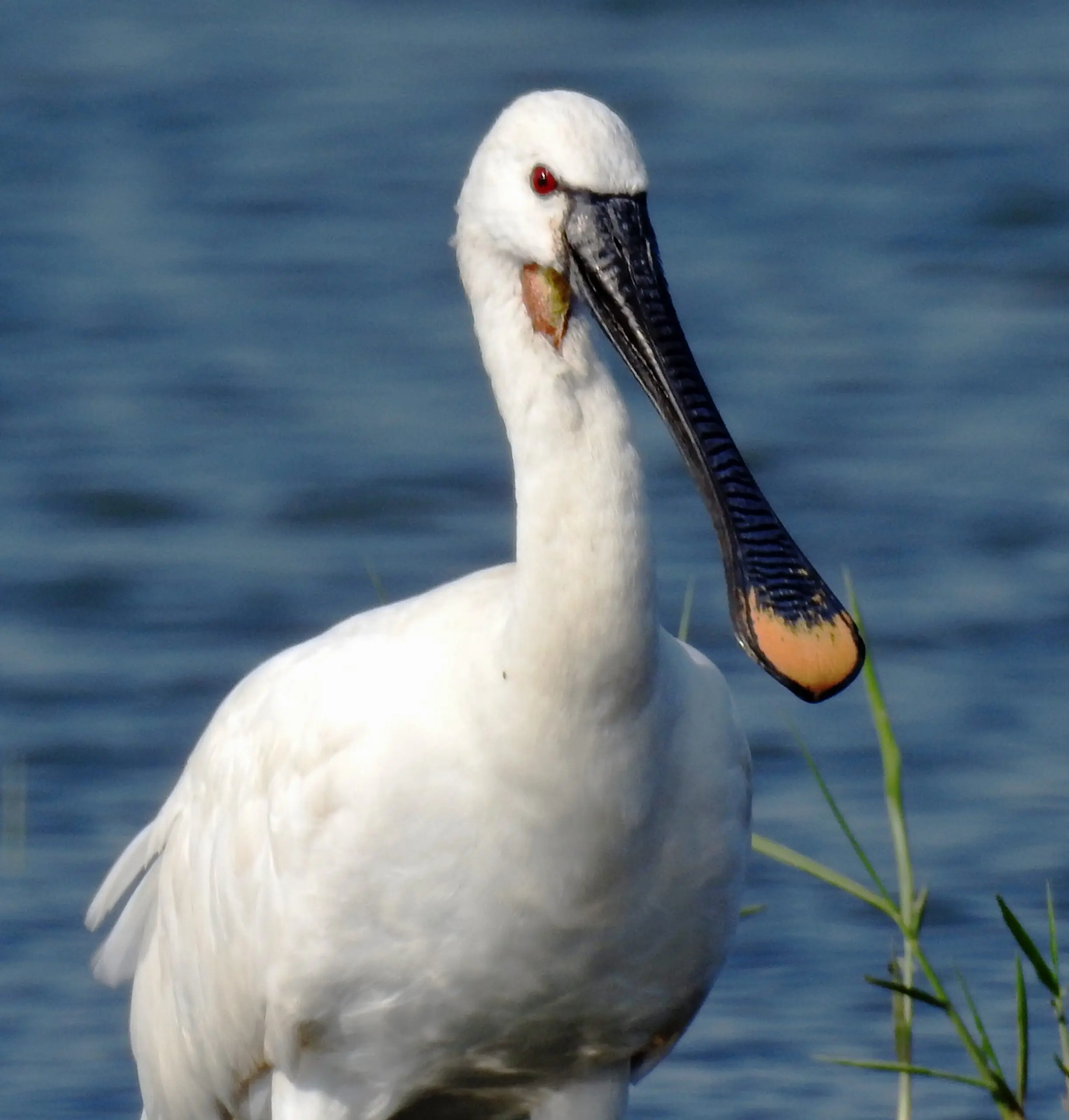
The most notable adaptation of the spoonbill is its beak, for which it gets its name. Their beak is wider at the front, and very sensitive to touch.
The spoonbill wades in semi-shallow water with its beak partially open and dipped into the water. As soon as a prey animal such as an invertebrate or a small fish swims by and touches the inside of the beak, it snaps shut.
Conservation
Least Concern
The Eurasian spoonbill is listed as ‘Least Concern’ on the IUCN Red List of Endangered Species.
Current population estimate
The wild population is estimated to sit between 79,000 and 96,000 wild individuals, with the overall population increasing.
Threats
However, while the species is doing well at the moment, it may come under threat from pollution, climate change, and habitat loss as a result of wetland draining in the future.
Frequently Asked Questions
Eurasian spoonbills are found in parts of continental Europe, central and eastern Asia, and parts of northern Africa.
Eurasian spoonbills typically live for between 10 and 15 years.
Eurasian spoonbills eat a variety of aquatic animals, including small fish and frogs, crustaceans, worms, and aquatic insects.
No, Eurasian spoonbills do not live in Ireland. They are rare vagrants, meaning a bird that has been blown off its usual migratory route, but none have been sighted since 2001.
The Eurasian spoonbills can be found in the Flamingo Lagoon living alongside the Chilean flamingos, the black-crowned night herons, and the white-faced whistling ducks.