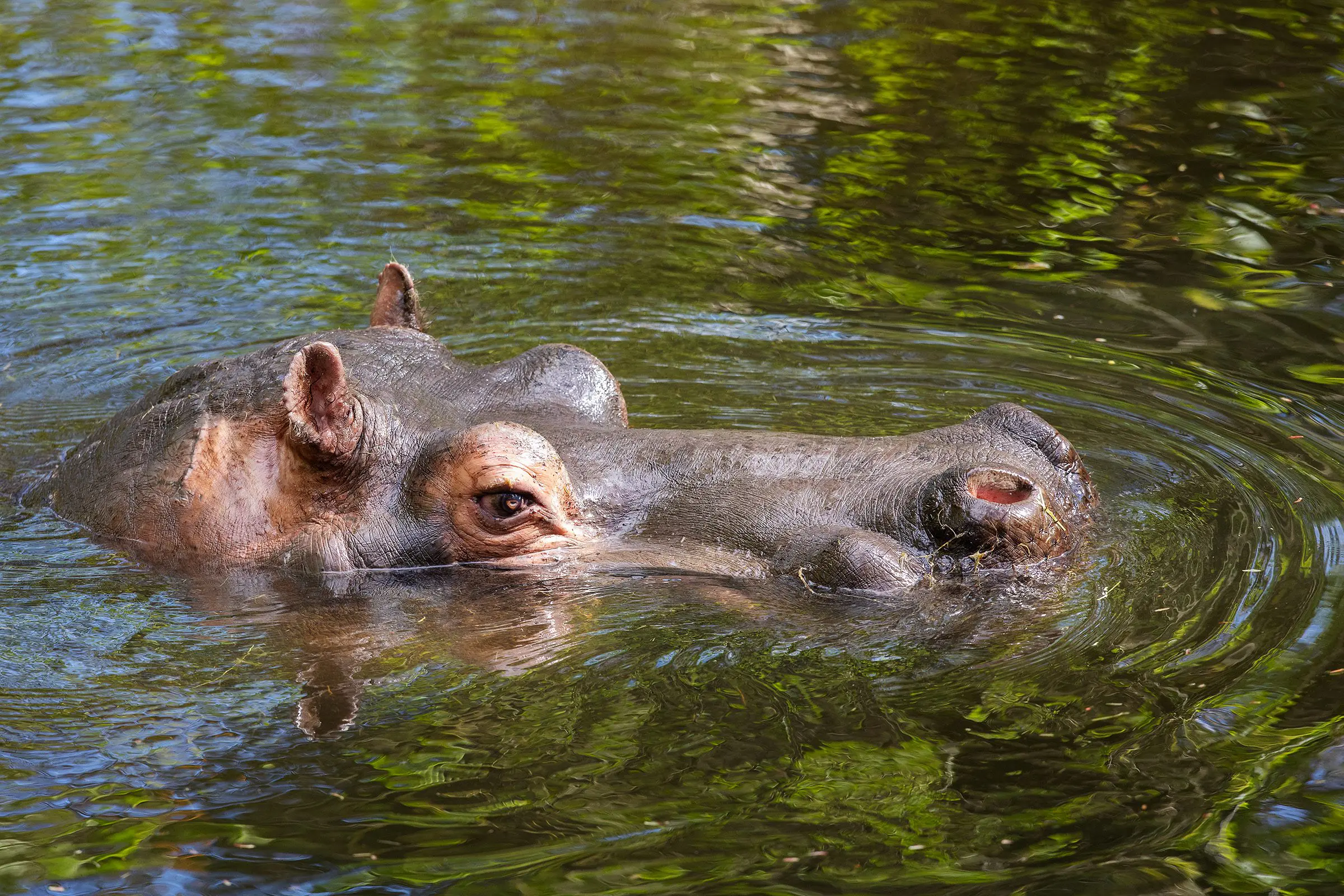
Common hippopotamus
The common hippopotamus is one of the largest land mammals and spends most of its day submerged in rivers and lakes to keep cool, emerging at night to graze on grass
Species
Mammals
Habitat
Wetlands
Diet
Herbivores
Conservation Status
Vulnerable
Common hippopotamus
Hippopotamus amphibious
Irish Name: Dobhareach
ICUN Status: Vulnerable
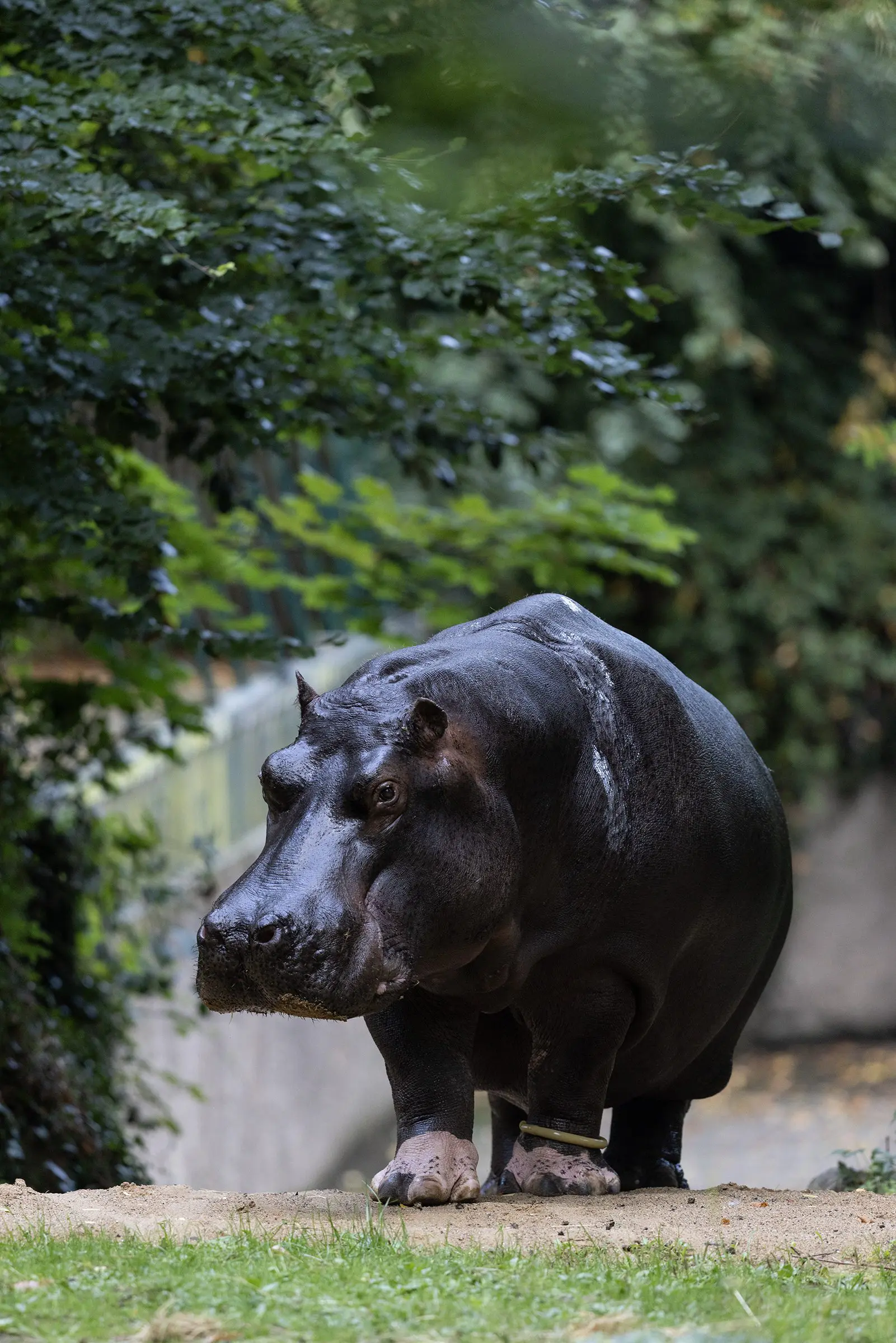
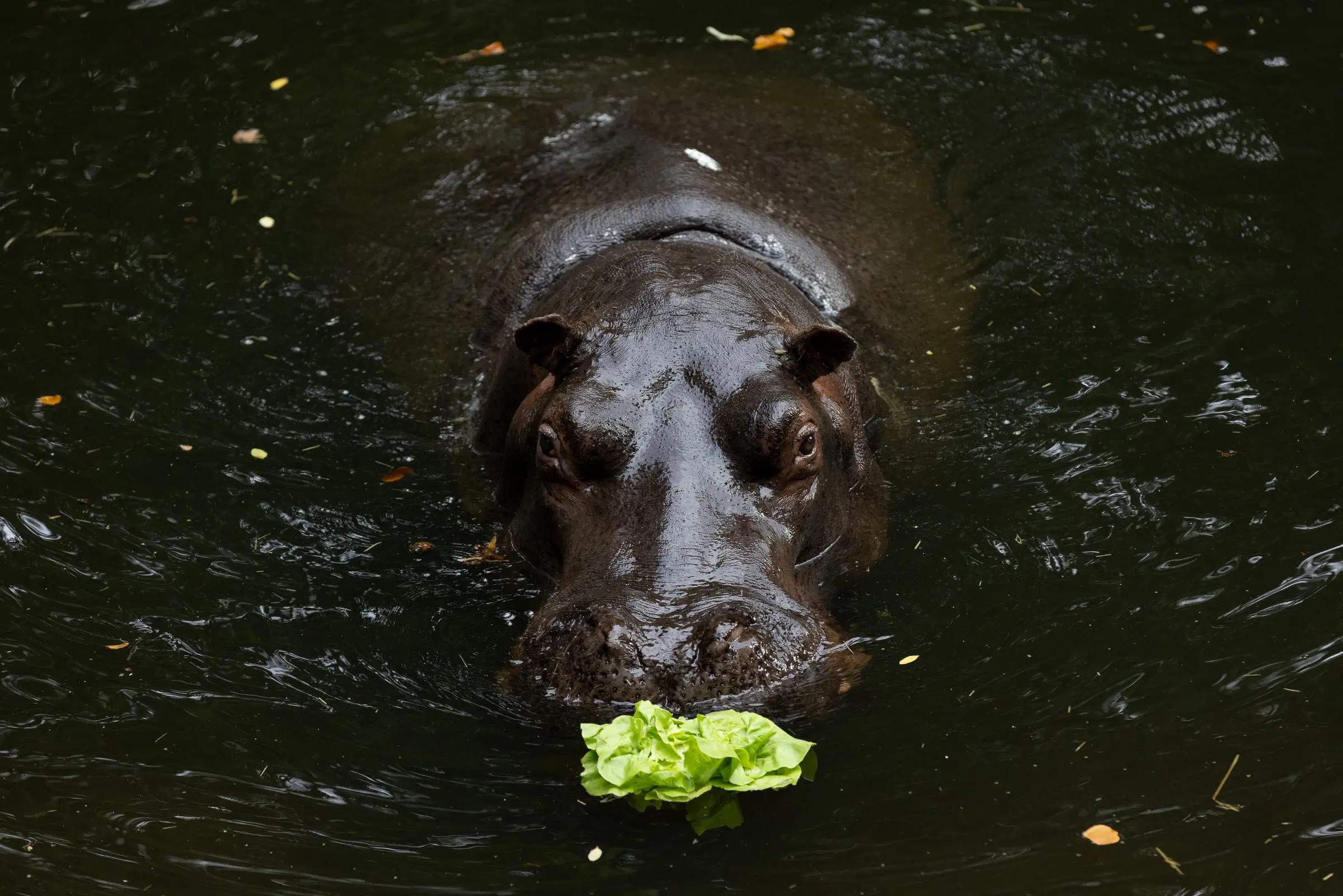
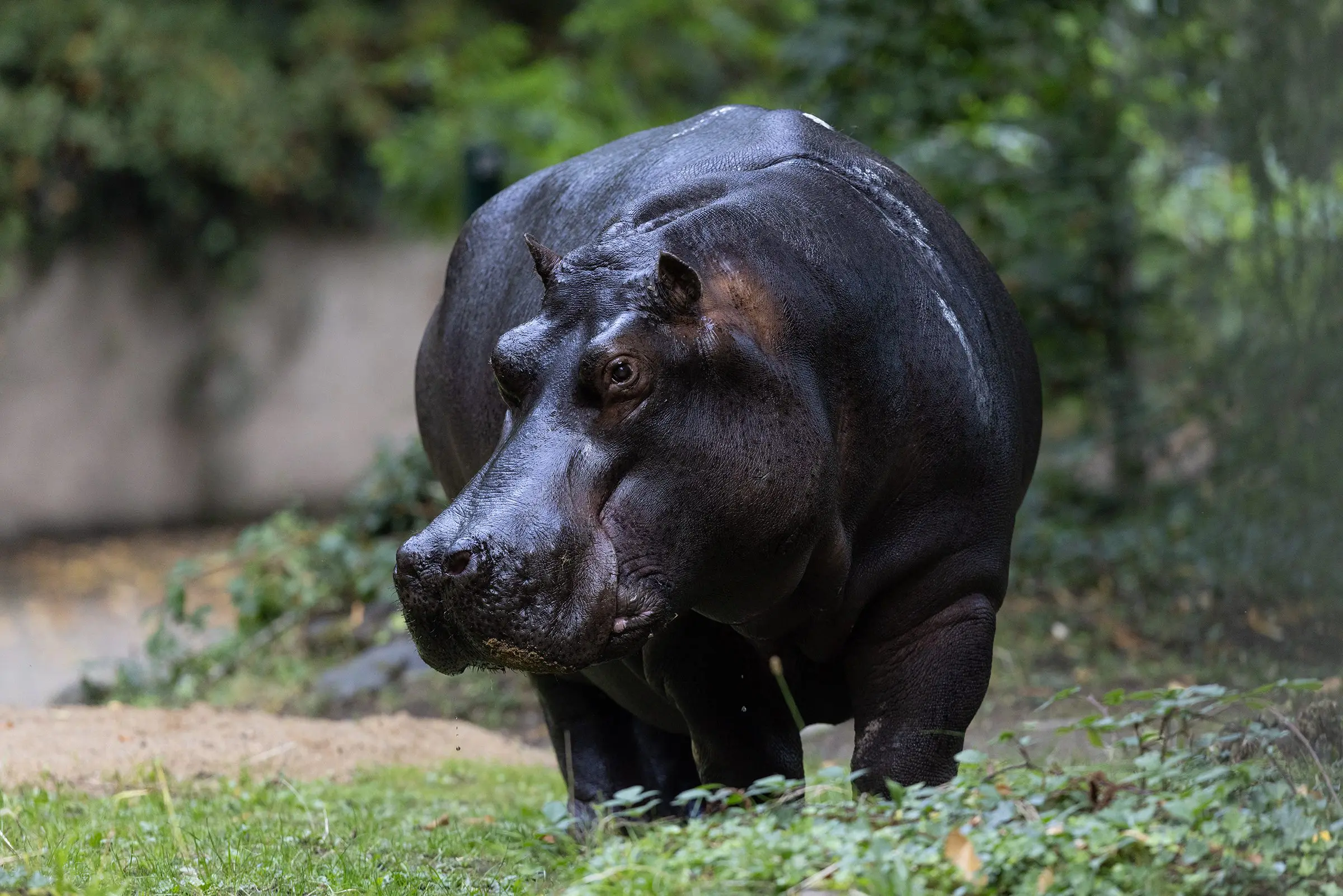
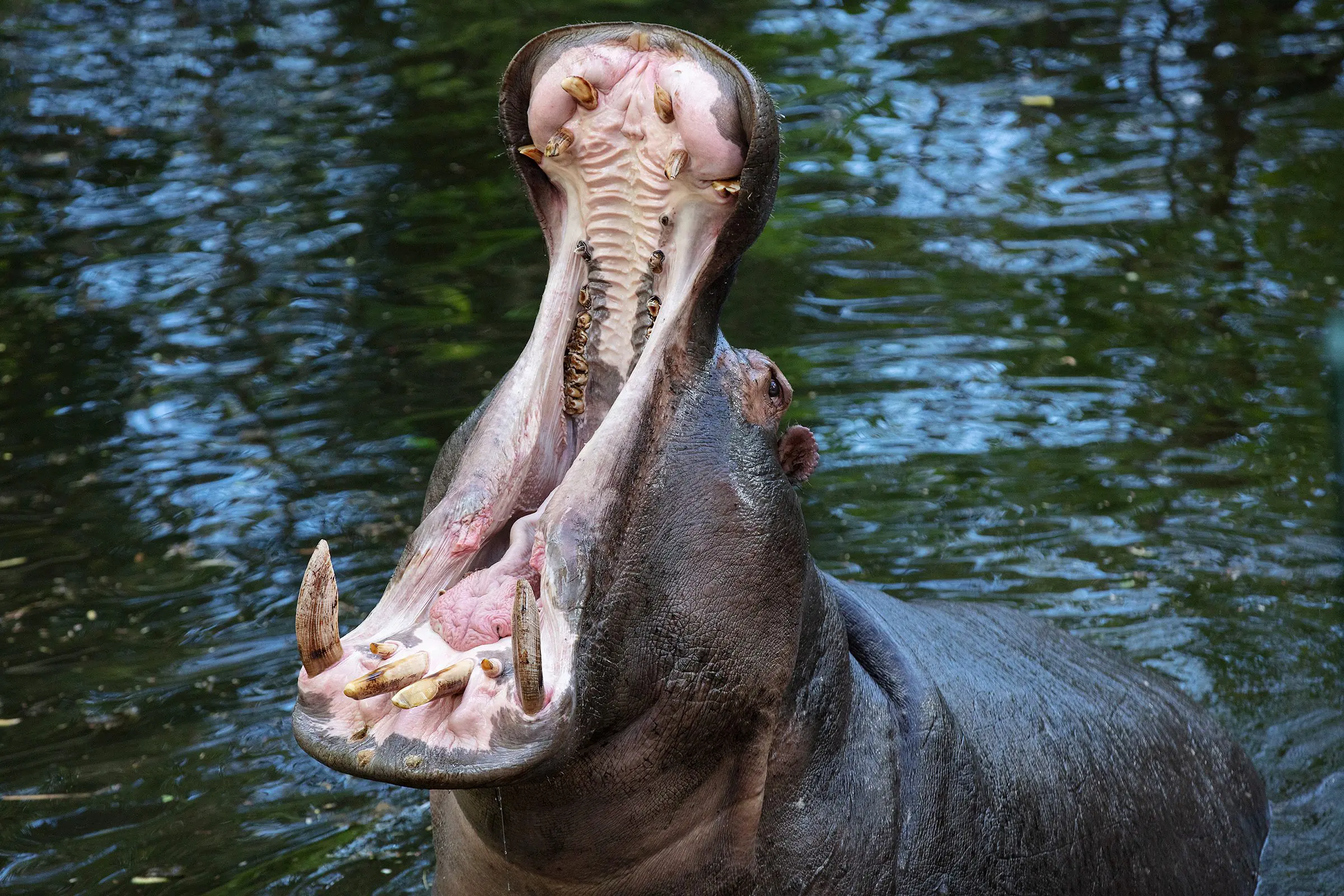
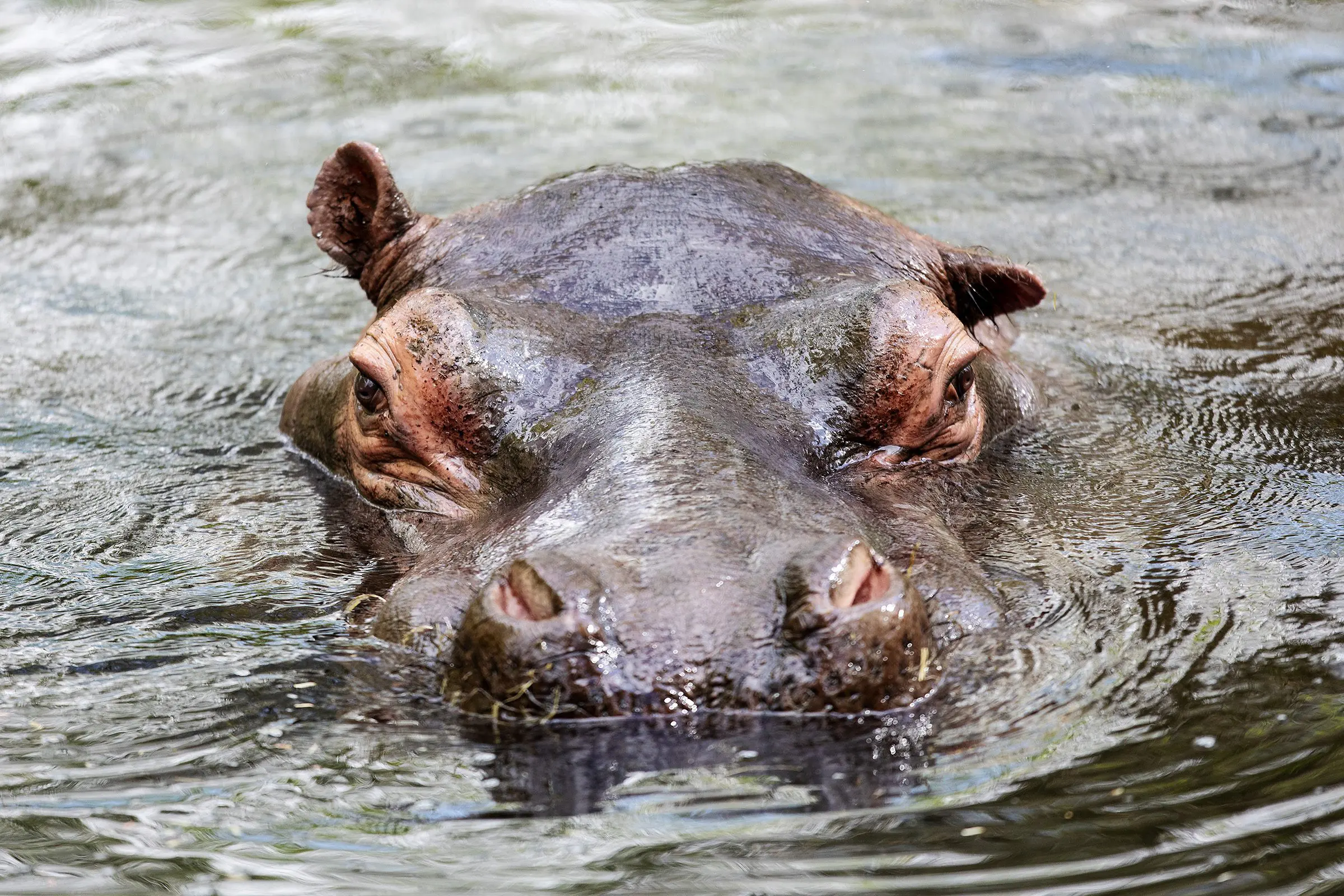
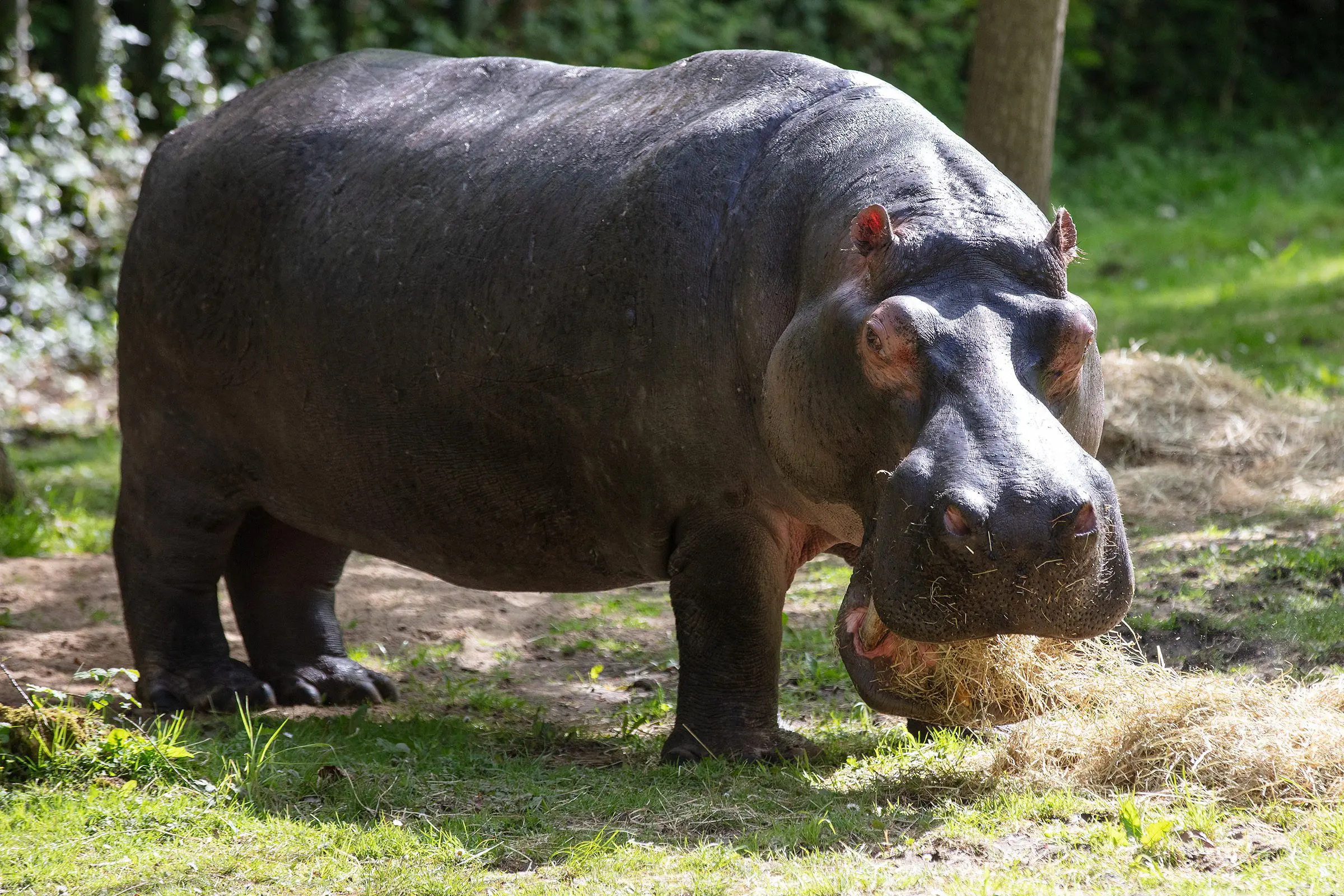
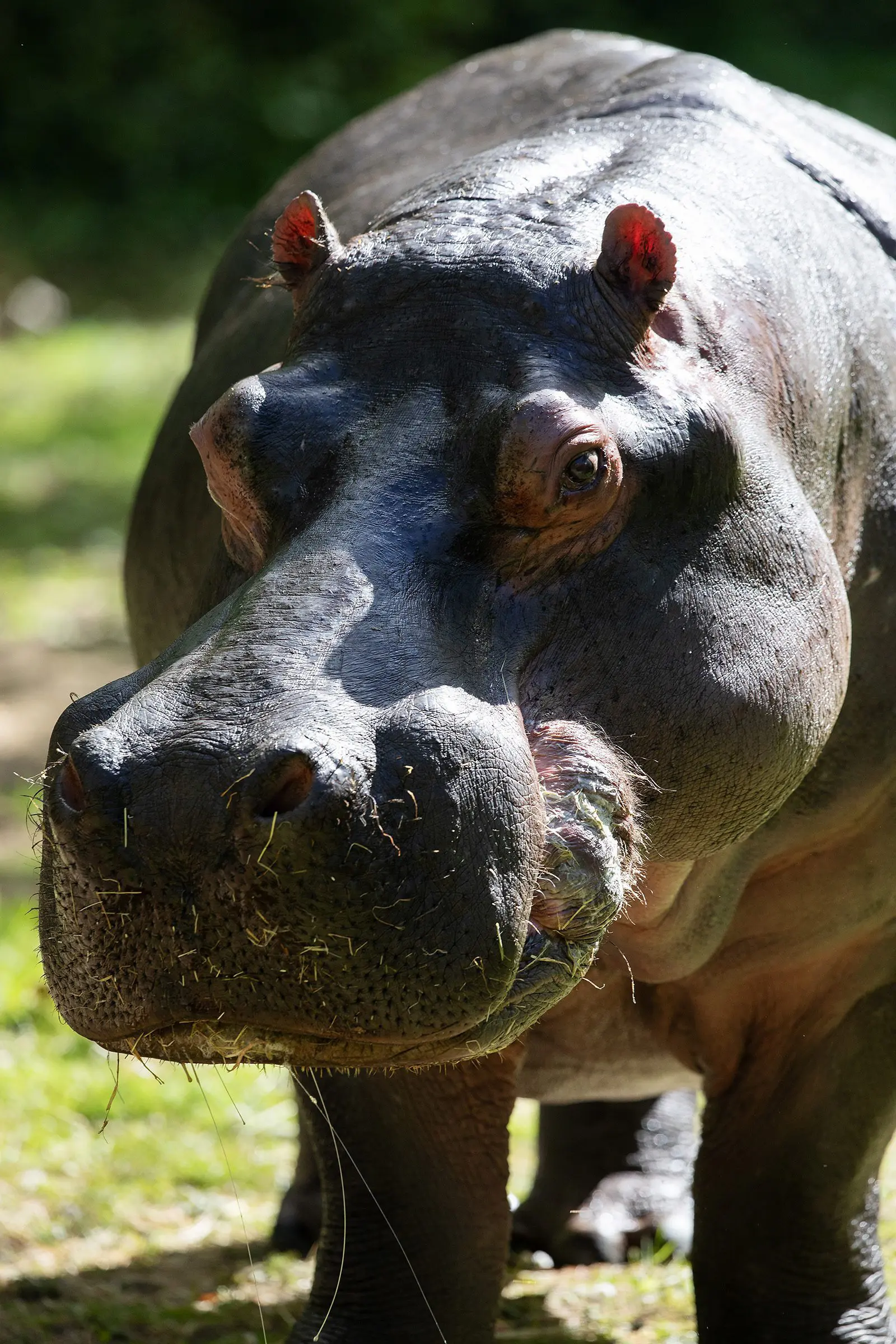
Hippos are one of the heaviest land animals on earth and can weigh up to three and a half tonnes! Only elephants and rhinos are heavier. Hippos have a huge barrel-shaped body, wide mouths and large tusks. They spend most of the day wallowing and resting in or near water. At night, they leave the water to graze.
General Information
Zoo location
African Plains
Animal class
Mammalia
Animal order
Cetartiodactyla
Where do they live (Natural habitat)?
Hippos are semi-aquatic, meaning they spend time on land and in the water. They are found in shallow lakes, rivers and swamps across eastern, central and southern sub-Saharan Africa.
How long do they live?
Approximately 40-50 years in the wild and in zoos.
What do they eat?
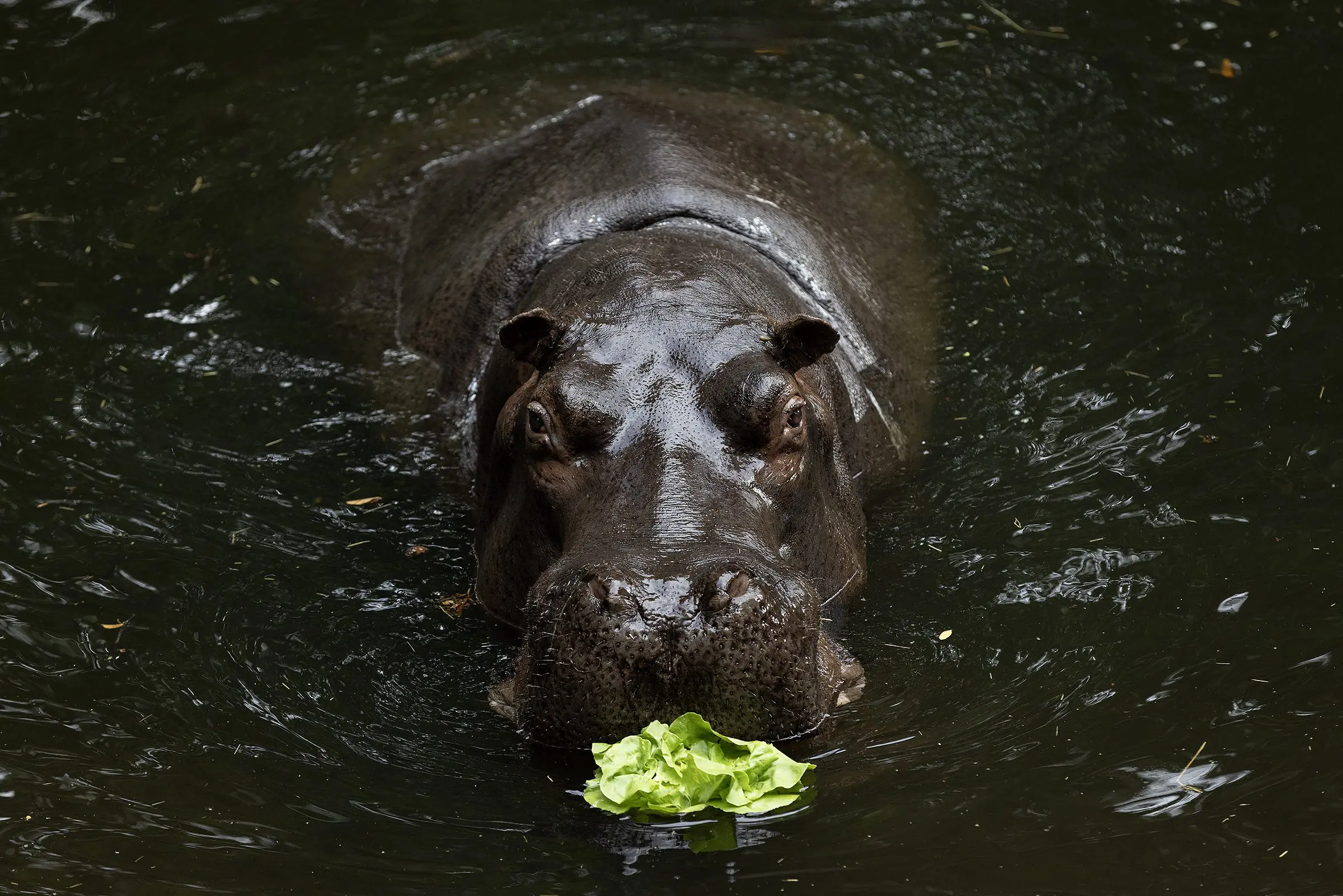
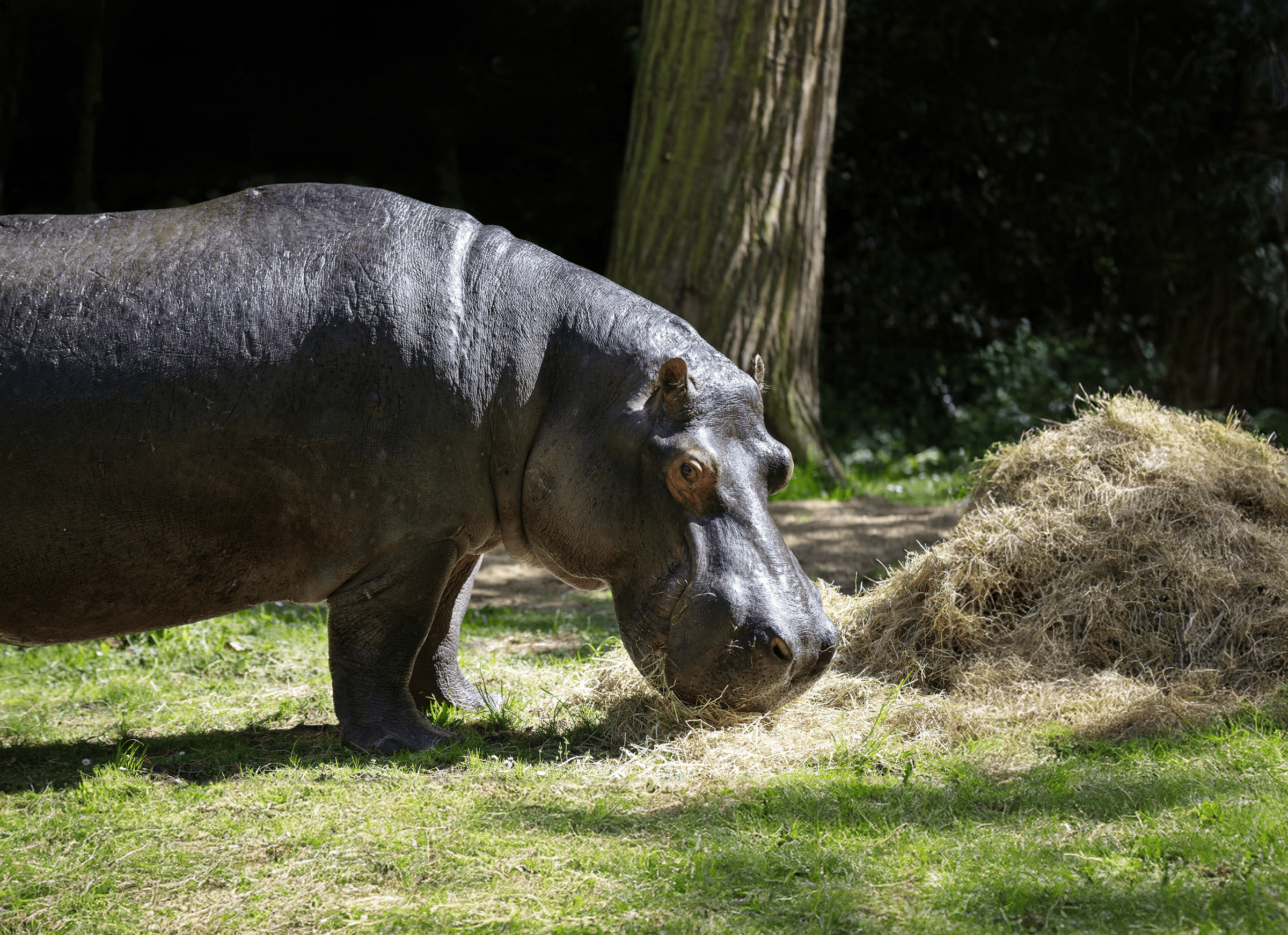
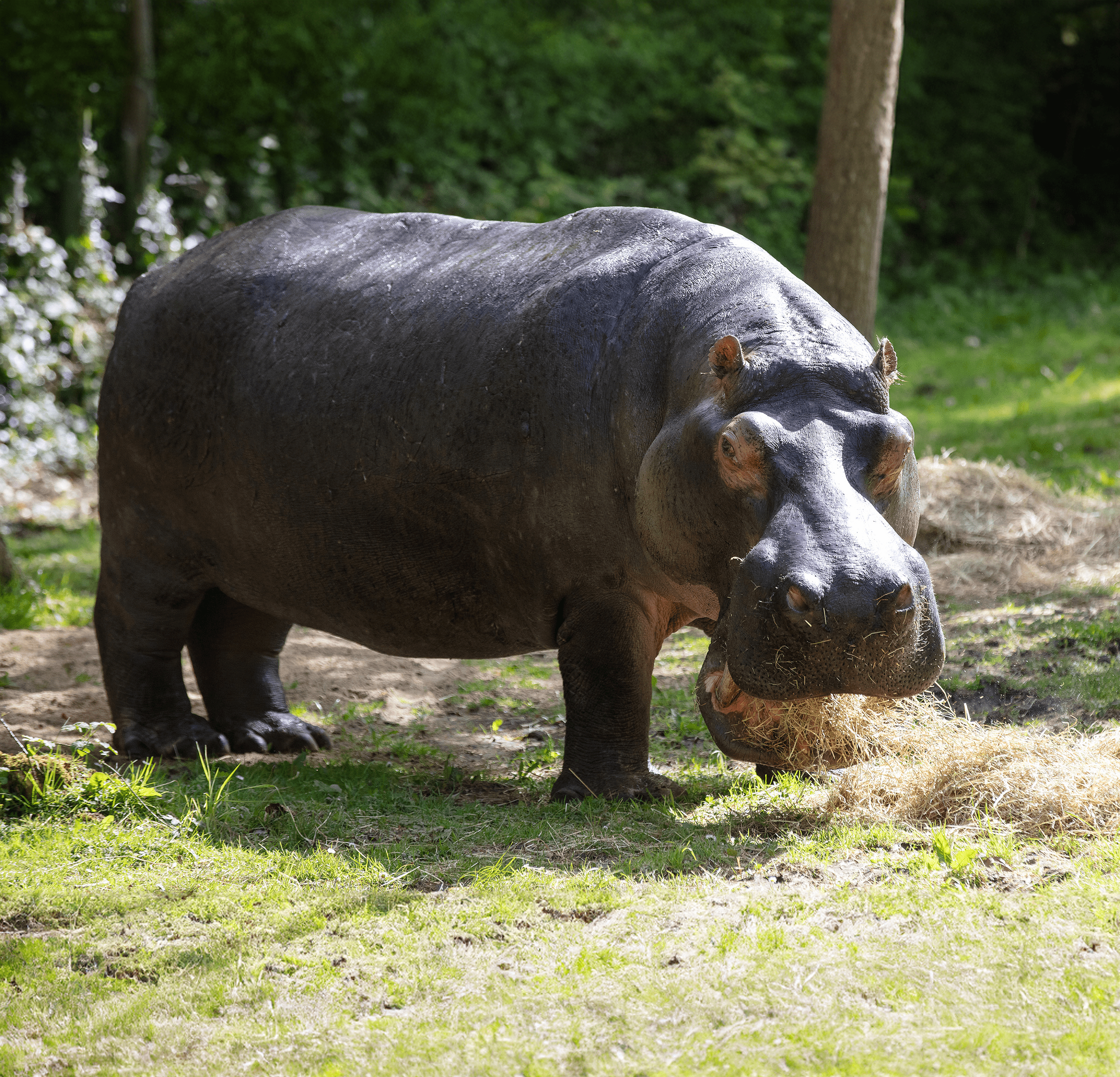
Hippos are herbivores (plant-eaters) and mainly eat grass. They leave the water at night to graze for 4-5 hours in grassy areas near the water. While they prefer to eat near the water, they will travel several kilometres to find food if they need to. Hippos have also been observed on a few occasions eating dead animals, however, their bodies are not suited to eating meat so this is likely not a common behaviour.
Group name
Herd
Closest related species / sister species
The closest relative of the common hippo is the only other species of hippo, the pygmy hippo.
The Common Hippopotamus
Family life
Hippos are social animals; they live in herds of about 20 to 200 individuals. The females are the leaders of the herd, while the males rest along the water bank protecting the females and calves. Young stay feeding from their mother for around a year and females tend to have young every 2 years.
Baby name
Calf
Gestation (pregnancy) period
Approximately 8 months
Number of young at birth
Usually one
Weight at birth
Approximately 20-55 kg
Age at maturity
Hippos usually reach maturity around 3.5 years of age.
Size male adult
Adult males weigh approximately 3.5 tonnes (3,500 kg s) and are approximately 150-165 cm tall.
Size female adult
Females are a similar height to males but weigh much less, approximately 1.5 tonnes (1,500 kgs).
Conservation
Vulnerable
The hippopotamus is classified as Vulnerable by the International Union for Conservation of Nature.
Current population estimate
Approximately 115,000 to 130,000.
Threats
The main threats facing hippos are habitat loss due to agriculture and building developments, climate change (causing drought), man-made changes to rivers and lakes (e.g. dams), hunting, and human disturbance (e.g. war, civil unrest).
Frequently Asked Questions
Hippos are herbivores (plant-eaters) and mainly eat grass. The leave the water at night to graze for 4-5 hours in grassy areas near the water.
Usually between 1.5 tonnes (female) and 3.5 tonnes (male).
Hippos make a variety of sounds including honking, grunting and bellowing
In Greek, it means “river horse”.
Hippos are found in shallow lakes, rivers and swamps across eastern, central and southern sub-Saharan Africa. They leave the water to go ashore to feed on grassy areas along the banks of the water.
Hippos can hold their breath for up to 5 minutes.
A calf
Approximately 8 months.
Hippos do are herbivores (plant-eaters) and their diet is mainly made up of grass. They have been observed on a few occasions eating dead animals, however their bodies are not suited to eating meat so this is likely not a common behaviour.
A group of hippos is called a herd.
Hippos have four toes; they are even-toed ungulates (animals with hooves).
Hippos can vary in length, from 209cm to 505cm including a tail of about 35cm in length. They are approximately 150-165cm tall.
Hippos live in eastern, Central and southern sub-saharan Africa.