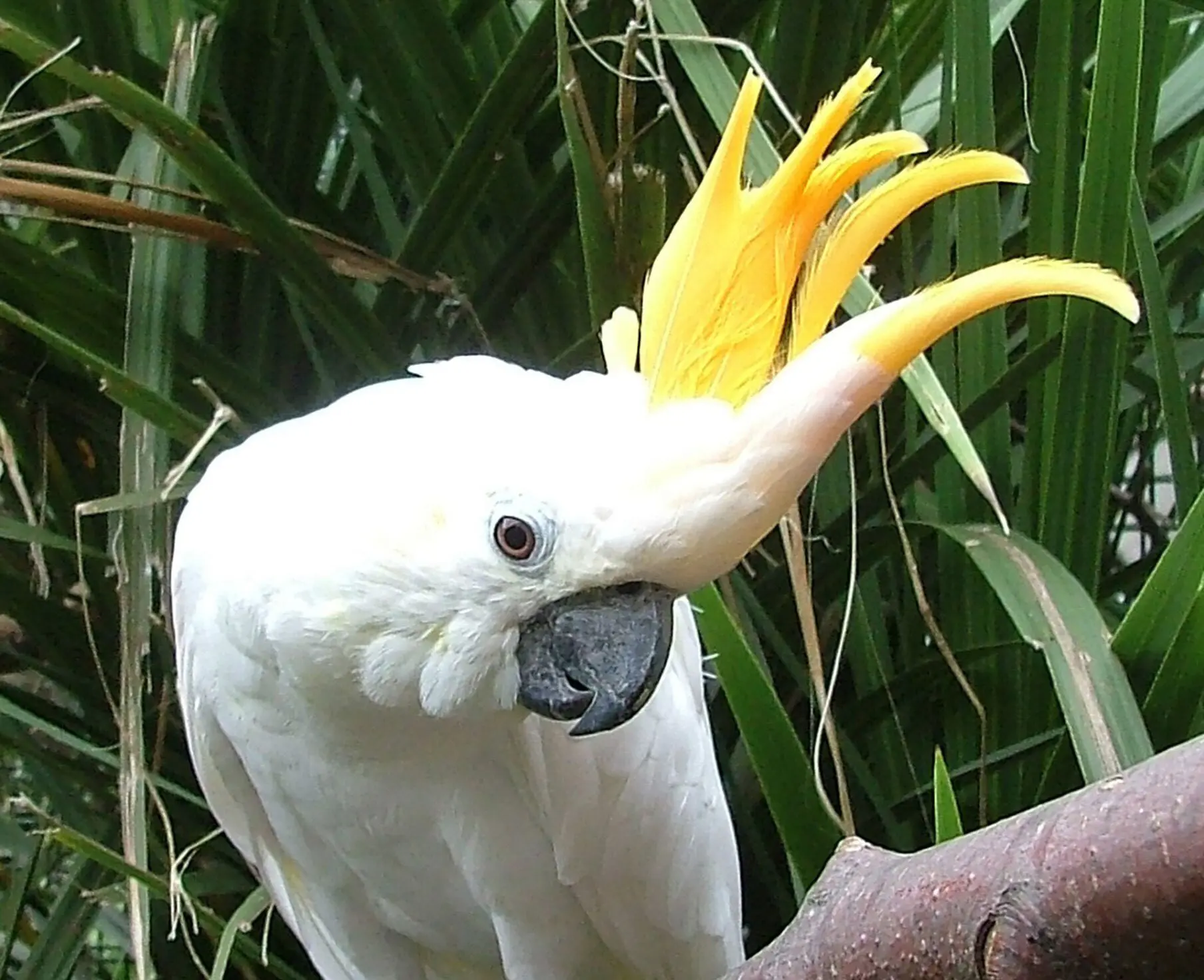
Citron-crested cockatoo
One of four subspecies of yellow-crested cockatoo
Species
Birds
Habitat
Forest
Diet
Herbivore
Conservation Status
Critically Endangered
Citron-crested cockatoo
Cacatua citrinocristata
Irish Name: Cocatú ciotrónchíorach
ICUN Status: Critically Endangered
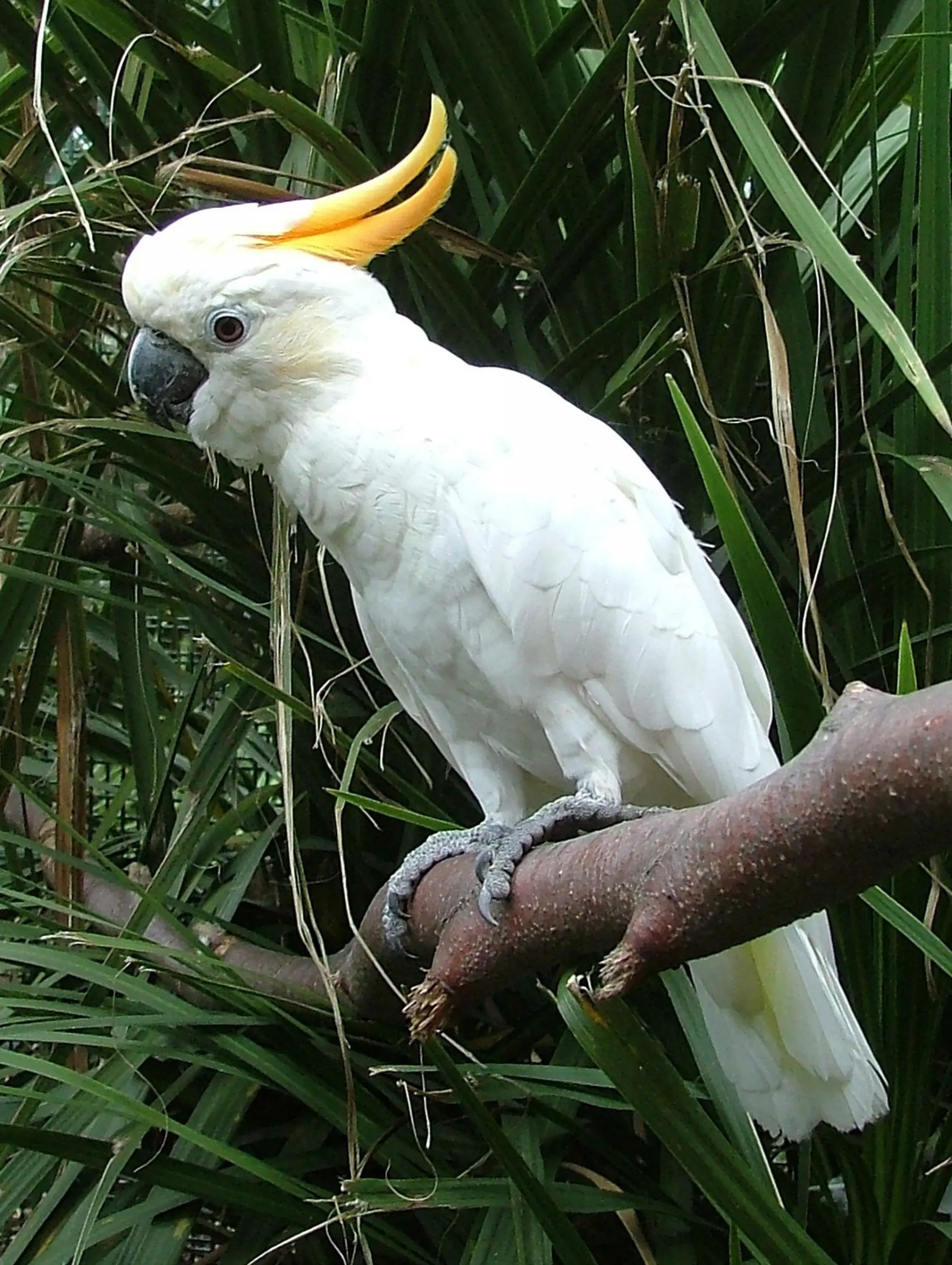
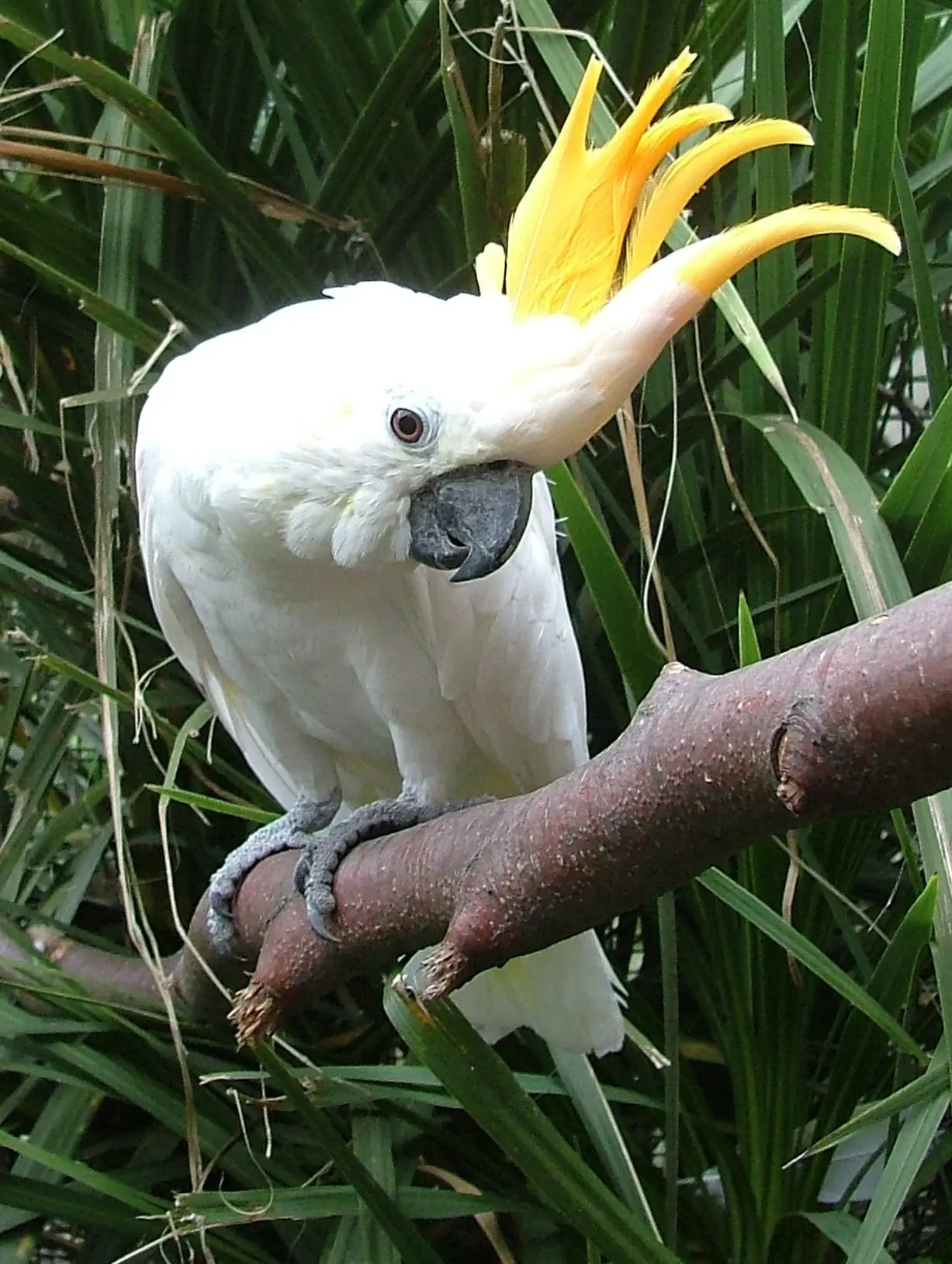
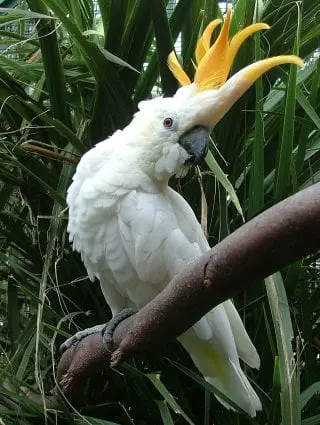
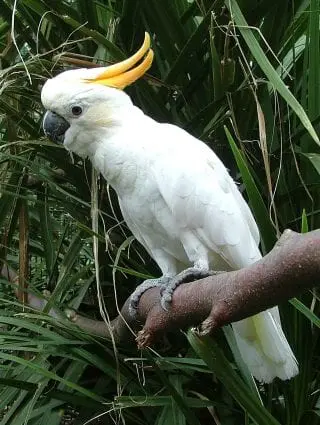
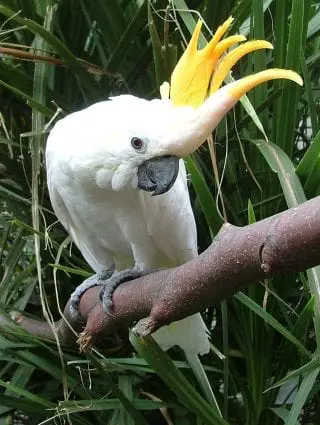
The citron-crested cockatoo is one of four subspecies of yellow-crested cockatoo. They have white feathers and a distinctive orange-coloured crest on their head. They have pale orange ear patches and pale yellow coloured feathers under their wings and tail feathers. Other features include a dark grey beak and a pale blue ring around their eyes. Males have black eyes; females have brown eyes.
General Information
Zoo location
Near the Orangutan Forest
Animal class
Aves
Animal order
Psittaciformes
Where do they live (Natural habitat)?
The citron-crested cockatoo is only found on the island of Sumba in Indonesia. They live mainly in tropical forests or on the edges of forests.
How long do they live?
Between 50-60 years of age.
What do they eat?
They eat a variety of seeds, nuts, berries, buds, flowers and fruit. They will also eat food grown on farms, e.g. maize.
Group name
Flock
Closest related species / sister species
The closest relatives of the citron-crested cockatoo are the other three subspecies of yellow-crested cockatoos.
Fun Facts!
The Citron-crested cockatoo
Family life
Citron-crested cockatoos live in small flocks but sometimes gather in larger flocks when feeding. On Sumba Island, mating happens from September to May. Their courtship displays include vocalising from the top of a tree and frequent raising and lowering of the crest. Nests are built in tree cavities.
Baby name
Chick or hatchling
Gestation (pregnancy) period
The eggs are incubated for approximately 28 days by both the male and female. The chicks leave the nest approximately 10-12 weeks after hatching.
Number of young at birth
2-3 eggs
Age at maturity
3-5 years of age
Adult size
They are approximately 350 g in weight and approximately 35 cm in length.
Adult male name
Cock
Adult female name
Hen
Conservation
Critically Endangered
The citron-crested cockatoo is listed as Critically Endangered by the International Union for Conservation of Nature.
Current population estimate
Unknown, but could be as low as 500-1000.
Threats
The main threats to citron-crested cockatoos are trapping for the illegal pet trade and habitat loss because of deforestation – Sumba Island has lost 90% of its native forest. In general, animals that are only found in one place and/or whose population is small are very vulnerable. They face additional threats from inbreeding, disease outbreaks and natural disasters.
The citron-crested cockatoo also only reproduces in small numbers, which means it takes longer for the population to recover, even when conservation measures are put in place.
What is Dublin Zoo doing?
Dublin Zoo currently coordinates the European Zoo Breeding Programme for the Citron-crested cockatoo. This means that we manage the breeding of citron-crested cockatoos across all European zoos.
Since 2011, Dublin Zoo has been providing funding for research on the citron-crested cockatoo population on Sumba Island. Although fewer birds are being caught for the pet trade, the population has not increased as hoped. It was believed that this might be due to fewer birds successfully rearing chicks. This research project was established to investigate why breeding results were poor in the wild in the hope that we could find ways of helping to improve the results.
Frequently Asked Questions
Yes, citron-crested cockatoos can mimic sounds that they hear from other animals. It is thought that this adaptation is a defence mechanism to try keep away predators from their nests. Cockatoos can make a whole host of vocalisations such as screeching, whistling and hissing.
There are many different reasons why birds have colourful feathers. Bright colours and feather patterns help different bird species identify each other. Males having a vibrant colourful orange crest is said to attract female. Sometimes colour patterns on birds can even help them to camouflage in their habitat, like the green feathers that the great green macaw has.
A crest on a birds’ head is usually for display purposes and communication. When a bird with a crest on their head feels threatened they fan out their feathers to make themselves look larger. They are defending their territory or trying to keep predators away.
Citron-crested cockatoos have a varied diet, but a main component of what they consume is seeds. Their strong beak is very well adapted for this diet. Citron-crested cockatoos can hold seeds with their feet and use their pincer-like beak to crack open even the toughest of seed shells. They use their tongue to scoop out the contents of the seed into their mouth.
It has been documented that the citron-crested cockatoo can fly at speeds of up to 70 kilometres per hour!