Chinese dhole
The dhole, also known as the Asiatic wild dog, is a medium-sized canine predator with rounded ears
Species
Mammals
Habitat
General
Diet
Carnivores
Conservation Status
Endangered
Dhole
Cuon alpinus lepturus
Irish Name: Madra fiáin Áiseach
ICUN Status: Endangered
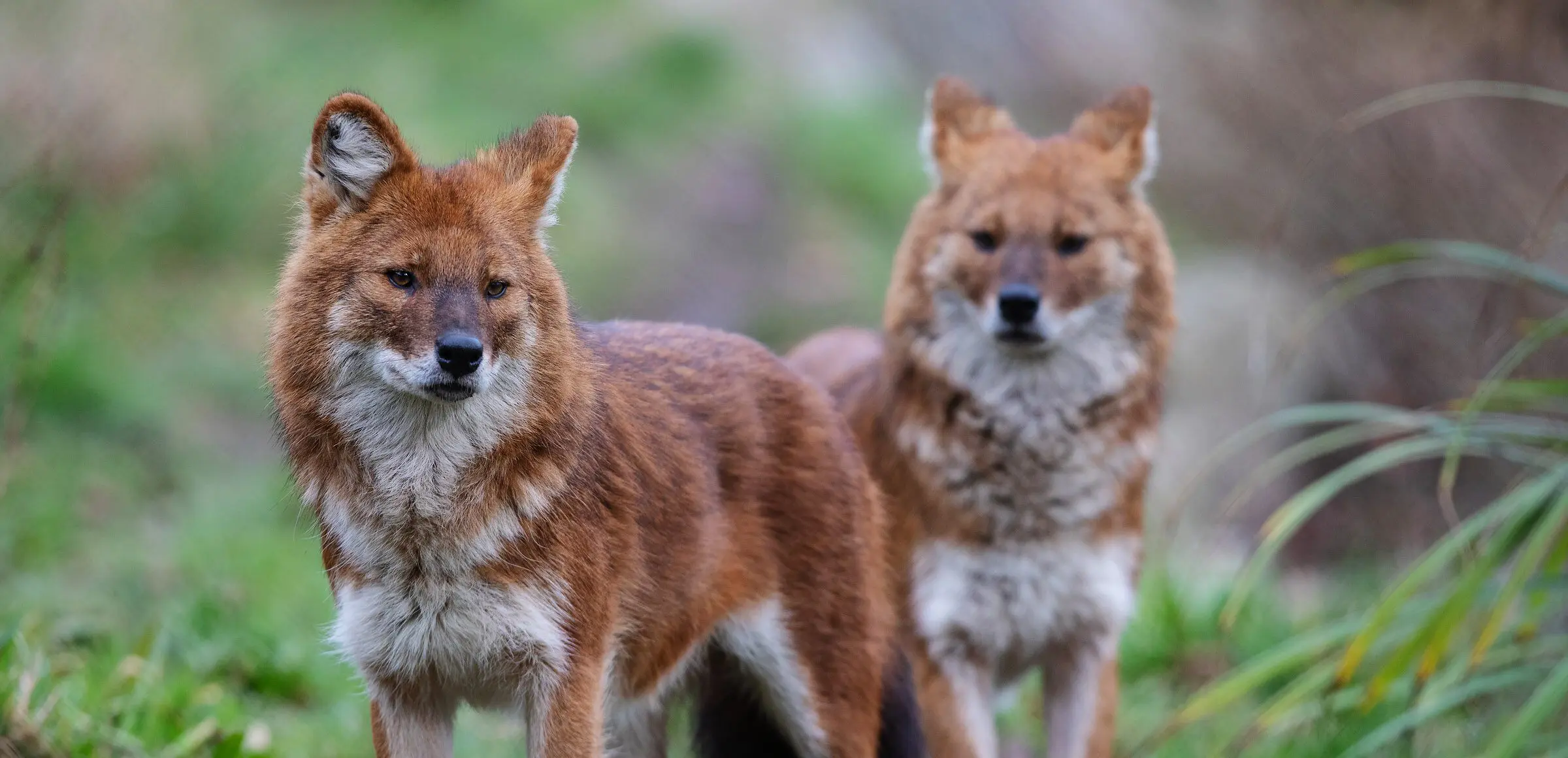
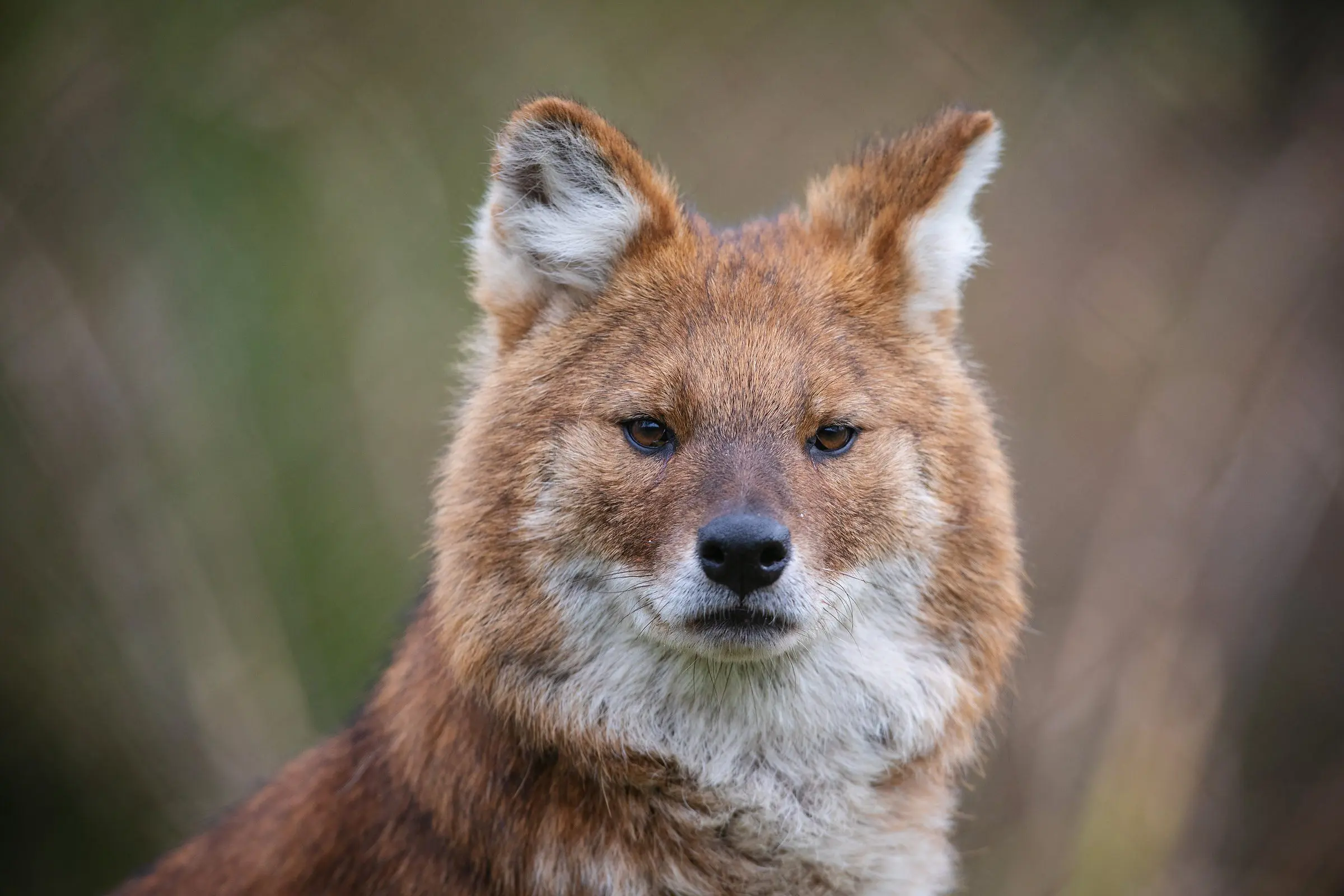
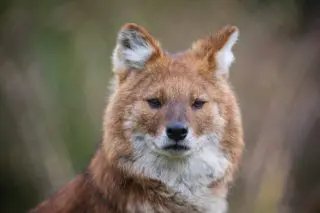
The dhole, also known as the Asiatic wild dog, is a medium-sized canine predator with rounded ears. It has a slender body with red-brown fur, a paler underside and a black tail. Dholes belong to the same family as wolves, coyotes and foxes.
General Information
Zoo location
Asian Forests
Animal class
Mammalia
Animal order
Carnivora
Where do they live (Natural habitat)?
Dholes are habitat generalists, meaning that they live in many different habitats. These include tropical and temperate deciduous forests, rainforests, grasslands and scrublands. In the past, dholes were widespread throughout Asia. Now, scattered populations of dholes live in Bangladesh, Bhutan, Cambodia, China, India, Indonesia, Laos, Malaysia, Myanmar, Nepal and Thailand.
How long do they live?
Dholes live up to eight years in the wild and up to 16 years in zoos.
What do they eat?
Dholes are hypercarnivores, meaning that over 70% of their diet comes from meat. They prefer to hunt medium to large ungulates (hooved animals), particularly deer like sambar, chital and muntjac. They also hunt birds, rodents and, sometimes, livestock.
Group name
Pack
Closest related species / sister species
Dholes are closely related to grey wolves, Ethiopian wolves and coyotes.
Fun Facts!
The Dhole
Family life
Dholes are very social. They live in packs of 5-10 members (although packs with 25 members have been recorded regularly). These large packs allow dholes to hunt large numbers of prey and successfully guard their large litters. The size of the pack may depend on habitat type, the amount of food available and the presence of other predators such as tigers. For example, dhole packs tend to be smaller in dense forests where their preferred prey are less abundant. The pack is led by a breeding male and female, and only they produce pups. The whole pack is involved in the raising of offspring. Everyone takes turns to hunt for, groom, guard and play with the pups.
Baby name
Pup
Gestation (pregnancy) period
Approximately nine weeks
Number of young at birth
5-10 pups on average
Weight at birth
200-350g
Age at maturity
A dhole reaches its adult size after 15 months. Females start breeding after three years in the wild.
Adult size
Approximately 130cm long, 50cm tall, 12-20kg in weight
Conservation
Endangered
Currently, dholes are classified as Endangered by the International Union for Conservation of Nature (IUCN).
Current population estimate
Under 2,500 mature individuals
Threats
The main threats to dholes are the depletion of their prey sources due to hunting by humans and habitat loss due to agriculture, plantations and human development. They also face persecution (being harmed) by humans due to livestock losses.
What is Dublin Zoo doing?
Dublin zoo raises awareness of and provides education on this less well-known species and the conservation threats it faces in the wild.
Frequently Asked Questions
Dholes live in tropical and temperate deciduous forests, rainforests, grasslands and scrublands in Asia. They are found in Bangladesh, Bhutan, Cambodia, China, India, Indonesia, Laos, Malaysia, Myanmar, Nepal and Thailand.
Dholes are called hypercarnivores, meaning that over 70% of their diet comes from meat. They prefer to hunt medium to large ungulates (hooved animals), especially deer like sambar, chital and muntjac. Dholes will also eat birds, rodents and, occasionally, livestock.
Dholes do not have any natural predators, but they do share their habitats with tigers and leopards, and conflict can happen between these species.
No, dholes are mainly diurnal, meaning that they are active and hunt during the day.
Yes, dholes are currently classified as Endangered by the International Union for Conservation of Nature (IUCN). They face threats such as declining prey populations, habitat loss due to human activities and persecution (being harmed) by humans.