Northwest Bornean Orangutan
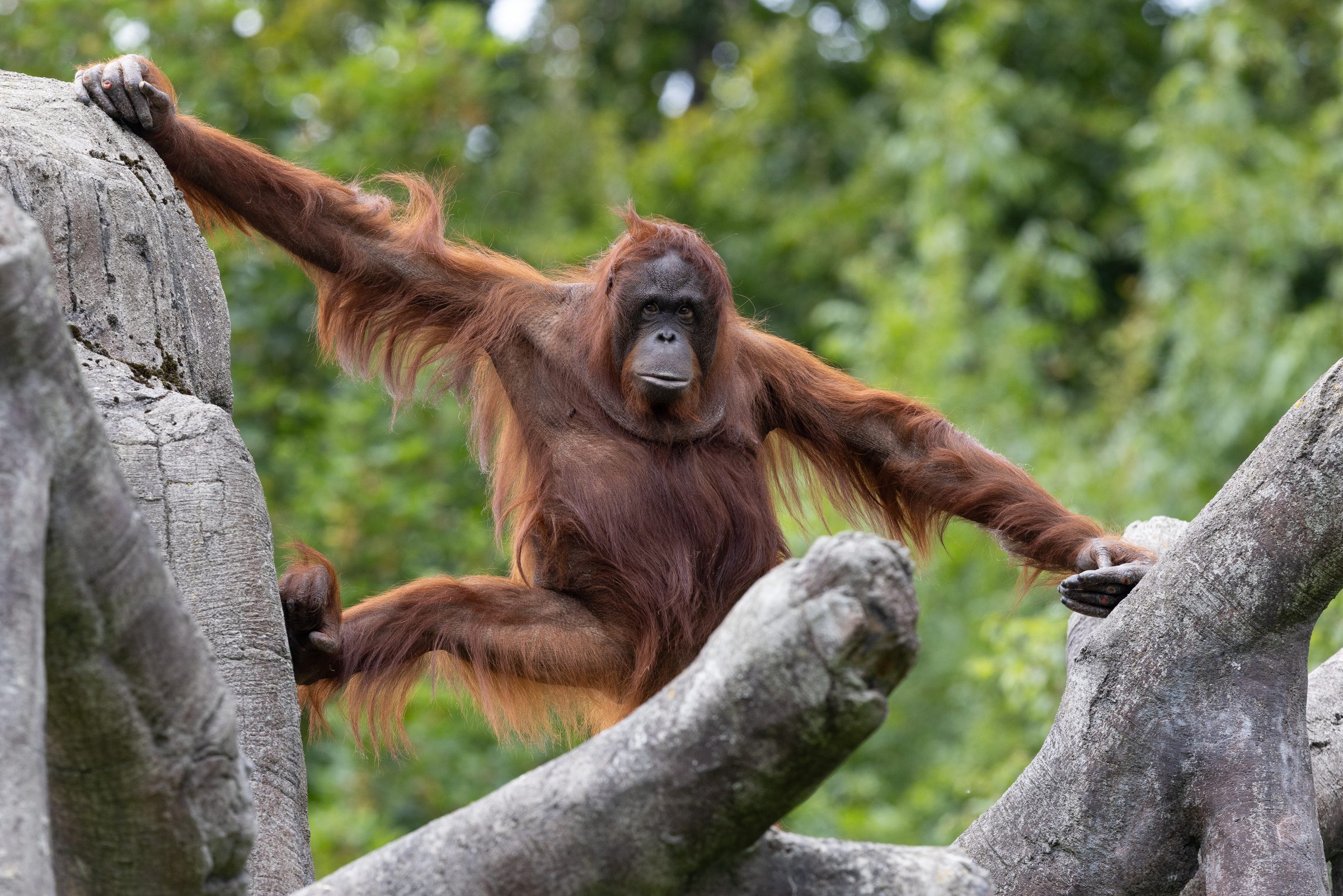
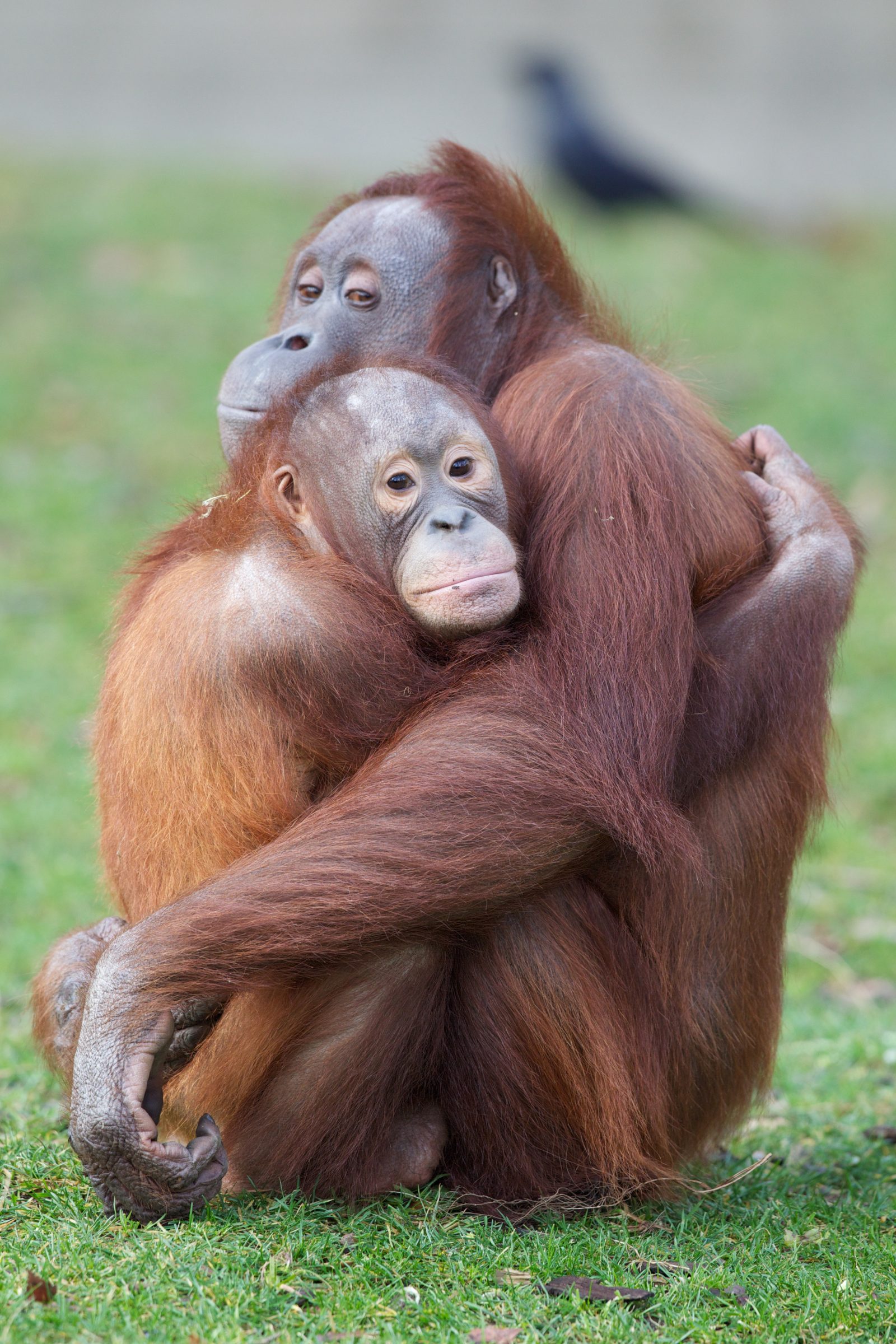
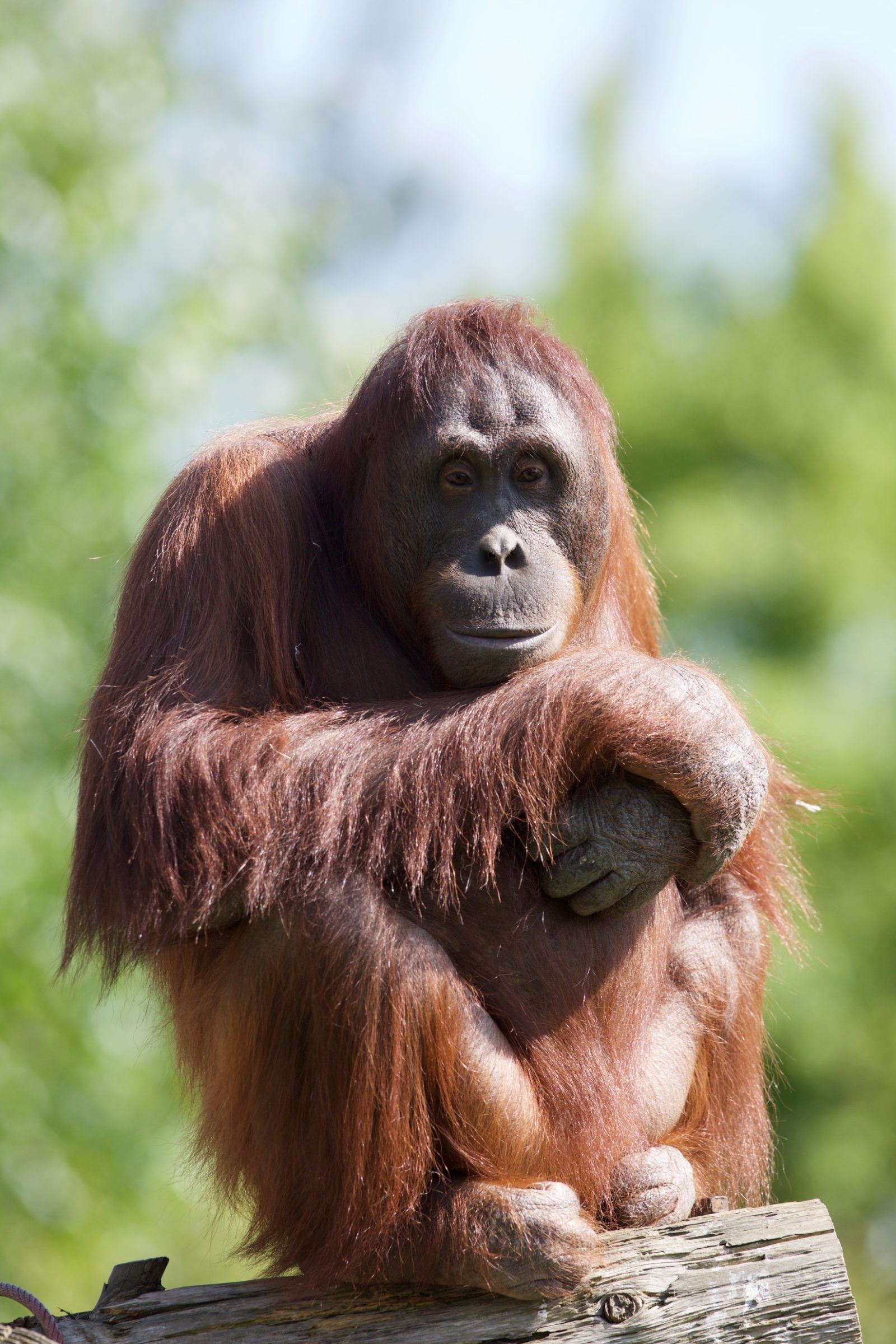
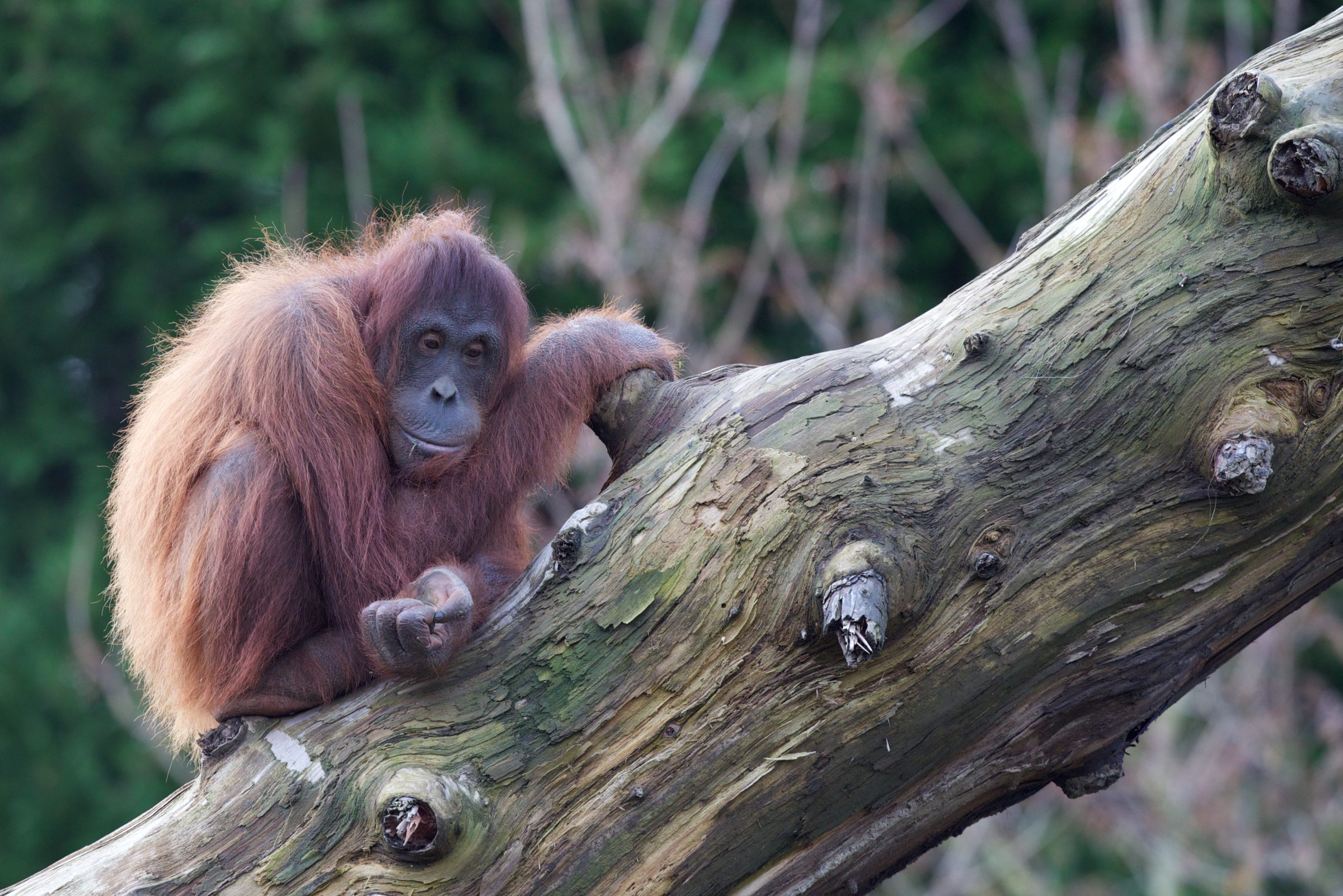
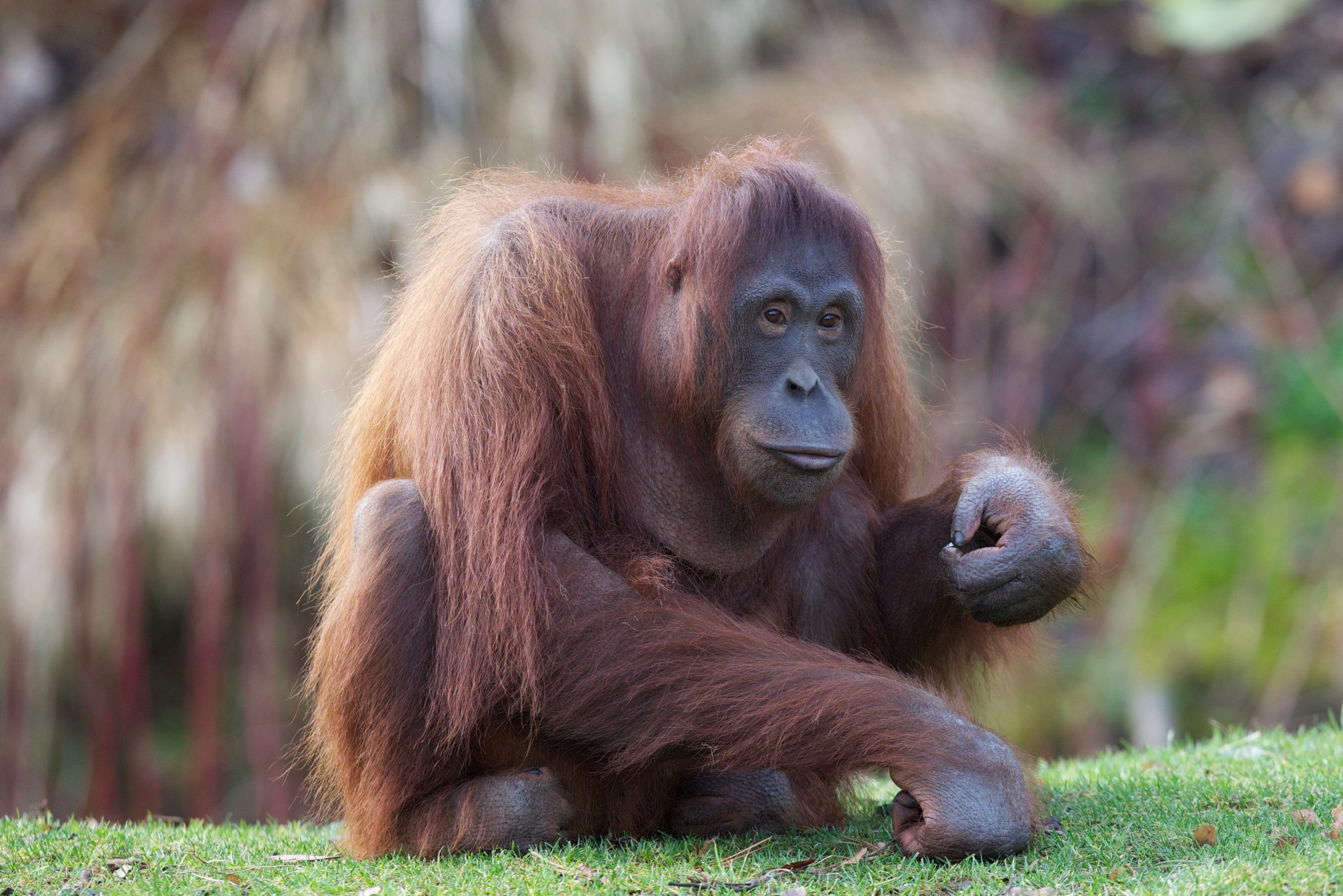
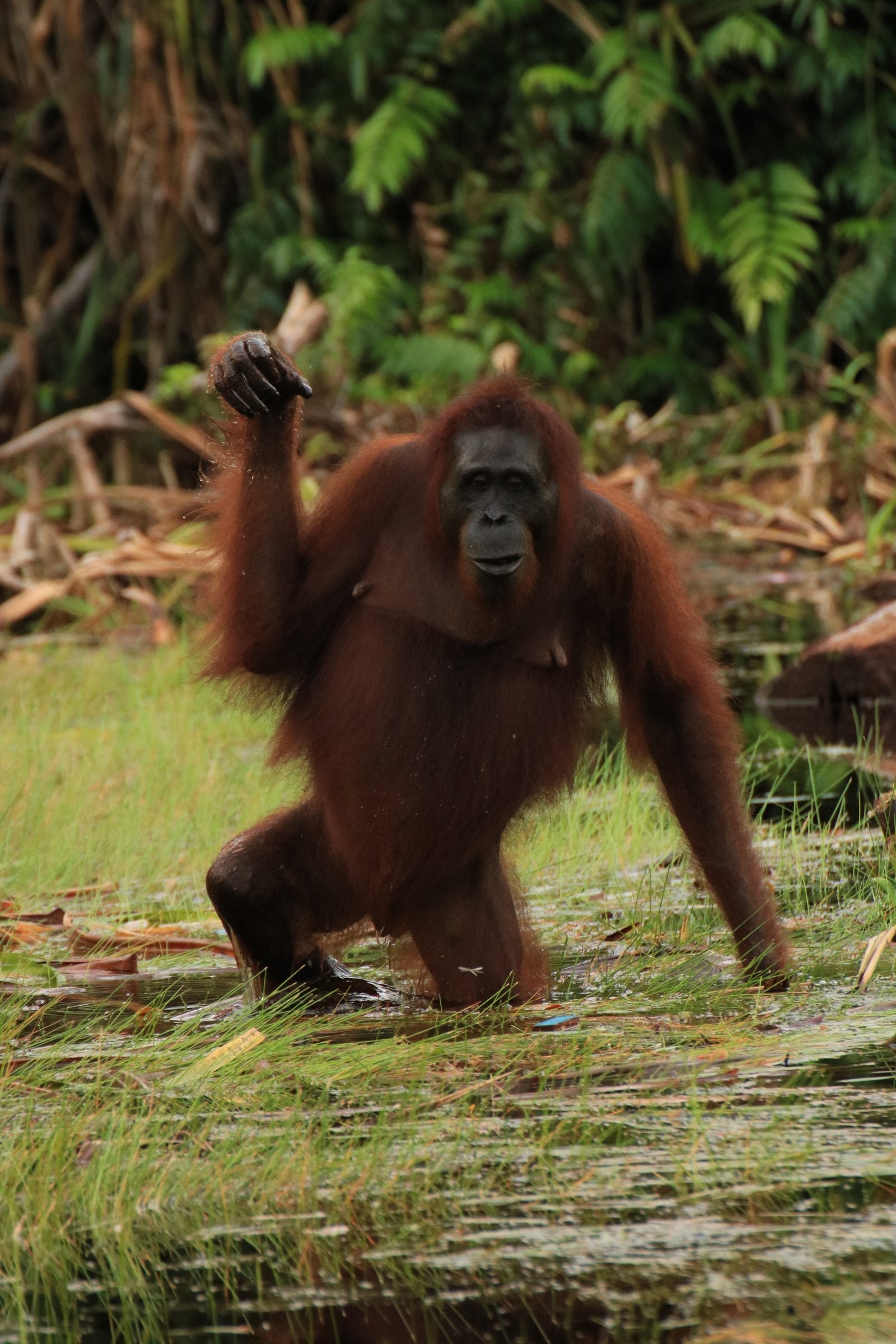
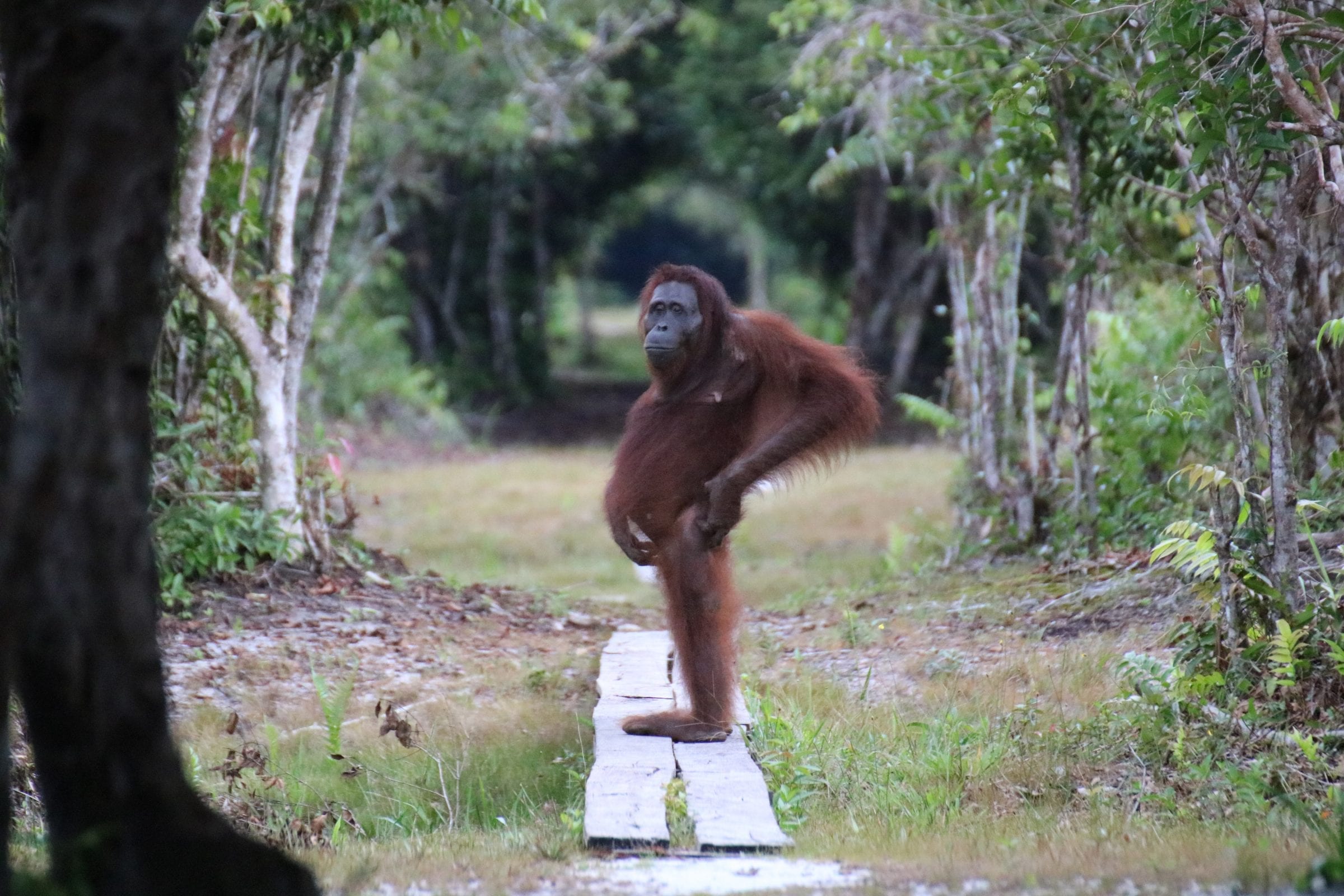
The Northwest Bornean orangutan is a critically endangered great ape distinguished by its shaggy reddish-brown fur and the large cheek pads that develop on adult males
Species
Mammals
Habitat
Forest
Diet
Herbivores
Conservation Status
Critically Endangered
Bornean Orangutan
Pongo pygmaeus
Irish Name: Órang-útan Boirneoch
ICUN Status: Critically endangered
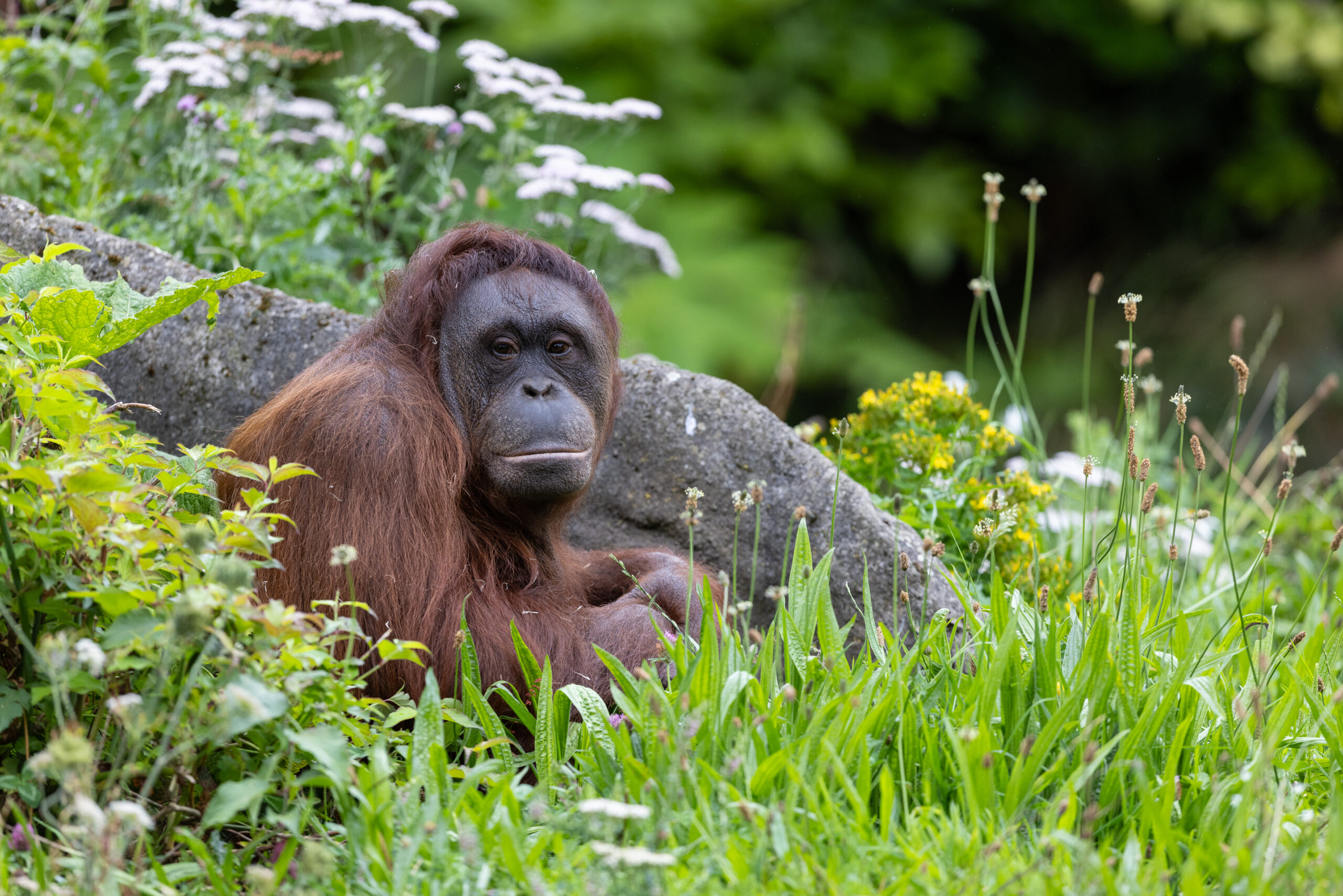
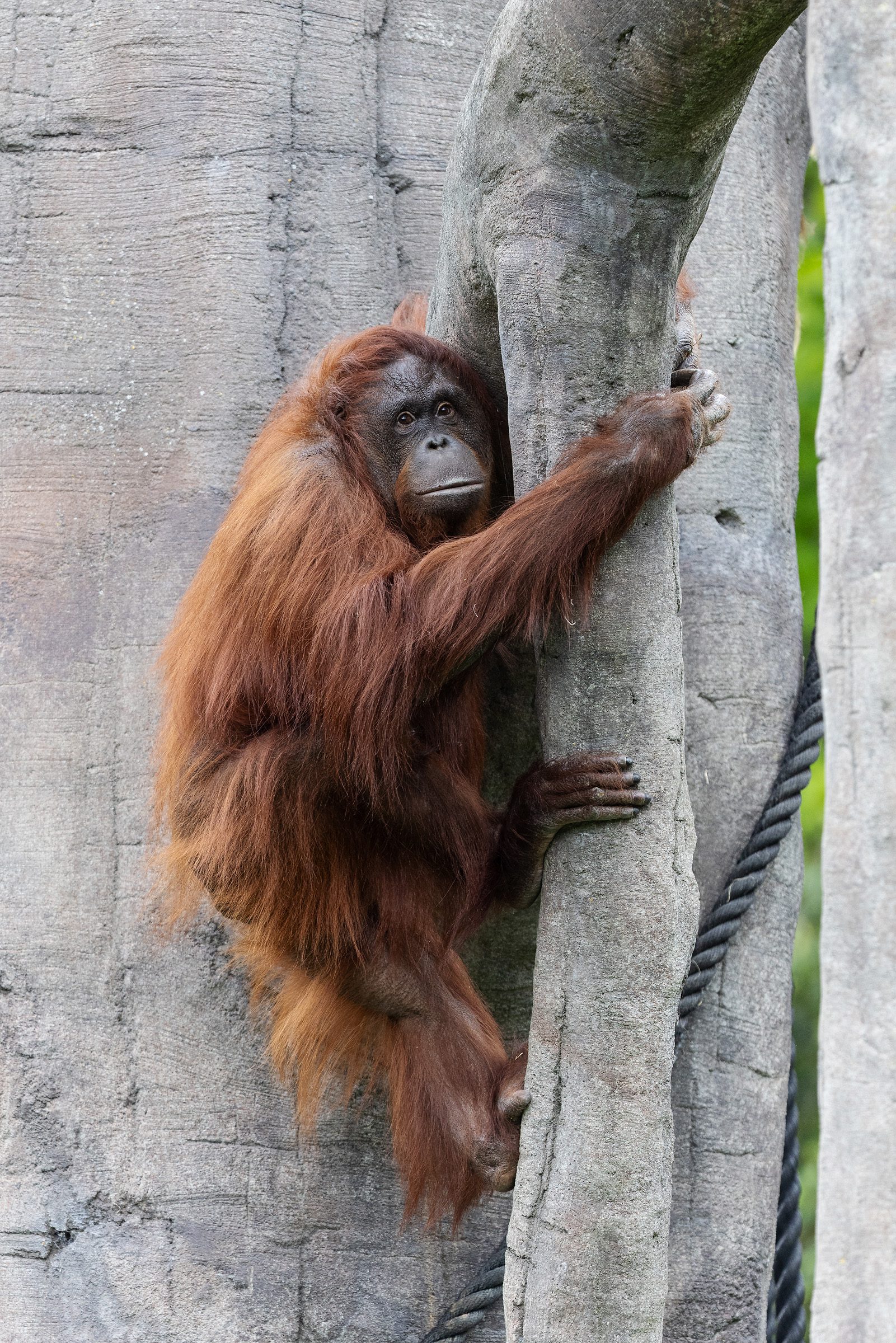
Orangutans are great apes with grey skin covered by long, reddish hair, and no tail (a trait of apes but not monkeys). Orangutans have longer arms than legs and opposable thumbs and toes well suited for climbing.
General Information
Zoo location
The Orangutan Forest
Animal class
Mammalia
Animal order
Primates
Where do they live (Natural habitat)?
Bornean orangutans are native to the island of Borneo in Indonesia. As an arboreal (tree dwelling) species, they prefer low-laying forests.
How long do they live?
Orangutans live up to 50 years in the wild, and 60 years in zoos.
What do they eat?
Orangutans are herbivores and feed on over 400 species of plants. They forage for and eat fruit, leaves, bark, and flowers, with the occasional invertebrate.
Group name
Orangutans do not have a group name. This is because they are semi-solitary, preferring to live in small groups or on their own.
Closest related species / sister species
There are three subspecies of Bornean orangutan. These are: Northwest Bornean Orangutan, Southwest Bornean Orangutan and Northeast Bornean Orangutan.
The subspecies that live at Dublin Zoo are Northwest Bornean orangutans (Pongo pygmaeus pygmaeus)
Fun Facts!
The northwest bornean orangutan
Family life
Orangutans are typically semi-solitary animals, foraging and nesting alone but sometimes they live in small groups. When ready to breed, females will actively seek out males, and one infant is produced roughly every eight years. Many orangutan behaviours must be taught, and youngsters stay with their mother for the first five to eight years of life.
Baby name
Baby or infant.
Gestation (pregnancy) period
The gestation period is around 8 months.
Number of young at birth
One baby, occasionally two.
Weight at birth
1.5 – 2kg.
Age at maturity
Females are about 12 years at maturity, and males reach maturity at about 15 years.
Size male adult
Male orangutans average 1.36m (136cm) in height and usually weigh on average 87 kilograms.
Size female adult
Female orangutans average 1.14m (114cm) in height and average 37 kilograms in weight.
Conservation
Critically Endangered
The orangutan is listed as Critically Endangered by the International Union for Conservation of Nature.
Current population estimate
The current population estimate for this species is approximately 104,700. At the current rate of decline, it’s expected that many populations could be severely depleted or completely driven to extinction within the next 50 years.
Threats
Major threats include habitat loss due to palm oil farming, illegal hunting, habitat fragmentation, and fires. These threats are compounded by lack of public awareness and climate change.
What is Dublin Zoo doing?
Dublin Zoo is part of the international breeding programme for this species. The zoo also partners with the Orangutan Foundation who safeguard three areas of critical orangutan habitat in Borneo, Indonesia. One of these areas is the Lamandau Wildlife reserve, which zookeeper Aisleen Greene and Team Leader Ciaran McMahon visited in 2017. The support from Dublin Zoo has helped the Foundation purchase over 5,058 hectares of land to expand the reserve.
Dublin Zoo has also implemented a sustainable palm oil programme throughout the zoo, meaning all products sold in the shops and restaurants are either palm oil free or products with sustainable palm oil certifications.
Frequently Asked Questions
Orangutans live in Indonesia, and the species of orangutan living in Dublin Zoo is found on the island of Borneo.
Orangutans are endangered because of lack of public awareness in their native habitat, along with significant habitat loss and hunting due to palm oil farming.
Orangutans are primarily herbivores, eating a wide variety of fruits and plants.
Female orangutans are, on average, 114 cm in height and can weigh up to 50 kg; while males can reach up to 90 kg in weight and are on average 136 cm in height.
Orangutans live up to 60 years in zoos and 50 years in the wild.
Female orangutans can weigh up to 50 kg, while males can reach up to 90 kg.
It is difficult to measure the strength of an orangutan. They are not as strong as gorillas but are stronger than an adult human.
Yes, orangutans are one of the great apes. Great apes are comprised of gorillas, bonobos and chimpanzees.
Adult males can be aggressive, but overall, orangutans are quite gentle and solitary.
Orangutans do not have tails.
Orangutans are very intelligent, having complex communication patterns and very adept tool-making abilities.
In Malay, orangutan means “man of the forest.”
Orangutans are primates, but they are apes, not monkeys. Apes are generally larger than monkeys and do not have tails.
Dublin Zoo is part of the international breeding programme for orangutans, and works with conservation organisations to protect orangutan habitats. Orangutans are particularly threatened by habitat loss due to palm oil plantations and hunting, so reducing palm oil use can help support this species.
Orangutans are very intelligent, having complex communication patterns and very adept tool-making abilities.
Orangutans are pregnant for about 8 months.
As of 2004, it is estimated about 104,700 Bornean orangutans are left in the wild. This number is predicted to fall to 47,000 individuals by 2025.
There is no true name for a group. Males are solitary and females only occasionally may travel in small groups with their infants in search of food. Larger groups may occur during mast fruiting events but are not generally normal otherwise.
Predators of orangutans no longer live on Borneo, so Bornean orangutans are only at risk from predation by humans.
Orangutans do not mate for life.