Bolivian squirrel monkey
Bolivian squirrel monkey is a small, agile primate found in the Amazon basin of Bolivia, Brazil, and Peru
Species
Mammals
Habitat
Rainforest
Diet
Herbivores
Conservation Status
Least Concern
Bolivian squirrel monkey
Saimiri boliviensis
Irish Name: Moncaí iorach Bolavach
ICUN Status: Least Concern
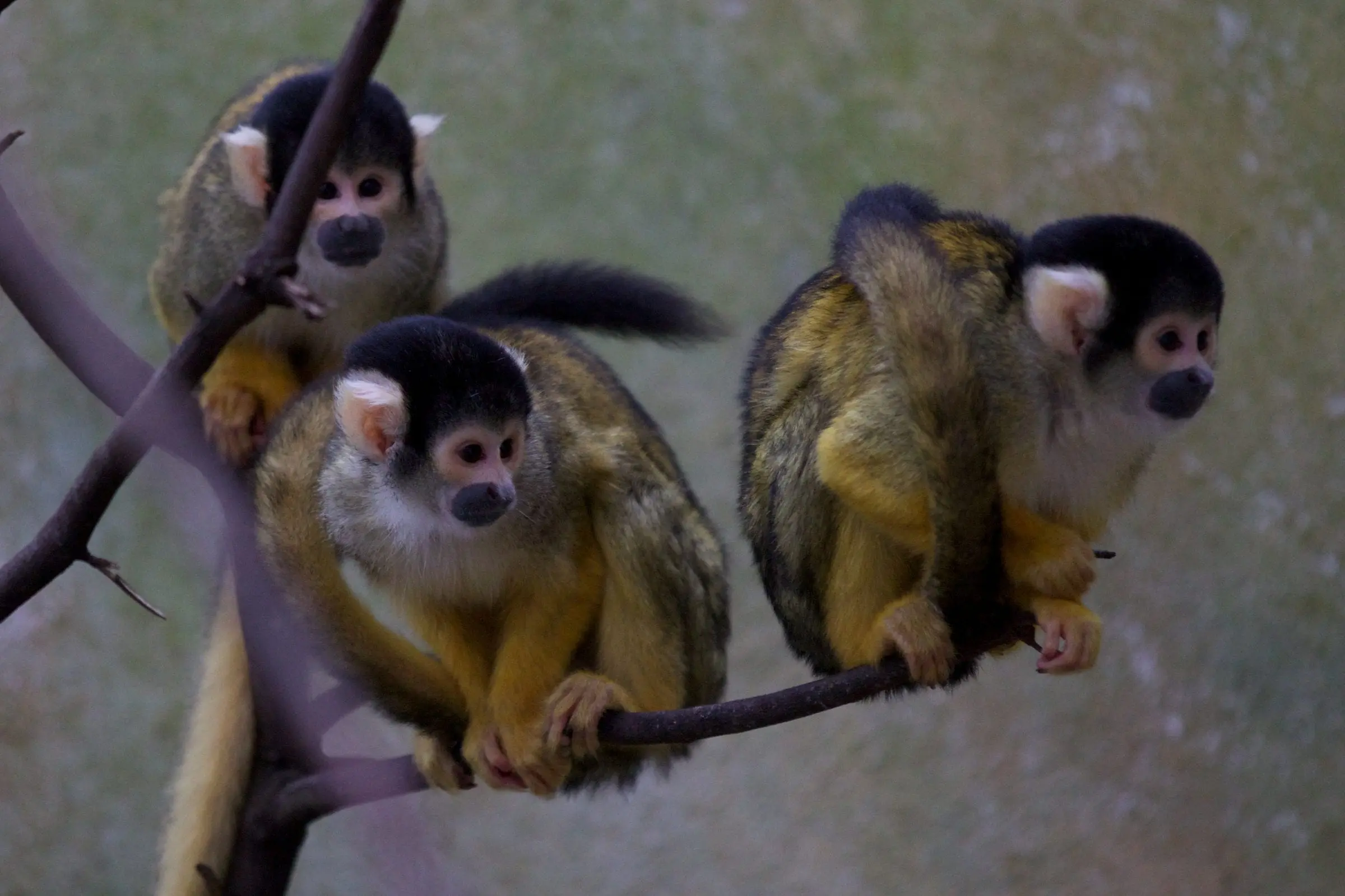
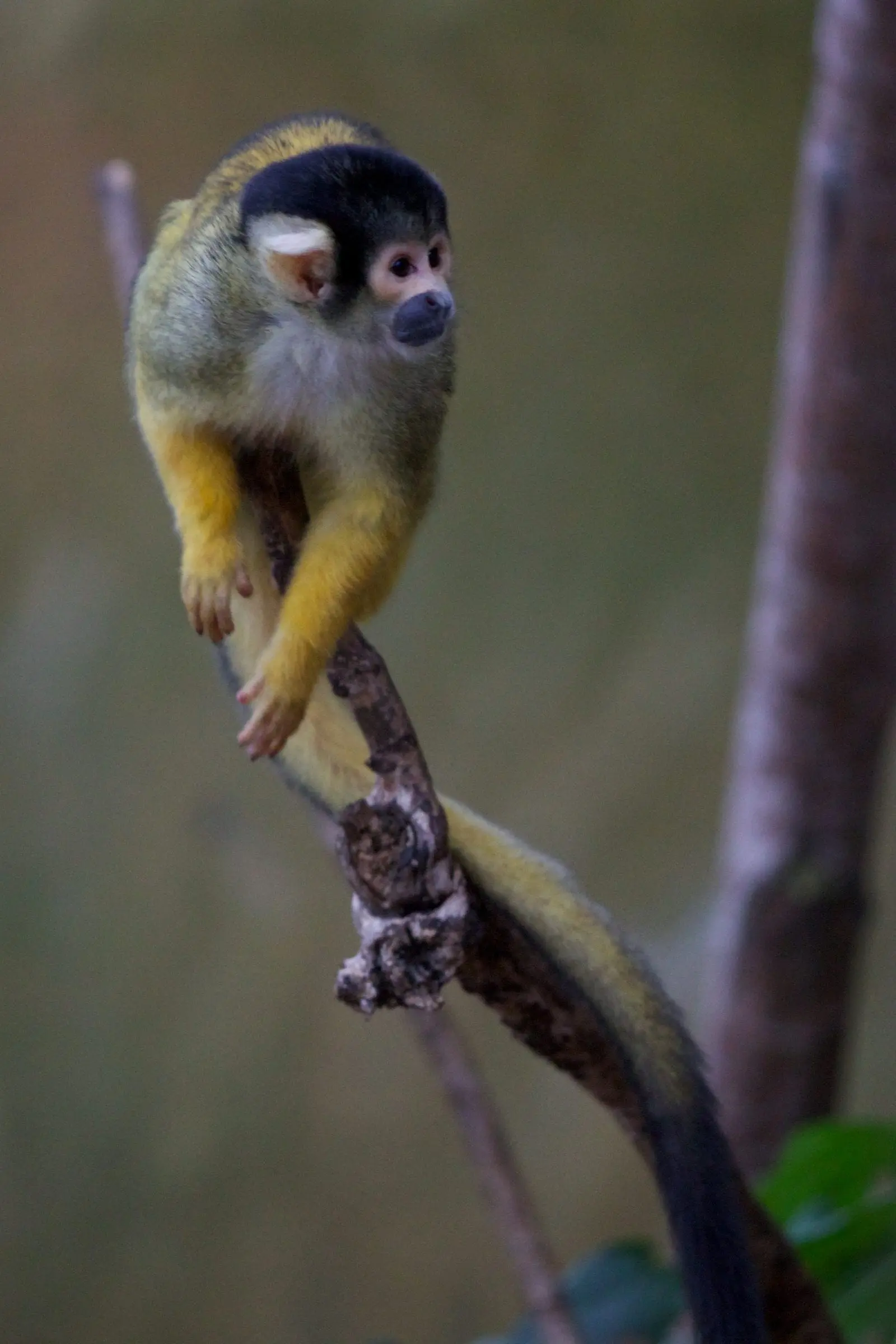
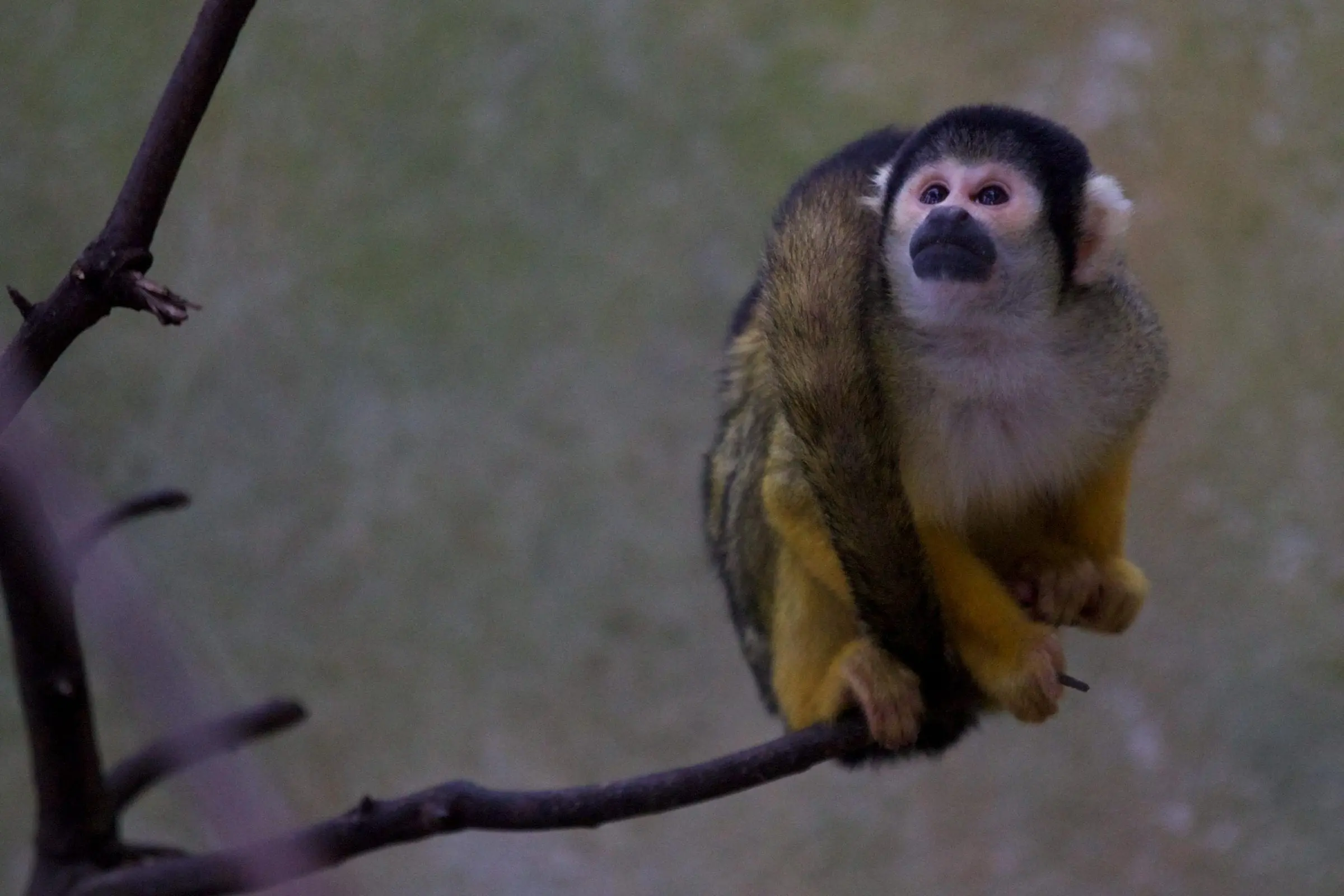
The Bolivian squirrel monkey is a small arboreal (lives in trees) monkey. They have a white face with a black nose and muzzle. Their coat varies in colour from brown and grey to golden, and their tail is longer than their body.
General Information
Zoo location
South America House
Animal class
Mammalia
Animal order
Primates
Where do they live (Natural habitat)?
Bolivian squirrel monkeys live in the rainforests of Bolivia, Peru and Brazil. They use all levels of the forest, but forage and travel mainly in the lower canopy and understory.
How long do they live?
15-20 years in the wild, 30 years in zoos.
What do they eat?
Bolivian squirrel monkeys mainly eat fruit and insects. They sometimes also eat seeds, leaves, flowers, eggs and small vertebrates.
Group name
Troop
Closest related species / sister species
The closest relative of the Bolivian squirrel monkey is the other subspecies of the genus Saimiri, the Peruvian squirrel monkey.
Fun Facts!
The Bolivian squirrel monkey
Family life
Bolivian squirrel monkeys are social animals that live in large groups of up to 75 individuals. Females remain in the groups they were born in, while males leave their groups at 4-5 years old to form all-male (bachelor) groups. They then disperse into other family groups when breeding. Adult females are dominant over males and often segregate them to the edge of the group.
Baby name
Infant
Gestation (pregnancy) period
Around 5 months.
Number of young at birth
One
Age at maturity
Females around 2.5-3 years, males around 5 years.
Size male adult
25 – 37cm in length with a 35-45cm tail.
Approximately 1kg in weight.
Size female adult
22 – 30cm in length with a 35-45cm tail.
Approximately 750g in weight.
Conservation
Least Concern
The Bolivian squirrel monkey is classified as Least Concern by the International Union for the Conservation of Nature.
Current population estimate
Unknown but decreasing.
Threats
Threats to the Bolivian squirrel monkey include hunting for food, capture for the pet trade and habitat loss.
What is Dublin Zoo doing?
Dublin Zoo participates in the European breeding programme for Bolivian squirrel monkeys.
Frequently Asked Questions
The Bolivian squirrel monkey is classified as Least Concern by the International Union for the Conservation of Nature, which means they are not currently endangered. However, they do still face some threats such as habitat loss, hunting and capture for the pet trade.
Bolivian squirrel monkeys mainly eat fruit and insects. They sometimes also eat seeds, leaves, flowers, eggs and small vertebrates.
They live in the rainforests of Bolivia, Peru and Brazil.
Yes, like all monkeys, Bolivian squirrel monkeys have a tail. Their tail is much longer than their body. It helps them balance while moving around in trees.
Predators of the Bolivian squirrel monkey include birds of prey like falcons or vultures, snakes, and big cats such as jaguars.
Squirrel monkeys have a wide range of vocalisations that they use to communicate including peeping, cackling, and twittering.