Amur Tiger
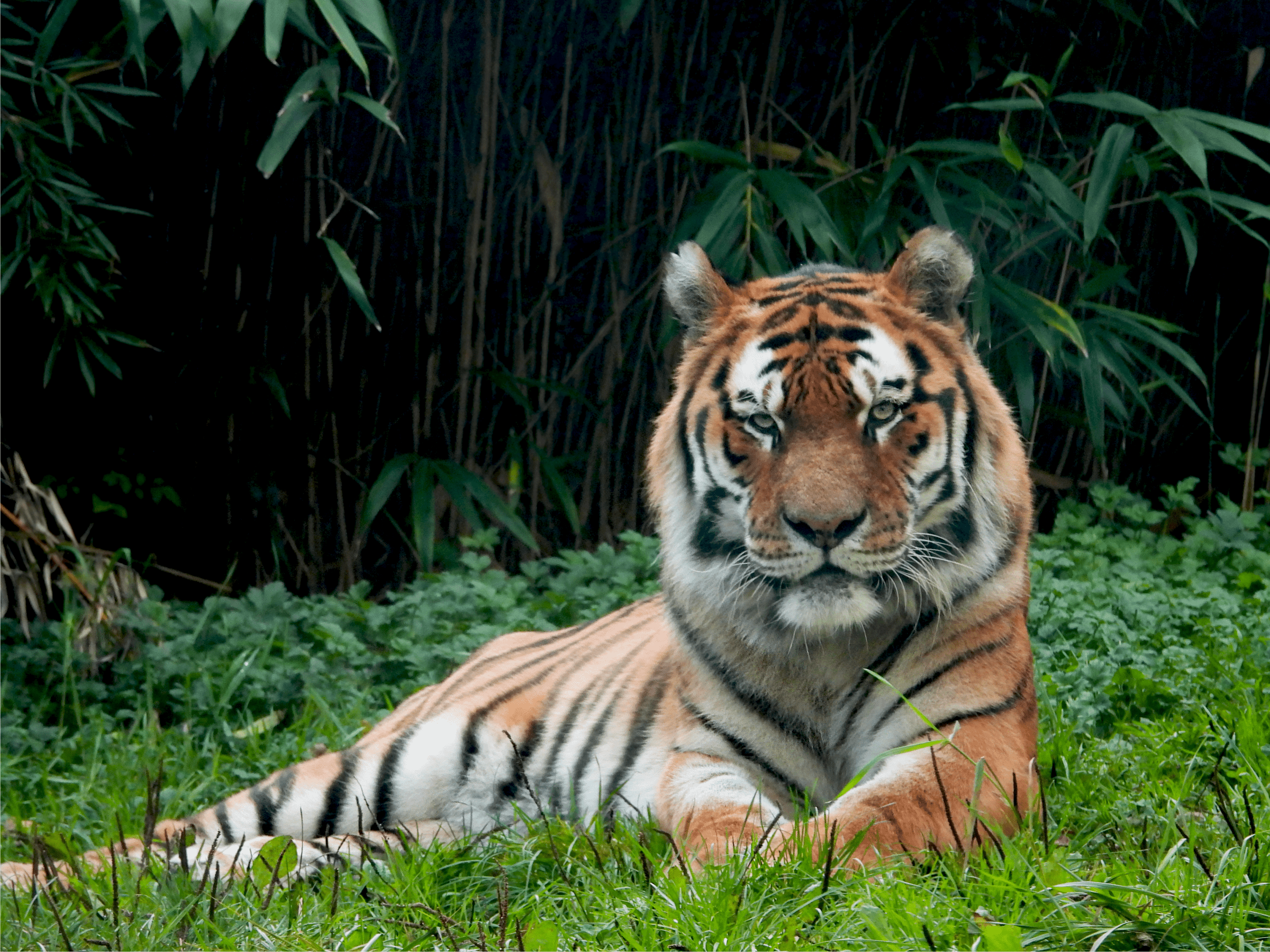
The Amur Tiger is the largest cat species, with a reddish-orange coat featuring black stripes that are unique to each individual
Species
Mammals
Habitat
Forest
Diet
Carnivores
Conservation Status
Endangered
Amur Tiger
Panthera tigris altaica
Irish Name: Tíogar Amur
ICUN Status: Endangered
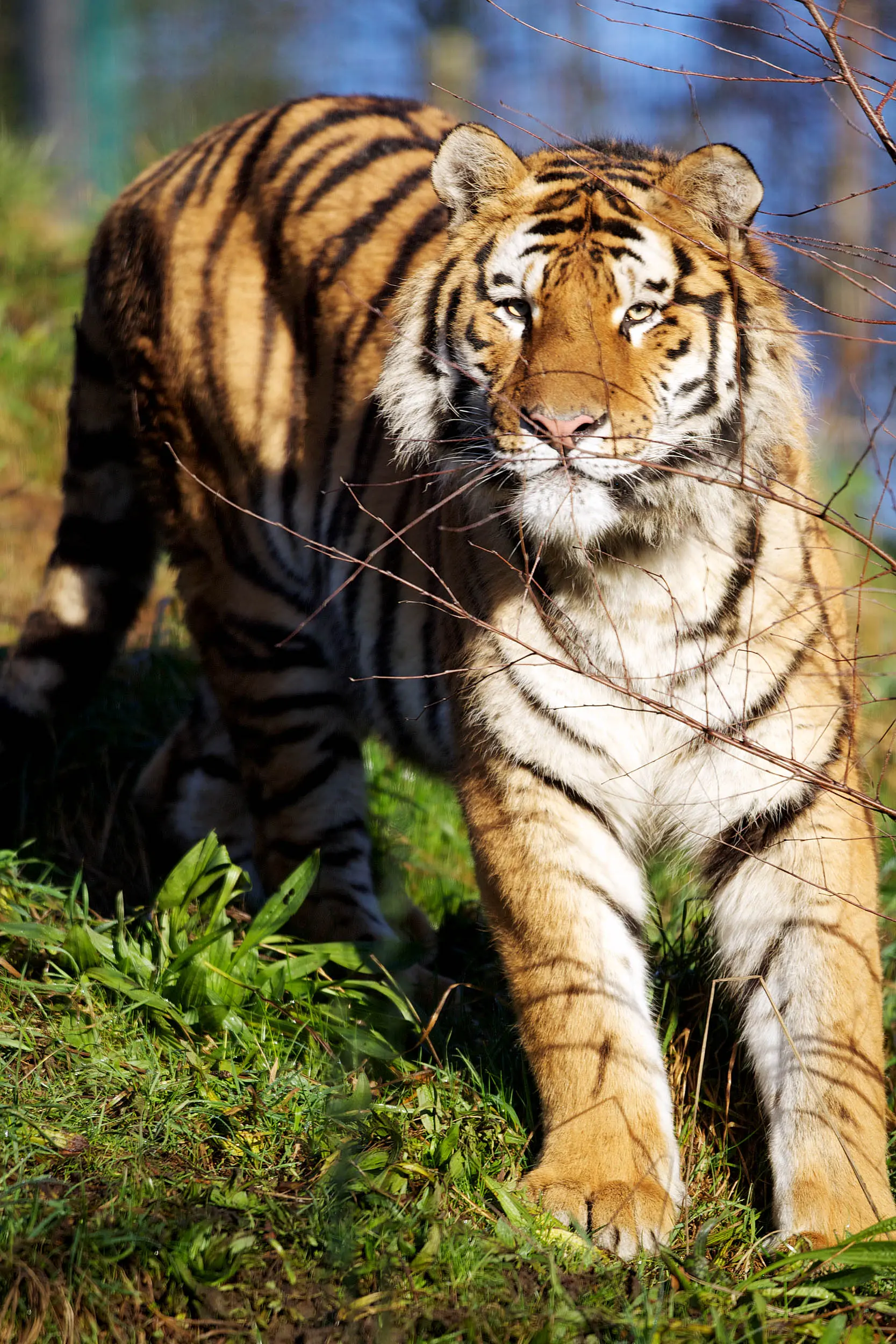
The Amur tiger is the world’s biggest cat. It was formerly known as the Siberian tiger but as it no longer exists in Siberia, it has been renamed after the Amur river on the border of Russia and China where it is still found.
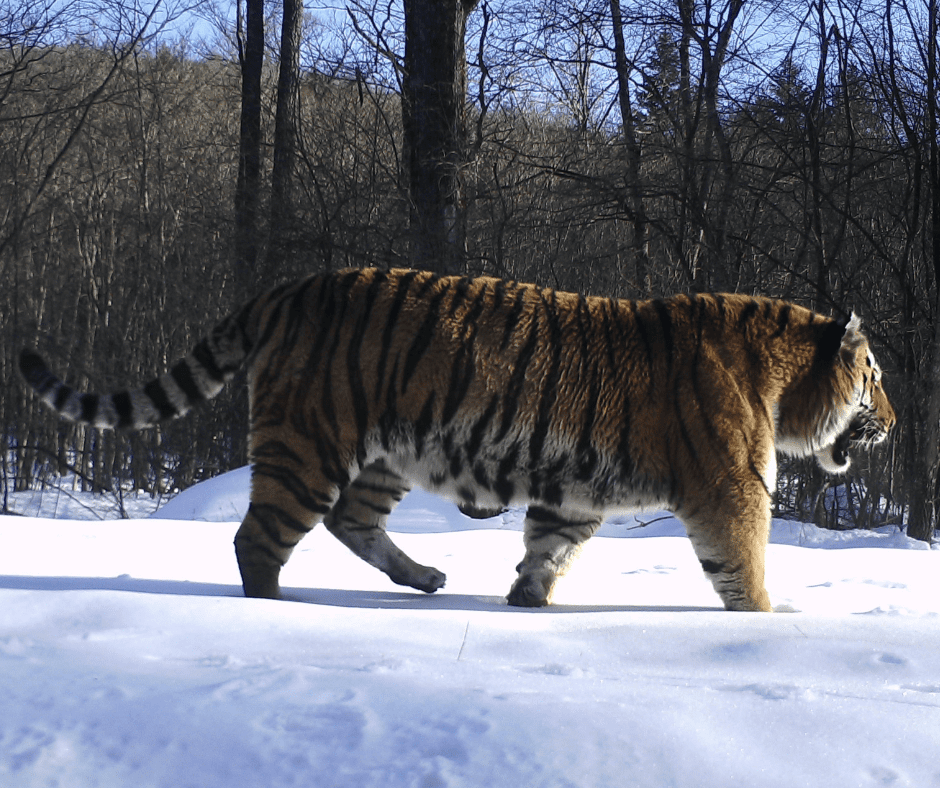
Amur tigers have orange fur with thin black stripes and a white underbelly. These tigers have large heads, sharp teeth and long claws. Males can weigh up to 190kgs.
General Information
Zoo location
Asian Forests
Animal class
Mammalia
Animal order
Carnivora
Where do they live (Natural habitat)?
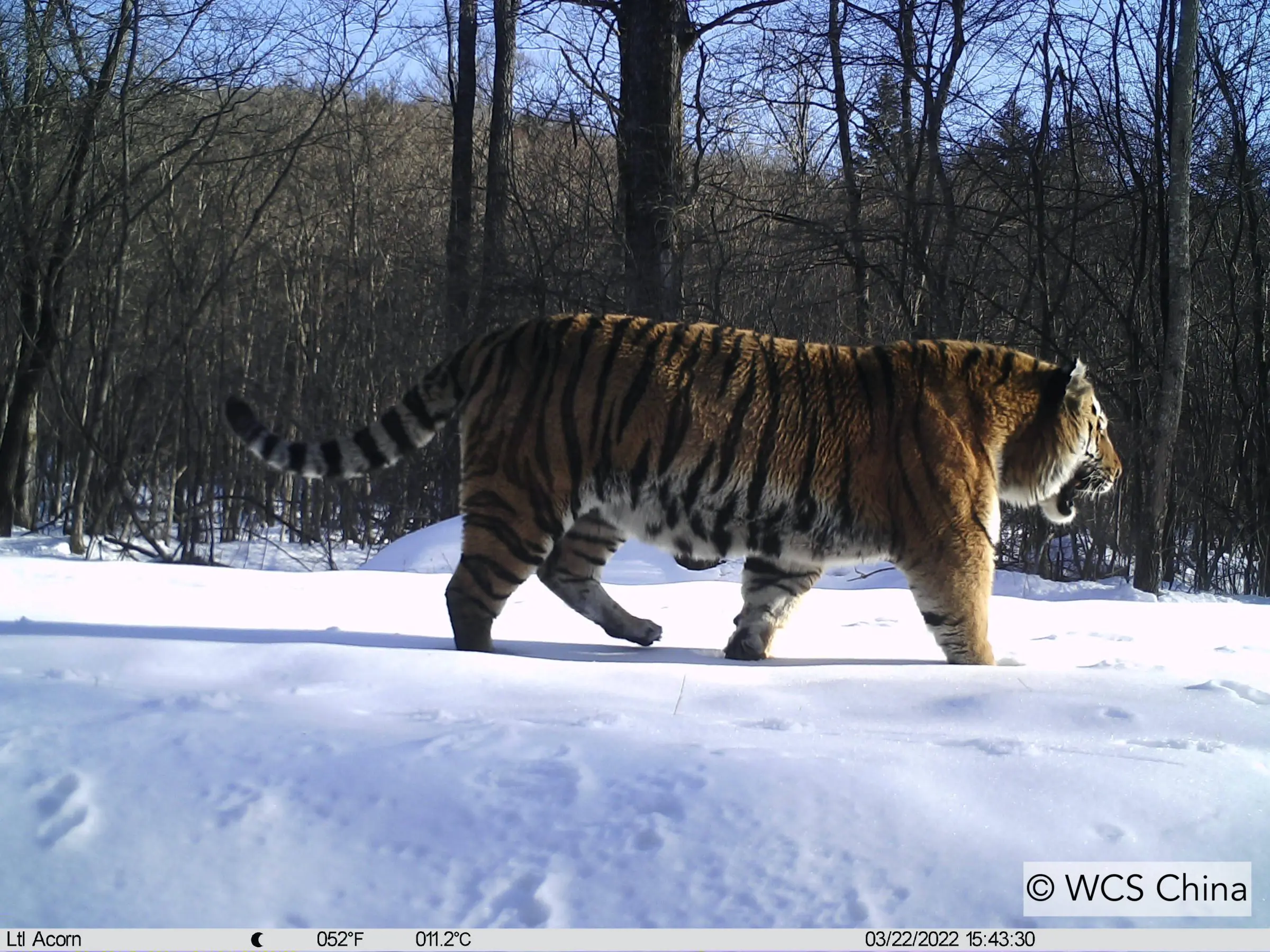
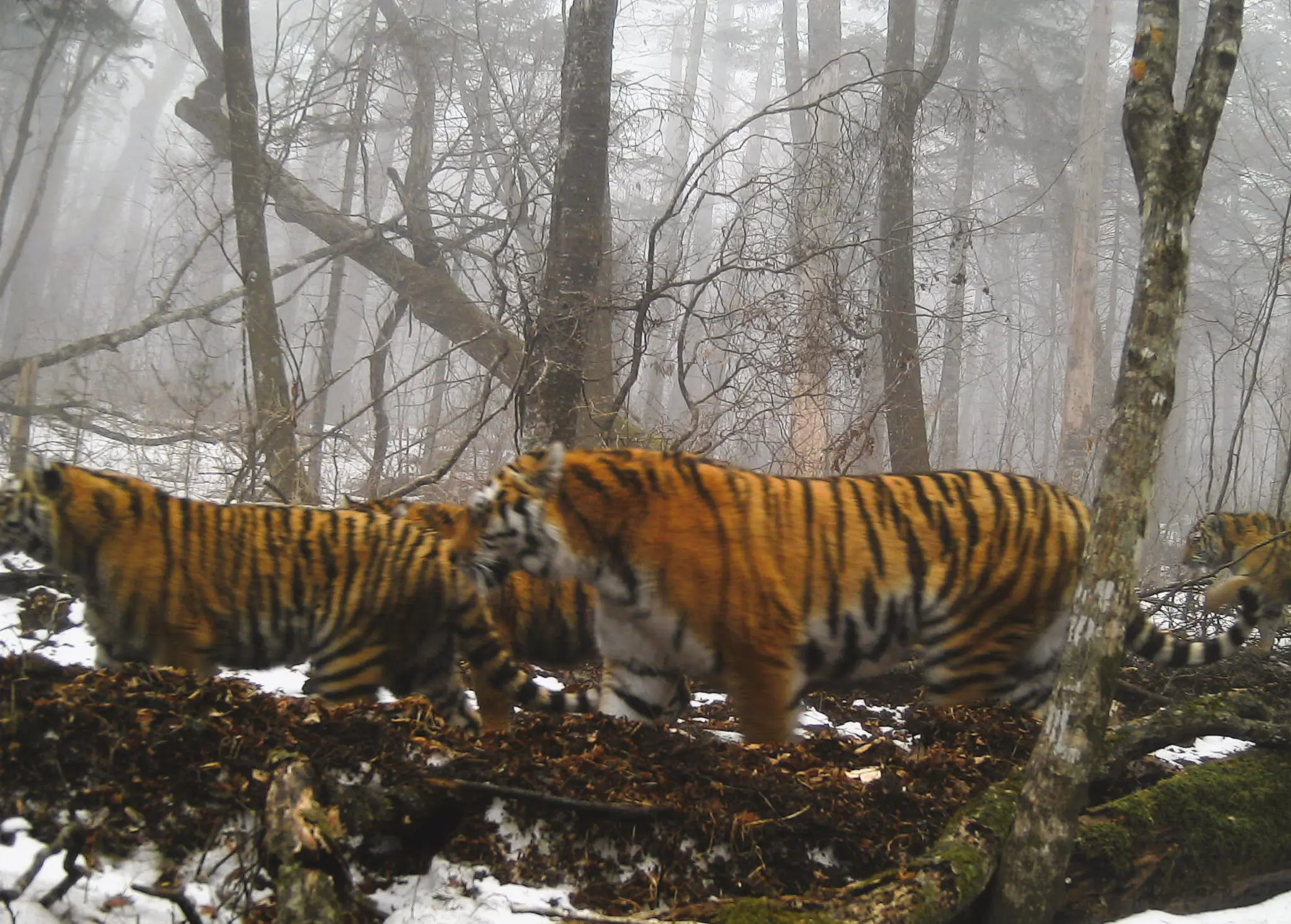
The Amur tiger lives in forest habitats, usually at high elevation and have adapted beautifully to live in the harsher, cold climates. The majority of the remaining Amur tigers can be found in the Sikhote-Alin mountain range and the Russian Far East though there are also small populations in China.
How long do they live?
On average, Amur tigers live 10 – 15 years in the wild, and up to 20 years in zoos.
What do they eat?
Amur tigers are carnivorous, and they hunt and eat large ungulates including wapiti, moose, boar, sika deer and red deer. They will also, on occasion, eat smaller animals such as badgers, hare and salmon. They have also been known to kill brown bear cubs and sometimes even sub-adult Himalayan black bears.
In a three-year study spanning 2009-2012 it was discovered that the monitored tigers would kill, on average, every 7 days during summer, and 5 in winter. They would consume approximately 7 – 10 kg per day. Their territories are usually vast and extensive.
Group name
They are solitary in nature, except mothers with cubs, so there is not a very consistent name for a group.
Closest related species / sister species
The tiger’s closest relative is the snow leopard. Other subspecies include – Bengal tiger, South China tiger, Sumatran tiger, Indochinese tiger and the Malayan tiger
Fun Facts!
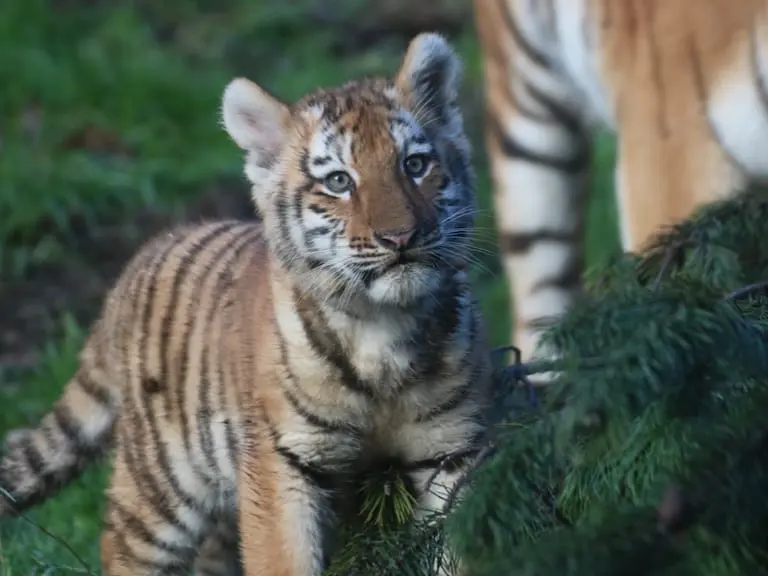
Endangered Tiger Cubs Born at Dublin Zoo!
The rare aye-aye
Family life
Amur tigers are solitary creatures and have their own territories, with multiple females living in one male’s territory. They can mate at any time of year, their gestation period is 12-14 weeks and the average litter is 2-4 cubs. The cubs will stay with their mother and learn how to hunt and survive from her, and once they reach sub-adulthood, at around 2-3 years, they will leave to establish their own territories. Male adolescents will leave sooner than their female counterparts, though both sexes will leave quickly following the birth of a mother’s new litter.
Baby name
Cub
Gestation (pregnancy) period
12-14 weeks.
Number of young at birth
1-6 cubs can be born, though the average is 2-4 cubs.
Weight at birth
780 grams – 1.6 kilograms.
Age at maturity
Amur tigers are considered adolescent by 35 months, with males reaching sexual maturity at 48 – 60 months. Females reach maturity quicker, as do tigers in zoos.
Size male adult
A male Amur tiger’s body length can reach 3.7 metres, including their head and tail (they have a tail length of approximately 91-99 cm), and can weigh up to approximately 400 kilograms.
Size female adult
A female Amur tiger’s body length can reach up to 2.4 metres, including their head and tail, and can weigh 168 kg.
Adult male name
Tiger
Adult female name
Tigress/tiger
Conservation
Endangered
The Amur tiger is listed as Endangered by the International Union for Conservation in Nature.
Current population estimate
Over 750 individuals as of 2022.
The Amur tiger once ranged across a large swathe of land covering the Russian Far East, northern China and the Korean peninsula. But in the 1940s their numbers dropped to less than 50 individuals, mainly due to hunting. In 1947, Russia became the first country to grant the tiger full protection and, since then, tiger numbers have gradually been rising.
However, their future is still not secure with a number of threats remaining. The Amur tiger’s habitat is now primarily restricted to the Amur River region on the border between Russia and China. This remaining habitat is under threat from human developments such as agriculture, logging and mining.
Threats
Human interference such as poaching, hunting, and habitat loss.
What is Dublin Zoo doing?
Since 2015, Dublin Zoo has worked in partnership with the Amur Leopard and Tiger Alliance to support a project to reduce human-tiger conflict in the Russian Far East. This project is coordinated by the Wildlife Conservation Society (WCS) – Russian Programme and has two main parts. The first is to resolve human-tiger conflict when it arises and the second is to monitor the progress of orphaned cubs and rehabilitated tigers released back into the wild.
Dublin Zoo is also part of a European breeding programme for the species and in 2018, two female cubs Alena and Zarina were born as part of this programme.
Frequently Asked Questions
The Amur tiger lives in boreal forest habitats, usually at high elevation and have adapted beautifully to live in the harsher, cold climates. The majority of the remaining Amur tigers can be found in the Sikhote-Alin mountain range and the Russian Far East though there are also small populations in China.
Amur tigers on average live 10 – 15 years in the wild and up to 20 years in zoos.
As per a 2015 census, it was found that there are approximately 540 individual Amur tigers remaining. The current estimate for populations in the Amur region is at around the 500 mark, with IUCN declaring the population to be stable.
Amur tigers are apex predators and are an important part of ecosystem balance. They are an umbrella, or keystone, species. They prevent overgrazing by hunting herbivores and large ungulates.
Amur tigers were nearly hunted to extinction. They now face threats not just from poachers and hunters, but also from habitat loss, encroachment and logging.
Amur tigers and Siberian tigers are the same. They were once called Siberian tigers because of the huge range of land their population covered across Siberia, but now unfortunately their numbers have dwindled so much they inhabit just Russia’s Amur region.
Amur tigers are carnivorous, and they hunt and eat large ungulates, including wapiti, moose, boar, sika deer, and red deer. On occasion, they will also eat smaller animals such as badgers, hare, and salmon.
In the 1930s it is thought that Amur tiger numbers fell to as low as 20-30 animals, but it wasn’t until 1996 that they were declared Critically Endangered by IUCN.
Amur tigers are mostly nocturnal and are most active at night. They are ambush predators and rely on camouflage while hunting.