Sulawesi crested macaque
Sulawesi-crested macaques are one of many species of macaque, a type of monkey
Species
Mammals
Habitat
Forest
Diet
Omnivores
Conservation Status
Critically Endangered
Sulawesi crested macaque
Macaca nigra
Irish Name: Meacaic chíorach Shulaivéiseach
IUCN Status: Critically Endangered
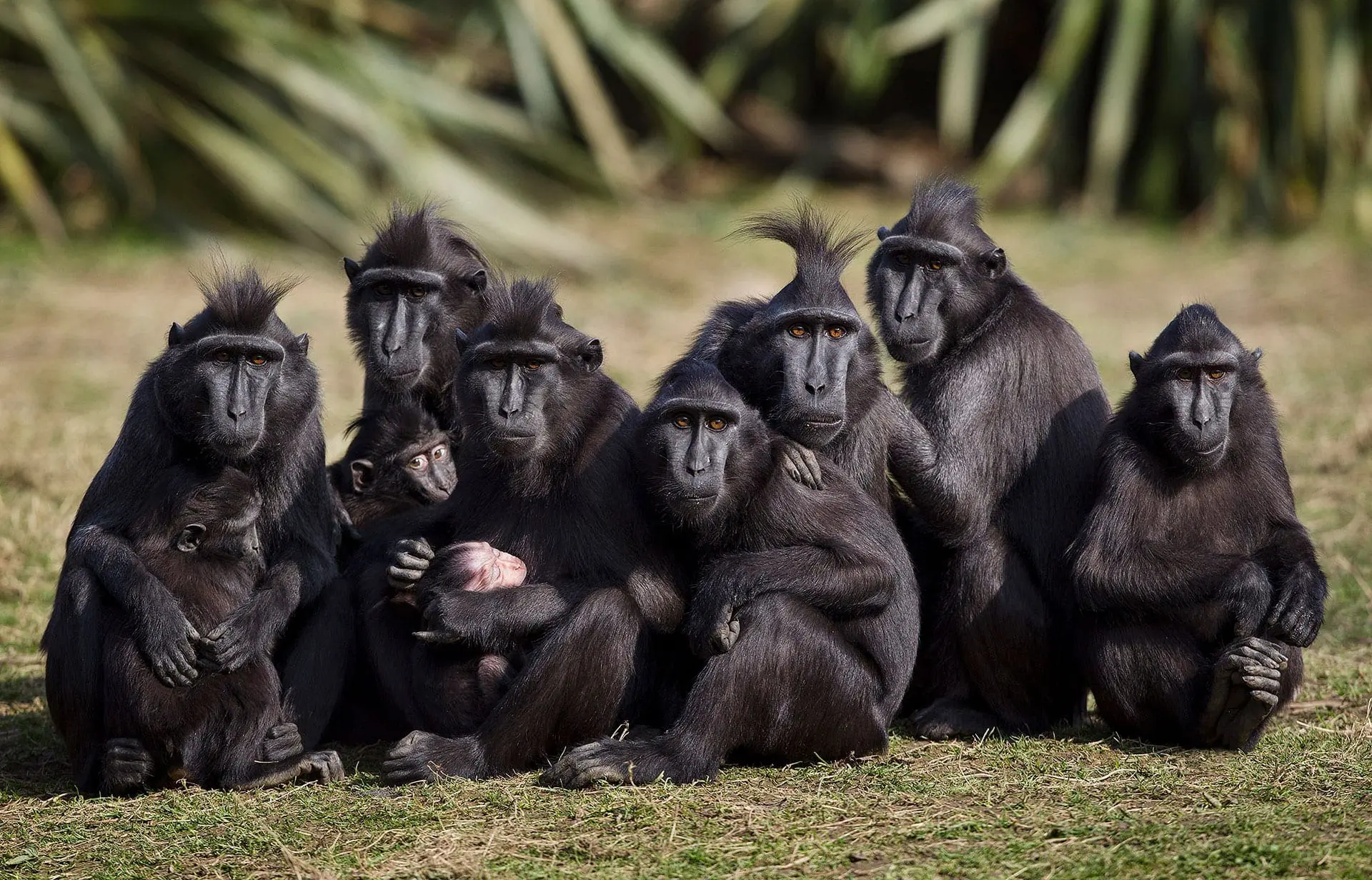
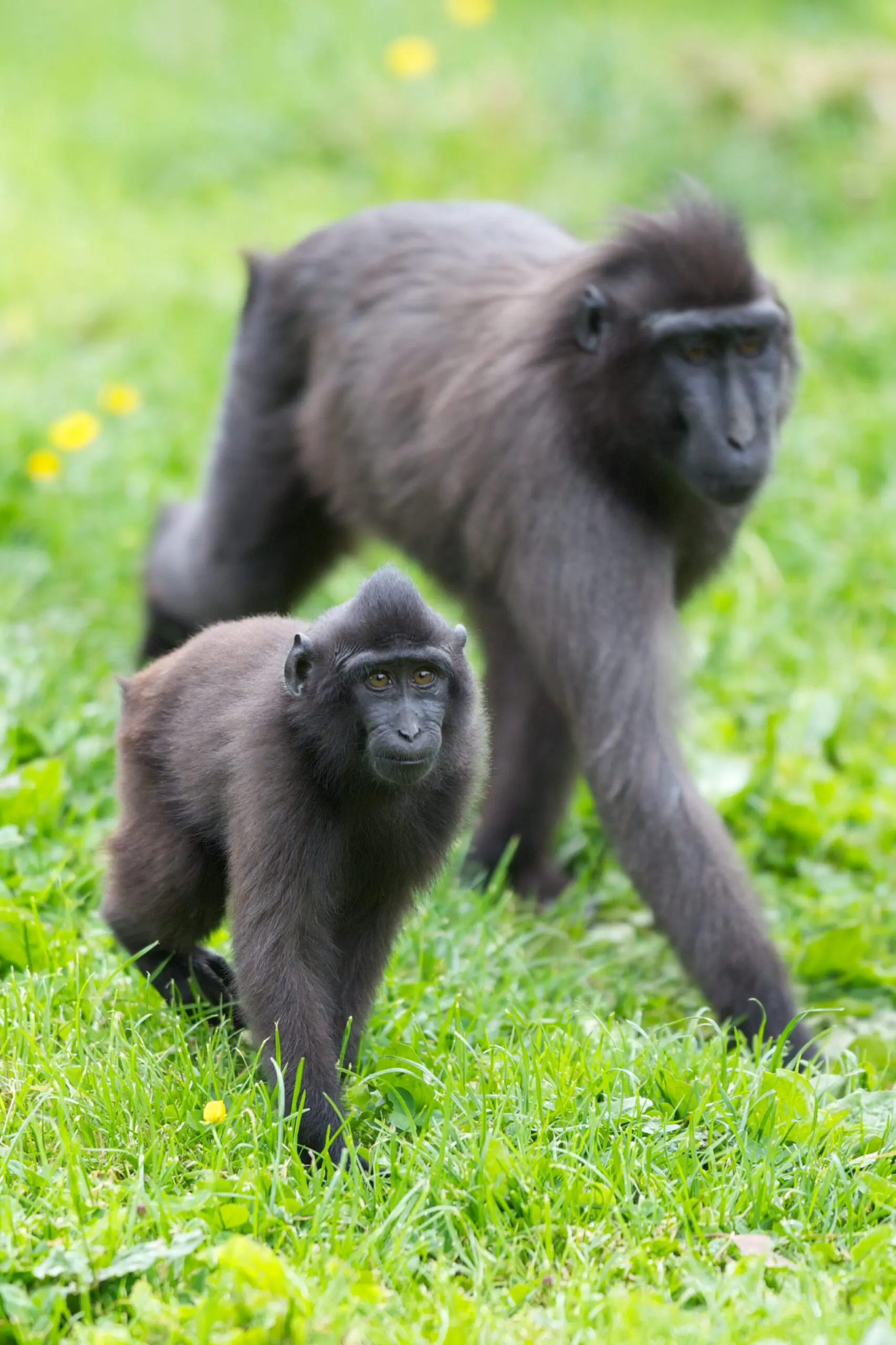
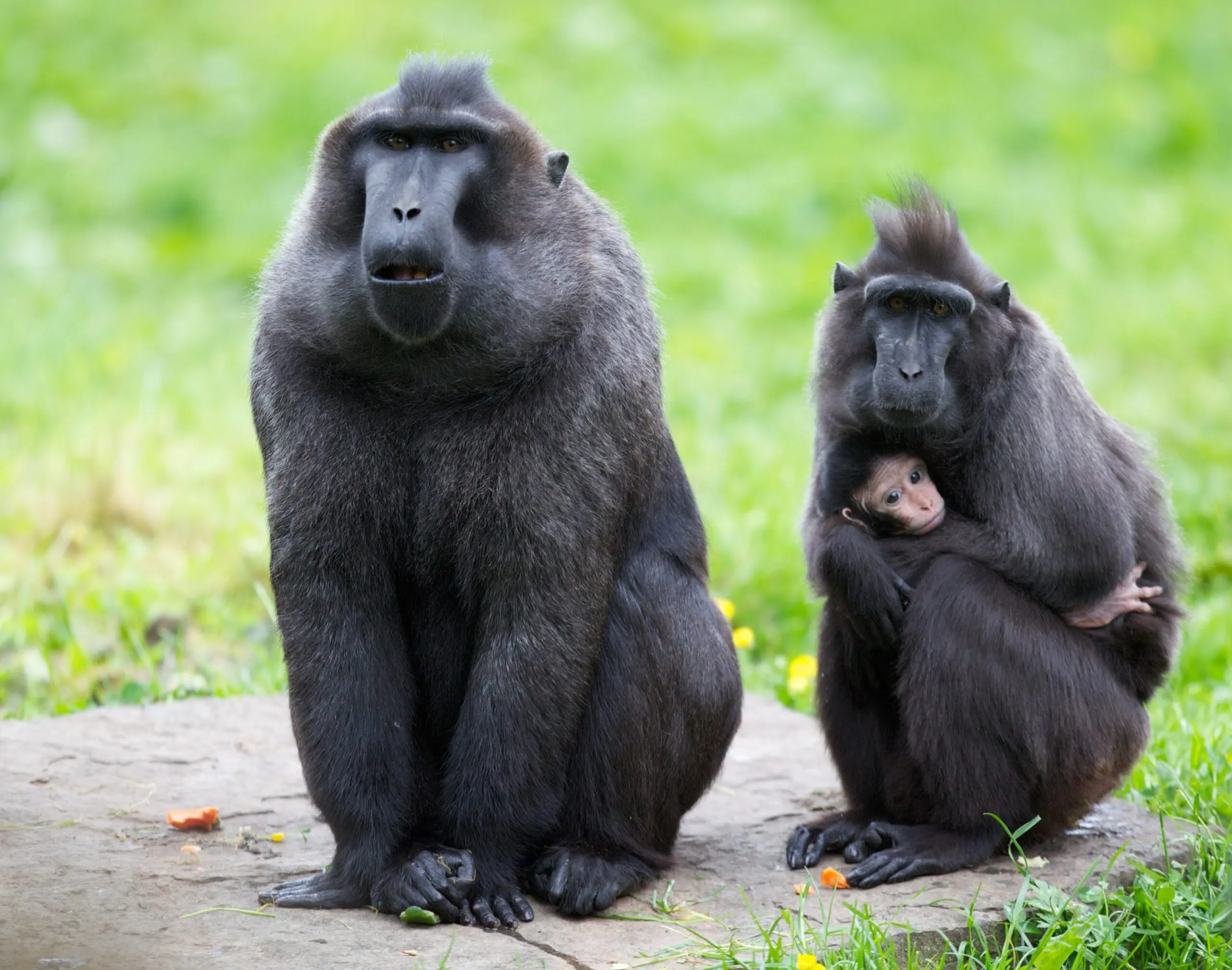
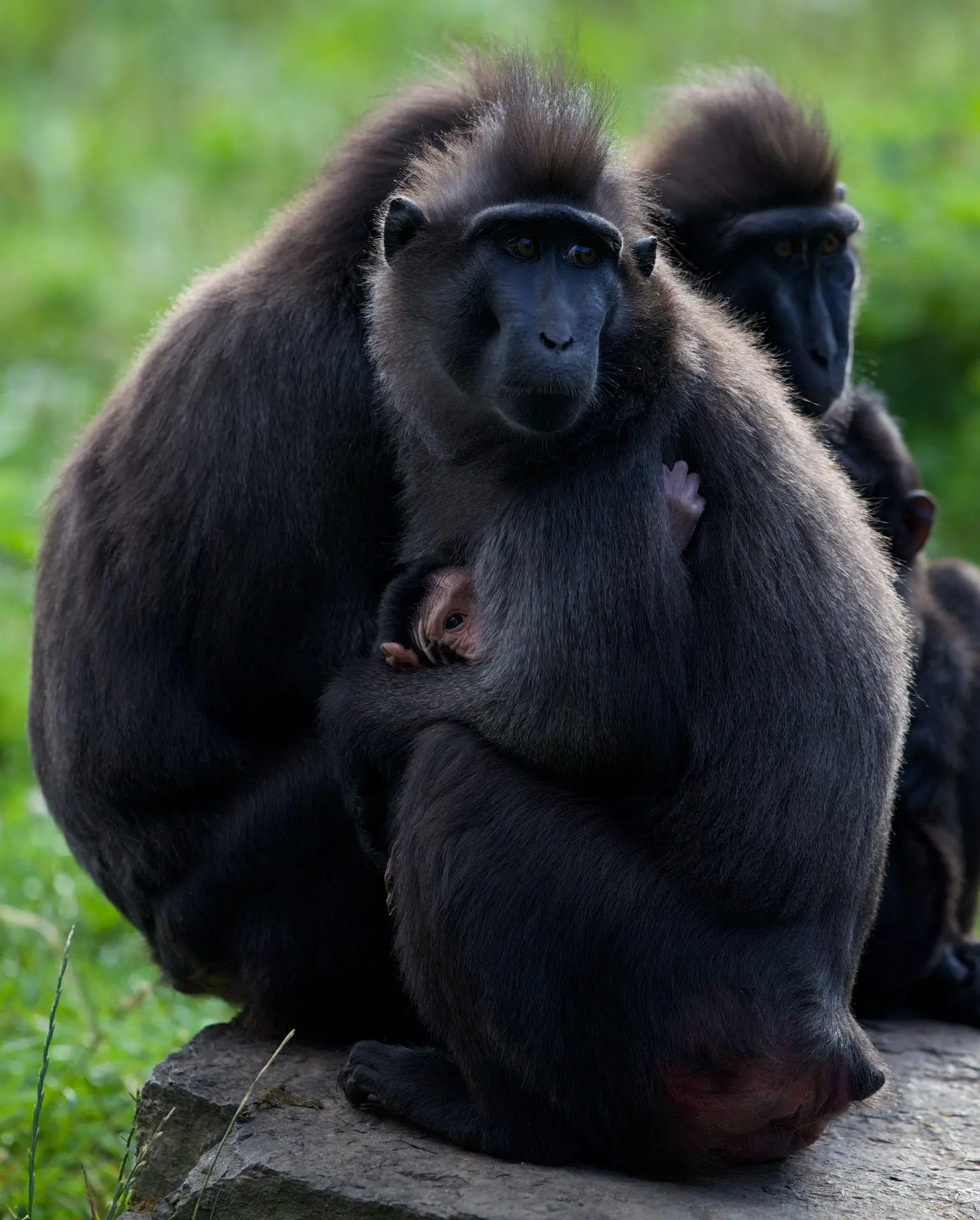
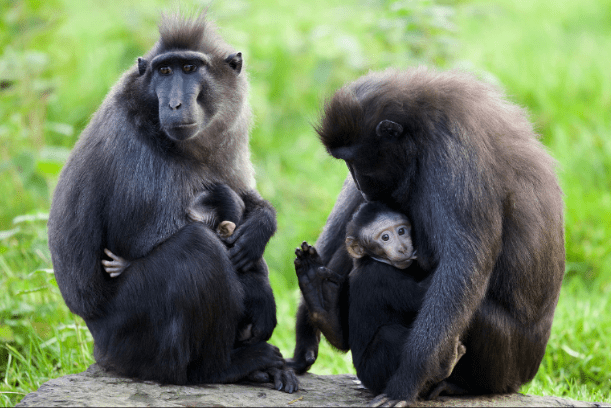
Sulawesi crested macaques are one of many species of macaque, a type of monkey. They have black hair on their faces and covering their bodies, apart from the pink hairless pads on their bottoms. They have a distinctive tuft of black hair on the top of their heads, which forms a mohawk-like crest, from which they get their name. Sulawesi crested macaques have a short tail that is difficult to see, which can lead people to think they are apes
General Information
Zoo location
The Sulawesi crested macaques can be found in the Asian Forest habitat at Dublin Zoo.
Animal class
Mammalia
Animal order
Primates
Where do they live (Natural habitat)?
Sulawesi crested macaques live on the islands of Indonesia, in particular the north-eastern point of the island of Sulawesi and its neighbouring islands. There is also a large introduced population living on the island of Pulau Bacan. They live in lowland and mountain tropical forests.
How long do they live?
They live for approximately 18 years in the wild and up to 34 in zoos.
What do they eat?
Sulawesi crested macaques are frugivores, which means they mainly eat fruit. They also eat seeds, leaves and small vertebrates such as frogs, lizards, snakes and bats.
Group name
Troop
Closest related species / sister species
The closest related species to the Sulawesi crested macaque are the lion-tailed macaque (Macaca silenusi)) and the pigtail macaque (Macaca nemestrina).
Fun Facts!
The sulawesi crested macaque
Family life
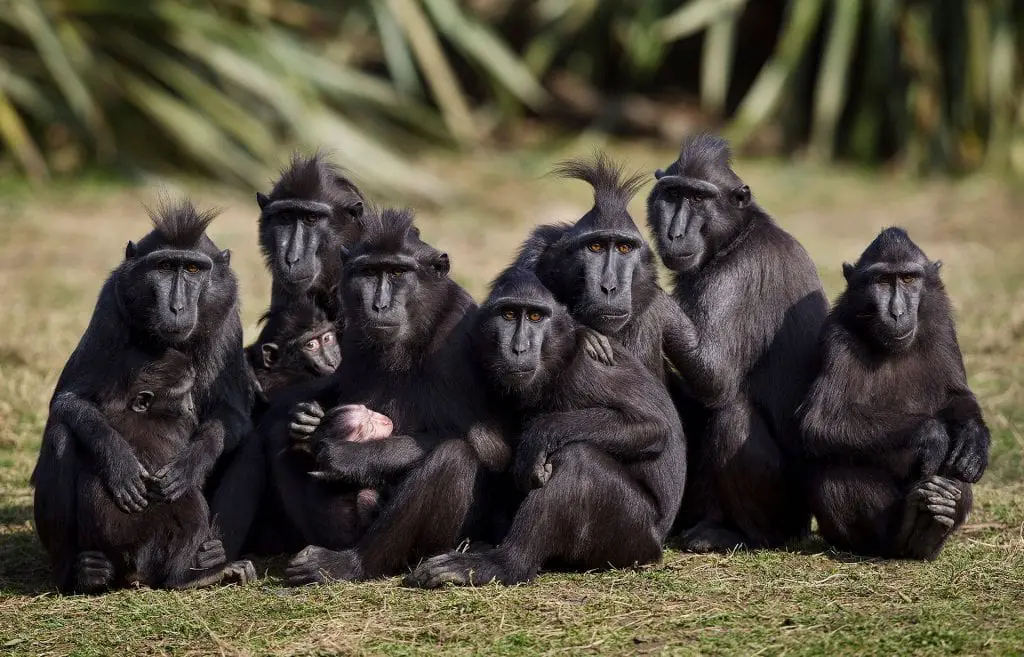
Sulawesi crested macaques live in troops of 5-25 individuals. Troops can be even larger if living in areas where there is an abundance of food sources. They are highly social and spend a lot of time grooming each other.
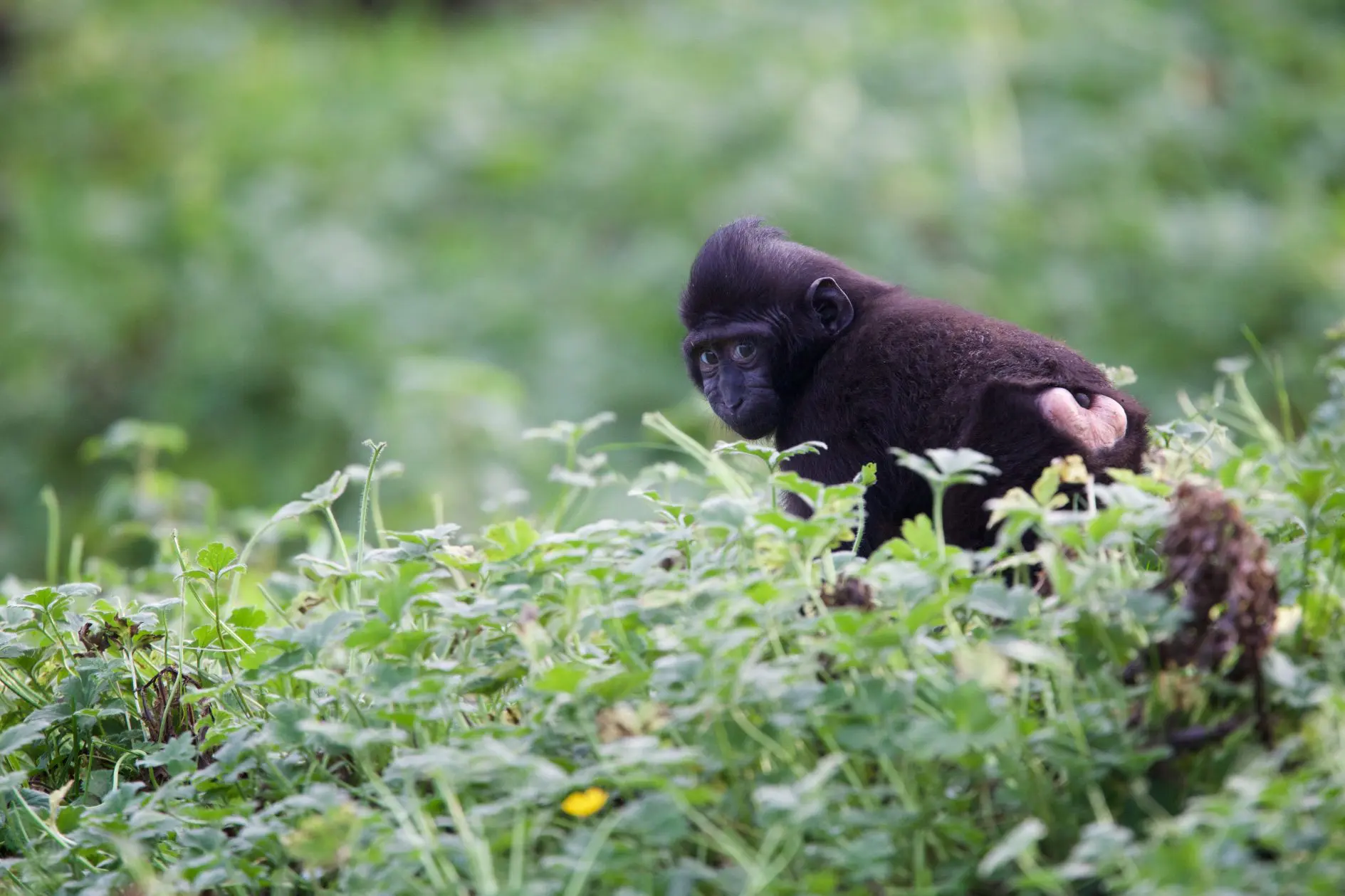
Both males and females will mate multiple times with multiple partners. Females alert males to their readiness to mate by the swelling and brightening of the pink patch on their bottoms. They can breed all year round.
Baby name
Infant
Gestation (pregnancy) period
About 6 months
Number of young at birth
Usually 1 infant is born
Age at maturity
Males and females reach sexual maturity between 4-6 years.
Size adult male
Height: 50 – 60 cm
Weight: 6 -10 kg
Size adult female
Height: 45 – 55 cm
Weight: 3.5 – 6 kg
Conservation
Critically Endangered
The Sulawesi crested macaque is classified as Critically Endangered by the International Union for the Conservation of Nature.
Current population estimate
Approximately 4,000 to 6,000 individuals on Sulawesi Island, and approximately 100,000 on the Pulau Bacan Island, where they have been introduced. In general, the population is severely decreasing.
Threats
The main threat facing Sulawesi crested macaques is hunting for bushmeat. They also face habitat destruction and capture for the pet trade.
What is Dublin Zoo doing?
Dublin Zoo supports the Selamatkan Yaki organisation and their EARS project (Education and Awareness-raising). This project is based in Sulawesi and is involved in Sulawesi crested macaque conservation.
Dublin Zoo also participates in the European breeding programme for Sulawesi crested macaques.
Frequently Asked Questions
Sulawesi crested macaques are frugivores, which means they mainly eat fruit. They also eat seeds, leaves and small vertebrates such as frogs, lizards, snakes and bats.
Sulawesi crested macaques live on the islands of Indonesia, in particular the north-eastern point of the island of Sulawesi and its neighbouring islands. There is also a large introduced population living on the island of Pulau Bacan. They live in lowland and mountain tropical forests.
Species whose habitat is restricted (e.g. living on an island) face a number of threats. The population is isolated to one area which can result in inbreeding and the loss of genetic variation. Given that they are found in only one area, they can be vulnerable to disease outbreaks and environmental disasters that threaten the entire population. In addition, as the population increases, it may reach a size where resources such as food and space are in short supply.
Sulawesi crested macaques are classified as Critically Endangered by the IUCN. Their population numbers have severely decreased in recent decades.
All species of macaque have tails apart from the Barbary macaque. For this reason, they are sometimes referred to as Barbary ‘apes’ because, unlike monkeys, apes have no tails.
Sulawesi crested macaques live for approximately 18 years in the wild and up to 34 years in zoos.
The main threats facing Sulawesi crested macaques is hunting for bushmeat. They are also threatened by habitat destruction and poaching for the pet trade.