Eastern bongo
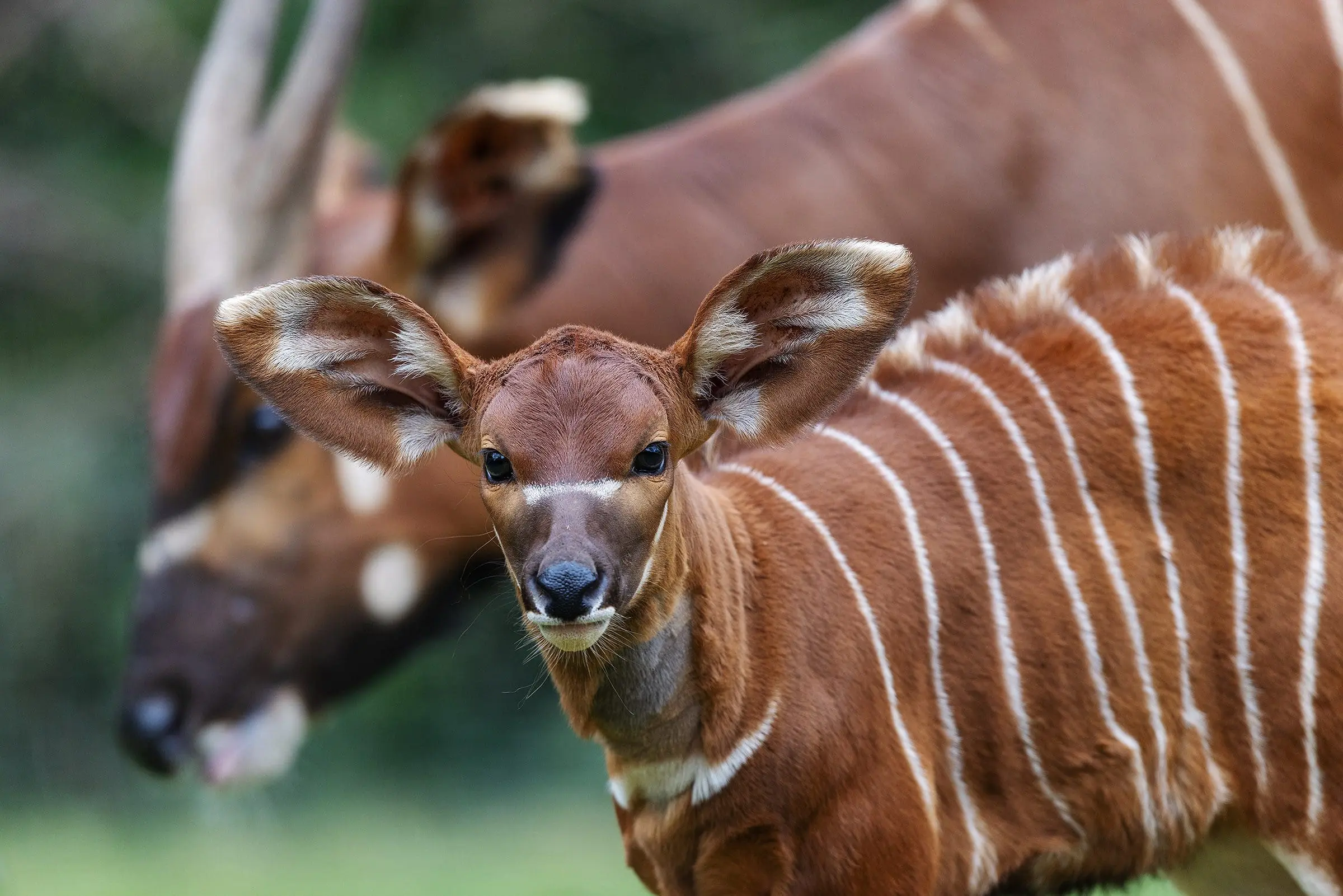
The Eastern bongo is a critically endangered antelope distinguished by its chestnut coat with bright white stripes and elegant spiral horns present in both males and females
Species
Mammals
Habitat
Forest
Diet
Herbivores
Conservation Status
Critically Endangered
Eastern bongo
Tragelaphus eurycerus isaaci
Irish Name: Bongó Oirthearach
IUCN Status: Critically Endangered
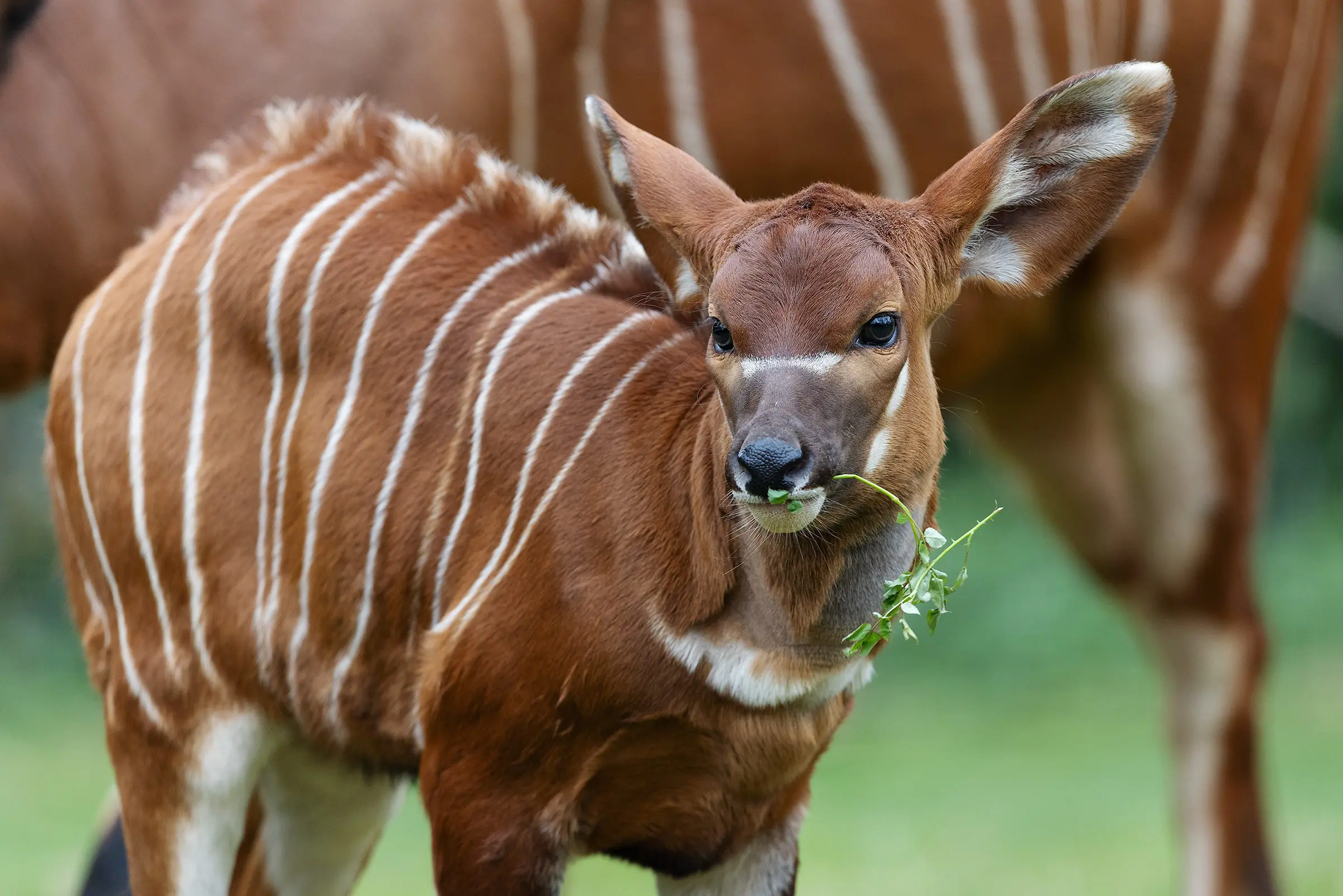
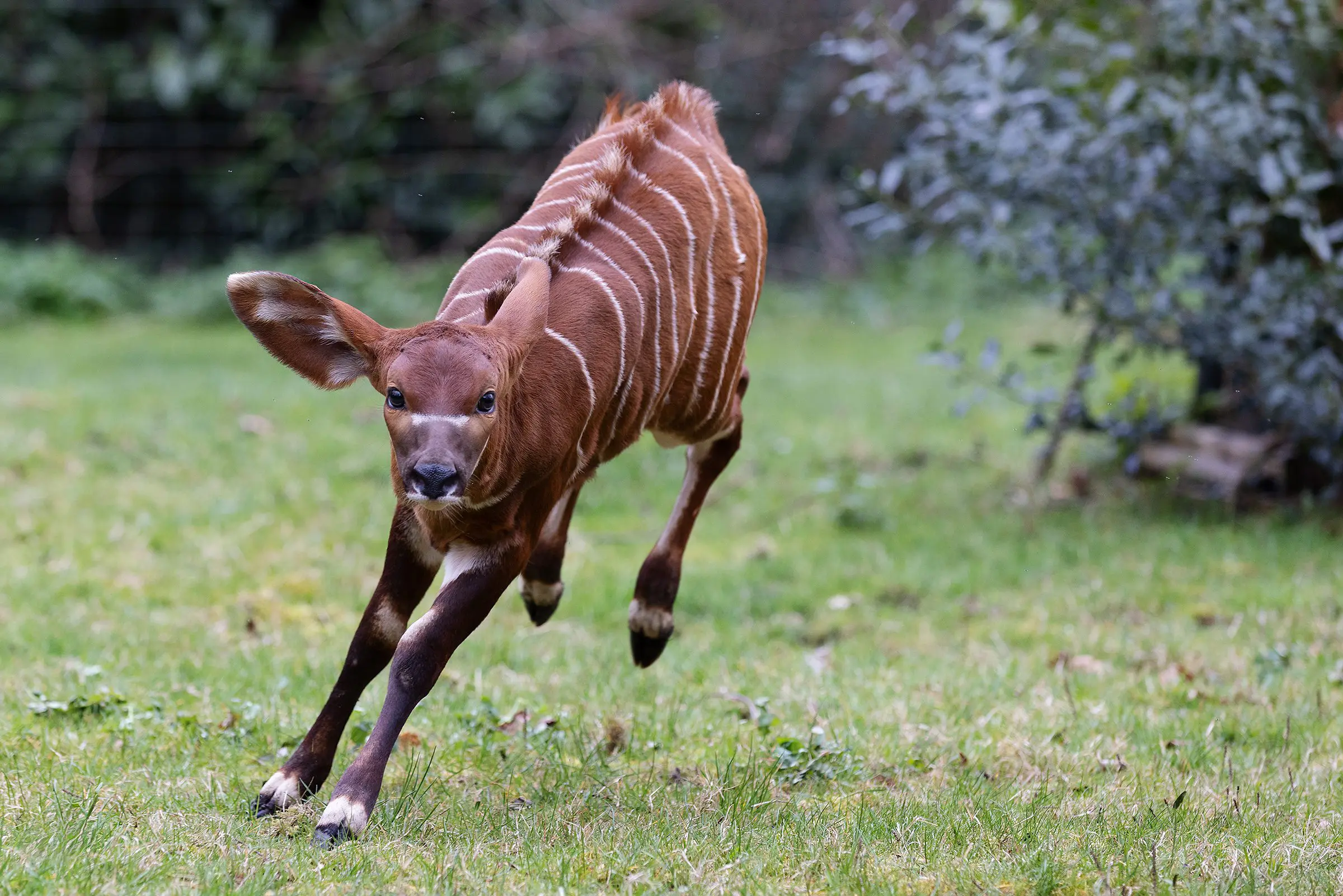
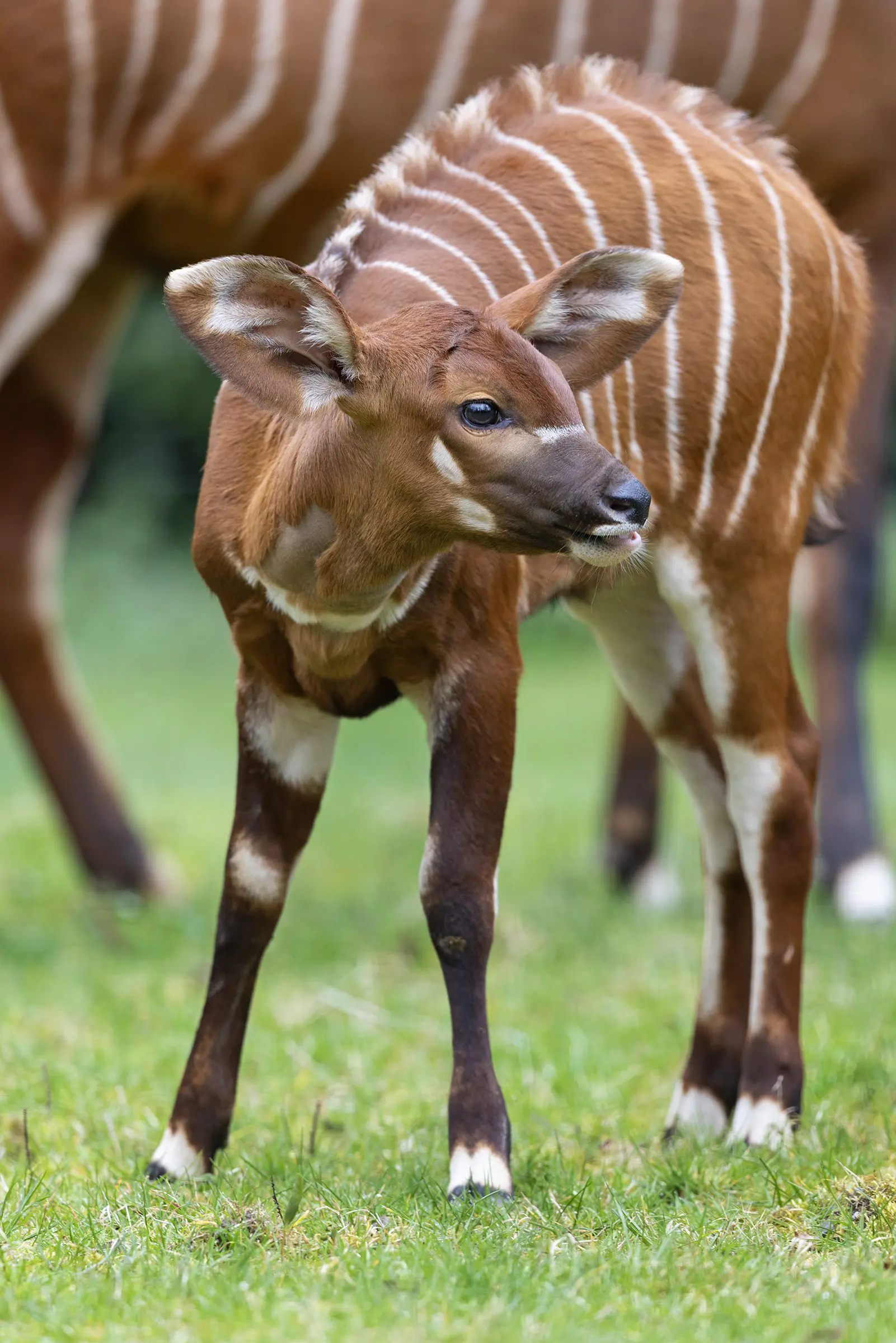
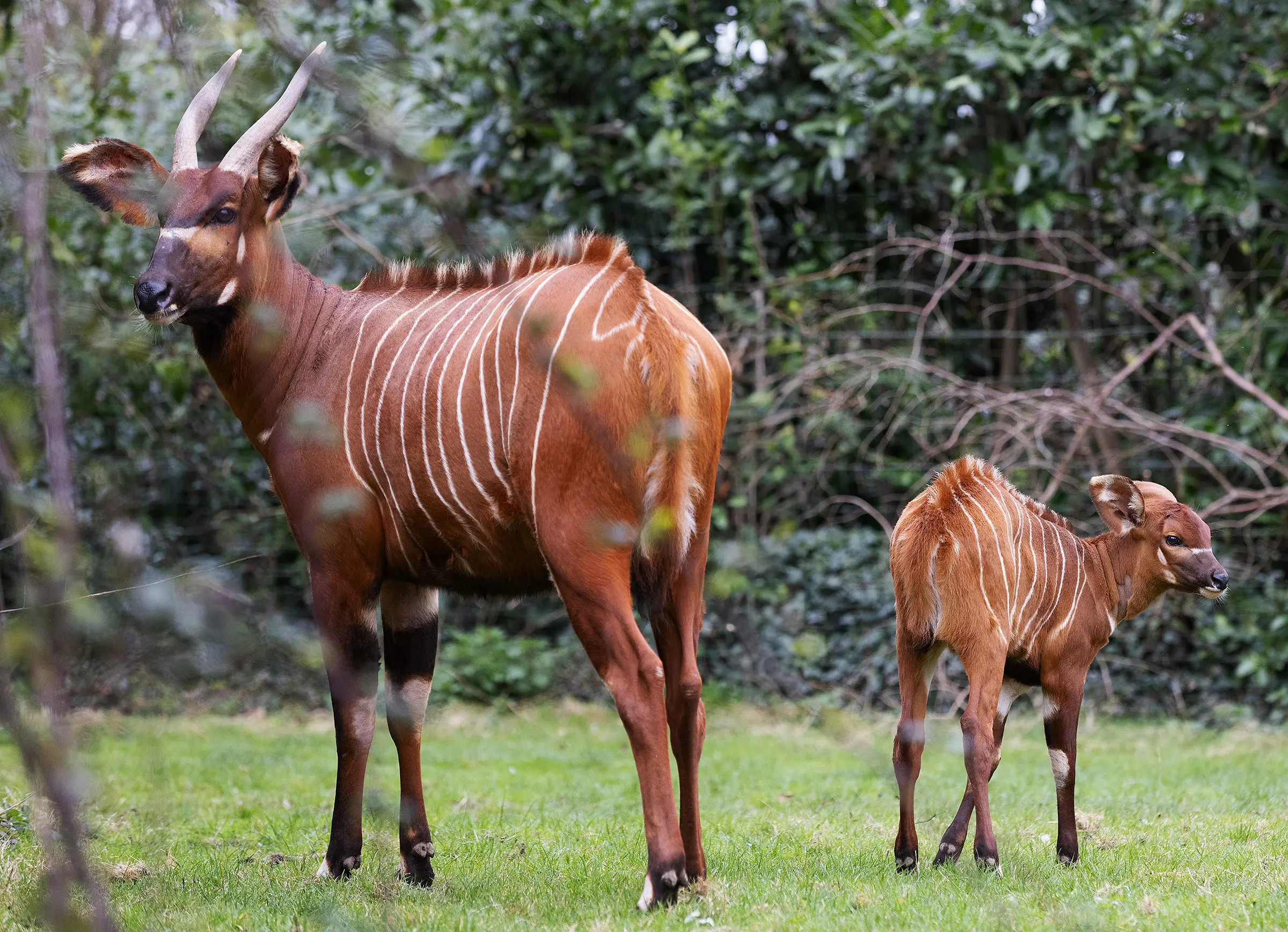
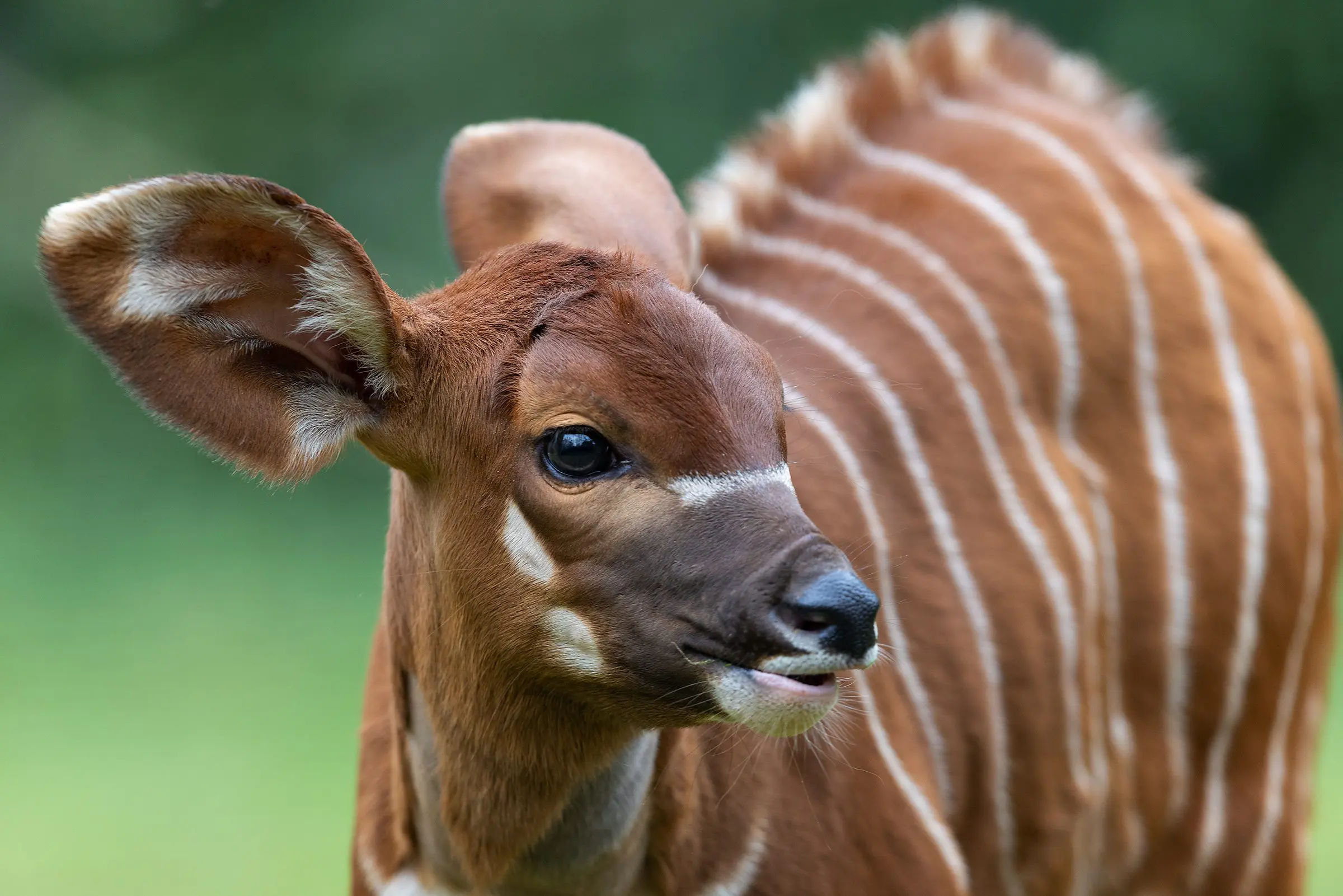
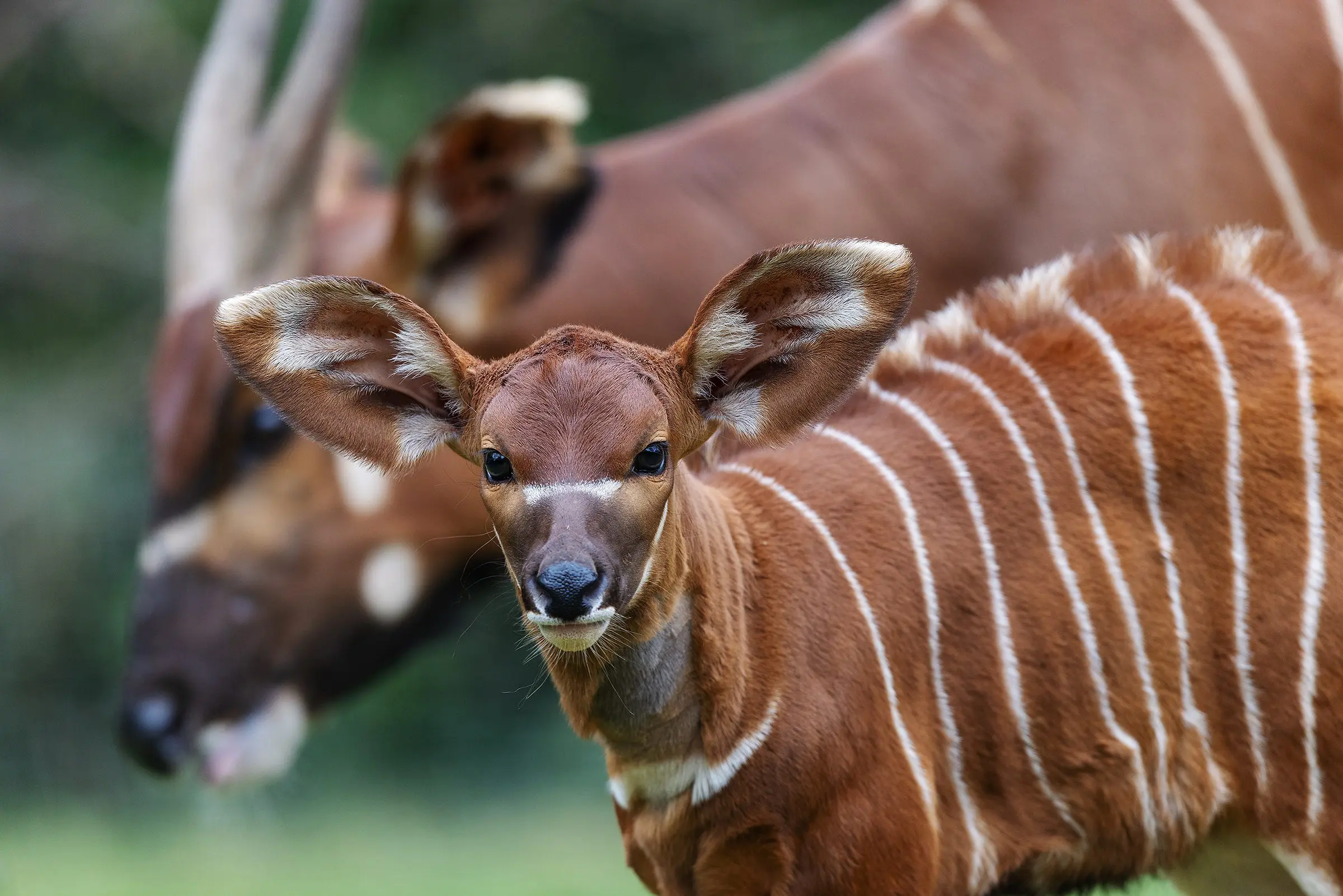
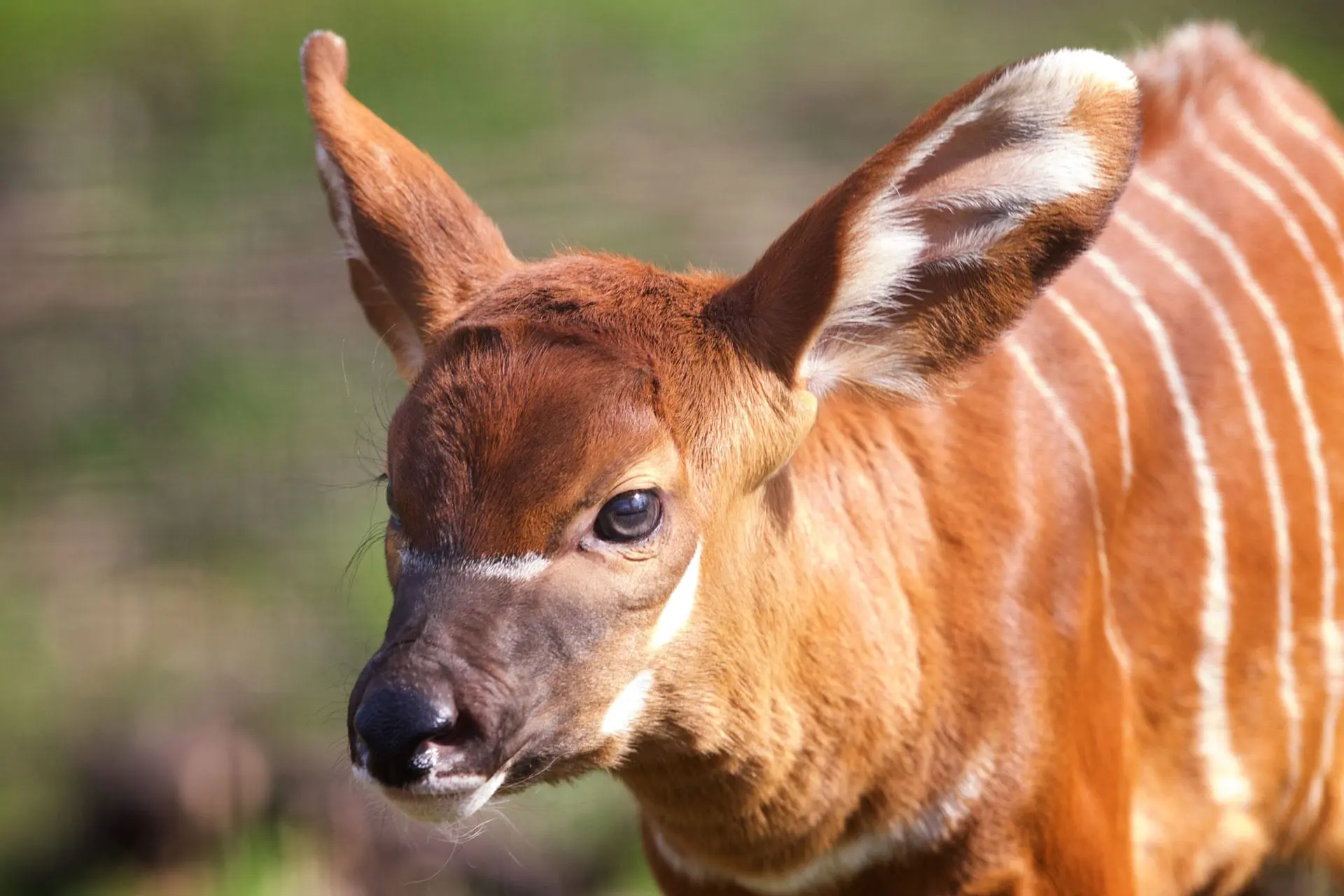
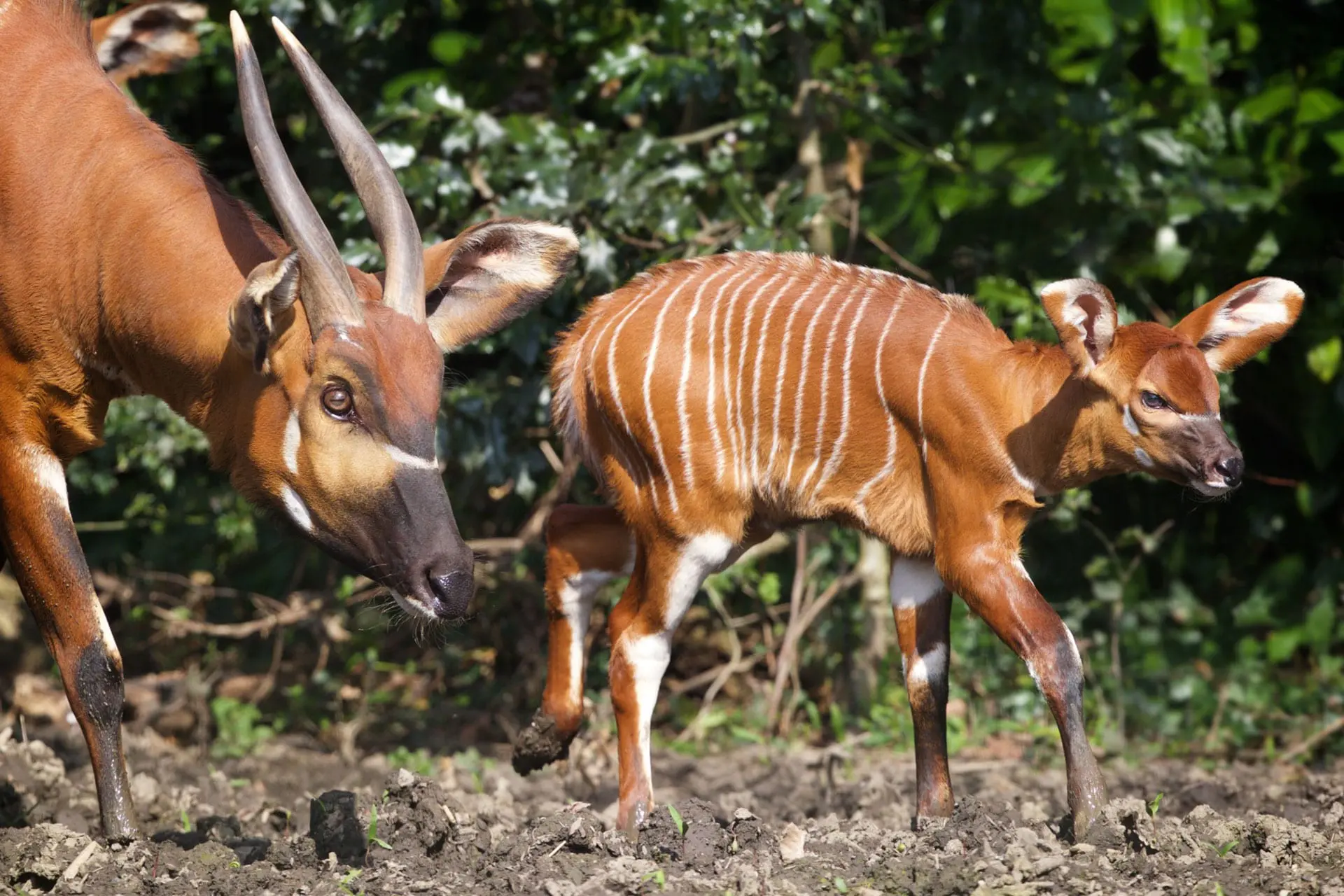
The eastern bongo – also known as the mountain bongo – is one of two subspecies of bongo, a type of forest antelope. They have a chestnut brown coat with a series of white vertical stripes. Both the males and females have long twisted horns. Females are usually more brightly coloured than males.
General Information
Zoo location
African Plains
Animal class
Mammalia
Animal order
Cetartiodactyla
Where do they live (Natural habitat)?
The only place in the world that eastern bongos live in the wild is in mountainous forests in Central Kenya.
How long do they live?
Eastern bongos live approximately 20 years in zoos. Information about their life expectancy in the wild is less well known but is likely less than this.
What do they eat?
Eastern bongos are herbivores (plant-eaters). They eat leaves, shoots, grasses, flowers and rotting bark from trees.
Group name
Herd.
Closest related species / sister species
The eastern bongo’s closest relative is the only other subspecies of bongo, the lowland or western bongo.
Fun Facts!
The Eastern bongo
Family life
Females can sometimes be found in small groups. When young males mature, they leave the female group and join smaller male groups. Older males remain solitary (live alone). Eastern bongos are very shy and timid. They are easily frightened.
Baby name
Calf
Gestation (pregnancy) period
9 months
Number of young at birth
1
Weight at birth
Approximately 15-20 kg
Age at maturity
8-36 months
Size male & female adult
Up to 1.4m shoulder height; approximately 250-450 kg
Conservation
Critically Endangered
Eastern bongos are classified as Critically Endangered by the International Union of Conservation of Nature (IUCN) due to the destruction of their forest habitat, illegal hunting and disease.
Current population estimate
70-80 (decreasing)
Threats
Habitat loss because of illegal logging increased hunting and disease.
What is Dublin Zoo doing?
Dublin Zoo supports the Bongo Surveillance Project in Kenya, which monitors the eastern bongo population and works with the local community in their area to protect the eastern bongo’s forest habitat and promote conservation. Dublin Zoo also participates in the European Endangered Species Breeding Programme for eastern bongos.
Frequently Asked Questions
The eastern bongo is one of two subspecies of bongo, a type of forest antelope.
The eastern bongo is an ungulate, which means animals that have hooves. They are even-toed, meaning they have two toes/hooves on each foot. Other even-toed ungulates include deer, giraffes, sheep, goats and cattle.
There are only an estimated 70-80 eastern Bongos left in the wild.
Eastern bongos are classified as Critically Endangered due to the destruction of their forest habitat, illegal hunting and disease. Their population numbers have declined dramatically in recent years.
Their striped coat helps to camouflage them from predators in their forest habitat by breaking up their outline in the steaks of sunlight through the trees. They also help them find each other in the dense forest.