Sun beetle
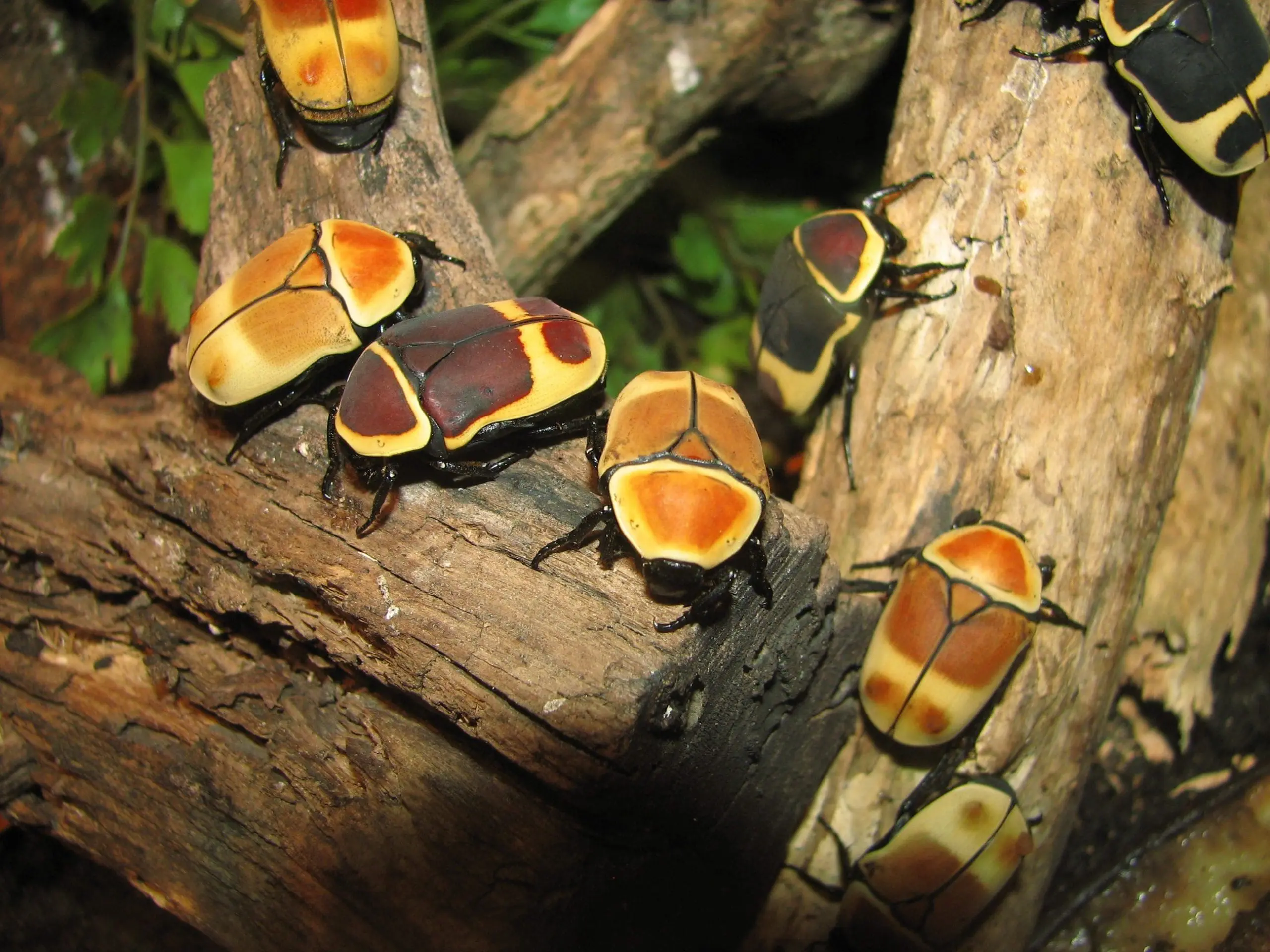
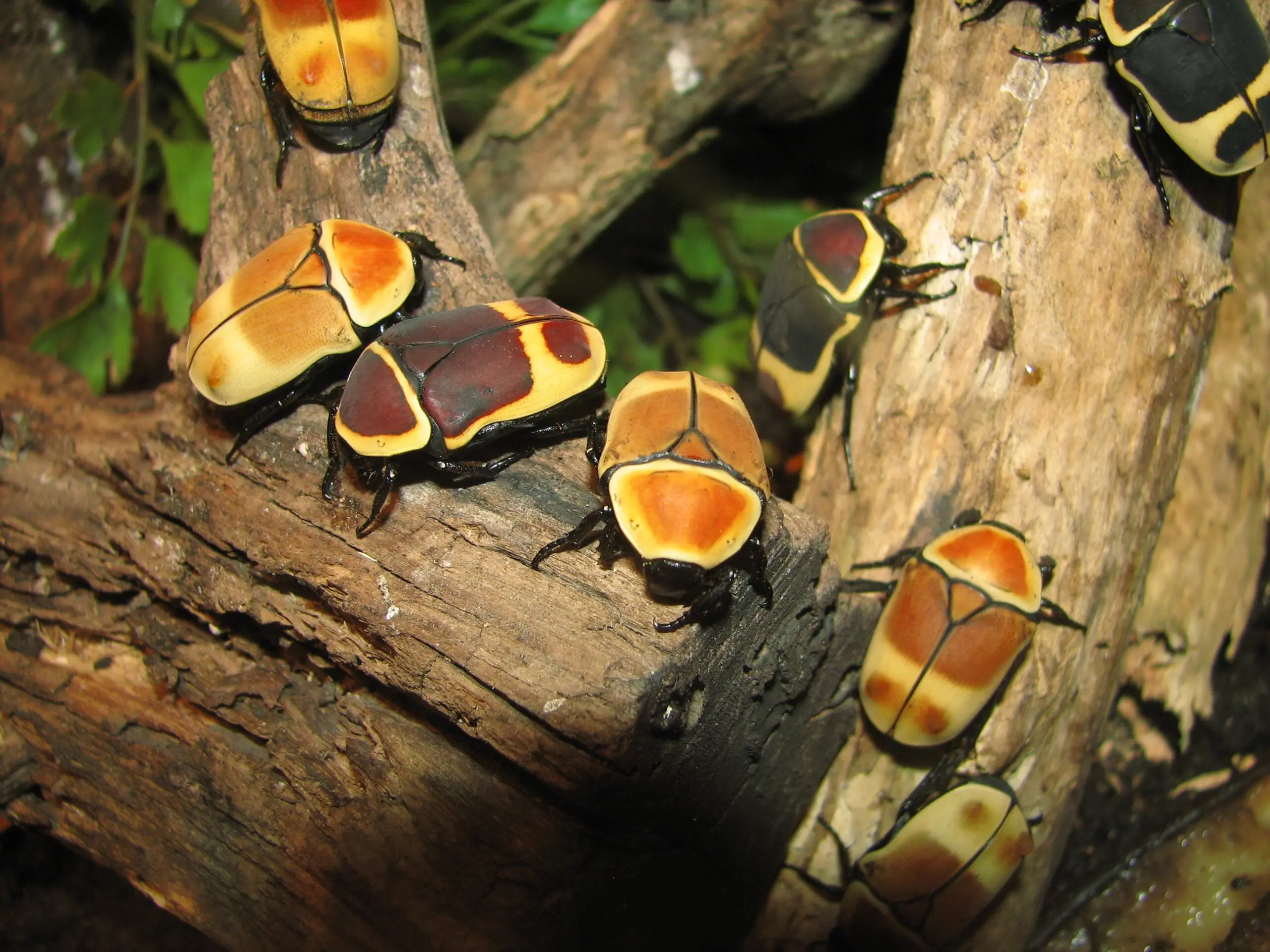
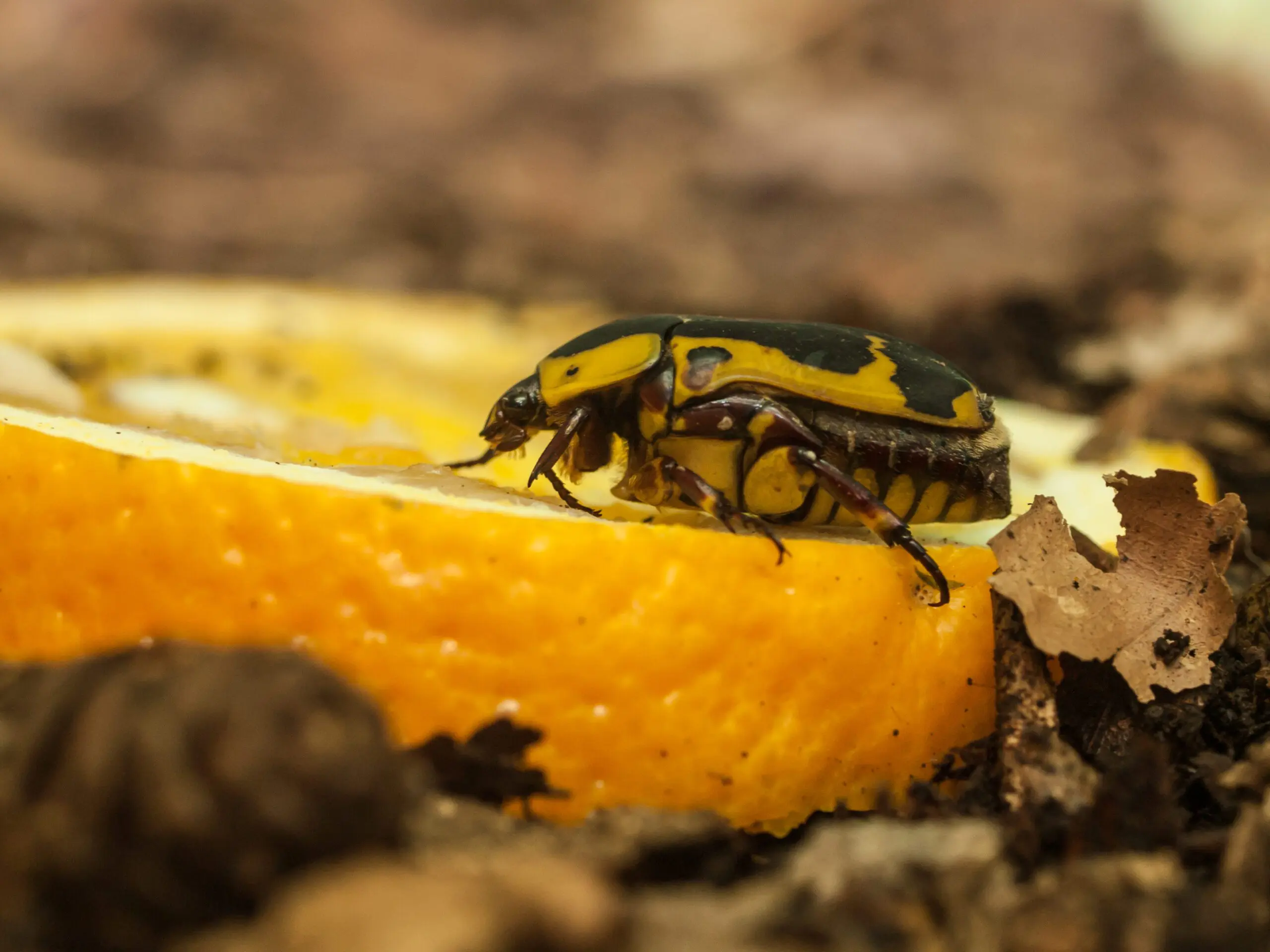
Sun beetles are a species of beetle from the subfamily Cetoniinae, best known for their dark brown and yellow back markings
Species
Insecta
Habitat
Forest
Diet
Herbivores and decomposers
Conservation Status
Still to be evaluated
Sun beetle
Pachnoda marginata
Irish Name: Ciaróg na Gréine
IUCN Status: Not listed
Sun beetles are a species of beetle from the subfamily Cetoniinae, best known for their dark brown and yellow back markings. They are a relatively small species of beetle, growing to only about 3 centimetres in length. There are 9 recognised subspecies of sun beetles.
The sun beetle is native to central and western African countries such as Nigeria, Cameroon, and Equatorial Guinea.
General Information
Zoo location
Discovery & Learning Centre
Animal class
Insecta
Animal order
Coleoptera
Where do they live (Natural habitat)?
The sun beetle is most commonly found in the forests of central and western Africa. They are often found perching on acacia trees.
How long do they live?
Once they have left the pupa, the adult beetles will live for a further 5 to 10 months.
What do they eat?
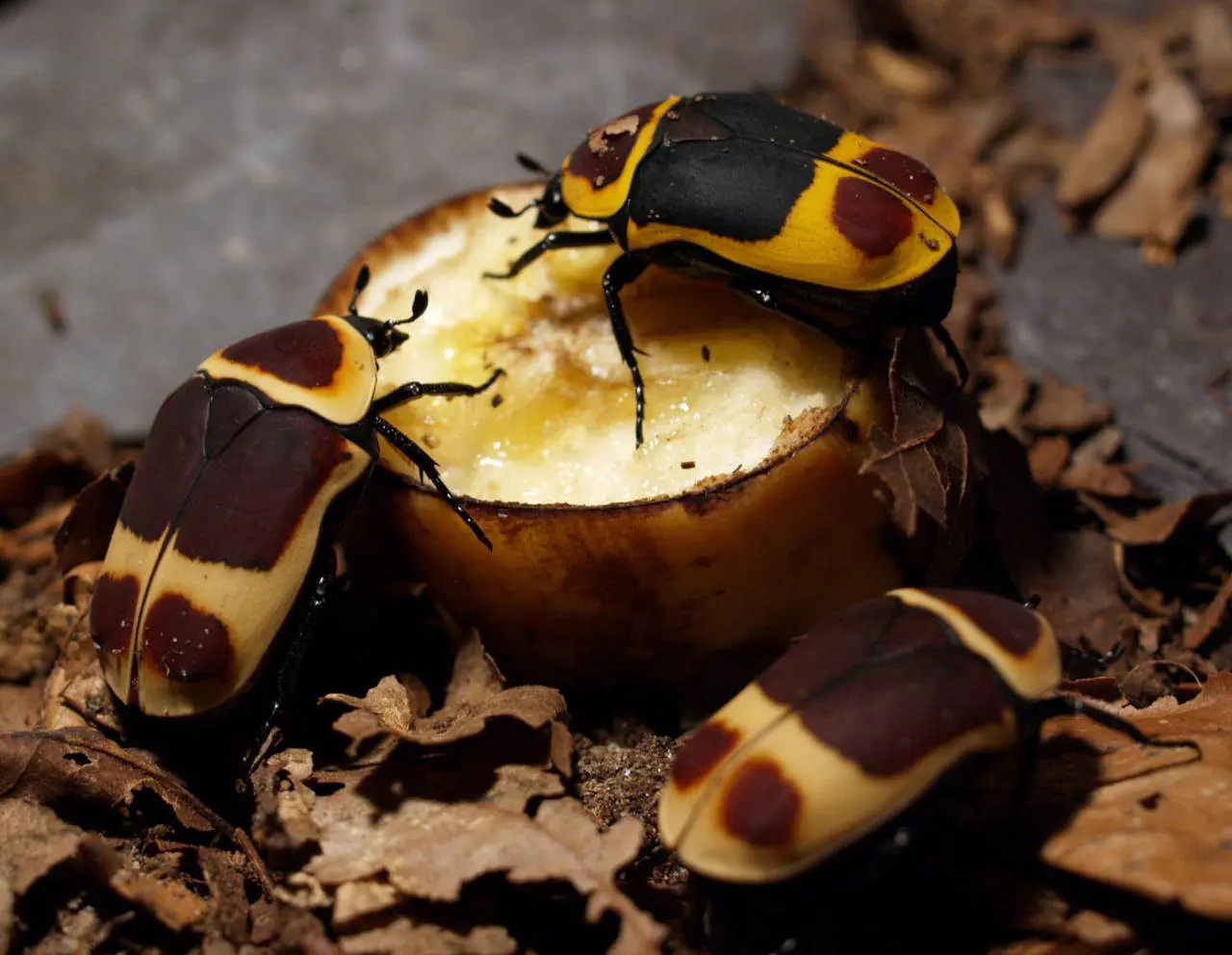
Sun beetles are herbivores and decomposers. They feed on fruits and sap, but will also feed on dead wood and other decaying plant matter. They play an important role in returning nutrients to the soil through this process.
Group name
Sun beetles are herbivores and decomposers. They feed on fruits and sap, but will also feed on dead wood and other decaying plant matter. They play an important role in returning nutrients to the soil through this process.
Closest related species / sister species
Sun beetles are most closely related to other beetles in the family Scarabaeidae, which is comprised of over 35,000 species including dung beetles.
Fun Facts!
The Sun Beetle
Behaviours
Sun beetles are most active in warmer temperatures, between 27 and 30 degrees Celsius.
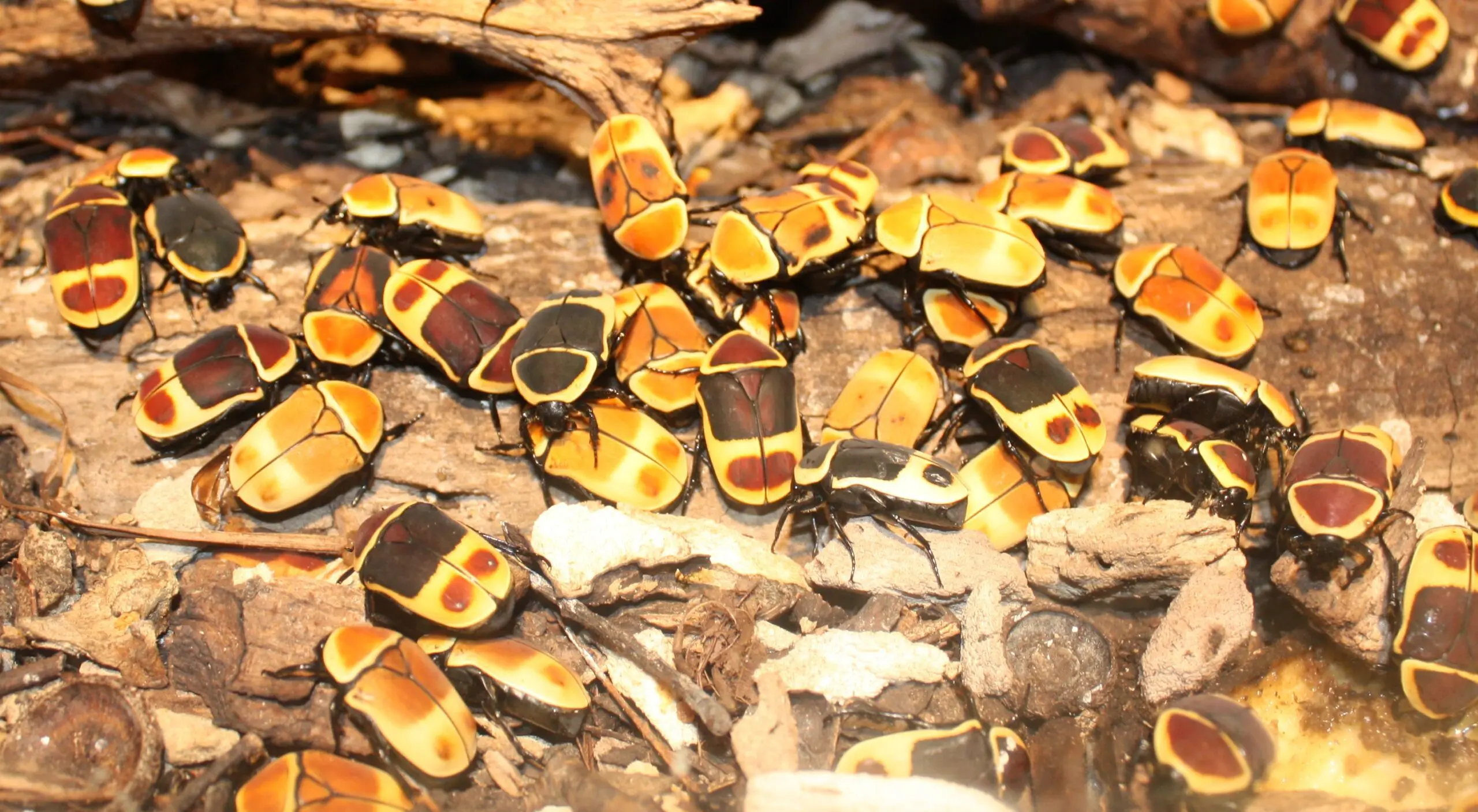
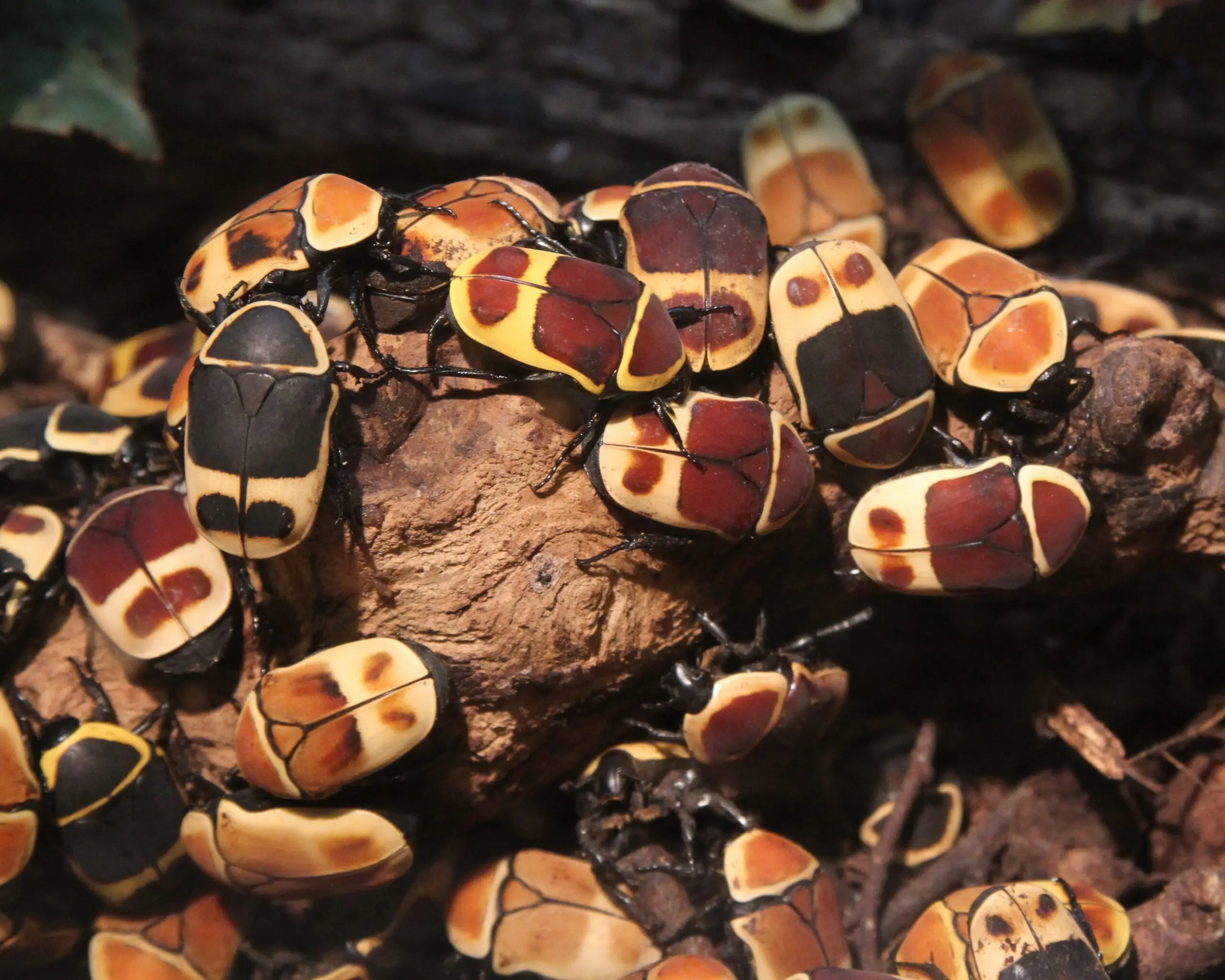
They are known to swarm, occasionally living in large groups of several hundred individuals.
The larvae of the sun beetle spend the first few weeks of their lives beneath the soil feeding on leaf litter and other decaying plant matter.
Reproduction and Life Cycle
Like all beetles, sun beetles begin life as a larva. After mating, the female will lay an egg in the moist ground. The egg will hatch shortly thereafter, and the larva will feed almost continuously for between 2 and 5 months.
The larvae then pupate in the soil for several weeks, during which time they undergo metamorphosis and turn into their adult forms.
Once they have left the pupa, the adult beetles will live for a further 5 to 10 months.
Adaptations
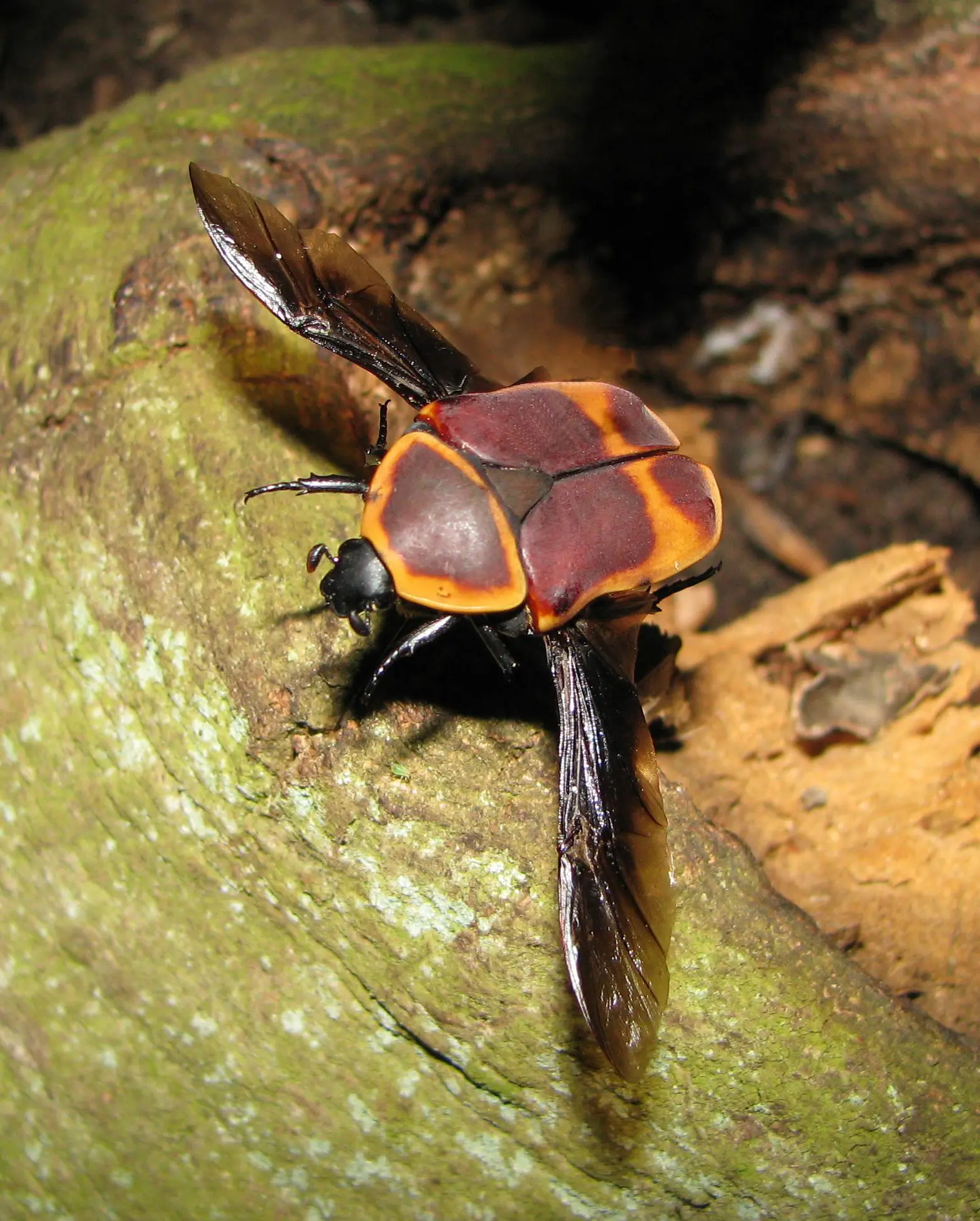
Sun beetles have a pair of wings that are kept folded beneath a pair of hardened forewings called elytra. When threatened, the beetles may open up their wings so as to fly off and escape from danger. They can also spray a foul smelling liquid from their rear end as a defence mechanism.
Conservation
Not Listed
The sun beetle is not listed on the IUCN Red List of Endangered Species. This is likely a result of its wide distribution and abundance, as well as popularity in the pet trade.
Frequently Asked Questions
Sun beetles typically live for a total of 10 to 15 months. Their lifespan is broken into three key stages – a larval form for up to 5 months, inside a pupa for several weeks, and an adult form for up to 10 months.
Sun beetles are herbivores. They feed on fruits, sap, and decaying plant matter. By feeding on decaying plant matter, they return vital nutrients to the soil.
Sun beetles are found in the forests of central and western Africa, most commonly found living on Acacia trees.
Scientists have so far discovered over 400,000 species of beetle, with new ones discovered every year. They make up 40% of all arthropod species (invertebrates with a hard exoskeleton made of chitin, segmented bodies, and jointed limbs) and 25% of all known living animals. It is estimated that there may be as many as 2.1 million species of beetle alive today.
Metamorphosis is the process by which an animal goes through great change during its growth, often with distinct stages at different points in their life. Beetles begin life as a larva, before enclosing themselves in a pupae for several weeks, during which time they change into their adult forms. A caterpillar turning into a butterfly is another well-known example of metamorphosis.
The sun beetles can be found in the Discovery & Learning Centre at Dublin Zoo. You might sometimes also see them in the royal python and phantasmal poison dart frog habitats in Zoorassic World.