Black-crowned night heron
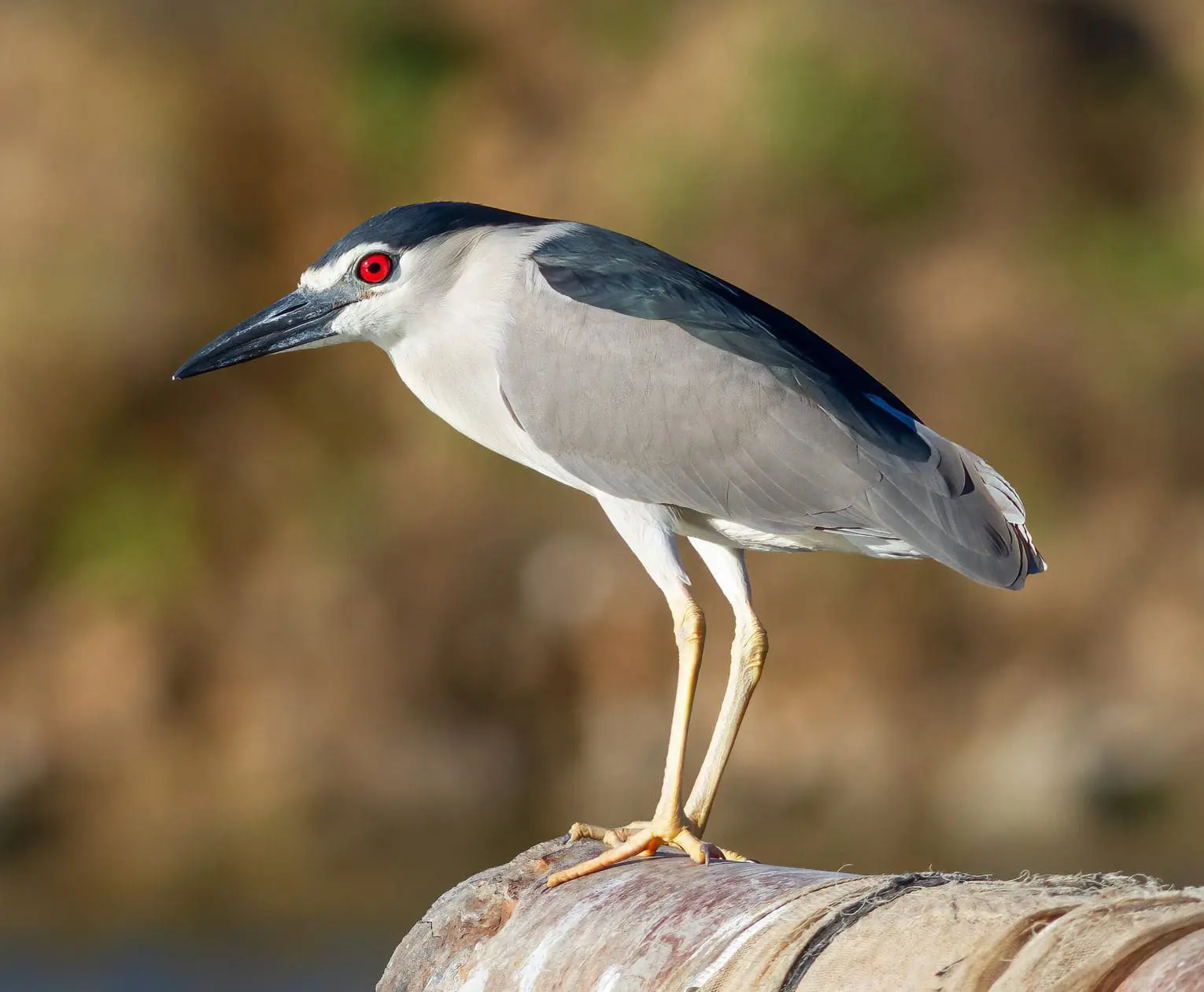
The black-crowned night heron is a medium sized heron from the Ardeidae family.
Species
Birds
Habitat
Wetlands
Diet
Carnivores
Conservation Status
Least Concern
Black-crowned night heron
Nycticorax nycticorax
Irish Name: Corr réisc
IUCN Status: Least Concern
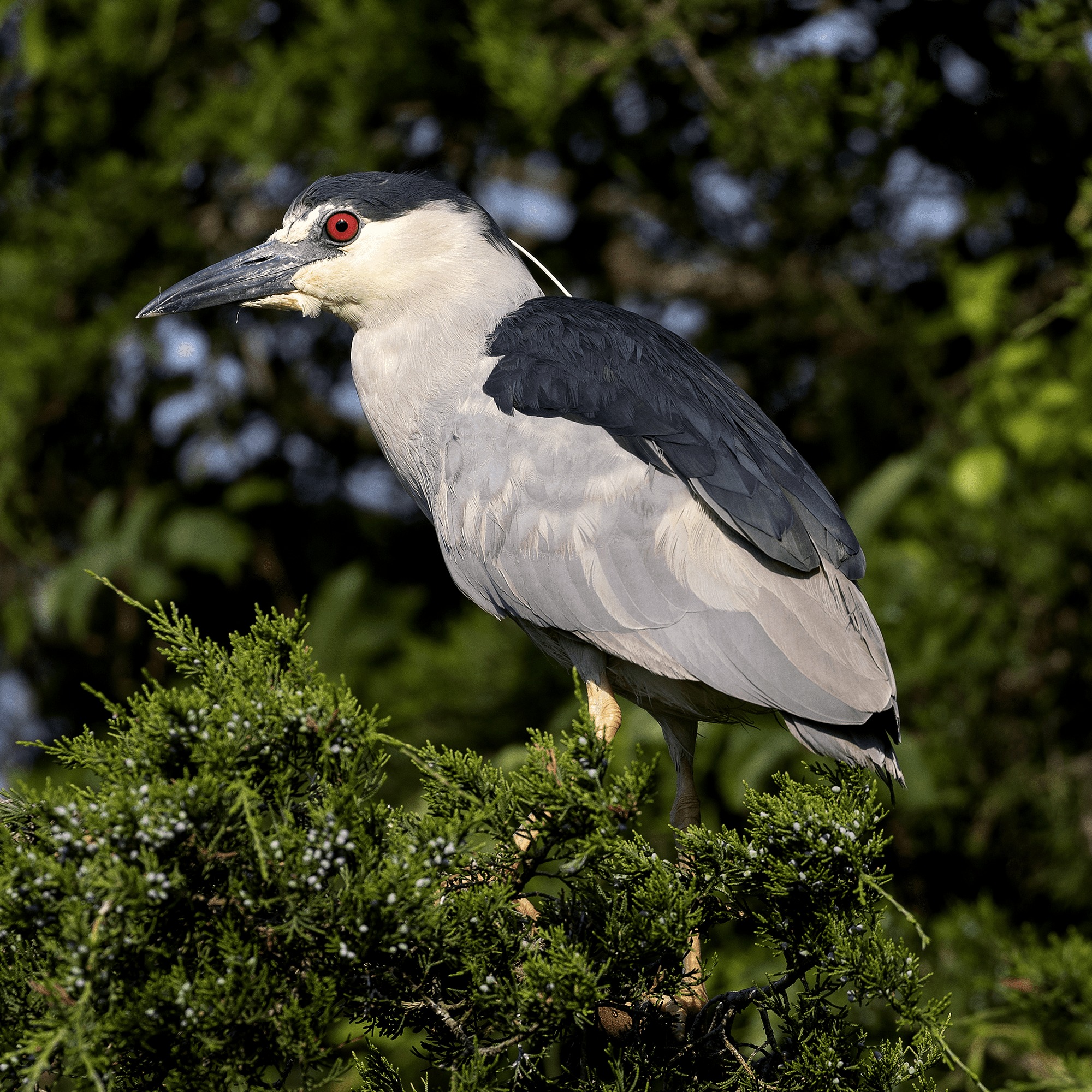
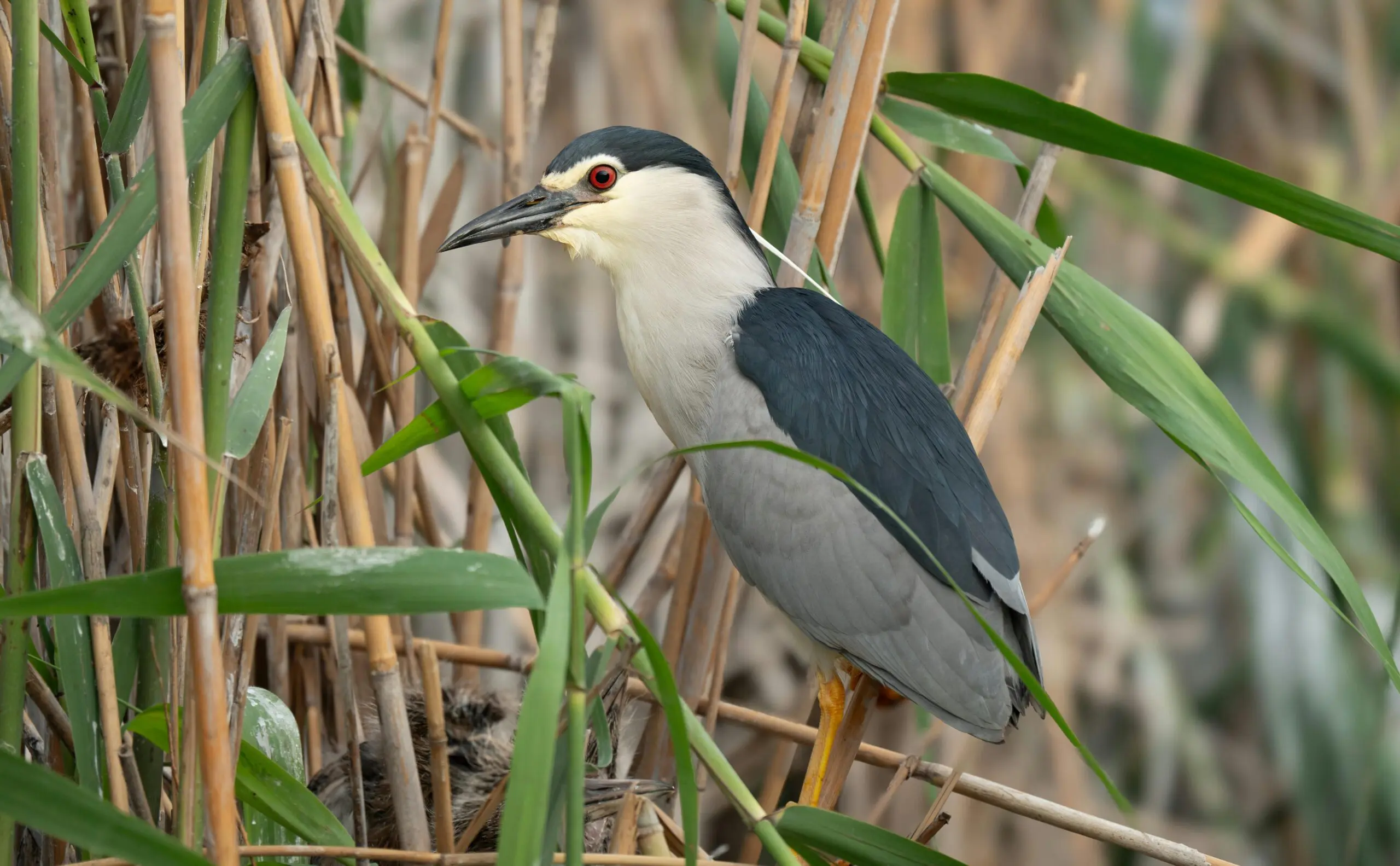
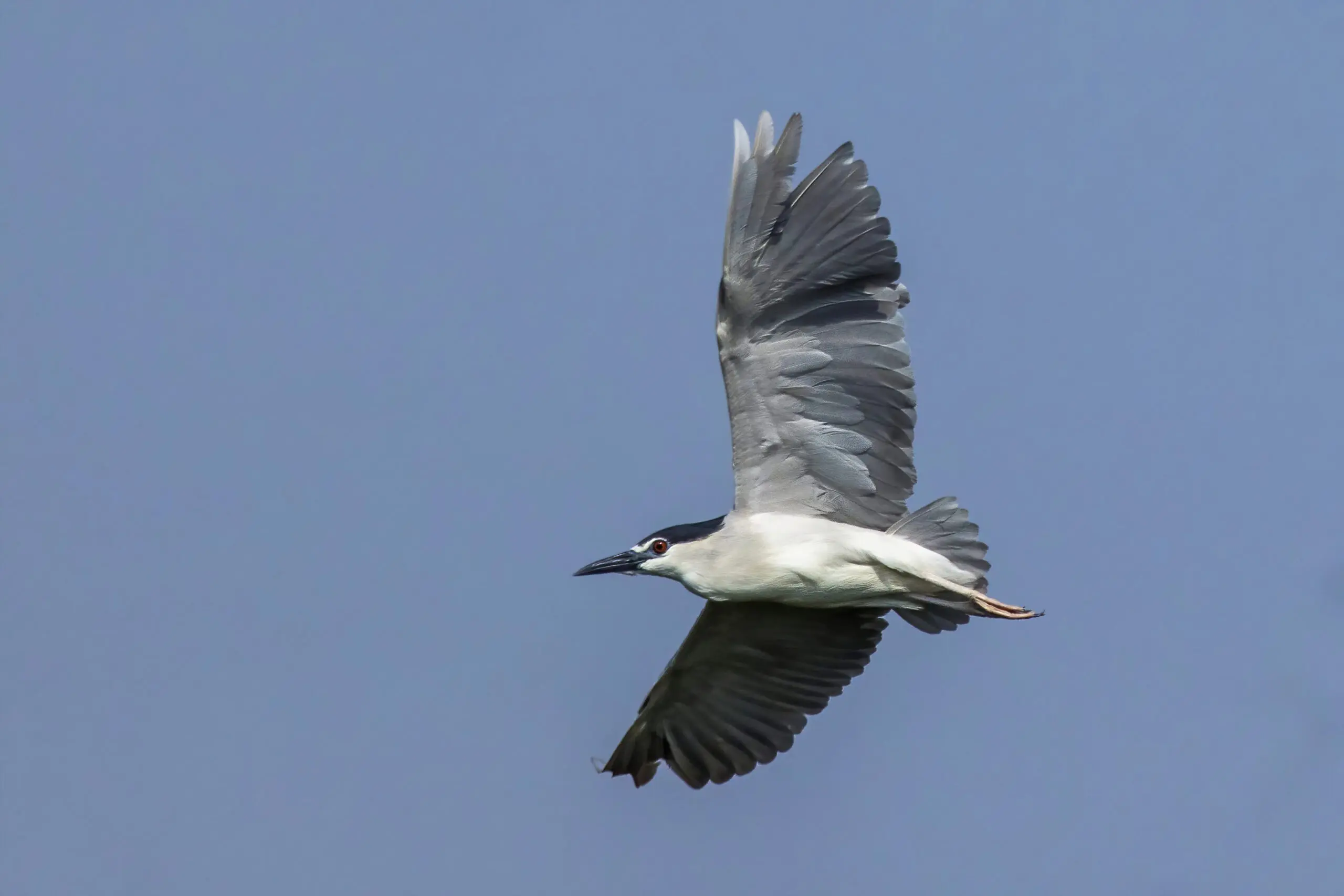
The black-crowned night heron is a medium sized heron from the Ardeidae family. They have a long black beak and distinctive bright red eyes. As the name suggests, they have a black “crown” on the top of their head, grey wings, a white head and body, and short yellow legs. They are relatively stocky in comparison to other herons. They measure up to 65 centimetres long, with a wingspan of over 110 centimetres, and weighing between 520 and 800 grams. Males are slightly larger than females once fully grown. Juveniles usually have a more brown body and grey legs, with dark, tear drop shaped spots along their front.
They are found around the world, being a resident species through South America, sub-Saharan Africa, southern Asia, southern Europe, and parts of North America.
General Information
Zoo location
Flamingo Lagoon
Animal class
Aves
Animal order
Pelecaniformes
Where do they live (Natural habitat)?
Like most herons, the black-crowned night heron lives in a variety of wetland habitats, including freshwater lakes, marshlands, mudflats and mangroves.
How long do they live?
Black-crowned night herons reach maturity at around 2 years of age, and can live for around 20 years.
What do they eat?
Black-crowned night herons are carnivores, feeding on a wide variety of different animals. These include small fish, frogs and other amphibians, crustaceans, molluscs such as snails, earthworms, leaches, insects, spiders, small rodents, and even the eggs of other birds.
Group name
The collective name for a group of herons is an ‘siege’.
Closest related species / sister species
Black-crowned night herons are most closely related to Nankeen night herons of south-east Asia and Australia.
Fun Facts!
Black-crowned night heron
Behaviours
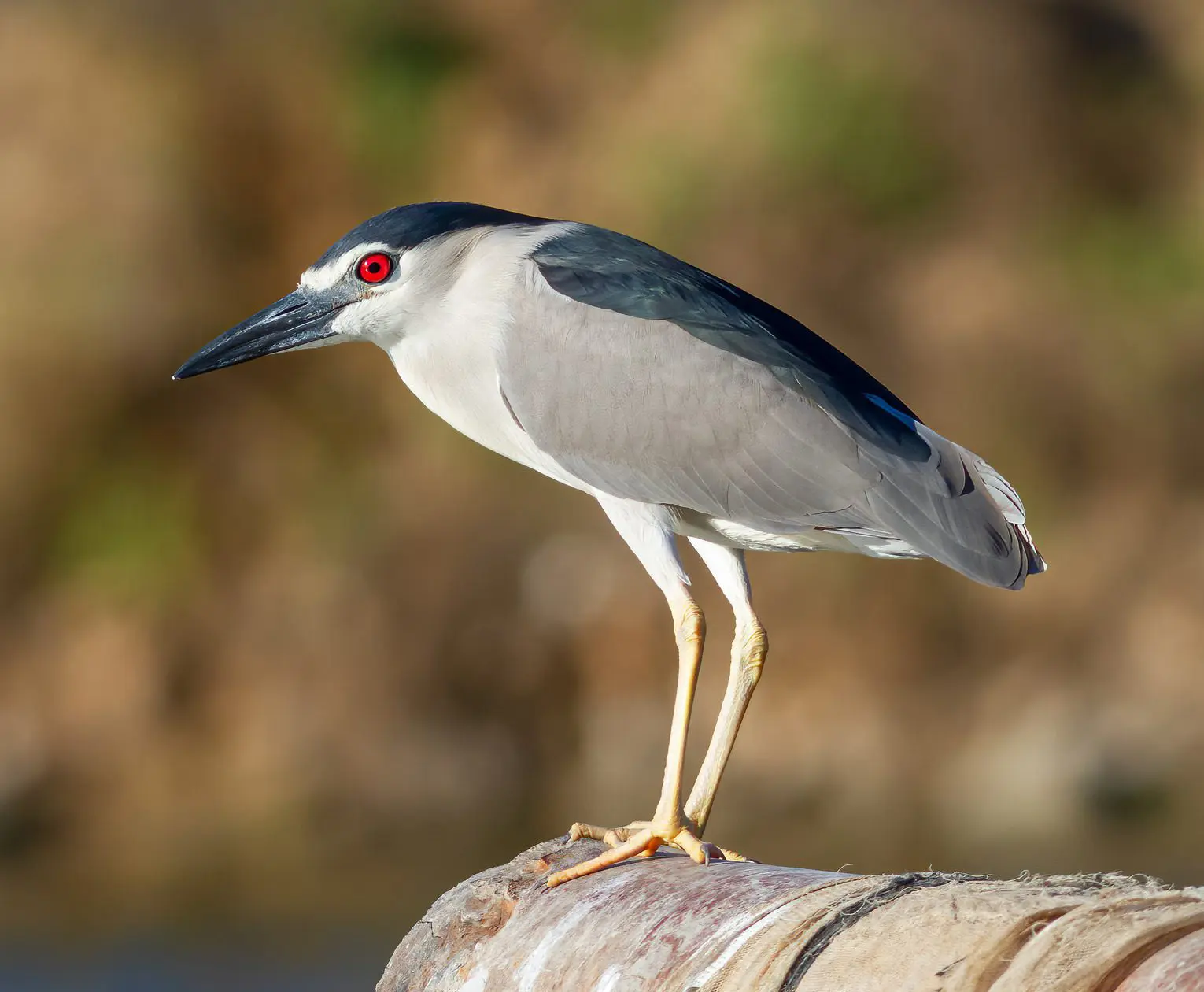
The black-crowned night heron is a predominantly nocturnal species, though it is also active in the early morning and late evening.
They typically feed alone, standing still and watching out for prey or moving slowly through shallow water. When they spot a prey animal, they will lunge their head into the water to grab it with their beak.
During the day, black-crowned night herons will roost in trees away from feeding grounds. They roost in colonies, ranging from a dozen to hundreds of birds. As the sun begins to set, they will take off to head to feeding grounds.
While European populations typically migrate south to northern Africa for the winter, and after the breeding season, tropic populations are more often residents. However, they will disperse from breeding grounds once the season has finished.
Reproduction and Life Cycle
Night herons are assumed to be monogamous. Males will perform courtship displays that involve a variety of acts, including snapping their beak, dancing, hissing, and bobbing their head. During this time, the legs of both sexes turn pink and they display long, white, quill-like feathers from the top of their heads.
Nests are built at the base of trees or in the forks of branches. The herons will brood in colonies, with several nests being found in a single tree.
A female will typically lay 3 to 5 eggs. Starting within 5 days of mating, she will lay one pale-blue/green egg every 2 days. The eggs are incubated by both parents for up to 26 days. Once hatched, the chicks will remain in the nest for 2 weeks, eventually taking flight to go to feeding grounds by 6 weeks of age.
Black-crowned night herons reach maturity at around 2 years of age, and can live for around 20 years.
Adaptations
The black-crowned night heron has larger and more widely spread eyes compared to diurnal herons, which likely allow it to see better over a greater range of light levels.
They are among a few heron species that have been observed to practice baiting. This practice involves the heron placing an invertebrate or other desirable food item near the water’s surface to attract fish, which the heron then catches to feed itself.
Conservation
Least Concern
The black-crowned night heron is listed as ‘Least Concern’ on the IUCN Red List of Endangered Species.
Current population estimate
Estimates of the total wild population range from 663,000 to almost 3,000,000 individuals. Whether the population is increasing, stable, or decreasing is unknown.
Threats
While the species is doing well at the moment, it may come under threat from pollution, climate change, and habitat loss as a result of wetland draining in the future.
Frequently Asked Questions
Black-crowned night herons can be found almost all over the world, from parts of southern Europe and Asia to South America to sub-Saharan Africa and even parts of North America.
Black-crowned night herons are generalist carnivores feeding on a wide variety of other animals. Their prey includes small mammals such as rodents and bats, amphibians such as frogs, small fish, crustaceans, molluscs, insects, spiders, and even the eggs of other birds.
Black-crowned night herons breed once a year, with females laying a clutch of 3 to 5 eggs. Both males and females look after the eggs and the chicks once they hatch.
The black-crowned night herons can be found in the Flamingo Lagoon living alongside the Chilean flamingos, the Eurasian spoonbills, and the white-faced whistling ducks.
While Dublin Zoo doesn’t look after any other heron species, visitors are likely to come across wild native grey herons. These birds can be seen around the zoos two lakes, and especially around the California sea lion habitat where they often wait to steal the sea lions’ fish.