Black beauty stick insect
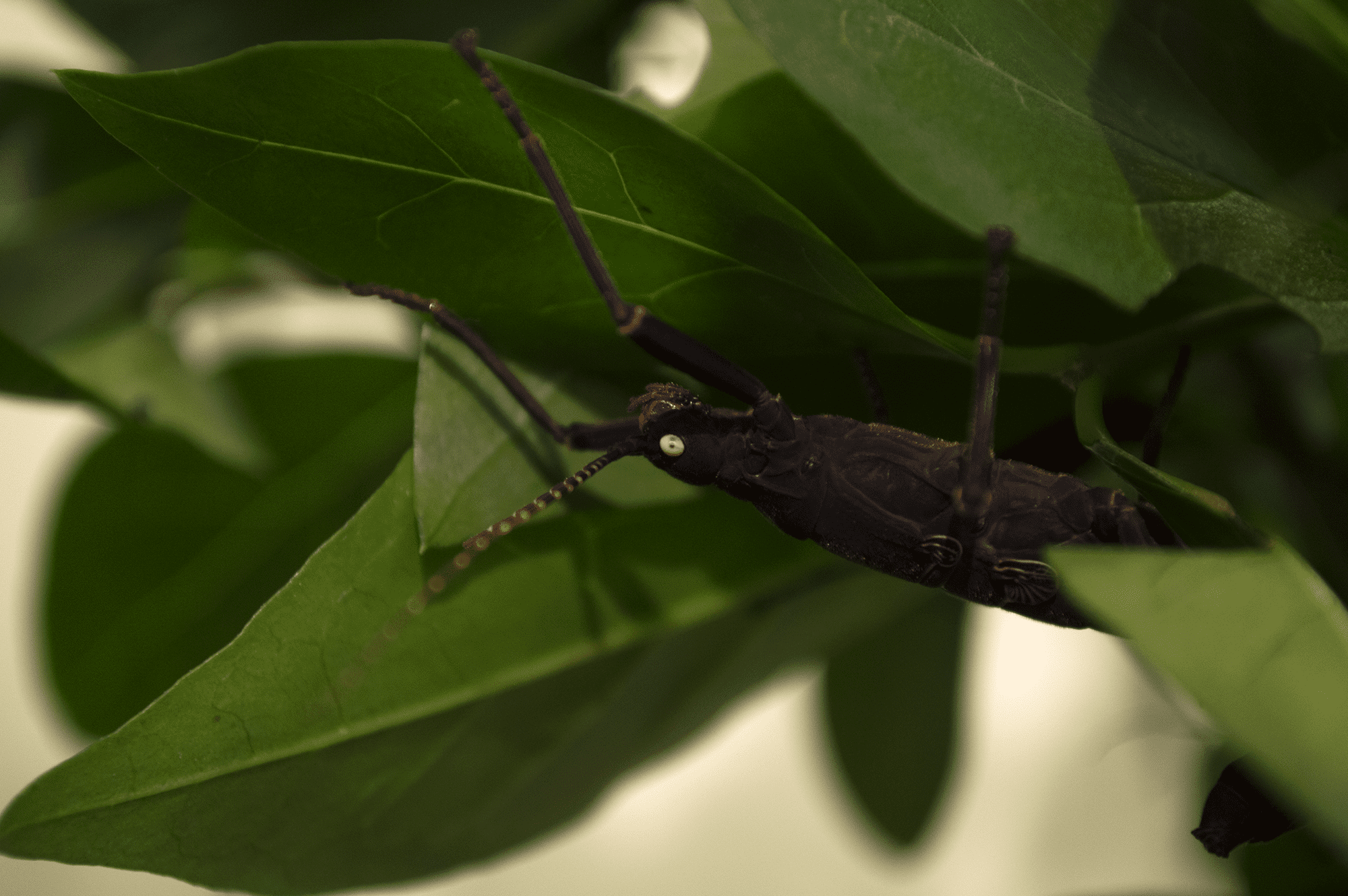
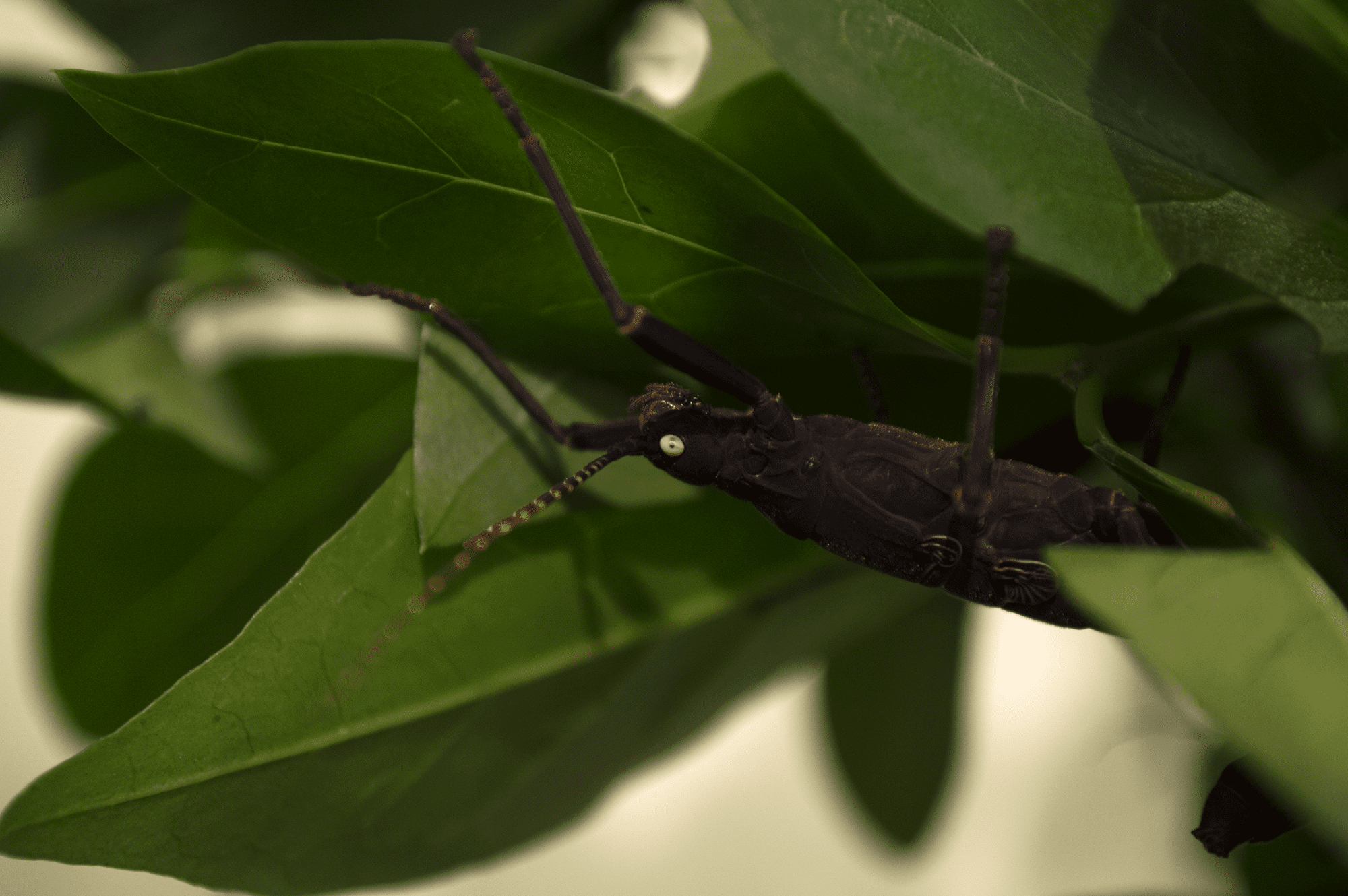
Black beauty stick insects are a species of stick insects best recognised for their short, thick, black bodies with bright yellow eyes
Species
Insecta
Habitat
Grassland
Diet
Herbivores
Conservation Status
Critically Endangered
Black beauty stick insect
Peruphasma schultei
Irish Name: Cipíneach scéimhe dubh
IUCN Status: Critically Endangered
Black beauty stick insects are a species of stick insects best recognised for their short, thick, black bodies with bright yellow eyes and antennae, and reduced red wings. Females are typically larger than males, growing up to almost 6 centimetres long. Males rarely grow to longer than 4 centimetres. Black beauty stick insects are endemic to Peru, with known populations all found within a 50 square kilometre range.
General Information
Zoo location
Discovery & Learning Centre
Animal class
Insecta
Animal order
Phasmatodea
Where do they live (Natural habitat)?
The black beauty stick insect has been found in grassland and forest habitats in Peru. In particular it seems to have a preference for pepper trees, of the genus Schimus.
How long do they live?
Black beauty stick insects reach maturity at around 6 months old and have an expected lifespan of between 12 and 18 months.
What do they eat?
Black beauty stick insects are herbivores. In the wild, they feed primarily on the leaves of pepper trees. At Dublin Zoo, they happily feed on privet leaves.
Group name
The collective name for a group of stick insects is a ‘bushel’.
Closest related species / sister species
Black beauty stick insects are most closely related to other stick insects in the family Pseudophasmatidae, also known as ‘striped stick insects’.
Fun Facts!
Behaviours
Black beauty stick insects are primarily nocturnal, but can also be active around sunrise and sunset. Most of their day is spent feeding.
Though they have small wings, they cannot fly. Instead, they are used for attracting mates.
Reproduction and Life Cycle
Males mate with females by climbing on their backs and remaining attached to them for up to several weeks at a time. Females can lay up to 100 eggs in their lifetime. They do not built nests. Instead, the eggs drop from their thorax and rest on the ground wherever they fall. The eggs incubate in the soil for between 3 and 5 months before hatching. Nymphs – newly hatched stick insects – look like smaller versions of the adults, though it is not possible to distinguish the males and females from one another until they reach maturity.
Black beauty stick insects reach maturity at around 6 months old and have an expected lifespan of between 12 and 18 months. Throughout their lives, the insects will moult several times. This is because their outer bodies, known as an exoskeleton, is made of chitin, a tough protein that does not grow with them. As a result, they must shed their old skin whenever they grow. Most stick insects go through 6 to 8 moults in their lifetime.
Adaptations
When threatened, black beauty stick insects will raise their wings as a warning before spraying a foul smelling liquid at their attacker. This liquid can cause irritation to another animal’s eyes or skin.
Though they don’t look too much like sticks compared to other stick insects, their dark black bodies allow them to hide in crevices in trees and rocks to camouflage themselves from predators.
Their eggs resemble seeds which are collected by ants. The eggs hatch safely in the ant nest, and the nymphs leave as soon as possible, climbing into the nearest tree for safety.
Conservation
Critically Endangered
Black beauty stick insects are listed as ‘Critically Endangered’ on the IUCN Red List of Endangered Species.
Current population estimate
The population of this species is not known in the wild, but it is thought to be decreasing due to its limited range and declining quality of its habitat.
Threats
The black beauty stick insect is only found in a 50 square kilometre range in Peru in an area which is saying a high level of deforestation for agriculture. Their isolated range puts them at greater risk of going extinct.
Frequently Asked Questions
Black beauty stick insects are found in a very small area of grassland and forest habitats in Peru.
They are herbivores. In the wild, they feed on the leaves of pepper trees. In human care, they happily feed on privet and honeysuckle leaves.
Sexual dimorphism is when the two sexes of a species look quite different. For example, female black beauty stick insects are larger than the males.
Endemic means a species lives only in a very specific place. Endemic species are often at higher risk of going extinct due to how isolated they typically are.
In the earliest stage of their lives, stick insects are referred to as ‘nymphs’.
The stick insects can be found in the Discovery & Learning Centre at Dublin Zoo.