Brazilian tapir
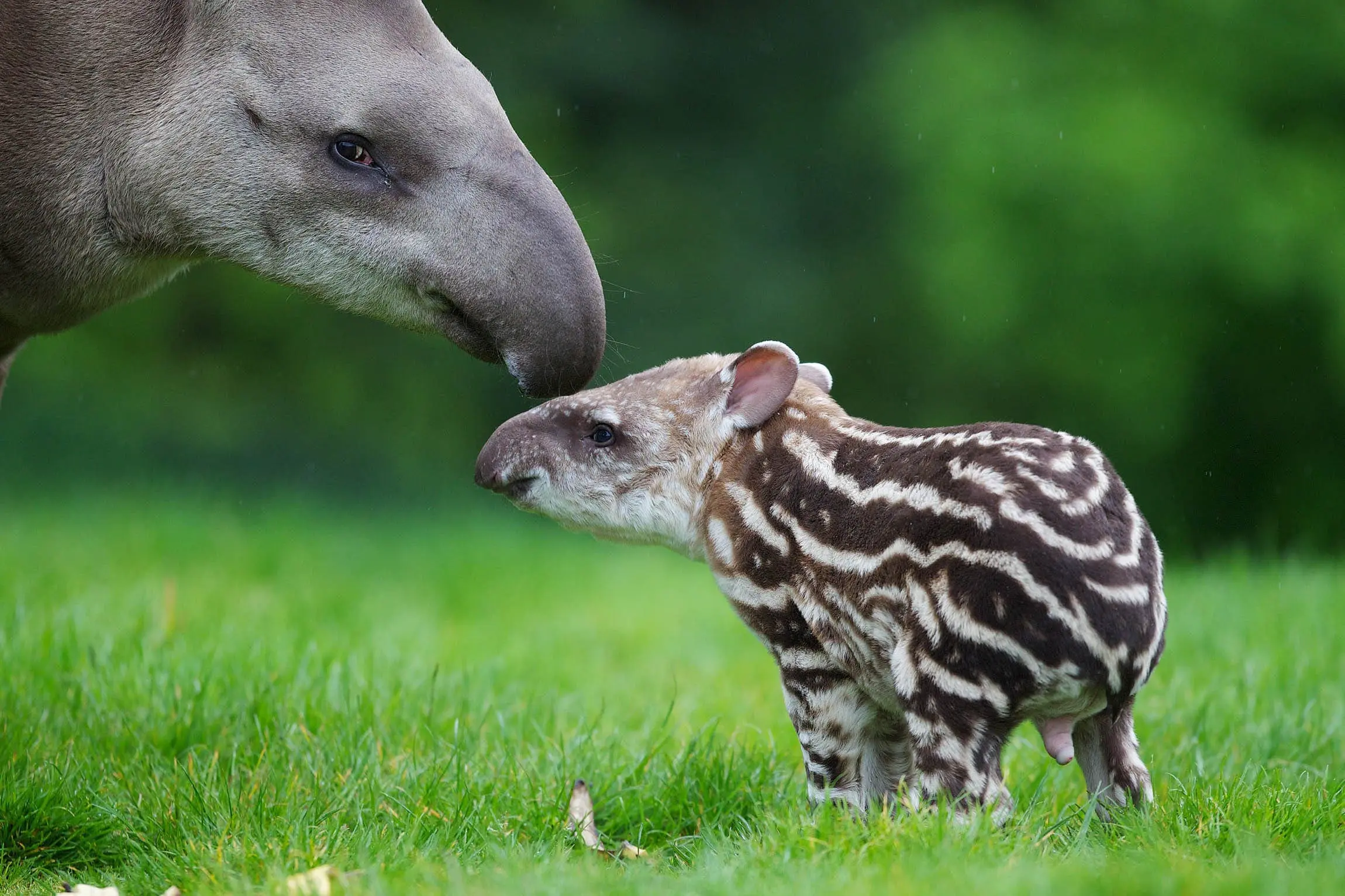
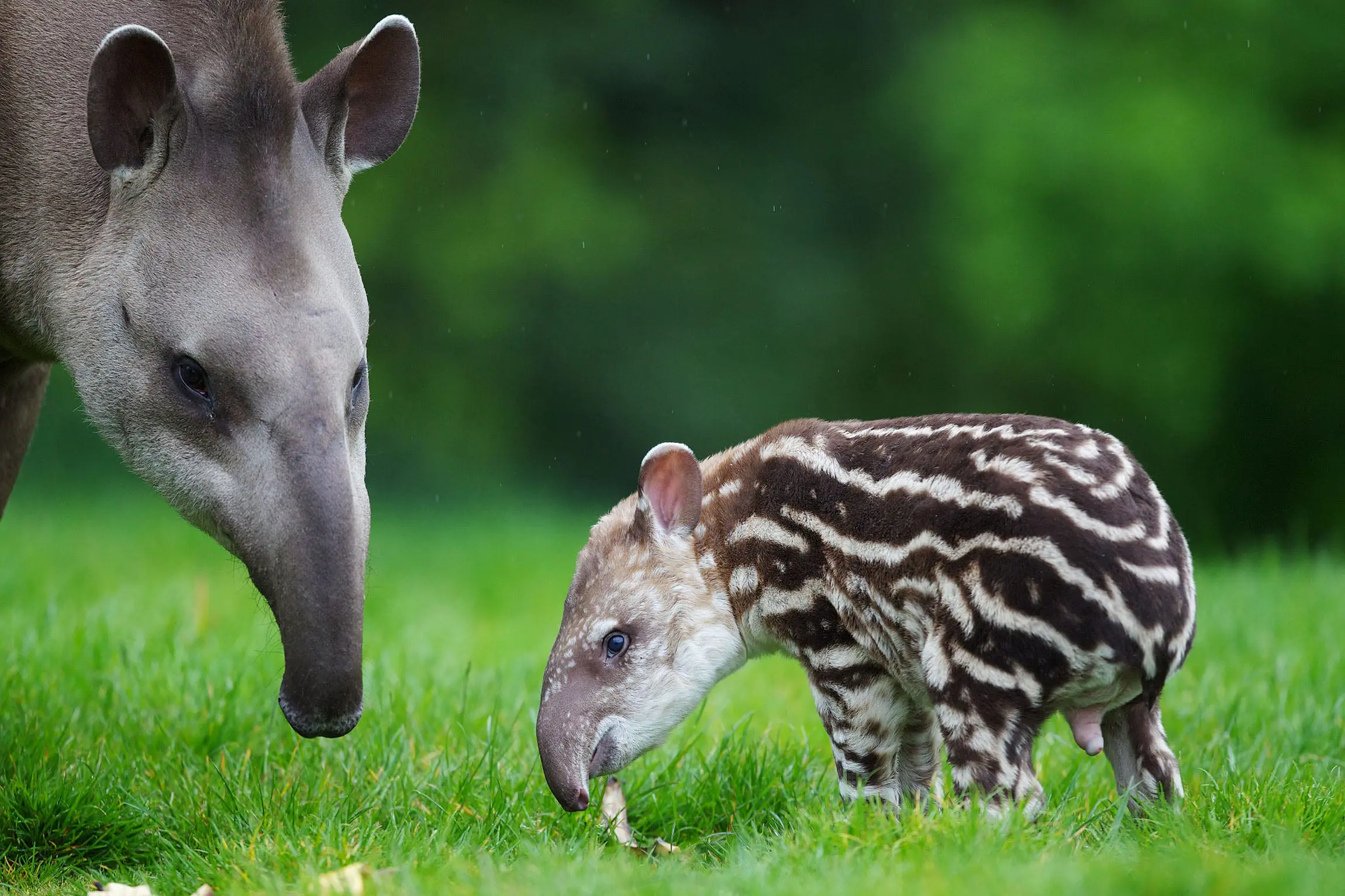
The Brazilian tapir has a distinctive prehensile snout used to grasp vegetation and a dark brown coat that helps it blend into the dense rainforest undergrowth
Species
Mammals
Habitat
Wetlands
Diet
Herbivores
Conservation Status
Vulnerable
Brazilian tapir
Tapirus terrestris
Irish Name: Taipir Bhrasaíleach
IUCN Status: Vulnerable
Tapirs have a flexible snout (made of their upper lip and nose) that they use to detect smells, grasp food and as a snorkel when submerged in water to avoid predators like jaguars.
General Information
Zoo location
Beside the great lawn, just after the South American House
Animal class
Mammalia
Animal order
Perissodactyla
Where do they live (Natural habitat)?
The Brazilian tapir is generally found living near water in swamp forests, rainforests, shrublands and wetlands across Northern and Central South America.
How long do they live?
25-30 years in the wild and 30-35 years in zoos.
What do they eat?
Brazilian tapirs are herbivores (plant-eaters). They mostly eat leaves and fruits. They use their long prehensile (grasping) snout to reach for food.
Group name
Tapirs are usually solitary (live on their own) and don’t have a commonly used group name associated with them.
Closest related species / sister species
The closest relatives of the Brazilian tapir are the other members of the tapir family (Mountain tapir, Baird’s tapir and Malay tapir).
Fun Facts!
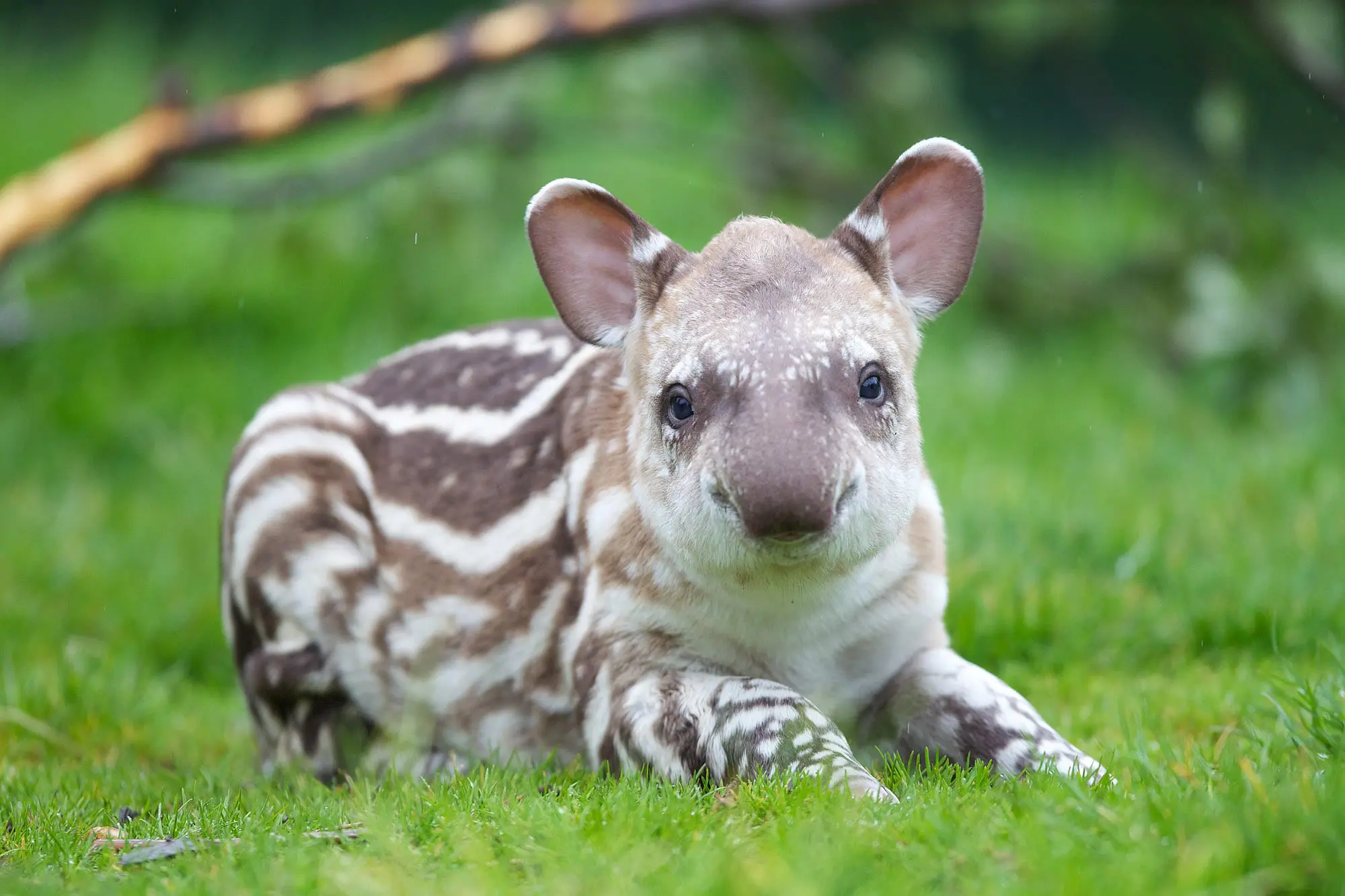
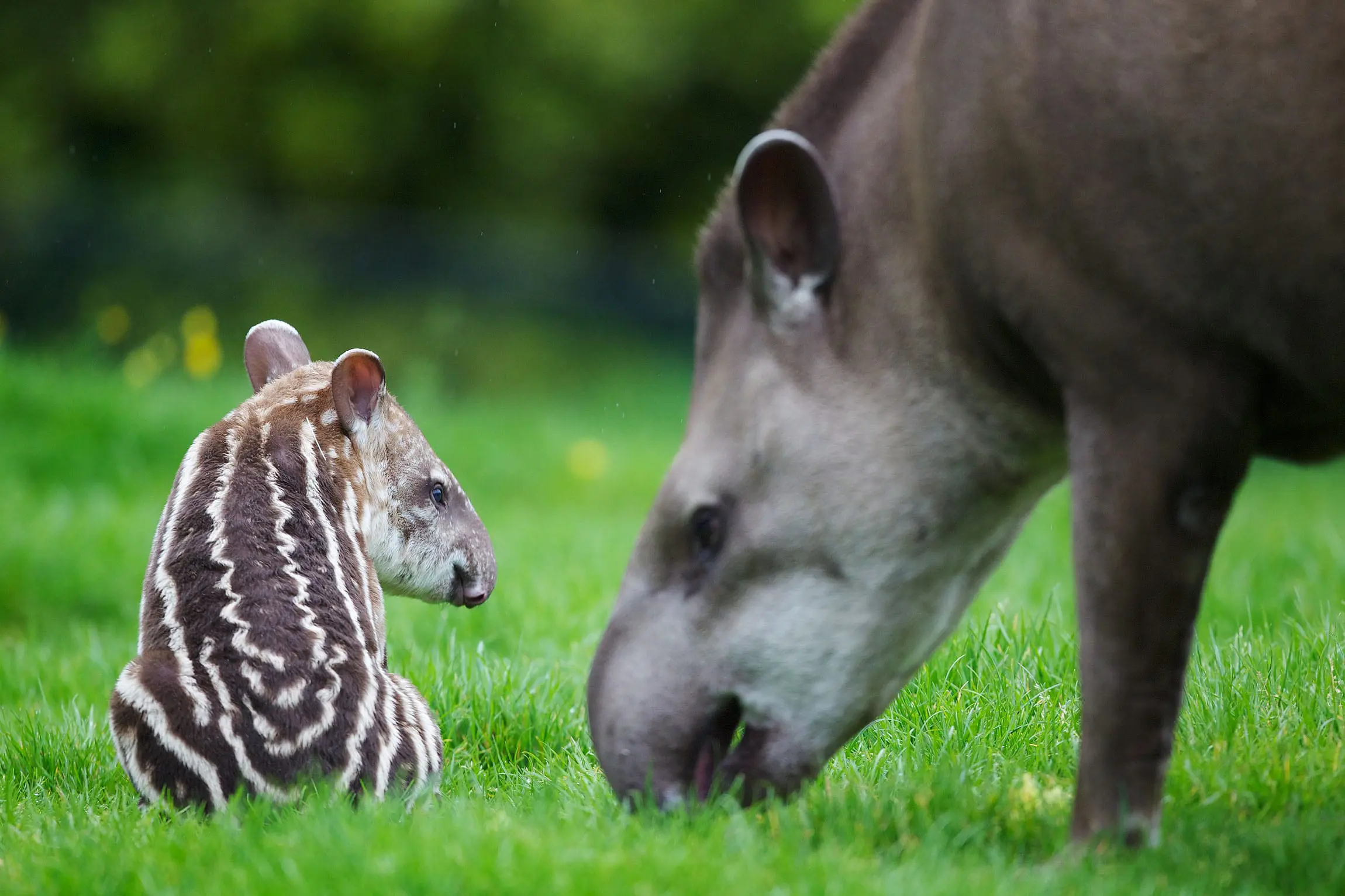
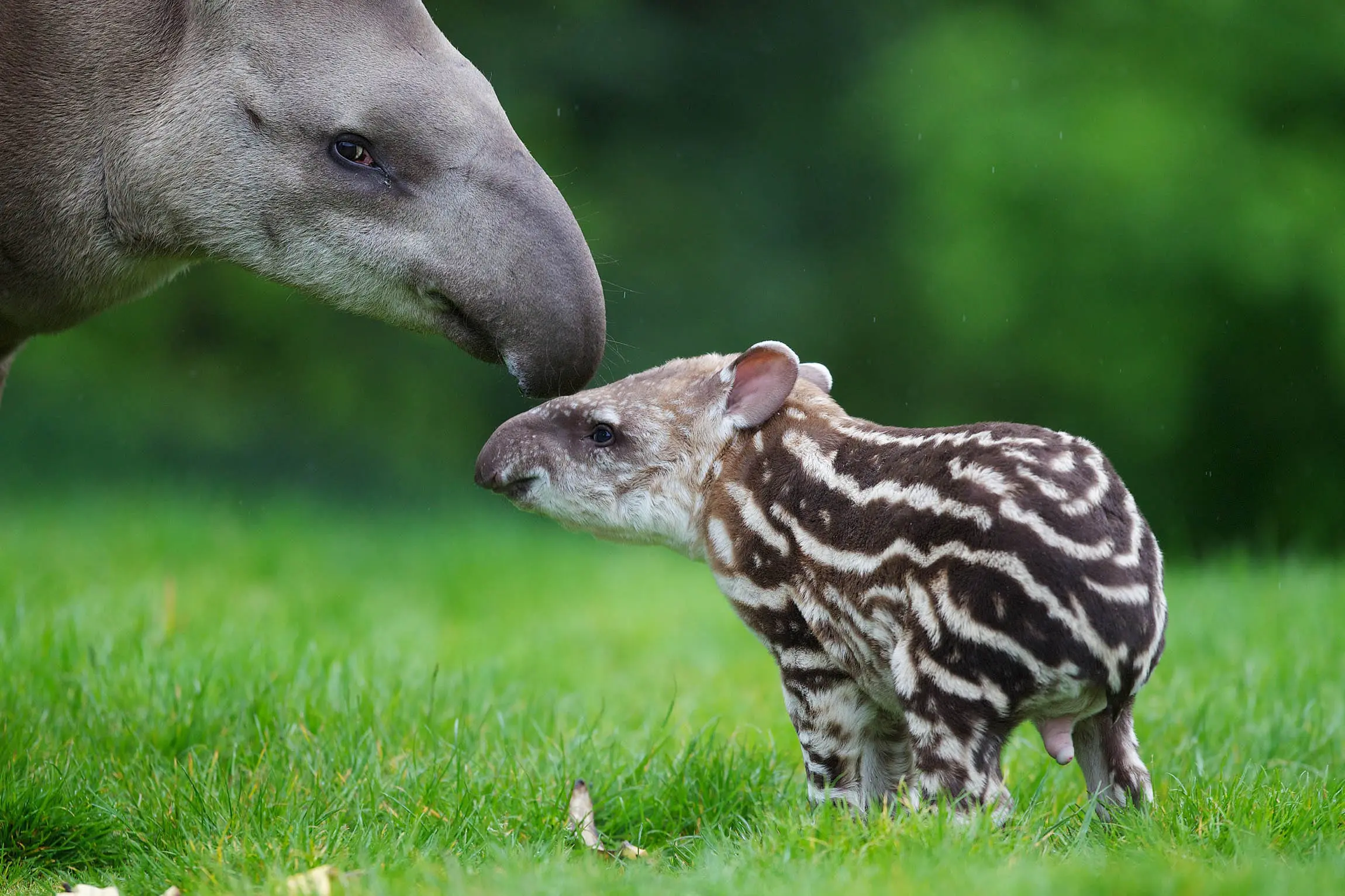
Tapir calf at Dublin Zoo
The brazilian tapir
Family life
Brazilian tapirs are generally solitary, meaning they live alone except when mating or raising their young. Tapir calves stay with their mothers for 12-18 months and become independent after this.
Baby name
Calf
Gestation (pregnancy) period
13 months.
Number of young at birth
One
Weight at birth
Approximately 6-11kgs
Age at maturity
Approximately 2-4 years
Adult size
Approximately 2m long, 1m tall, and weigh around 150-250kg.
Conservation
Vulnerable
The Brazilian tapir is classified as Vulnerable by the International Union for the Conservation of Nature.
Current population estimate
Unknown. Finding and counting the secretive Brazilian tapir in the wild is difficult, so there are no estimates for their population at the moment. However, studies show that their numbers are decreasing.
Threats
The main threats to the Brazilian tapir are habitat loss due to deforestation and illegal hunting for meat.
What is Dublin Zoo doing?
Dublin Zoo participates in a European breeding programme for South American tapirs.
Frequently Asked Questions
Brazilian tapirs are herbivores (plant-eaters). They mostly eat leaves and fruits. They use their long prehensile (grasping) snout to reach for food.
Brazilian tapirs are generally found living near water in swamp forests, rainforests, shrublands and wetlands across Northern and Central South America.
Tapirs are not closely related to elephants. They are most closely related to rhinos, but are also related to horses and zebra.
We do not know the exact population of Brazilian tapirs because finding and counting them in the wild is difficult. However, studies show that their numbers are decreasing due to threats such as habitat loss and illegal hunting.
Tapirs have good camouflage to help them avoid being seen by predators. Due to their large size, adult tapirs are fairly successful at avoiding predators but young tapirs are more susceptible to attacks. To escape from predators, tapirs run to water sources and submerge themselves to keep hidden (using their snout as a snorkel to breathe through).
Yes, a tapir is a mammal.
Tapirs are largely nocturnal, which means they are more active at night. This is when they do most of their foraging for food.
Brazilian tapirs are approximately 2m in length, 1m tall and weigh 150-250kg.
Brazilian tapirs are currently classified as Vulnerable by the International Union for the Conservation of Nature. This means that they are not currently endangered but could become so in the future due to the threats they face.
Tapirs can live approximately 25-30 years in the wild and 30-35 years in zoos.
Tapirs are predated upon by the black caiman and Orinoco crocodiles, big cats like the jaguar and cougar, and in places, the green anaconda.
The Brazilian tapir’s main predators are some species of crocodiles and large cats, such as jaguars. Due to their large size, adult tapirs are fairly successful at avoiding predators but young tapirs are more susceptible to attacks.