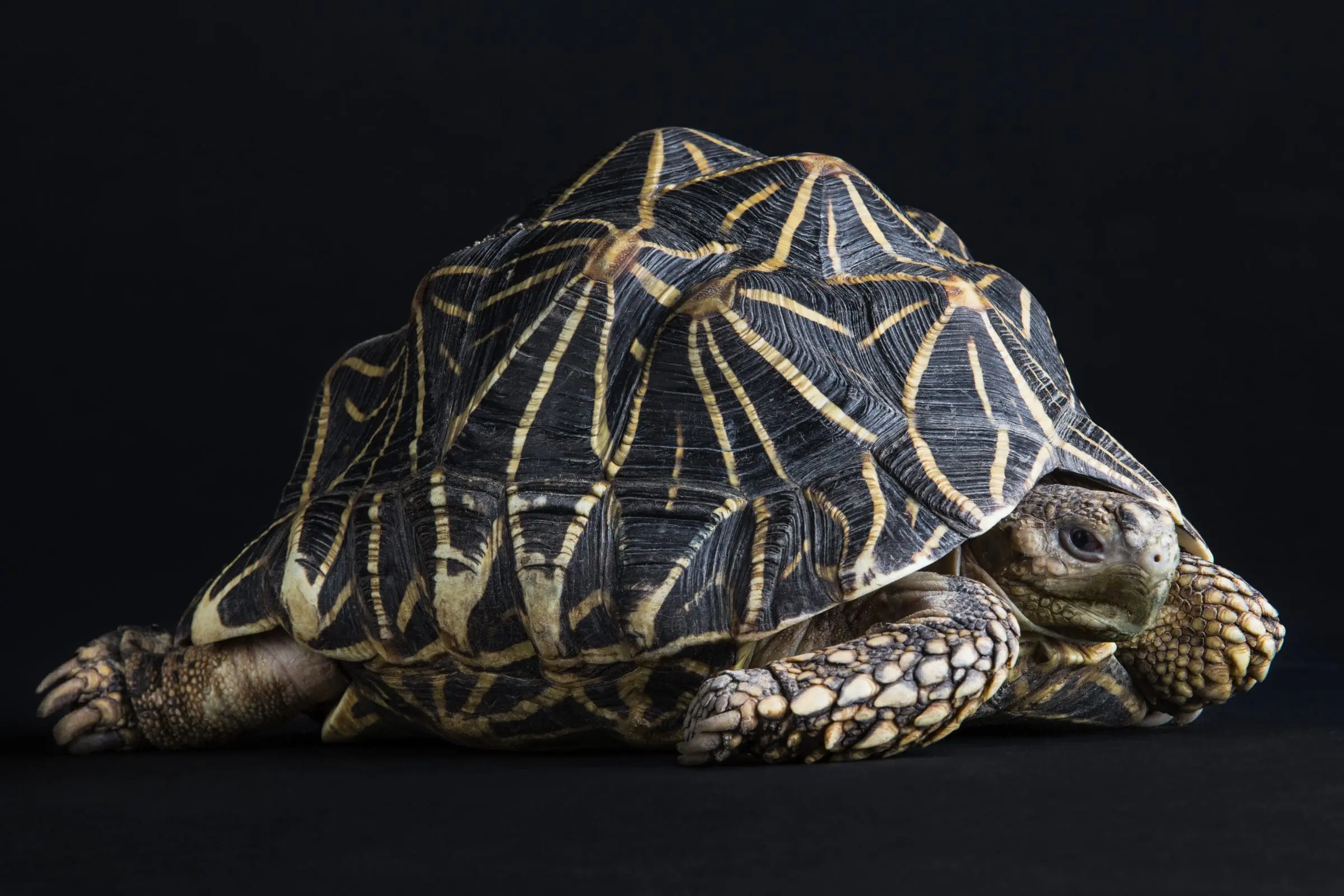
Indian star tortoise
The Indian star tortoise is a species of tortoise with a highly rounded shell
Species
Reptiles
Habitat
Forest
Diet
Herbivores
Conservation Status
Vulnerable
Indian star tortoise
Geochelone elegans
Irish Name: Toirtís réaltach Indiach
IUCN Status: Vulnerable
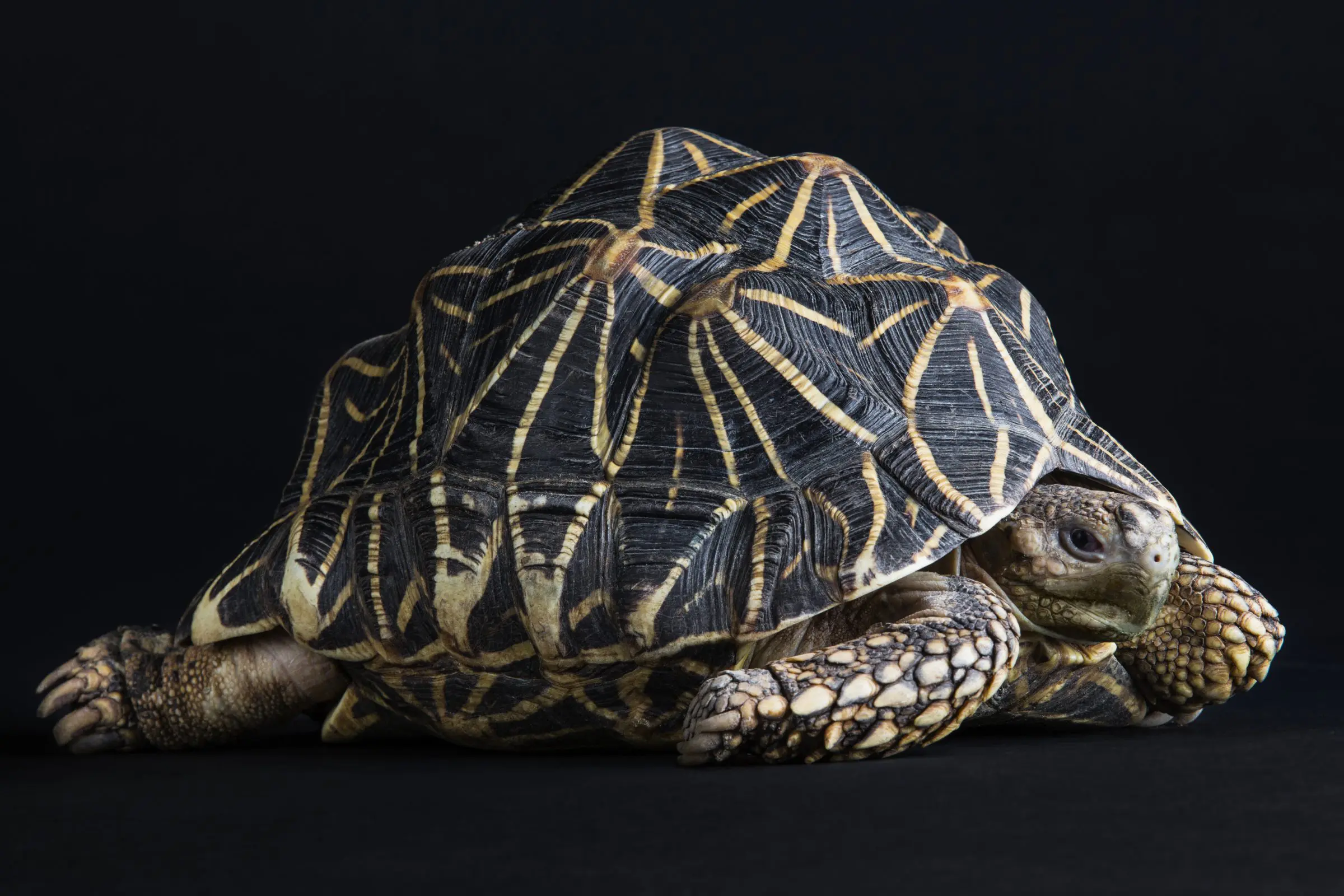
The Indian star tortoise is a species of tortoise with a highly rounded shell. Their name comes from the star-like pattern on their shell. These patterns act as camouflage by helping to break up the shell outline so that it more easily blends into its surroundings.
General Information
Zoo location
Zoorassic World
Animal class
Reptilia
Animal order
Testudines
Where do they live (Natural habitat)?
The Indian star tortoise is found in dry forests in India, Sri Lanka and Pakistan.
How long do they live?
30 – 80 years
What do they eat?
Indian star tortoises are mainly herbivores. They eat grasses, fruit and flowers. However, they have been known to also eat insects, dung and carrion (dead animals).
Group name
The group name for tortoises is a creep, though they are generally solitary animals.
Closest related species / sister species
The Burmese star tortoise is their closest relative
Fun Facts!
The Indian star tortoise
Family life
The Indian star tortoise is a solitary animal (mostly lives alone). There is no care given to eggs or hatchlings.
Baby name
Hatchling
Gestation (pregnancy) period
Eggs are incubated for approximately 47–180 days.
Number of young at birth
7-10 eggs in a clutch
Weight at birth
Approximately 25-45g.
Age at maturity
Females reach maturity between 8-12 years. Males reach maturity between 6-8 years.
Adult size
Indian star tortoise can measure 20-30 cm in length and can weigh upwards of 6 kgs.
Conservation
Vulnerable
The Indian star tortoise is classified as Vulnerable by the International Union for Conservation of Nature.
Current population estimate
Unknown, but decreasing
Threats
Threats to the Indian star tortoise include capture for the exotic pet trade and as food, pollution and habitat loss.
What is Dublin Zoo doing?
Dublin zoo is a member of the Indian star tortoise EEP and has successfully bred Indian star tortoises’ with the last clutch hatching in 2017.
Frequently Asked Questions
Indian star tortoise can measure 20-30 cm in length and can weigh upwards of 6 kgs.
Indian star tortoises are mainly herbivores. They eat grasses, fruit and flowers. However, they have been known to also eat insects, dung and carrion (dead animals).
Indian star tortoises are not poisonous themselves, however, they can shed the bacteria salmonella in their faeces.
In general, Indian star tortoises do not have ears on the outside of their bodies. The Indian star tortoise has ears that are covered by a flap of skin. Their ears are located on the side of their head, just behind their eyes. Tortoises’ do not hear sound but feel vibrations in the ground which is then transmitted to the eardrum.
Indian star tortoises live on land not in the water.