Ball python
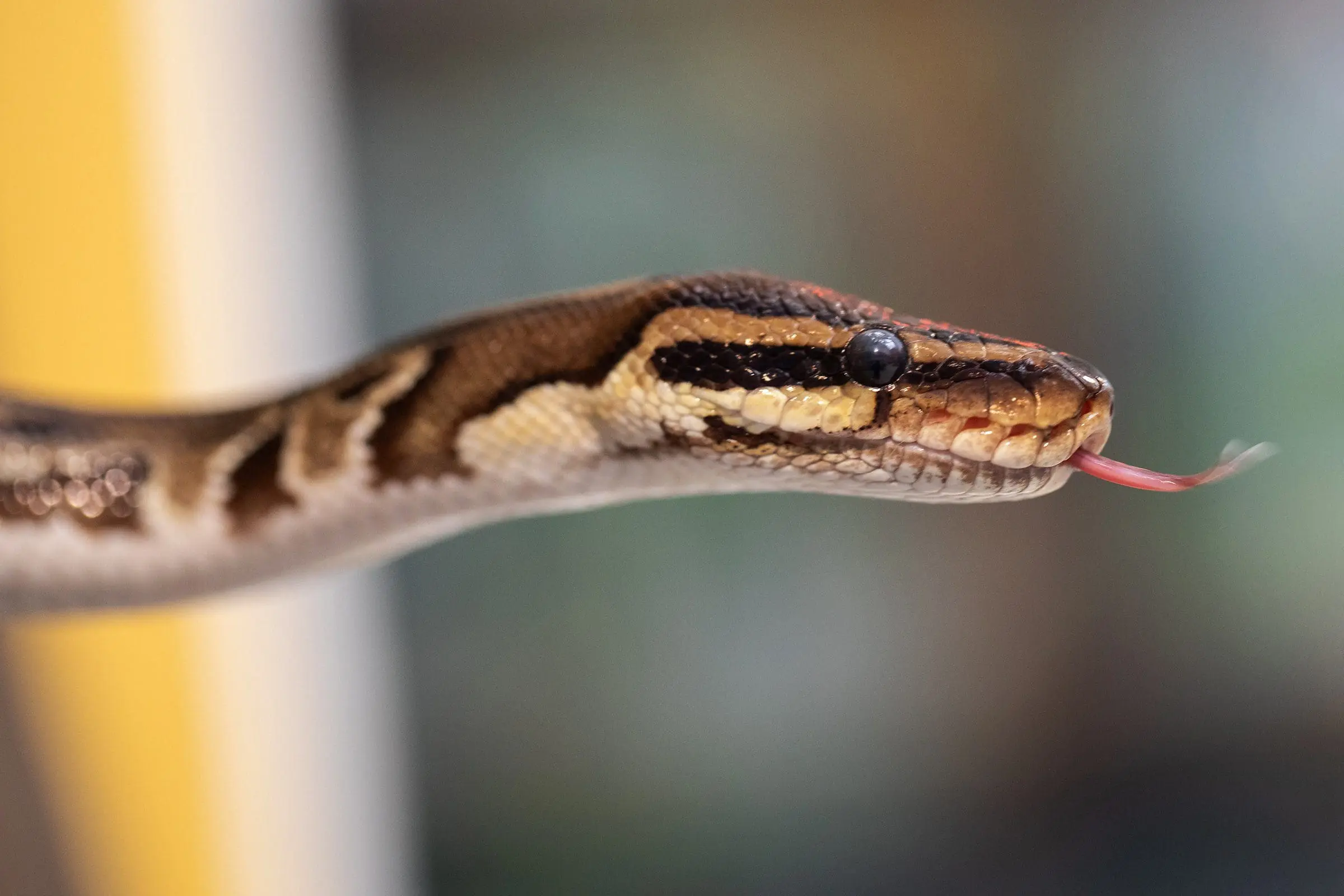
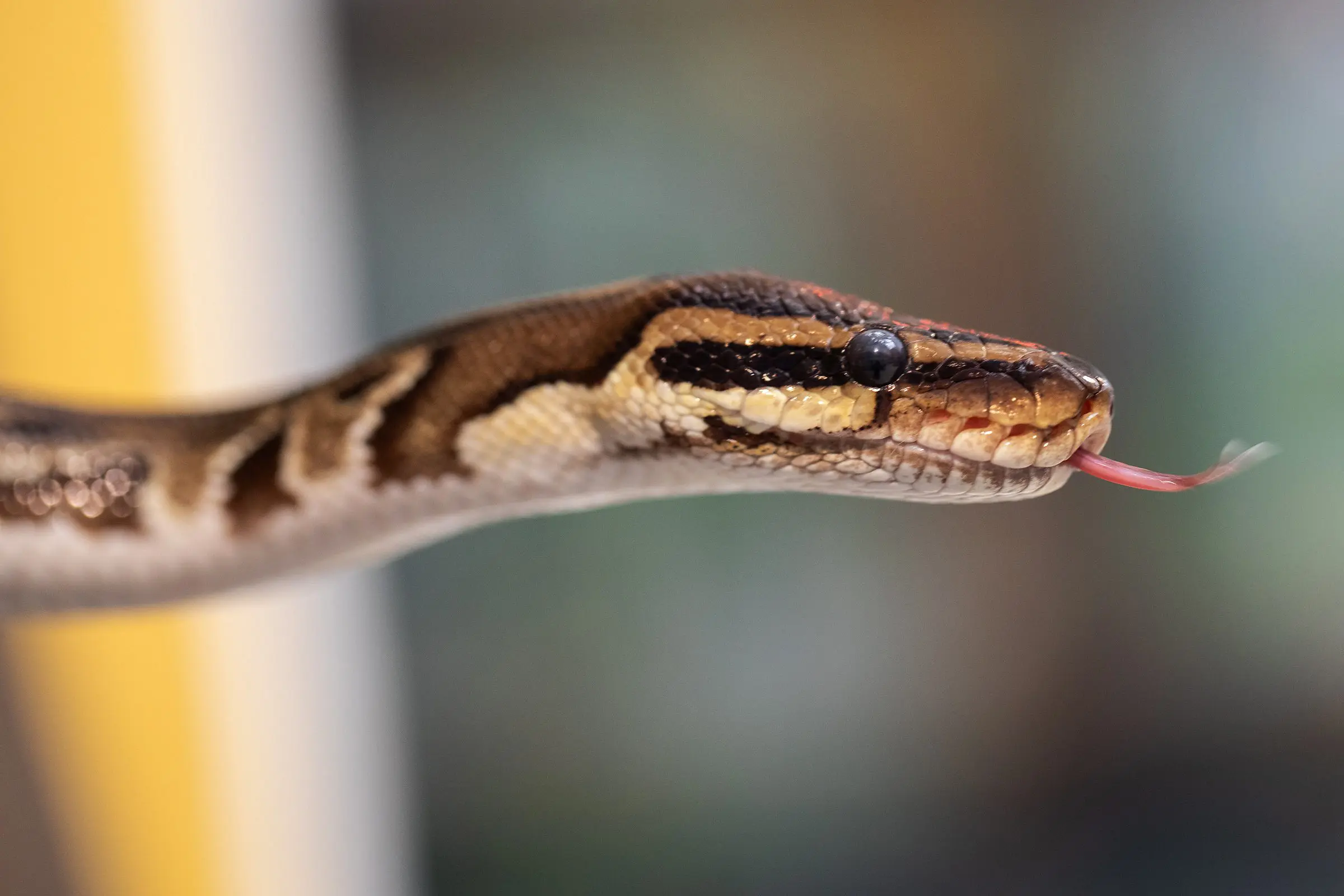
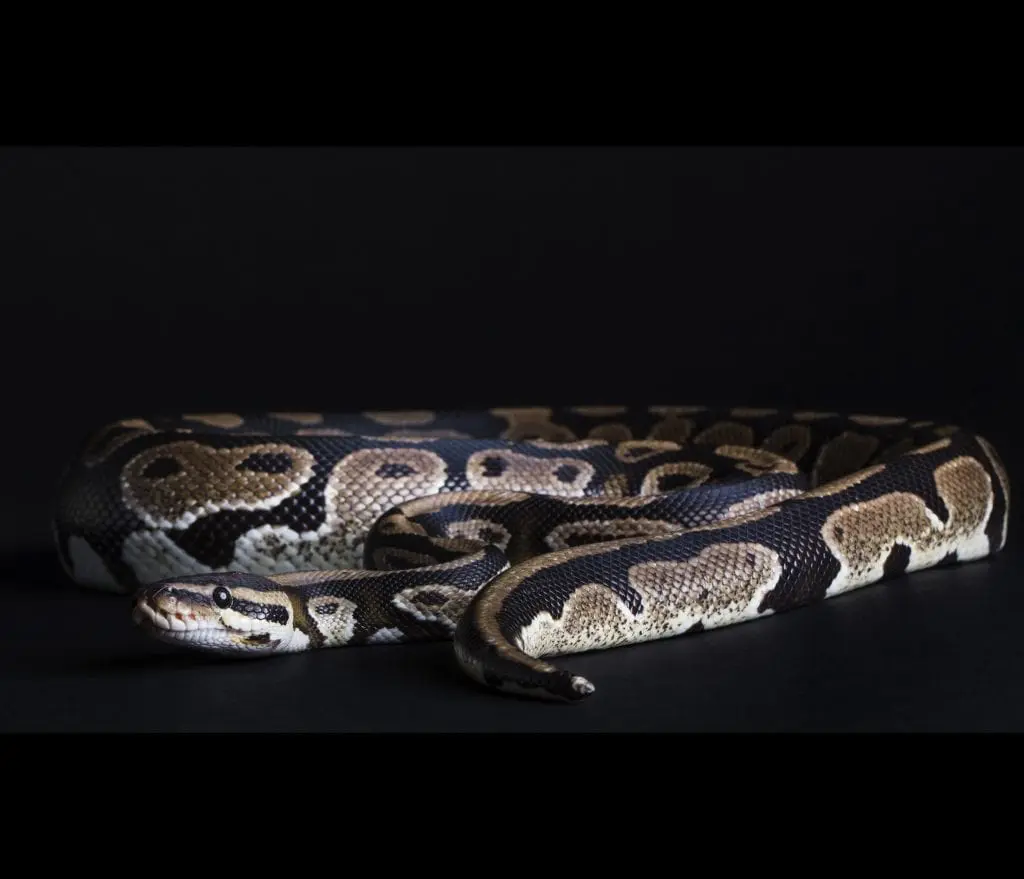
The ball python is a non-venomous constrictor that gets its name from its defensive behaviour of curling into a tight ball when threatened
Species
Reptiles
Habitat
Grassland
Diet
Carnivores
Conservation Status
Near Threatened
Ball python
Python regius
Irish Name: Píotón Ríoga
IUCN Status: Least Concern
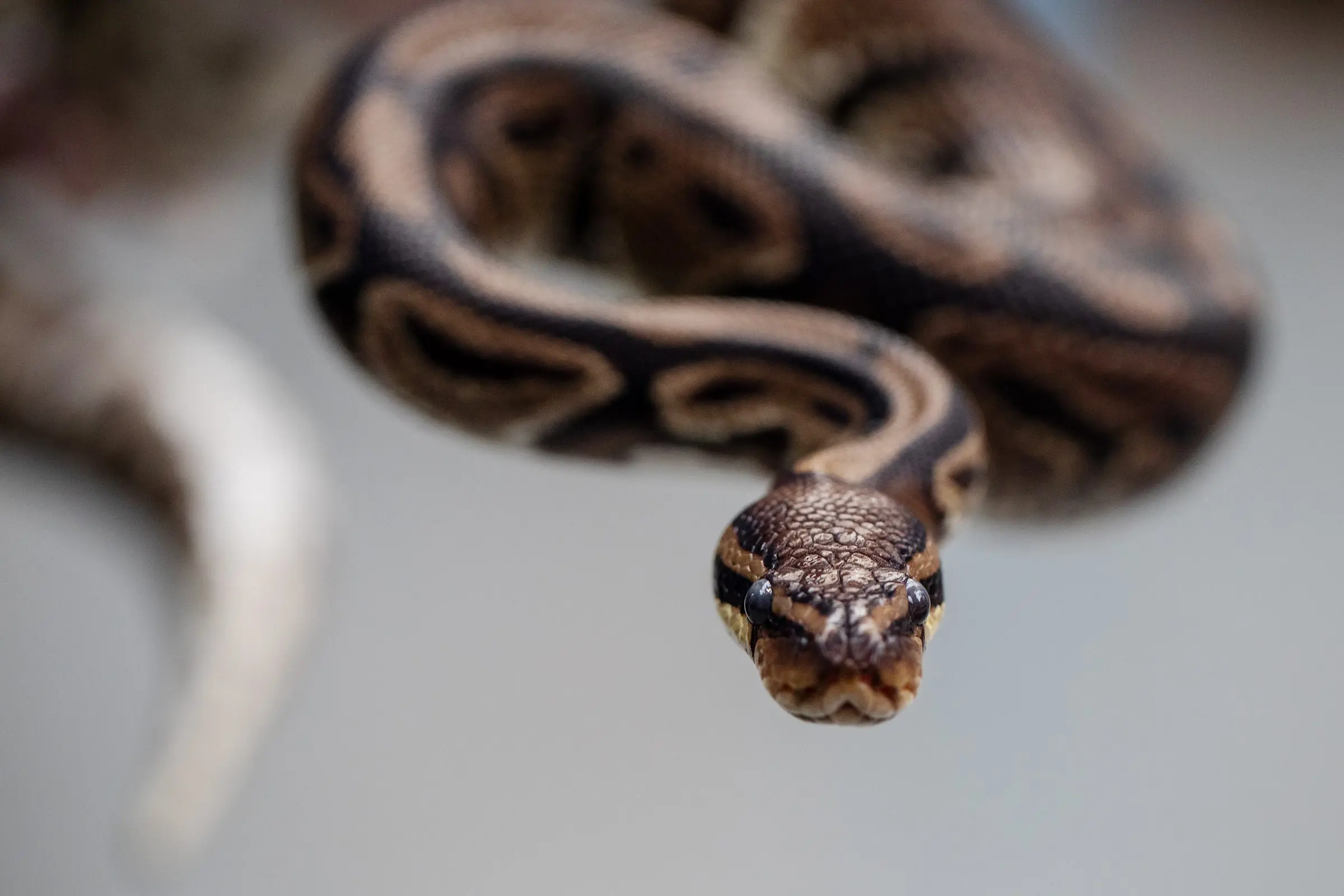
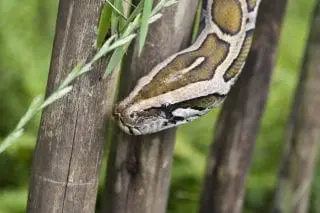
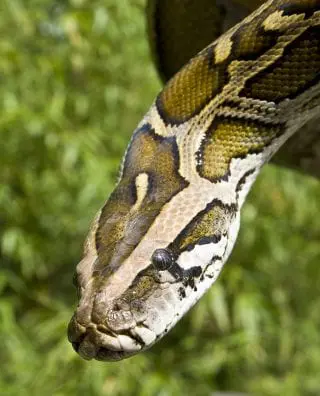
Ball pythons are nonvenomous constrictor snakes. They have large black or brown markings with lighter brown patches. Each Ball python has a unique pattern of markings. Their underside is generally white. Adult female Ball pythons are larger than males.
General Information
Animal class
Reptilia
Animal order
Squamata
Where do they live (Natural habitat)?
Ball pythons live in Western and Central Africa in tropical grasslands and savannas (flat, dry grasslands). They often live in burrows.
How long do they live?
20 years in the wild and up to 30 years in zoos.
What do they eat?
Ball pythons are carnivores (eat meat). They eat small mammals such as gerbils, rats, mice, shrews and occasionally birds.
Closest related species / sister species
The closest relatives of the Ball python are other members of the Python genus including the Burmese python and the Indian python.
Fun Facts!
The ball python
Family life
Ball pythons are solitary (mostly live alone). Females wrap around their eggs to protect them and incubate them using a shivering motion. Hatchlings are immediately able to look after themselves.
Baby name
Hatchling
Gestation (pregnancy) period
Eggs usually hatch after 55-60 days
Number of young at birth
1-11 eggs
Weight at birth
30-70g on average
Age at maturity
In the wild, the female matures between 20-36 months. The male reaches sexual maturity between 11-18 months.
Adult size
90-180cm
Conservation
Least Concern
The Ball python is classified as Least Concern by the International Union for Conservation of Nature.
Current population estimate
Unknown
Threats
The main threat to Ball pythons is capture for the pet trade. They are also hunted for their meat and skin.
What is Dublin Zoo doing?
Dublin Zoo educates our visitors about the natural world with the aim of inspiring in them a love of nature and enabling them to act positively for conservation.
Frequently Asked Questions
20 years in the wild and up to 30 years in zoos.
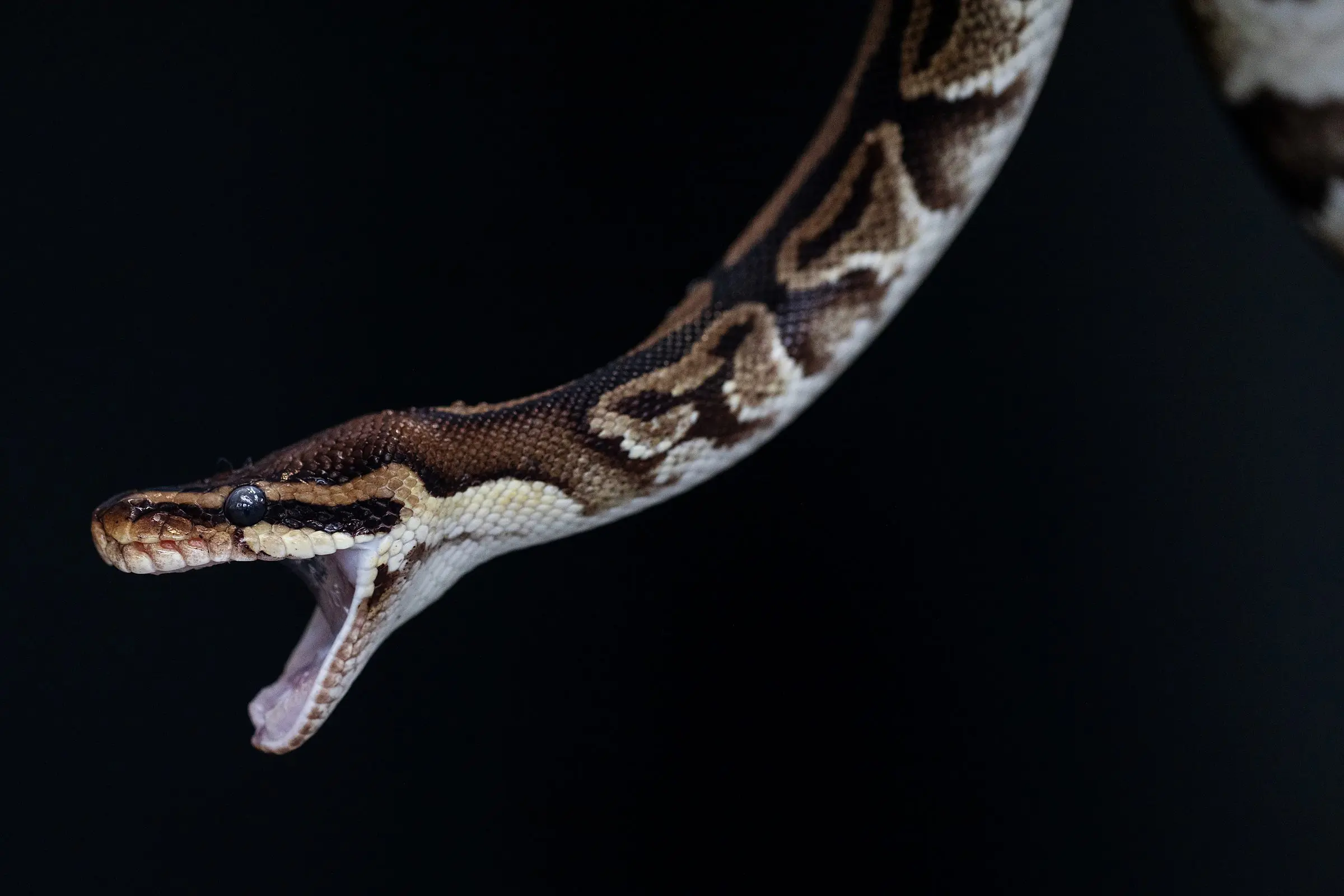
Ball pythons have a nonvenomous bite that they use when threatened.
They are nonvenomous constrictors.
Ball pythons have sharp teeth that face backwards to help them hold onto prey.
When it gets very hot, Ball pythons go underground and reduce their metabolic rate. They do this to keep cool. This is called aestivation.
90-180cm
A Ball python can survive months without eating. It can do this by reducing its metabolic rate.
1-11 eggs
Western and Central Africa.