Red river hog
Red river hogs are, as their name suggests, a member of the pig family
Species
Mammals
Habitat
Woodland
Diet
Omnivores
Conservation Status
Least Concern
Red river hog
Potamochoerus porcus
Irish Name: Borra rua abhann
IUCN Status: Least Concern
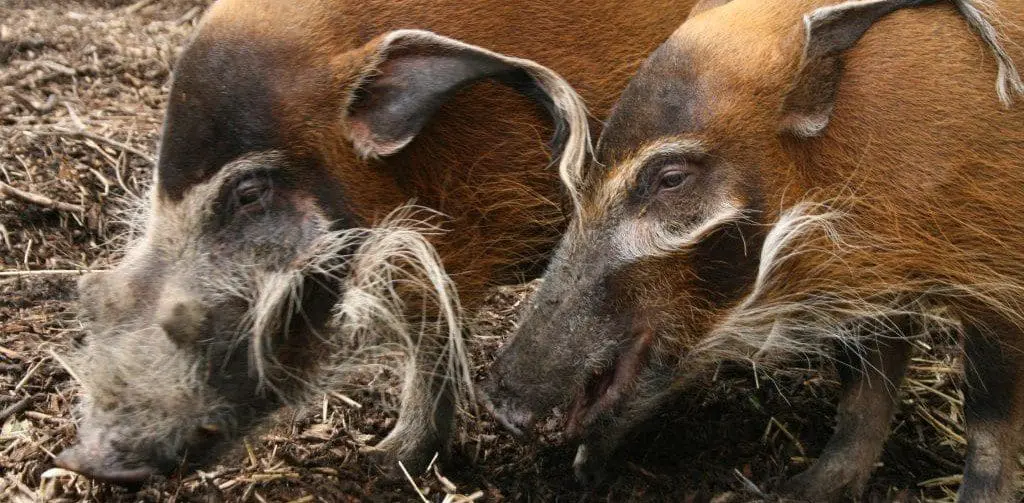
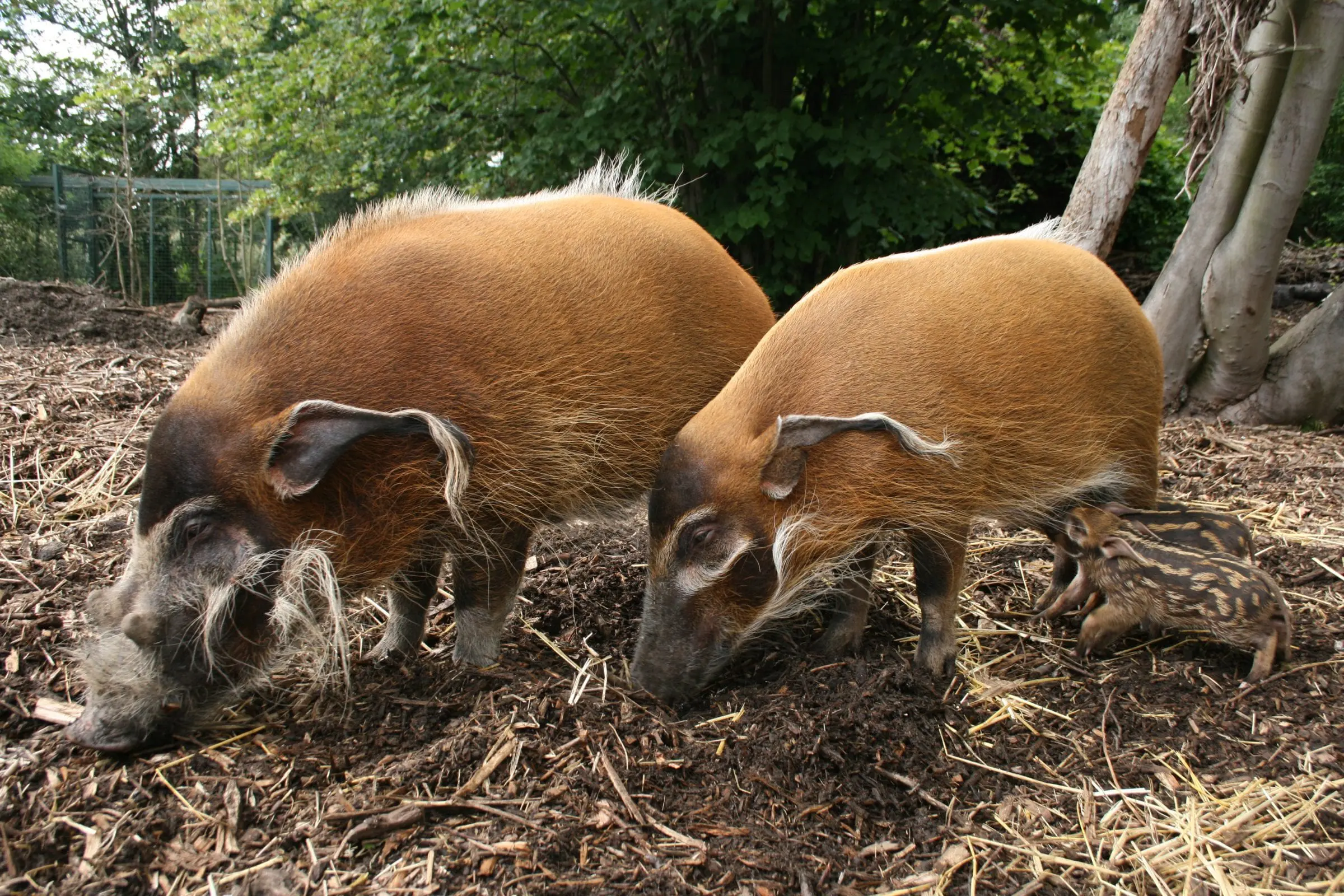
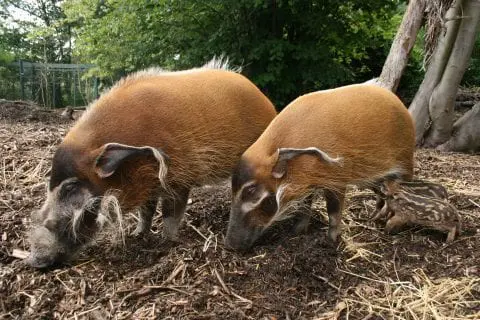
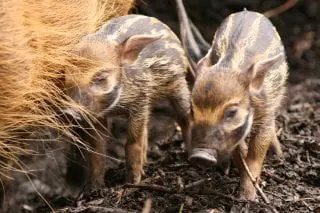
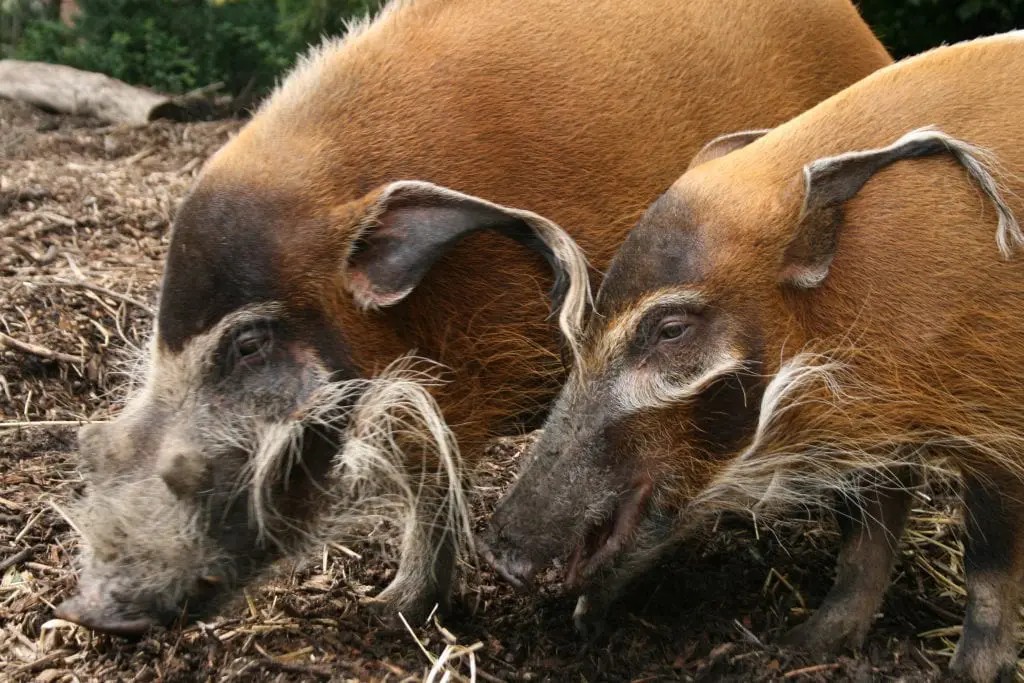
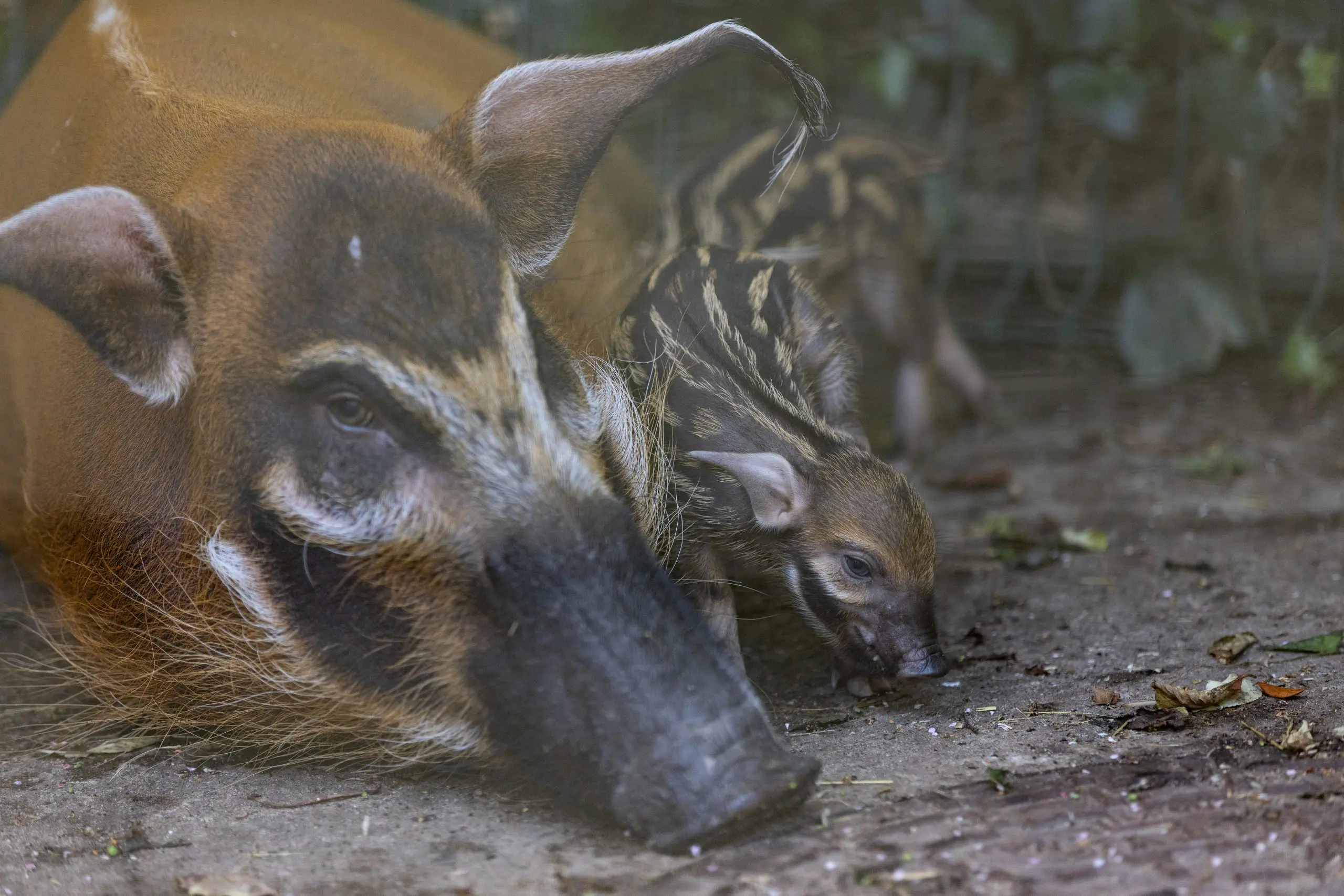
Red river hogs are, as their name suggests, a member of the pig family. They are reddish-brown in colour with black legs and a tufted stripe of fur that runs along their spine. Their ears and tail end in long tufts of white or black hair. They also have tusks (canine teeth). Males have facial whiskers and conical bumps on their cheeks.
General Information
Zoo location
African Plains (between the okapi and African spurred tortoise)
Animal class
Mammalia
Animal order
Cetartiodactyla
Where do they live (Natural habitat)?
Red river hogs live in rainforests and woodlands near rivers or swamps in central and western Africa.
How long do they live?
On average, red river hogs live up to 15 years in the wild and 20 years in zoos.
What do they eat?
Red river hogs are omnivores (eat both plants and meat). They use their snouts to burrow and find food. They mostly eat roots and tubers, as well as a variety of fruits and seeds. They also eat insects and birds’ eggs.
Group name
A sounder
Closest related species / sister species
The red river hog’s closest relative is the bushpig, another African wild pig that can be found in many countries in central and eastern sub-Saharan Africa.
Fun Facts!
The red river hog
Family life
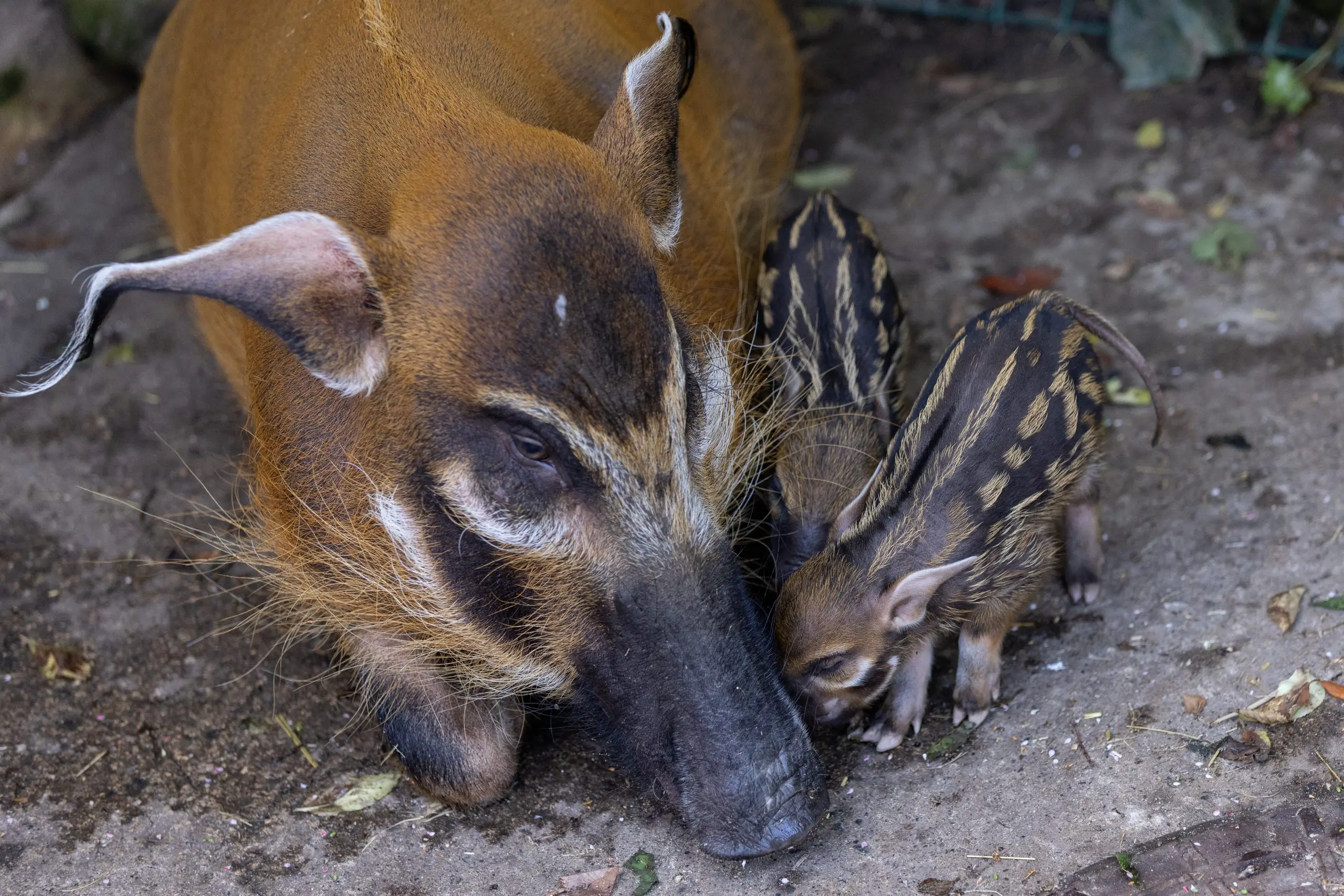
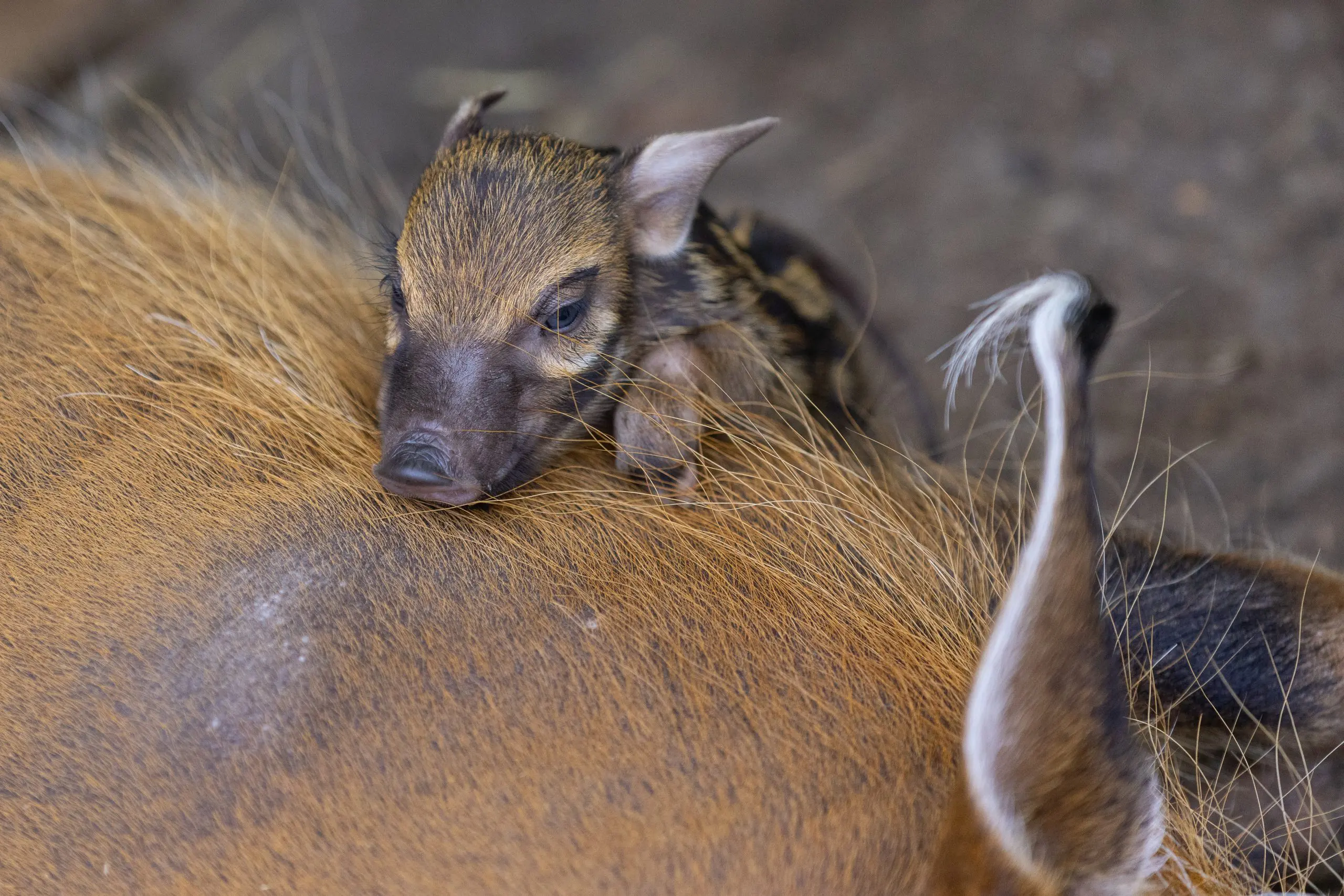
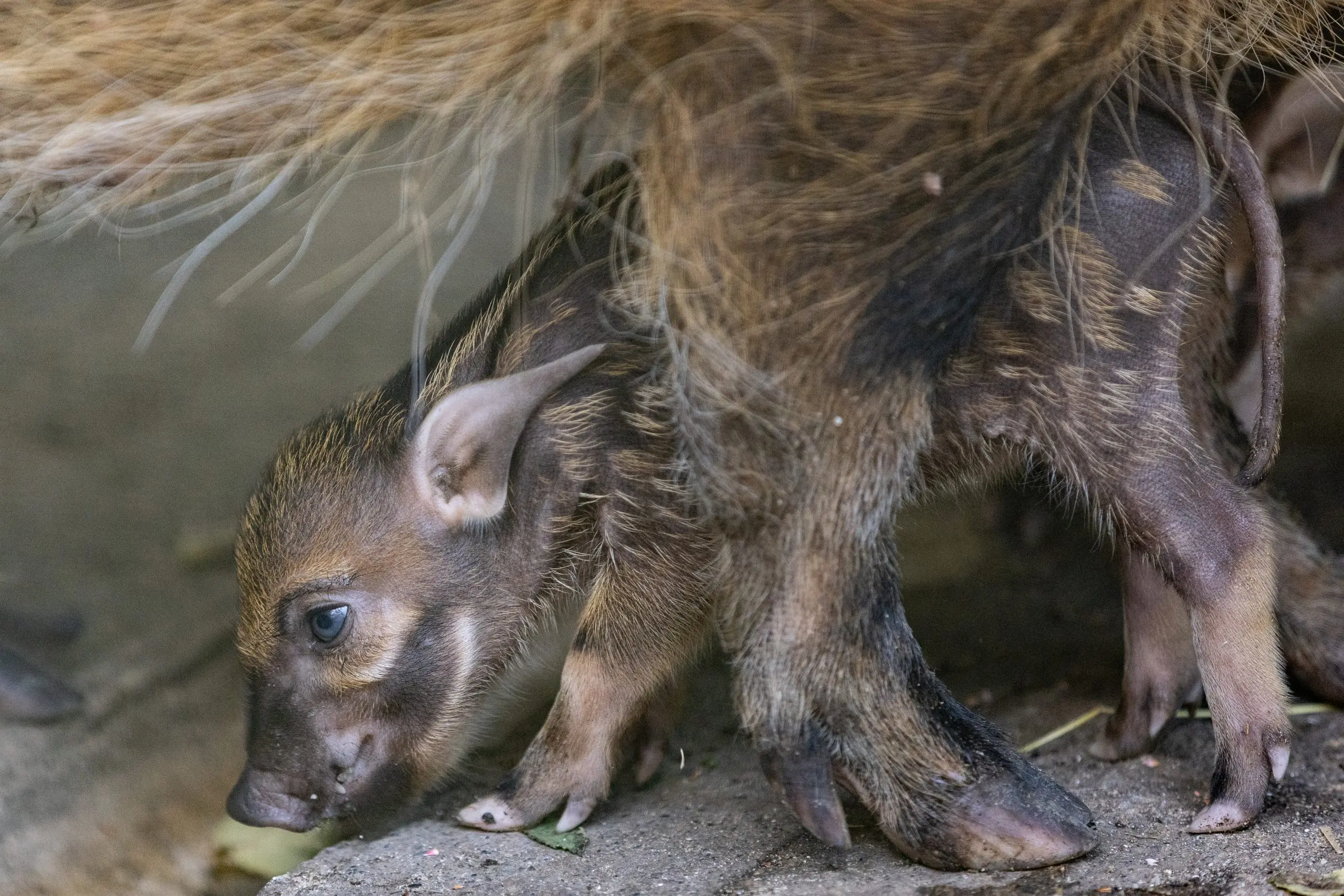
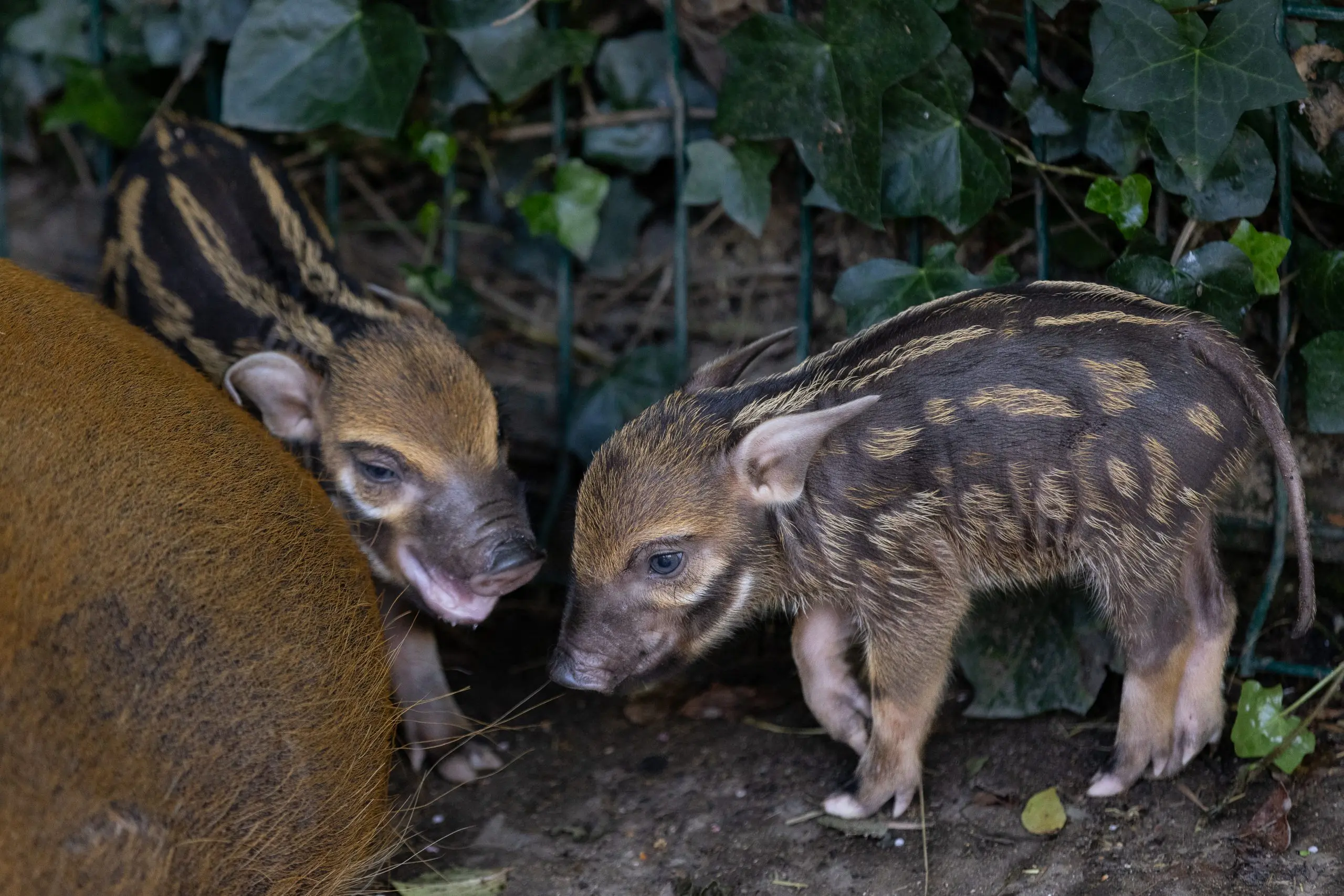
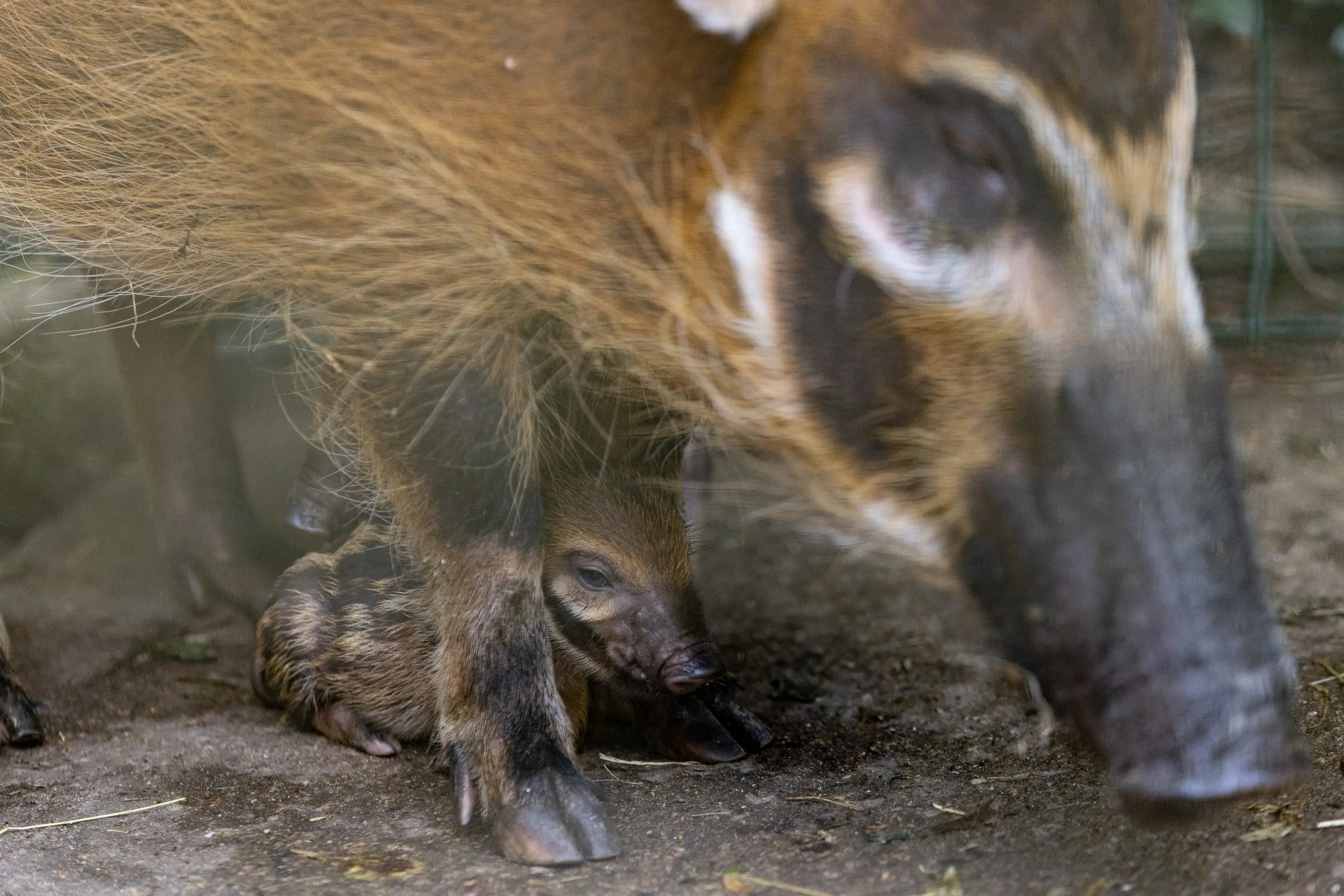
Red river hogs are social animals. They live in groups of approximately 6-10 individuals usually consisting of one boar (male), several sows (females) and their piglets. The sow constructs a nest of leaves and grass to give birth in and care for her young in. (remove the rest)
Baby name
Piglet
Gestation (pregnancy) period
About 4 months.
Number of young at birth
1-6 (usually a litter of 3-4)
Weight at birth
650-900g
Age at maturity
About 3 years
Adult size
Approximately 50-90cm in height and 45-130kg in weight.
Adult male name
Boar
Adult female name
Sow
Conservation
Least Concern
The red river hog is classified as Least Concern by the International Union for the Conservation of Nature.
Current population estimate
Unknown, but believed to be decreasing.
Threats
The main threat facing red river hogs is hunting for their meat to provide food for locals and as bush meat for urban markets. Another threat to them is habitat loss.
What is Dublin Zoo doing?
Dublin Zoo participates in a European Breeding Programme for red river hogs.
Frequently Asked Questions
Red river hogs are omnivores (eat both plants and meat). They use their snouts to burrow and find food. They mostly eat roots and tubers, as well as a variety of fruits and seeds. They also eat insects and birds’ eggs.
Red river hogs live in rainforests and woodlands near rivers or swamps in central and western Africa.
On average, red river hogs live up to 15 years in the wild and 20 years in zoos.
A sounder.
Yes. Red river hogs are part of the Suidae family, which includes domestic pigs, hogs, warthogs and boars.
Red river hogs are classified as Least Concern by the International Union for the Conservation of Nature, meaning that they are not currently endangered. However, they do face threats from hunting and habitat loss.