Aye-aye
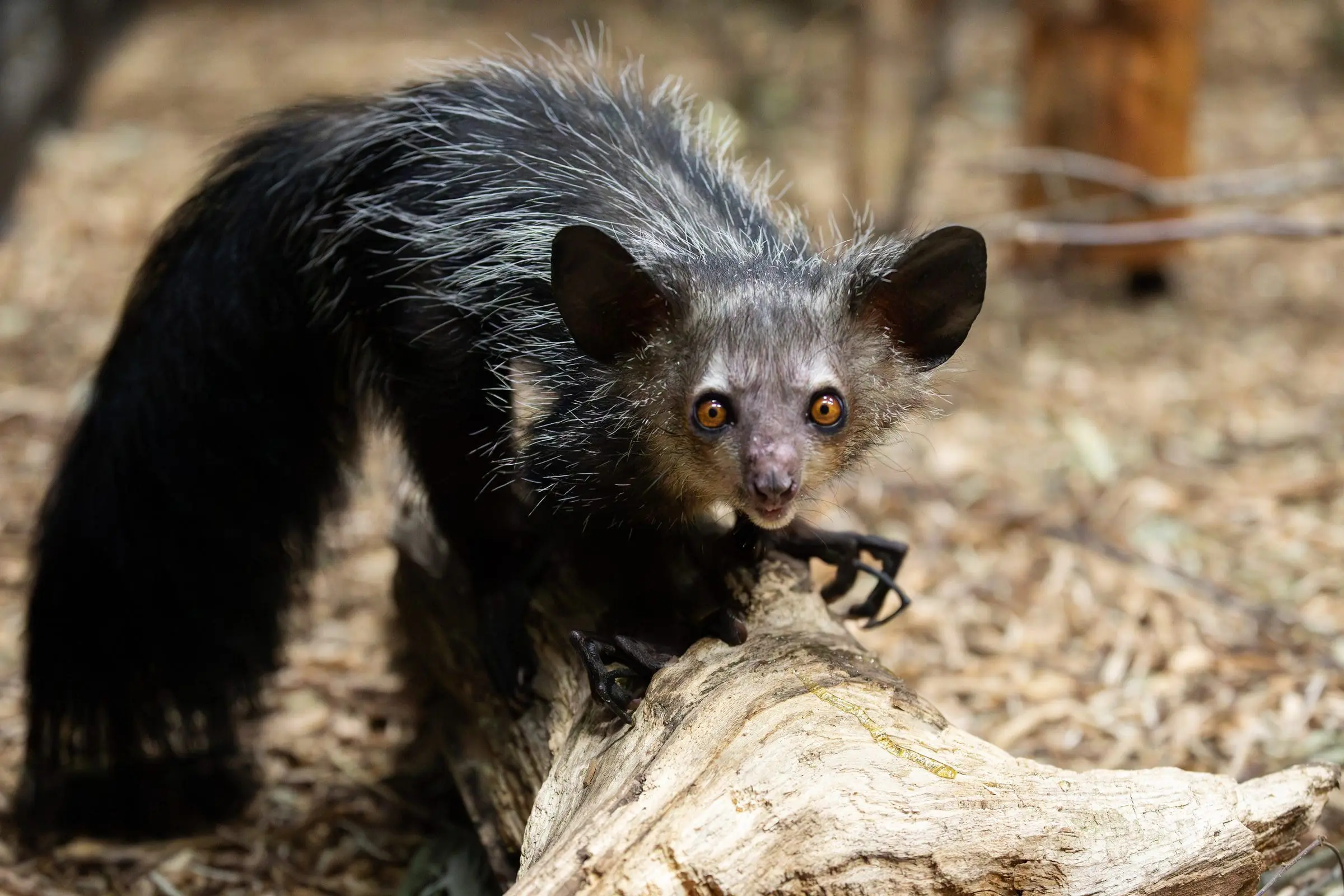
The aye-aye is the world’s largest nocturnal primate and uses its long, thin middle finger to tap on wood and extract insects
Species
Mammals
Habitat
Forest
Diet
Omnivore
Conservation Status
Endangered
Aye-aye
Daubentonia madagascariensis
Irish Name: Aidhe-aidhe
IUCN Status: Endangered
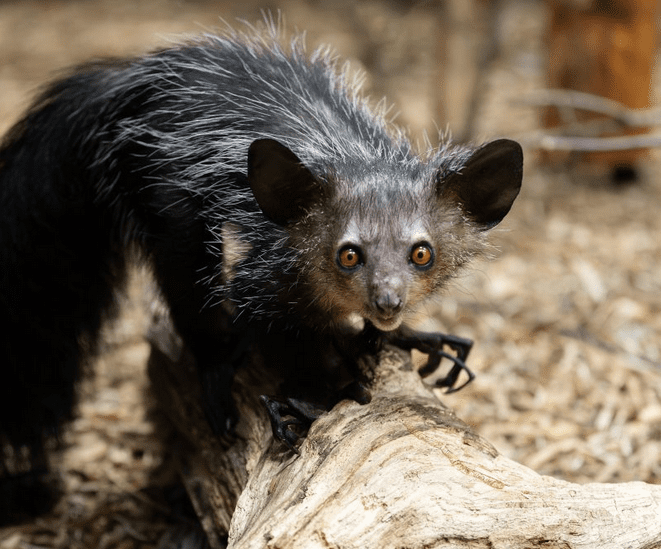
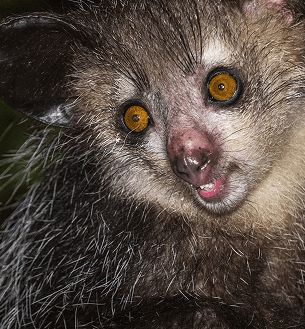
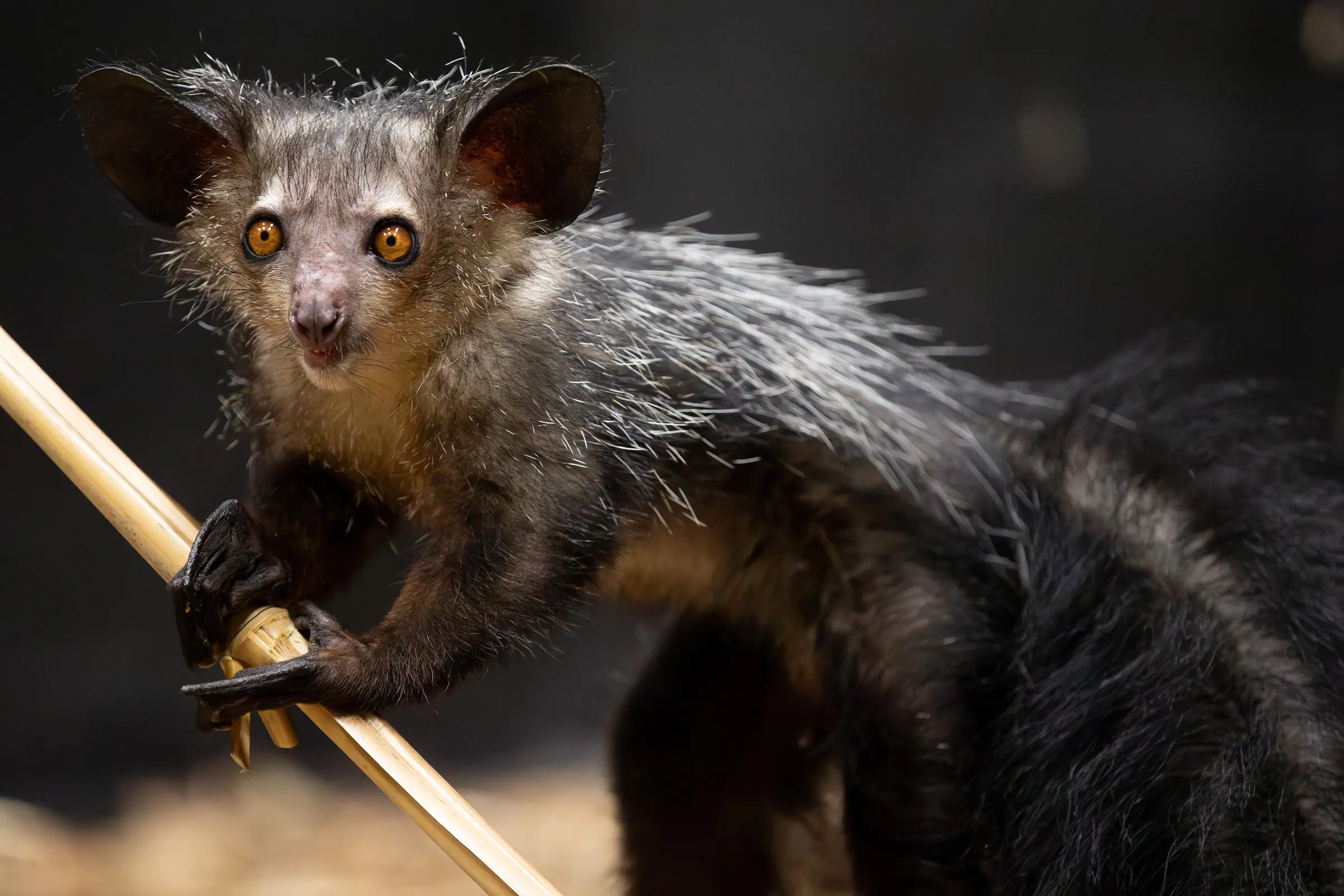
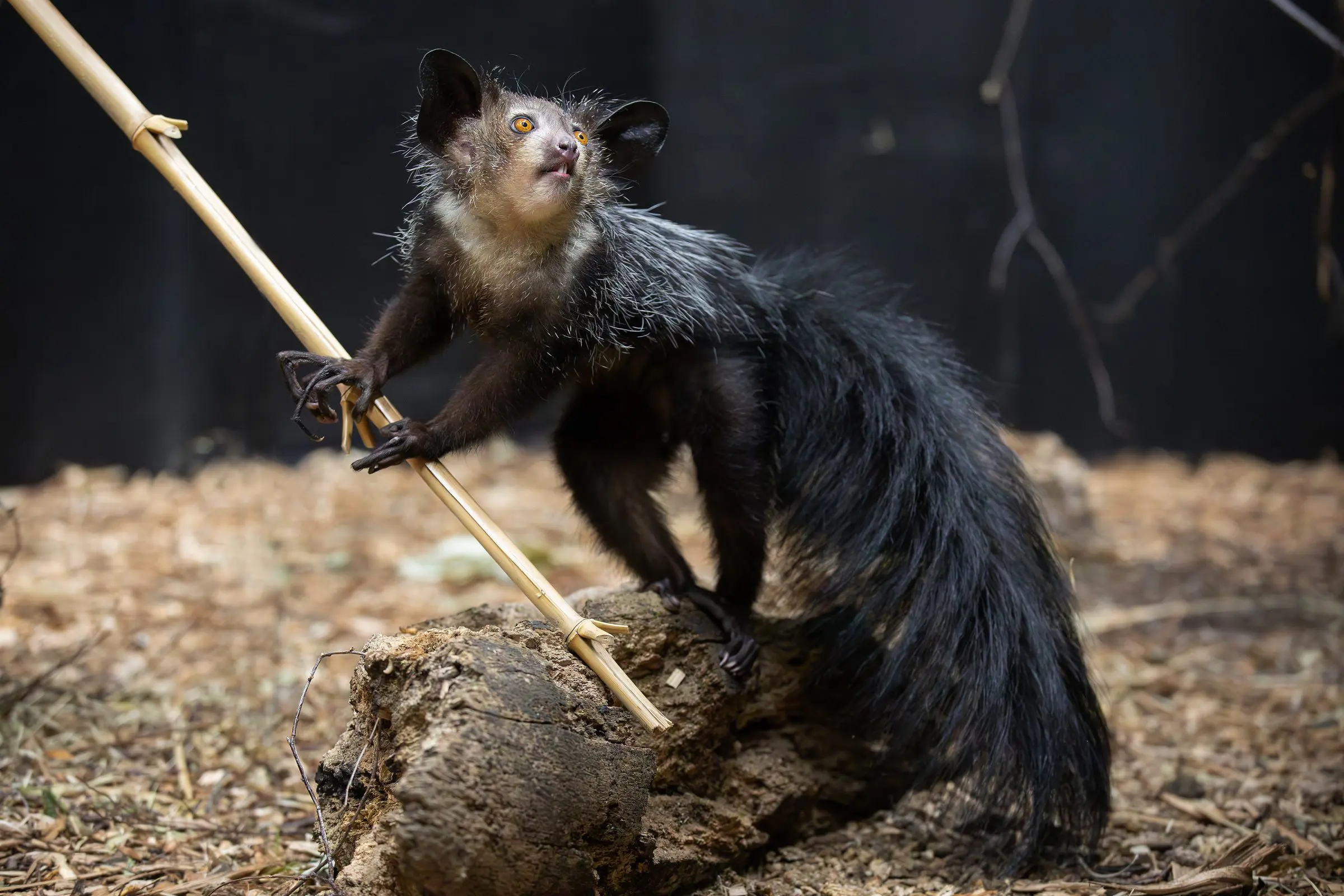
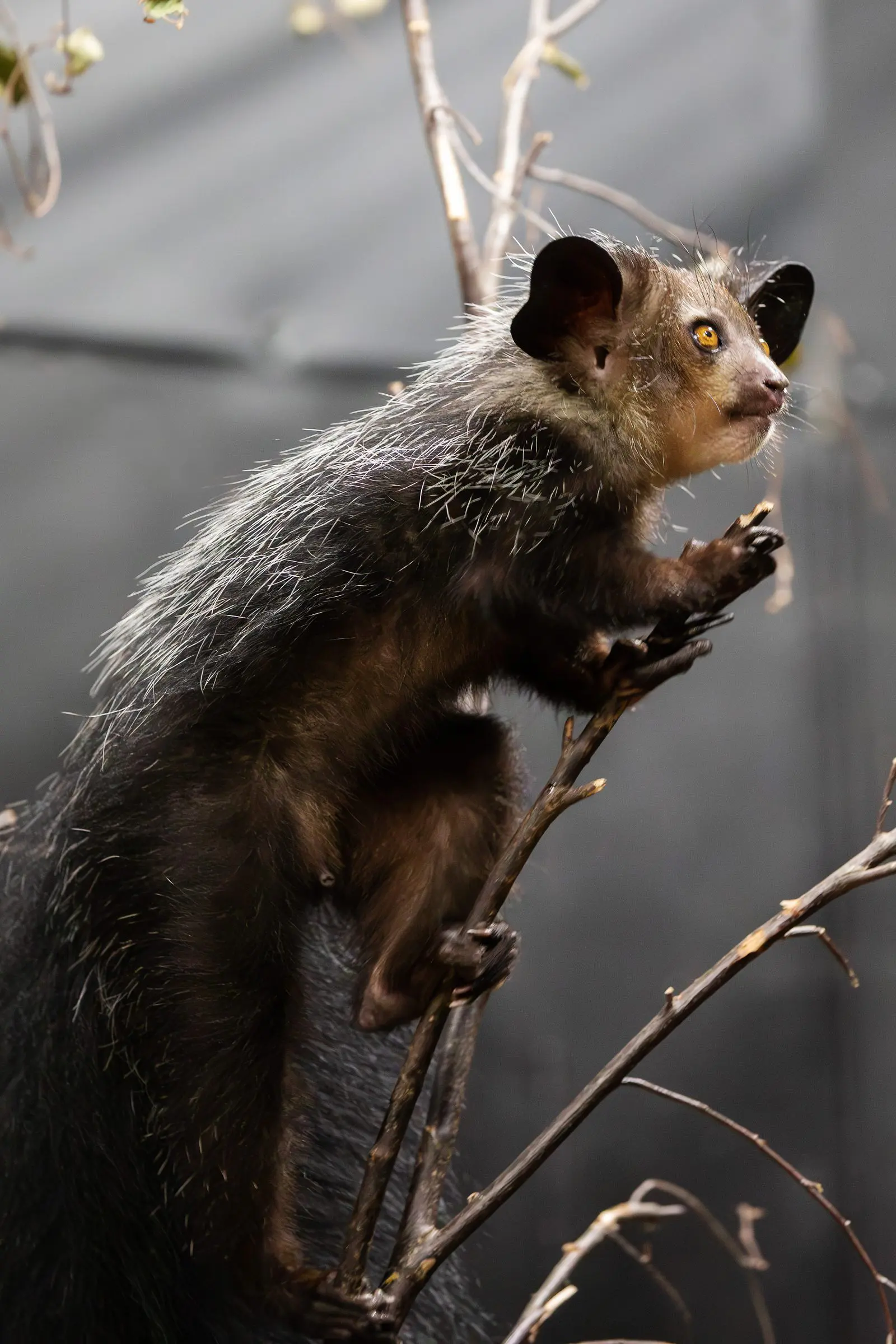
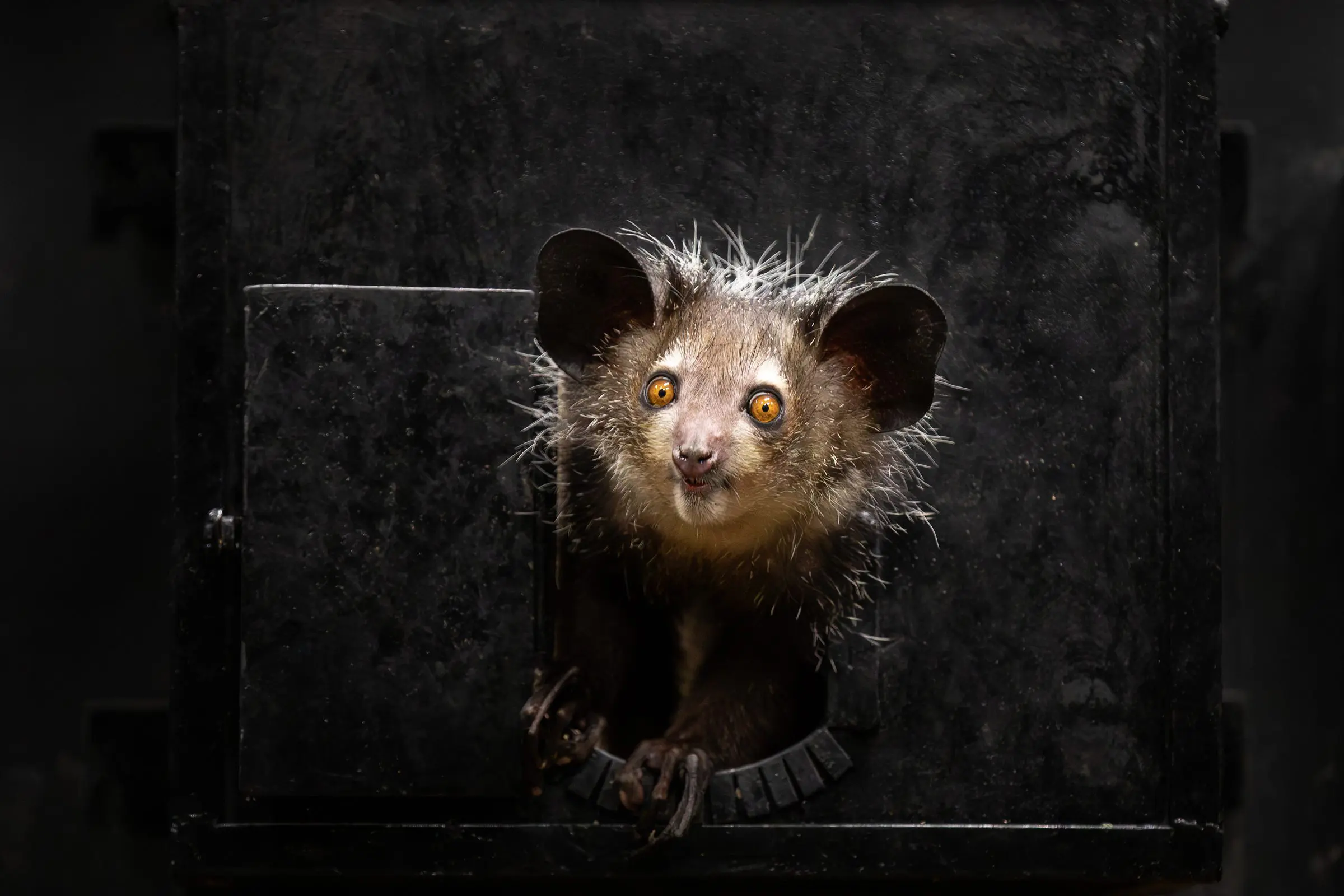
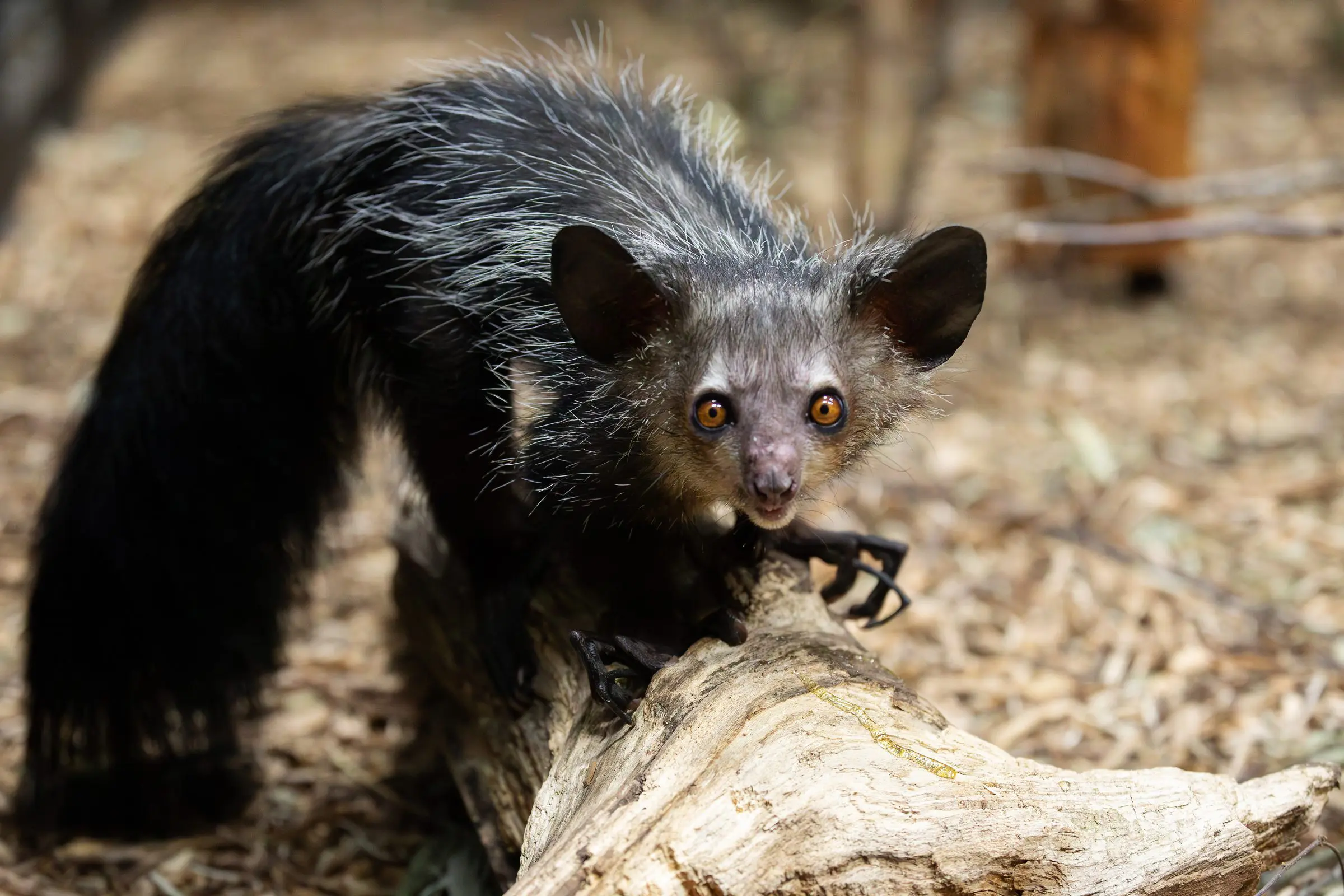
Aye-ayes are a small nocturnal species of lemur that can only be found in the wild in Madagascar. They are covered in black or brown fur and have large yellow eyes which help them see in the dark. They are known for their long, thin middle finger which they use to search for food. They have large, sensitive ears that help them detect prey and a long, bushy tail which allows them to balance as they travel along tree branches.
General Information
Zoo location
Beside Himalayan Hills and Sea Lion Cove
Animal class
Mammalia
Animal order
Primates
Where do they live (Natural habitat)?
In the wild, aye-ayes are found in only one place in the world: tropical and subtropical forests in Madagascar.
How long do they live?
The lifespan of the aye-aye in the wild is currently unknown. However, they can live to approximately 20 years in zoos.
What do they eat?
The aye-aye is an omnivore, mainly feeding on insects, seeds and fruits.
Group name
They are usually solitary (live alone). Therefore, there is currently no name for a group.
Closest related species / sister species
Aye-ayes are a species of lemur and are therefore closely related to other lemur species. With their unique features such as their rat-like teeth and squirrel-like tail, aye-ayes may resemble a rodent, but they are actually primates – and their relatives includes apes and humans!
Fun Facts!
The Demon Primate
The rare aye-aye
Family life
The aye-aye is usually solitary (lives alone). However, recent evidence has shown that some aye-ayes forage for food alongside each other and establish relationships in pairs or groups of individuals, meaning they may be more social than previously thought. There is no fixed breeding season, and females will mate with multiple partners. Males do not take care of the infants. Infants stay with their mothers for up to two years before becoming independent.
Baby name
Infant
Gestation (pregnancy) period
158-172 days
Number of young at birth
One
Weight at birth
90-140 g
Age at maturity
8-36 months
Adult size
Approximately 30-40 cm long body with a 45-55 cm long bushy tail. They weigh 2.3-2.7 kg.
Conservation
Endangered
Aye-ayes are classified as Endangered by the International Union for Conservation of Nature (IUCN).
Current population estimate
Since aye-ayes are nocturnal (mainly active at night) and have huge home ranges, it can be difficult for scientists to measure their population size. However, their population is believed to have declined by approximately 50% over the past 30-40 years.
Threats
The main threat to aye-ayes is the deforestation of forests in Madagascar for food, timber and charcoal production. Another threat is poaching (illegal hunting) because of the belief that aye-ayes bring bad luck or because they can harm local farmers’ crops. They are also sometimes hunted as food.
What is Dublin Zoo doing?
Dublin Zoo has been supporting The Lemur Conservation Association (AEECL) since 2022. AEECL is a group of 30 European zoos that have joined forces to support community-driven lemur conservation in and around the Sahamalaza-Iles Radama National Park in northwest Madagascar. The conservation work they carry out includes sponsoring teachers and students, reforestation programmes and community projects.
Frequently Asked Questions
In the wild, aye-ayes are found in only one place in the world: tropical and subtropical forests in Madagascar.
The lifespan of aye-ayes in the wild is currently unknown. However, they can live to approximately 20 years in zoos.
The aye-aye is an omnivore, mainly feeding on insects, seeds and fruits.
The main threat to aye-ayes is the deforestation of forests in Madagascar for food, timber and charcoal production. Another threat is poaching (illegal hunting) because of the belief that aye-ayes bring bad luck or because they can harm local farmers’ crops. They are also sometimes hunted as food.
Aye-ayes are a species of lemur. They are the only member of the family Daubentoniidae.
Since aye-ayes are nocturnal and have huge home ranges, it can be difficult for scientists to measure their population size. However, their population is believed to have declined by approximately 50% over the past 30-40 years.
They are usually solitary (live alone). Therefore, there is currently no name for a group.
Approximately 30-40 cm long body with 45-55 cm long bushy tail. They weigh 2.3-2.7 kg.
An infant.
The aye-aye’s long, thin middle finger is used to search for food. They tap on bark to locate insects and once they find their feast, they pull away the bark using their teeth and use their middle finger to pull insects out. This is called percussive foraging.