Red panda
Voted as the visitor's of Dublin Zoo's favourite animal, the red pandas are the only member of the Ailuridae family
Species
Mammals
Habitat
Forest
Diet
Omnivores
Conservation Status
Endangered
Red panda
Ailurus fulgens fulgens
Irish Name: Panda rua
IUCN Status: Endangered
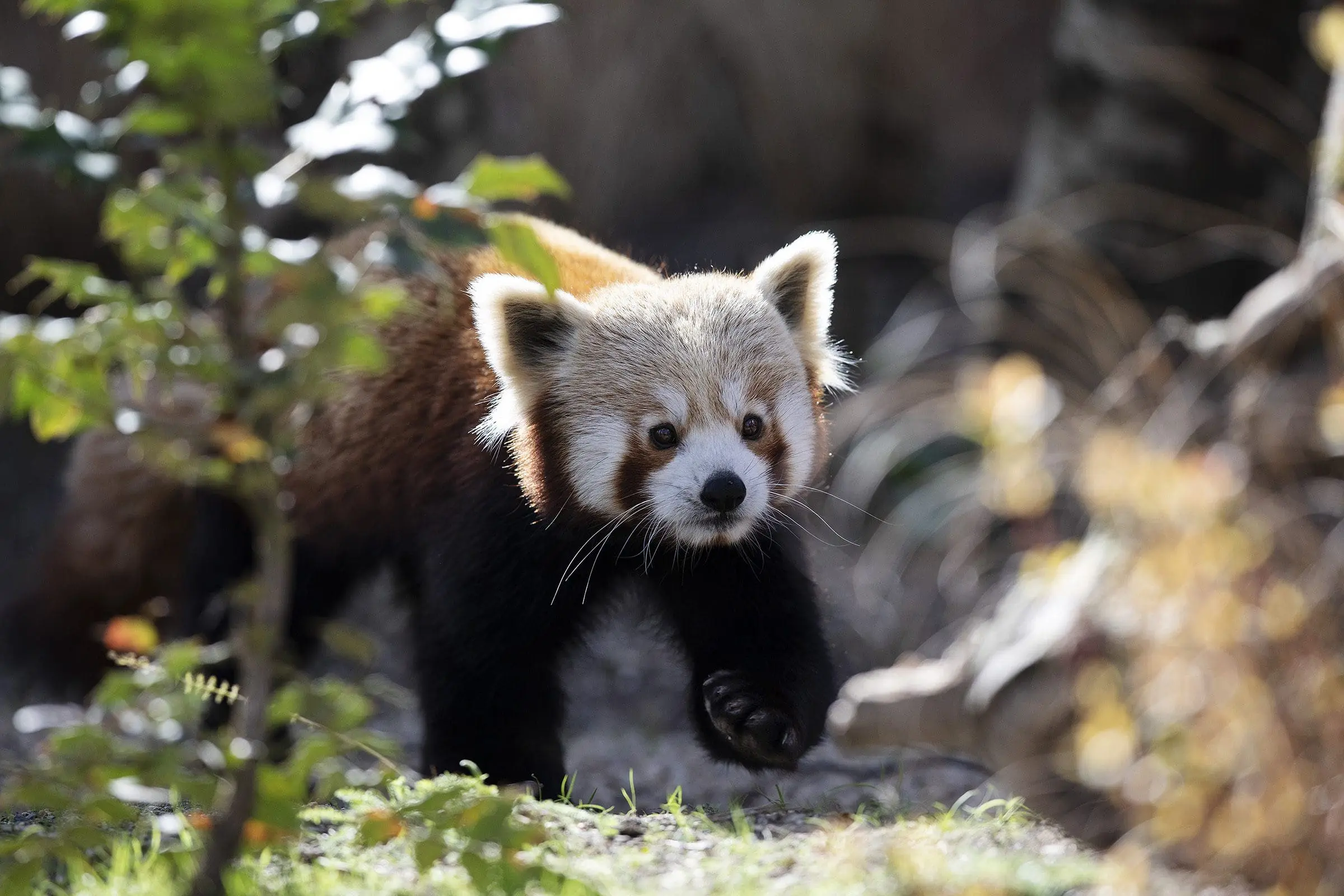
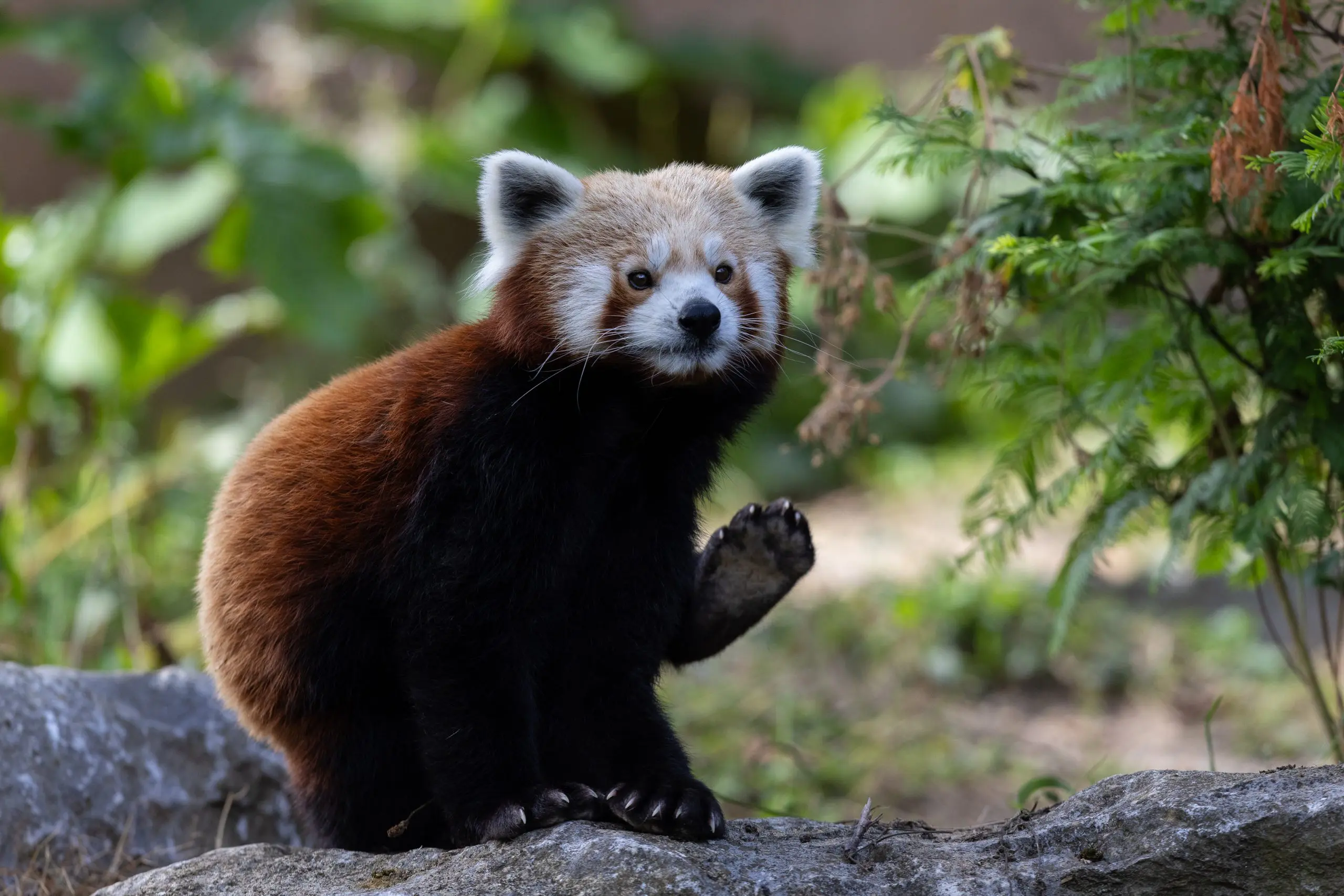
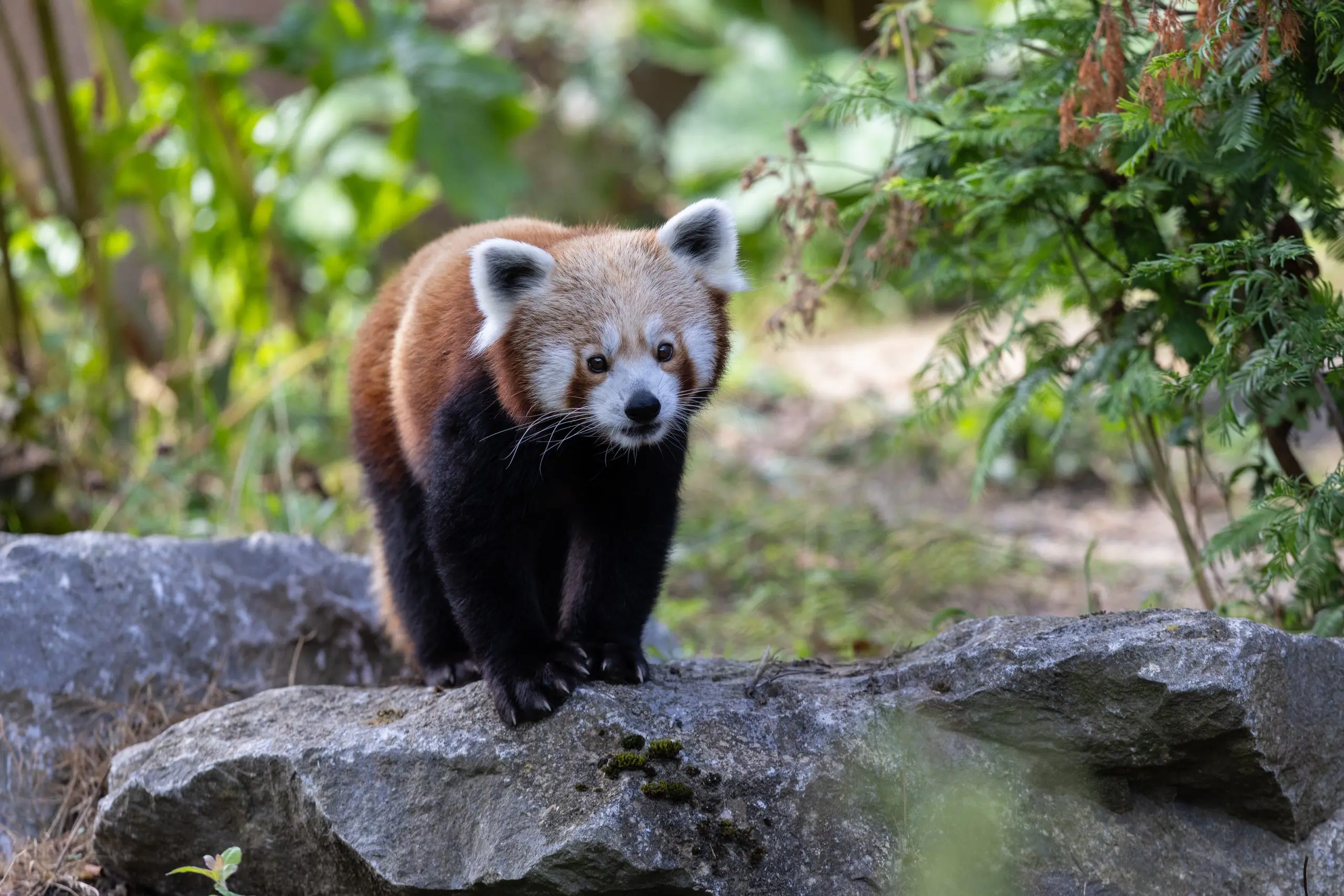
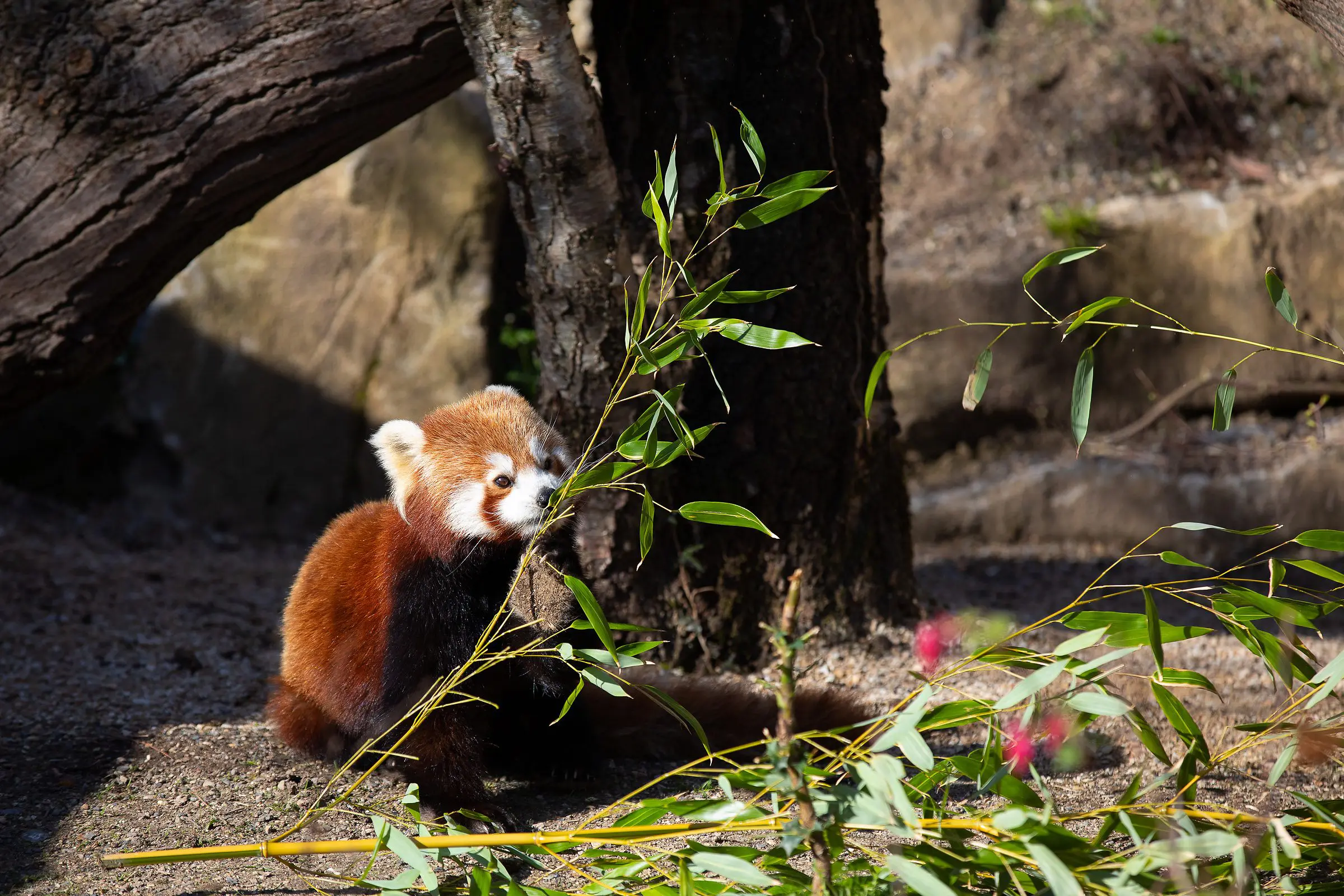
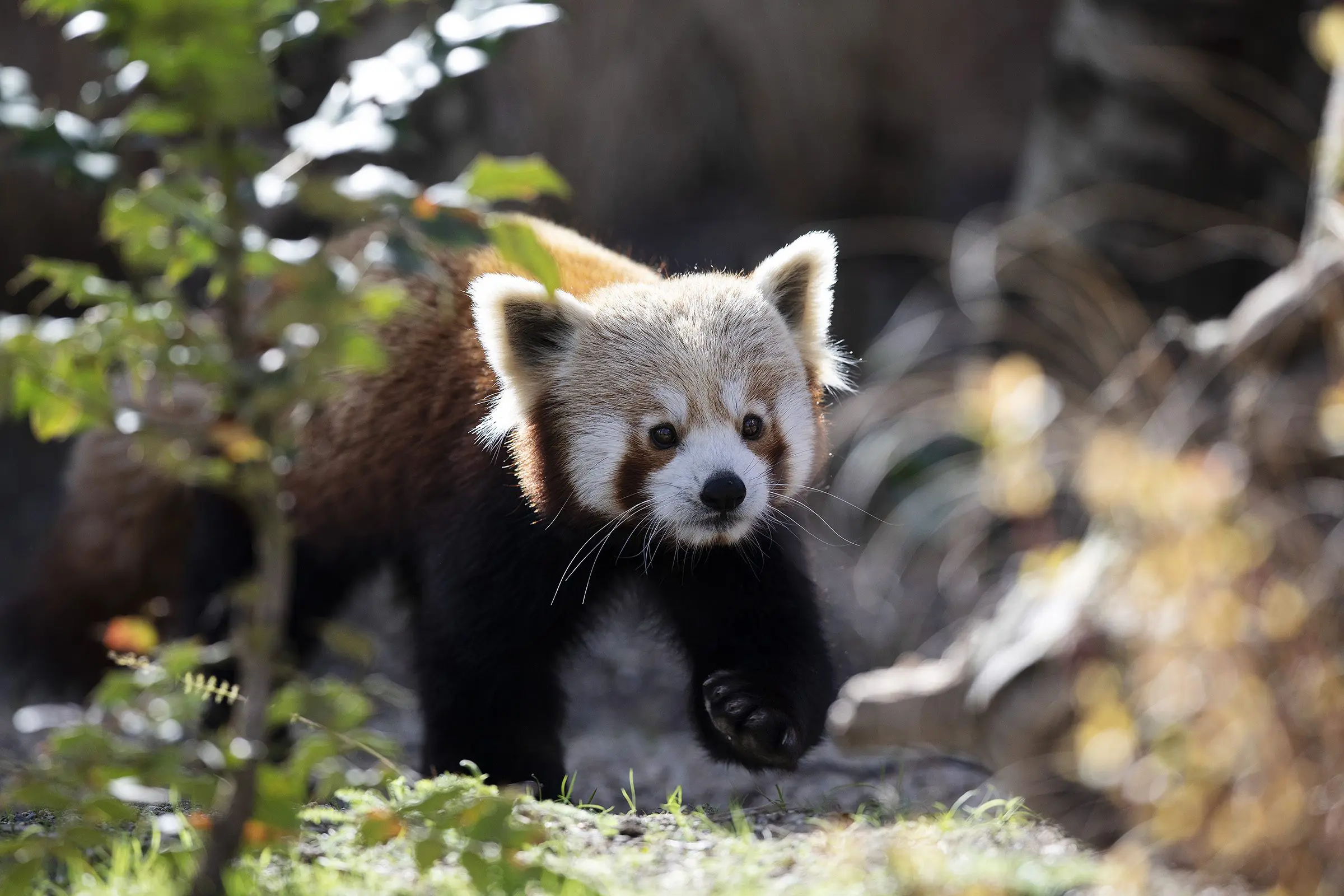
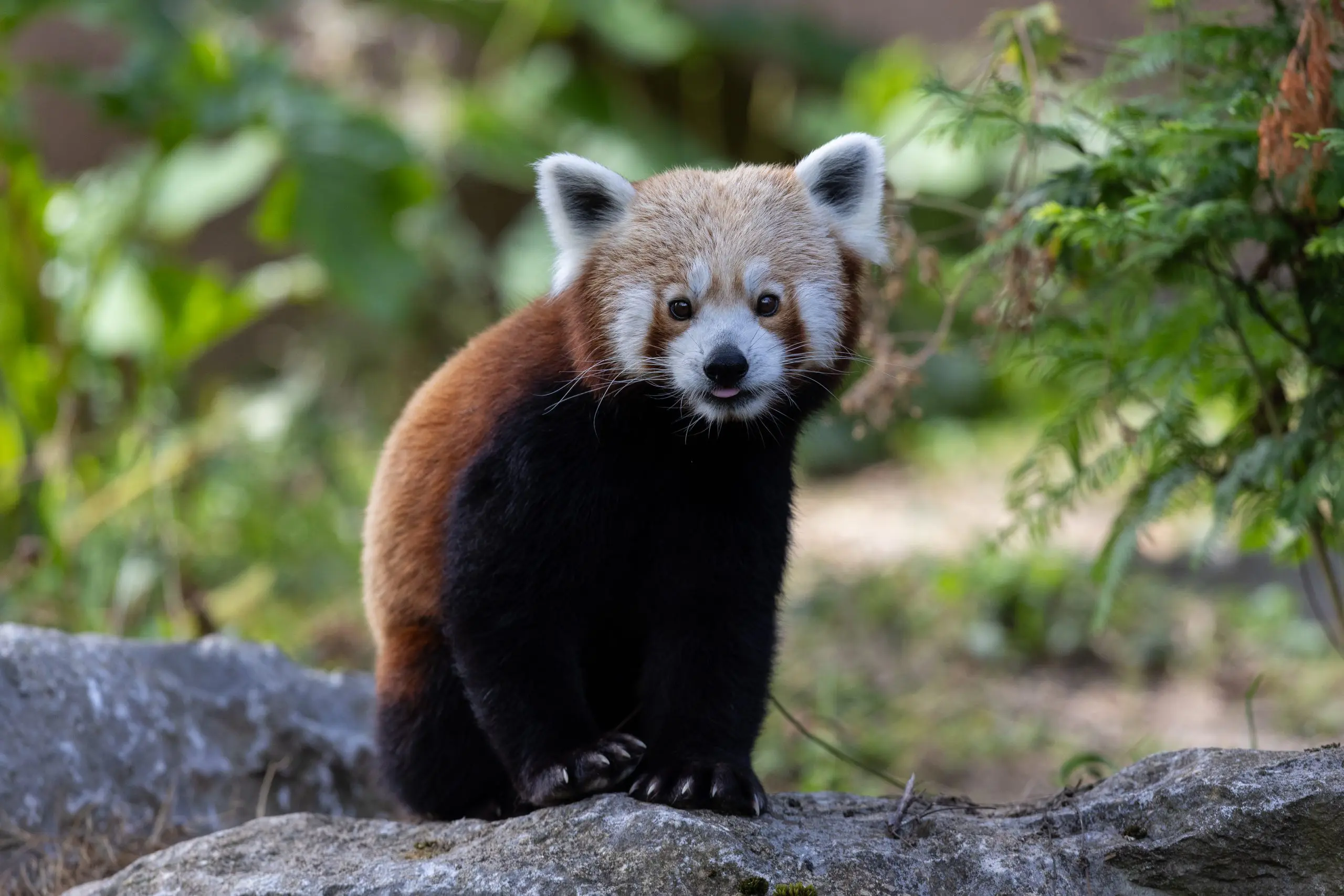
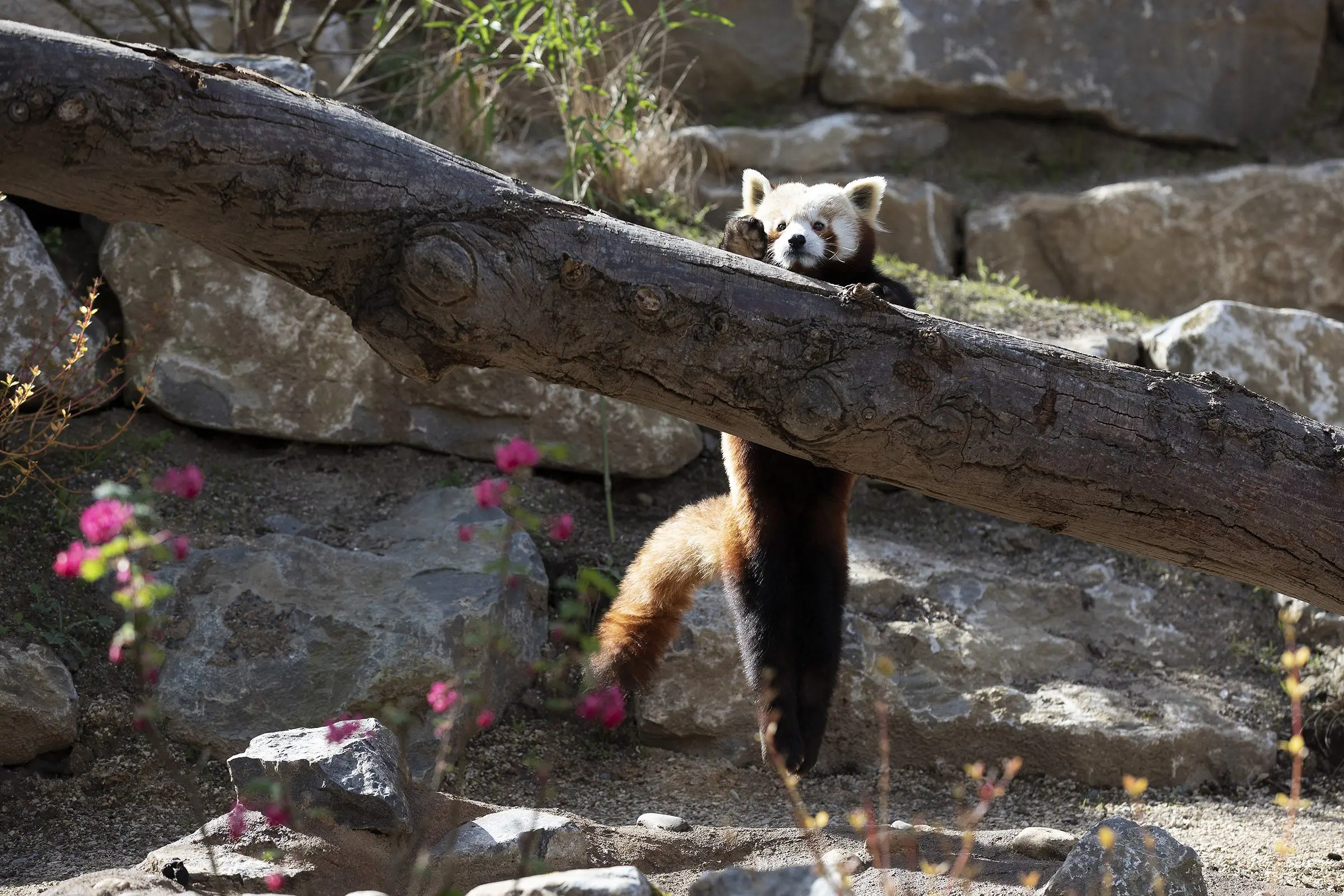
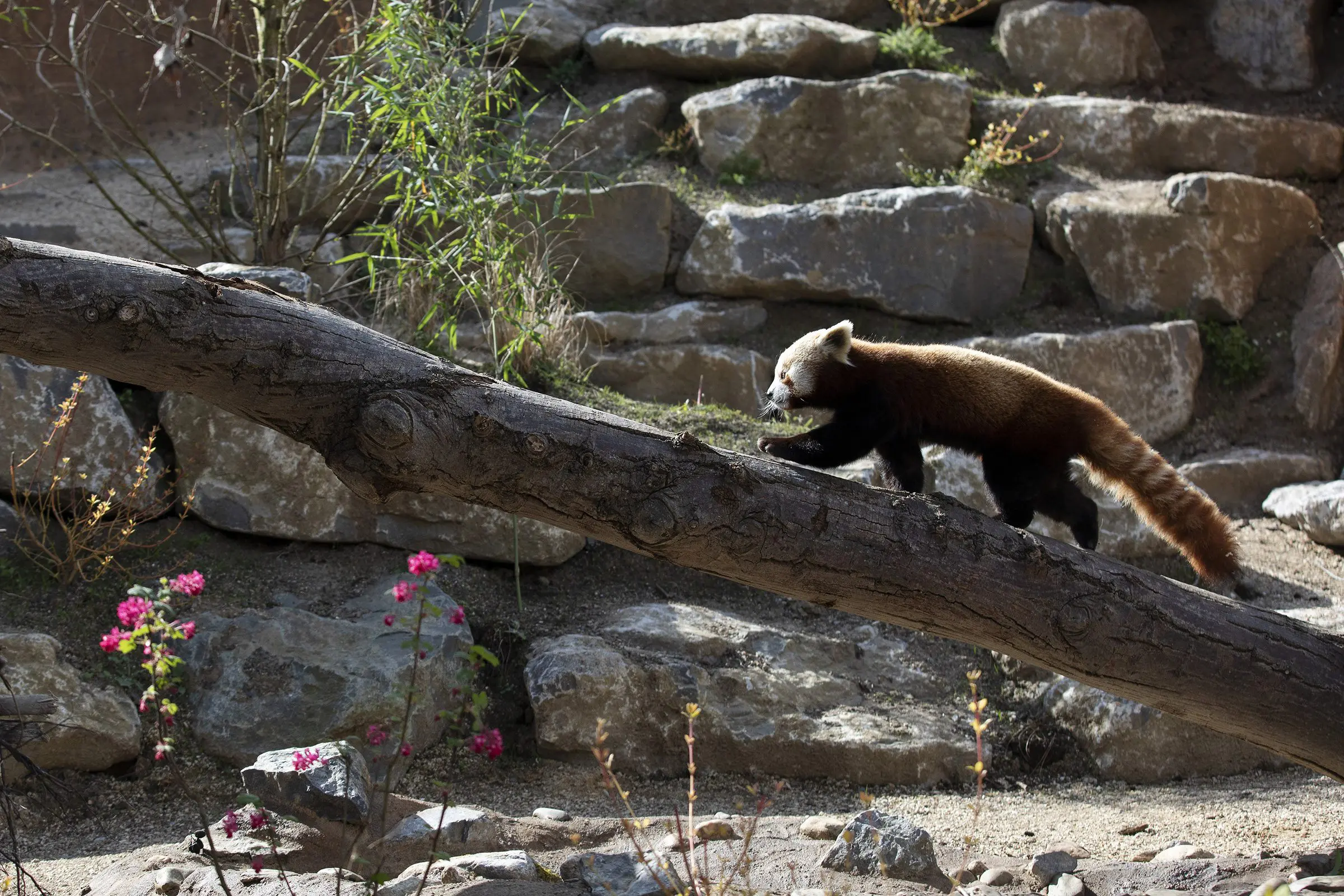
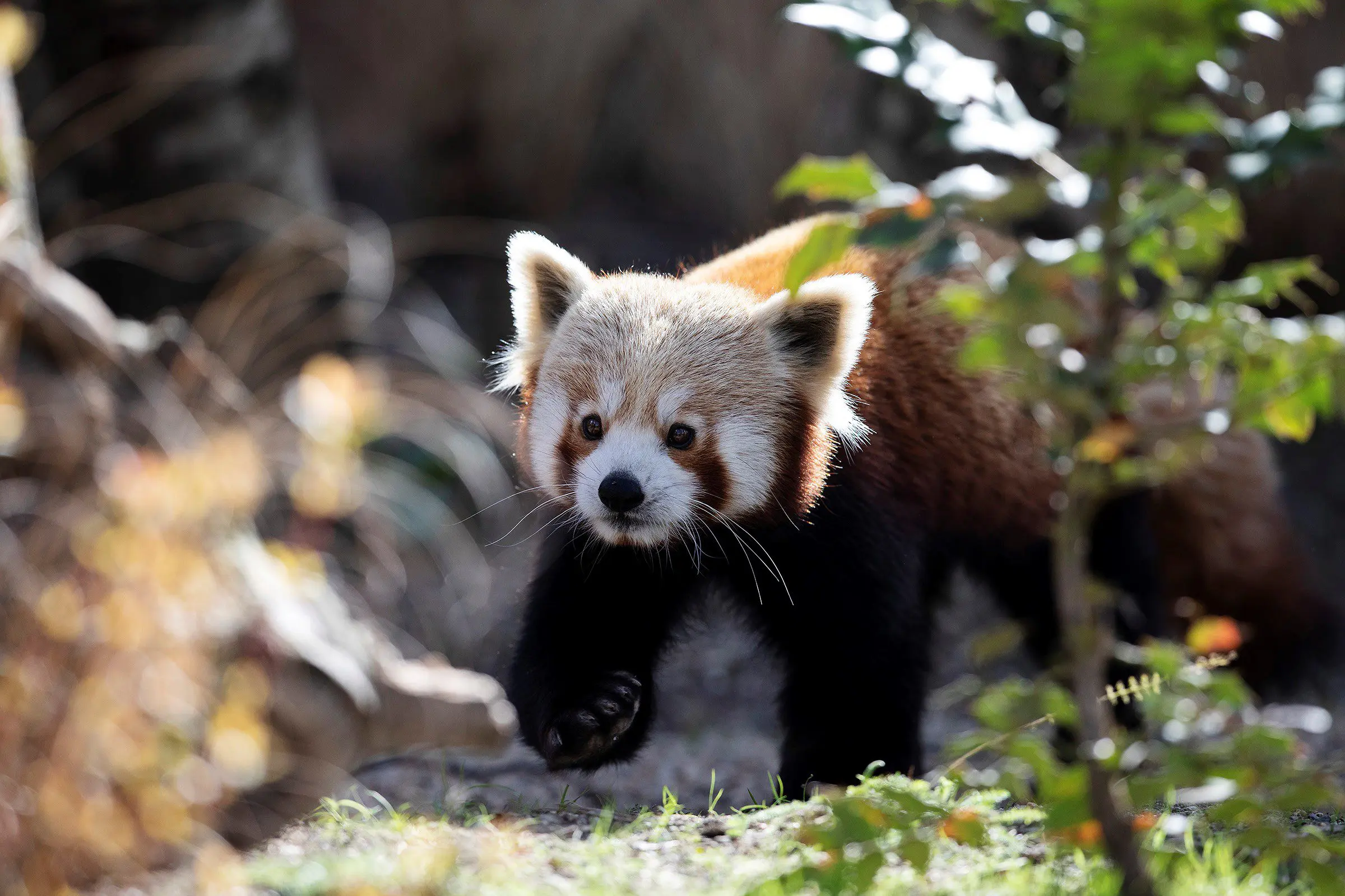
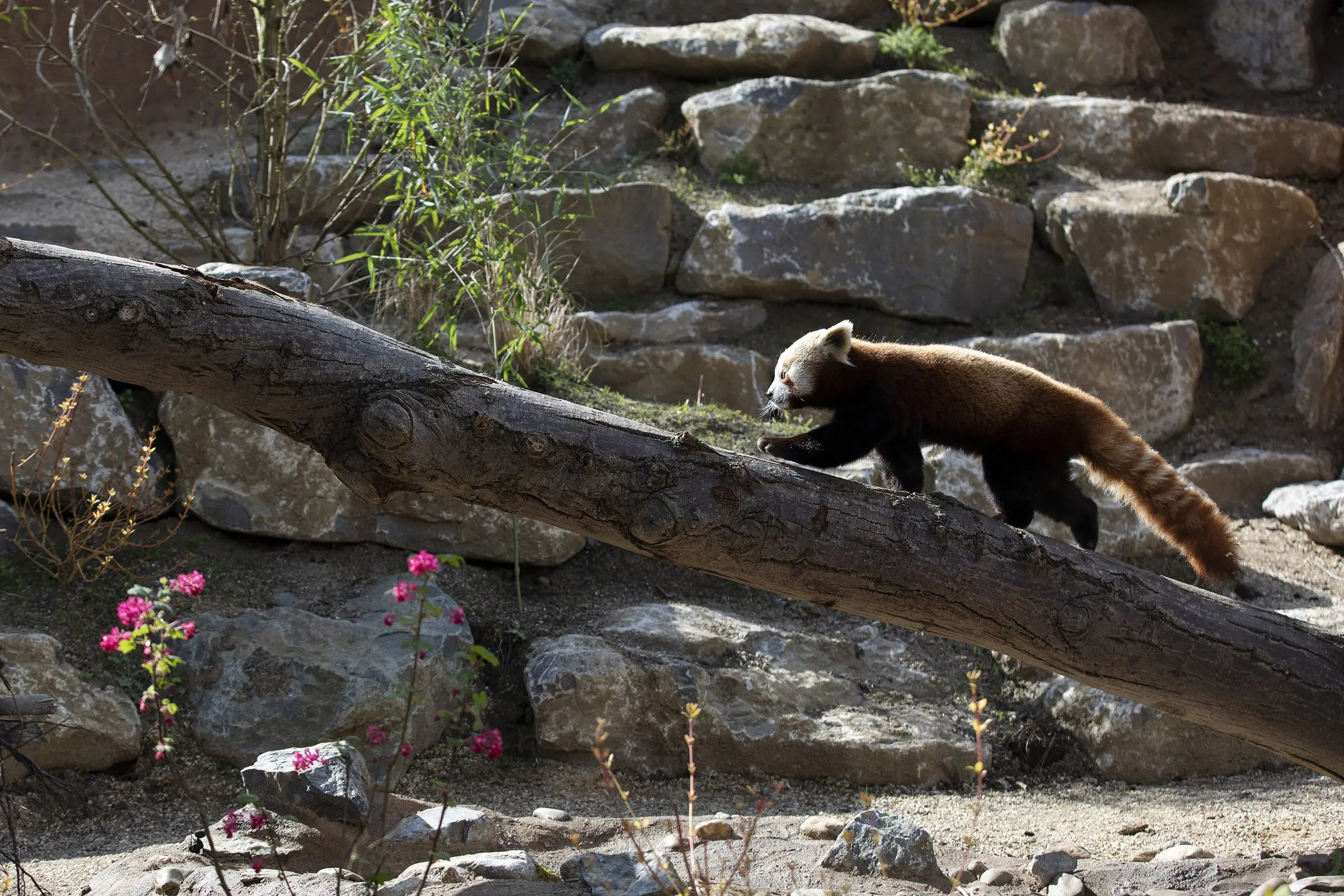
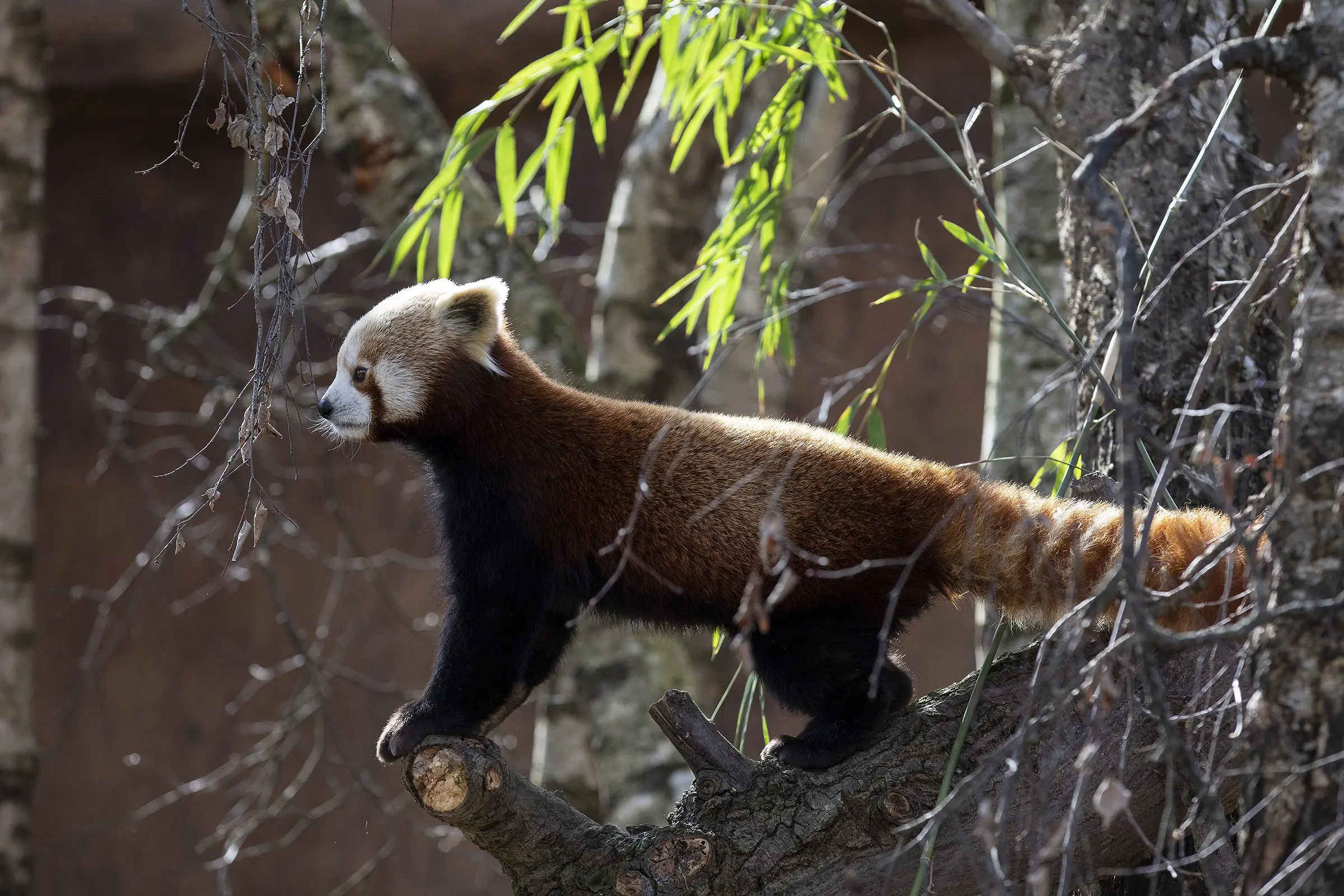
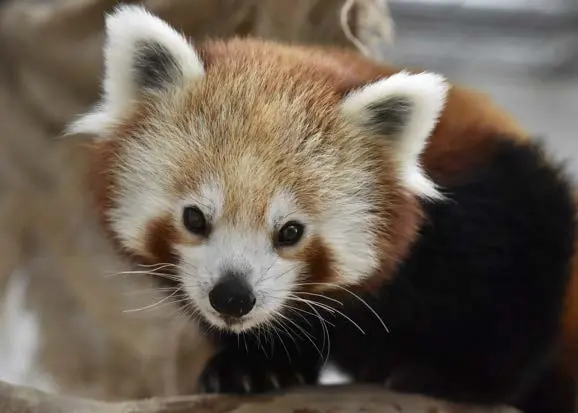
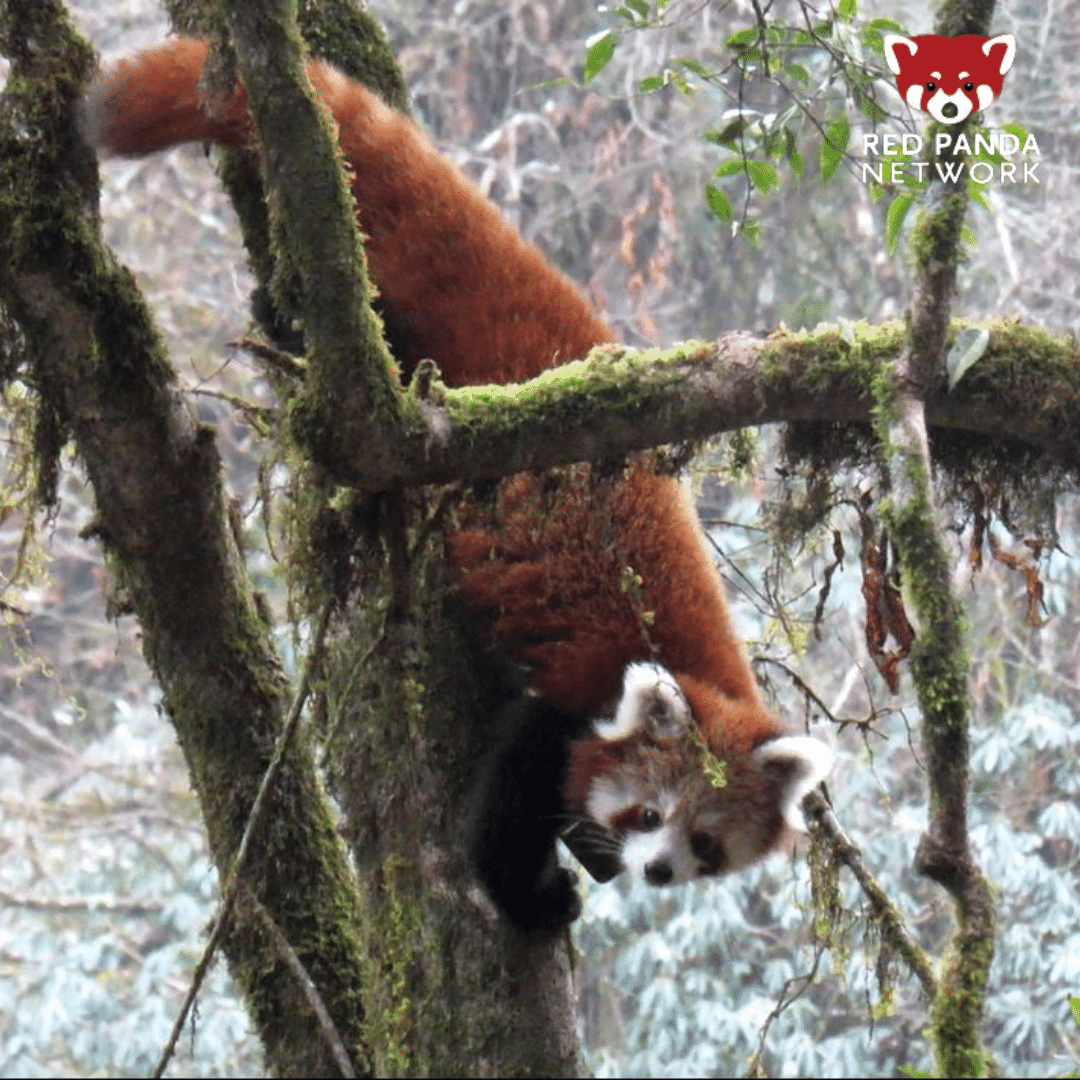
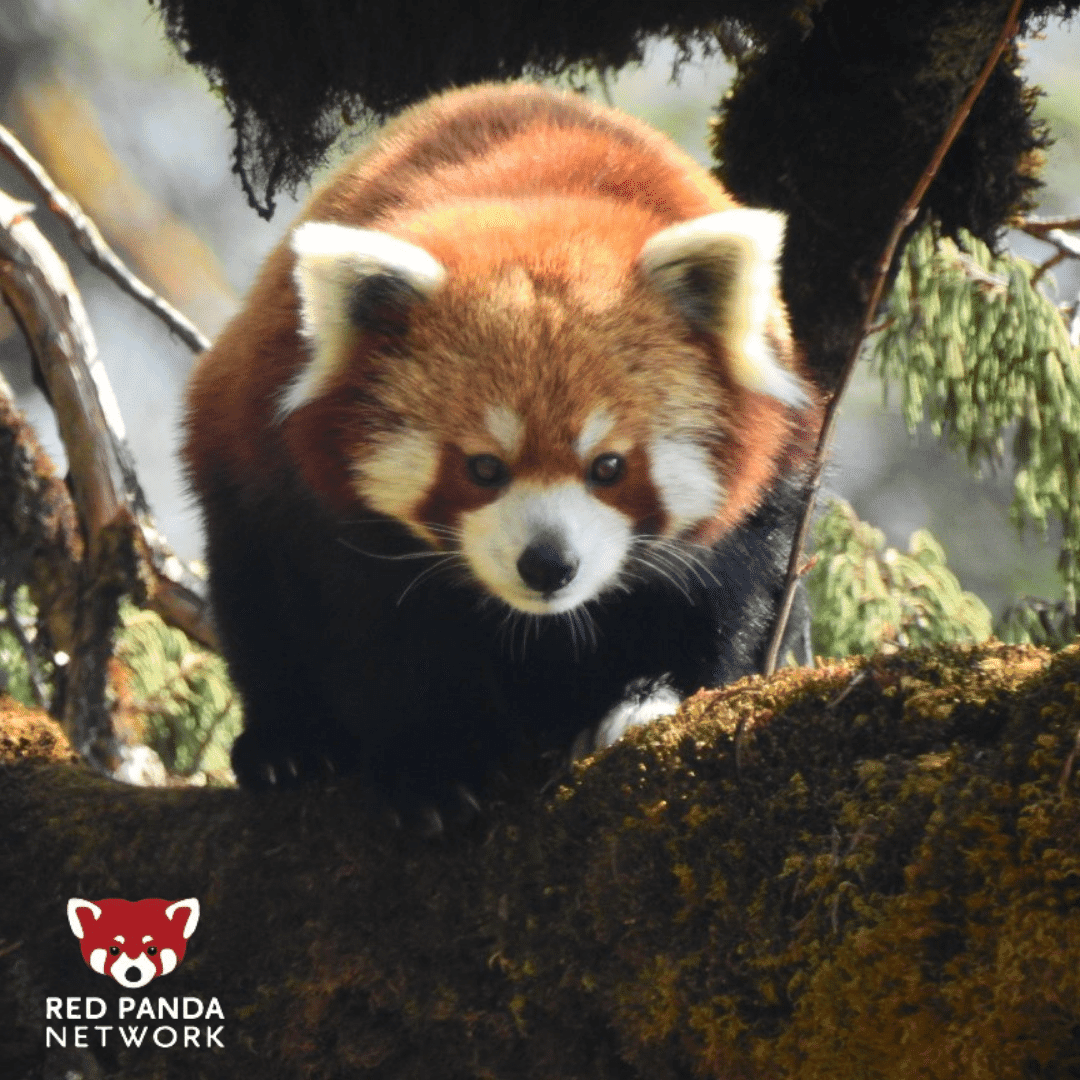
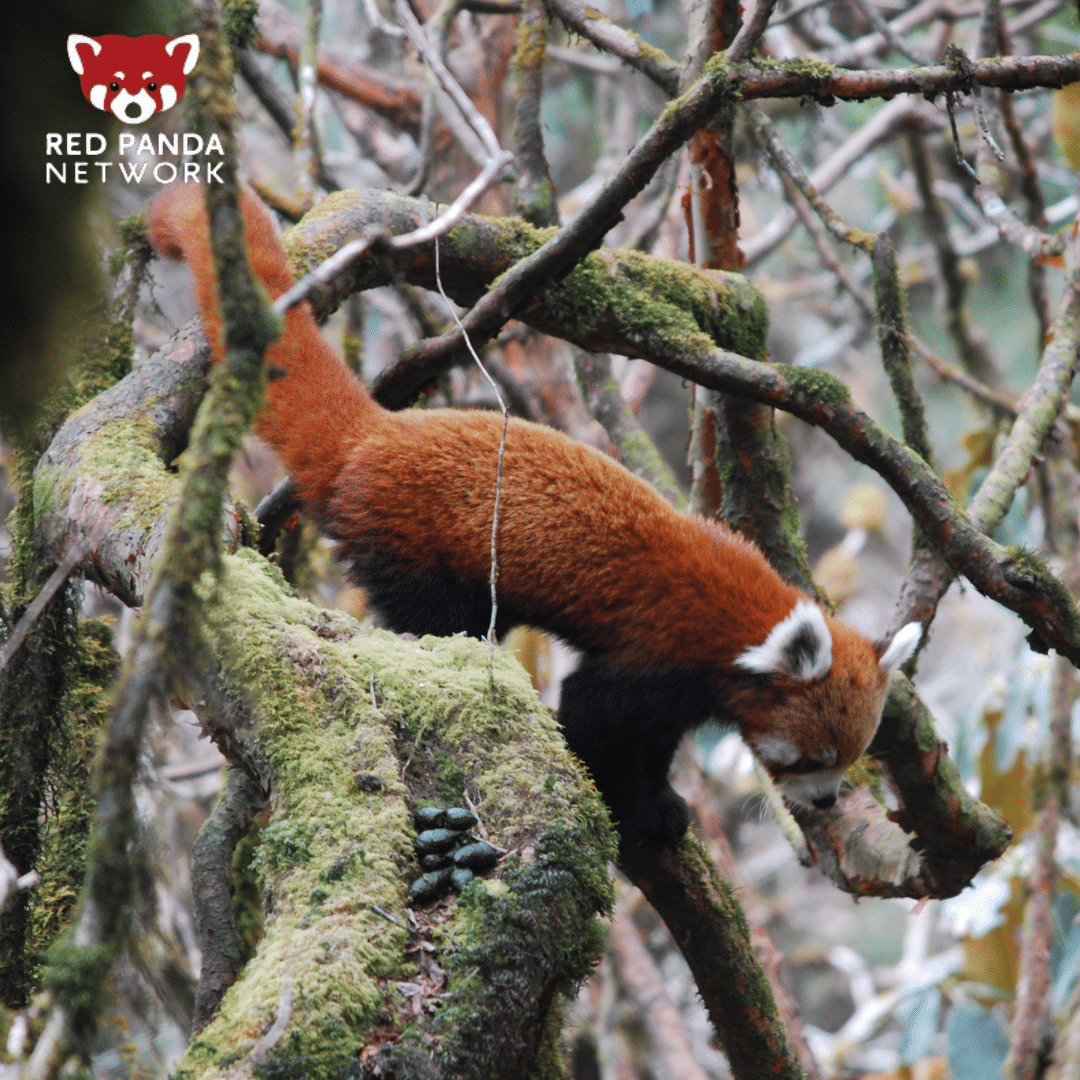
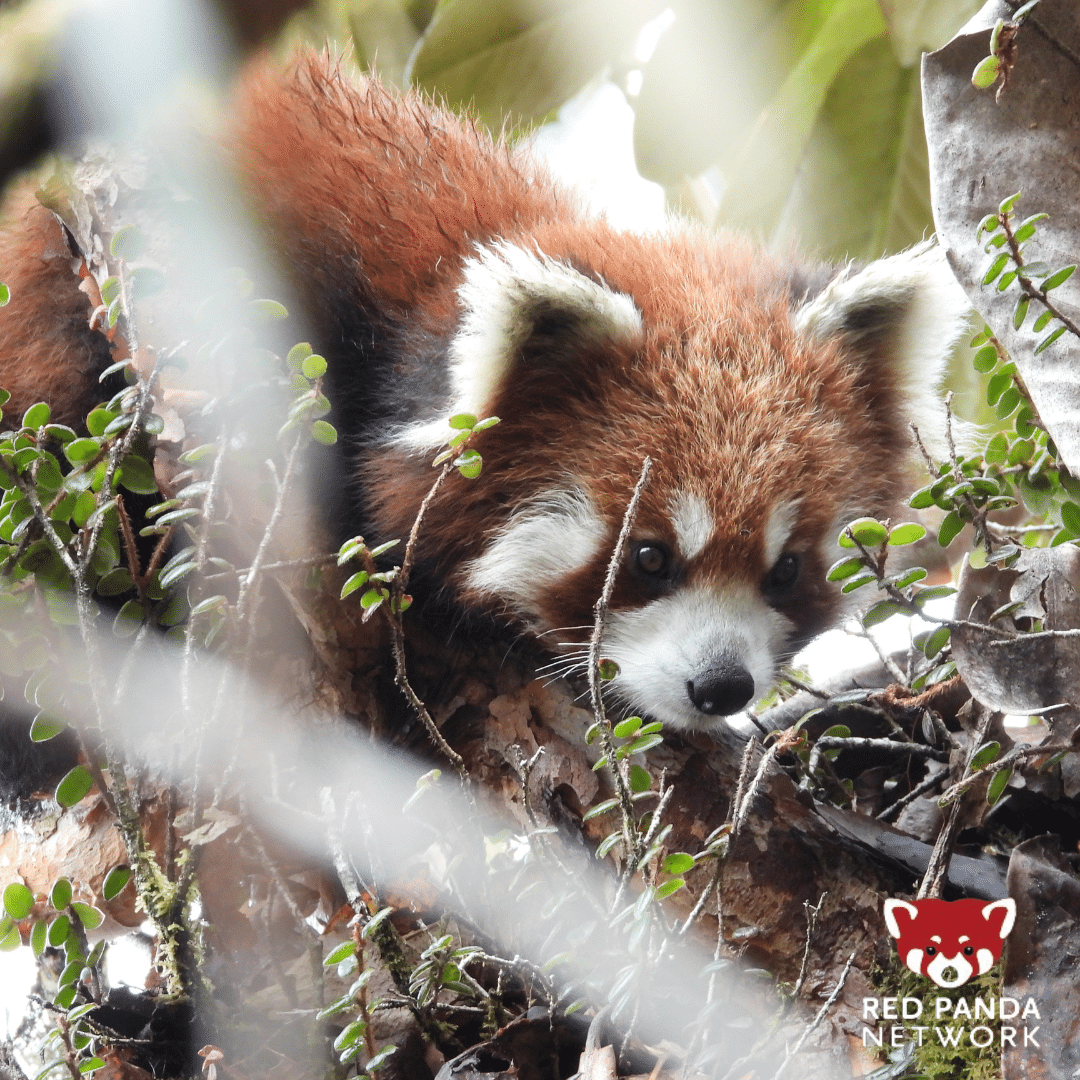
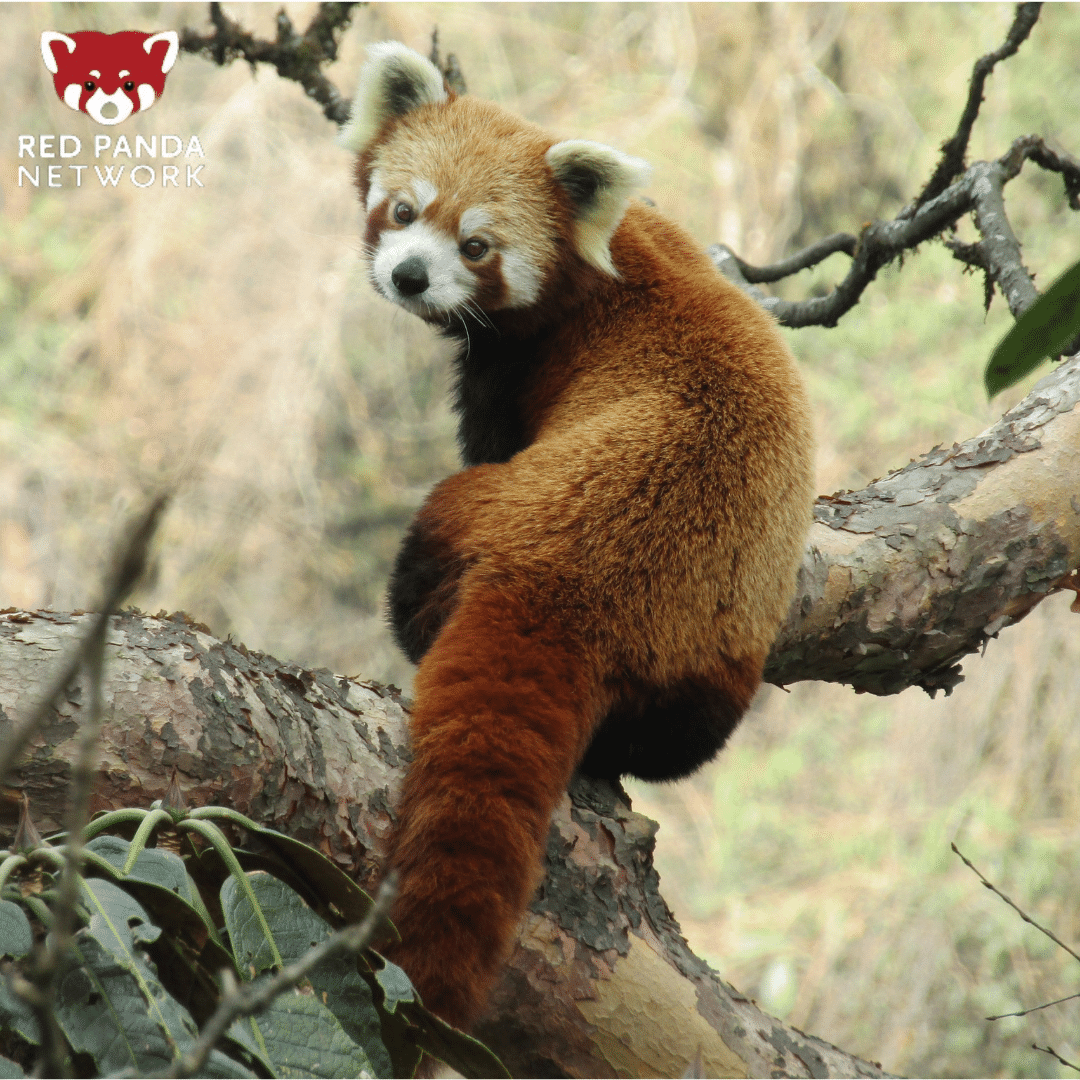
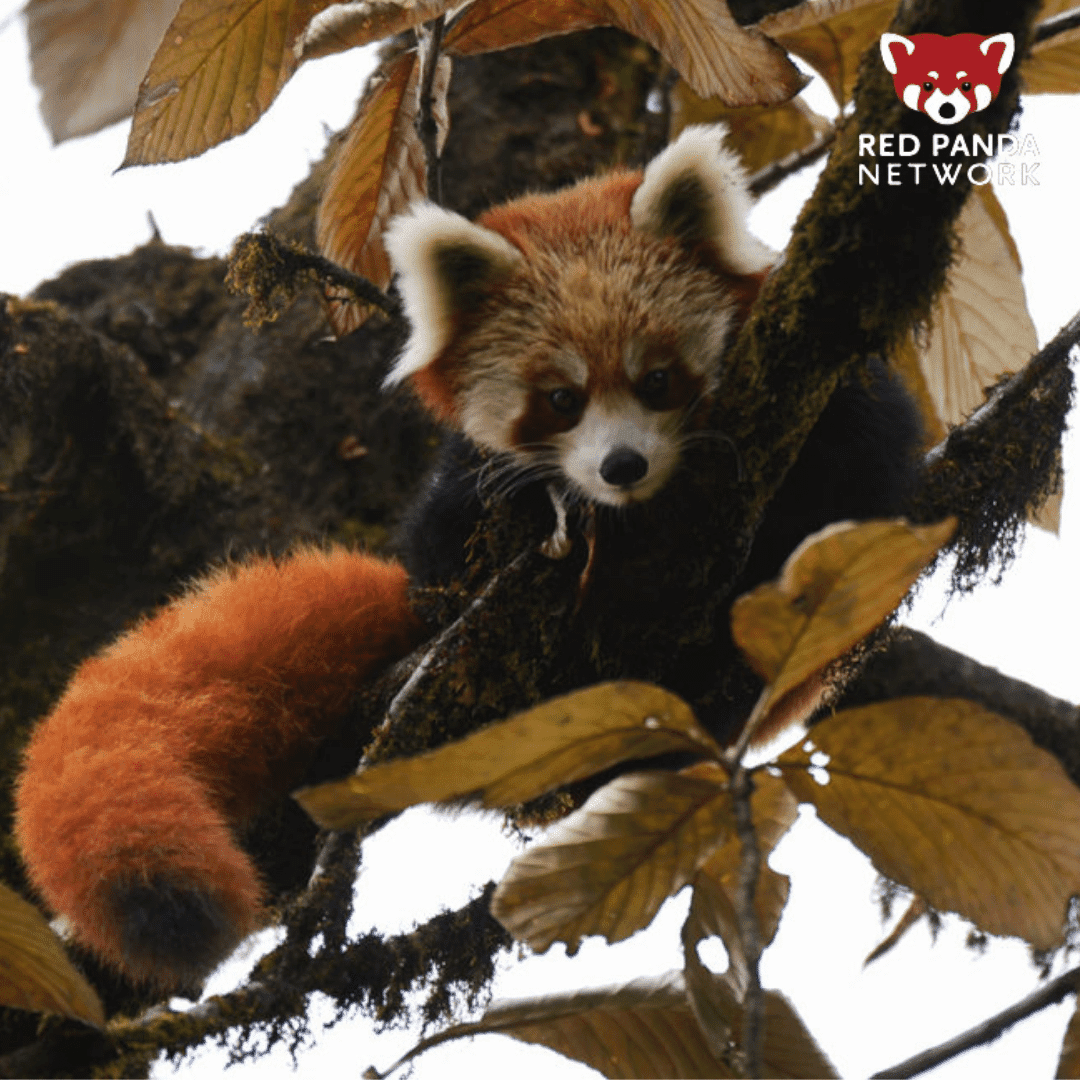
Red pandas have a unique reddish-brown coat. They have large round heads, short snouts and big, pointed ears. Their faces are white with reddish-brown ‘tear’ marks from their eyes to the corners of their mouth.
They have long, bushy, ringed tails. Contrary to their name, red pandas are not bears and are not even closely related to giant pandas; they are the only member of the Ailuridae family. The word ‘panda’ derives from the meaning ‘bamboo-eater’.
General Information
Zoo location
Himalayan Hills
Animal class
Mammalia
Animal order
Carnivora
Where do they live (Natural habitat)?
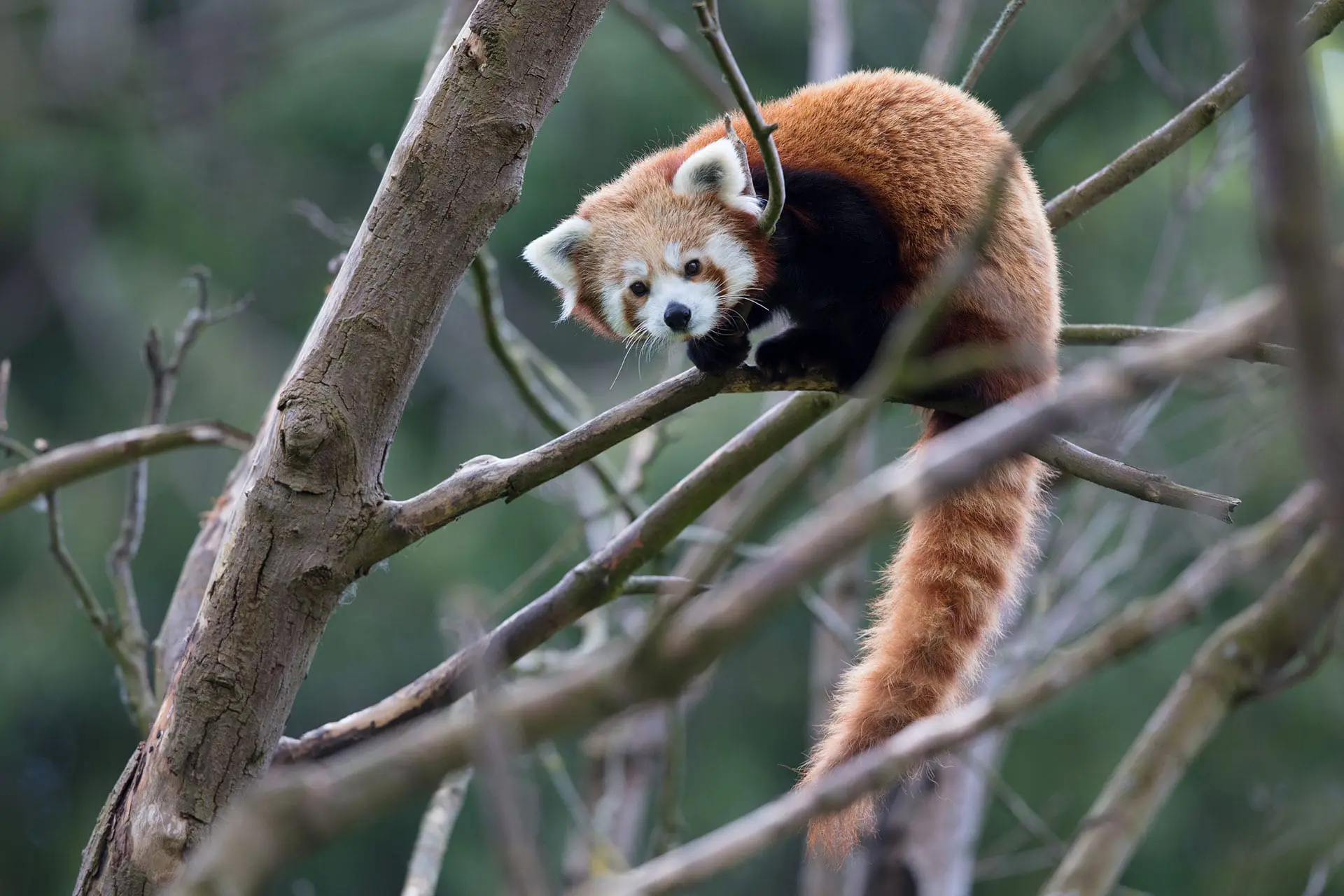
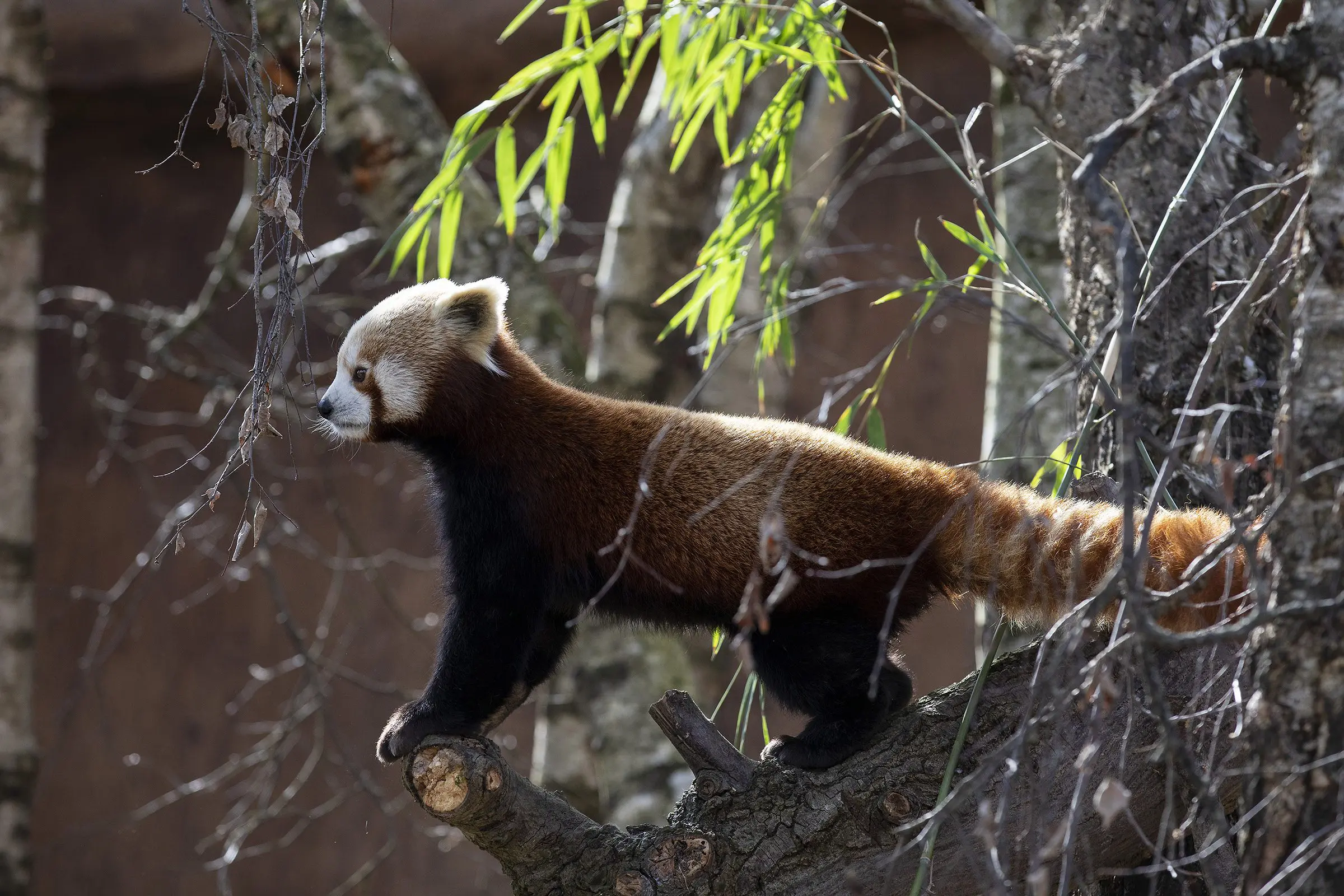
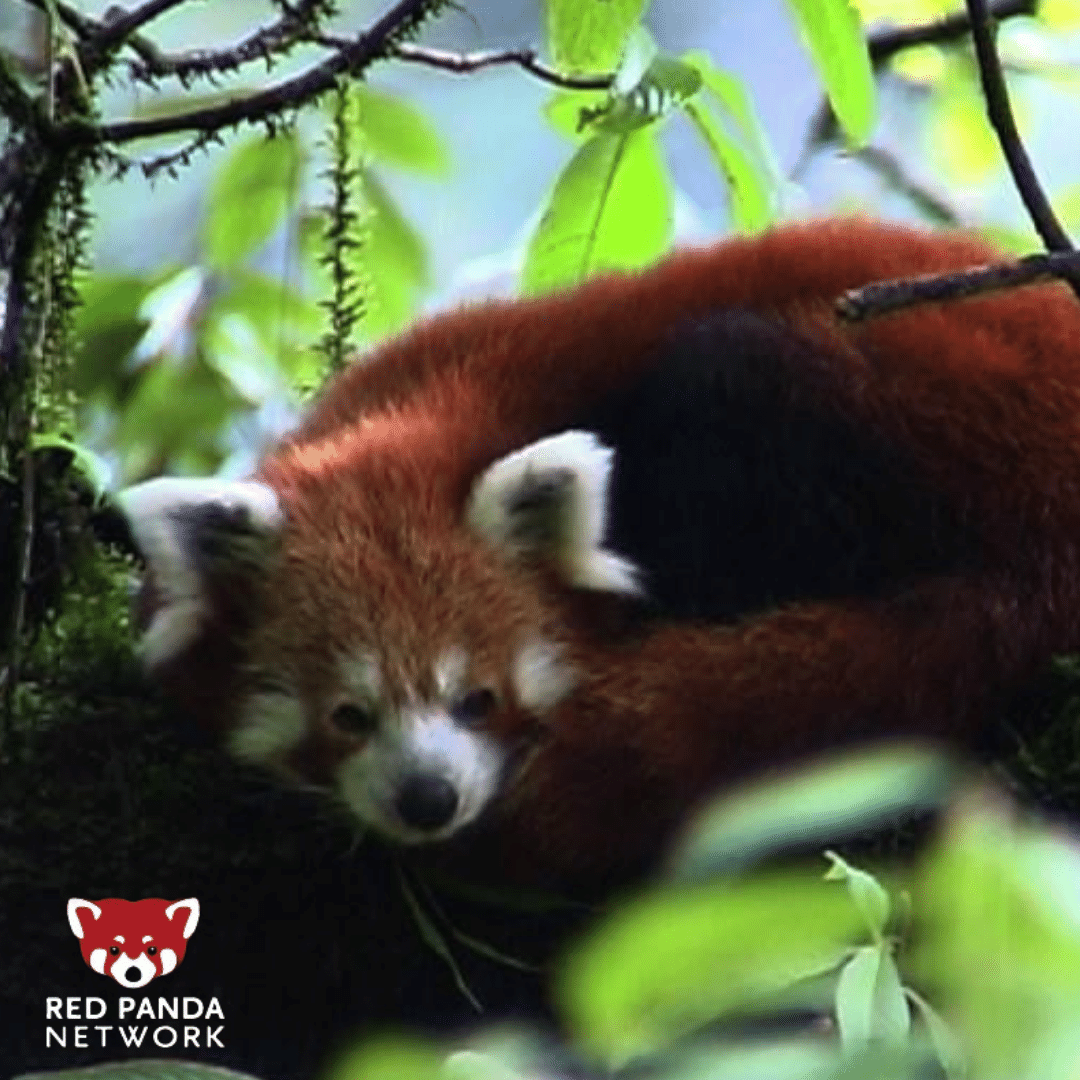
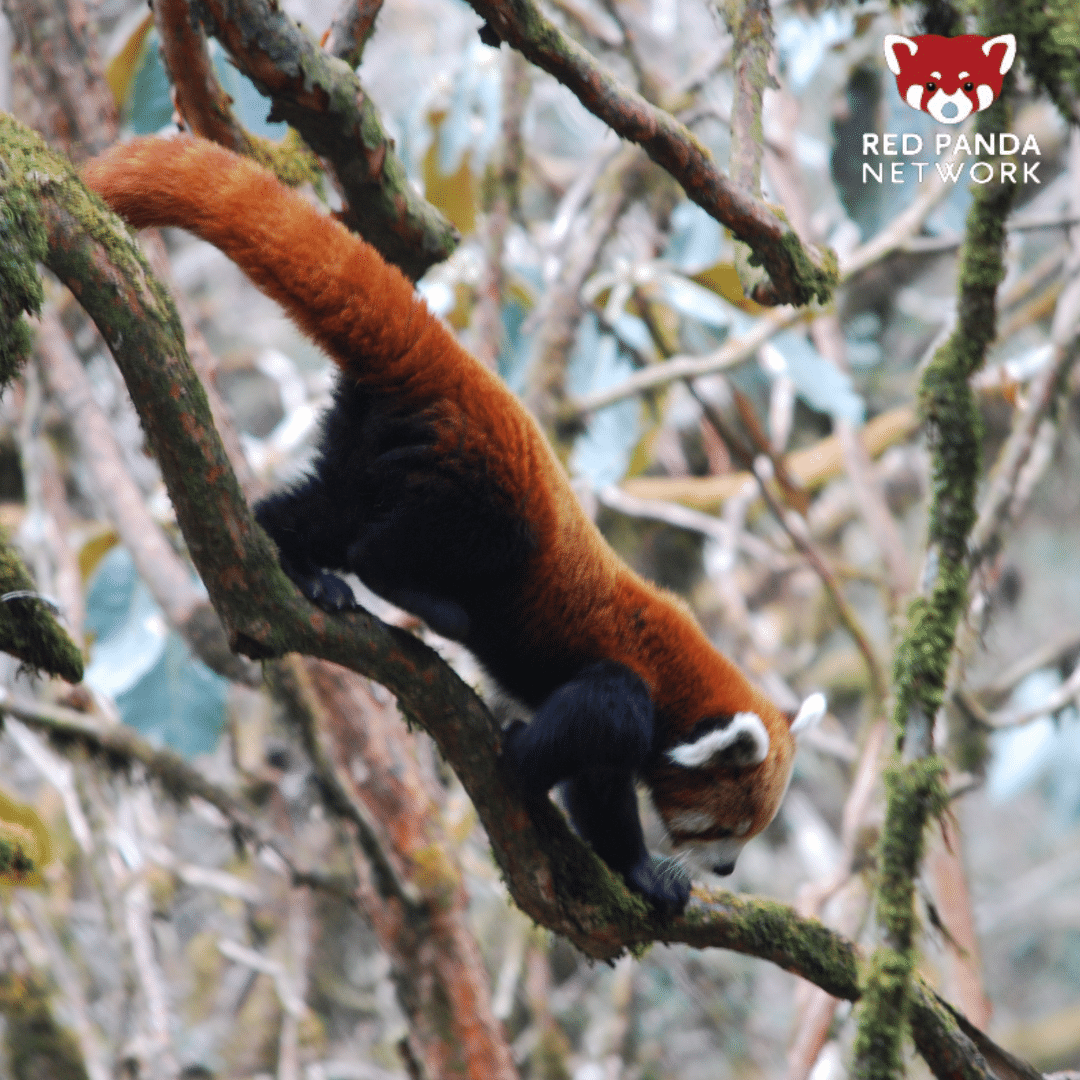
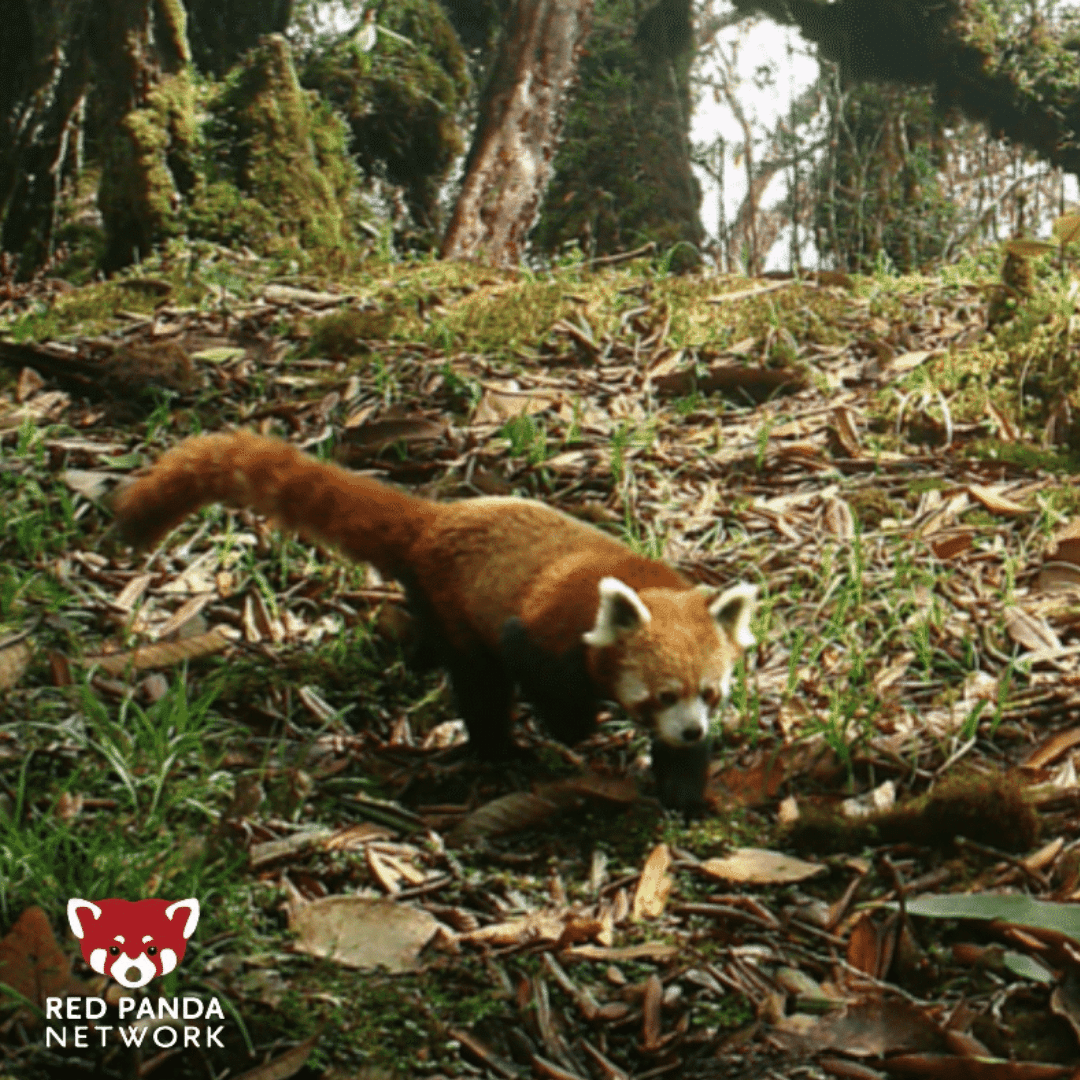
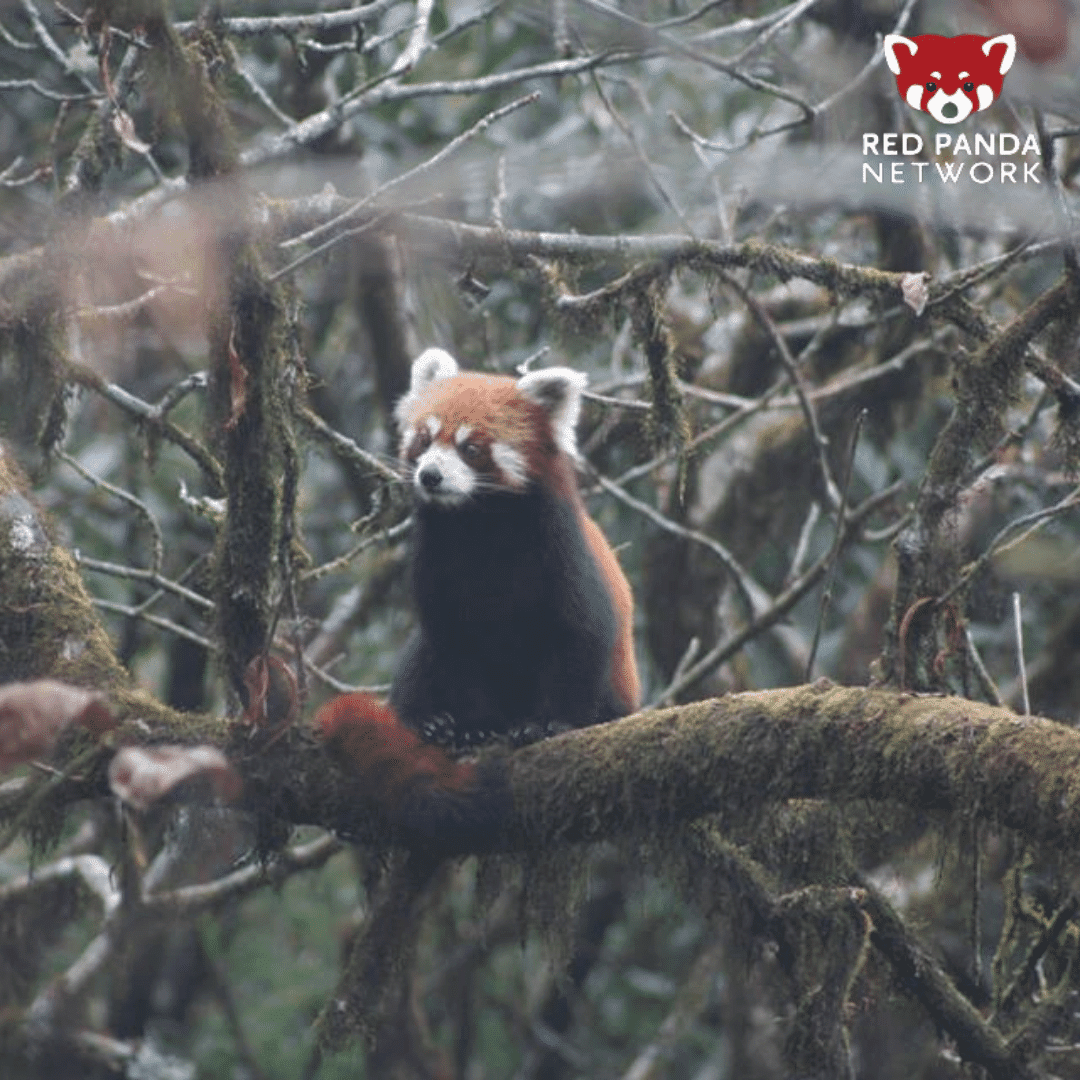
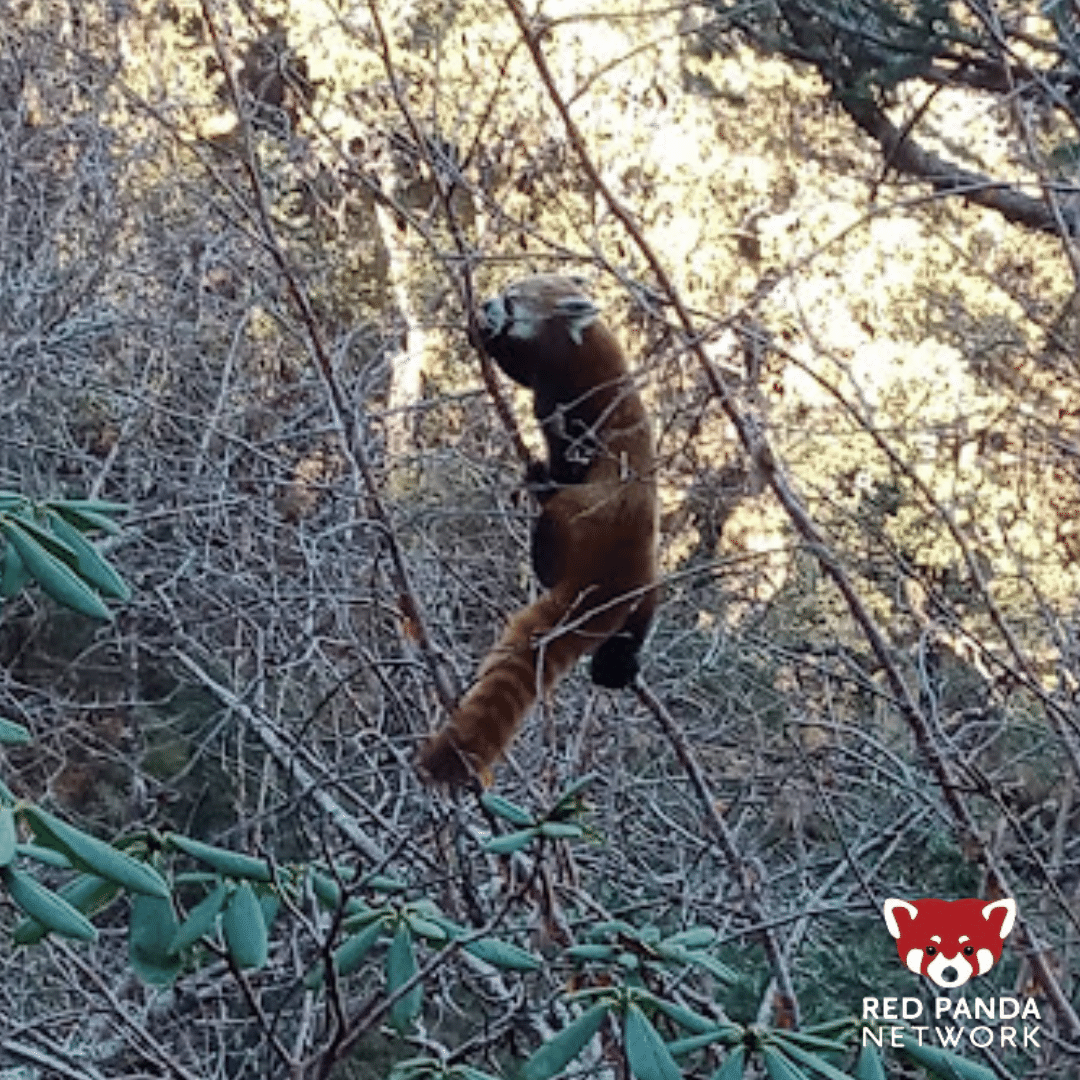
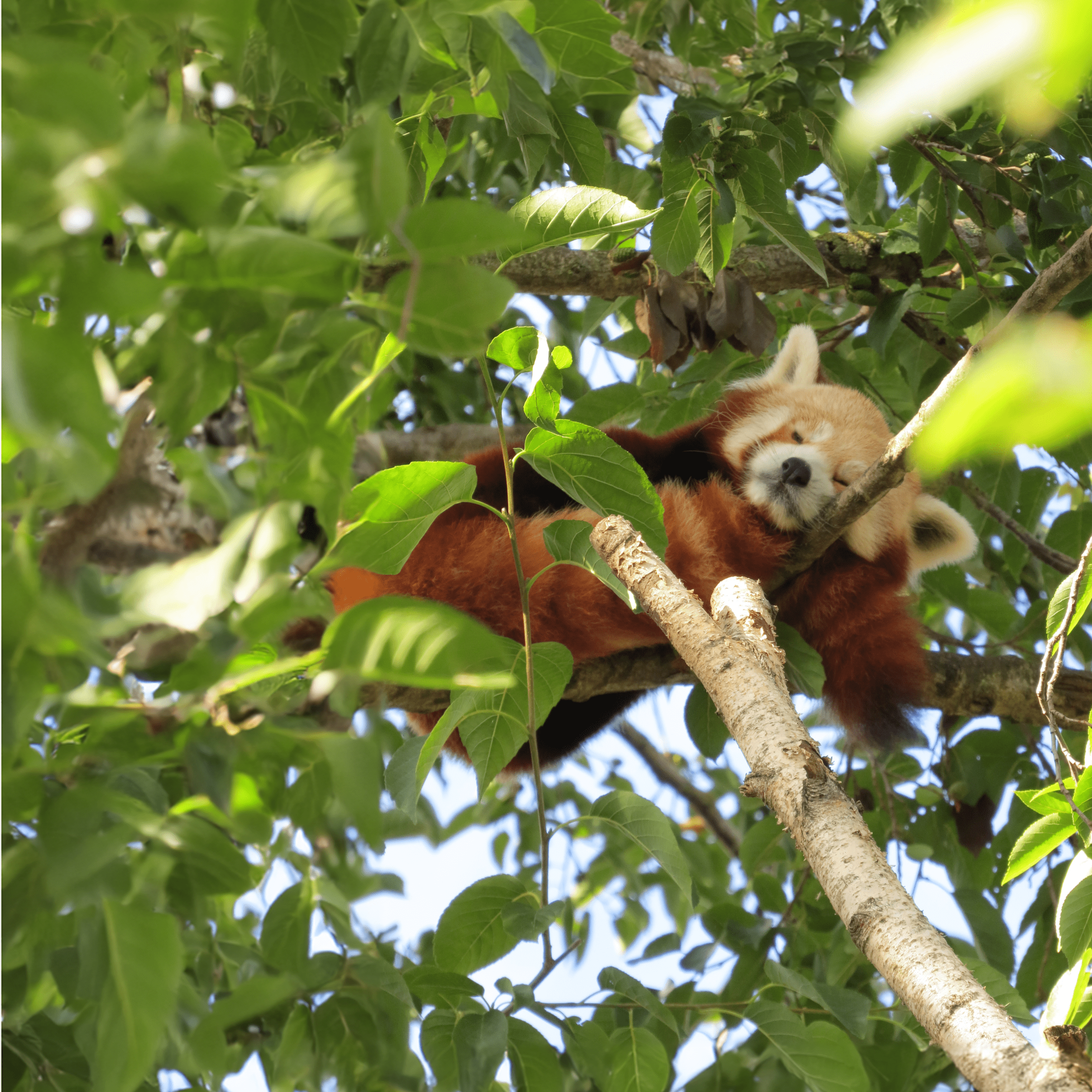
Red pandas live in high-altitude bamboo forests in the Himalayas and other high mountains in Nepal, Bhutan, China and small parts of India. They spend most of their time in trees, their semi-retractable claws help them move easily from branch to branch.
How long do they live?
Red pandas live in high-altitude bamboo forests in the Himalayas and other high mountains in Nepal, Bhutan, China and small parts of India. They spend most of their time in trees, their semi-retractable claws help them move easily from branch to branch.
What do they eat?
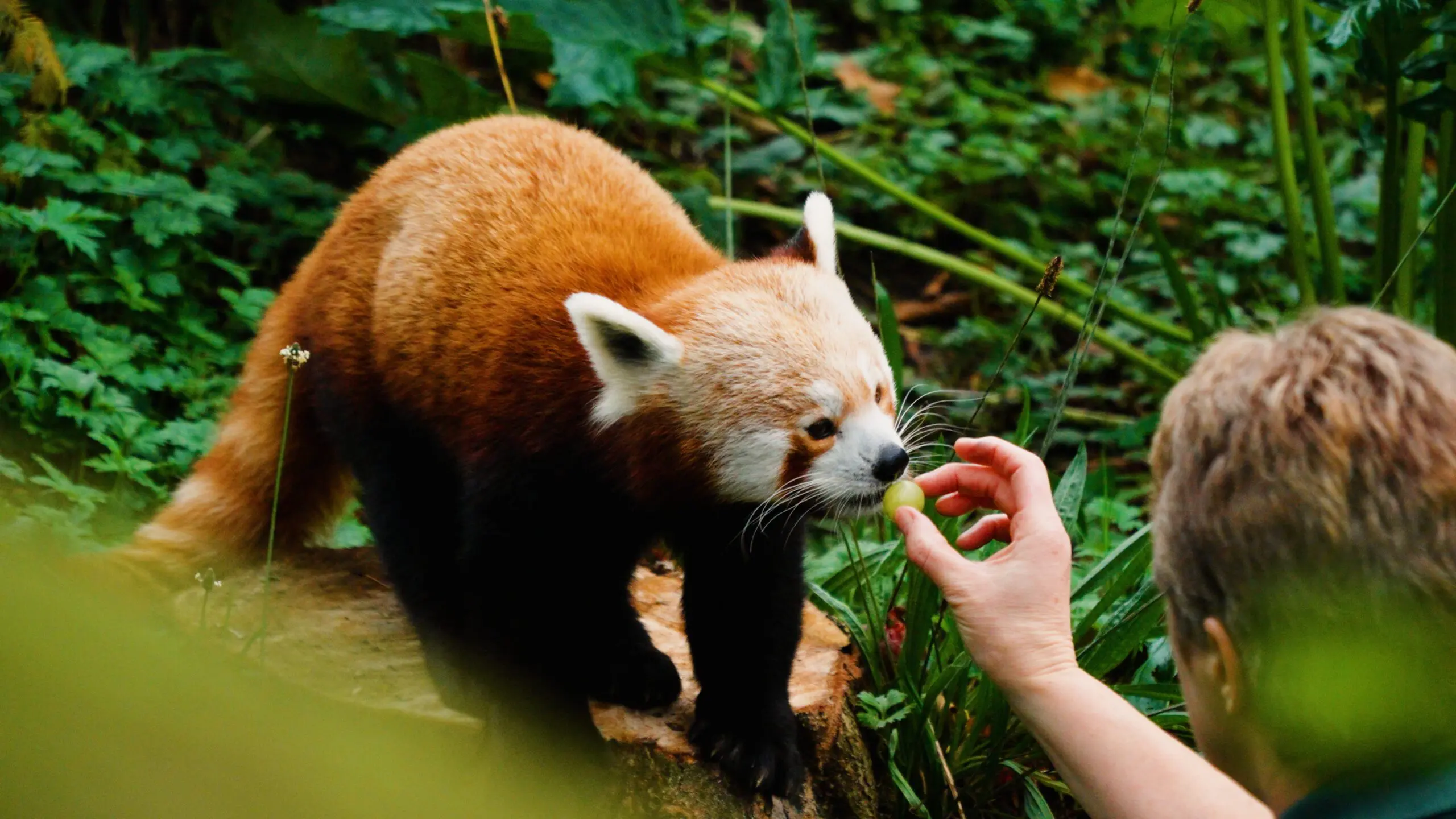
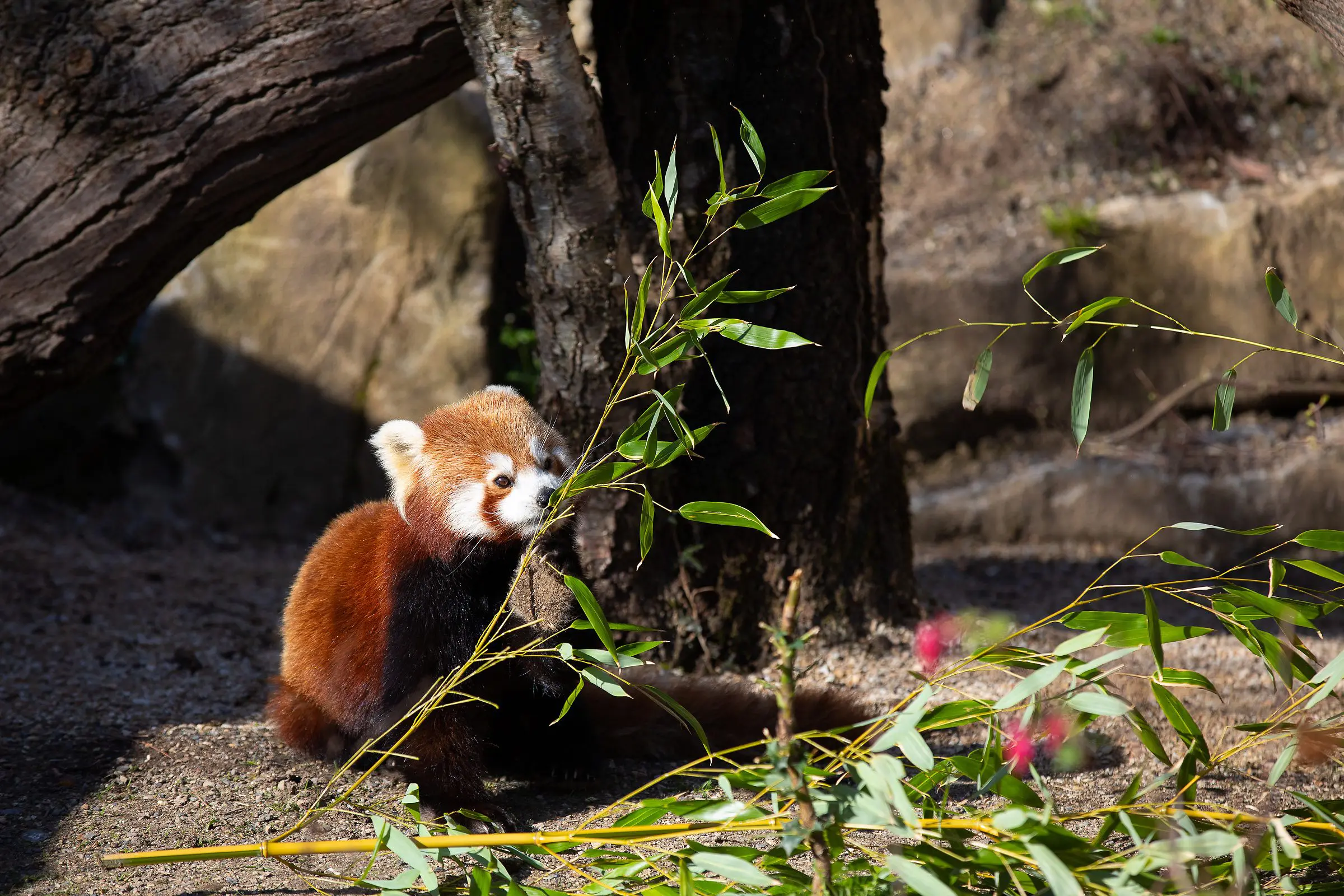
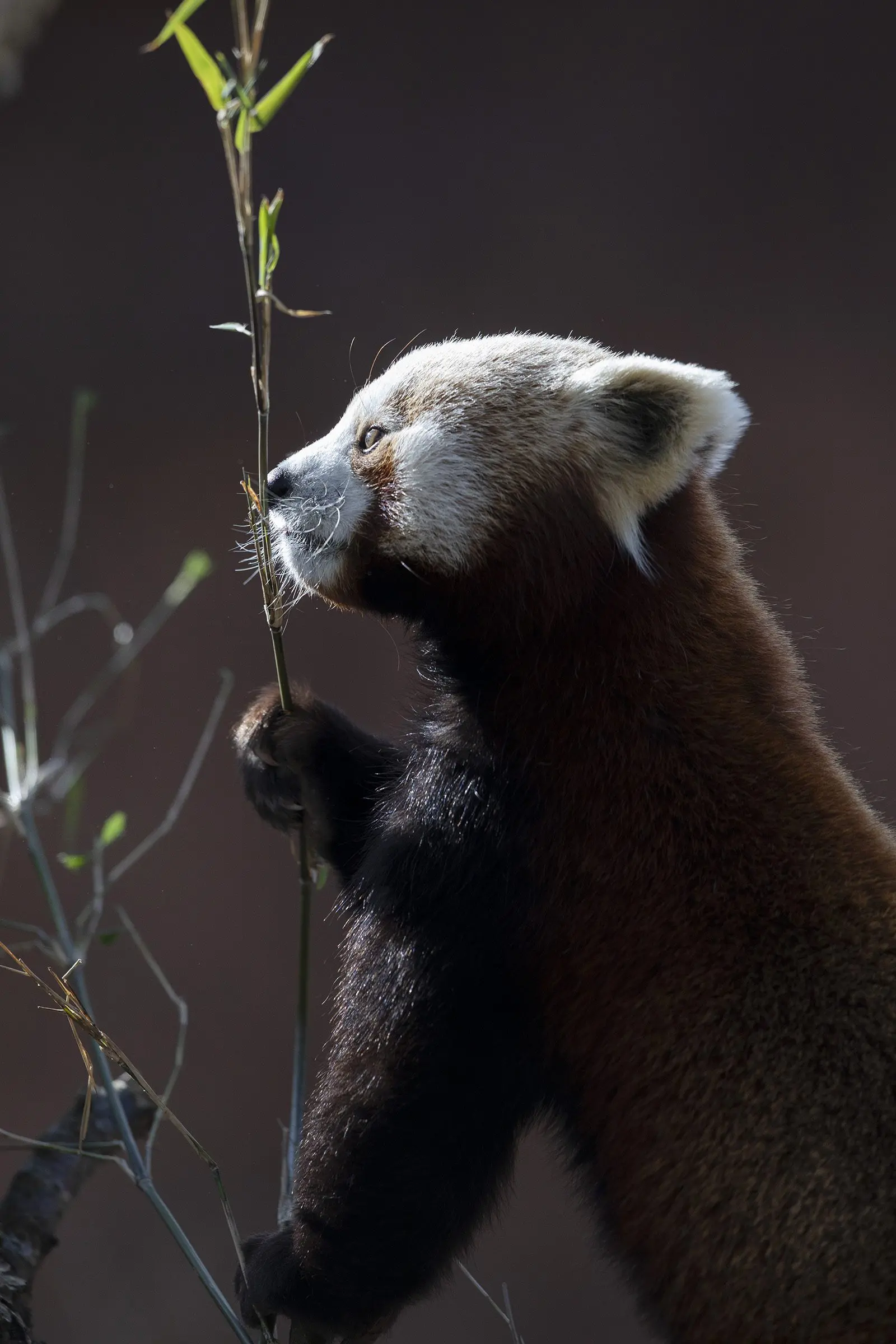
Red pandas mainly eat bamboo. However, they do also occasionally eat fruit, insects, flowers, eggs and small lizards.
Group name
Red pandas have no real group name because they are mostly solitary.
Closest related species / sister species
Red pandas belong to their own unique family and are not closely related to any particular species. The family Ailuridae is in the same superfamily as weasels and raccoons.
Check out our red panda ISL Keeper Talk
Fun Facts!
Red panda meets new mate
The rare aye-aye
Family life
Red pandas are shy and solitary except when breeding. Females create a nest in trees or bamboo thickets in which their litter is born. The young remain in the nest for about 3 months and stay with their mother until the breeding season starts. Males do not take part in rearing the young.
Baby name
Cub
Gestation (pregnancy) period
Approximately 4.5 months
Number of young at birth
1-4 cubs
Weight at birth
90-100 g
Age at maturity
18 months
Adult size
The head and body are up to 65 cm long, with the tail up to 47 cm long. They weigh up to 7 kg. Males and females are similar sizes.
Conservation
Endangered
The red panda is classified as Endangered by the International Union for the Conservation of Nature.
Current population estimate
This has been difficult to measure given the habitats they are found it. It is estimated that there are less than 10,000, and possibly as few as 2,500 remaining in the wild. Population has decreased by about 50% over the last 20 years.
Threats
One of the main threats facing red pandas is habitat loss or fragmentation, which results in the loss of nesting trees and bamboo for eating. They also face the effects of climate change and natural disasters and are hunted for their fur and for capture for the illegal wildlife trade.
What is Dublin Zoo doing?
Dublin Zoo supports the Red Panda Network’s Forest Guardian programme in Nepal. This project operates through local people called forest guardians. Forest guardians monitor red panda populations and their habitat in their local areas and collect information on how people are using the forest. They also raise awareness about red pandas and their threats and are involved with anti-poaching activities.
Frequently Asked Questions
Red pandas face a number of threats including widespread habitat loss or fragmentation, as well as climate change and natural disasters. They are also widely hunted for their fur and for capture for the illegal wildlife trade.
Red pandas mainly eat bamboo. However, they do also occasionally eat fruit, insects, flowers, eggs and small lizards.
Red pandas live in high-altitude bamboo forests in the Himalayas and other high mountains in Nepal, Bhutan, China and small parts of India.
Red pandas are not bears. They belong to their own unique family called Ailuridae.
Despite their mild-mannered appearance, red pandas are highly territorial. If threatened, they defend themselves by standing on their hind legs and using their sharp claws to strike out.
10 years in the wild and up to 15 years in zoos.
This has been difficult to measure given the habitats they are found in. It is estimated that there are less than 10,000, and possibly as few as 2,500 remaining in the wild. Population has decreased by about 50% over the last 20 years.
There has been much scientific debate over the classification of red pandas. Red pandas were originally placed in the same family as the raccoon due to having similar skulls, teeth and tails. Later they were assigned to the bear family. Following further genetic research, they are now placed in their own unique family, Ailuridae.
The head and body is up to 65 cm long, with the tail up to 47 cm long. They weigh up to 7 kg.
Red pandas belong to their own unique family – Ailuridae and are not closely related to any particular species The family Ailuridae is in the same superfamily as weasels and raccoons.
Red pandas are generally quiet but communicate using squeals and twitters.
Red pandas are mostly nocturnal, but they are very active at dusk and dawn.
Despite sharing a common name, red panda and giant pandas are not closely related. The name ‘panda’ is believed to come from the meaning ‘bamboo-eater’. There has been much scientific debate over the classification of red pandas. Red pandas were originally placed in the same family as the raccoon. Later they were assigned to the bear family, of which the giant panda is a member. Following further genetic research, they are now placed in their own unique family, Ailuridae.
There are so many reasons why it is important to save red pandas. They are the only species of their kind, which makes them unique. They are a charismatic and popular species and therefore are considered an umbrella species. This means that because they are so popular, people will often want to help protect them, and protecting them also protects lots of other lesser known plants and animals in the region in which they live.
Red pandas are generally quiet but communicate using squeals and twitters. They also communicate using scent marking. This involves urinating or rubbing scent glands located at the base of their tails onto surfaces to pass along information such as readiness to breed. They mark their territory using scent glands located between their footpads.
Red pandas can have between 1 and 4 young, most commonly 1-2.