Humboldt penguin
The Humboldt penguin is native to the Pacific coasts of Chile and Peru
Species
Birds
Habitat
Coastal
Diet
Carnivores
Conservation Status
Vulnerable
Humboldt penguin
Spheniscus humboldti
Irish Name: Piongain Pheiriúch
IUCN Status: Vulnerable
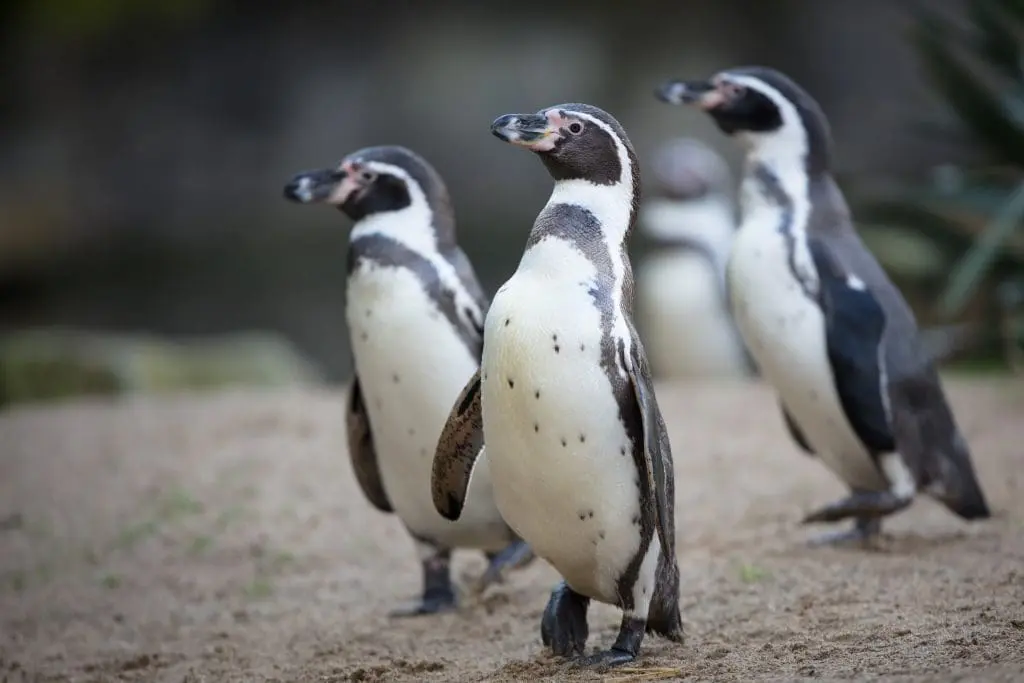
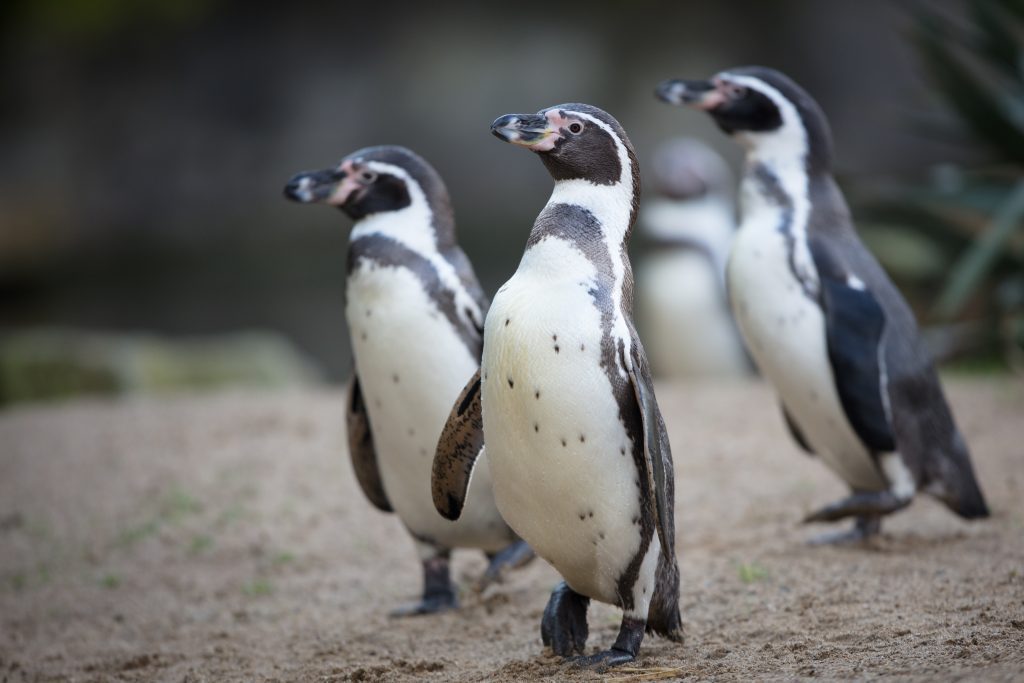
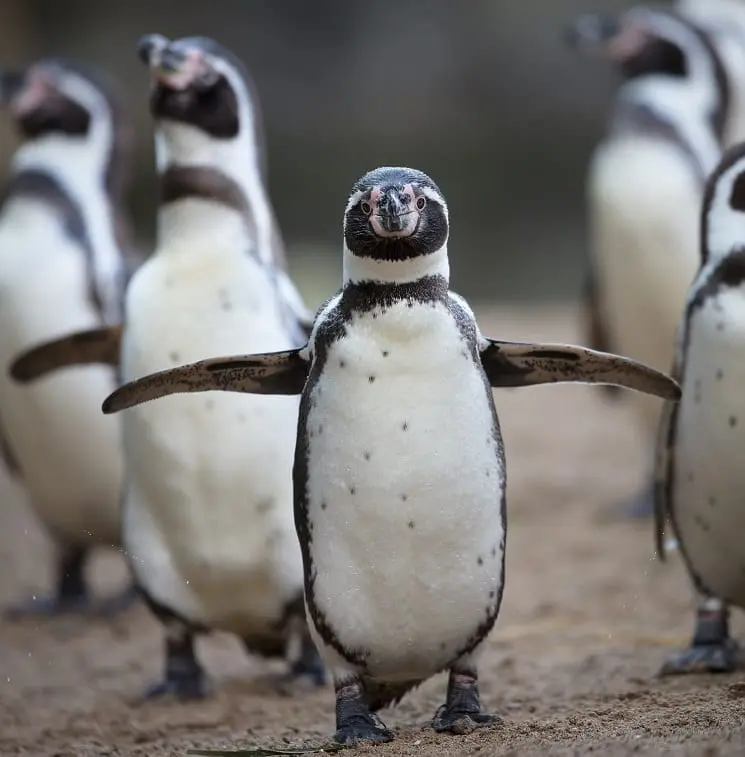
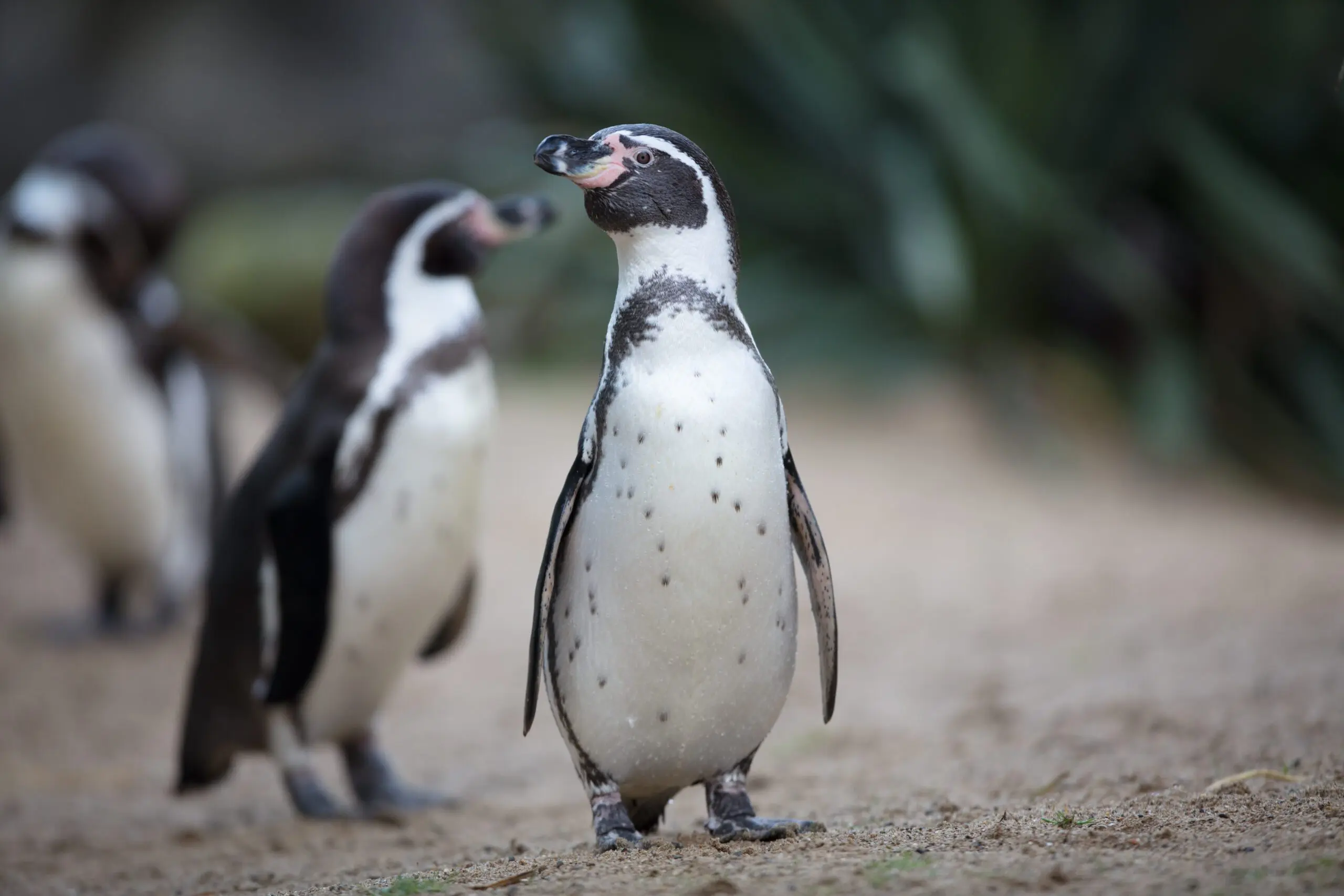
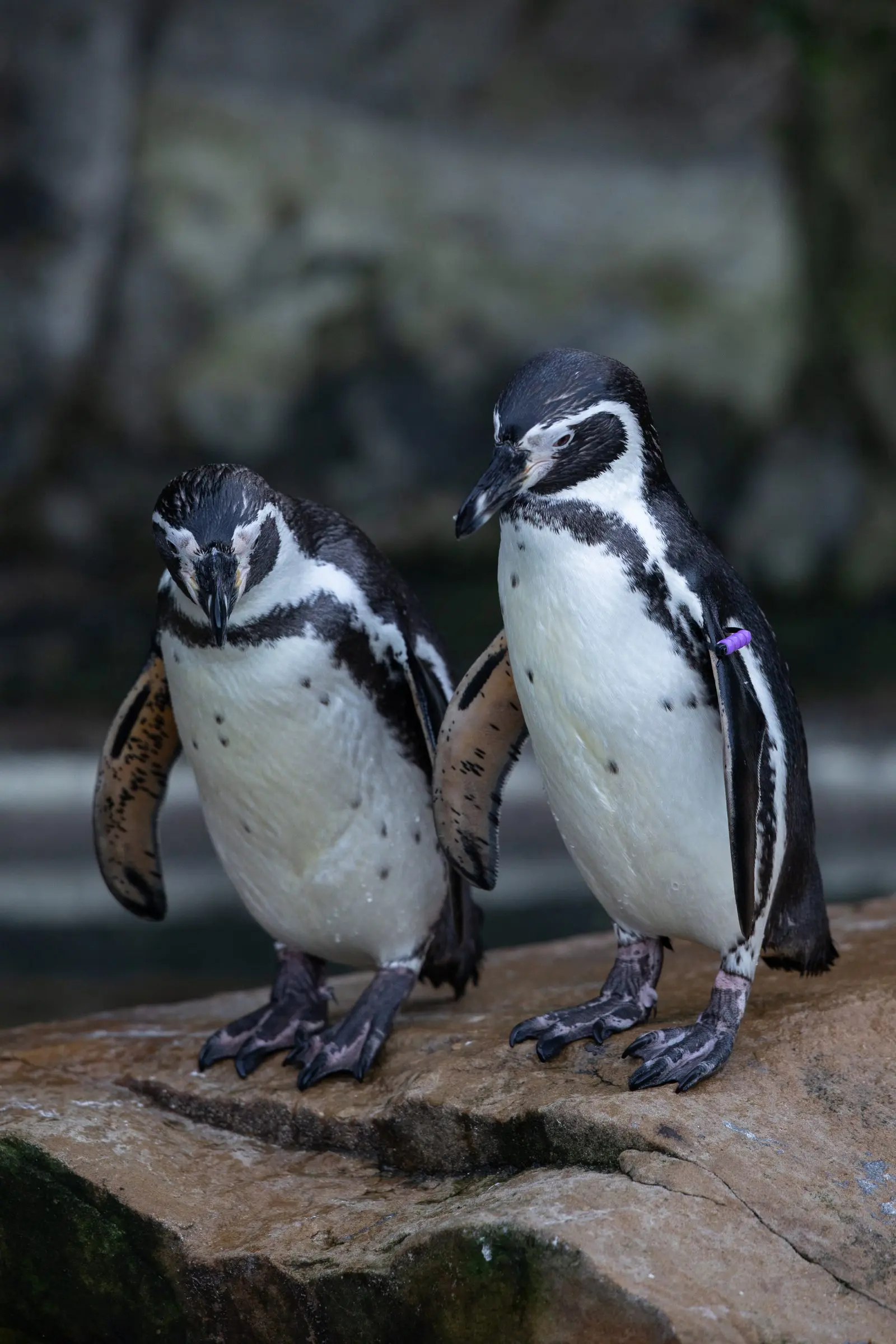
Penguins are flightless aquatic birds, adapted to live in water. Their backs are black and their chest is white, with a pattern of black spots that is unique to each individual. Humboldt penguins also have a black band of feathers across their upper chest. The base of their beak has no feathers and is pink in colour.
General Information
Zoo location
The Humboldt penguins are located beside Sea Lion Cove.
Animal class
Aves
Animal order
Sphenisciformes
Where do they live (Natural habitat)?
Unlike their Antarctic relatives, Humboldt penguins are native to Peru and Chile, where they live on rocky coasts
How long do they live?
Humboldt penguins live approximately 15-20 years in zoos. Little is known about their lifespan in the wild.
What do they eat?
Humboldt penguins feed on small fish such as sardines and anchovies. They also feed on squid, crab and shrimp. They hunt in groups, circling their prey before attacking.
Group name
A group of penguins is called a colony.
Closest related species / sister species
The closest related species to the Humboldt penguin are the Galapagos penguin, Magellanic penguin and African penguin.
Check out our penguin ISL Keeper Talk
Fun Facts!
Humboldt penguin swims – underwater views!
The humboldt penguin
Family life
Humboldt penguins are very social and live in large colonies. ‘They are usually monogamous (mate with one partner). Breeding occurs throughout the year with eggs incubating for about 40 days. Chicks are cared for by both parents.
Baby name
Chick
Gestation (pregnancy) period
Incubation period (time to hatching) of approximately 40 days.
Number of young at birth
Normal clutch of 2 eggs twice a year.
Age at maturity
2-3 years of age.
Size male adult
Male Humboldt penguins are up to 70cm long and weigh up to 6kg.
Size female adult
Female Humboldt penguins are smaller than the males.
Conservation
Vulnerable
The Humboldt penguin is listed as Vulnerable by the International Union for Conservation of Nature
Current population estimate
Estimated that there are 23,800 Humboldt penguins in the wild.
Threats
The Humboldt penguin is under threat from industrial fishing activities. These activities reduce the amount of fish available to penguins for food. Penguins sometimes also get caught in or harmed by fishing nets.
They are also threatened by humans removing guano (sea bird poo that Humboldt penguins make their nests from and lay eggs in).
The arrival of rats to their wild habitats has also reduced chick populations.
Oil spills and climate change are also a threat.
What is Dublin Zoo doing?
Dublin Zoo provides funding for Humboldt penguin conservation through our conservation partner, Sphenisco, which works to protect Humboldt penguins.
Frequently Asked Questions
The Humboldt penguin is under threat from industrial fishing activities.
They are also threatened by humans removing guano (sea bird poo that Humboldt penguins make their nests from and lay eggs in).
The arrival of rats to their wild habitats has also reduced chick populations.
Oil spills and climate change are also a threat.
Humboldt penguins feed on sardines, anchovies, squid, crab and shrimp.
Humboldt penguins live in large colonies which helps protect them from predators such as gulls, sharks, leopard seals and fur seals.
Humboldt penguins live approximately 15-20 years in zoos. Little is known about their lifespan in the wild
Yes, penguins have knees. The leg is composed of a short femur, knee, tibia and fibula. The upper leg bone is not visible as it is covered in feathers.
Penguins are aquatic birds adapted to live in the water.
No, penguins cannot fly, but they can swim using their flippers.
Penguins are not mammals, they are birds.
Penguins have stiff overlapping waterproof feathers.
Penguins are usually monogamous (mate with one partner).
Some penguins can jump up to 1.8 meters high when going from water to shore.
A baby penguin is called a chick.
A group of penguins is called a colony
Polar bears do not eat penguins. This is because penguins and polar bears live in different areas in the wild and do not come across each other.
Penguins are eaten by gulls, sharks, leopard seals and fur seals.
Penguins do not have teeth. Instead, their tongue and throat have spiny structures that prevent food from slipping out of their mouth.
There are 17 species of penguin.
Humboldt penguins are up to 70 cm tall. Emperor penguins can reach 122 cm in height.
Humboldt penguins can recognise and find their partner and chicks in their large colony by their unique vocalisations (sounds).