Ring-tailed lemur
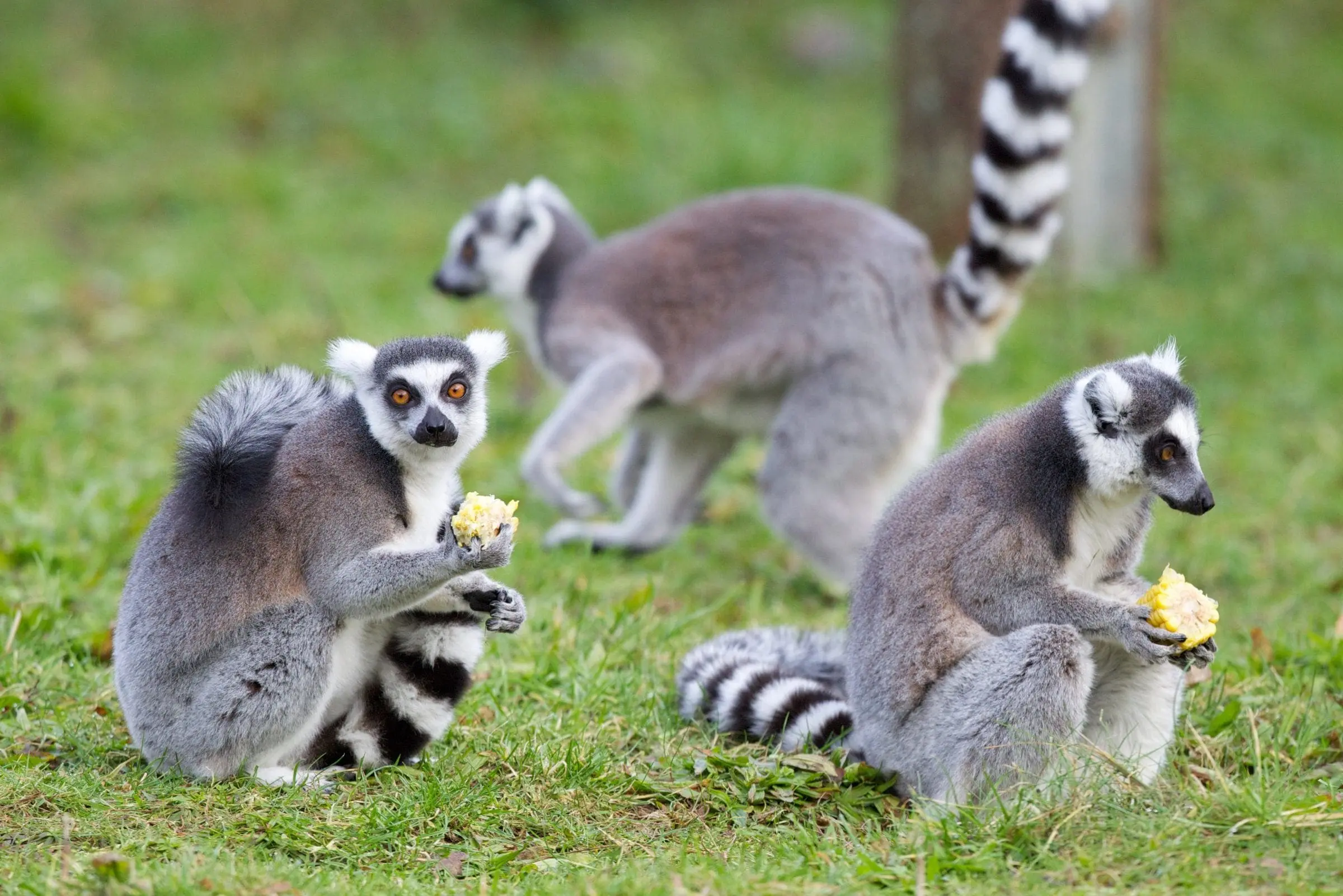
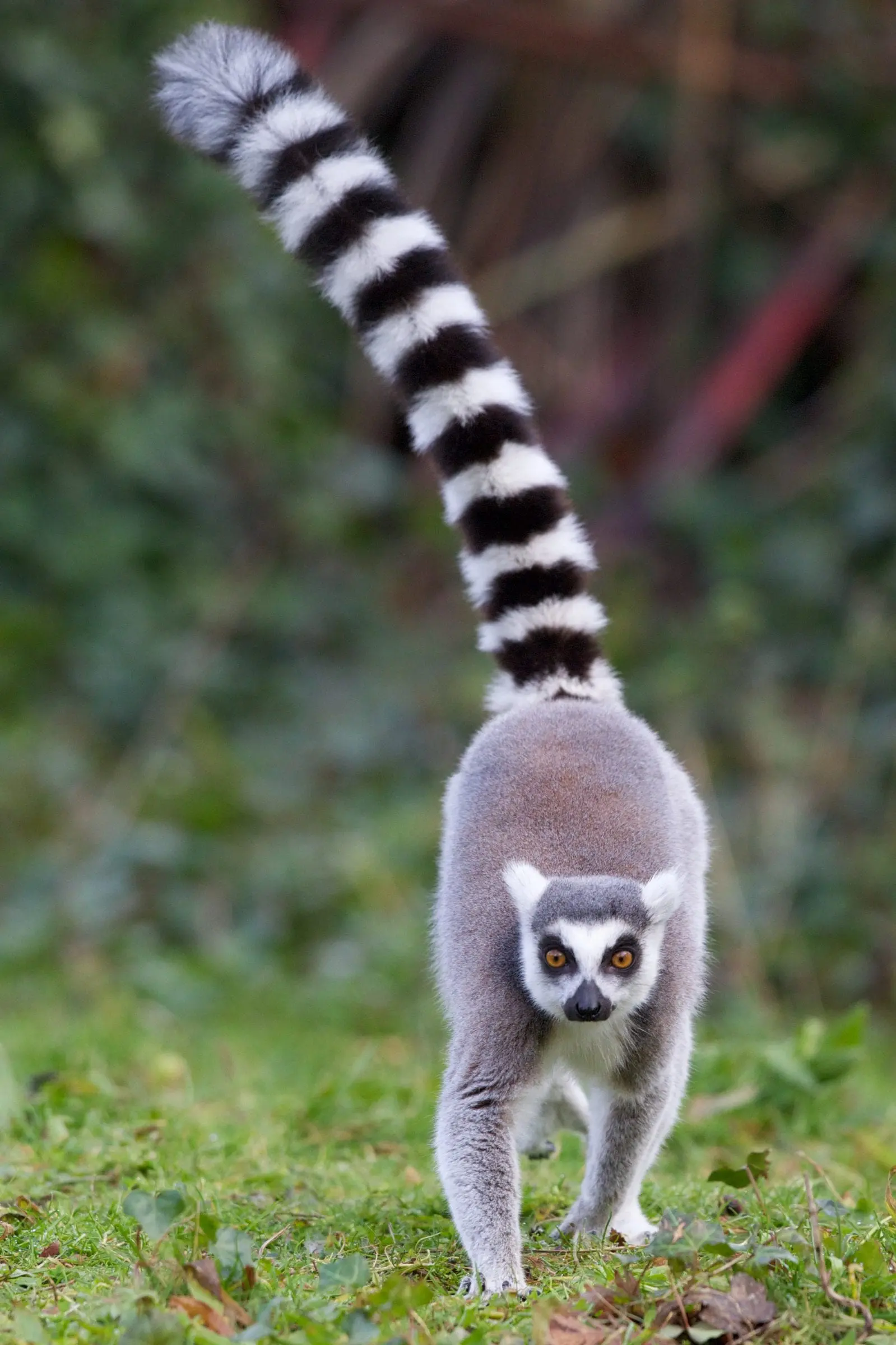
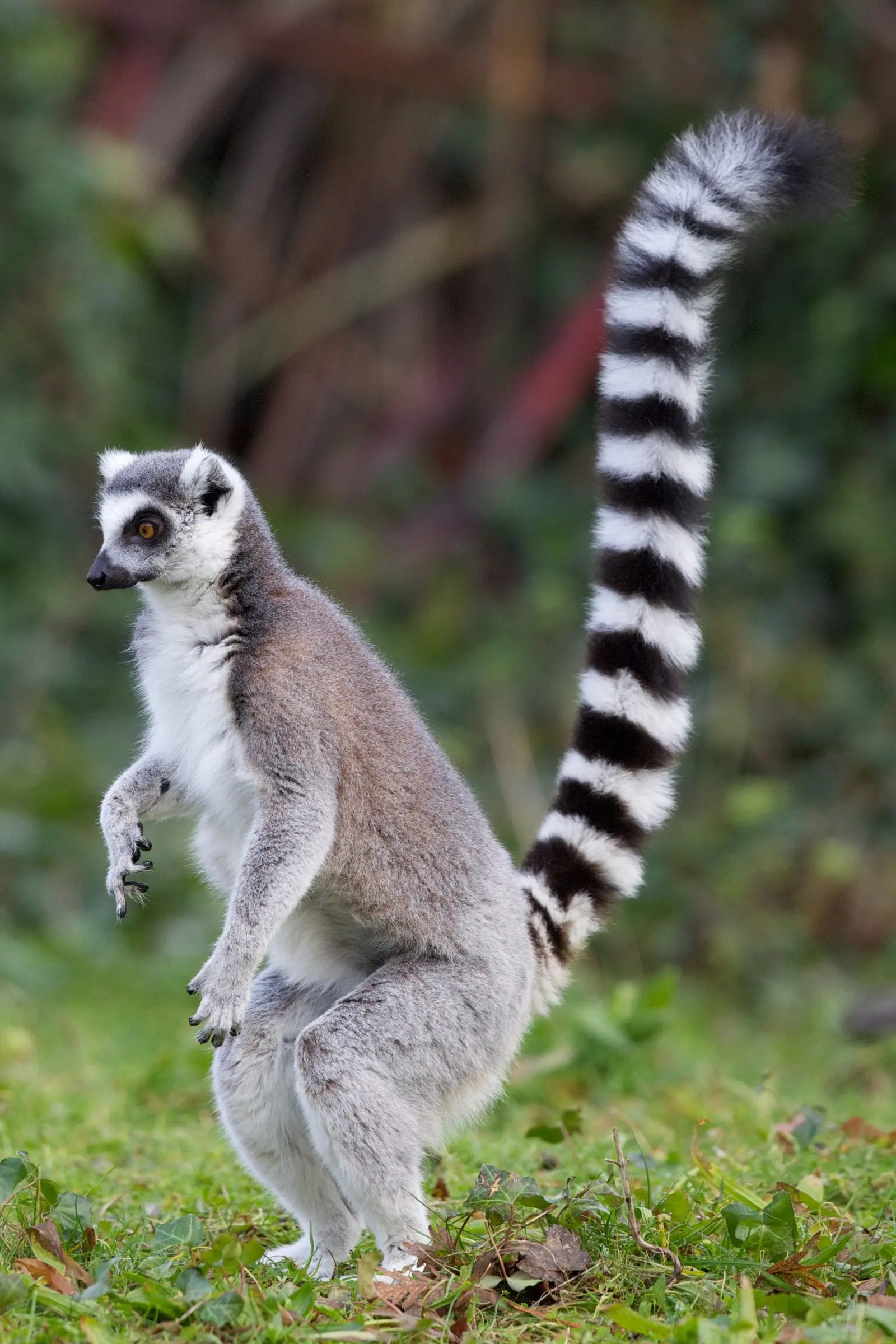
The ring-tailed lemur is one of the most recognizable lemur species, distinguished by its long black-and-white striped tail
Species
Mammals
Habitat
Forest
Diet
Omnivores
Conservation Status
Endangered
Ring-tailed lemur
Lemur catta
Irish Name: Léamar bandearrach
IUCN Status: Endangered
The ring-tailed lemur is a primate with a greyish body, a white body and a white face with black circles around its eyes. Its most distinguishable feature is its long black and white striped tail from where its name derives. The ring-tailed lemur, like all lemur species, hails from the island of Madagascar.
General Information
Zoo location
On Lemur Island, just across from the Play Forest playground and before the flamingos.
Animal class
Mammalia
Animal order
Primates
Where do they live (Natural habitat)?
Ring-tailed lemurs live in the dry forests and bush of southern Madagascar.
How long do they live?
Ring-tailed lemurs live for up to 20 years in the wild but up to 30 years in zoos.
What do they eat?
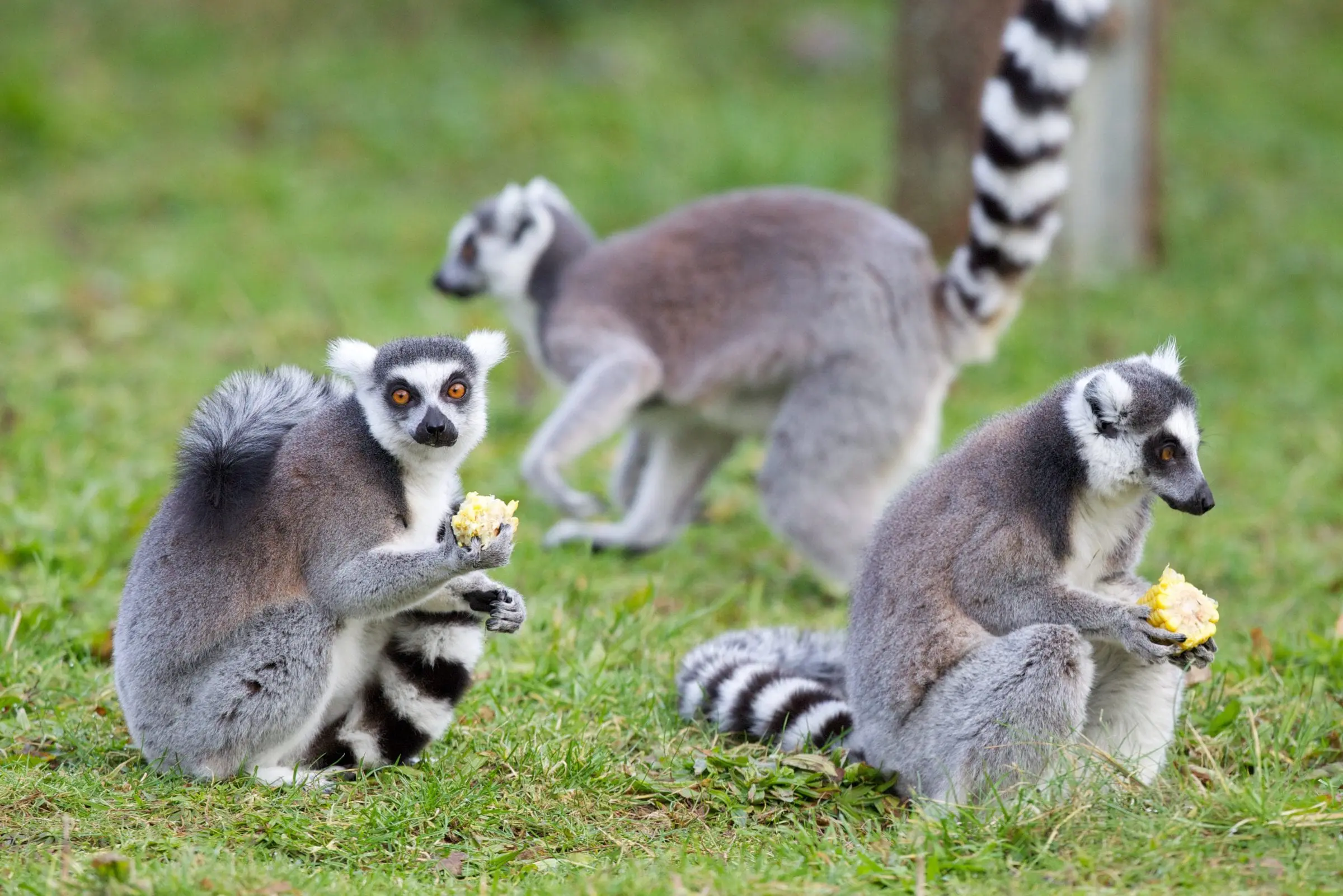
These opportunistic omnivores mostly eat leaves and fruit but will eat larvae, eggs, invertebrates, and small birds or reptiles if they can find them.
Group name
Troop
Closest related species / sister species
Ring-tailed lemurs are the only living members of the lemur genus. Their closest relatives are the bamboo lemurs or hapalemur, which include the gentle lemurs.
Fun Facts!
The Ring-tailed lemur
Family life
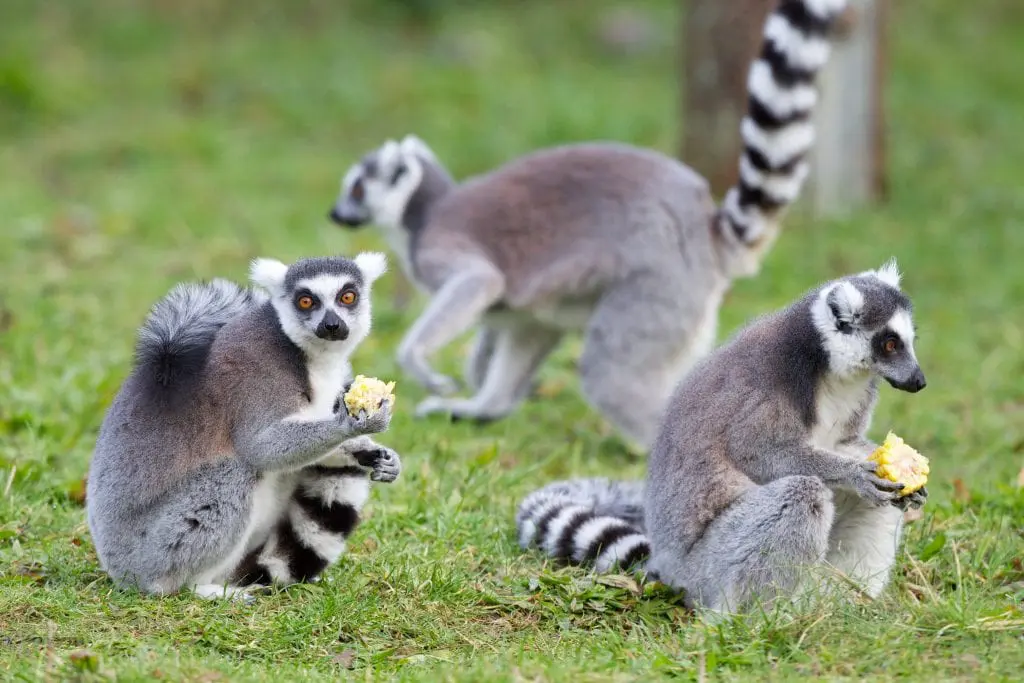
The ring-tailed lemur lives in groups of around 20 individuals, with females leading the troop. They can often be seen huddling in “lemur balls” or close knit huddling groups to keep warm and reaffirm social bonds. Young males leave their troop at 3-5 years old.
Baby name
Newborn, baby or infant.
Gestation (pregnancy) period
About 135 days
Number of young at birth
Usually 1 but occasionally twins are born
Weight at birth
Around 100g
Age at maturity
2.5-3 years
Size male adult
39-46cm in height and 2.2kg in weight
Size female adult
39-46cm in height and 2.2kg in weight
Adult male name
Male
Adult female name
Female
Conservation
Endangered
The ring-tailed lemur is listed as ‘Endangered’ by the International Union for Conservation of Nature due to habitat loss, climate change and being captured for the pet trade.
Almost every species of lemur are at risk of extinction, making them the world’s most endangered group of primates.
Current population estimate
Estimated between 2,000-2,400 in the wild.
Threats
Habitat loss due to farming and charcoal production, capture for the pet trade, climate change and their fragmented population are making it hard for their numbers to increase.
What is Dublin Zoo doing?
Dublin Zoo’s ring-tailed lemurs are part of the European breeding programme for this species, meaning that our animals can be suggested for breeding recommendations with other ring-tailed lemurs in other European zoos if they are genetically compatible.
Frequently Asked Questions
Ring-tailed lemurs are opportunistic omnivores that mostly eat leaves and fruit but will eat larvae, eggs, invertebrates, and small birds or reptiles if they can find them.
Ring-tailed lemurs live in the dry forests and bush of southern Madagascar.
Conservation efforts target four main threats to lemurs: habitat destruction, hunting for food, the pet trade and climate change/drought.
Nature preserves in Madagascar aim to prevent habitat destruction and prevent droughts. They introduce watering troughs and fruit trees that can help lemurs survive harsh dry seasons.
Successful breeding programmes in zoos can also lead to the reintroduction of lemurs into their natural habitat in the wild.
Conservation efforts target 3 main threats: habitat destruction, hunting for food and the pet trade, and climate change/droughts. Nature preserves in Madagascar help prevent some habitat destruction and protect from hunting, successful breeding programs in zoos can lead to reintroduction programes, and drought prevention (watering troughs and introduced fruit trees) can help them survive harsh dry seasons.
No, ring-tailed lemurs prefer the dry forest and spiny scrub in southern Madagascar instead of rainforests, although many other lemur species live in rainforests.
It is unknown exactly how many ring-tailed lemurs are left in Madagascar but could be as low as 2,000- 2,400 individuals.
The exact numbers of ring-tailed lemurs is unknown but could be as low as 2,000 individuals in the wild, with another 2,000 in zoos around the world.
An unknown number also exist in the private pet trade.
39-46cm, although their tail is not included in that length!
Ring-tailed lemurs are not nocturnal. They are active during the day. At night they huddle together in a ‘lemur’ ball to sleep.
Ring-tailed lemurs can jump about 7.5 metres in one leap.
An infant, newborn or baby.
Ring-tailed lemurs are highly social animals and live in groups of up to 20 individuals.