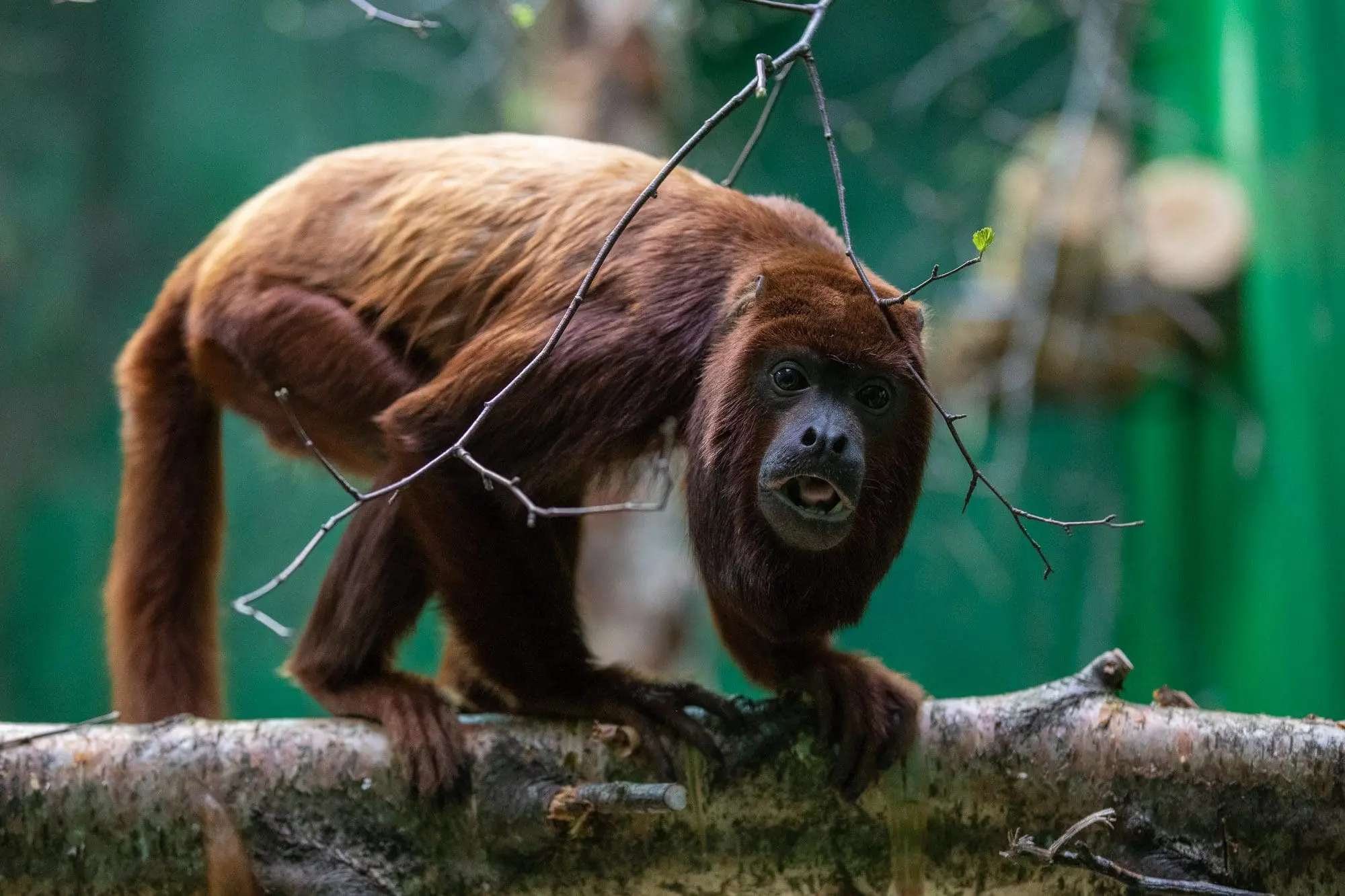
Venezuelan red howler monkey
The Venezuelan red howler monkey is a medium-sized primate that belongs to the New World monkeys
Species
Mammals
Habitat
Forest
Diet
Herbivores
Conservation Status
Least Concern
Venezuelan red howler monkey
Alouatta seniculus
Irish Name: Moncaí rua uallach Veiniséalach
ICUN Status: Least Concern
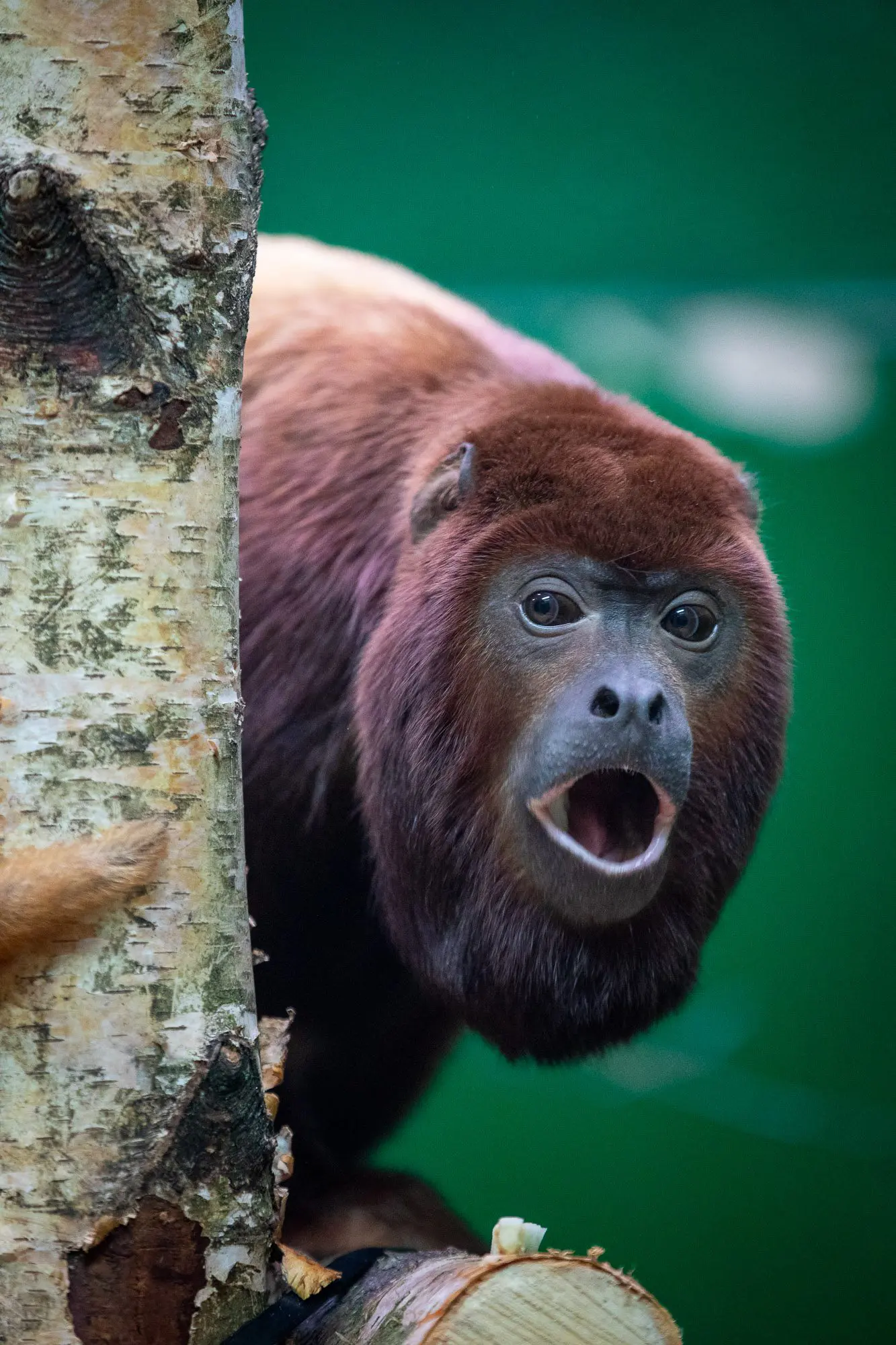
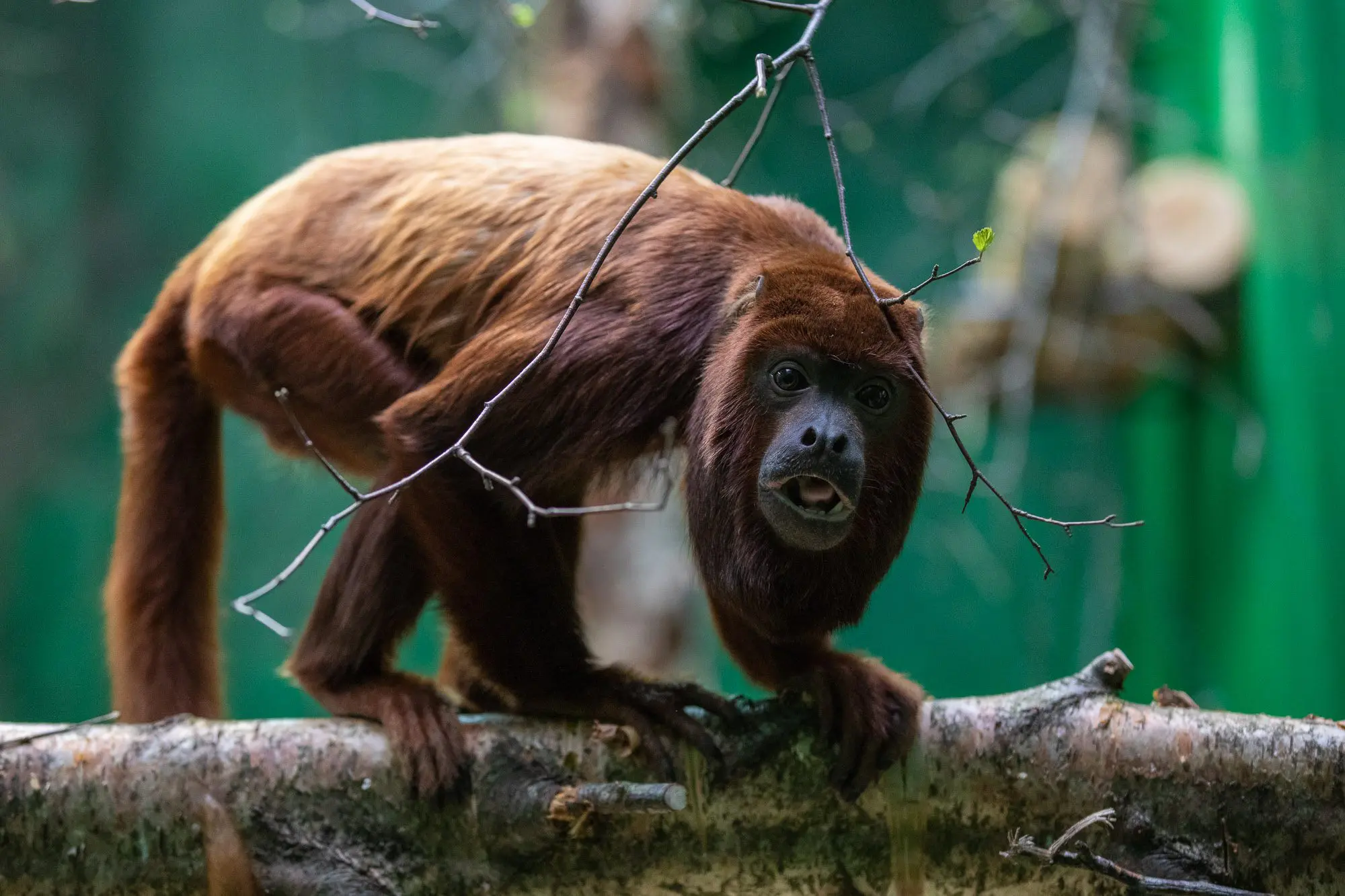
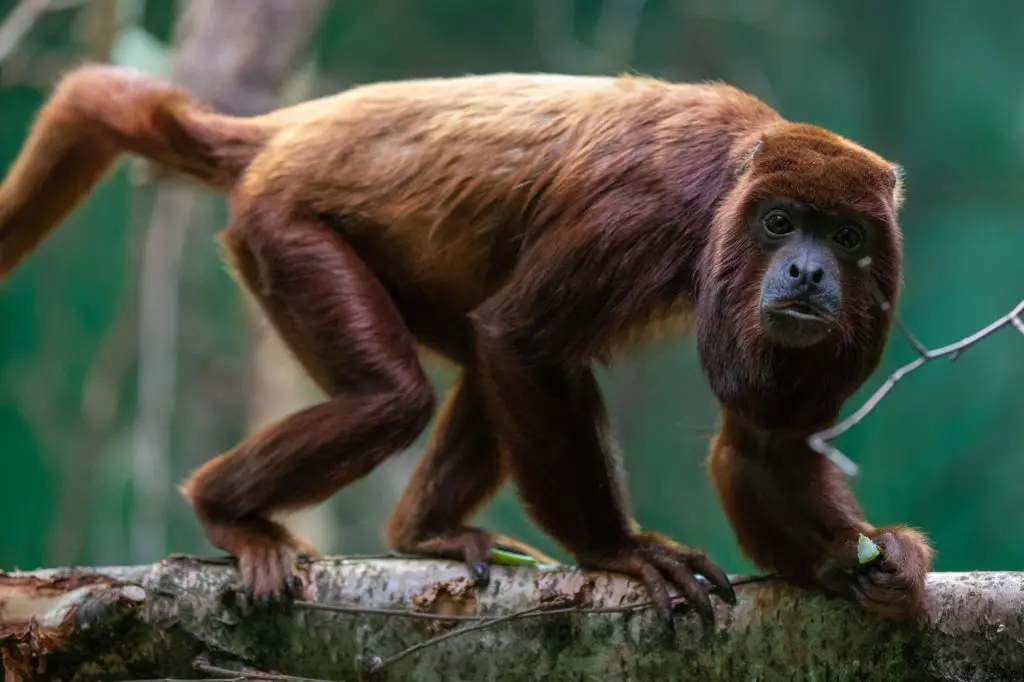
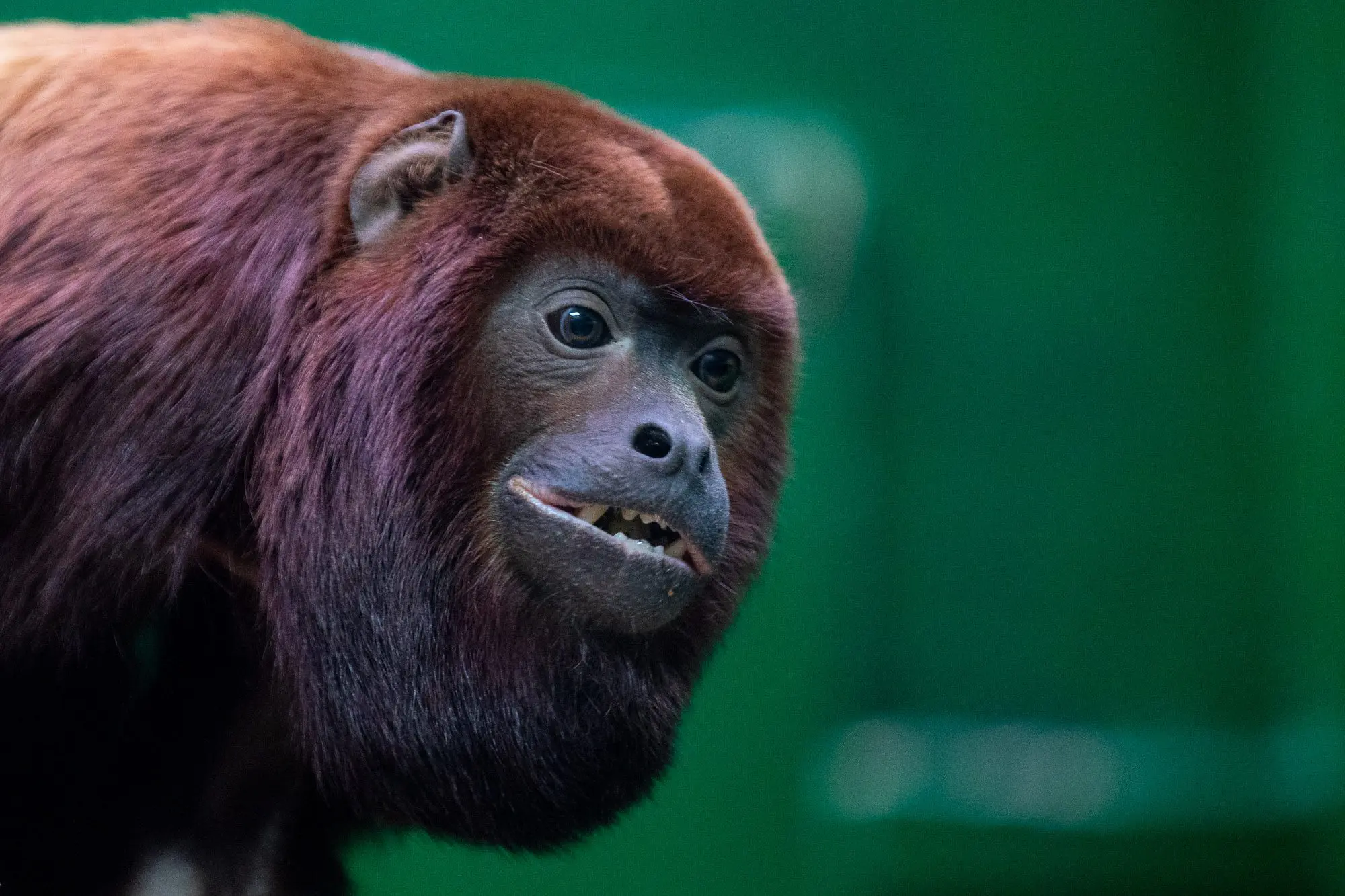
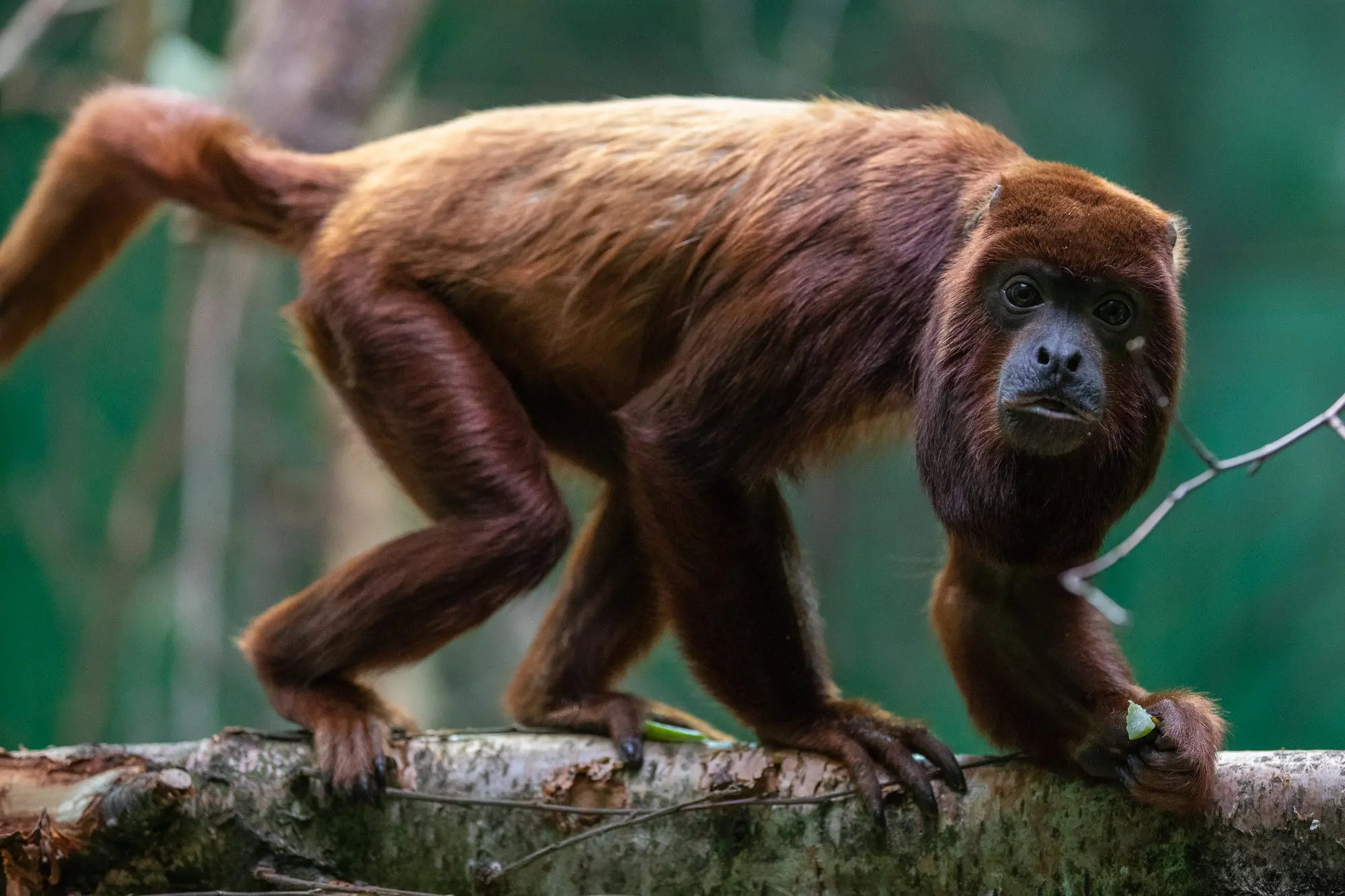
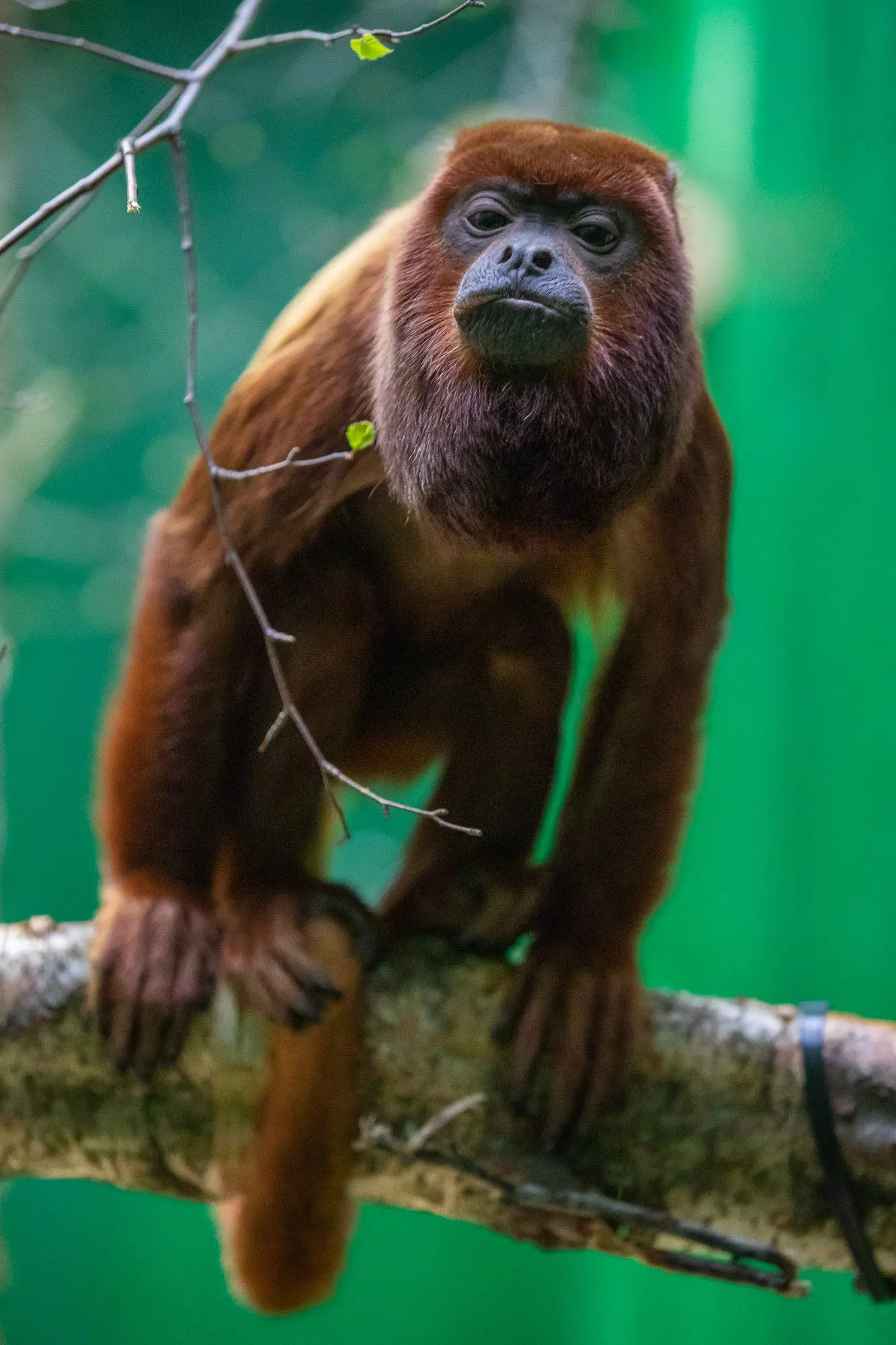
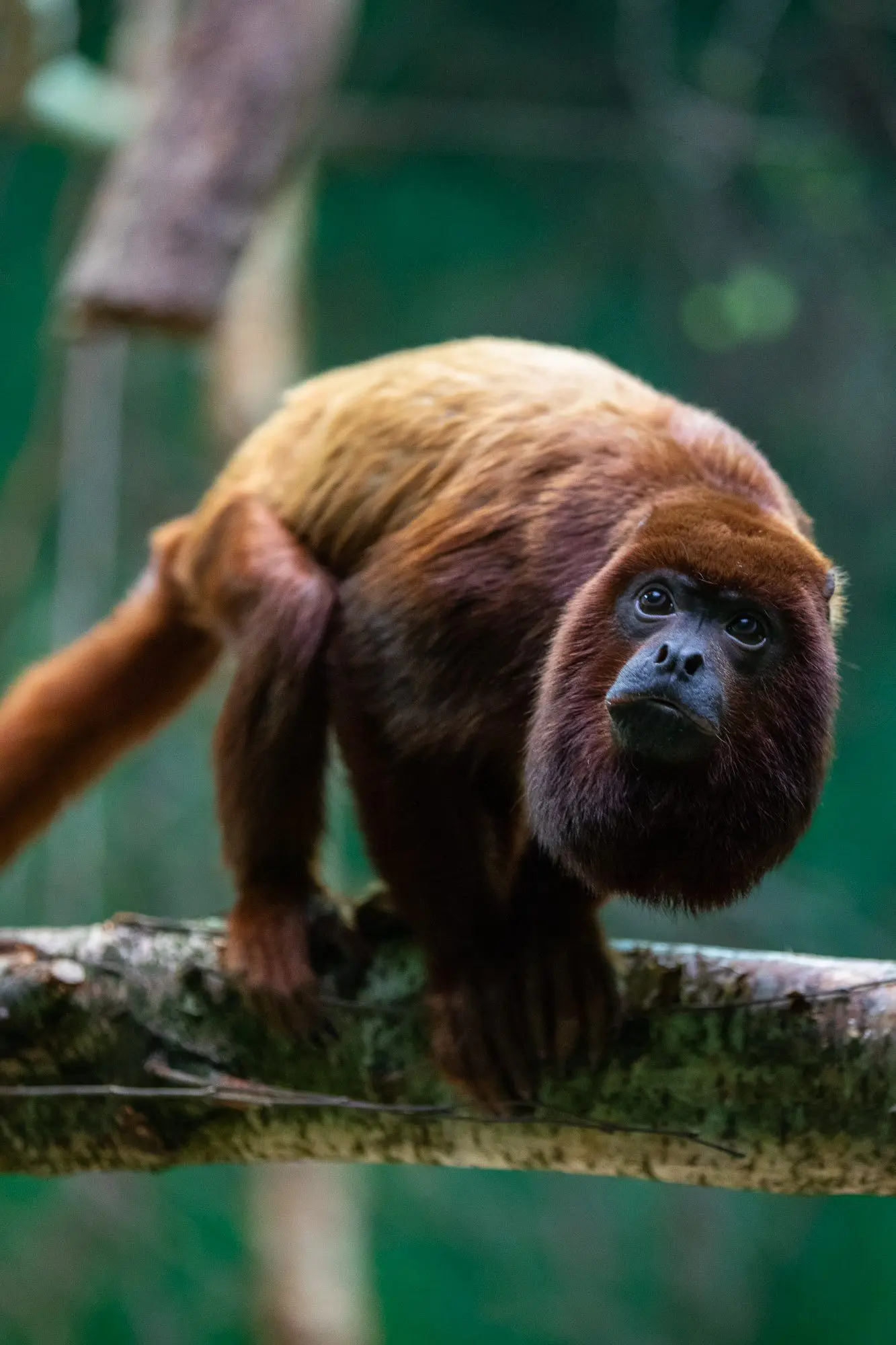
The Venezuelan red howler monkey is a medium-sized primate that belongs to the New World monkeys (monkeys that are found in North and South America). It has a red-brown coat, a large jaw and neck and a long tail. Its tail is sometimes longer than its body.
General Information
Zoo location
Rainforest House
Animal class
Mammalia
Animal order
Primates
Where do they live (Natural habitat)?
Venezuelan red howlers live in many different forest habitats, including rainforests, tropical deciduous forests and even mangrove (tropical trees found near water, usually saltwater) swamps. They are found on the South American continent in Colombia, Ecuador, Venezuela, Trinidad and Tobago, Bolivia and Brazil.
How long do they live?
Venezuelan red howlers can live up to 25 years in zoos and around 18 years in the wild.
What do they eat?
Venezuelan red howlers are herbivores (plant-eaters) and over 52% of their diet comes from leaves. Their large jaws help them chew tough leaves. Leaves are not very nutritious, so they supplement their diet with seasonal fruits (like wild figs) and flowers. They spend most of their time high up in tree canopies where the most nutritious leaves are found. Venezuelan red howlers are not picky eaters. They have been seen eating 195 different species of plants.
Group name
Troop
Closest related species / sister species
The Bolivian red howler monkey, once considered a subspecies of the Venezuelan red howler monkey, is the closest related species.
Fun Facts!
The Venezuelan red howler monkey
Family life
Venezuelan red howlers are social primates and live in troops of 2-13 members. These troops contain a dominant male, a couple of females and younger males. The troop spends a lot of the day maintaining social bonds between its members. This is mainly done by members grooming each other.
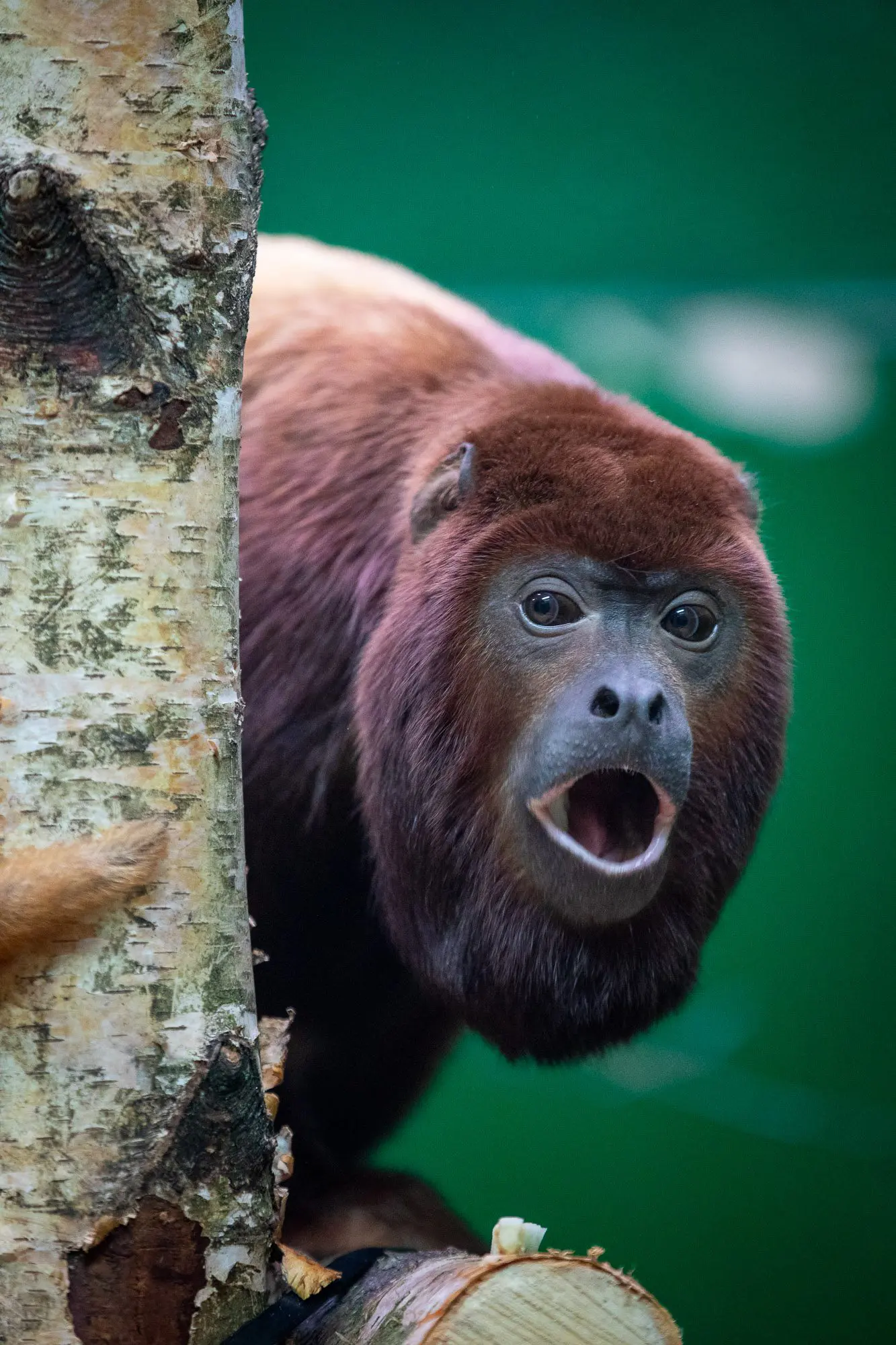
Like all howler monkeys, Venezuelan red howlers are very vocal. Howling helps them to establish and maintain their territories. When a troop starts to howl, any other howler monkeys close by will return the howl. As a result, each troop knows the position of other troops nearby.
Baby name
Infant
Gestation (pregnancy) period
Approximately six months
Number of young at birth
Generally One
Weight at birth
Approximately 450 g
Age at maturity
4-5 years of age
Adult size
6-72 cm long body, 49-75 cm long tail, 4.5-7.5 kg in weight
Conservation
Least Concern
Currently, the Venezuelan red howler monkey is classified as Least Concern by the International Union for Conservation of Nature (IUCN).
Current population estimate
Unknown but decreasing
Threats
The main threats to Venezuelan red howlers are habitat loss due to deforestation (for agriculture, logging and human development) and hunting by humans.
What is Dublin Zoo doing?
Dublin Zoo provides education on and raises awareness of this species and the conservation threats it faces in the wild.
Frequently Asked Questions
Red howler monkeys live in many different forest habitats, including rainforests and tropical deciduous forests, in South America. They are found in Colombia, Ecuador, Venezuela, Trinidad and Tobago, Bolivia and Brazil.
Venezuelan red howlers are herbivores (plant-eaters). They mostly eat leaves, but they also eat fruits (like wild figs) and flowers.
Venezuelan red howlers do have natural predators. These include harpy eagles and jaguars. Pumas and Boa constrictor snakes may also hunt them.
No, Venezuelan red howlers are currently not endangered. They are classified as Least Concern by the International Union for Conservation of Nature (IUCN). However, their populations in the wild are decreasing, and they face threats like the deforestation of their habitats and hunting by humans.