Siamang gibbon
Siamang gibbons are the largest of the gibbon species, a group of 'lesser’ apes found in Asia
Species
Mammals
Habitat
Forest
Diet
Omnivores
Conservation Status
Endangered
Siamang gibbon
Symphalangus syndactylus
Irish Name: Giobún siamang
IUCN Status: Endangered
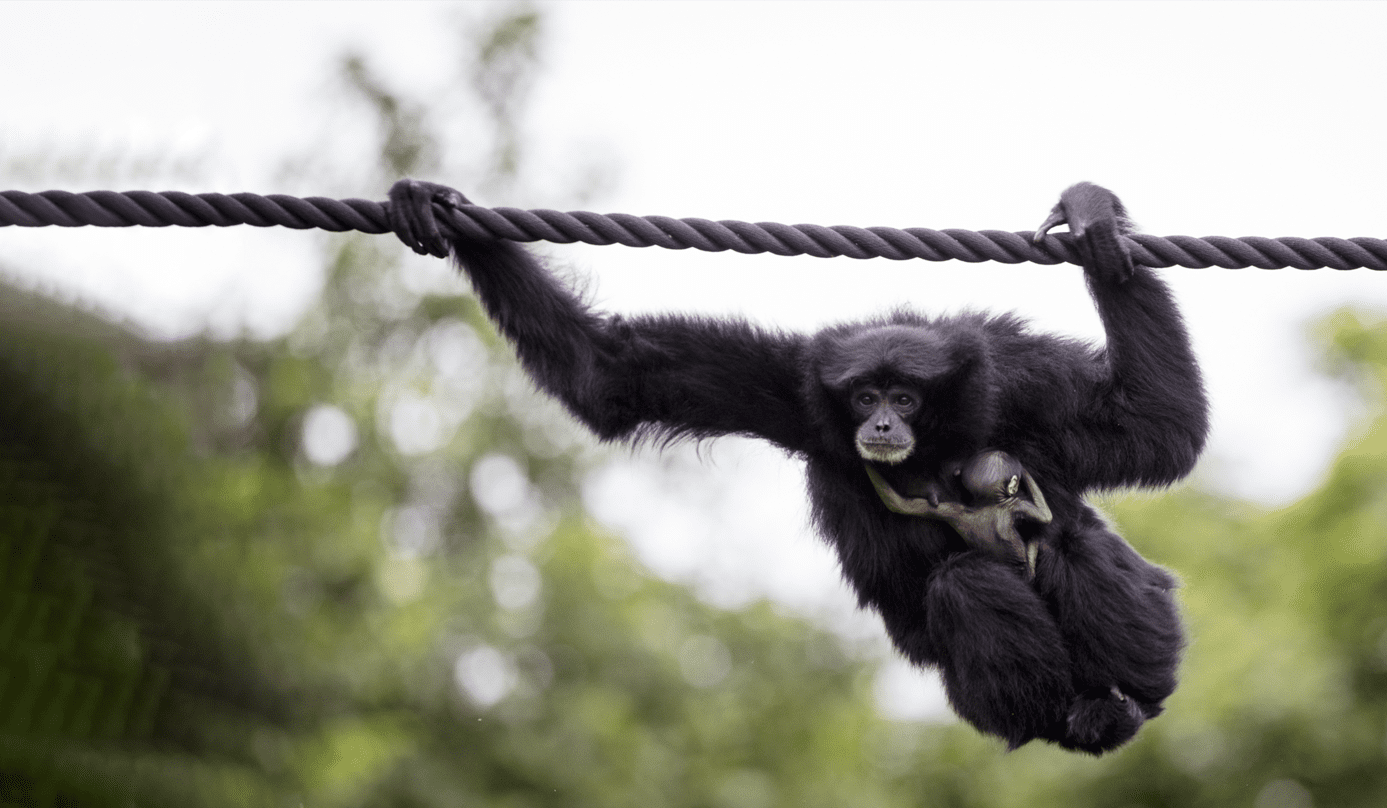
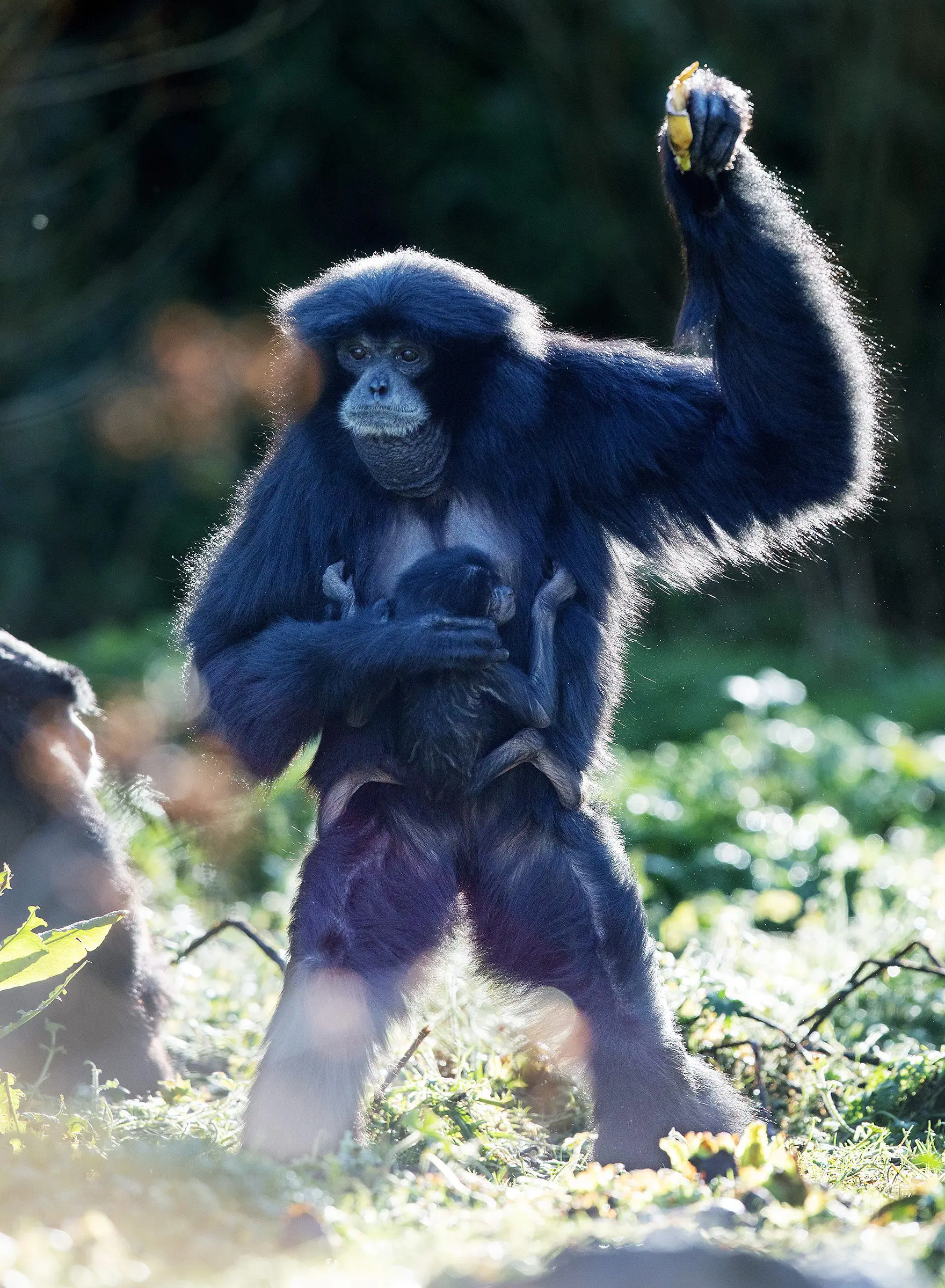
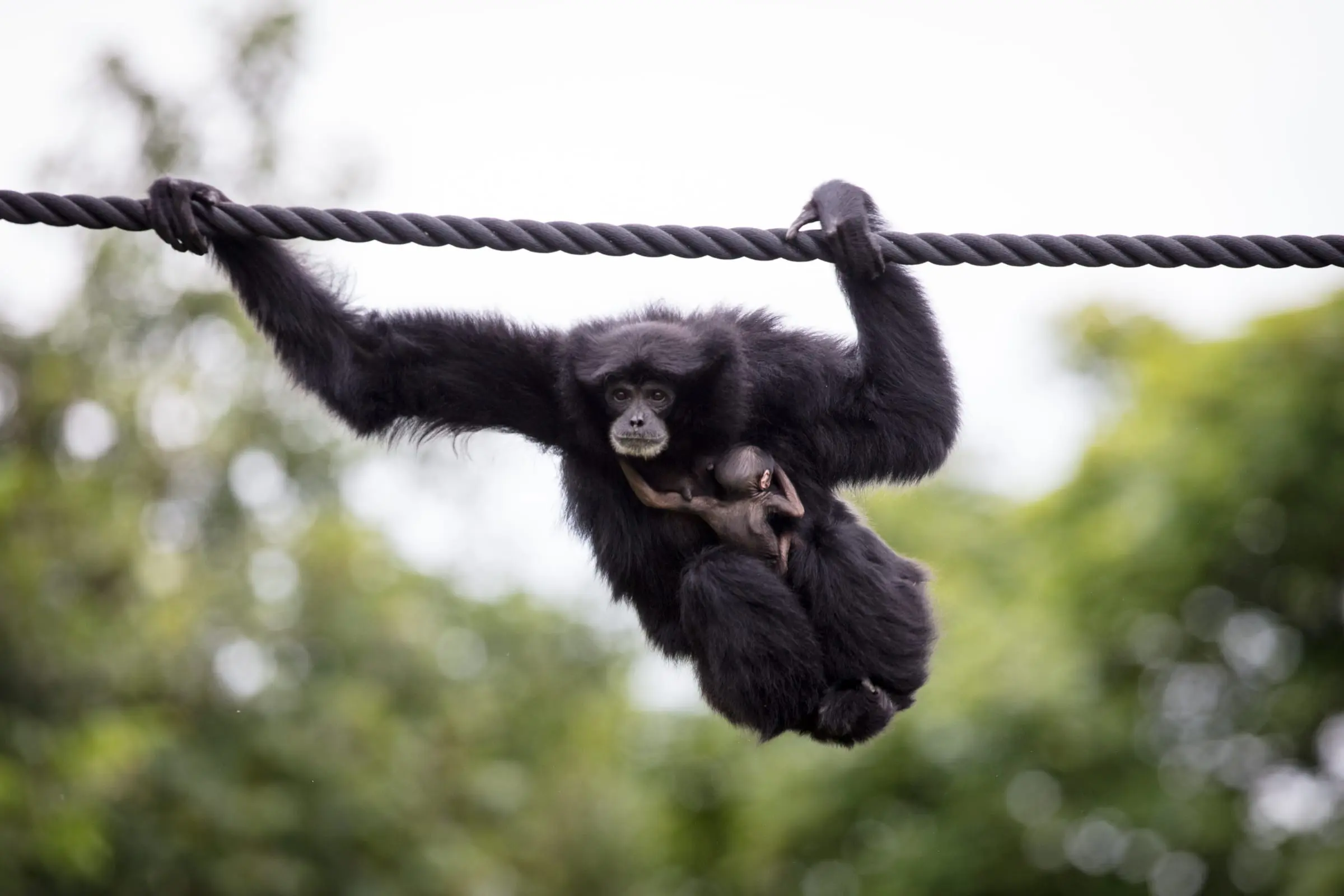
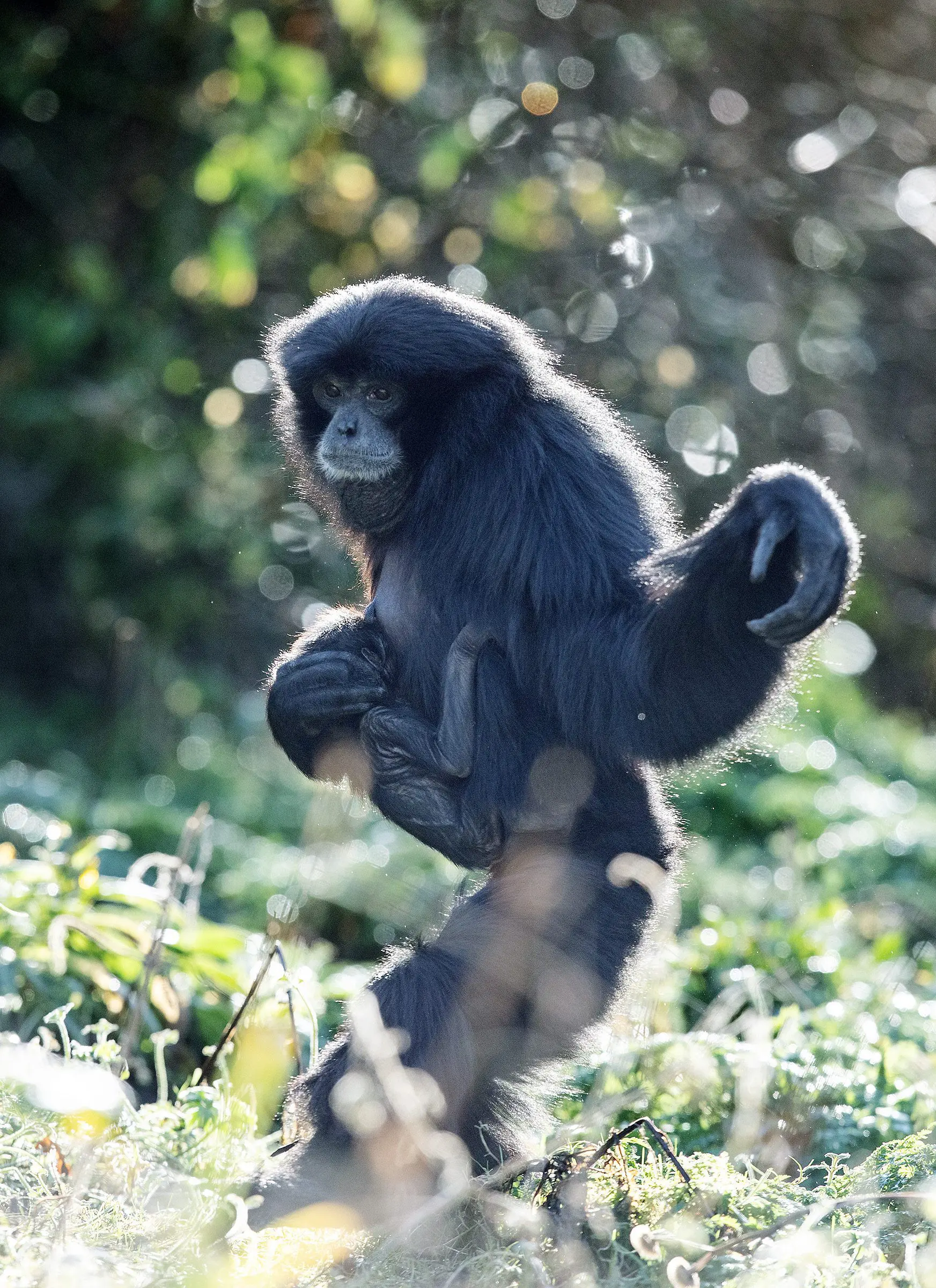
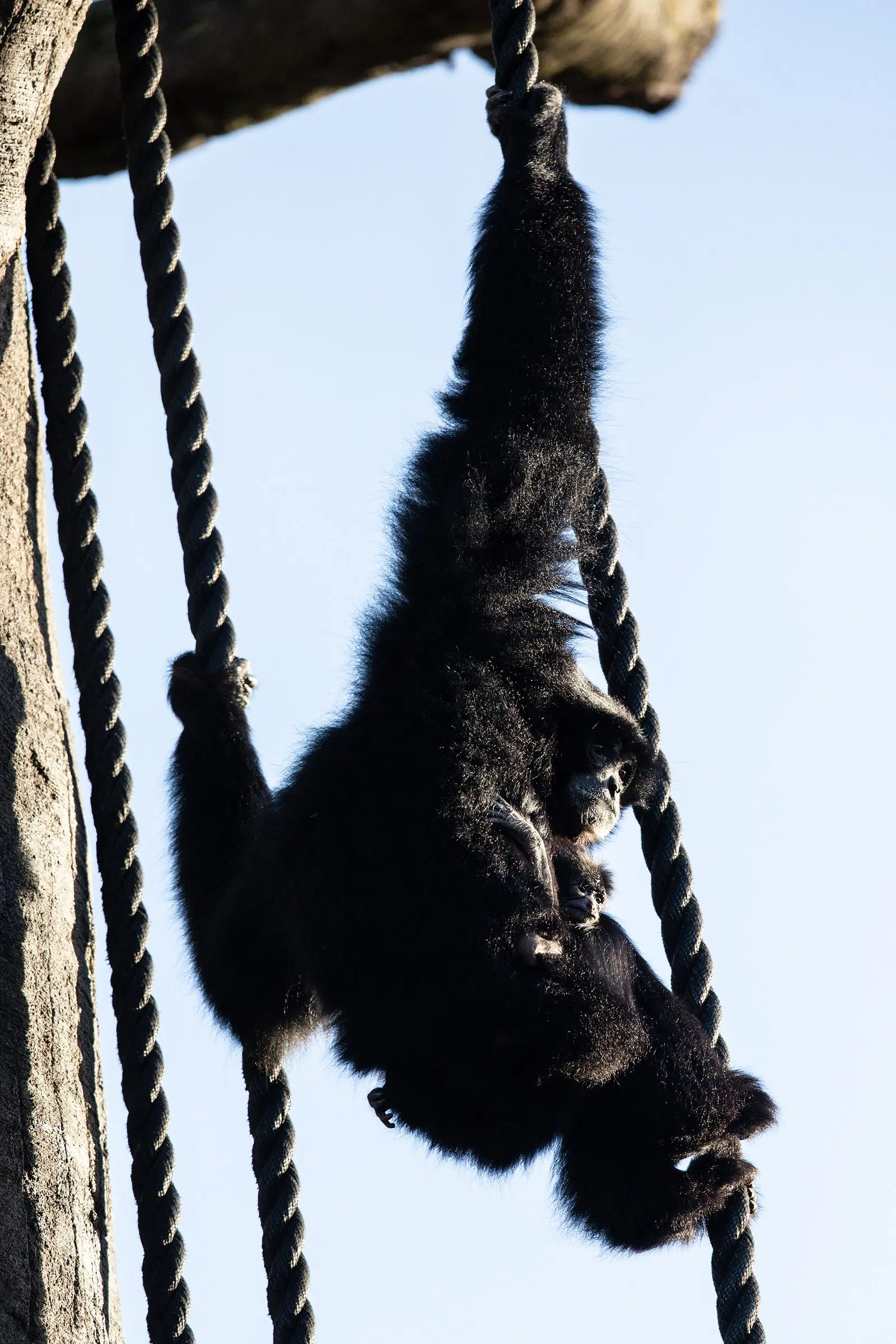
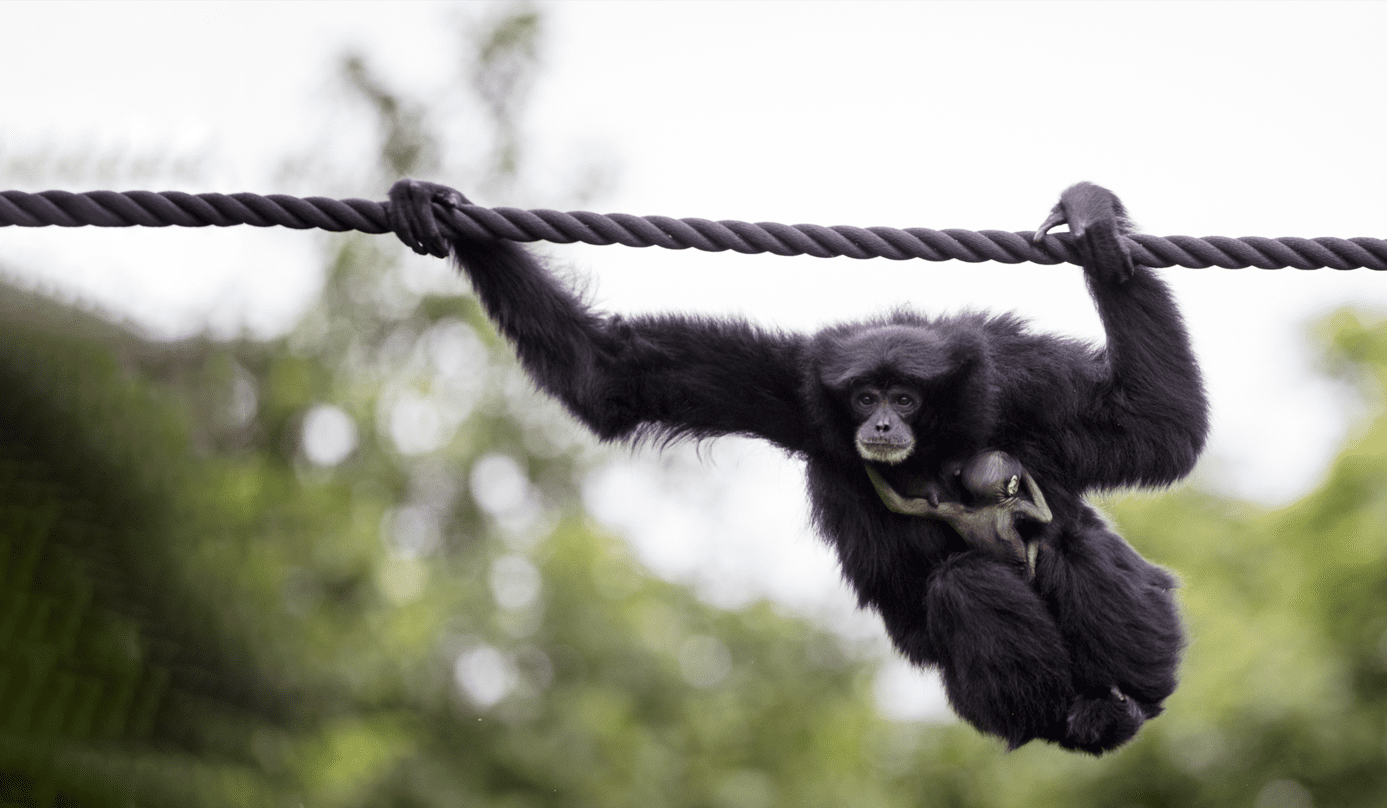
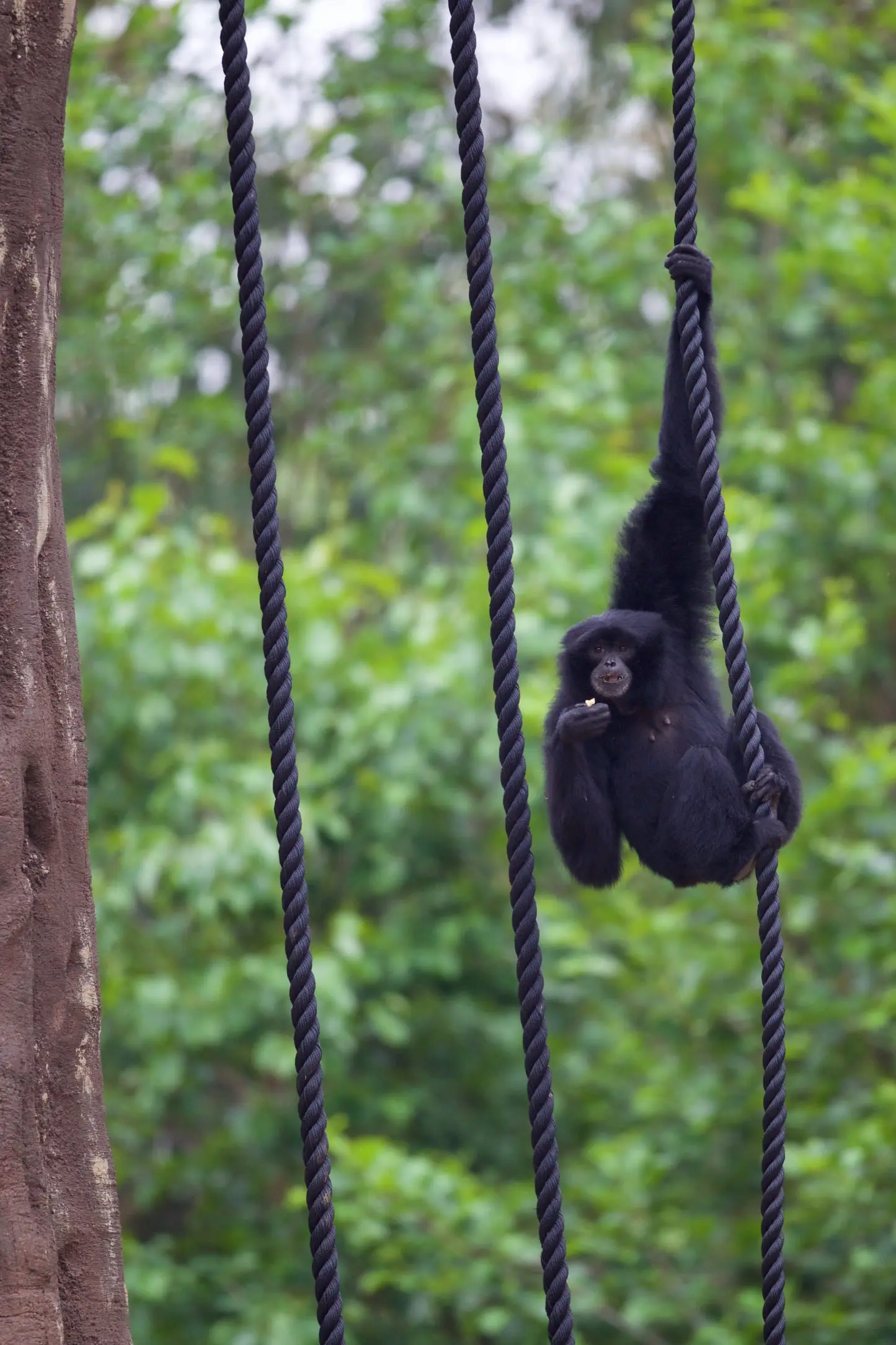
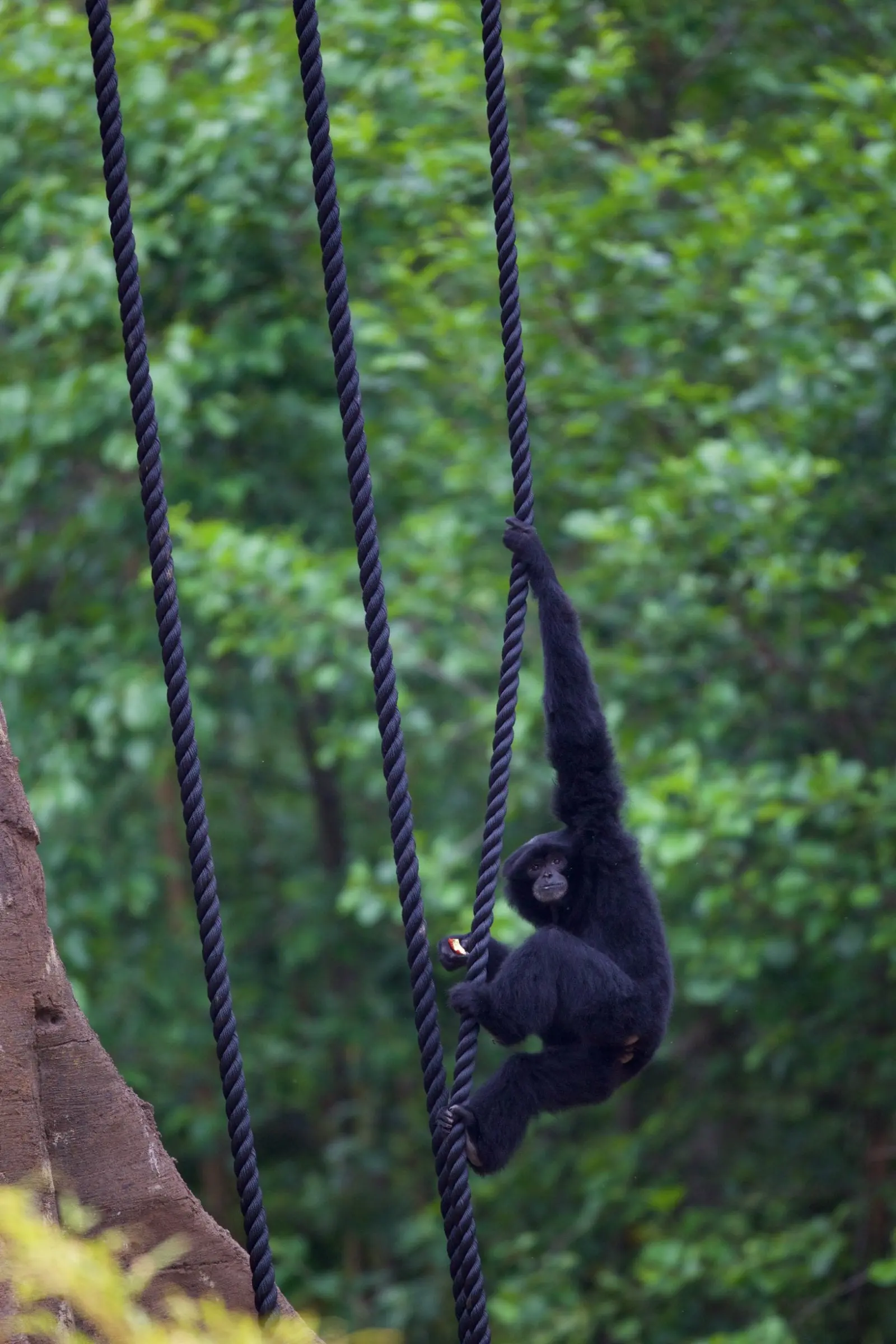
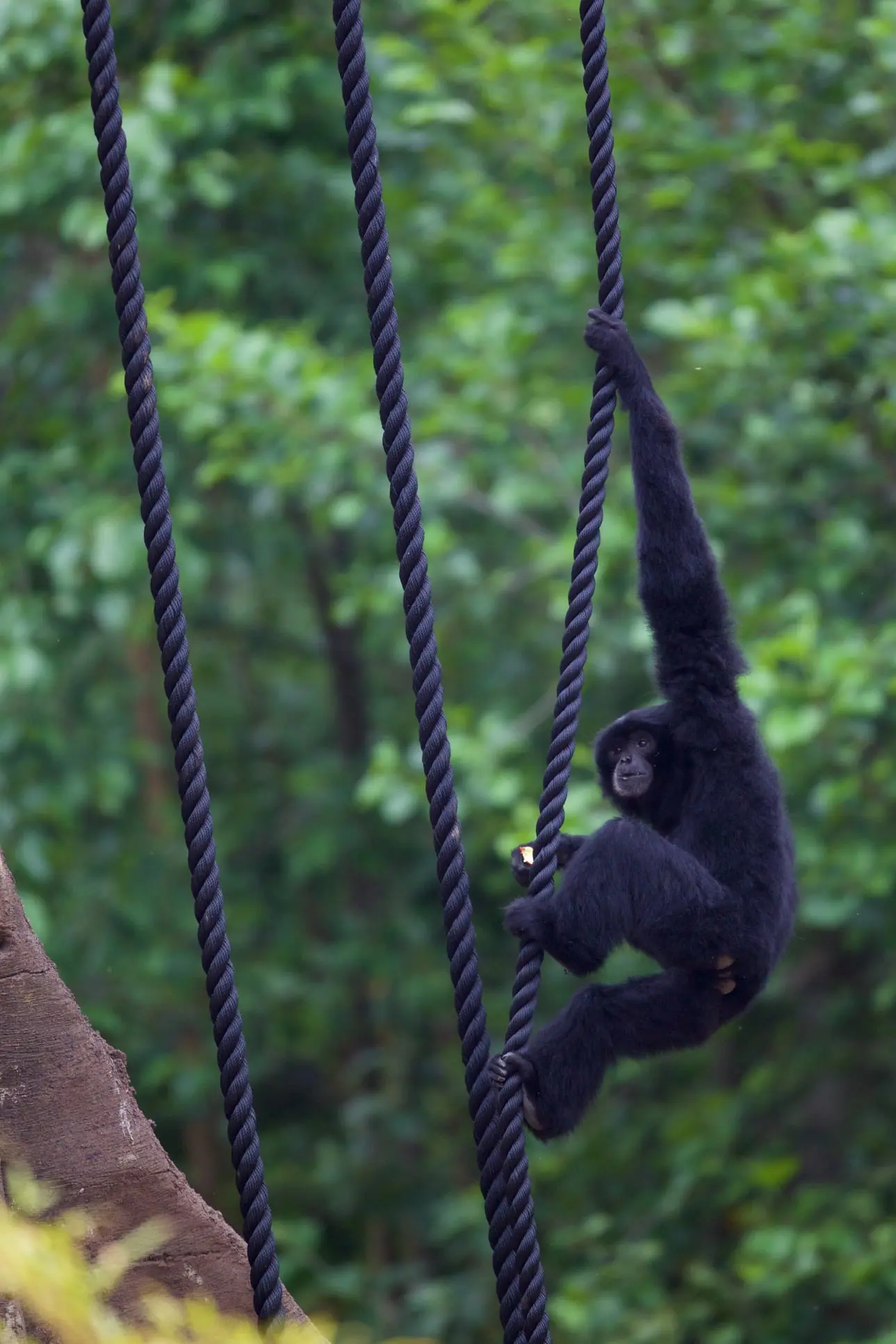
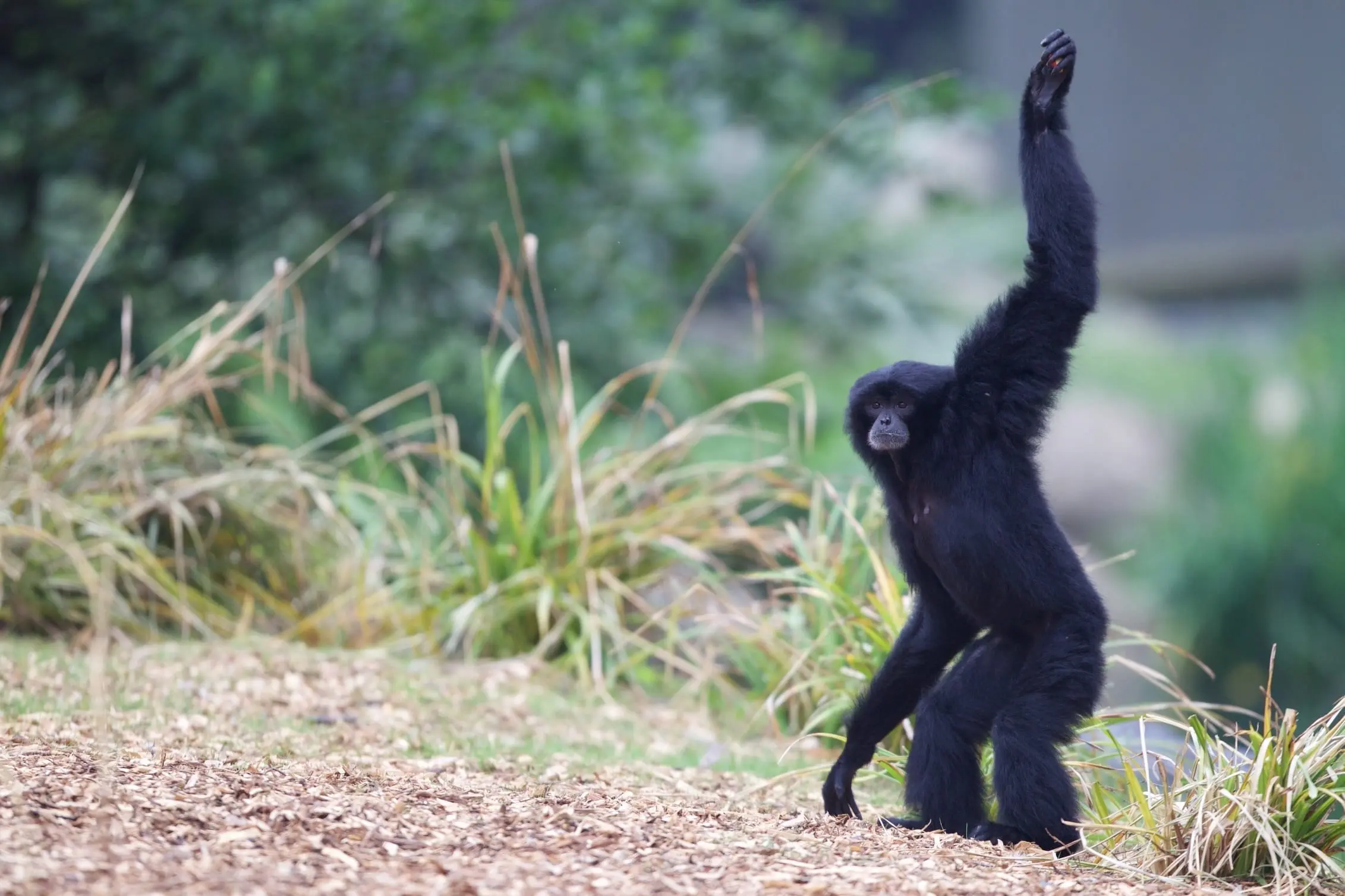
Siamang gibbons are the largest of the gibbon species, a group of ‘lesser’ apes found in Asia. Siamang gibbons have black shaggy fur and very long arms, which they use for swinging from branch to branch. They have large throat pouches which inflate to allow them to vocalise and sing.
General Information
Zoo location
Orangutan Rainforest
Animal class
Mammalia
Animal order
Primates
Where do they live (Natural habitat)?
Siamang gibbons are found in mountain and lowland forests on the island of Sumatra, in Malaysia and in small parts of Thailand. They prefer to spend time in the trees rather than on the forest floor.
How long do they live?
Siamang gibbons can live up to 40 years in zoos, and between 25-40 years in the wild.
What do they eat?
Their diet is mostly made up of leaves and fruit, but they also eat insects and flowers.
Group name
Family
Closest related species / sister species
The closest relatives of siamang gibbons are the species belonging to the three other genera of gibbons: hoolock gibbons, Nomascus gibbons and Hylobates.
Fun Facts!
The Siamang gibbon
Family life
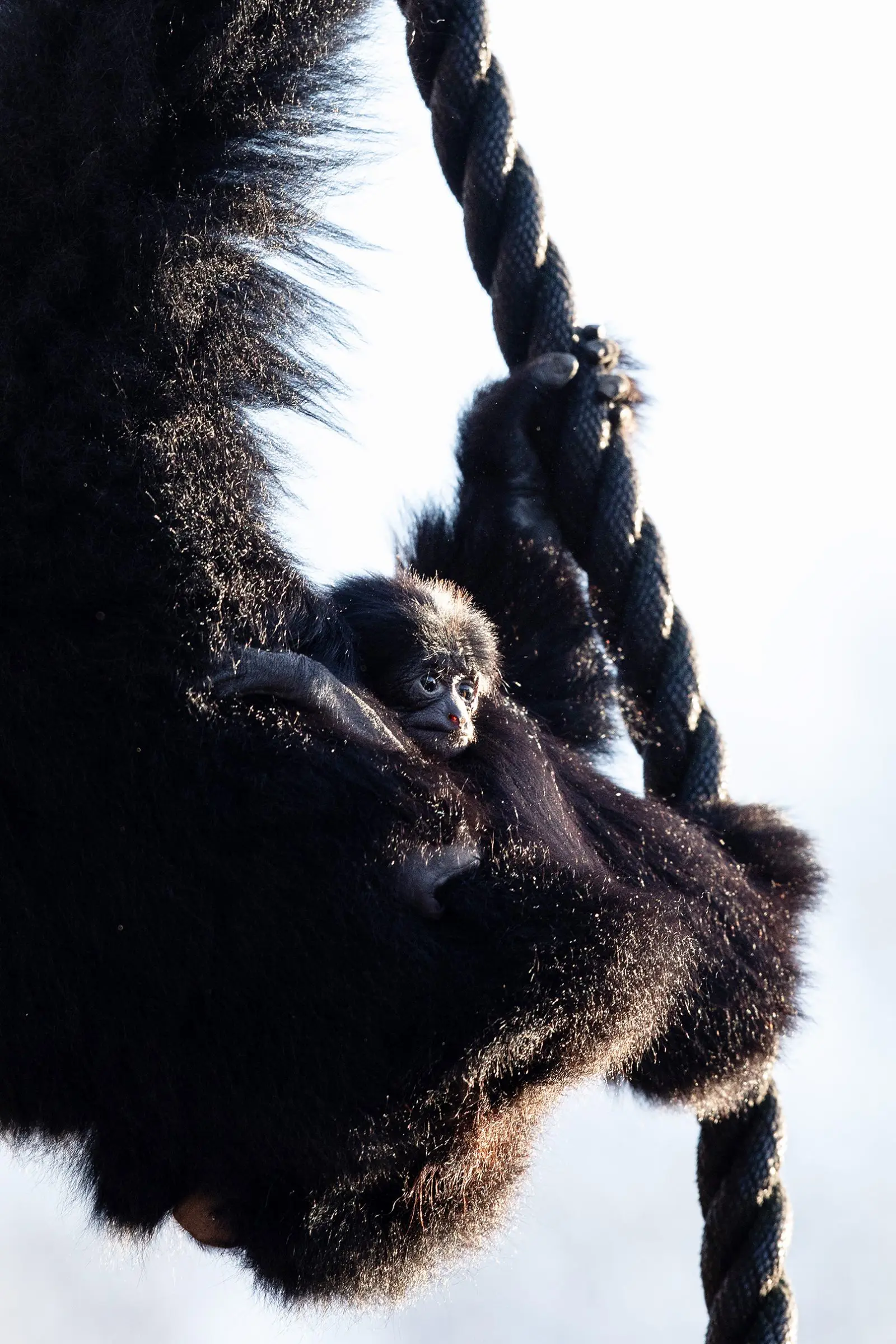
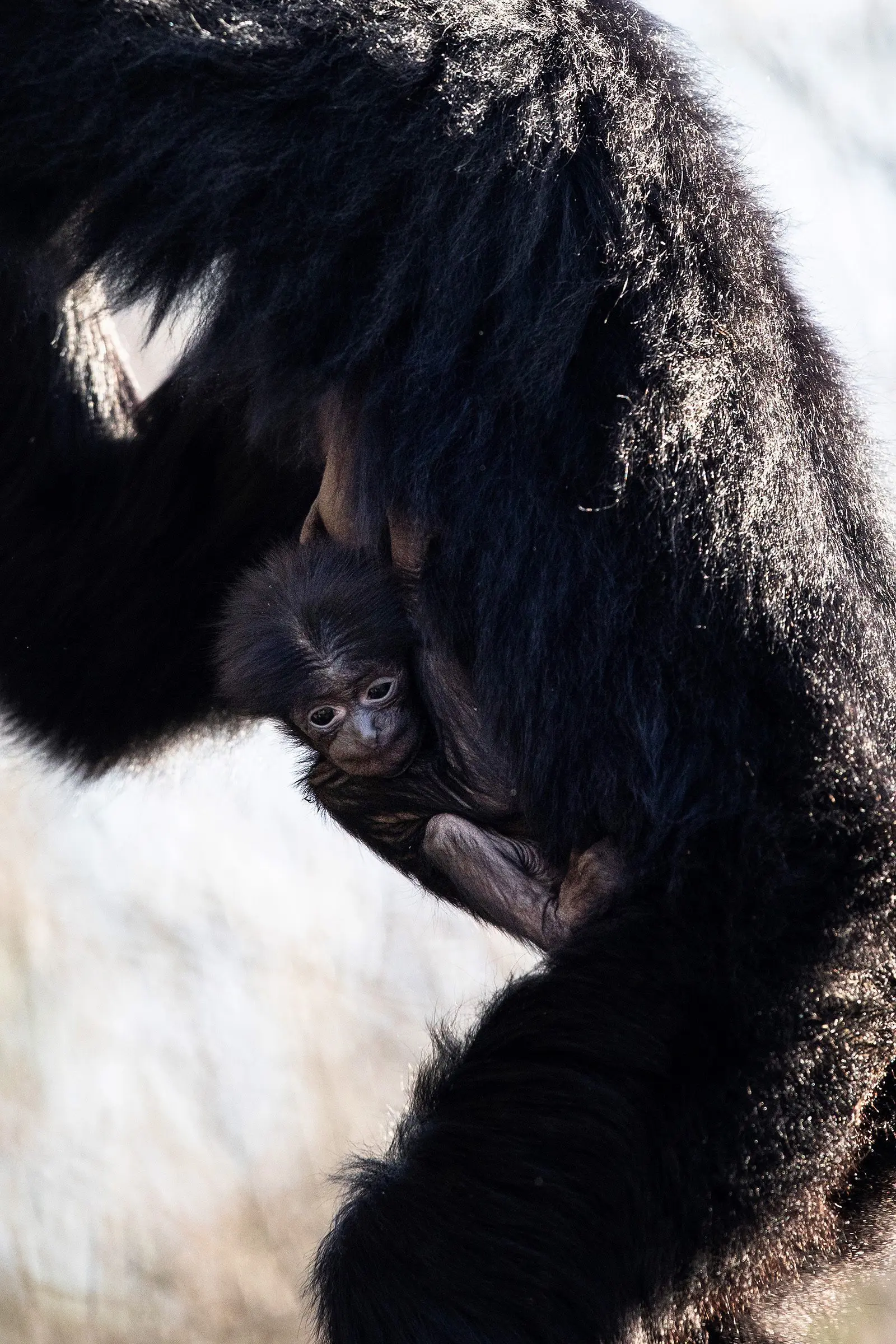
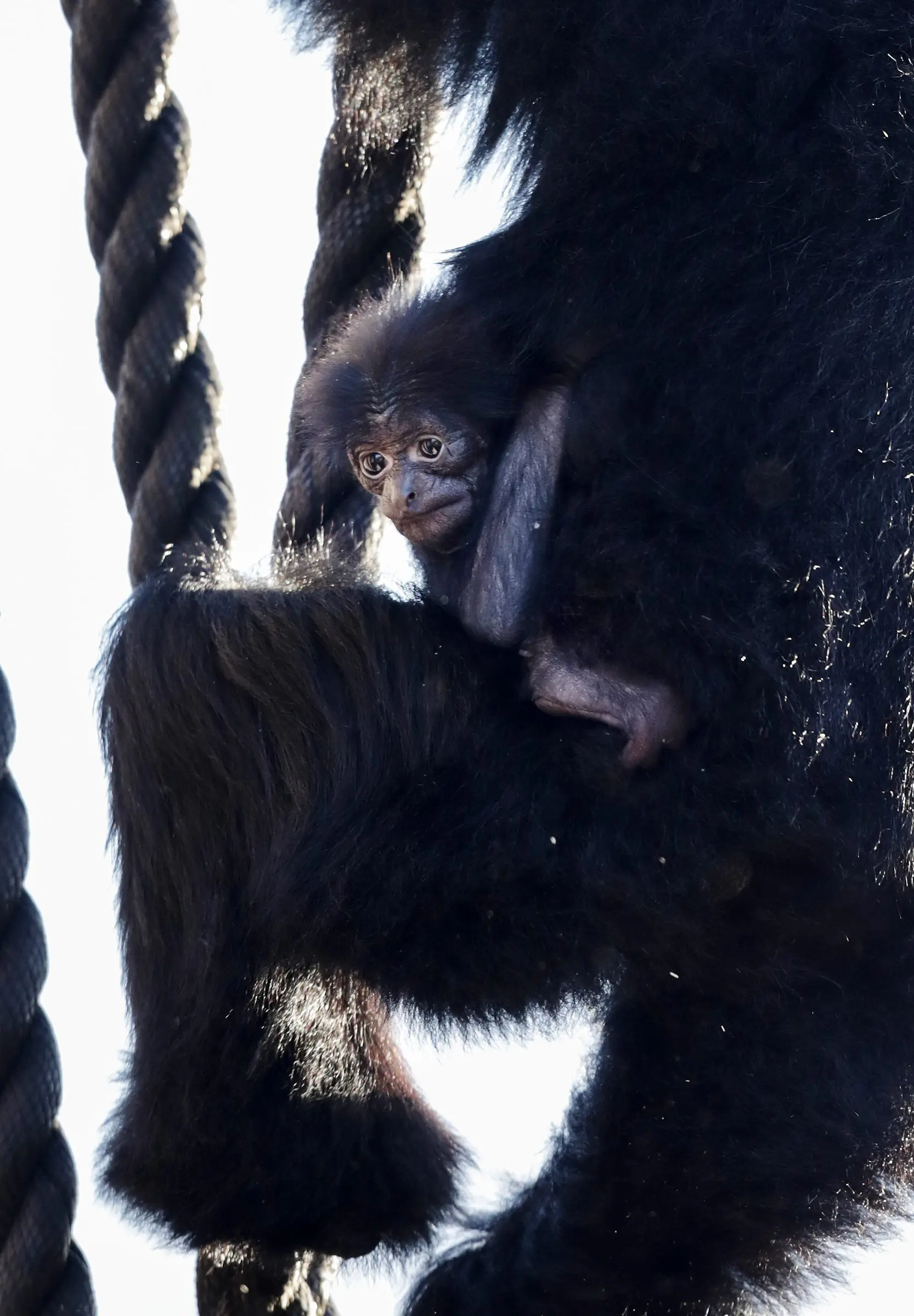
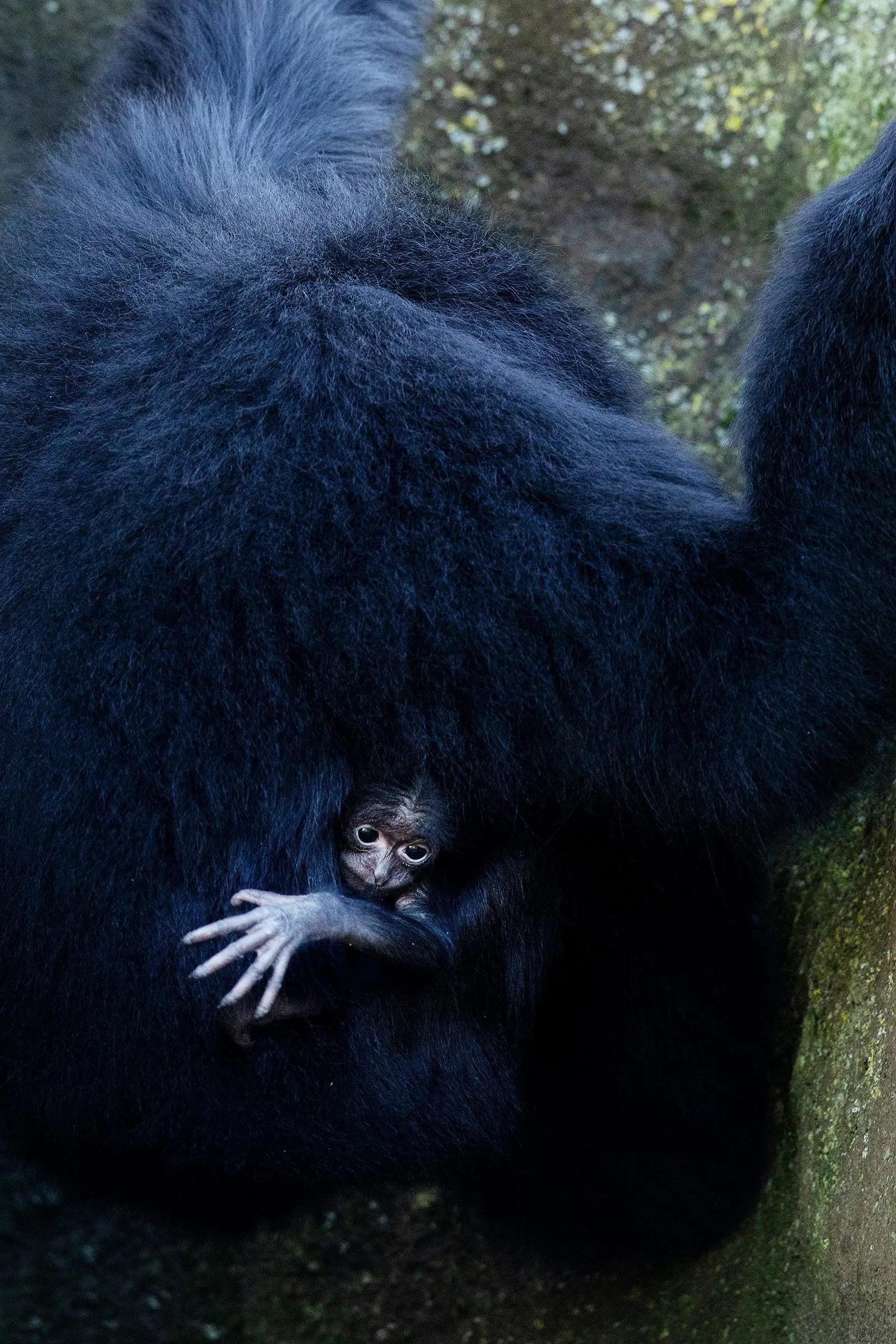
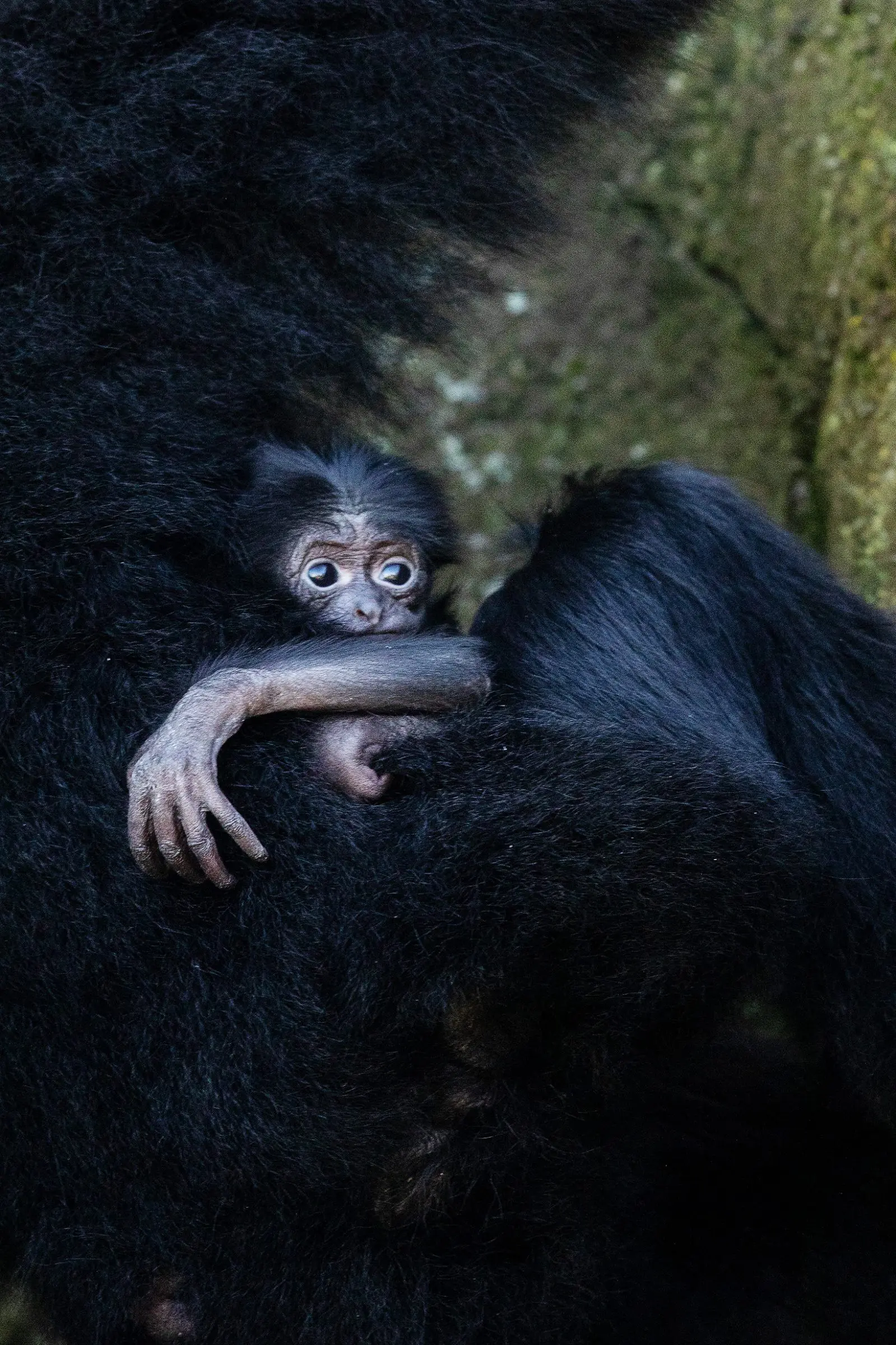
Siamang gibbons live in small groups of 3 to 6 individuals – a monogamous (having only one mate) mating pair and their offspring who have yet to leave the family. When an infant is born, it clings to its mother for around 8 months. At 6-8 years old, the siamang will leave their family group to find a mate and start a new family.
Baby name
Infant
Gestation (pregnancy) period
7-8 months
Number of young at birth
Usually 1, occasionally twin births do occur.
Weight at birth
Approximately 500 grams
Age at maturity
Approximately 8 to 9 years
Size male adult
Up to 90 cm tall and approximately 12 kg
Size female adult
Up to 90 cm tall and approximately 10 kg
Conservation
Endangered
The siamang gibbon is classified as Endangered by the International Union for Conservation of Nature
Current population estimate
Approximately 22,000 individuals
Threats
The biggest threats to siamang gibbons are habitat loss (mainly due deforestation for the palm oil industry) and the illegal pet trade.
What is Dublin Zoo doing?
Dublin Zoo participates in the European Endangered Species Programme (EEP) for siamang gibbons.
Frequently Asked Questions
Siamangs have a special throat sac that inflates to allow their call to be heard from kilometres away.
Their diet is mostly made up of leaves and fruit, but they also eat insects and flowers.
Siamangs use their long arms for swinging through the trees (brachiating) and for balance when walking on two legs.
Siamangs can generally be found swinging through the trees, but they can walk when on the ground.
Siamang gibbons are found in mountain and lowland forests on the island of Sumatra, in Malaysia and in small parts of Thailand.
The majority of their diet consists of leaves, the rest is made up of fruit, which varies seasonally.
No, gibbons are lesser apes. You can tell they are not monkeys because they don’t have a tail. Most monkeys have a tail.
Gibbons call and sing to establish their territory and to reinforce family or mating bonds. Siamang gibbon calls are louder than those of other gibbons.
Siamang gibbons are classified as Endangered due to habitat loss (mainly due to deforestation for the palm oil industry) and the illegal pet trade. Other species of gibbons are also classified as Endangered or Critically Endangered.
No, gibbons are lesser apes which mean they have no tails. Monkeys have tails, while apes do not.
There are 19 species of gibbon in 4 genera.
Baby gibbons are called infants.
Siamang gibbons can live up to 40 years in zoos, and between 25-40 years in the wild.
The biggest threats to siamang gibbons are habitat loss (mainly due deforestation for the palm oil industry) and the illegal pet trade.