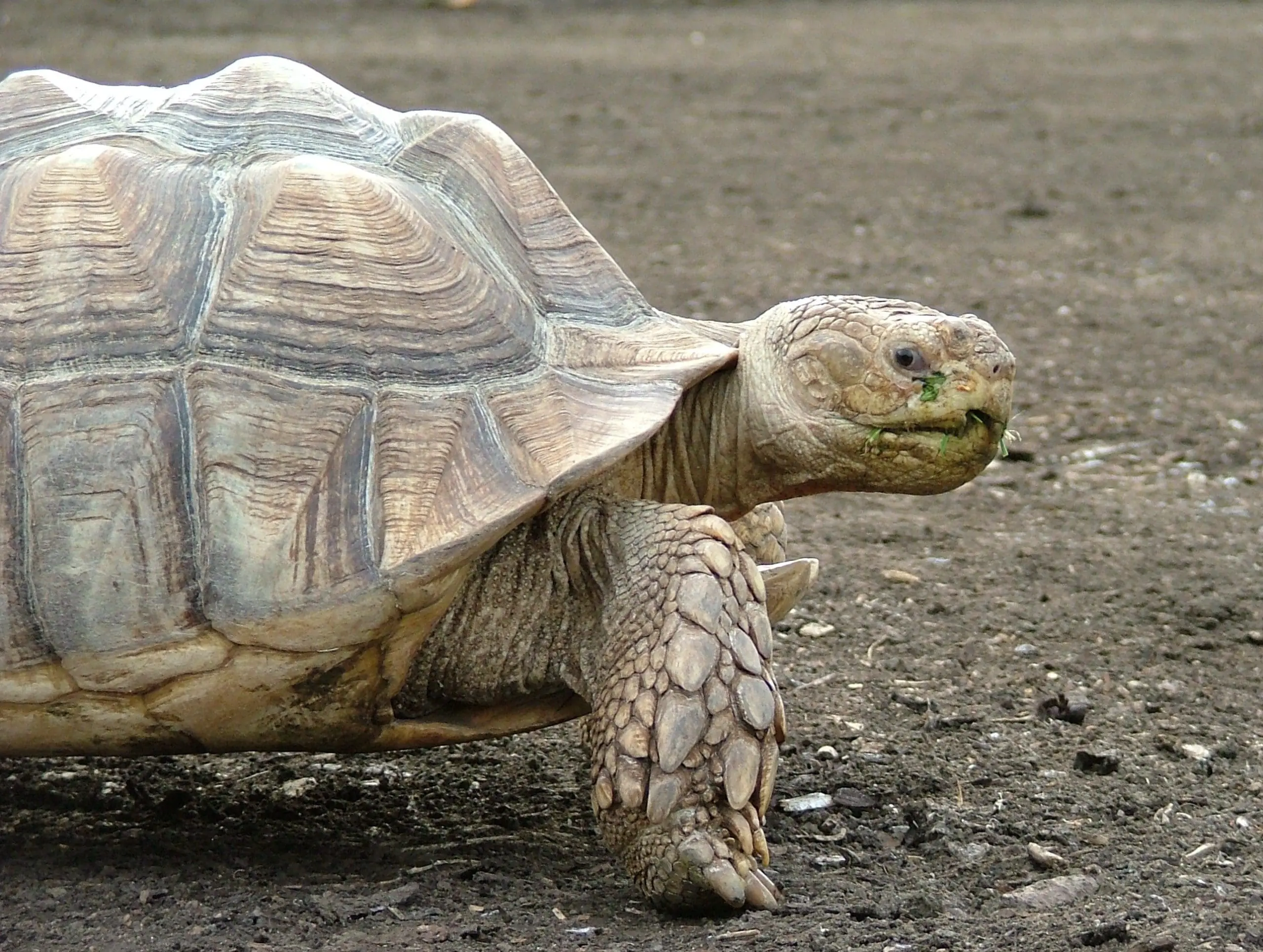
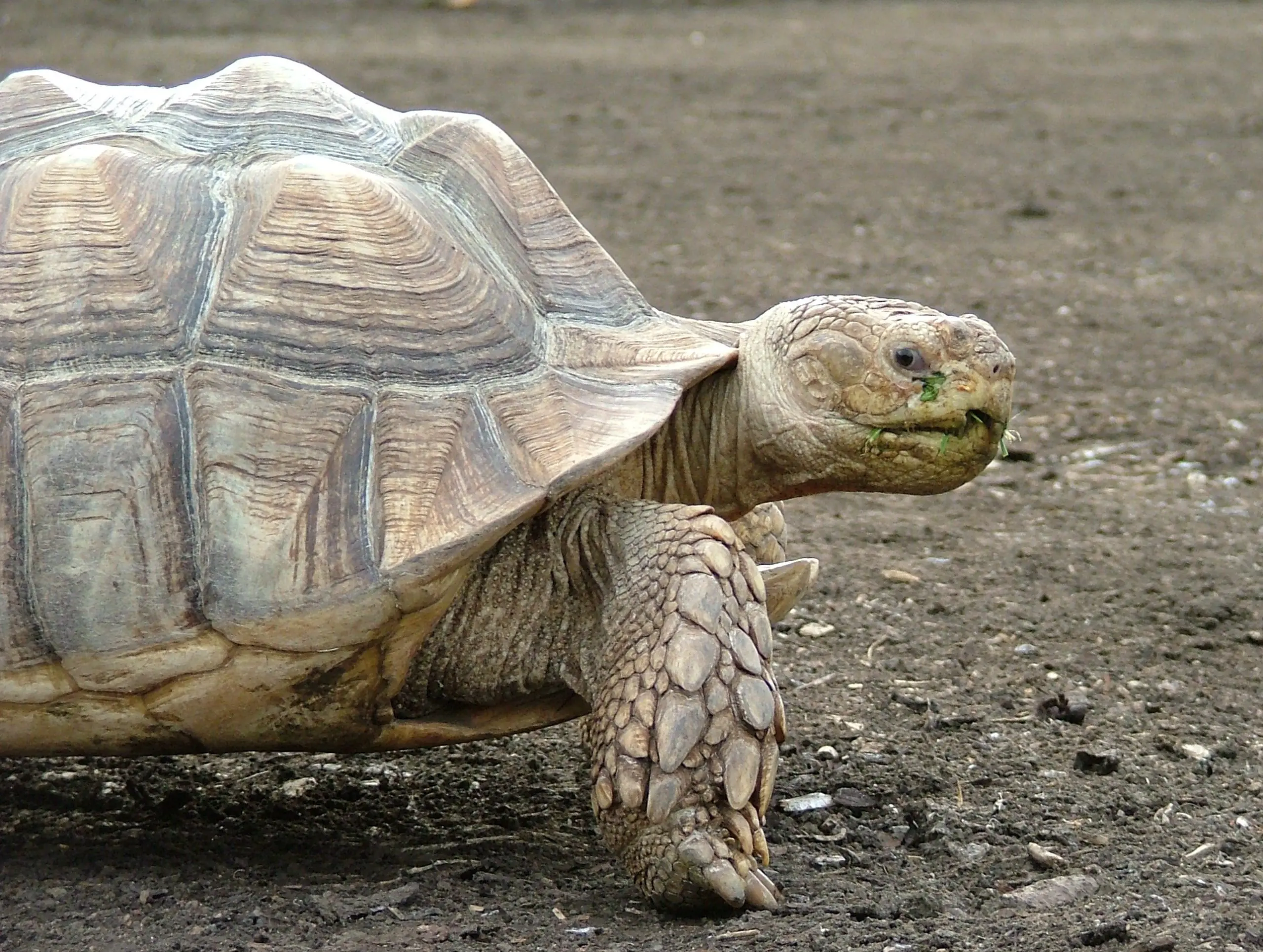
African spurred tortoise
The African spurred tortoise is the world's third-largest tortoise species with distinctive spurs on its hind legs used for digging burrows in its native Sahara Desert habitat
Species
Reptiles
Habitat
Desert
Diet
Herbivore
Conservation Status
Endangered
African spurred tortoise
Centrochelys sulcata
Irish Name: Toirtís sporach Afracach
IUCN Status: Endangered
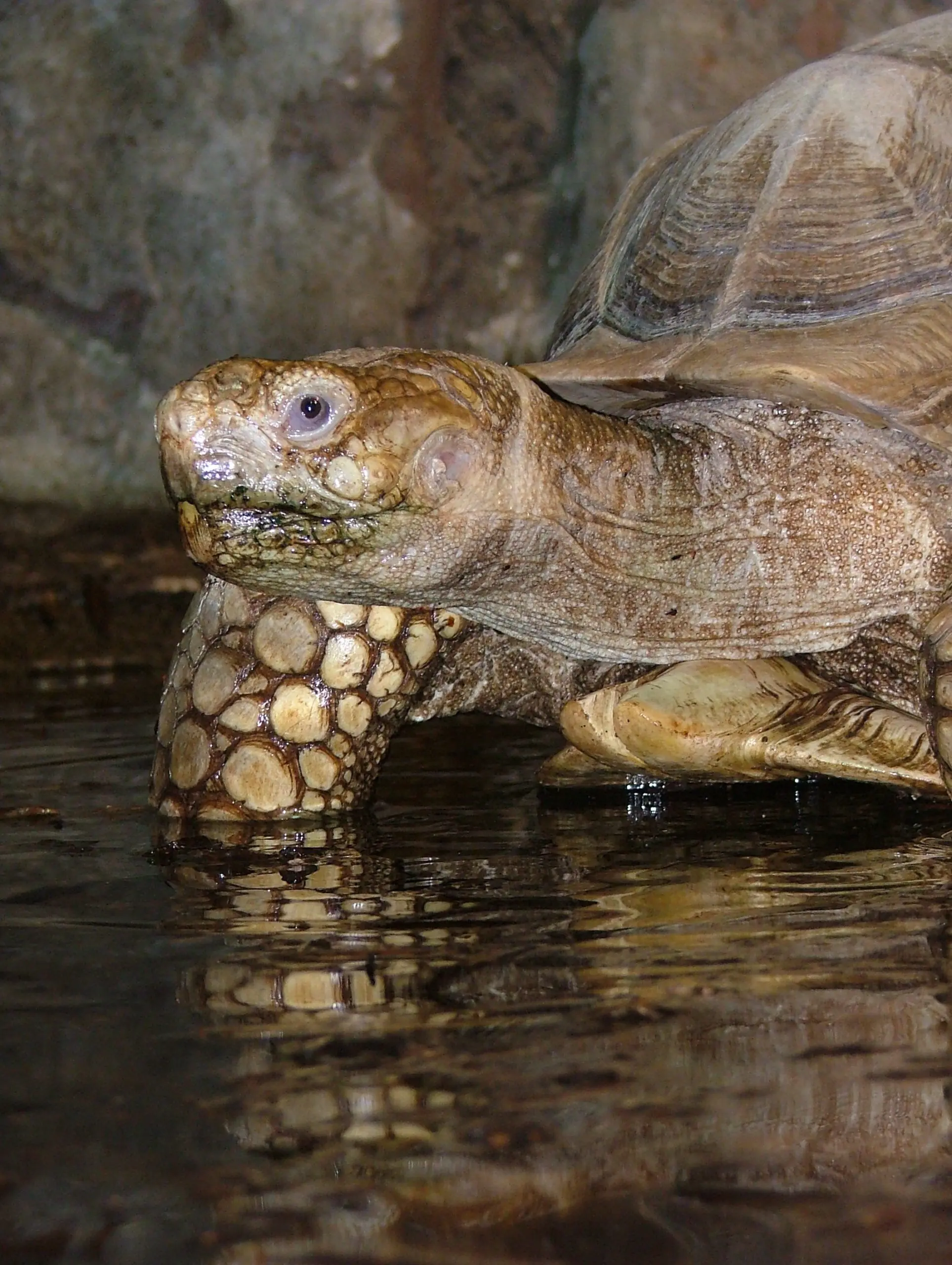
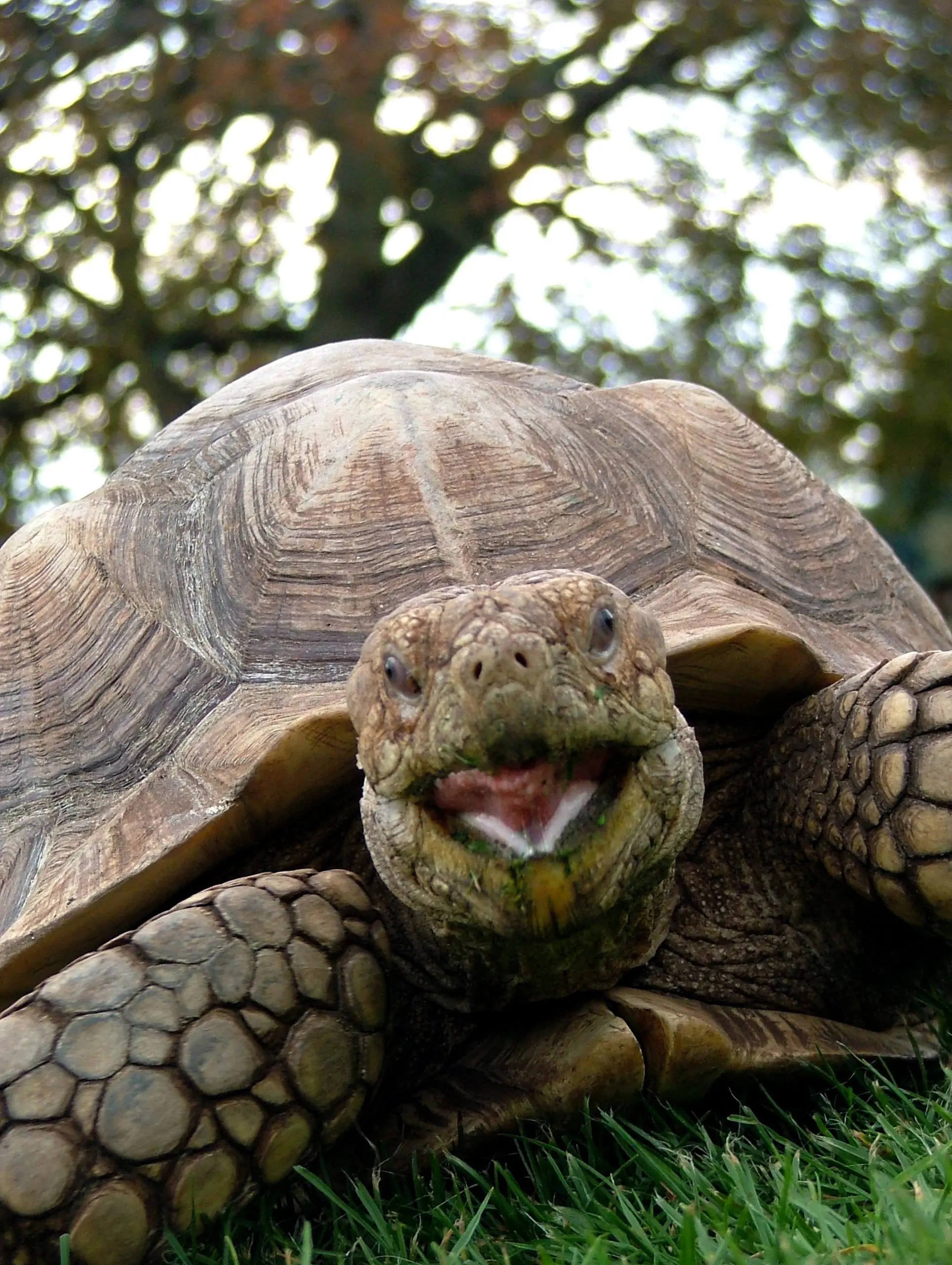
The African spurred tortoise is the largest mainland tortoise in the world. This tortoise is sandy in colour and has an oval-shaped shell, perfect for camouflage. The ‘spurred’ part of their name comes from the spurs on their hind legs. Alternative names for the African spurred tortoise are the sulcata tortoise or the African spur thigh tortoise. The African spurred tortoise lives in semi-arid grasslands, scrub and savannah habitats along the southern edge of the Sahara desert in Northern Africa.
General Information
Zoo location
African Plains
Animal class
Reptilia
Animal order
Testunides
Where do they live (Natural habitat)?
The African spurred tortoise can be found in many countries in Northern Africa such as; Burkina Faso, Central African Republic, Chad, Eritrea, Ethiopia, Mali, Mauritania, Niger, Nigeria, Senegal and Sudan. In these arid regions of the Sahara desert the African spurred tortoise will burrow into the ground to submerge itself into areas of higher moisture. They will spend the hottest part of the day in these underground burrows. Sometimes these burrows can be 15m deep and 30m long.
How long do they live?
African spurred tortoises can live upwards of 70 years.
What do they eat?
The African spurred tortoise is a herbivore and eats a high fibre diet. In their native habitat, they would eat an abundance of grasses, flowers, green plants and cacti.
Group name
African spurred tortoises usually lead a solitary life, but come together during the breeding season. However, a group of these tortoises is called a creep.
Closest related species / sister species
African spurred tortoises are the only surviving members of their genus. Some of the African spurred tortoises’ closest relatives are the largest island tortoise in the world, the Galapagos tortoise, and the second largest island tortoise, the Aldabra tortoise.
Fun Facts!
The African spurred tortoise

Family life
The breeding season usually occurs from June until the following March. The female will dig up to five nests before she decides which one is suitable for her to lay her 15 – 30 eggs. A female will lay an egg every three or so minutes until the entire clutch has been laid. She will then cover her eggs with sand and soil and they will incubate for 8 months before they hatch. Like most other reptiles the African spurred tortoise has no involvement with raising their young.
Baby name
Hatchling
Gestation (pregnancy) period
Eggs hatch between 4-8 months, depending on the temperature of the environment.
Number of young at birth
Approximately 17 eggs per clutch but they can have as much as 30.
Weight at birth
Hatchings can weigh 37g at birth.
Age at maturity
10-12yrs in females, 13-15yrs males.
Size adult male
Length: 80 cm
Weigh: 90 kgs
Size adult female
Length: 50 cm
Weigh: 60 kgs
The heaviest reported wild African spurred tortoise measured 83cm and weighed 98kg.
Conservation
Endangered
The African spurred tortoise is classified as Endangered by the International Union for Conservation of Nature.
Current population estimate
Due to the difficult nature of surveying wild population numbers, the International Union for Conservation of Nature can only estimate there are approximately 400 individuals left in the wild as of 2020.
Threats
Competing for grass with farm animals, these tortoises have a hard time getting enough food to survive on. Many tortoises have been taken from the wild for the pet trade; some countries are impacted more than others by this.
What is Dublin Zoo doing?
Dublin Zoo assists conservation projects for animals that share habitats with African spurred tortoises. The protection of these species and their habitats also benefits the tortoises; helping one also helps the other. This term is called an umbrella species.