Southern white rhinoceros
The Southern white rhinoceros is one of two subspecies of white rhinoceros, the largest of the rhino
Species
Mammals
Habitat
Savannah
Diet
Herbivores
Conservation Status
Near Threatened
Southern white rhinoceros
Ceratotherium simum simum
Irish Name: Srónbheannach bán deisceartach
IUCN Status: Near Threatened
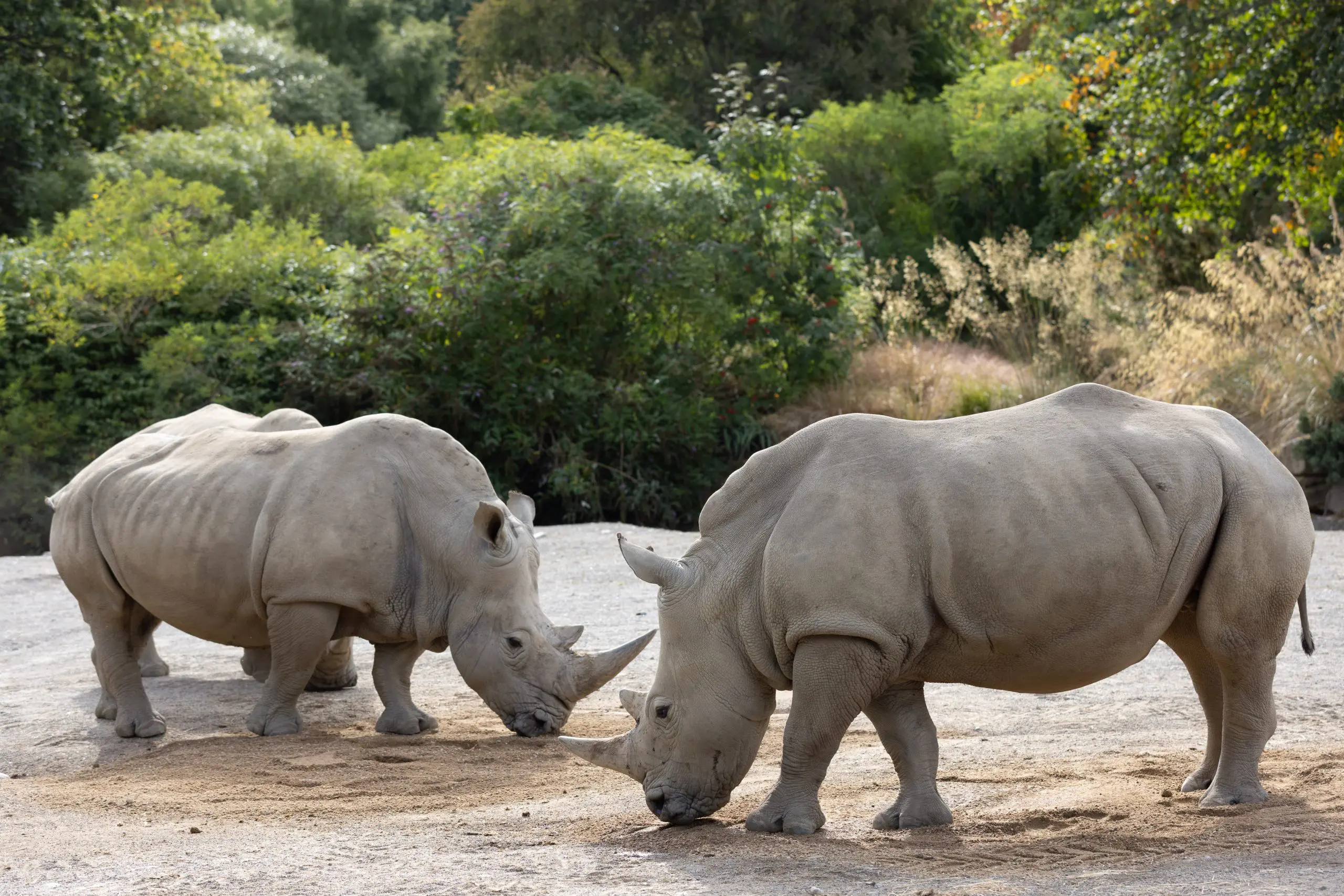
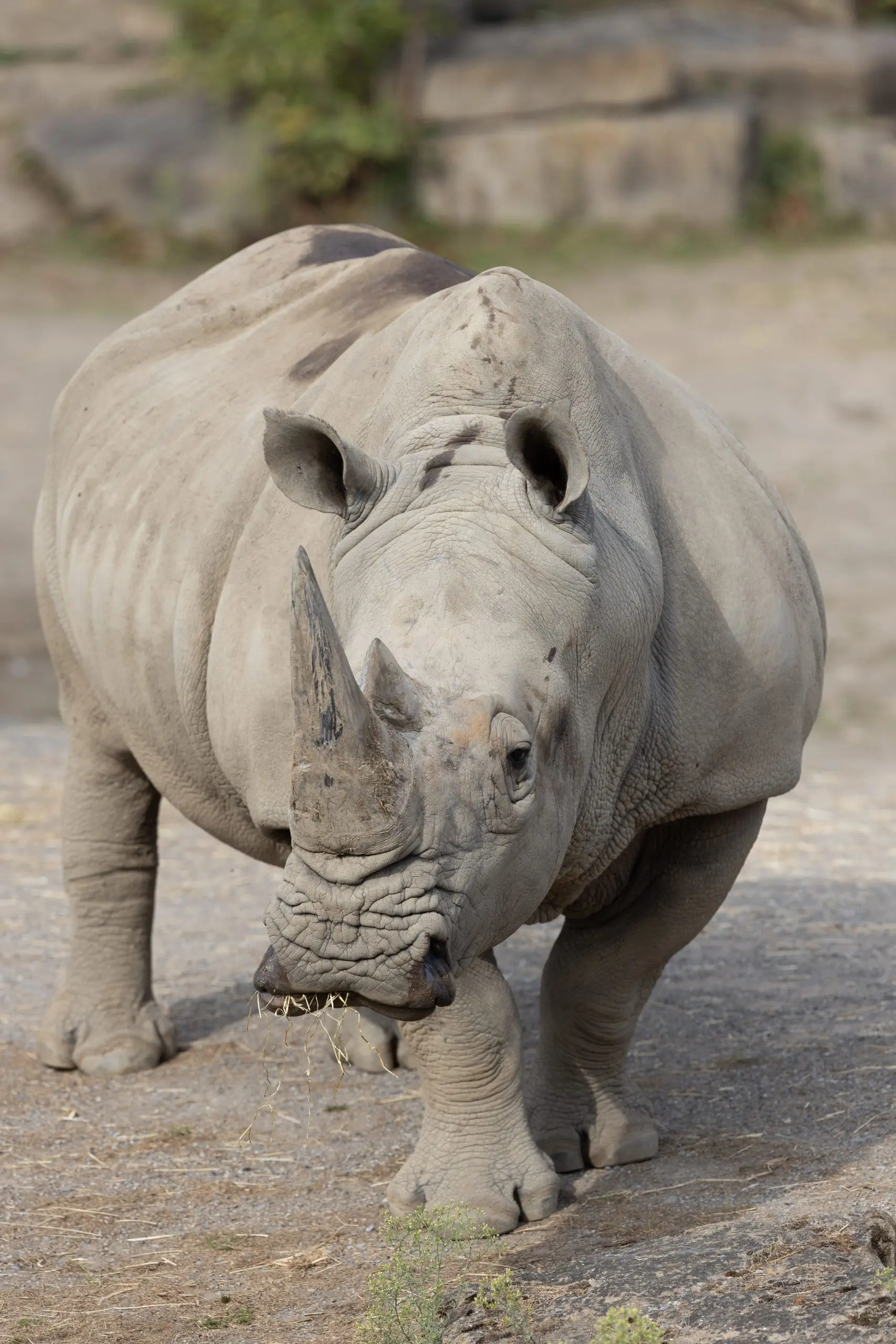
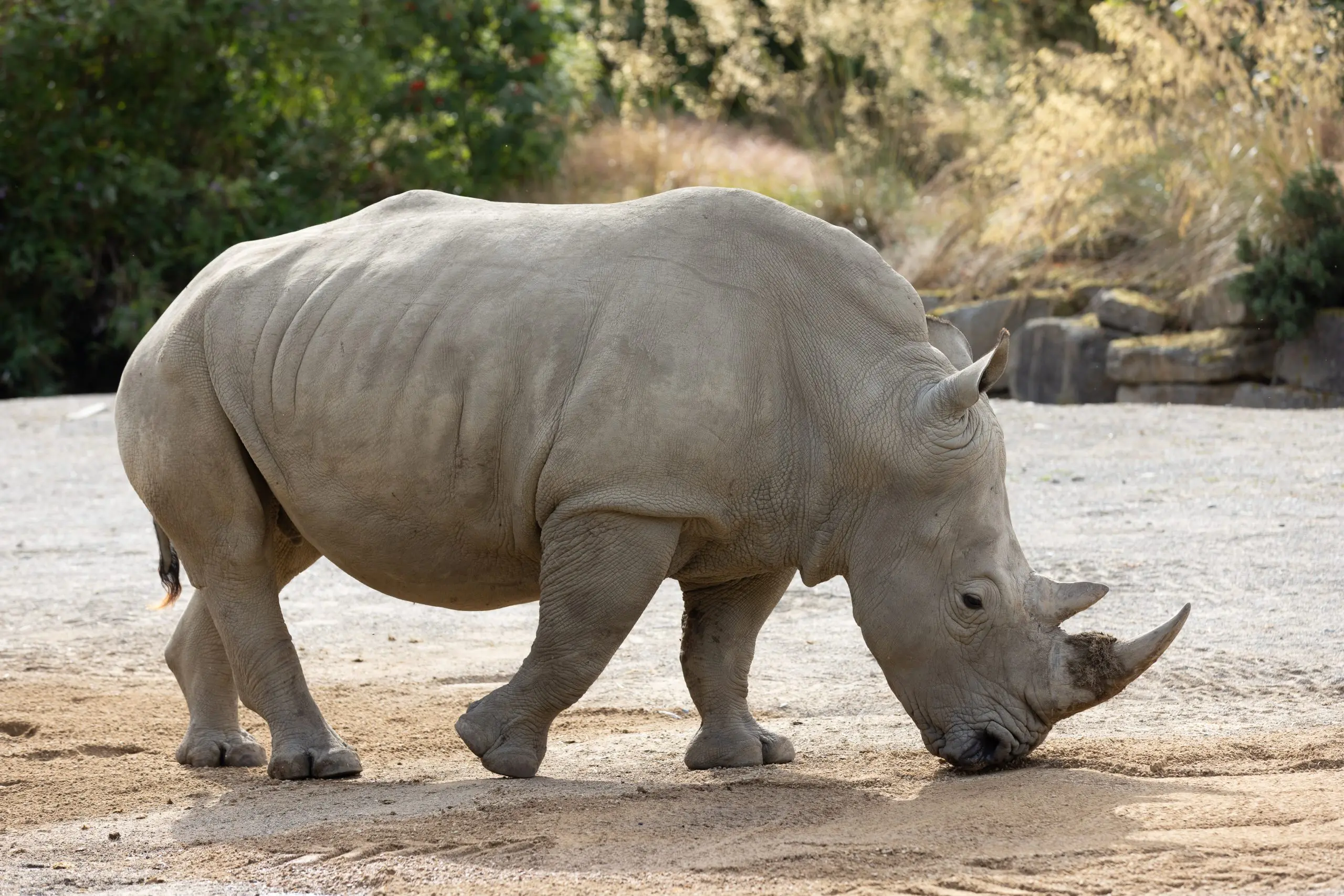
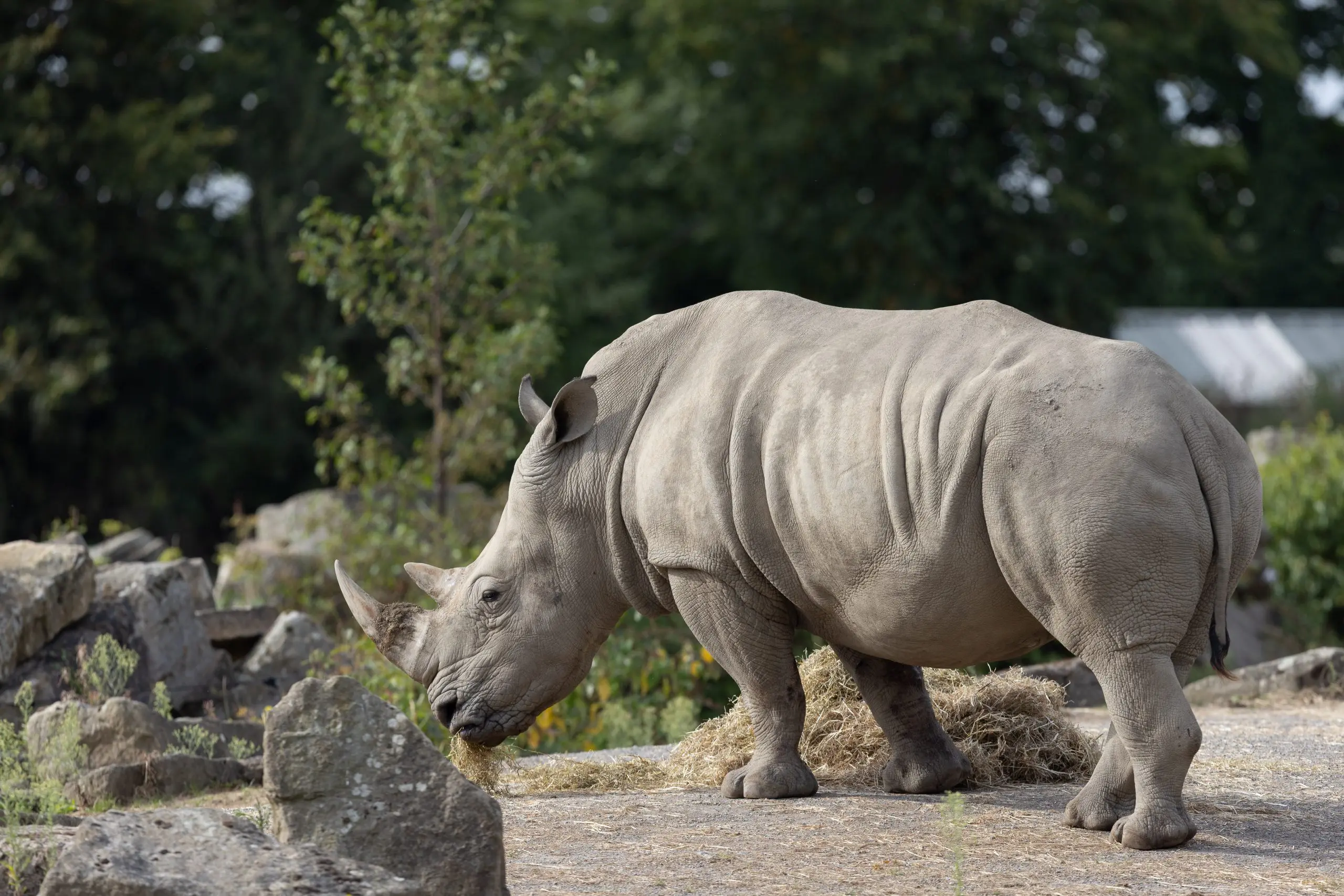
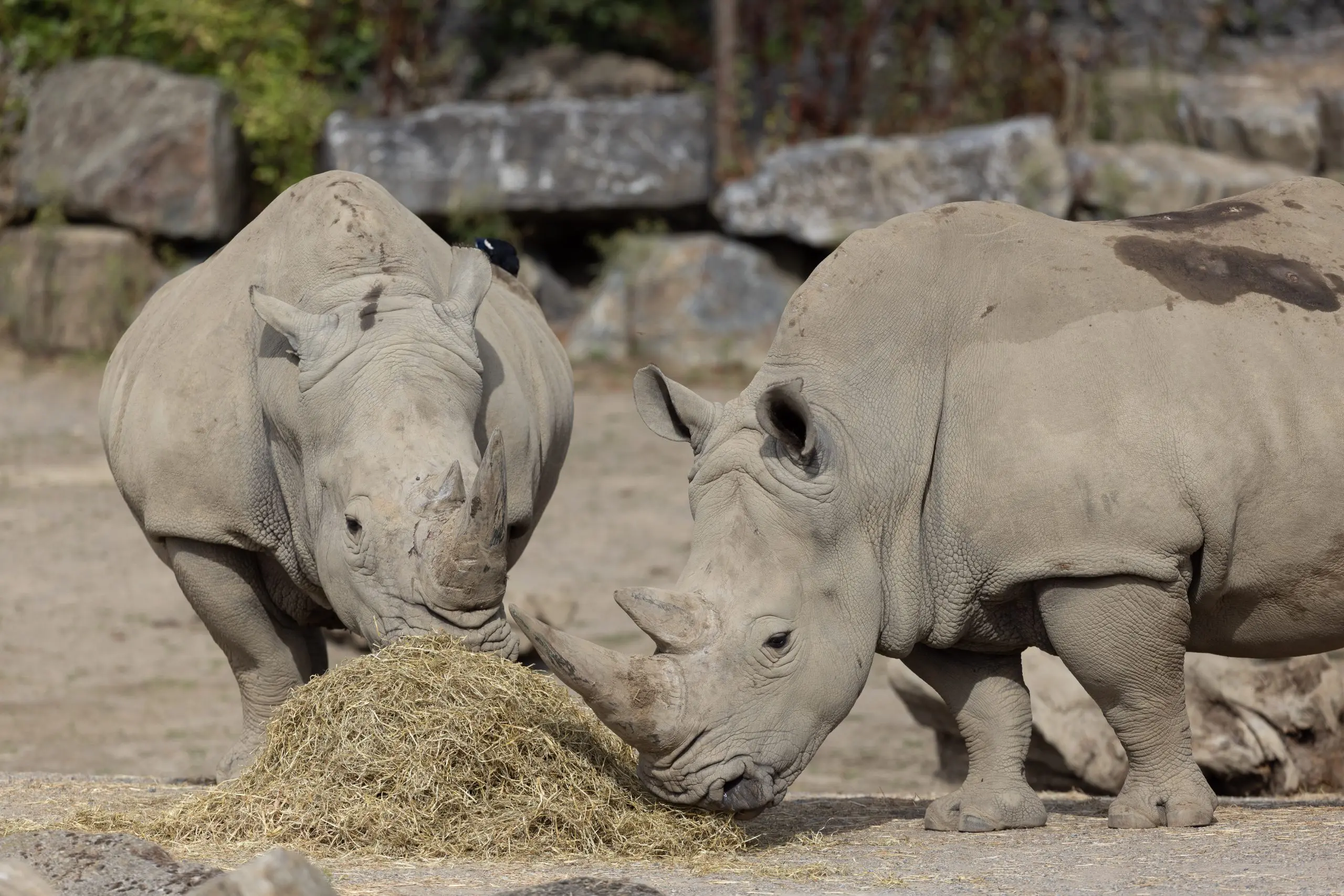
The Southern white rhinoceros is one of two subspecies of white rhinoceros, the largest of the rhino species and the third largest land mammal species in the world after African and Asian elephants. Southern white rhinos can weigh up to 2,500 kg and have a wide flat mouth, thick grey skin and two horns – one large horn to the front and a smaller horn further up their nose. Their horns are made of keratin, the same material as skin, nails and hair.
General Information
Zoo location
African Savannah
Animal class
Mammalia
Animal order
Perissodactyla
Where do they live (Natural habitat)?
Southern white rhinos are found in Eastern and Southern Africa. They live on grassy savannahs (flat land with scattered trees) and shrub lands.
How long do they live?
Approximately 35 years in the wild and 40 years in zoos.
What do they eat?
Southern white rhinos are herbivores and feed almost completely on short grasses. Their flat square lips are suited to grazing on grasses.
Group name
Crash
Closest related species / sister species
The closest relative of the Southern white rhino is the Northern white rhino.
Check out our rhino ISL Keeper Talk
Fun Facts!
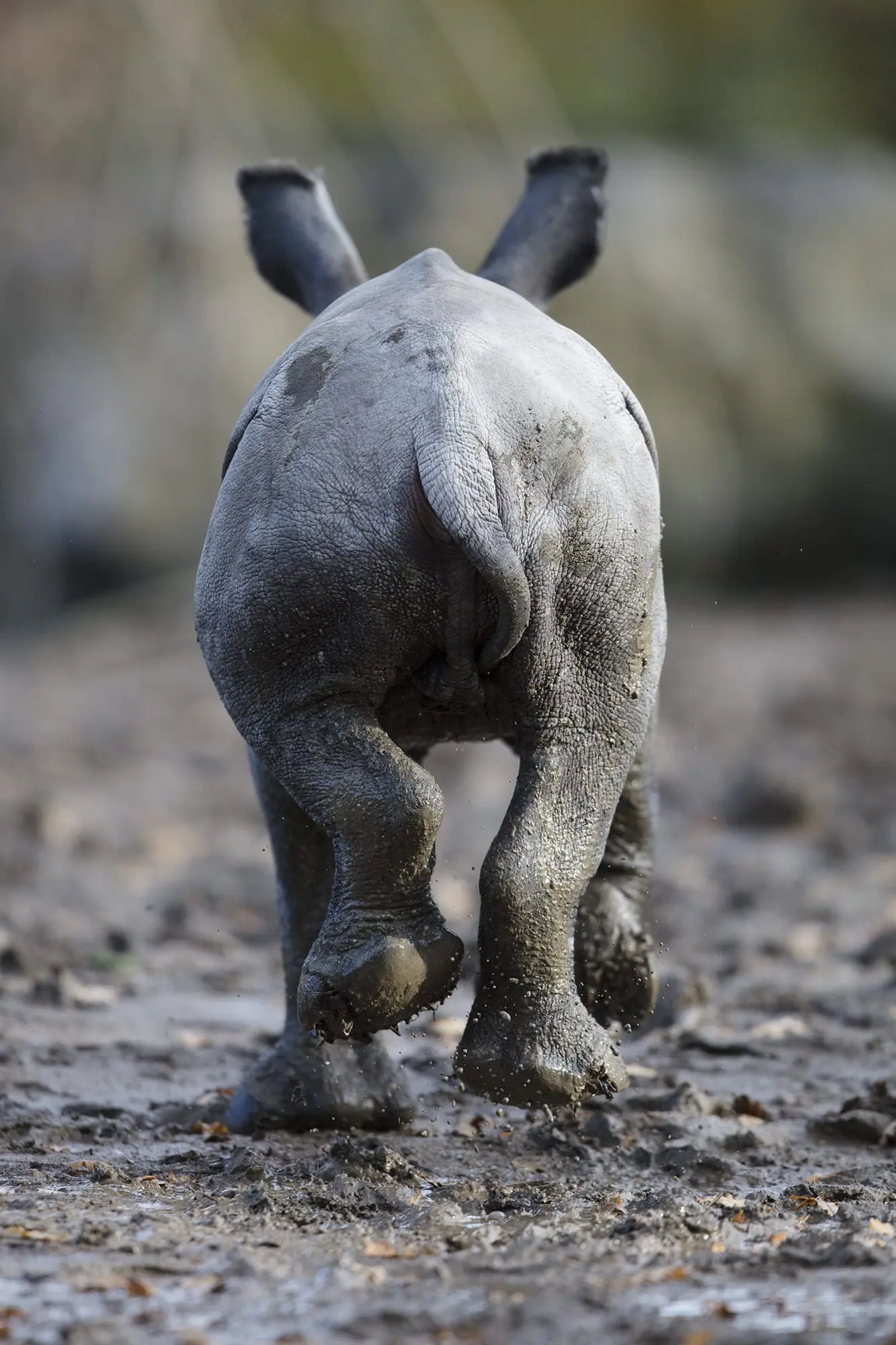
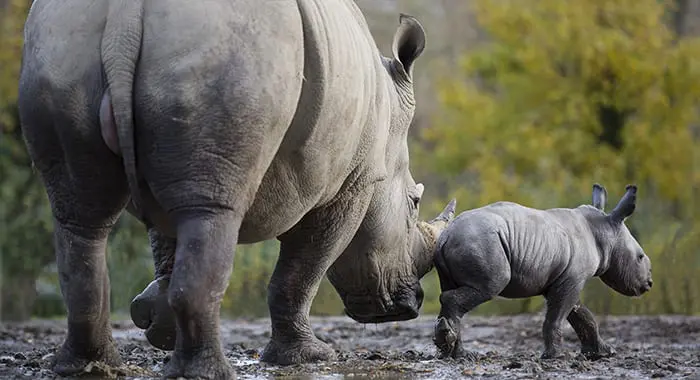
Rhino calf runs on the African Savanna for the first time
The southern white rhinoceros
Family life
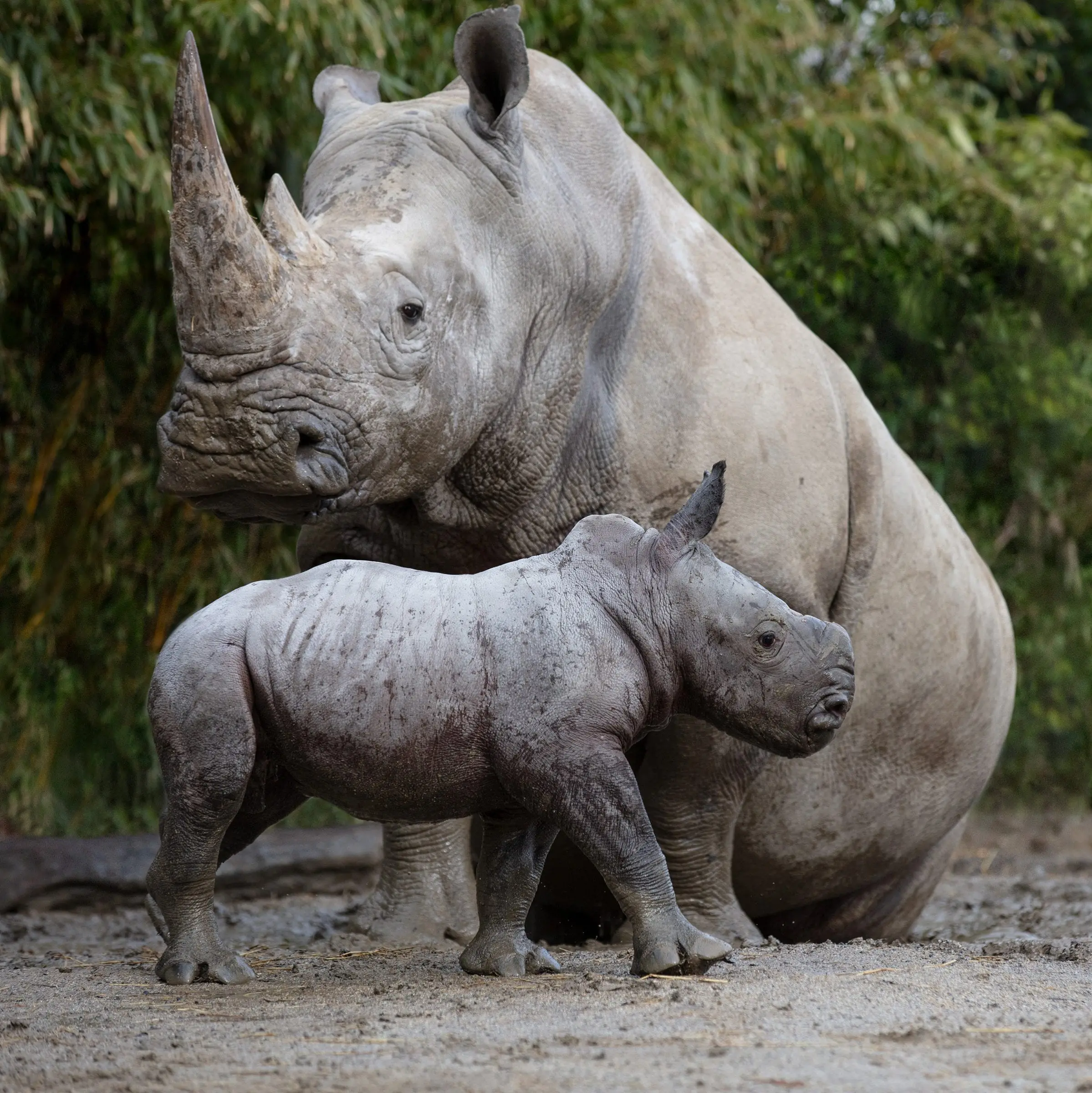
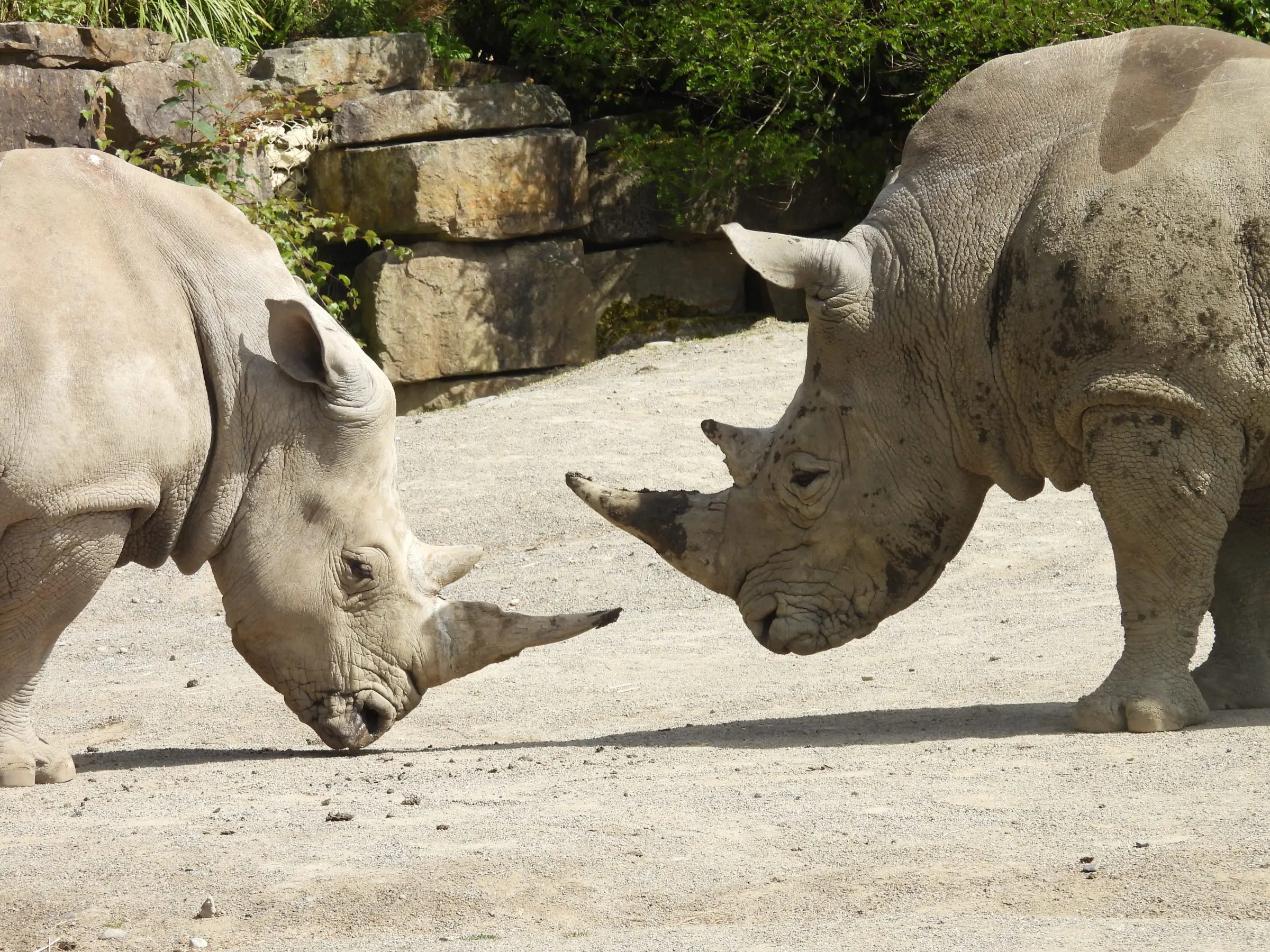
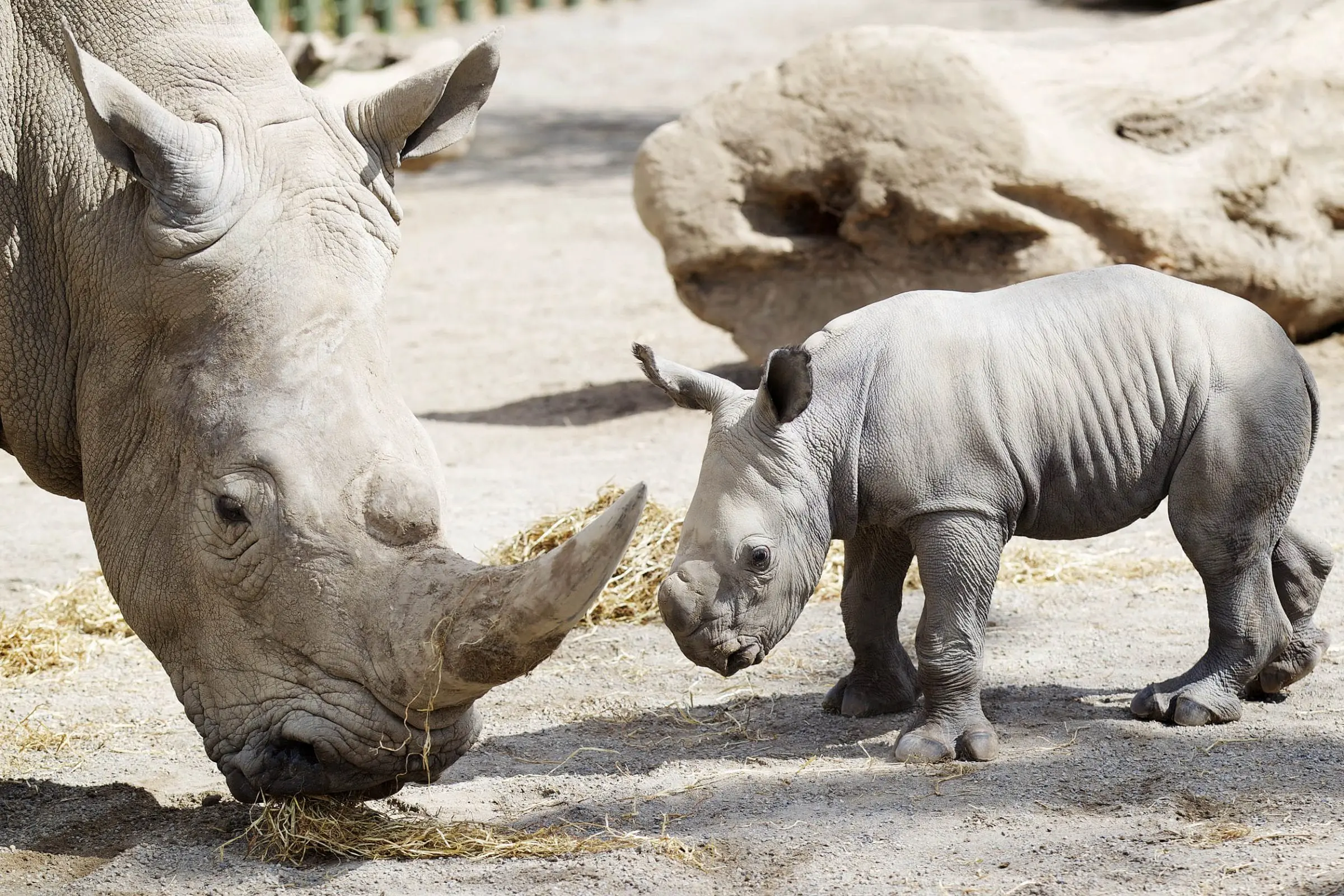
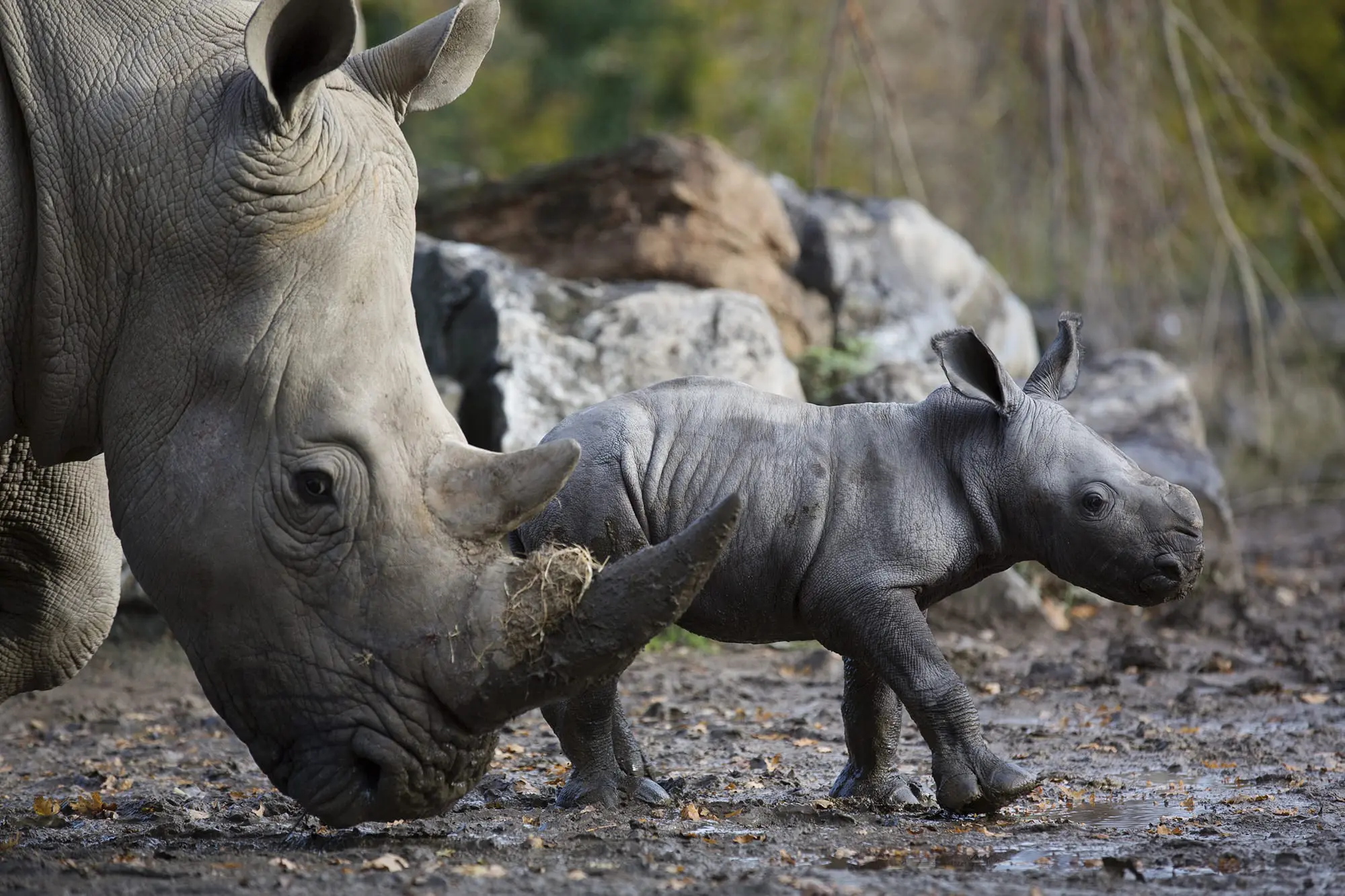
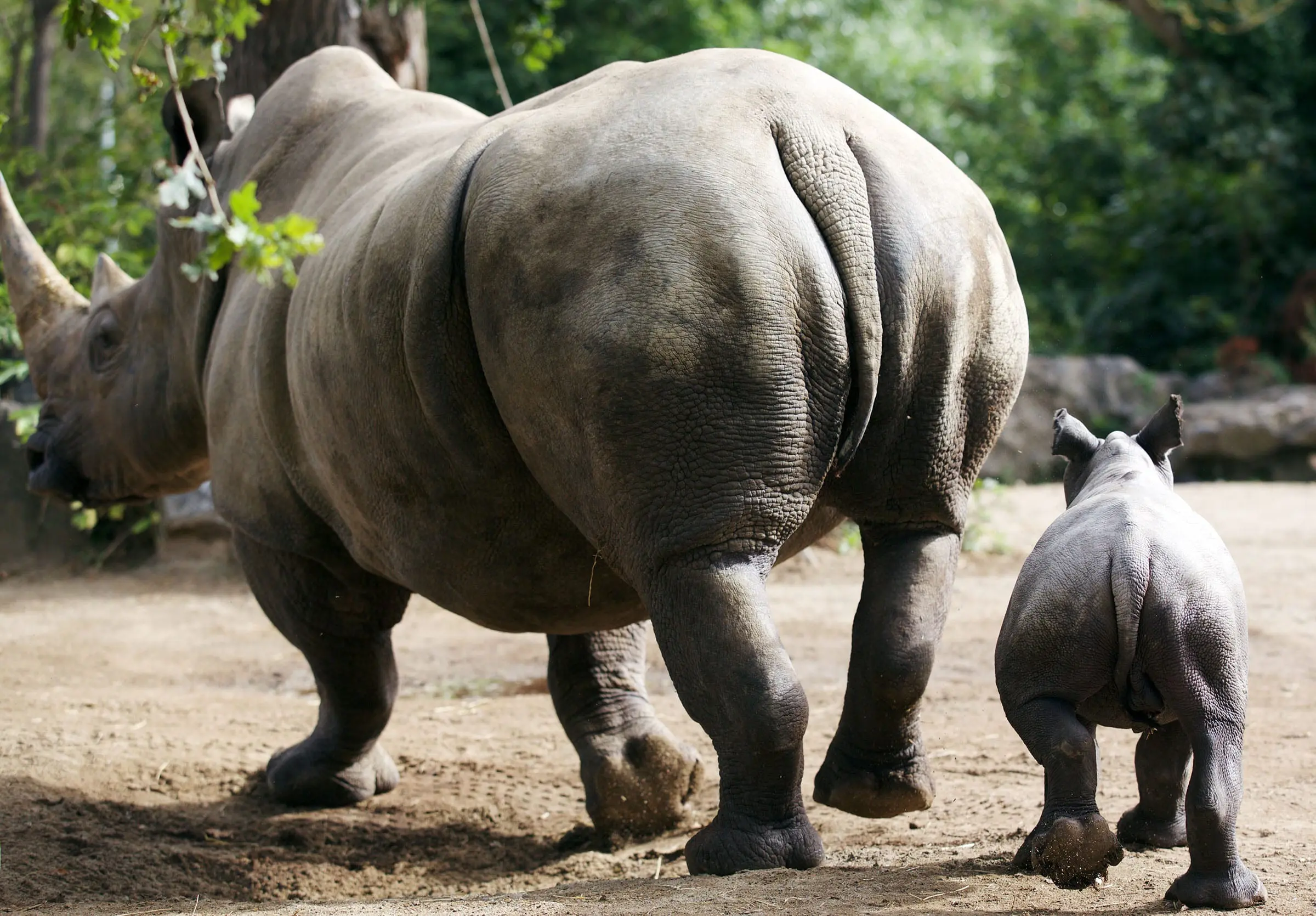
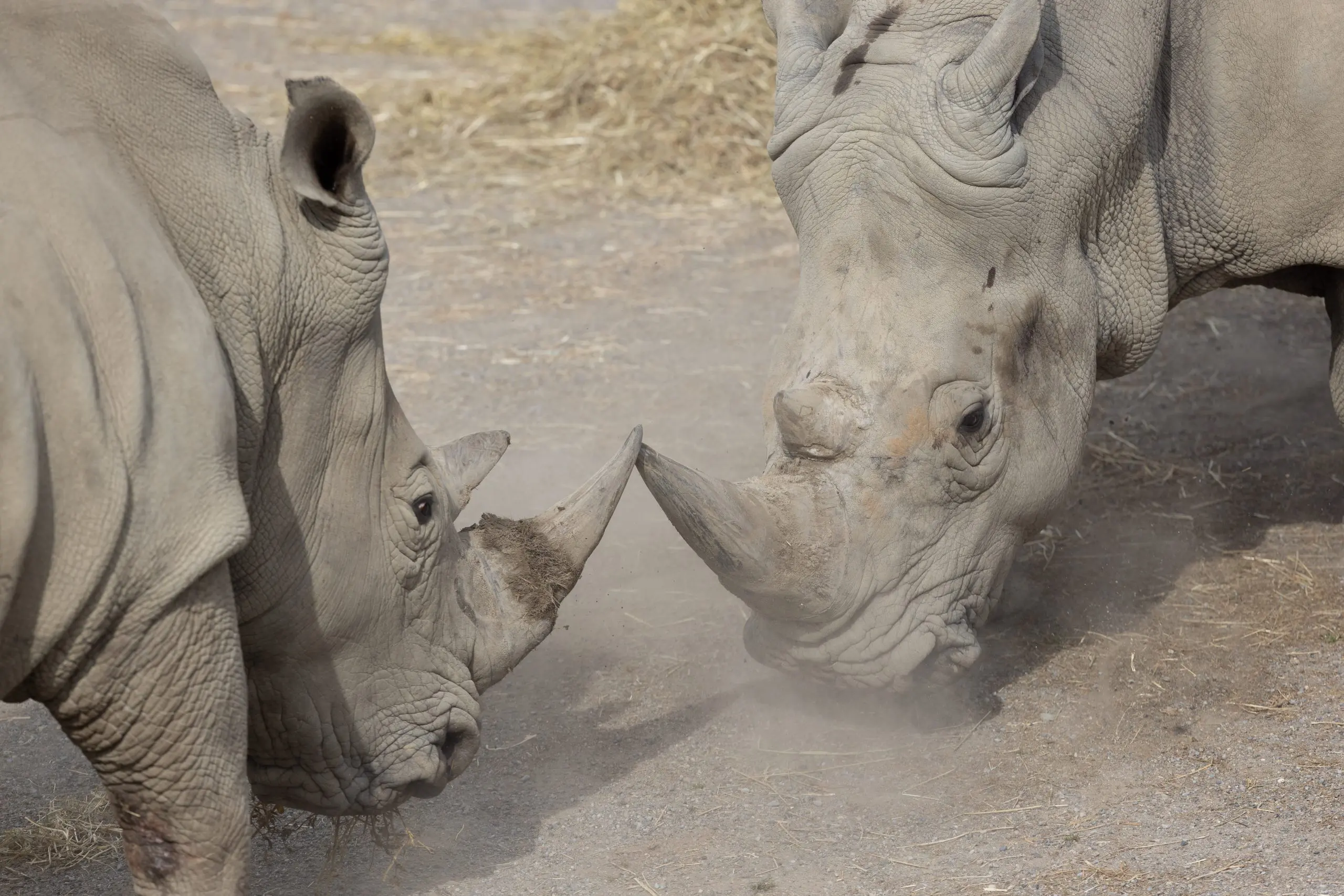
Southern white rhinos live in small groups of usually about 6 – but sometimes up to 14 – individuals called a ‘crash’ Due to decreasing numbers in the species the amount of individuals found in a crash of rhino is decreasing. A crash is mostly made up of females and their calves. Adult males are generally solitary (mostly live alone), meeting with females only for breeding. The males are extremely territorial – they mark their home areas using dung and defend them from other males using their horns.
Baby name
Calf
Gestation (pregnancy) period
Approximately 16 months
Number of young at birth
One
Weight at birth
40-60 kg
Age at maturity
6-7 years for females and 10-12 for males.
Adult size
Their head and body are approximately 3-5m long. They weigh 1800-2500kg.
Conservation
Near Threatened
The Southern white rhino has been classified as Near Threatened by the International Union for Conservation of Nature.
Current population estimate
Less than 16,000 individuals.
Threats
Poaching is the biggest threat to Southern white rhinos.
All rhino species are hunted for their horns.
Rhino horn products are seen as a symbol of wealth or success in some countries and poachers can get a lot of money by selling the horns. They are also used in Chinese medicine because they are believed to have medicinal properties, although there is no scientific evidence for this.
Like a lot of other species, Southern white rhinos are also threatened by habitat loss and political conflict in their native Africa.
What is Dublin Zoo doing?
Dublin Zoo supports the Lowveld Rhino Trust in Zimbabwe, which is involved with treating wounded and orphaned rhinos, catching poachers, monitoring rhino populations and community outreach programmes.
Dublin Zoo is also part of the European breeding programme for Southern white rhinos.
Frequently Asked Questions
Southern white rhinos mostly graze on short grasses. They will also eat shrubs and hay.
Their horns are made of a material called of keratin, the same material as skin, nails and hair.
Rhinoceros, rhinoceri, rhinoceroses are all valid plural terms for the rhinoceros.
A group of rhinoceros is called a crash.
Southern white rhinos can make a range of different sounds including grunting, snarling and wailing
Rhino can run up to 40 km per hour in short bursts.
Southern white rhinos are found in Eastern and Southern Africa. They live on grassy savannahs (flat land with scattered trees) and shrublands.
Like all species of rhino, poaching is the biggest threat to Southern white rhinos.
All rhino species are hunted for their horns.
Rhino horn products are seen as a symbol of wealth or success in some countries and poachers can get a lot of money by selling the horns. They are also used in Chinese medicine because they are believed to have medicinal properties, although there is no scientific evidence for this. Like a lot of other species, Southern white rhinos are also threatened by habitat loss and political conflict.
There are a number of conservation organisations working very hard to help protect all species of rhino from poaching through monitoring, educating local communities on the value of keeping rhinos alive and trying to reduce the illegal trade of rhino horns. Dublin Zoo works with the Lowveld Rhino Trust in partnership with Save the Rhino to try and save the species through collaborative action.
Southern white rhinos have 3 toes on each foot.
Rhinos are herbivores. They mostly graze on short grasses.
Southern white rhinoceros are not endangered; they are classified as Near Threatened. However, the other subspecies of white rhino, the Northern white rhino, is listed as Critically Endangered under the IUCN, with only two remaining individuals left in the world. There are four other species of rhino. The Javan rhino, Black rhino and Sumatran rhino are Critically Endangered, while the Indian rhino is classified as Vulnerable.
Rhino horn products are seen as a symbol of wealth or success in some countries and poachers can get a lot of money by selling the horns. They are also used in Chinese medicine because they are believed to have medicinal properties, although there is no scientific evidence for this
This is a common myth/legend in Malaysia, India, and Myanmar but has never been proven to be true.