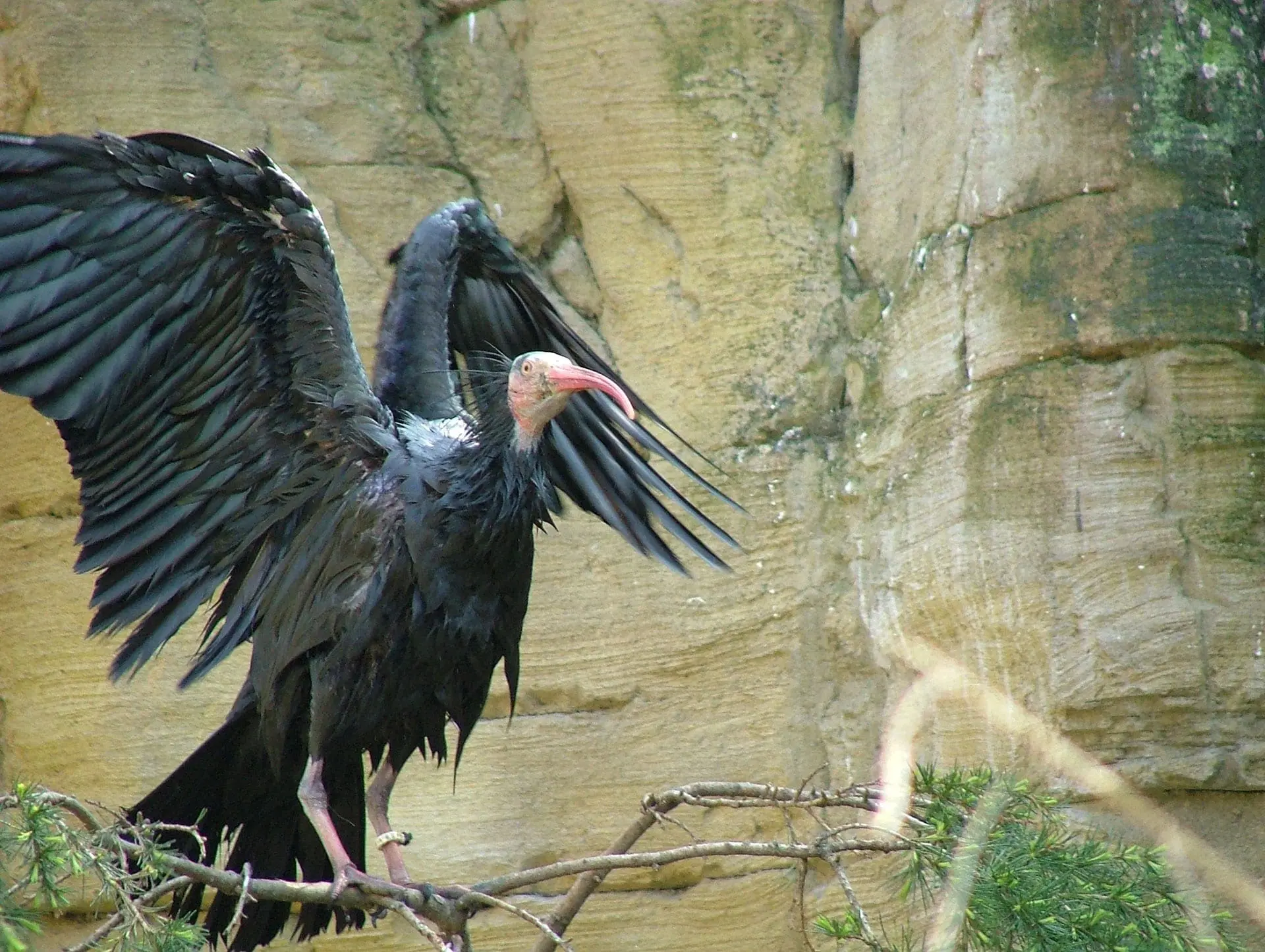
Waldrapp ibis
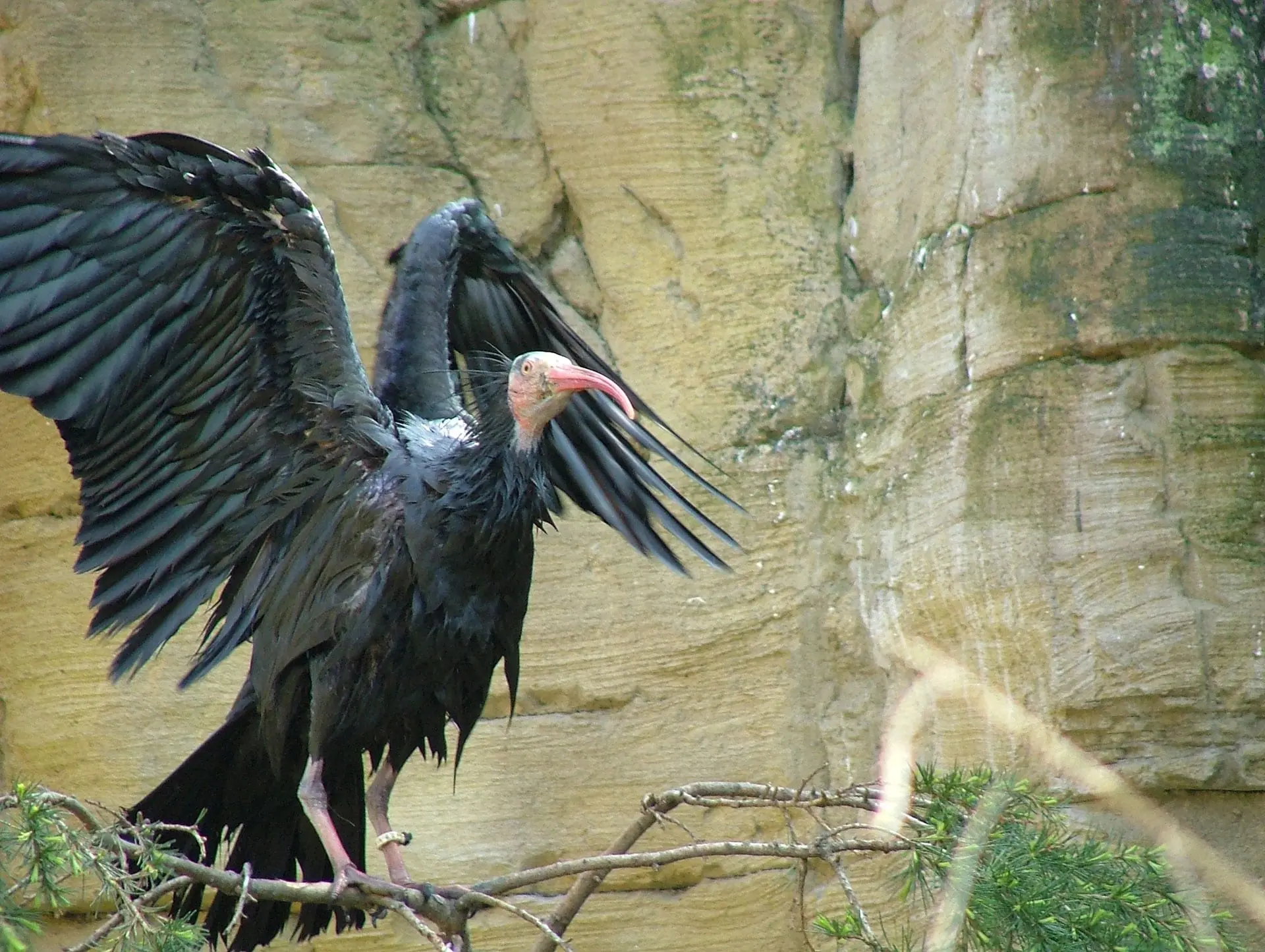
The waldrapp ibis has glossy black feathers, a long curved red beak, and an unfeathered pink face and head
Species
Birds
Habitat
Coastal
Diet
Omnivores
Conservation Status
Endangered
Waldrapp ibis
Geronticus eremita
Irish Name: Íbis mhaol tuaisceartach
IUCN Status: Endangered
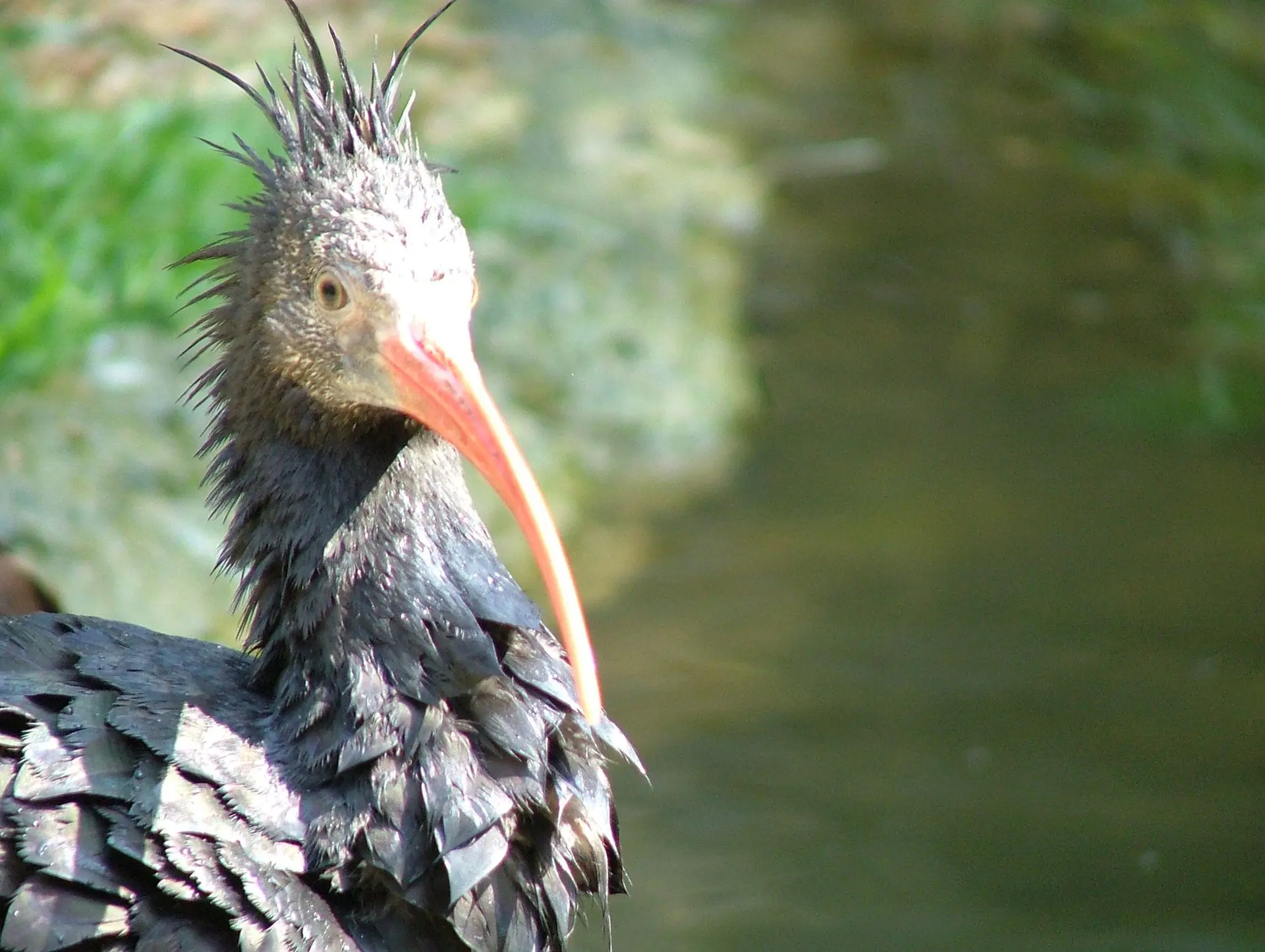
The waldrapp ibis has glossy black feathers, a long curved red beak, and an unfeathered pink face and head. They also have striking blue-ish purple feathers with a green tone.
General Information
Zoo location
Lower Zoo
Animal class
Aves
Animal order
Pelecaniformes
Where do they live (Natural habitat)?
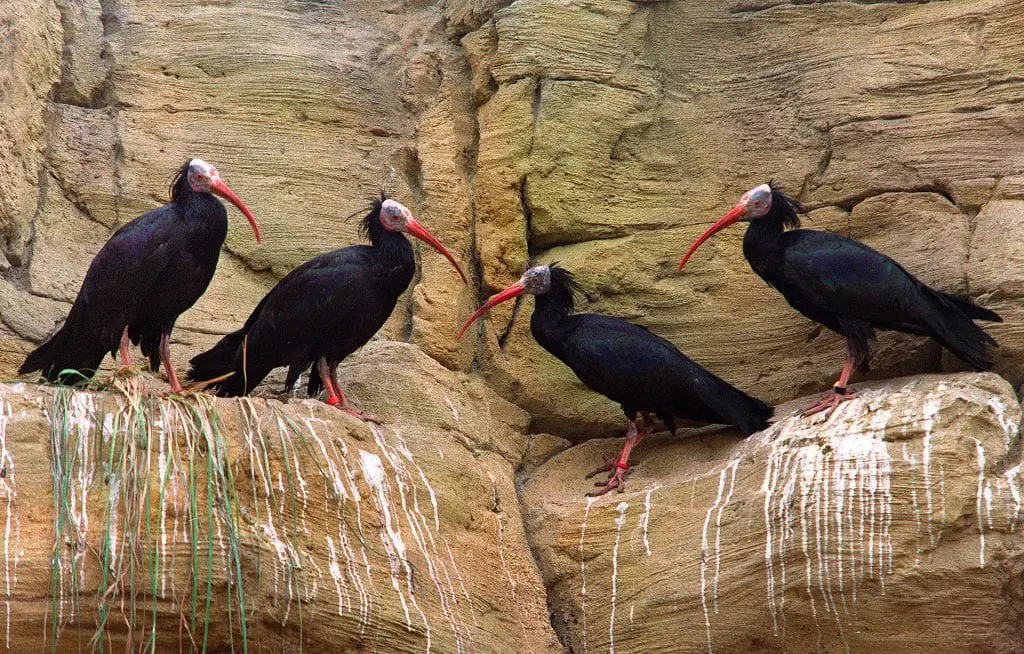
The waldrapp ibis is found in coastal areas, near the banks of rivers, in rocky areas and on cliffs in Morocco, Turkey and Syria.
How long do they live?
They live around 10-15 years in the wild, and up to 25 years in zoos.
What do they eat?
Waldrapp ibis are omnivores (eat both plants and meat). Their diet is made up of insects, lizards, snakes, worms, berries, shoots, aquatic plants, small rodents and small birds.
Group name
Flock
Closest related species / sister species
The closest relative of the waldrapp ibis (also known as the northern bald ibis) is the southern bald ibis, the only other member of the Geronticus genus. The southern bald ibis is native to South Africa.
Fun Facts!
The waldrapp ibis
Family life
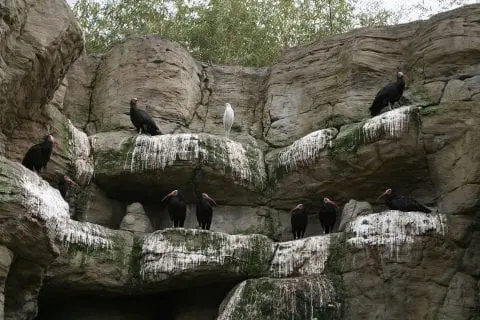
Waldrapp ibis are monogamous, meaning they only have one mate during their lifetime. They breed in colonies on coastal or mountain cliff edges. After the eggs are laid, both the male and female care for them during incubation and after hatching, taking turns to scavenge for food.
Baby name
Chick
Gestation period
25 days of incubation, both parents sit on the eggs
Number of young at birth
2 – 4 eggs in a clutch
Age at maturity
3 – 5 years
Adult size
70-80 cm in length and 1-1.3 kg in weight
Conservation
Endangered
Due to successful conservation actions, the waldrapp ibis has been reclassified as Endangered by the International Union for the Conservation of Nature, having been previously classified as Critically Endangered. However, their population size is still very small and conservation threats still remain.
Current population estimate
Approximately 200-250 individuals
Threats
Threats facing the waldrapp ibis include habitat destruction and disturbance, poaching, loss of eggs and chicks to predators (ravens and vultures), and use of pesticides.
What is Dublin Zoo doing?
Dublin Zoo is part of a breeding programme for this species. We have funded a project in Morocco that allows waldrapp ibis to be tracked via satellite to monitor their behaviour so that they can be better protected.
Frequently Asked Questions
Waldrapp ibis are omnivores (eat both plants and meat). Their diet is made up of insects, lizards, snakes, worms, berries, shoots, aquatic plants, small rodents and small birds.
The plural of ibis is ibis or ibises, though in older texts you might see “ibides” or “ibes”.
The waldrapp ibis is found in coastal areas and on cliffs in Morocco, Turkey and Syria.
Usually a group of ibis are called a flock.
The waldrapp ibis is not native to Australia. However, there is another species of ibis, the Australian white ibis, which as its name suggests is native to Australia.
Waldrapp ibis can fly. All living ibis species can fly.
Cranes and ibis are from separate orders and are therefore unrelated. Ibis are more closely related to pelicans and herons.