Asian elephant
The world’s largest land mammals
Species
Mammals
Habitat
Grassland
Diet
Herbivore
Conservation Status
Endangered
Asian elephant
Elephas maximus
Irish Name: Eilifint Áiseach
IUCN Status: Endangered
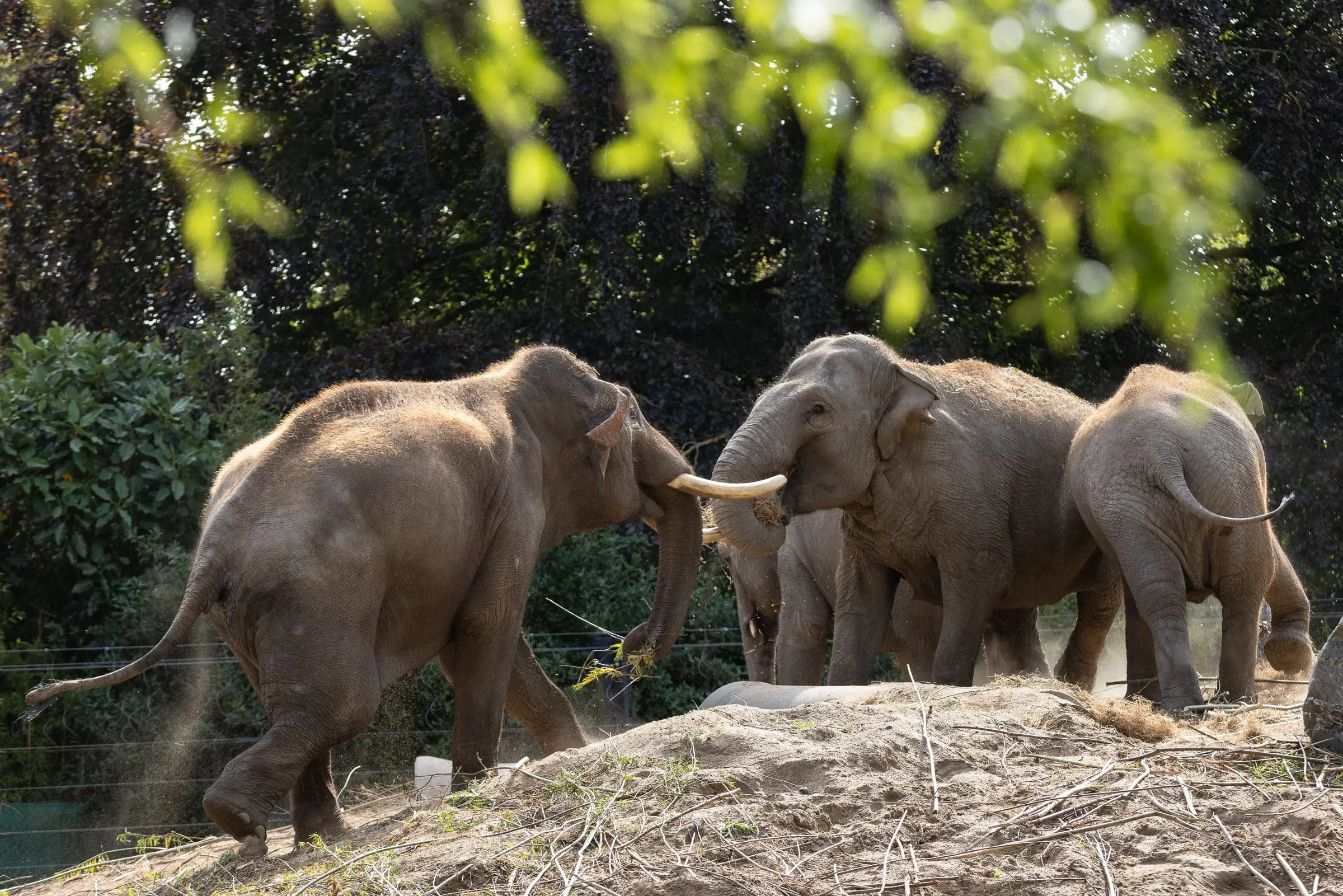
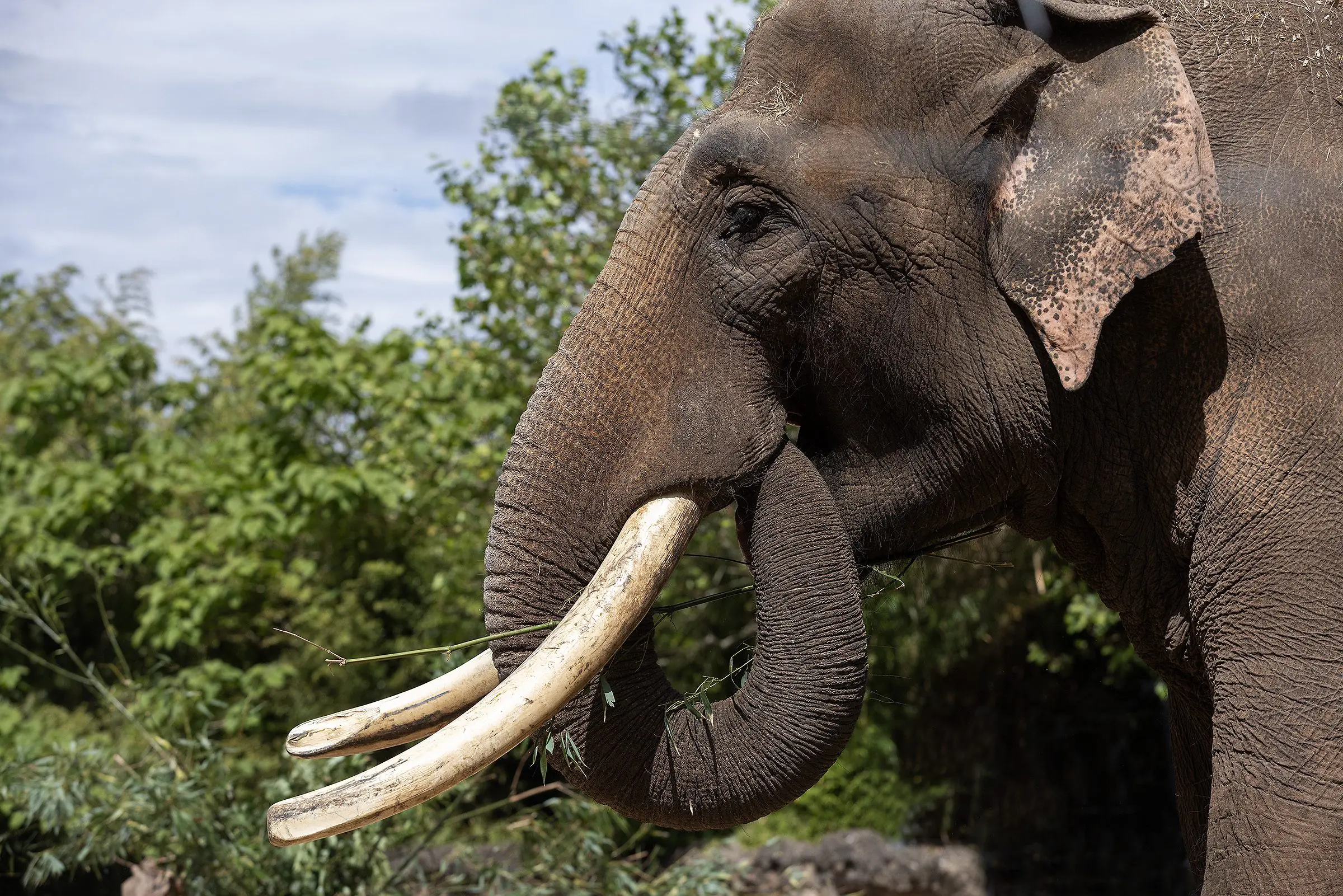
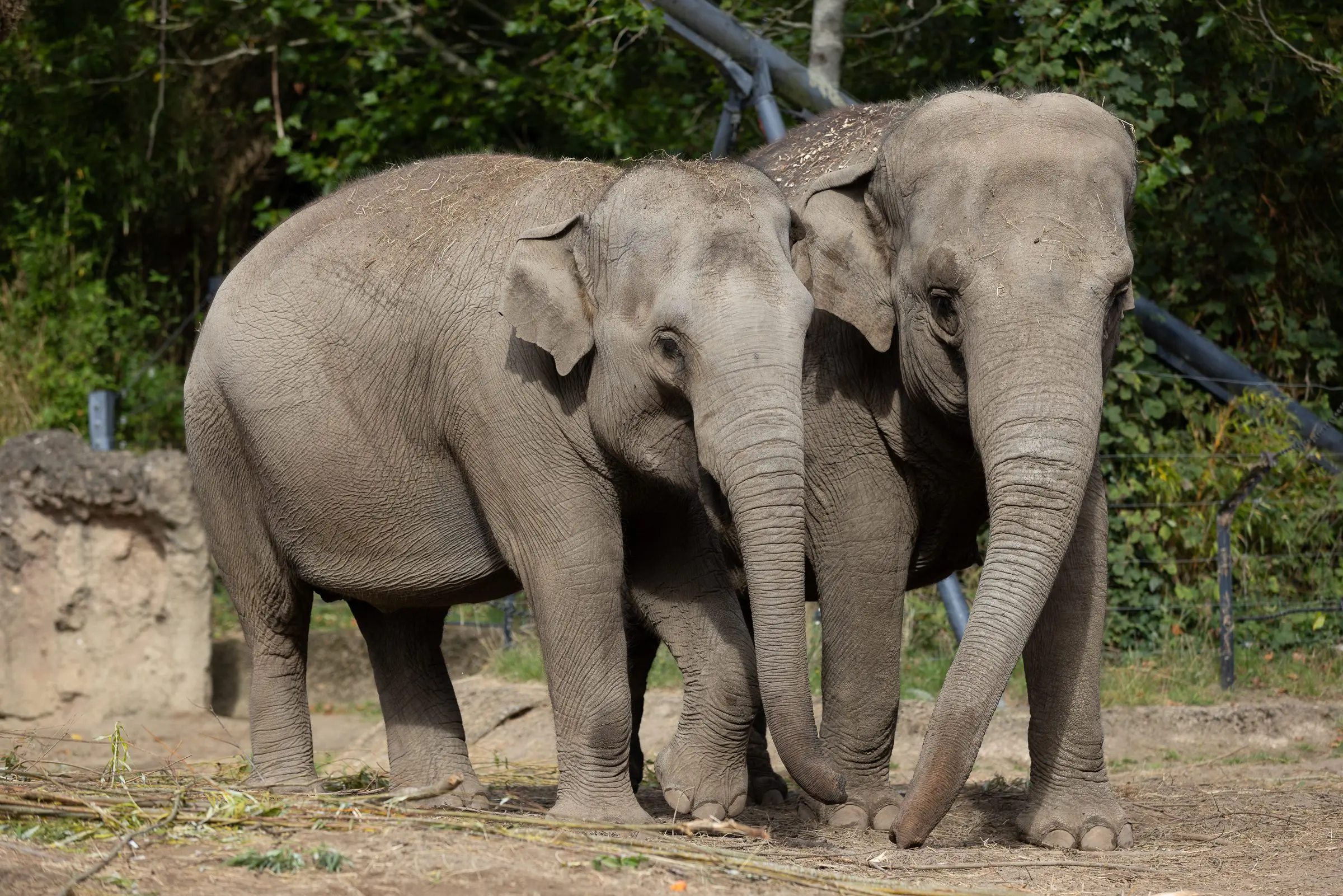
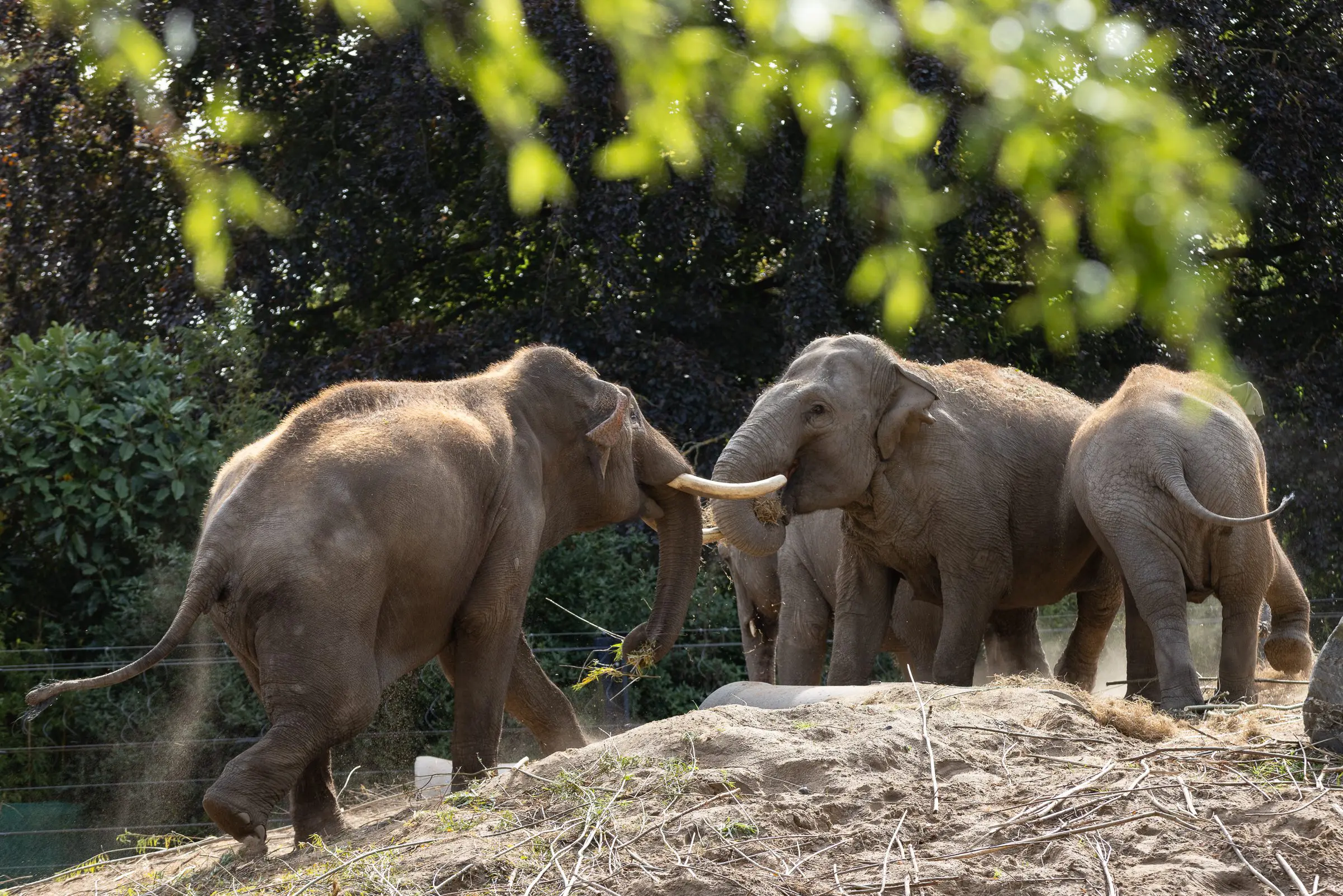
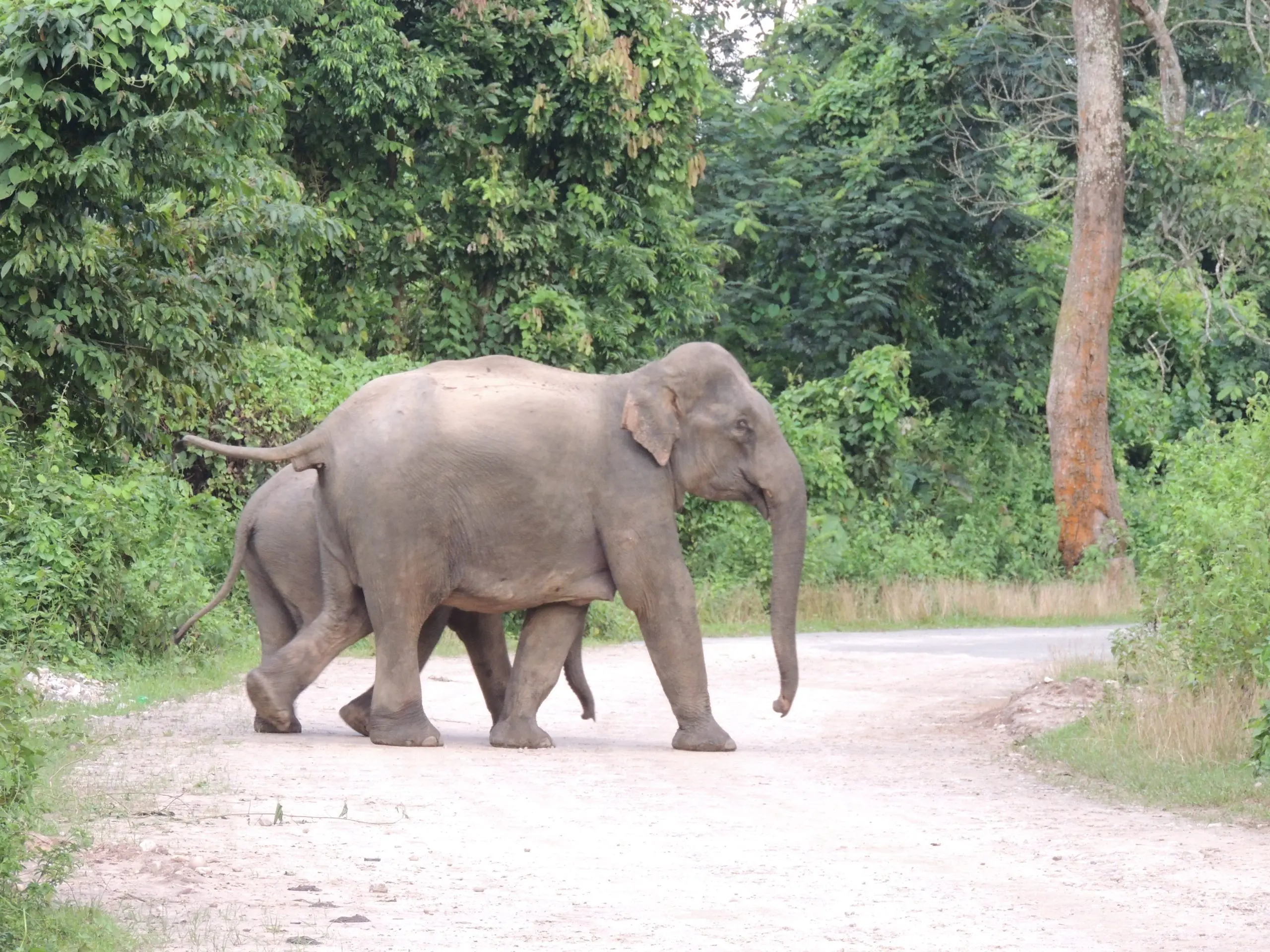
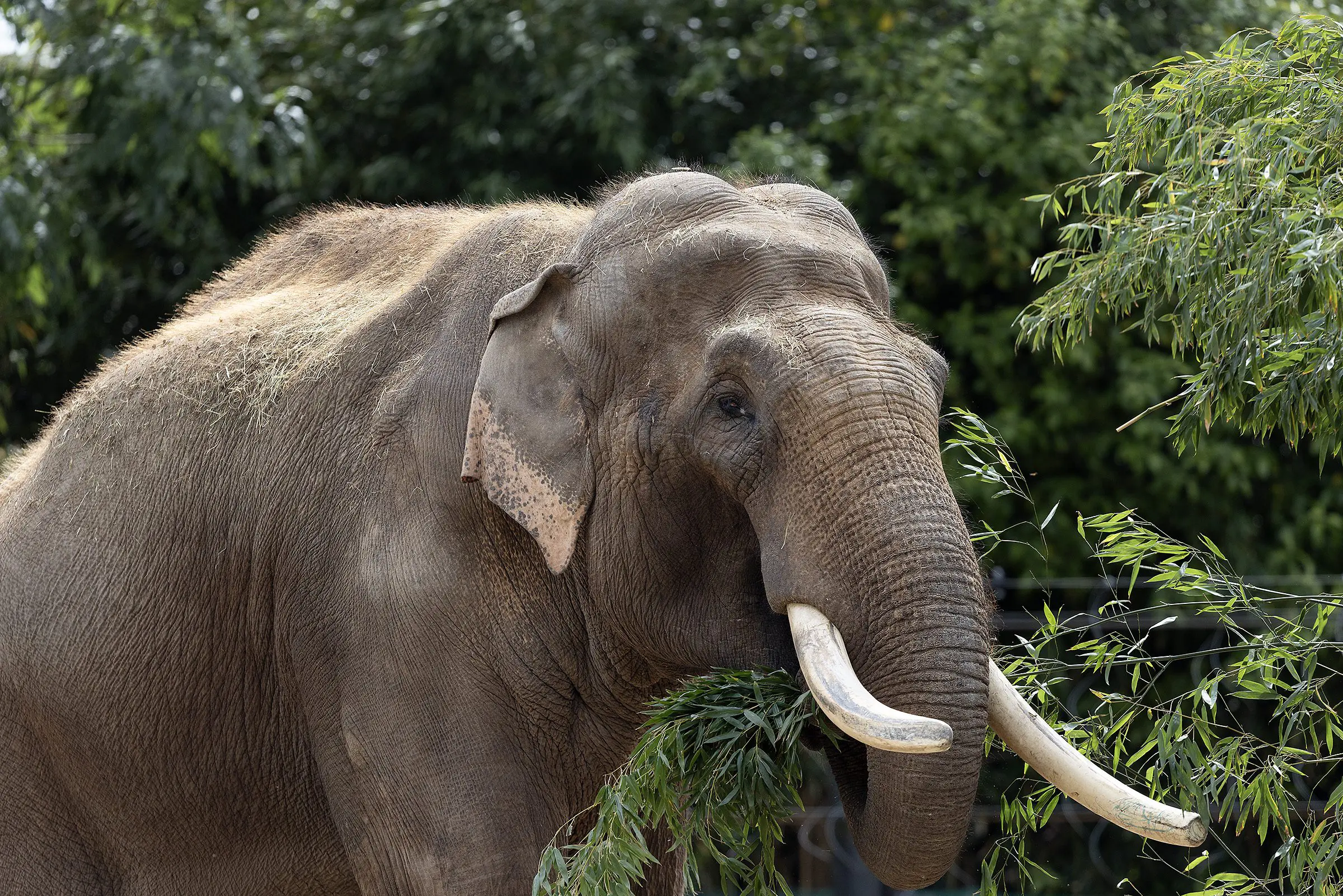
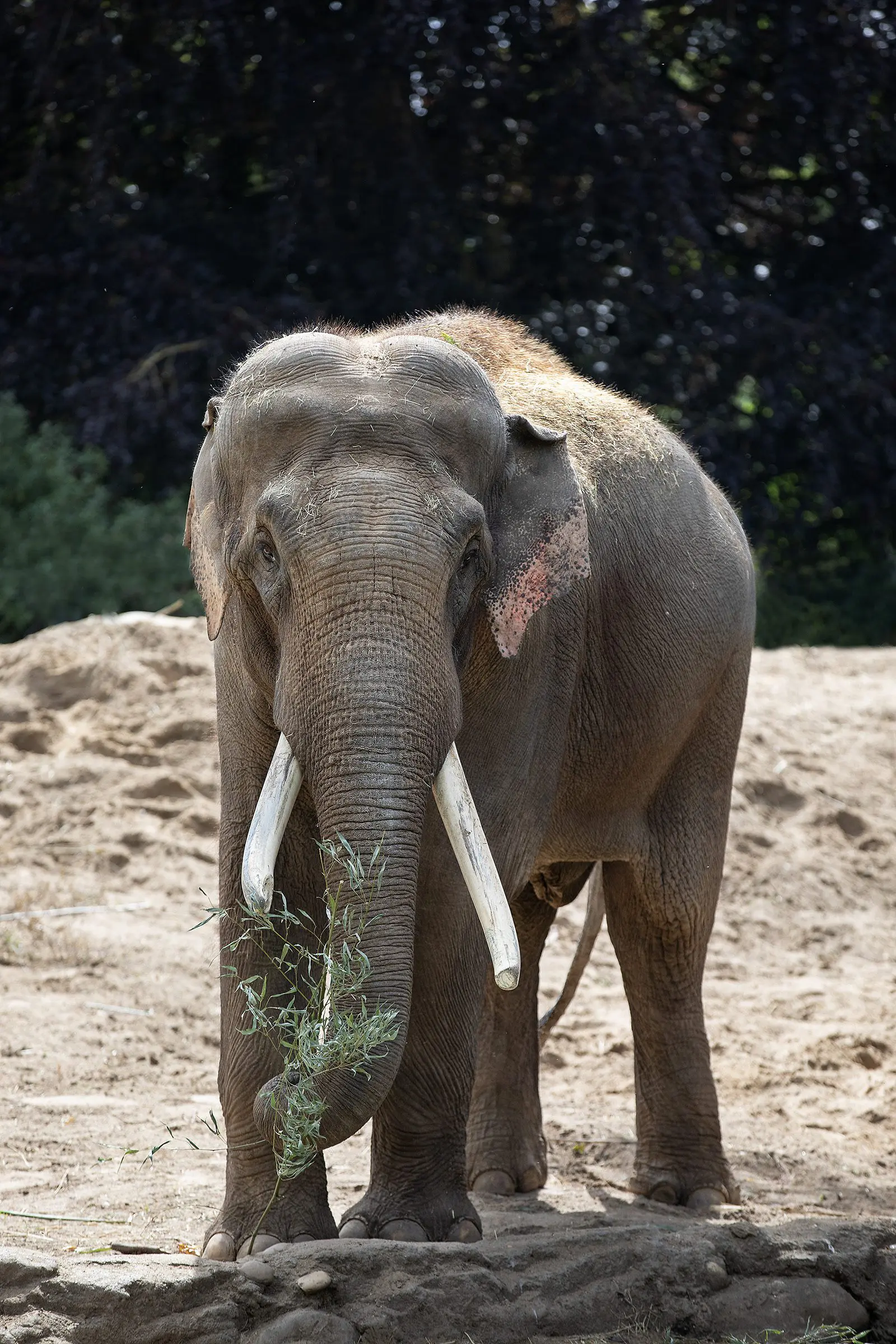
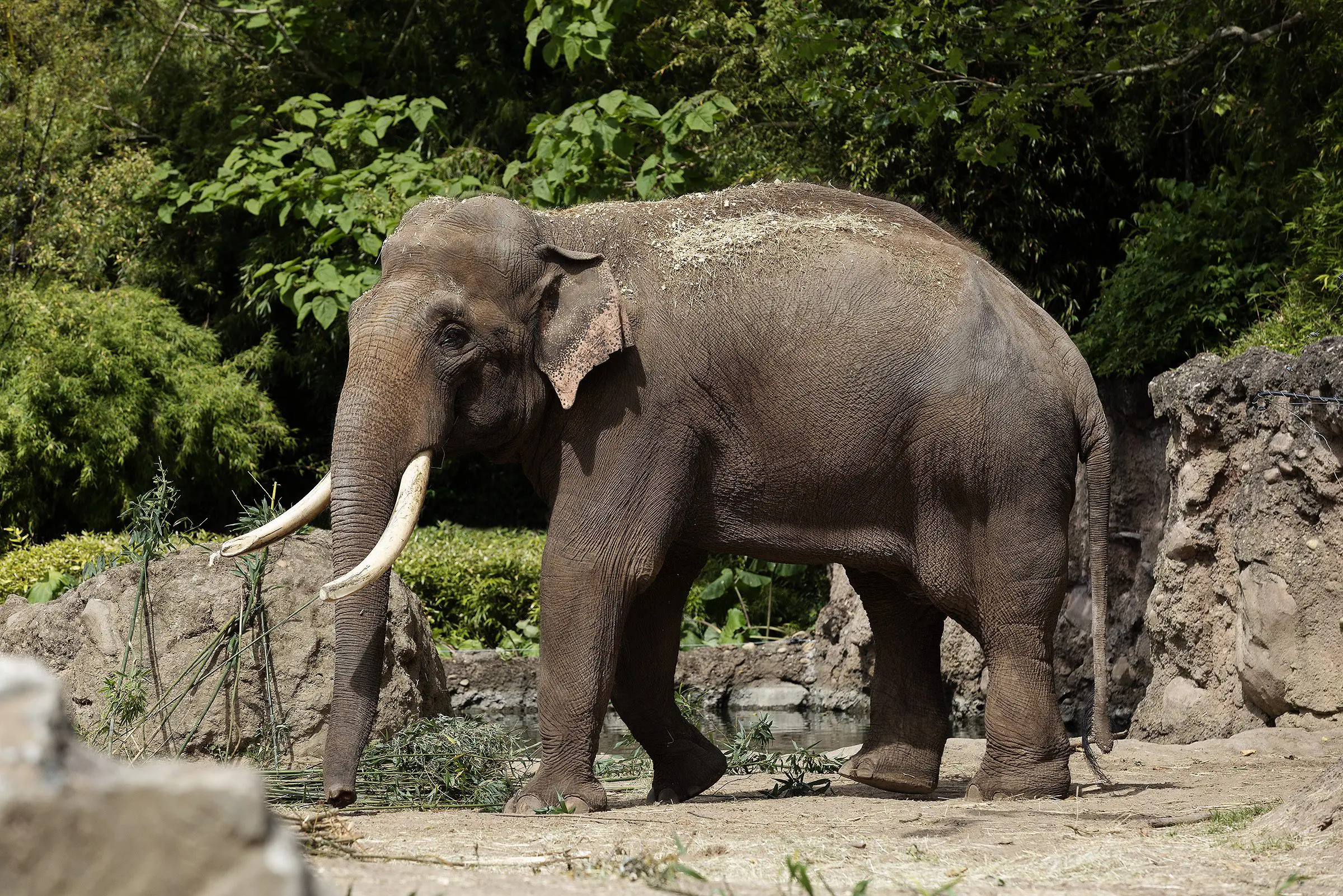
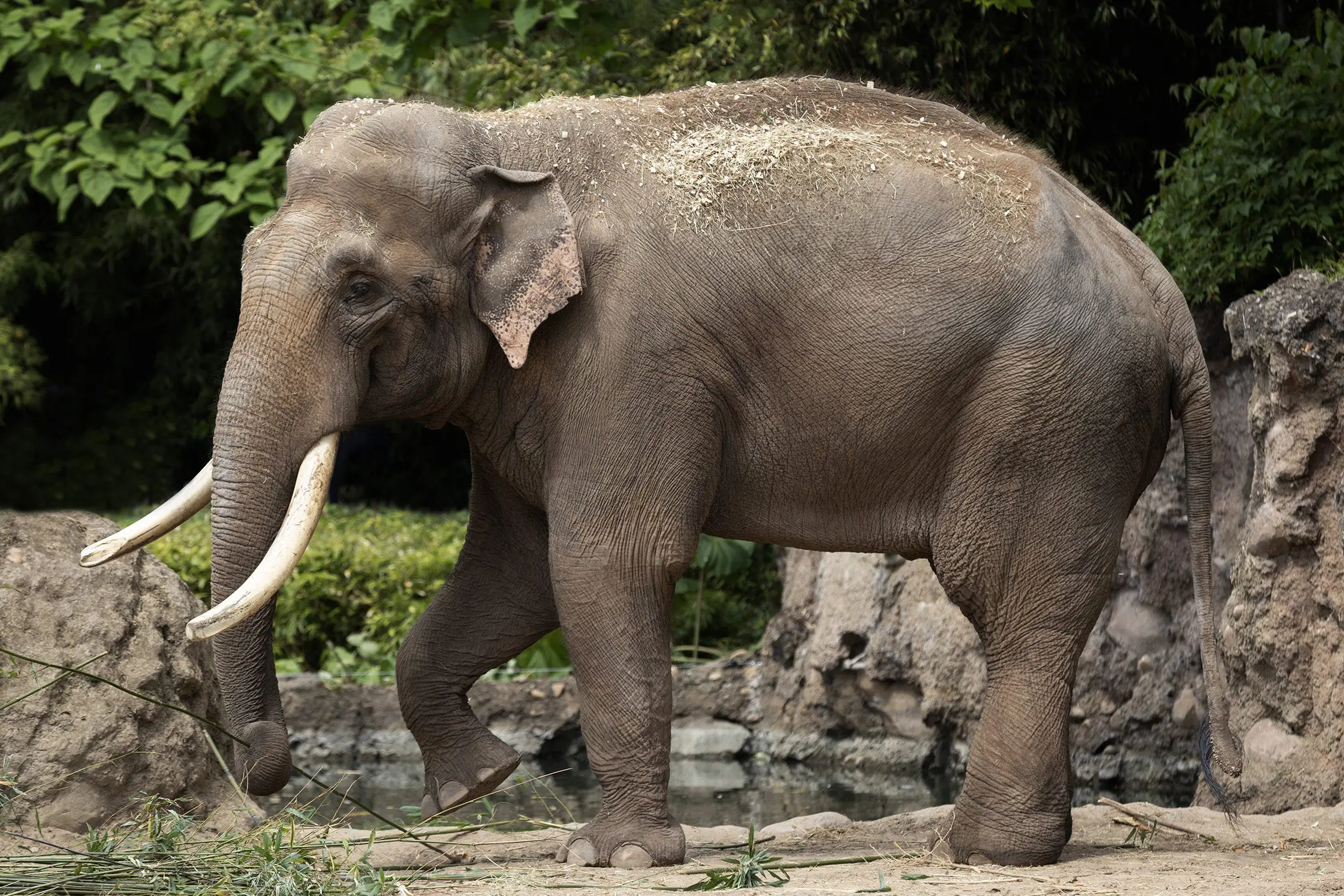
Elephants are the world’s largest land mammals, with African elephants being the largest and Asian elephants (the species at Dublin Zoo) being the second largest. They have a long trunk, wide flat ears and thick legs. Some males have large tusks. Females and some males have shorter tusks called “tushes”.
General Information
Zoo location
The Kaziranga Forest Trail
Animal class
Mammalia
Animal order
Proboscidea
Where do they live (Natural habitat)?
Asian Elephants are found in forests, grassland and shrub land in a number of countries in South and Southeast Asia including India, Sri Lanka, Nepal and Borneo.
How long do they live?
There is not enough collected data on wild Asian elephants to estimate their lifespan. However, it has been suggested that Asian elephants can live between 40-70 years in the wild and up to 80 years in zoos.
What do they eat?
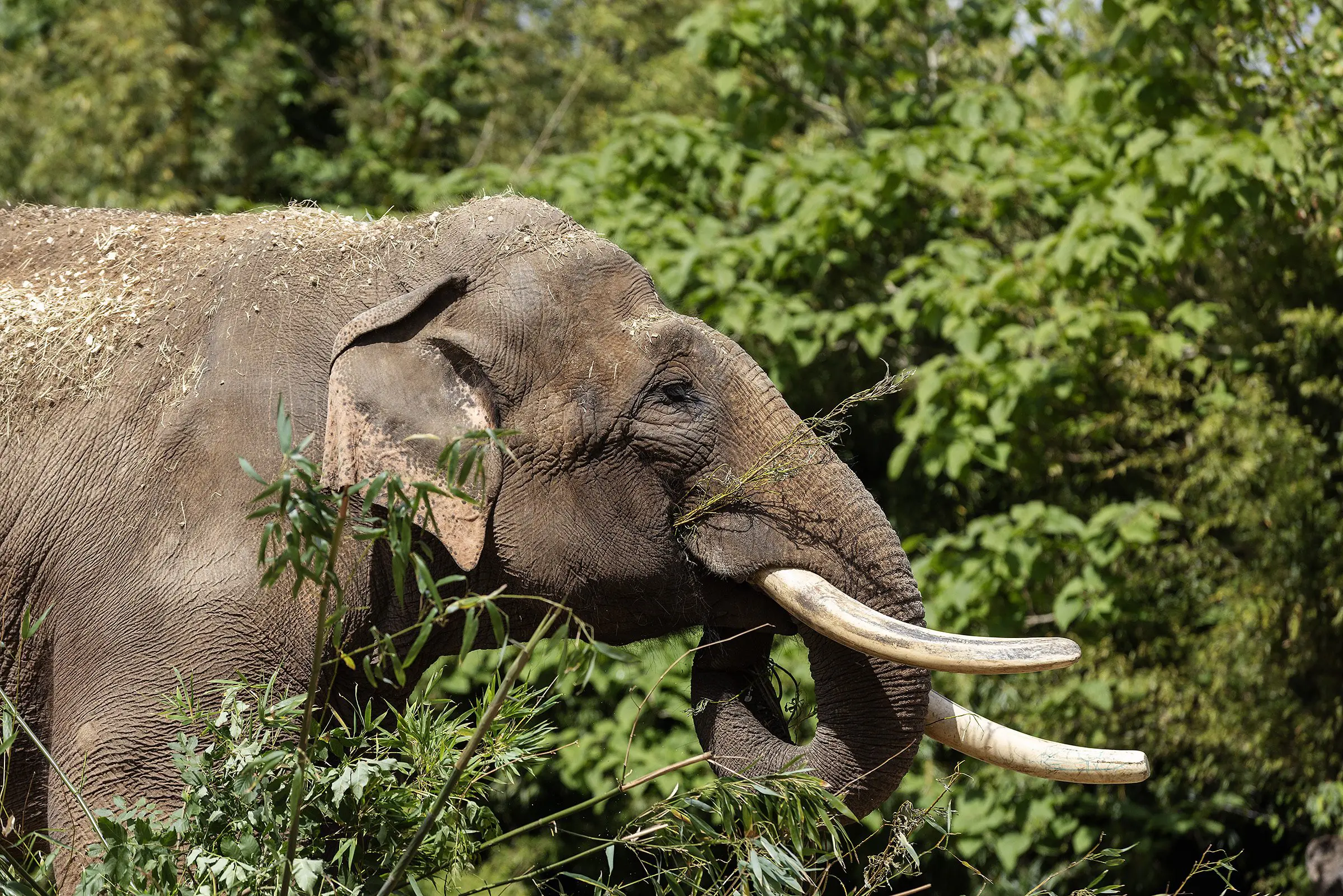
Due to their size, Asian elephants require huge quantities of food. They often spend three-quarters of the day feeding. They feed mainly on grasses, but also on tree bark, roots and leaves. They have also been known to eat bananas, rice and sugarcane.
Group name
Herd
Closest related species / sister species
The Asian elephant’s closest relative is the African elephant.
Check out our Asian elephant ISL Keeper Talk
Fun Facts!
Elephants bathing at Dublin Zoo
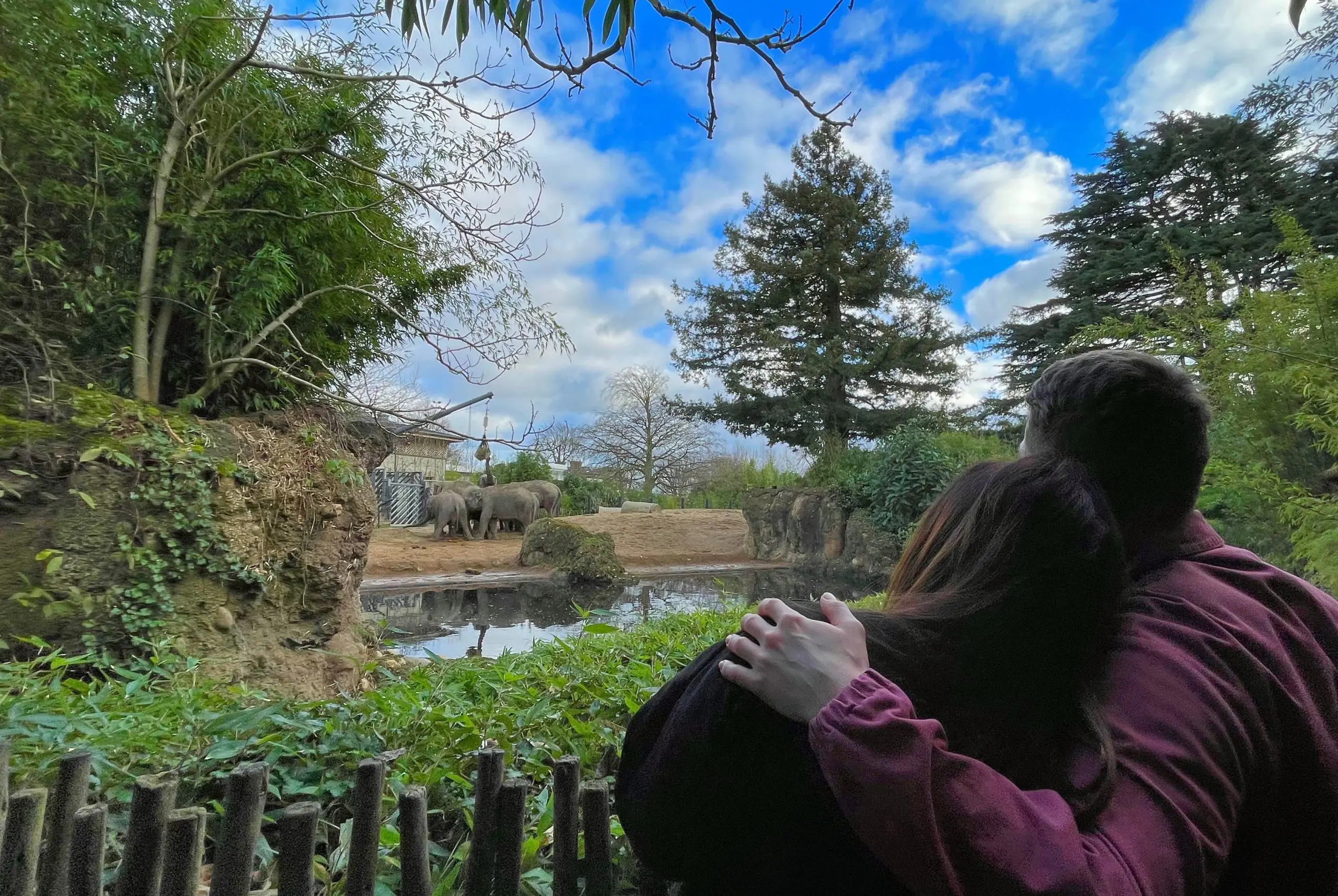
Elephants at Dublin Zoo
Family life
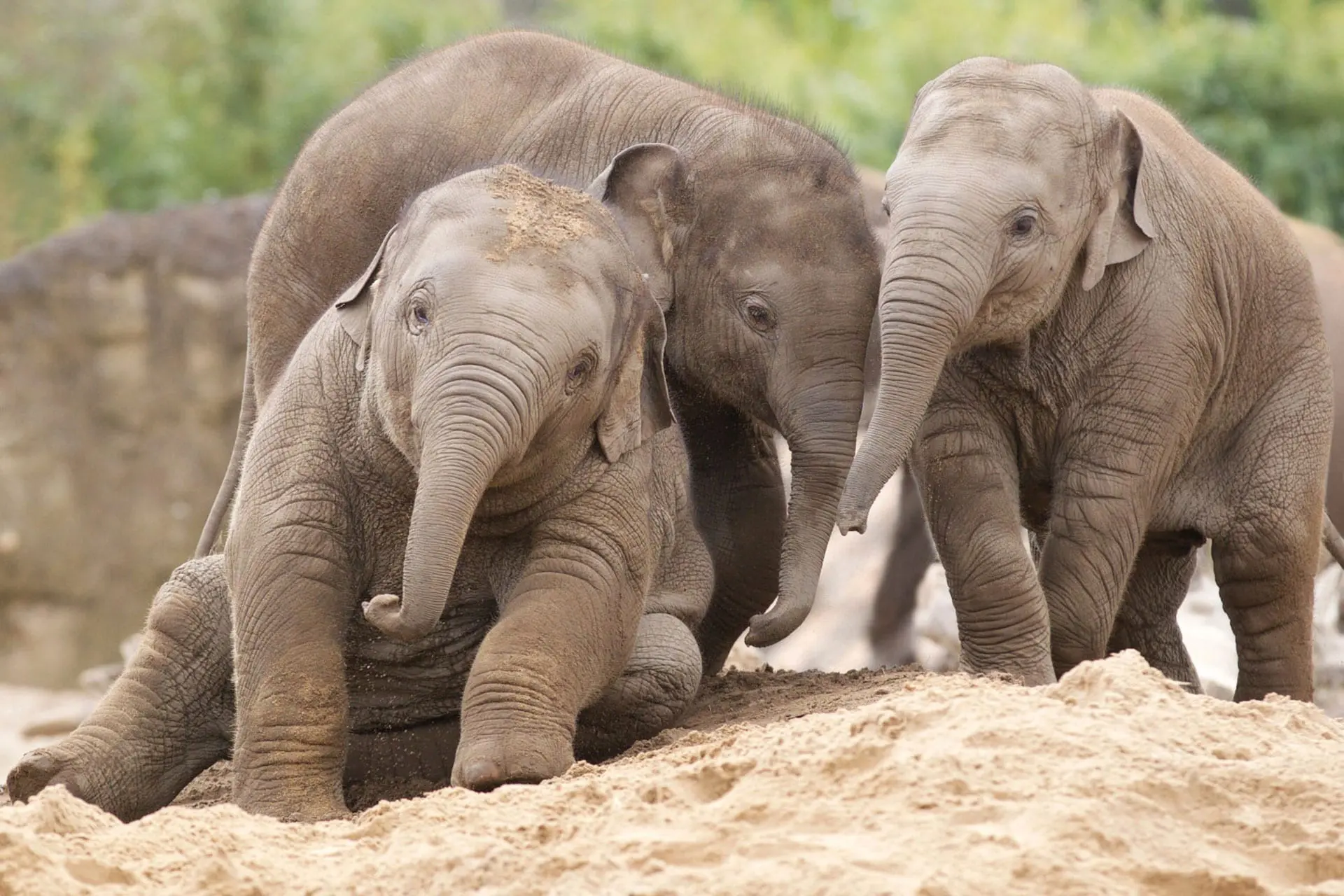
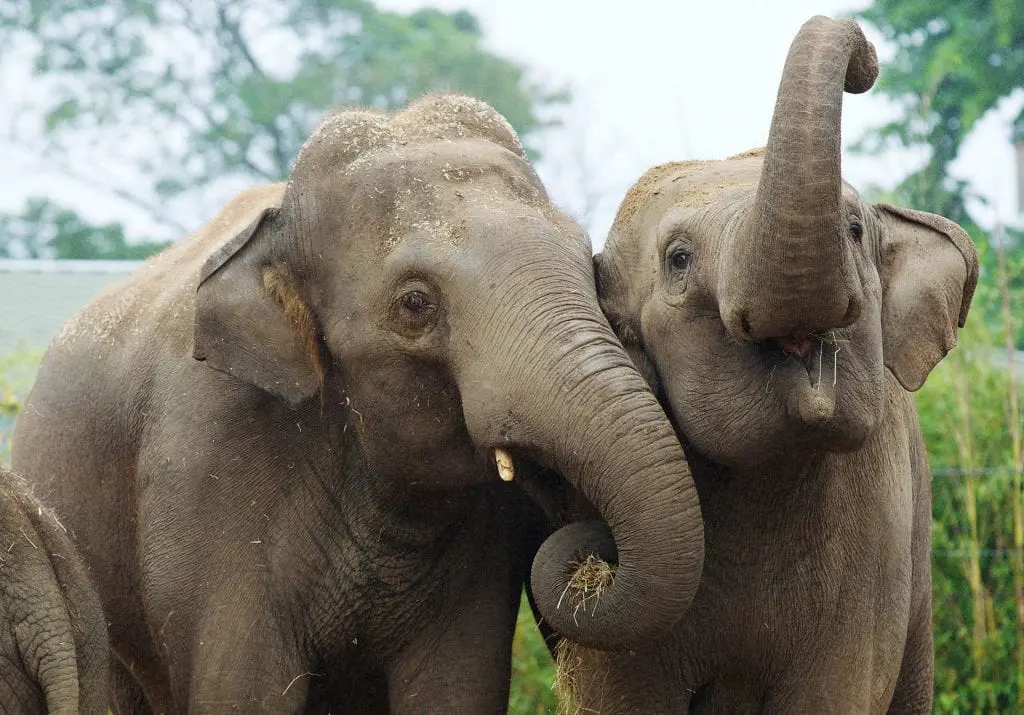
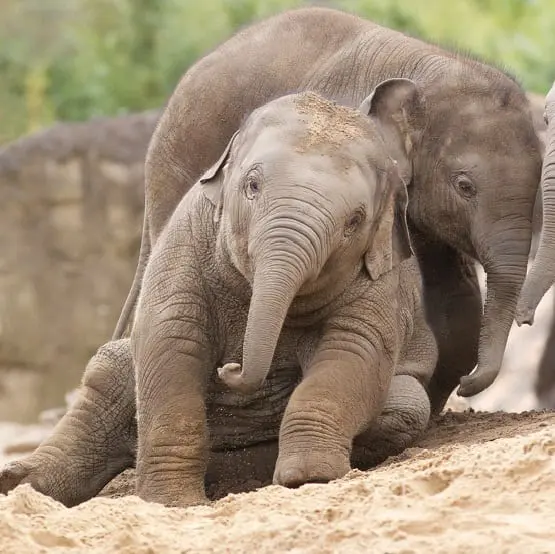
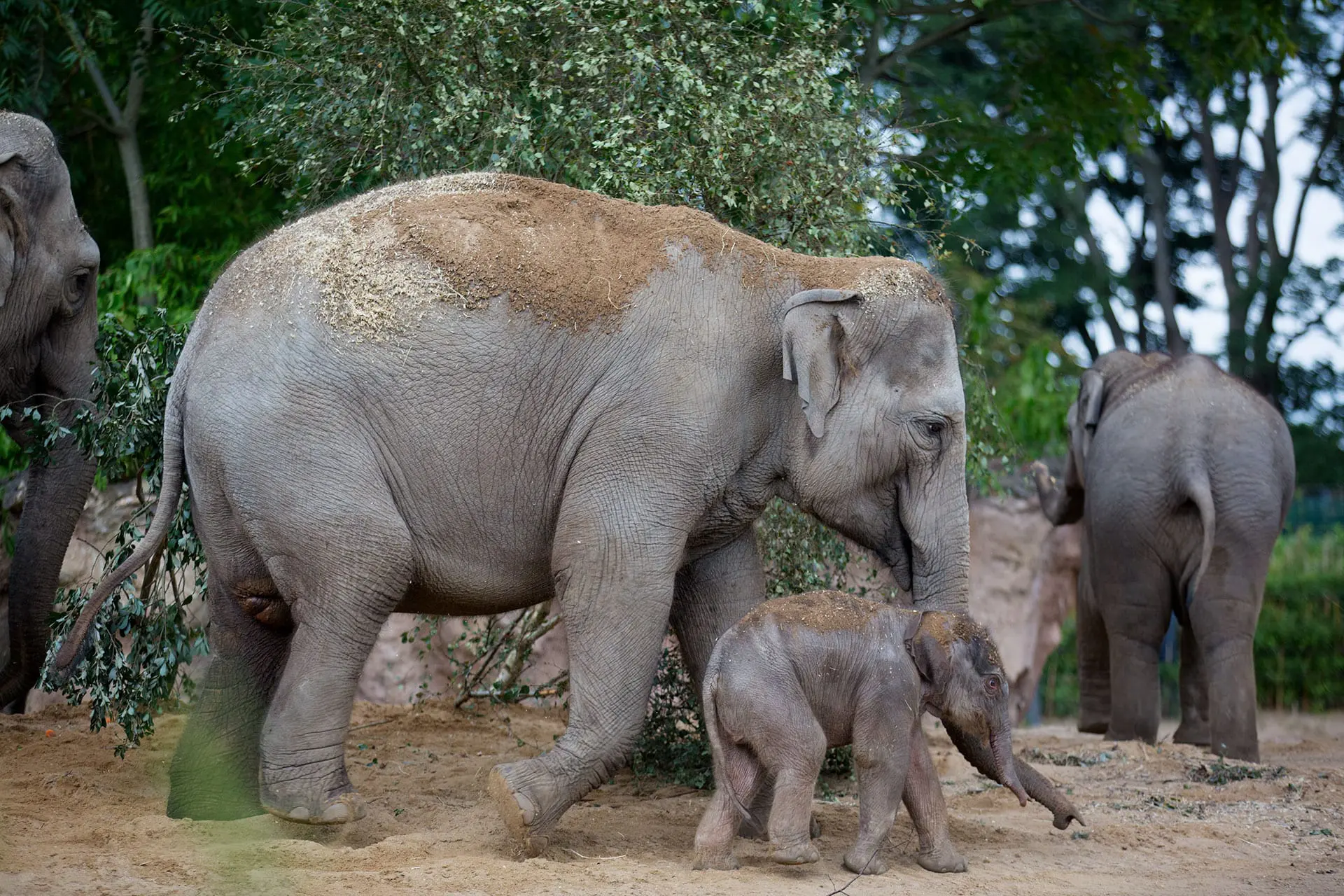
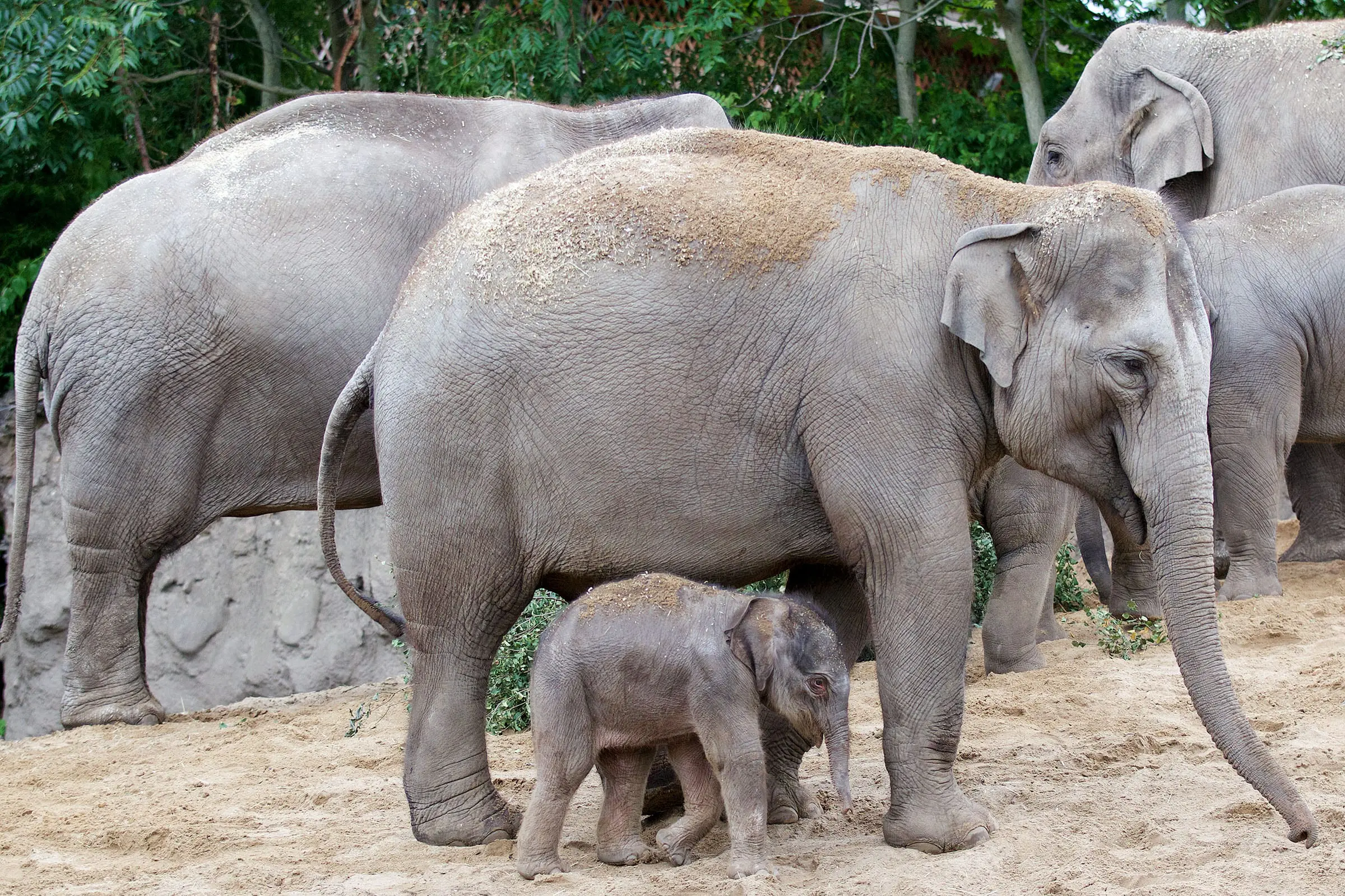
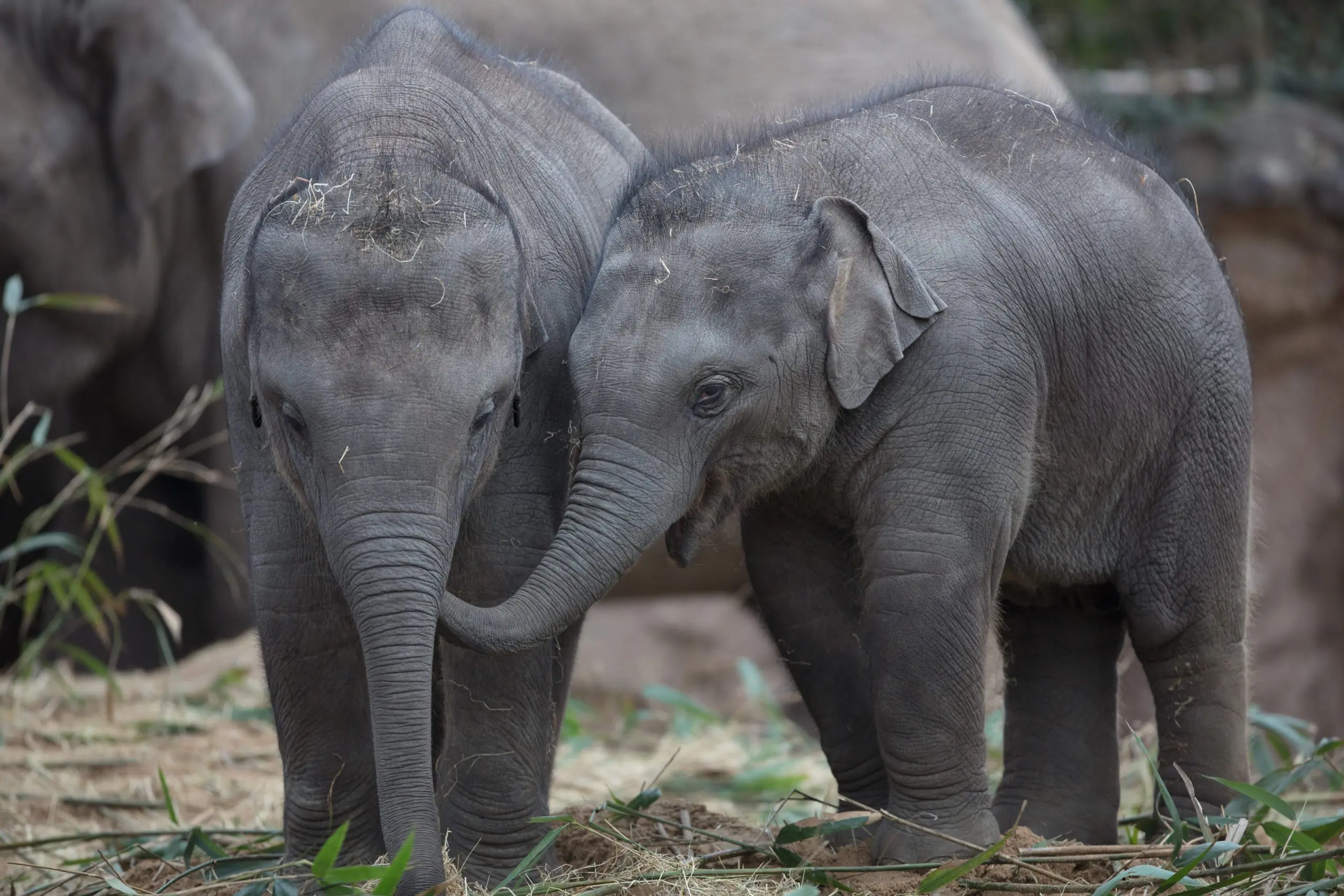
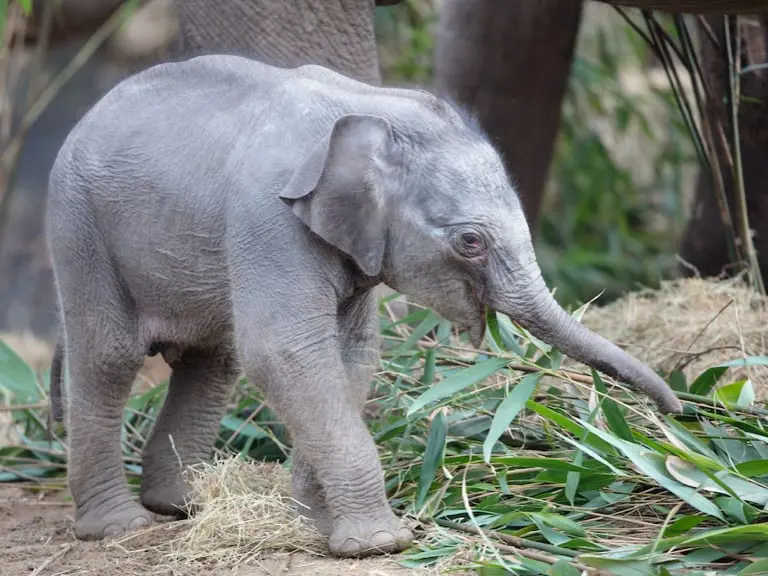
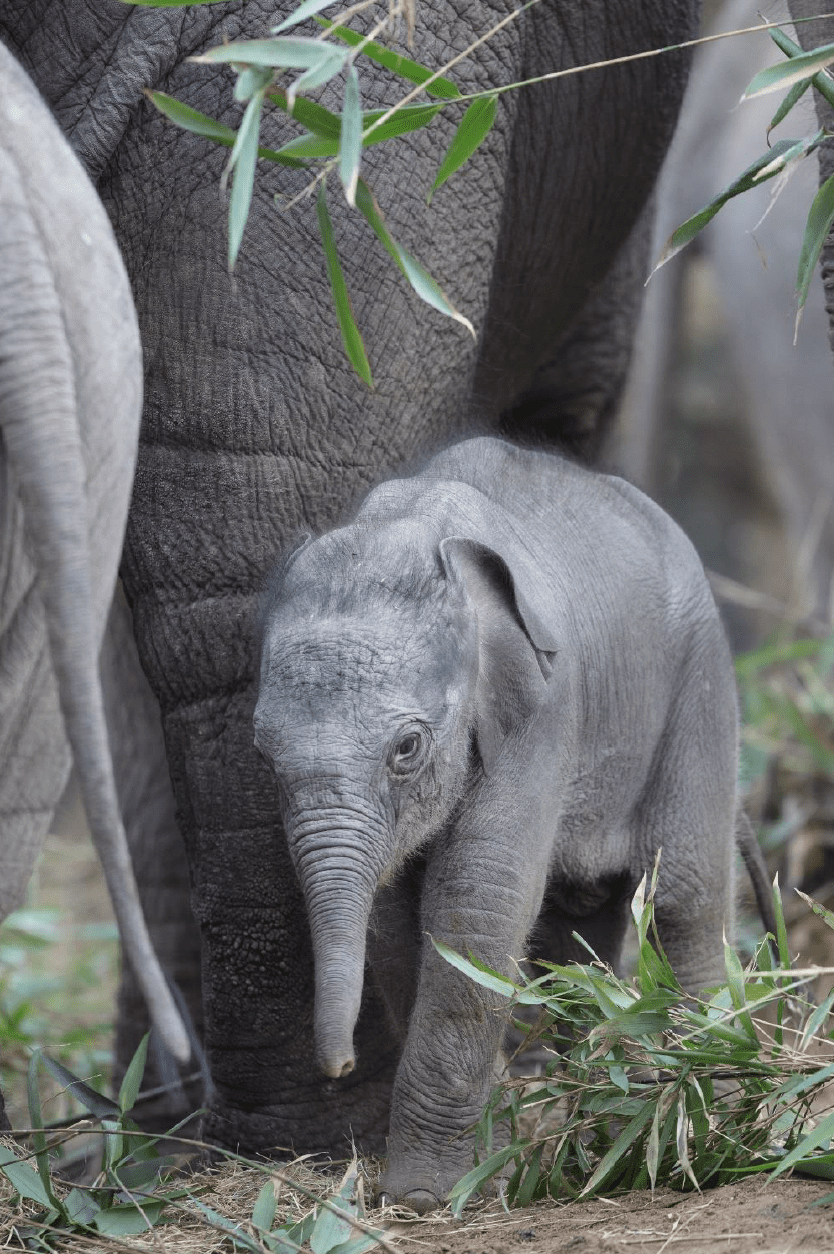
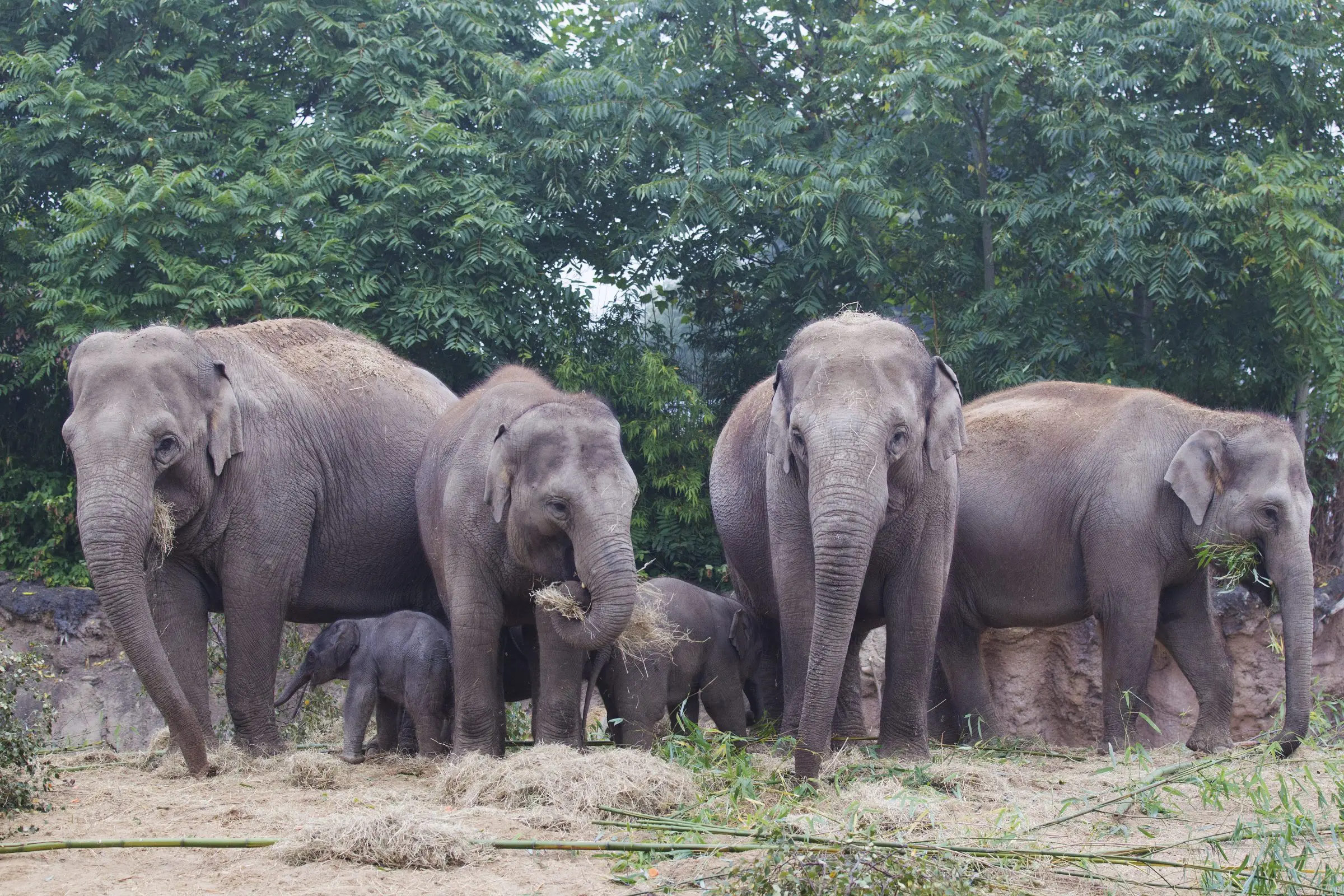
Asian elephants are social animals. Female elephants and their calves live in multi-generational herds, led by a matriarch (the dominant female). Young males leave the group when they are 6-7 years old. Bulls sometimes form bachelor groups (groups of males) but are mostly solitary (live alone), and only visit the female herds to mate.
Baby name
Calf
Gestation (pregnancy) period
22 months – elephants have the longest pregnancy or gestation period of all mammals
Number of young at birth
One
Weight at birth
Approximately 100kg
Age at maturity
10 – 15 years
Adult size
Asian elephants can reach a shoulder height of upwards of 3m, but the average height for a male is estimated at 2.7 – 3.2 m and 2.4 – 3 m for a female. They can weigh from 2,700 to 5,000 kg, with the average male weighing upwards of 4,000 kg and female weighing upwards of 2,700 kg.
Adult male name
Bull
Adult female name
Cow
Conservation
Endangered
Asian elephants are classified as Endangered by the International Union for Conservation of Nature due to habitat loss, human-elephant conflict over crops and being poached for their ivory tusks.
Current population estimate
Approximately 48,000 – 52,000
Threats
The main threat for Asian elephants is habitat loss due to deforestation for agriculture and housing. Increased agriculture has also led to increased conflict between elephants and humans: as elephants look for more space, they get killed by farmers for entering their land and eating their crops. Other threats to Asian elephants are poaching for ivory from their tusks and being captured for the tourist trade.
What is Dublin Zoo doing?
Dublin Zoo supports the Wildlife Trust of India, which is involved in the conservation of Asian elephants in South and Southeast Asia. Dublin Zoo is also part of the European breeding programme for the Asian elephant to try and protect this endangered species from extinction.
Frequently Asked Questions
The main threat for Asian elephants is habitat loss due to deforestation for agriculture and housing. Increased agriculture has also led to increased conflict between elephants and humans: as elephants look for more space, they get killed by farmers for entering their land and eating their crops. Other threats to Asian elephants are poaching for ivory from their tusks and being captured for the tourist trade.
Asian Elephants are found in forests, grassland and shrubland in a number of countries in South and Southeast Asia including India, Sri Lanka, Nepal and Borneo.
Due to their size, Asian elephants require huge quantities of food. They often spend three-quarters of the day feeding. They feed mainly on grasses, but also on tree bark, roots and leaves. They have also been known to eat bananas, rice and sugarcane.
Some male Asian elephants have large tusks. Females and some males have smaller tusks called “tushes”.
It is estimated that there are approximately 40,000 – 50,000 Asian elephants left in the wild.
There is not enough collected data on wild Asian elephants to estimate their lifespan. However, it has been suggested that Asian elephants can live between 40-70 years in the wild and up to 80 years in zoos.
Asian elephants can weigh from 2,700kg – 5,000kg. Males are generally larger than females.
An elephant’s skin colour is usually grey, but can turn brownish after they bathe in mud.
Asian elephants are often called ‘gardeners of the rainforest’ because of their role in spreading seeds in their habitat. When Asian elephants eat, they consume lots of seeds. These seeds get back into the soil through the its dung, causing more plants to grow. Their dung also acts as fertiliser for the soil and provides a home and food for many species of insect. Because of the important role they play in their ecosystem, Asian elephants are considered an umbrella species, meaning that protecting them will cause other species under its umbrella to also be protected.
Asian elephants can reach a shoulder height of up to 3m. Males are usually larger than females.
The oestrus cycle of a female elephant is 12-18 weeks long, but during this cycle there is only a short period of 2-10 days when a female can conceive. Male elephants also experience periods of increased hormone levels called “musth” during which they become particularly aggressive and visit family groups to seek out females that are ready to conceive. Elephant cows prefer mating with bulls in musth to non-musth bulls. Elephant cows give birth to one calf every four years.
Due to their size elephants require huge quantities of food, up to 150 kg of food per day. In the wild they eat mainly grasses, but also tree bark, roots and leaves. Here at Dublin Zoo they have a diet of mostly hay, but also, grass, leaves, vegetables and small amount of fruit.
The main way to tell the difference between Asian and African elephants is by looking at their ears. The Asian elephant’s ears are much smaller that the African elephant’s (whose large ears resemble the shape of the continent of Africa!). Asian elephants are also slightly smaller than their African relatives. Another difference is with their tusks: only some male Asian elephants grow tusks, while both male and female African elephants grow tusks.
African elephants are slightly larger than Asian elephants. African elephants can grow to a height of 4m and can weigh up to 6,300kg, while Asian elephants have a maximum height of approximately 3m and can weigh up to 5,000kg.